ANTIOXIDANTS
OXIDATION- It is defined as a loss of electron from a compound that results
in a change in the oxidation state of the molecule. this reaction is mediated
by O2 or free radicles, and reaction is catalyzed by heavy metals.
DRUG + O2 / free radicles DRUG+ + e-
Heavy metal(Pt/Pd)
light
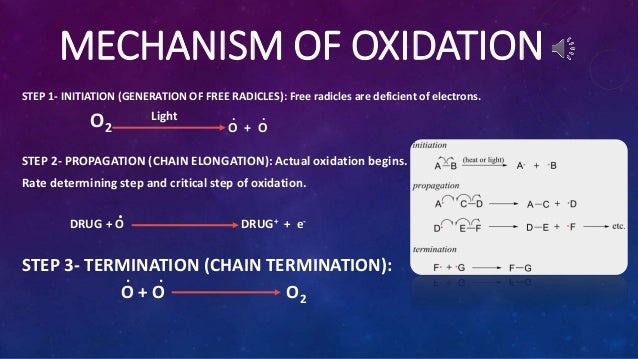
MECHANISM OF OXIDATION
STEP 1- INITIATION (GENERATION OF FREE RADICLES): Free radicles are deficient of electrons.
O2 O + O
STEP 2- PROPAGATION (CHAIN ELONGATION): Actual oxidation begins.
Rate determining step and critical step of oxidation.
DRUG + O DRUG+ + e-
STEP 3- TERMINATION (CHAIN TERMINATION):
O + O O2
Light . .
.
. .
ROLE OF HEAVY METALS IN OXIDATION!!
HEAVY METAL
GO FREE RADICLE!!
GO, AND ATTACK THE DRUG SUBSTANCE
HEAVY METAL
Pt/Pd
WHAT IS ANTIOXIDANTS??
Antioxidants are used to prevent the oxidation of active substance or
excipients present in formulation.
HOW THEY DO THAT?? (MECHANISM OF ANTIOXIDANTS)
# THEY DO IT BY 2 WAYS:
• By sacrificing and developing REDOX SYSTEM.
• By acting as a CHAIN INHIBITORS
MECHANISM OF ANTIOXIDANT
By sacrificing and developing REDOX SYSTEM:
By acting as a CHAIN INHIBITORS:
Drug substance
Antioxidant
Free radicle
Breaking chemical chain
Redox system
Antioxidant
giving electron
or H+ ion.
Free radicle
Inhibiting chain
propagation.
TYPES OF ANTIOXIDANTS
There are mainly three types of Antioxidants-
• Water soluble Antioxidants (REDUCING AGENTS)
• Lipid soluble Antioxidants (TRUE ANTIOXIDANTS)
• Antioxidant synergists (Chelating agents).
Butylated hydroxy toluene
(BHT)
Ascorbic acid
EDTA
WATER SOLUBLE ANTIOXIDANTS
ALSO CALLED AS REDUCING AGENTS
THEY ACT AS SACRIFICER.
Free radicle
Drug
substance
Protecting the drug substance from free
radicle, by sacrificing himself.
Antioxidant having
high oxidation state
MECHANISM INVOLVED
Getting oxidized and acting
as reducing agent.
Ascorbic acid
Drug substance
Free radicle
acceptor
Antioxidant
Free
radicles
No propagation, therefore
the oxidation is inhibited.
LIPID SOLUBLE ANTIOXIDANT
MECHANISM INVOLVED
Butylated hydroxy toluene (BHT)
CHELATING AGENTS
Effectiveness of Antioxidants depends on-
• Concentration of antioxidant used
• Nonreactivity
• Solution Ph
• Package integrity
Chelating agents are also called antagonist synergists. They increase the
effectiveness of antioxidants, by forming complex with heavy metals.
EDTA
WATER SOLUBLE ANTIOXIDANTS
SODIUM SULFITE SODIUM BISULFITE SULFUR DIOXIDE
ASCORBIC ACID THIOGLYCOLIC ACID ACETYLCYSTEINE
LIPID SOLUBLE ANTIOXIDANTS
HYDROQUINONE PROPYL GALLATE BUTYLATED HYDROXY TOLUENE
α- TOCOPHEROL LECITHIN BUTYLATED HYDROXY ANISOLE
CHELATING AGENTS
EDTA CITRIC ACID
TARTARIC ACID DIHYDROXYETHYL GLYCINE

Pharmaceutical Antioxidants

  • 1.
    ANTIOXIDANTS OXIDATION- It isdefined as a loss of electron from a compound that results in a change in the oxidation state of the molecule. this reaction is mediated by O2 or free radicles, and reaction is catalyzed by heavy metals. DRUG + O2 / free radicles DRUG+ + e- Heavy metal(Pt/Pd) light
  • 2.
    MECHANISM OF OXIDATION STEP1- INITIATION (GENERATION OF FREE RADICLES): Free radicles are deficient of electrons. O2 O + O STEP 2- PROPAGATION (CHAIN ELONGATION): Actual oxidation begins. Rate determining step and critical step of oxidation. DRUG + O DRUG+ + e- STEP 3- TERMINATION (CHAIN TERMINATION): O + O O2 Light . . . . .
  • 3.
    ROLE OF HEAVYMETALS IN OXIDATION!! HEAVY METAL GO FREE RADICLE!! GO, AND ATTACK THE DRUG SUBSTANCE HEAVY METAL Pt/Pd
  • 4.
    WHAT IS ANTIOXIDANTS?? Antioxidantsare used to prevent the oxidation of active substance or excipients present in formulation. HOW THEY DO THAT?? (MECHANISM OF ANTIOXIDANTS) # THEY DO IT BY 2 WAYS: • By sacrificing and developing REDOX SYSTEM. • By acting as a CHAIN INHIBITORS
  • 5.
    MECHANISM OF ANTIOXIDANT Bysacrificing and developing REDOX SYSTEM: By acting as a CHAIN INHIBITORS: Drug substance Antioxidant Free radicle Breaking chemical chain Redox system Antioxidant giving electron or H+ ion. Free radicle Inhibiting chain propagation.
  • 6.
    TYPES OF ANTIOXIDANTS Thereare mainly three types of Antioxidants- • Water soluble Antioxidants (REDUCING AGENTS) • Lipid soluble Antioxidants (TRUE ANTIOXIDANTS) • Antioxidant synergists (Chelating agents). Butylated hydroxy toluene (BHT) Ascorbic acid EDTA
  • 7.
    WATER SOLUBLE ANTIOXIDANTS ALSOCALLED AS REDUCING AGENTS THEY ACT AS SACRIFICER. Free radicle Drug substance Protecting the drug substance from free radicle, by sacrificing himself. Antioxidant having high oxidation state MECHANISM INVOLVED Getting oxidized and acting as reducing agent. Ascorbic acid
  • 8.
    Drug substance Free radicle acceptor Antioxidant Free radicles Nopropagation, therefore the oxidation is inhibited. LIPID SOLUBLE ANTIOXIDANT MECHANISM INVOLVED Butylated hydroxy toluene (BHT)
  • 9.
    CHELATING AGENTS Effectiveness ofAntioxidants depends on- • Concentration of antioxidant used • Nonreactivity • Solution Ph • Package integrity Chelating agents are also called antagonist synergists. They increase the effectiveness of antioxidants, by forming complex with heavy metals. EDTA
  • 10.
    WATER SOLUBLE ANTIOXIDANTS SODIUMSULFITE SODIUM BISULFITE SULFUR DIOXIDE ASCORBIC ACID THIOGLYCOLIC ACID ACETYLCYSTEINE
  • 11.
    LIPID SOLUBLE ANTIOXIDANTS HYDROQUINONEPROPYL GALLATE BUTYLATED HYDROXY TOLUENE α- TOCOPHEROL LECITHIN BUTYLATED HYDROXY ANISOLE
  • 12.
    CHELATING AGENTS EDTA CITRICACID TARTARIC ACID DIHYDROXYETHYL GLYCINE