Semisolid Dosage Forms
-Prepared and presented by
Mr. Gaurav S. Patil
Assistant Professor, Dept. of Pharmaceutics
KVPS’s, Institute of Pharmaceutical Education, Boradi, Maharashtra
Department of Pharmaceutics
UNIT :V
Content
• Definition
• Classification
• Mechanism and Factor affecting dermal penetration of drugs
• Excipient used in semi-solid dosage forms
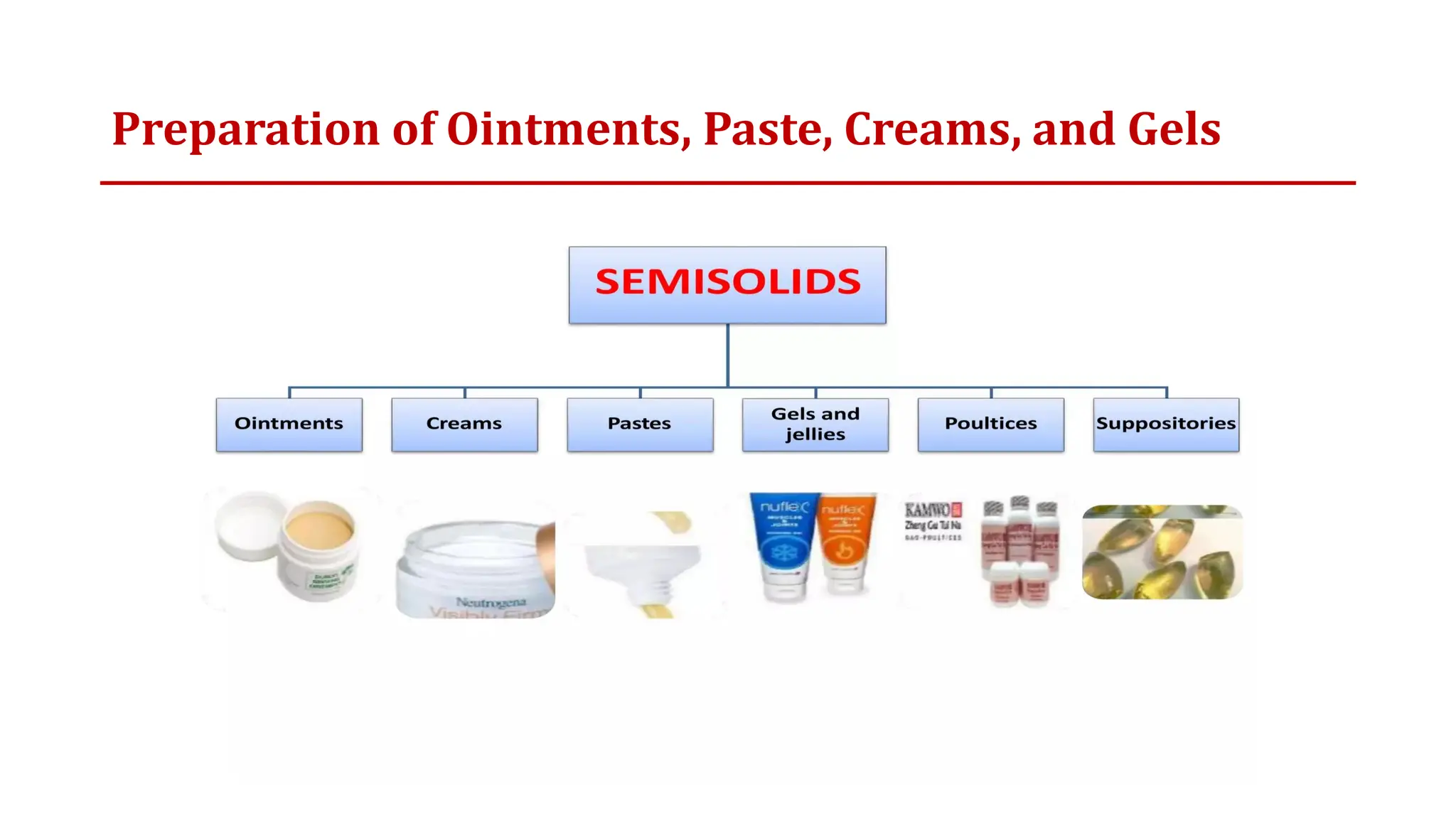
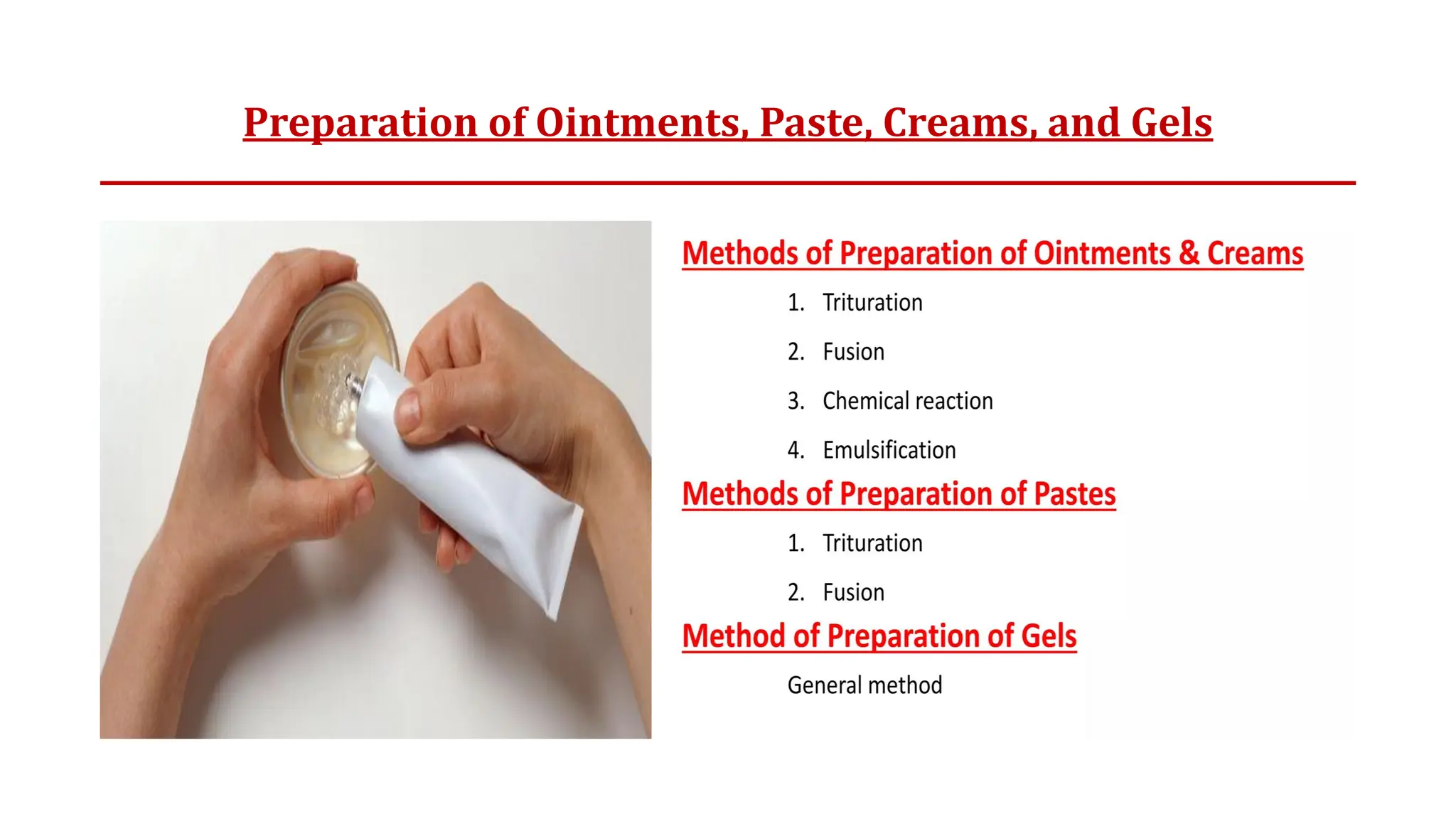
• Preparation of Ointments, Paste, Creams, and Gels
• Evaluation of semi-solid dosage forms.
Definition
• Definition: Semi-solid dosage forms are the dermatological preparations
mainly meant for external application to the skin to produce local or systemic
effect.
• Examples: Ointment, Gel, Suppositories, Paste, Jellies, Creams.
• They contain one or more active ingredients dissolved or uniformly dispersed
in a suitable base and any suitable excipients such as emulsifiers, viscosity
increasing agents, anti microbial agents, antioxidants, or stabilizing agents
etc.
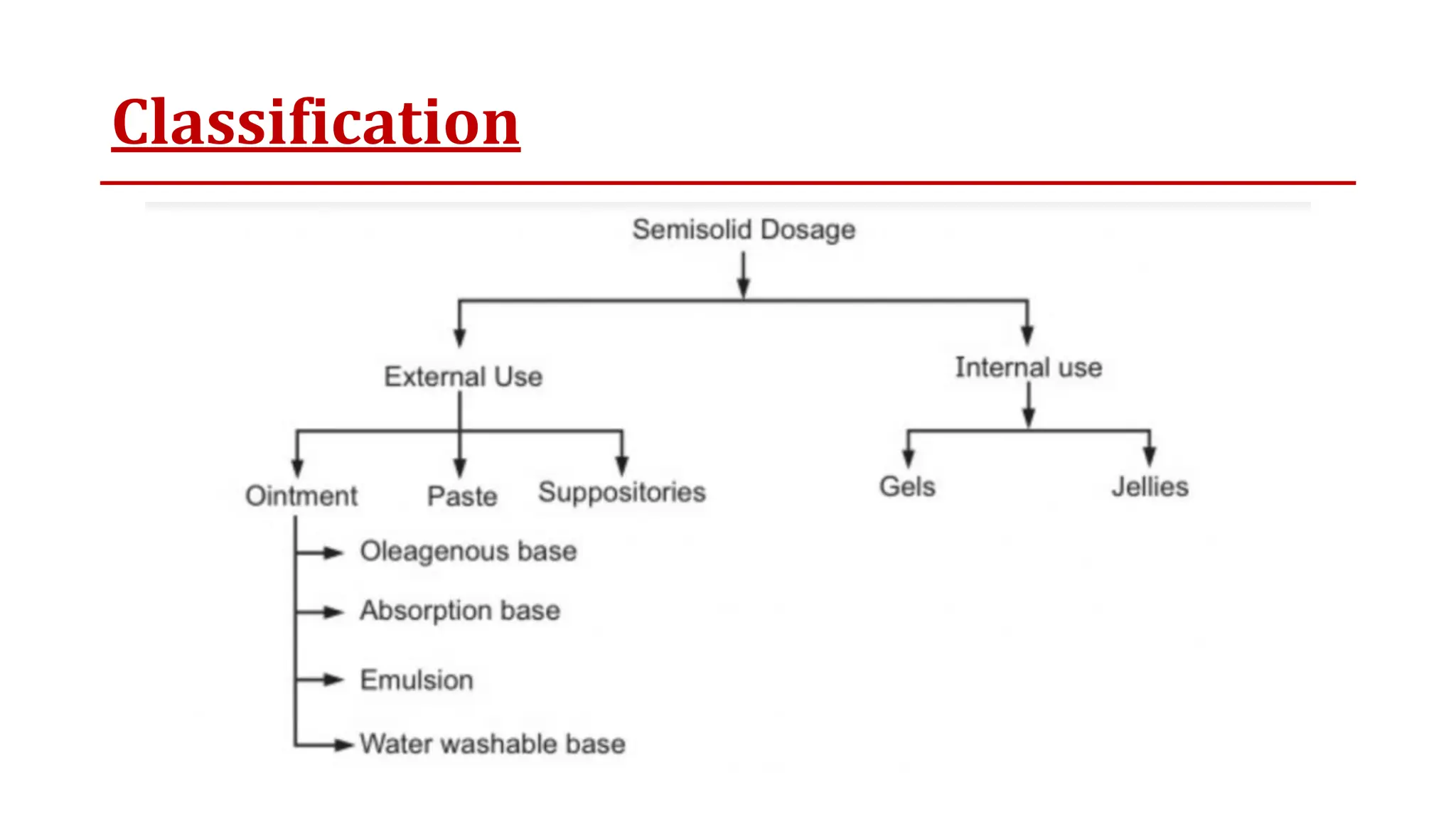
Classification
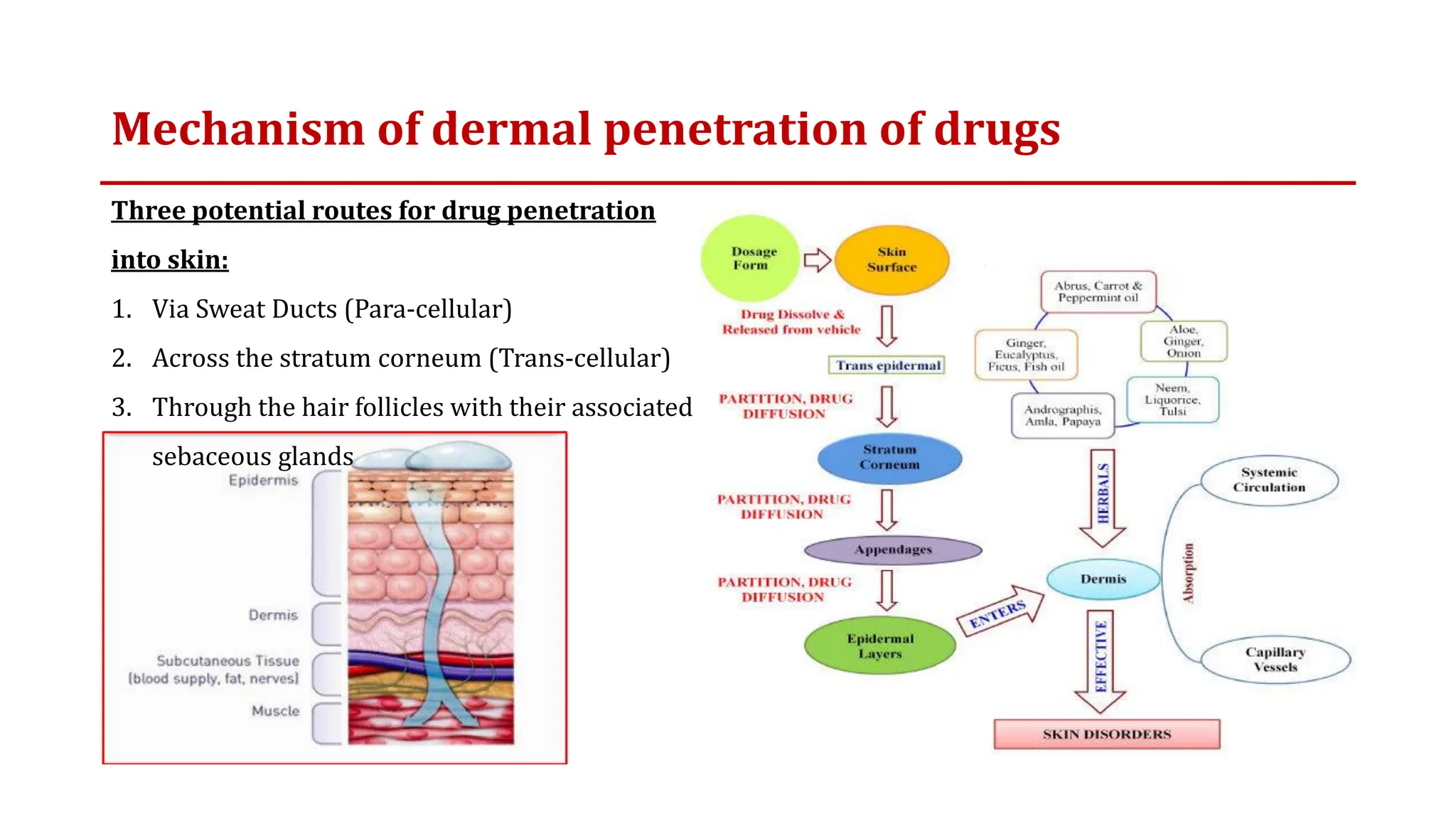
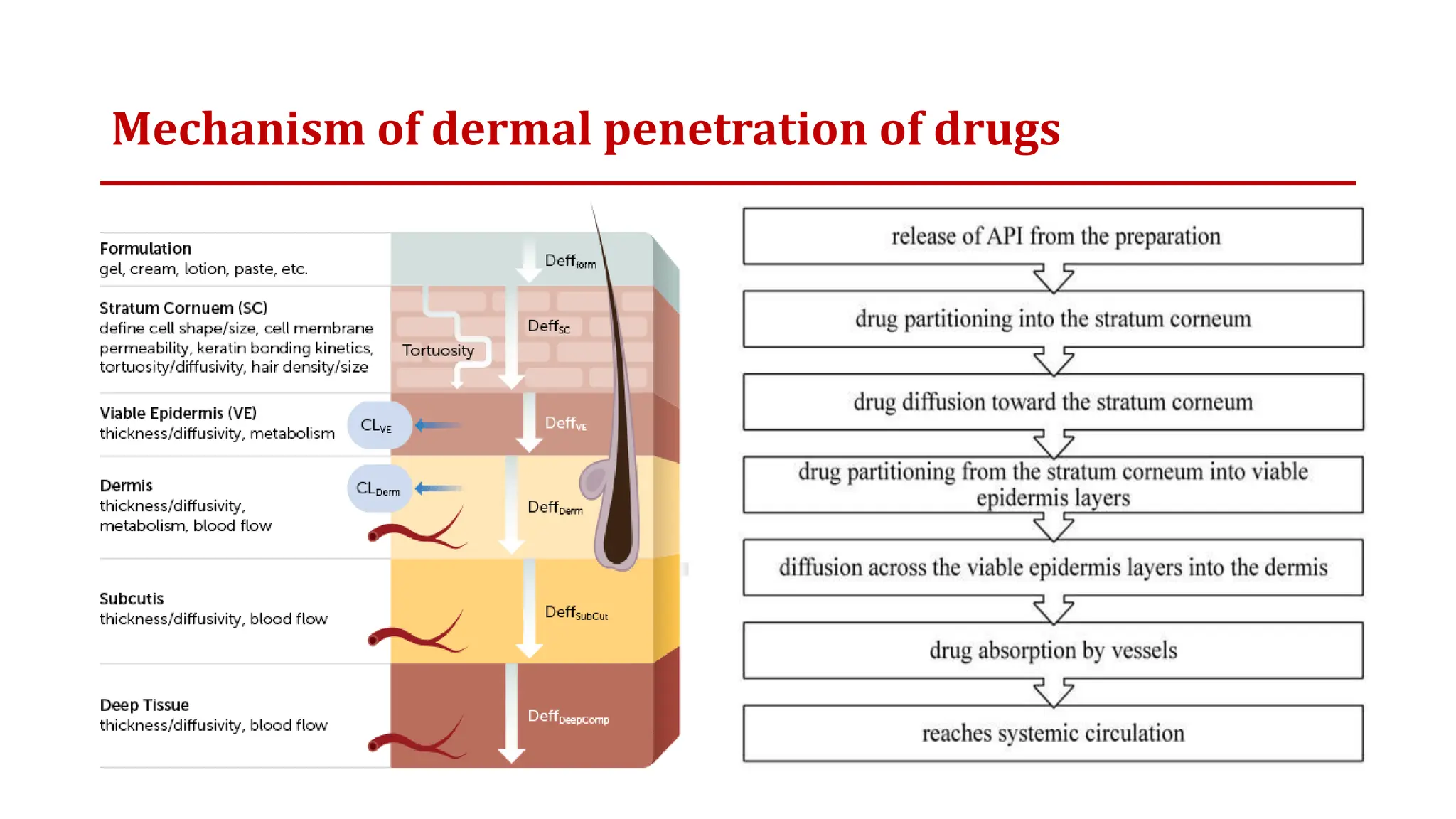
Mechanism of dermal penetration of drugs
Three potential routes for drug penetration
into skin:
1. Via Sweat Ducts (Para-cellular)
2. Across the stratum corneum (Trans-cellular)
3. Through the hair follicles with their associated
sebaceous glands
Mechanism of dermal penetration of drugs
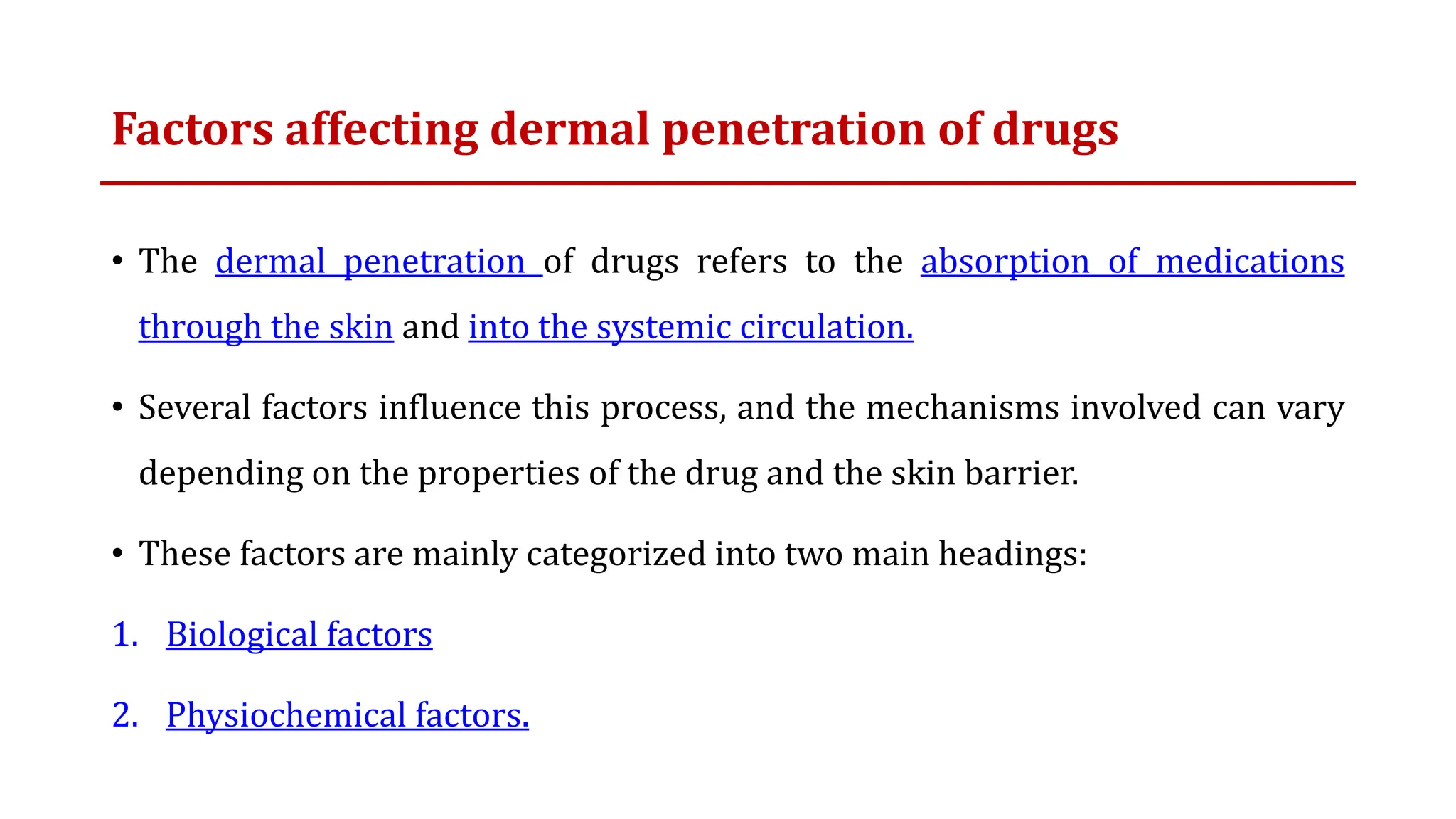
Factors affecting dermal penetration of drugs
• The dermal penetration of drugs refers to the absorption of medications
through the skin and into the systemic circulation.
• Several factors influence this process, and the mechanisms involved can vary
depending on the properties of the drug and the skin barrier.
• These factors are mainly categorized into two main headings:
1. Biological factors
2. Physiochemical factors.
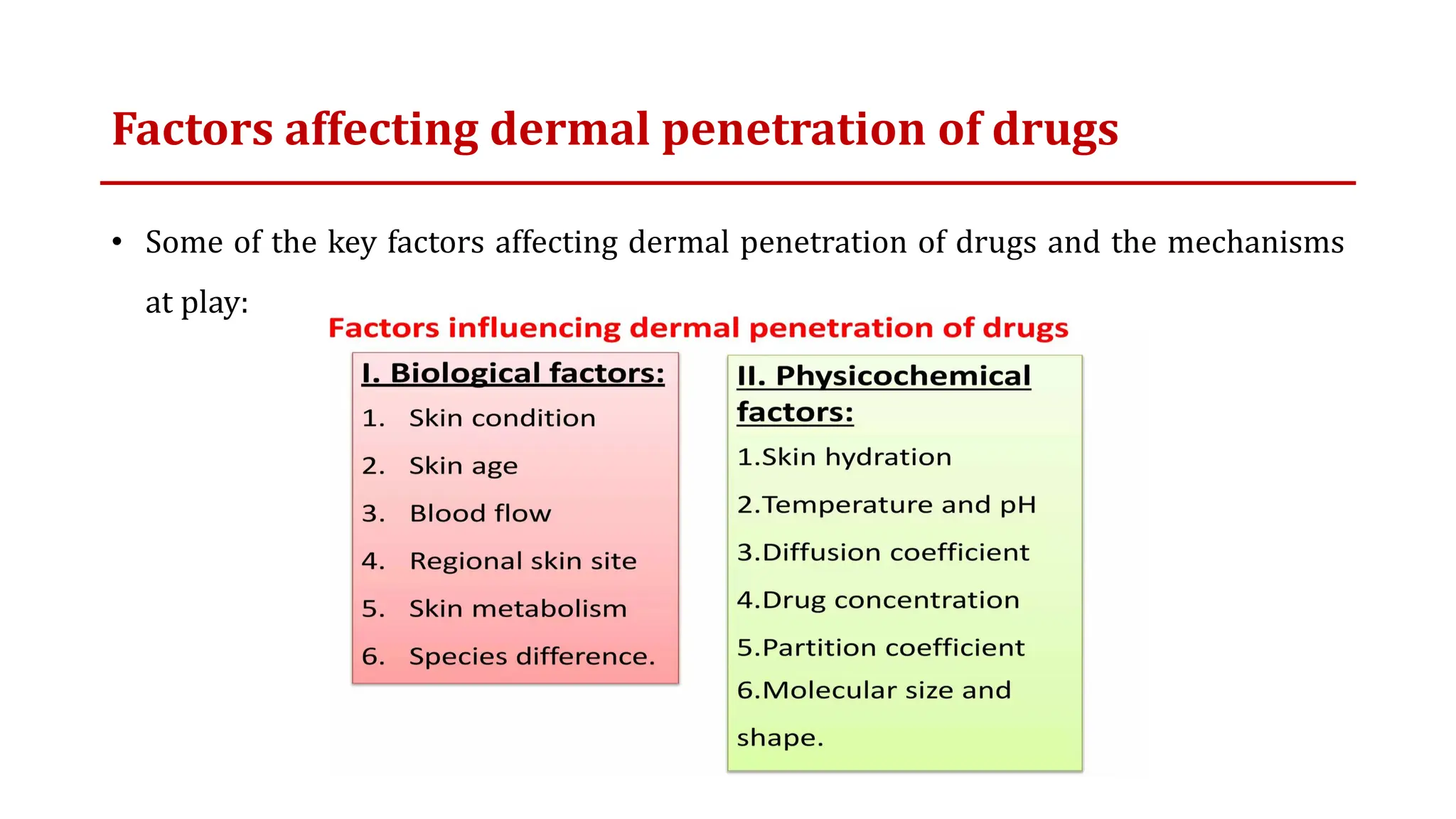
Factors affecting dermal penetration of drugs
• Some of the key factors affecting dermal penetration of drugs and the mechanisms
at play:
Factors affecting dermal penetration of drugs
Biological Factors:
1. Skin condition:
• Thickness: Thinner skin, such as on the face, neck, and flexor surfaces, is generally
more permeable than thicker skin, like the soles of the feet or the palms of the hands.
• Disease alter the skin condition, skin inflamed, with loss of stratum corneum thus
permeability increases.
• Intact and healthy skin is a more effective barrier than compromised or damaged
skin, such as in the case of cuts, burns, or dermatitis
Factors affecting dermal penetration of drugs
2. Skin Age: Skin of young and elder is more permeable than adult tissues.
3. Blood flow: Increase blood flow could reduce the amount of time a penetrant
remains in the dermis, also raise the concentration gradient across the skin.
4. Skin Metabolism: The skin metabolizes steroid hormones, chemical carcinogens,
and some drugs. Skin also metabolizes 5% of topical drugs.
Factors affecting dermal penetration of drugs
Physicochemical Factors:
1. Skin hydration: When the water saturate the skin, the tissue swells, soften. Wrinkles and
hydration of the stratum corneum increases the permeability of the skin.
2. Temperature : The rate of permeation increased exponentially with increasing skin surface
temperature. During the gradually increasing of skin temperature swells the polymer and
sustained release of drug to stratum corneum.
3. Molecular size and shape: Absorption is apparently inversely related to molecular weight.
Small molecules penetrate faster than larger ones. Effect of molecular shape is difficult to
determine as it is related to partition coefficient.
Preparation of Ointments, Paste, Creams, and Gels
Ointments
1. Ointments:
• Definition: Ointments are the topical semi-solid preparations meant for external
application to the skin or mucous membrane to produce local or systemic effect.
• Ointments usually contain a medicament(s) dissolved, suspended or emulsified in an
ointment base.
• They may contain suitable antimicrobial preservative to avoid microbial
contamination.
• The ointments are usually acts as protective or emollient for skin.
Ointments
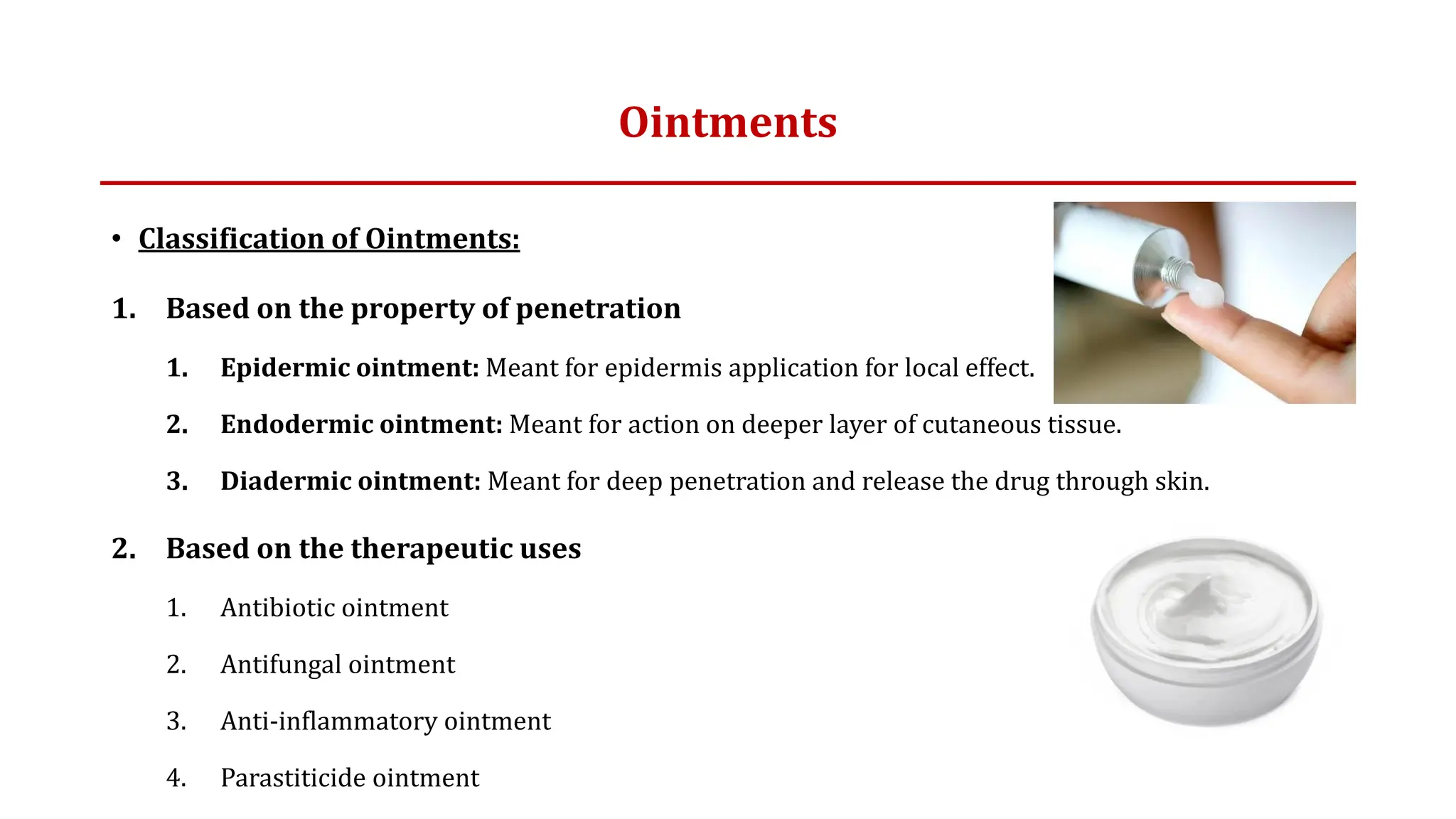
• Classification of Ointments:
1. Based on the property of penetration
1. Epidermic ointment: Meant for epidermis application for local effect.
2. Endodermic ointment: Meant for action on deeper layer of cutaneous tissue.
3. Diadermic ointment: Meant for deep penetration and release the drug through skin.
2. Based on the therapeutic uses
1. Antibiotic ointment
2. Antifungal ointment
3. Anti-inflammatory ointment
4. Parastiticide ointment
Ointments
• Ointment Bases: The ointment base is a substance or part of an ointment, which is
acts as a carrier or vehicle for the medicament.
• While selecting the suitable the ointment various factors are taken into
consideration such as desired action, nature of medicament, stability of ointment etc.
• Hence, an ideal ointment base should possess the following properties:
• It should be inert, smooth and odorless.
• It should be physically and chemically stable.
• It should not retard healing of the wound. It should not produce irritation to the skin.
• It should be compatible with the skin.
Ointments
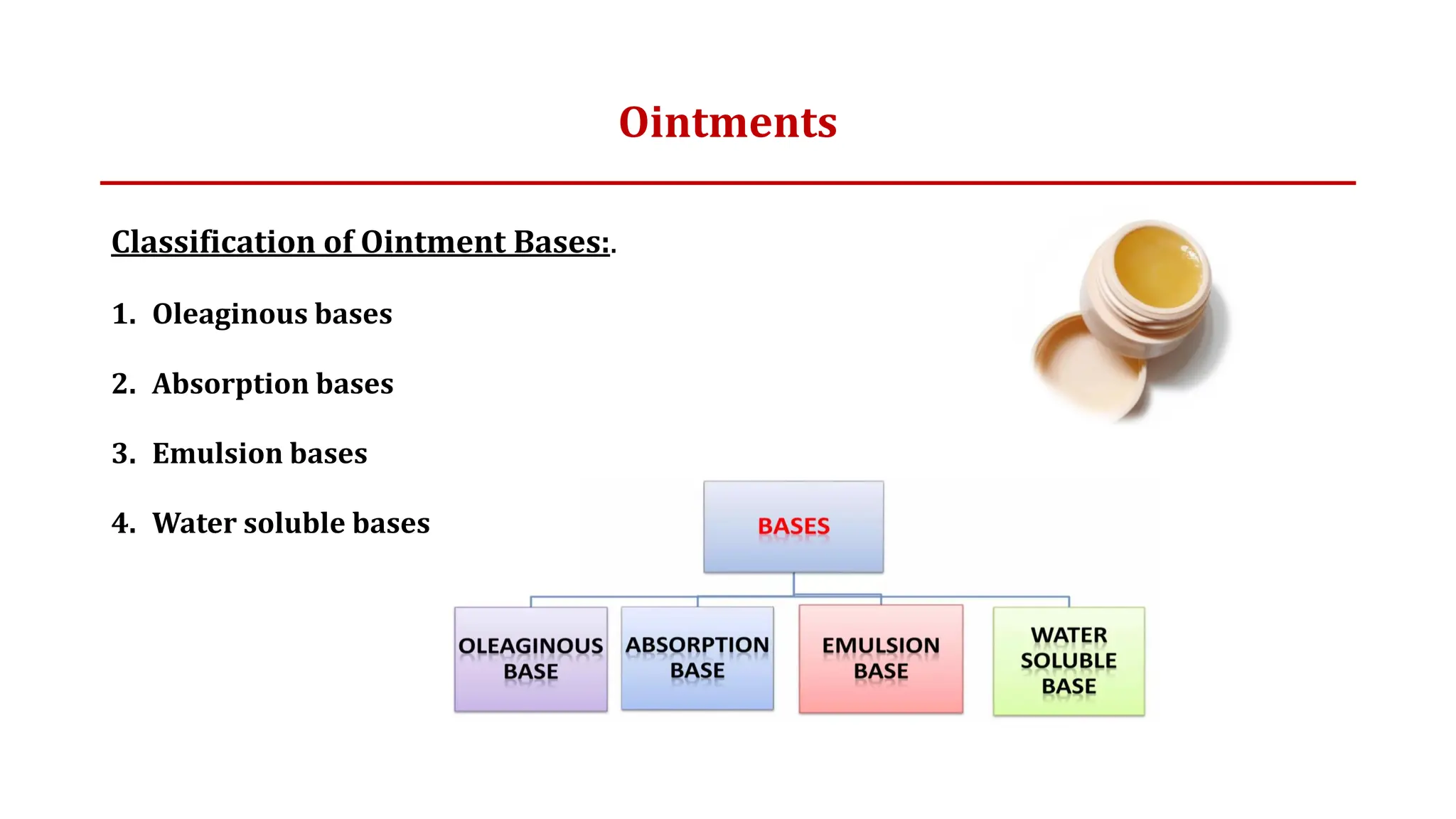
Classification of Ointment Bases:.
1. Oleaginous bases
2. Absorption bases
3. Emulsion bases
4. Water soluble bases
Ointments
1. Oleaginous bases:
• Oleaginous bases are also termed as hydrocarbon bases, on application to the skin they have an
emollient and protective effect.
• It is difficult to remove hydrocarbon bases from skin due to their oily nature.
• These bases consist of vegetable oils, animal fats and waxes.
• Examples of these bases includes; soft paraffin, hard paraffin, and liquid paraffin (mineral oils).
• Petrolatum (Soft Paraffin):
• It is purified mixture of semi-solid hydrocarbons obtained form petroleum.
• It is available in two varieties namely, yellow soft paraffin and white soft paraffin.
• Both of these having melting point between 38-56 o C.
Ointments
• Hard paraffin:
• It is purified mixture of solid hydrocarbons obtained form petrolatum.
• It is colorless or white, translucent, odorless and tasteless wax like substance.
• It is used to harden or soften the ointment base.
• Liquid paraffin:
• It consist of mixture of liquid hydrocarbons and obtained from petroleum by distillation.
• It is also known as liquid petroleum or mineral oil.
• It is colorless, odorless, tasteless and transparent oily liquid.
The oleaginous bases are loosing their importance nowadays due to reasons like, their greasy
and sticky nature, do not helpful in absorption of medicaments.
Ointments
2. Absorption bases:
• These are generally anhydrous substances having property of absorbing considerable
amount of water but still retaining their ointment-like consistency.
• They are of two types: Non-emulsified bases and Water in oil emulsions.
• The non-emulsified bases absorb water and aqueous solutions producing w/o emulsion.
• Examples of non-emulsified bases: wool fat, wool alcohol, and beeswax.
• The water in oil emulsion are capable of absorbing more water. Examples: Hydrous wool fat
(lanolin).
Ointments
• Wool fat
• It is purified fat-like substance obtained from the wool of sheep. Also k/a anhydrous
lanolin.
• It can absorb 50% of its weight of water. It is important constituent for simple ointment
base and eye ointment base.
• Hydrous wool fat (Lanolin)
• It is purified fat-like substance obtained from the wool of sheep. It is also know as lanolin.
• It is insoluble in water but soluble in ether and chloroform.
• It consist of 70% w/w wool fat and 30% w/w purified water.
Ointments
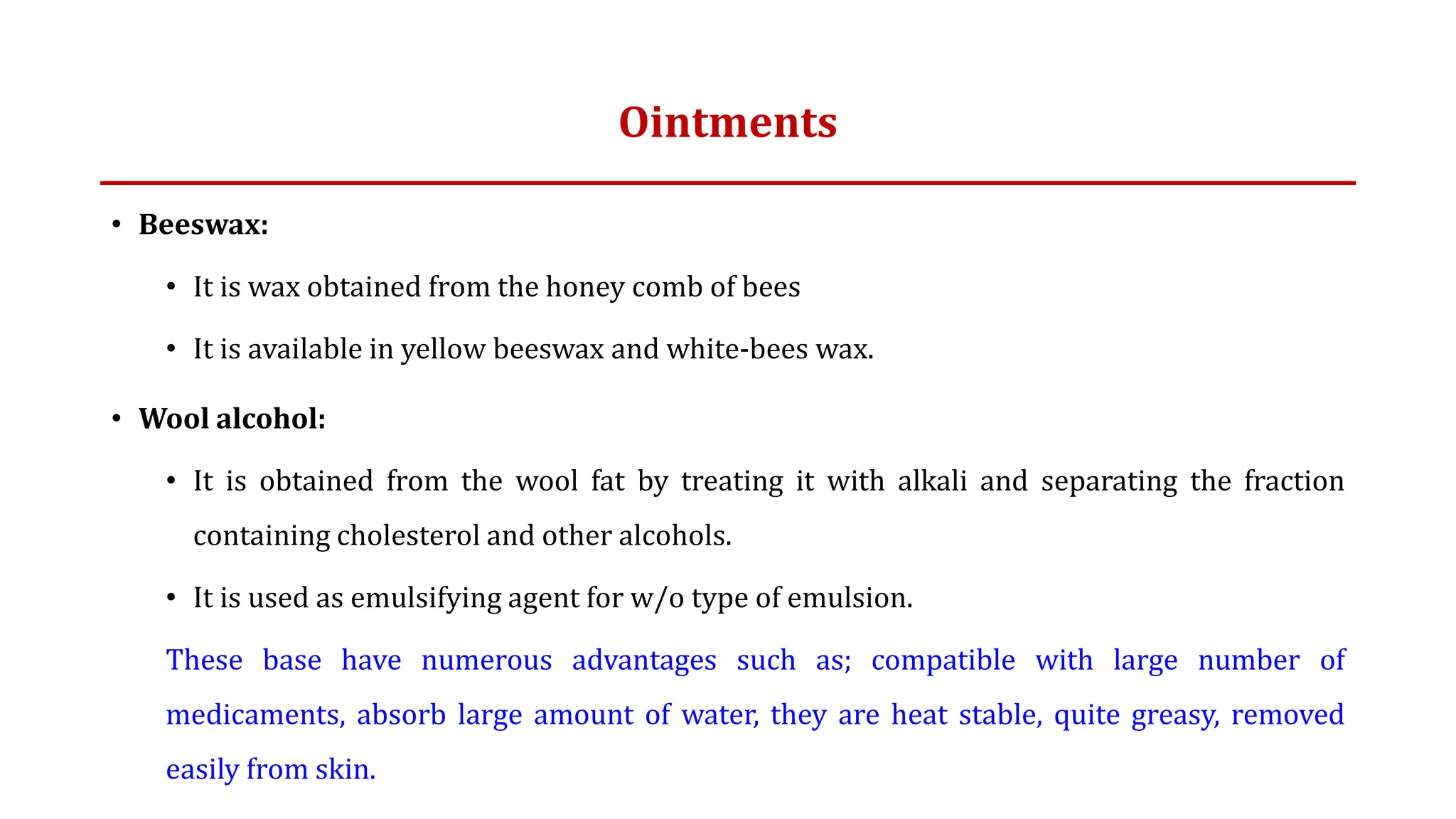
• Beeswax:
• It is wax obtained from the honey comb of bees
• It is available in yellow beeswax and white-bees wax.
• Wool alcohol:
• It is obtained from the wool fat by treating it with alkali and separating the fraction
containing cholesterol and other alcohols.
• It is used as emulsifying agent for w/o type of emulsion.
These base have numerous advantages such as; compatible with large number of
medicaments, absorb large amount of water, they are heat stable, quite greasy, removed
easily from skin.
Ointments
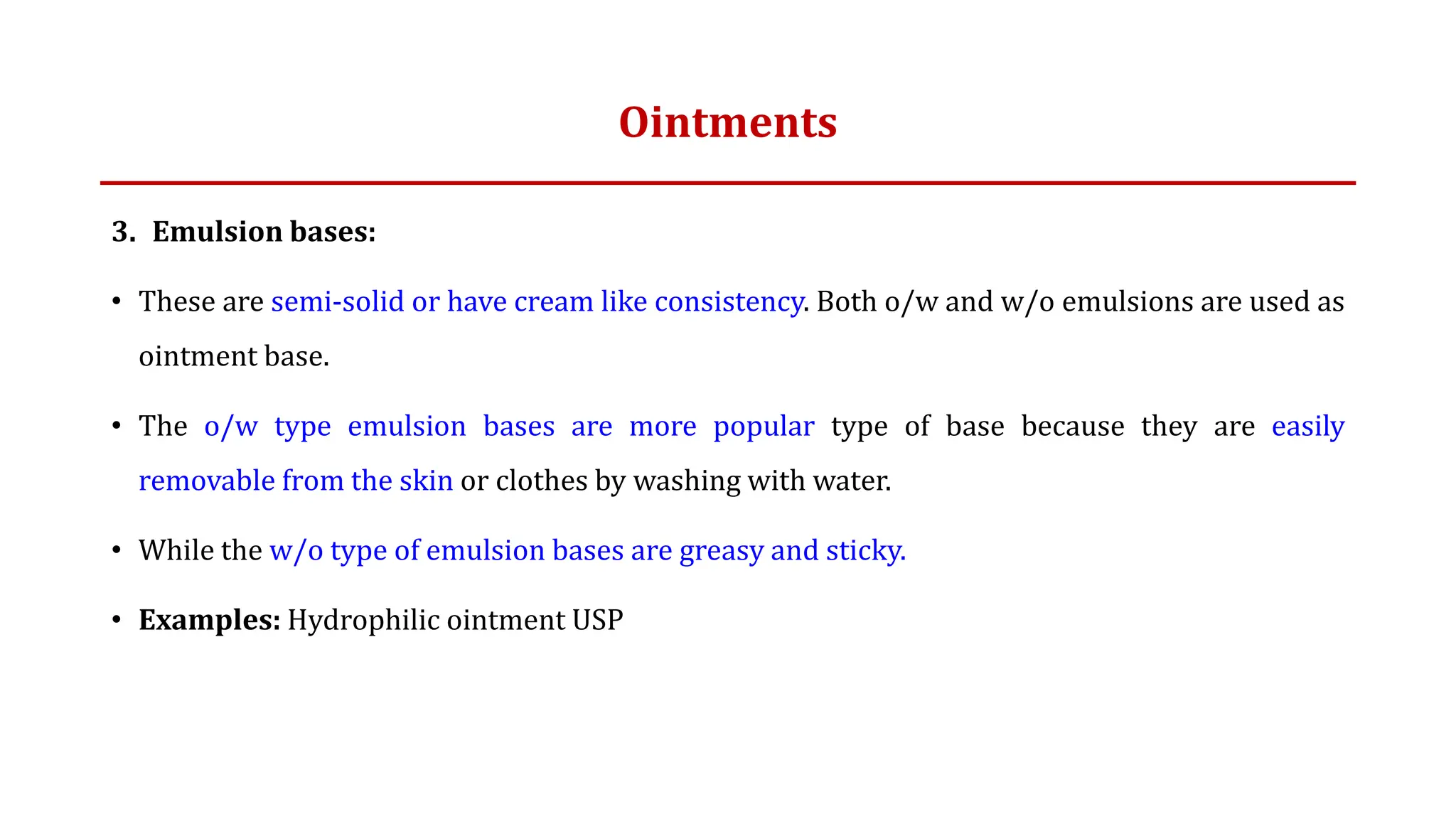
3. Emulsion bases:
• These are semi-solid or have cream like consistency. Both o/w and w/o emulsions are used as
ointment base.
• The o/w type emulsion bases are more popular type of base because they are easily
removable from the skin or clothes by washing with water.
• While the w/o type of emulsion bases are greasy and sticky.
• Examples: Hydrophilic ointment USP
Ointments
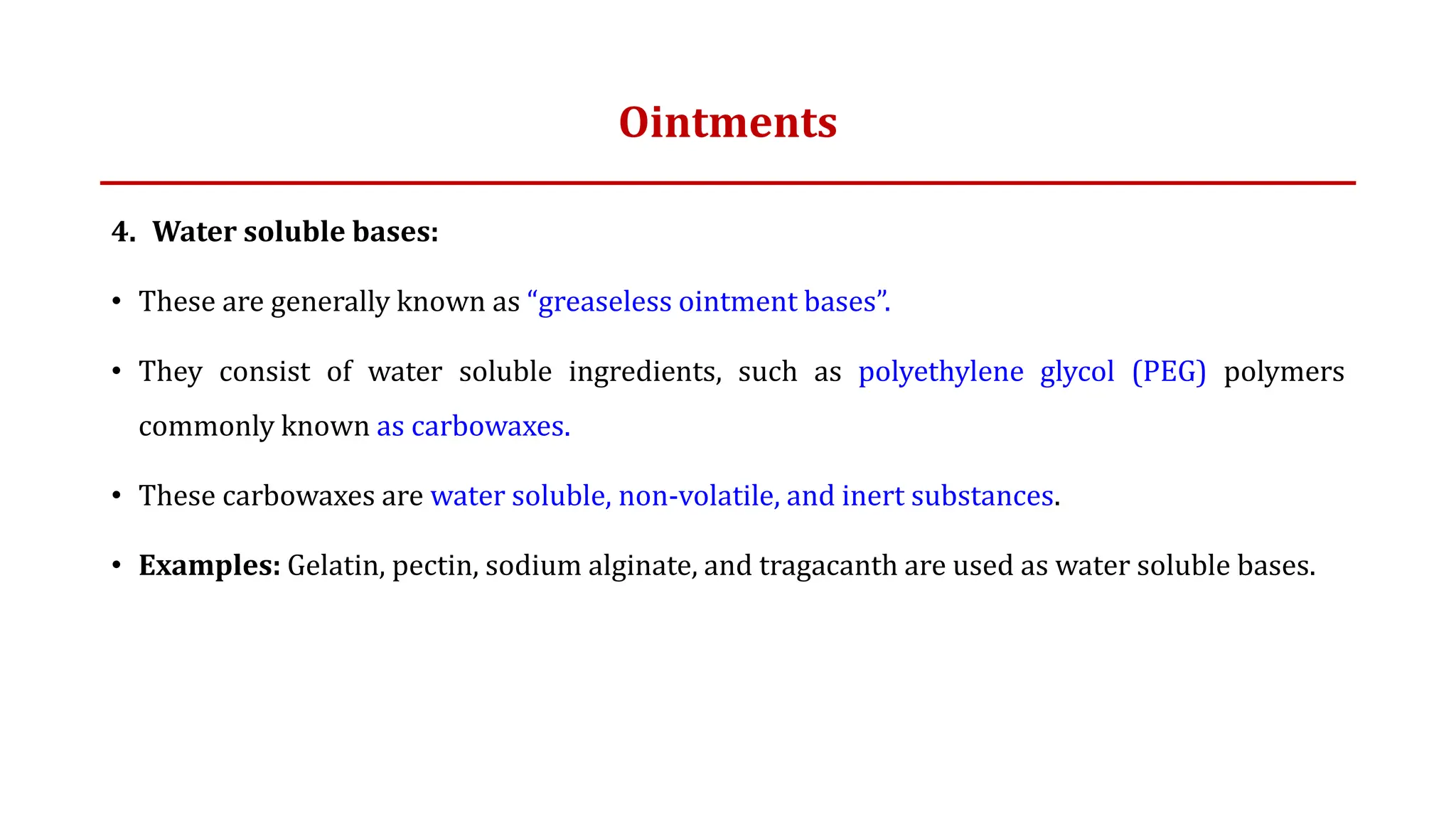
4. Water soluble bases:
• These are generally known as “greaseless ointment bases”.
• They consist of water soluble ingredients, such as polyethylene glycol (PEG) polymers
commonly known as carbowaxes.
• These carbowaxes are water soluble, non-volatile, and inert substances.
• Examples: Gelatin, pectin, sodium alginate, and tragacanth are used as water soluble bases.
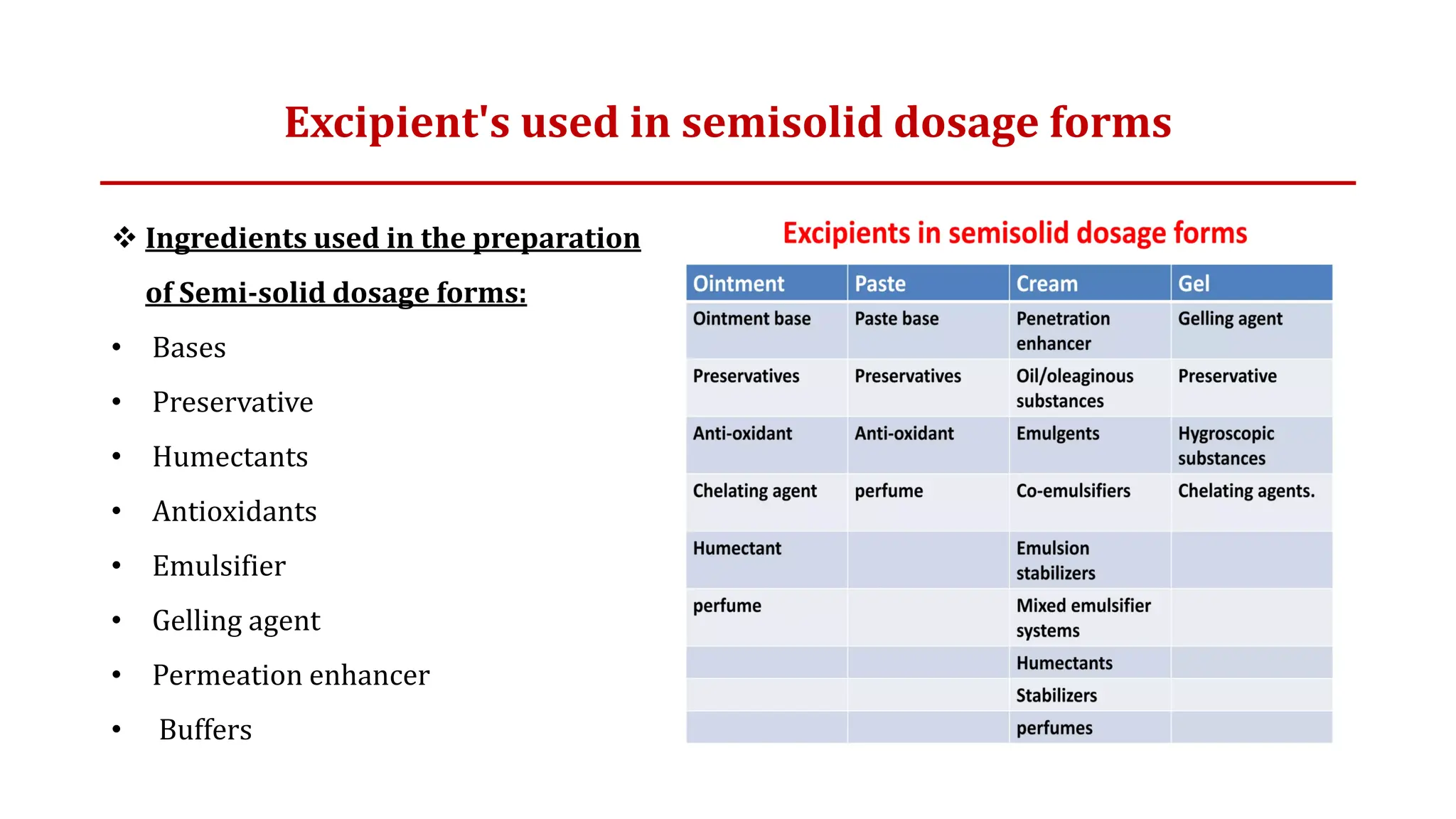
Excipient's used in semisolid dosage forms
 Ingredients used in the preparation
of Semi-solid dosage forms:
• Bases
• Preservative
• Humectants
• Antioxidants
• Emulsifier
• Gelling agent
• Permeation enhancer
• Buffers
Preparation of Ointments, Paste, Creams, and Gels
Preparation of Ointments, Creams and Paste
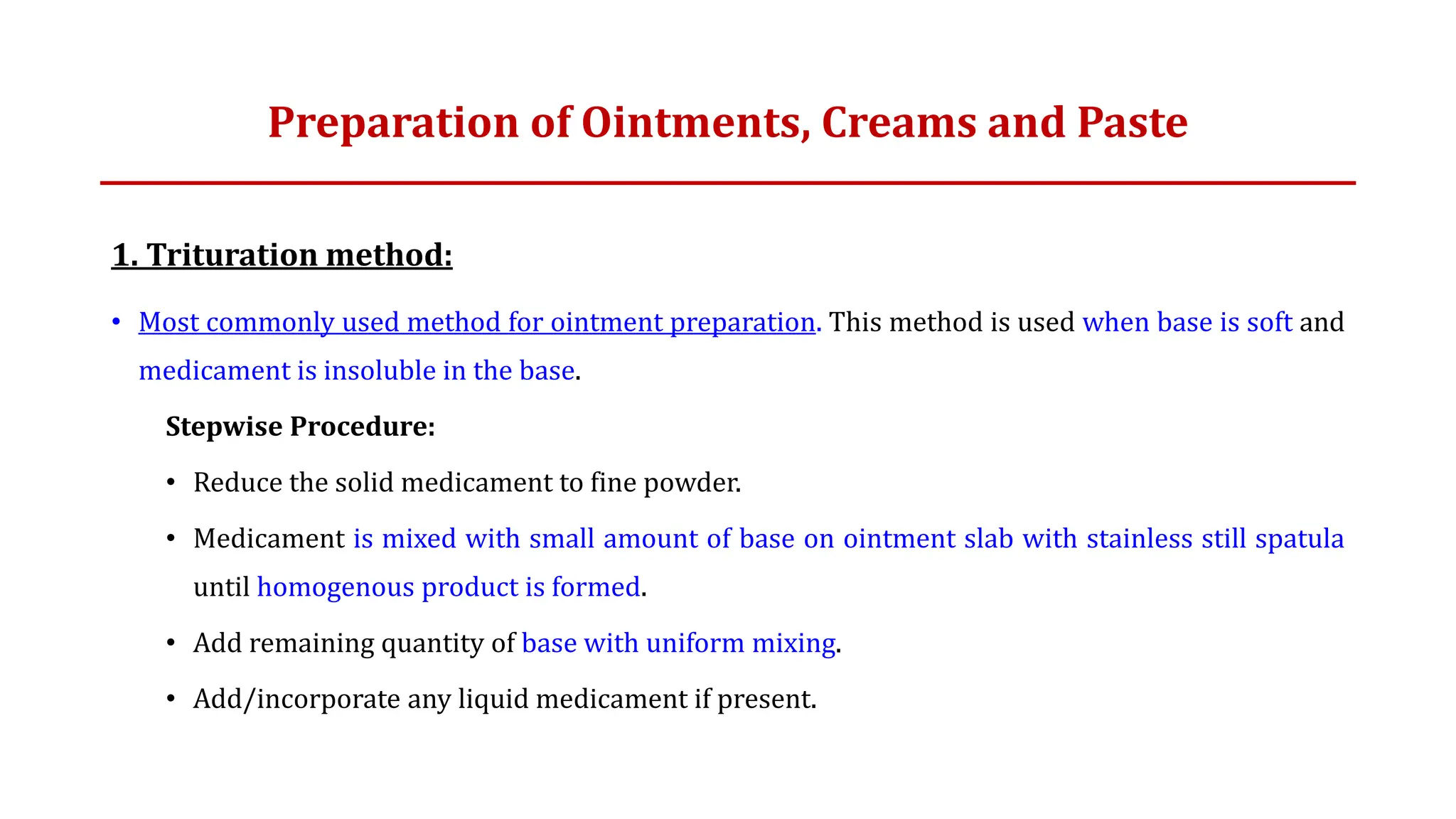
1. Trituration method:
• Most commonly used method for ointment preparation. This method is used when base is soft and
medicament is insoluble in the base.
Stepwise Procedure:
• Reduce the solid medicament to fine powder.
• Medicament is mixed with small amount of base on ointment slab with stainless still spatula
until homogenous product is formed.
• Add remaining quantity of base with uniform mixing.
• Add/incorporate any liquid medicament if present.
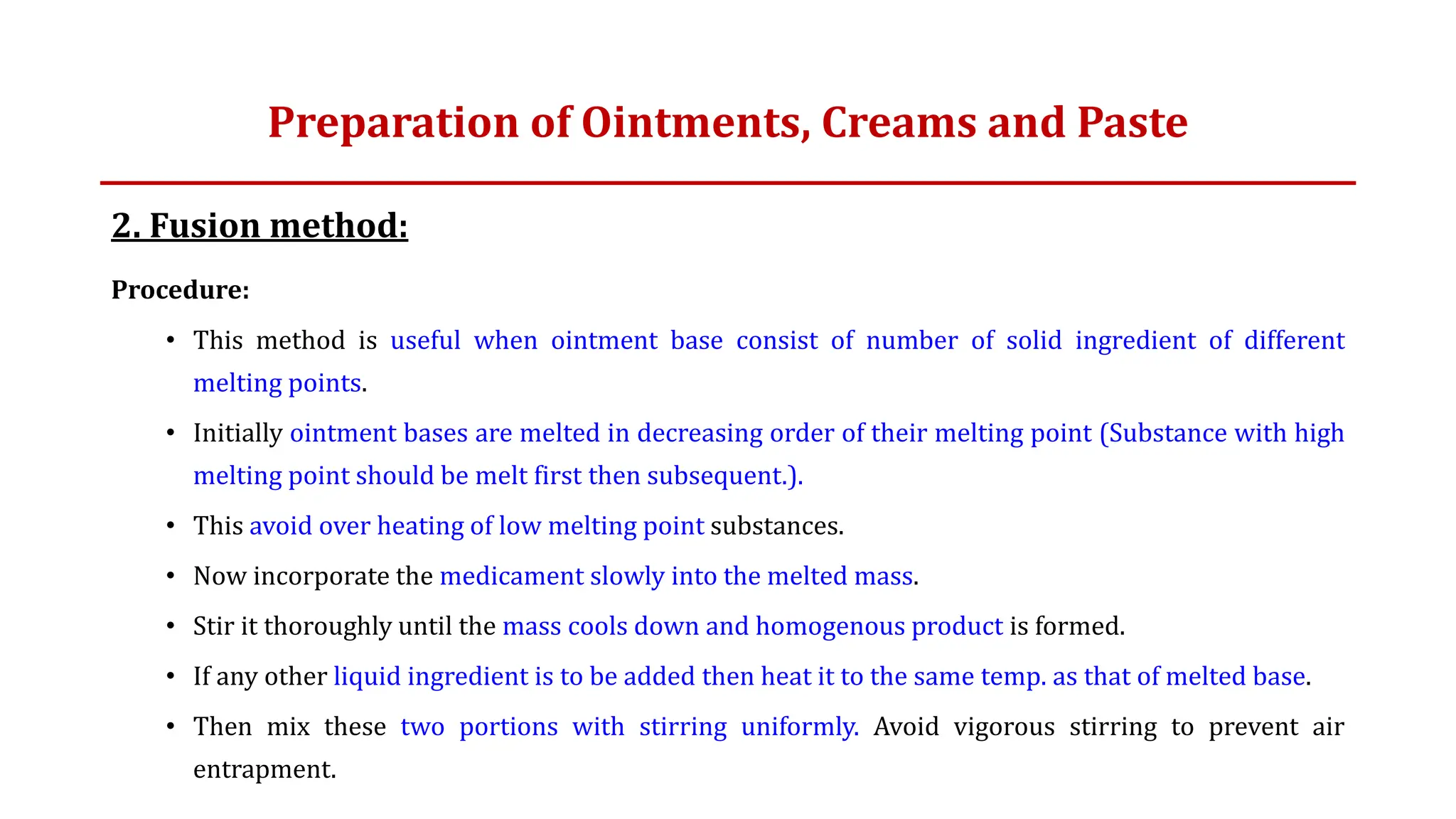
2. Fusion method:
Procedure:
• This method is useful when ointment base consist of number of solid ingredient of different
melting points.
• Initially ointment bases are melted in decreasing order of their melting point (Substance with high
melting point should be melt first then subsequent.).
• This avoid over heating of low melting point substances.
• Now incorporate the medicament slowly into the melted mass.
• Stir it thoroughly until the mass cools down and homogenous product is formed.
• If any other liquid ingredient is to be added then heat it to the same temp. as that of melted base.
• Then mix these two portions with stirring uniformly. Avoid vigorous stirring to prevent air
entrapment.
Preparation of Ointments, Creams and Paste
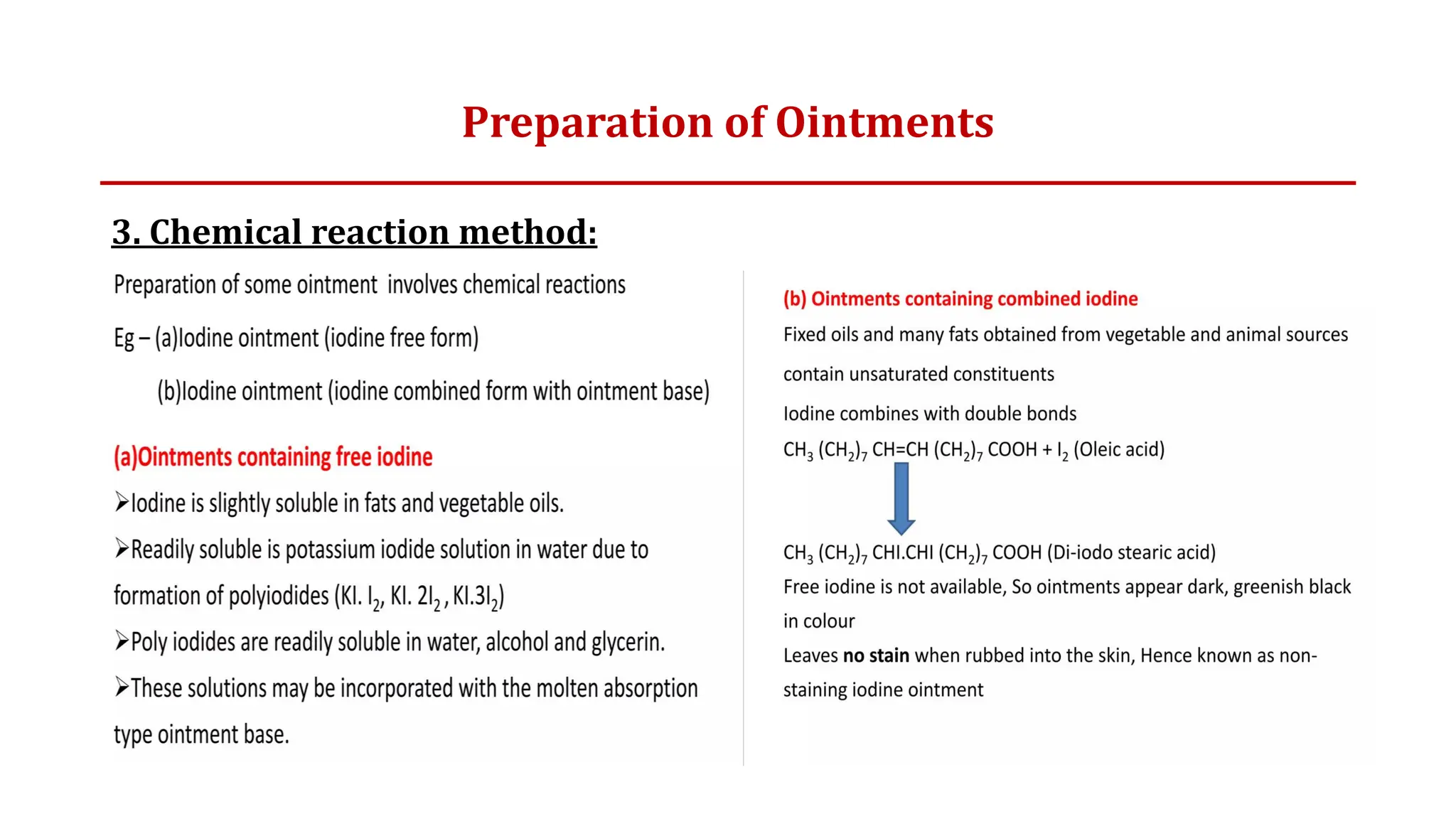
3. Chemical reaction method:
Preparation of Ointments
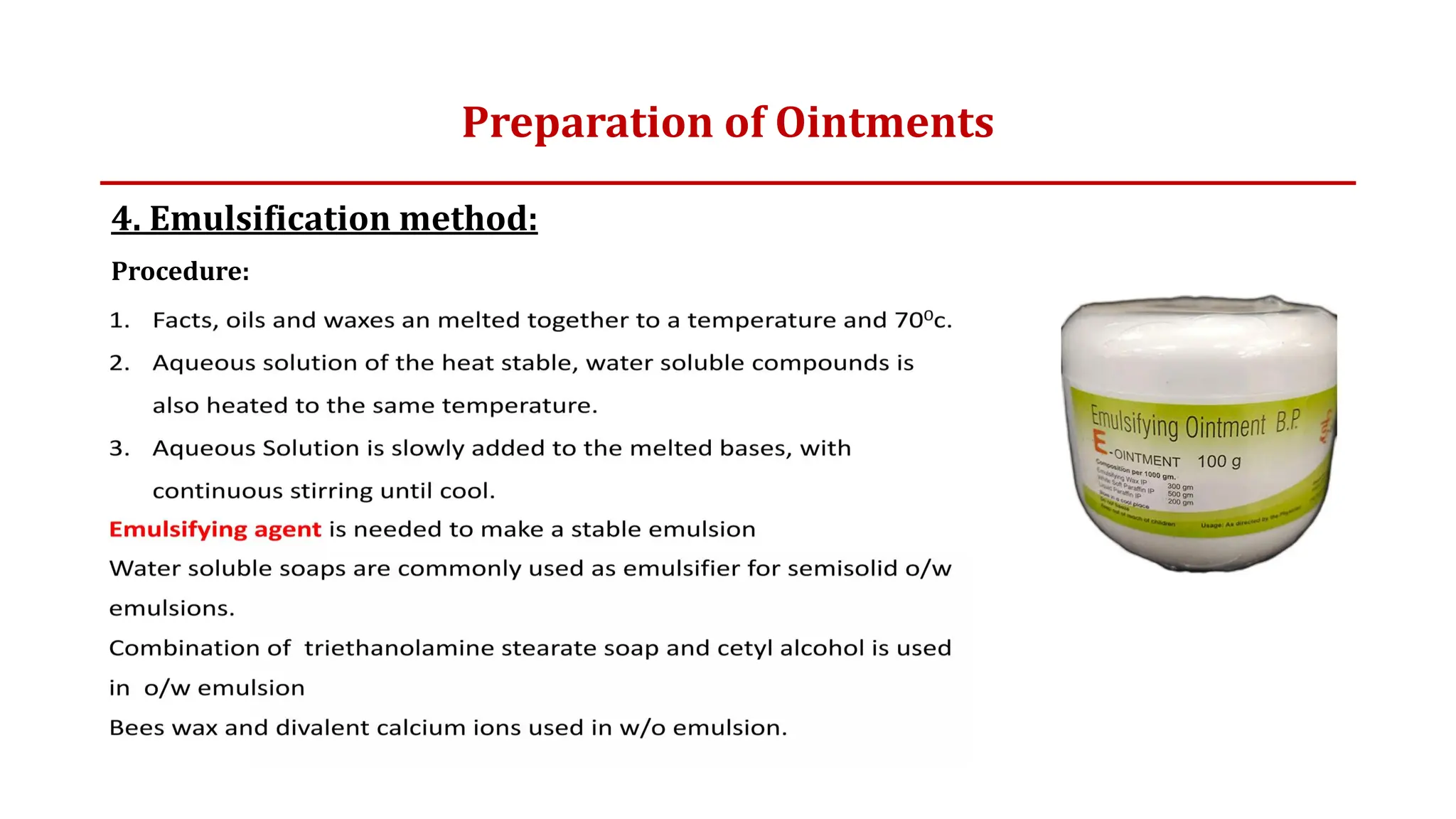
4. Emulsification method:
Procedure:
Preparation of Ointments
• Containers: Ointments are dispensed in glass or plastic jars having screw
caps with impermeable liners. Amber colored glass containers are used for
ointments containing light sensitive drugs. Nowadays, ointments are
generally supplied in plastic or metallic collapsible tubes.
• Labeling: The ointment container should be labelled “for external use only”
• Storage: Ointments should be store in cool and dry place. Protected from the
sunlight and higher temperature.
Container, Labeling and Storage of Ointments
Creams
• Creams: Creams are the viscous semi-solid emulsions which are meant for
external application to the skin.
• They usually contain water soluble base due to which they can be easily
removed from the skin.
• They are softer and light weight in comparison to ointment
• They are of two types: Aqueous creams and Oily creams.
Creams
• Aqueous creams: In aqueous creams, the emulsions are o/w type. These
creams are relatively non-greasy than oily creams.
• They are further classified in various heading depending upon emulsifying
agent used for preparing them.
• Anionic emulsifying wax cream
• Cationic emulsifying wax cream
• Non-anionic emulsifying wax creams
Creams
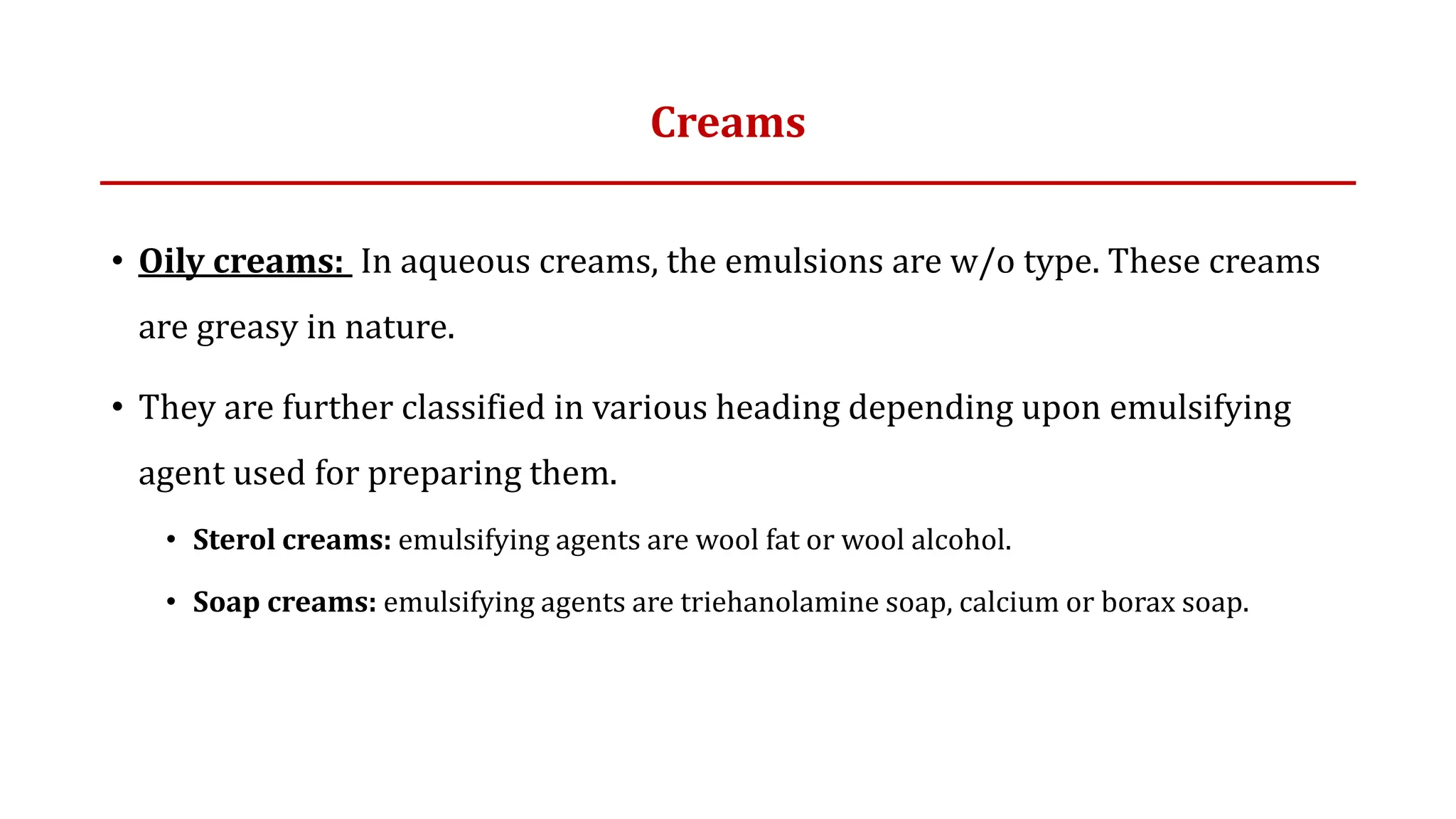
• Oily creams: In aqueous creams, the emulsions are w/o type. These creams
are greasy in nature.
• They are further classified in various heading depending upon emulsifying
agent used for preparing them.
• Sterol creams: emulsifying agents are wool fat or wool alcohol.
• Soap creams: emulsifying agents are triehanolamine soap, calcium or borax soap.
Creams
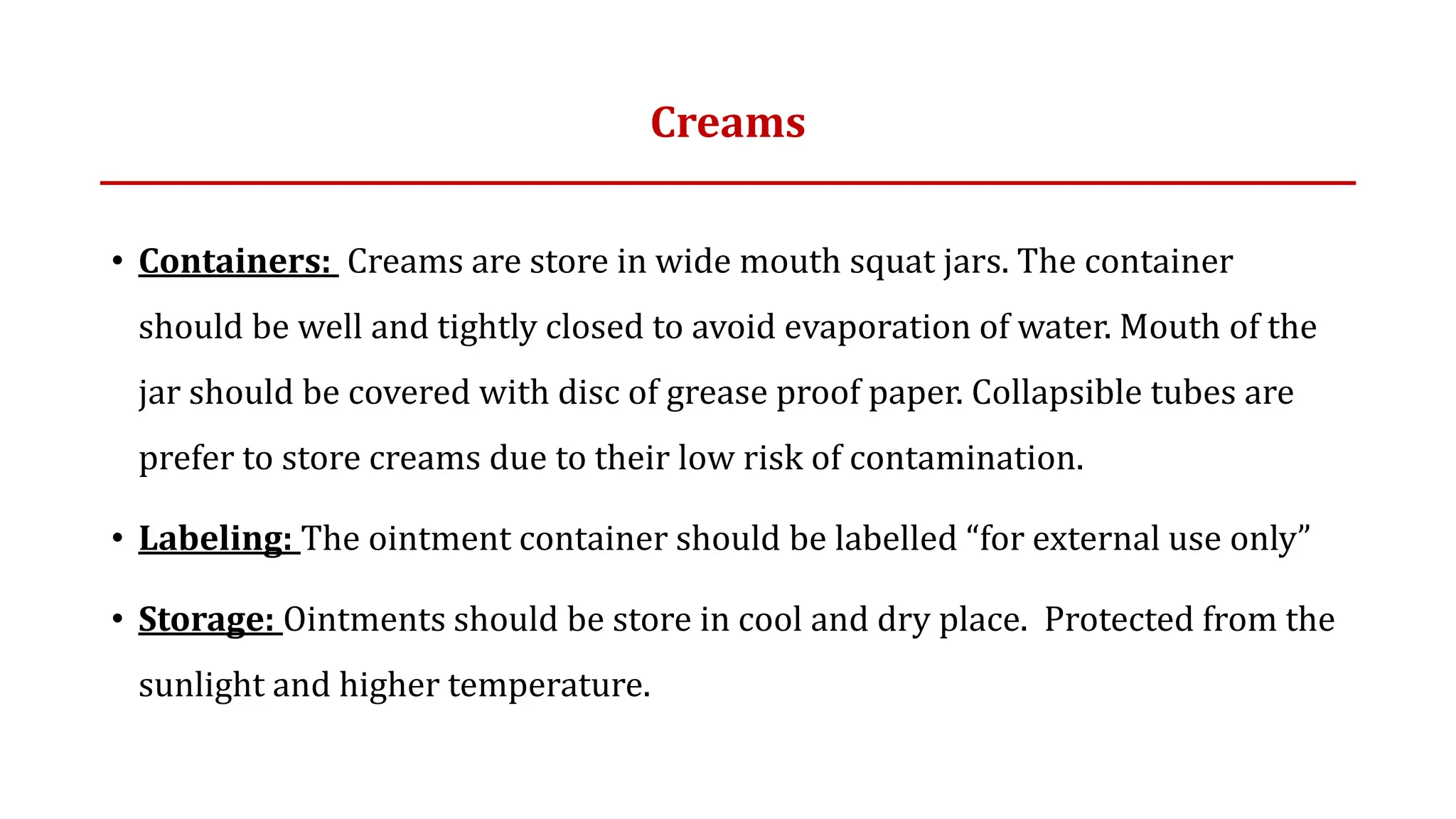
• Containers: Creams are store in wide mouth squat jars. The container
should be well and tightly closed to avoid evaporation of water. Mouth of the
jar should be covered with disc of grease proof paper. Collapsible tubes are
prefer to store creams due to their low risk of contamination.
• Labeling: The ointment container should be labelled “for external use only”
• Storage: Ointments should be store in cool and dry place. Protected from the
sunlight and higher temperature.
Paste
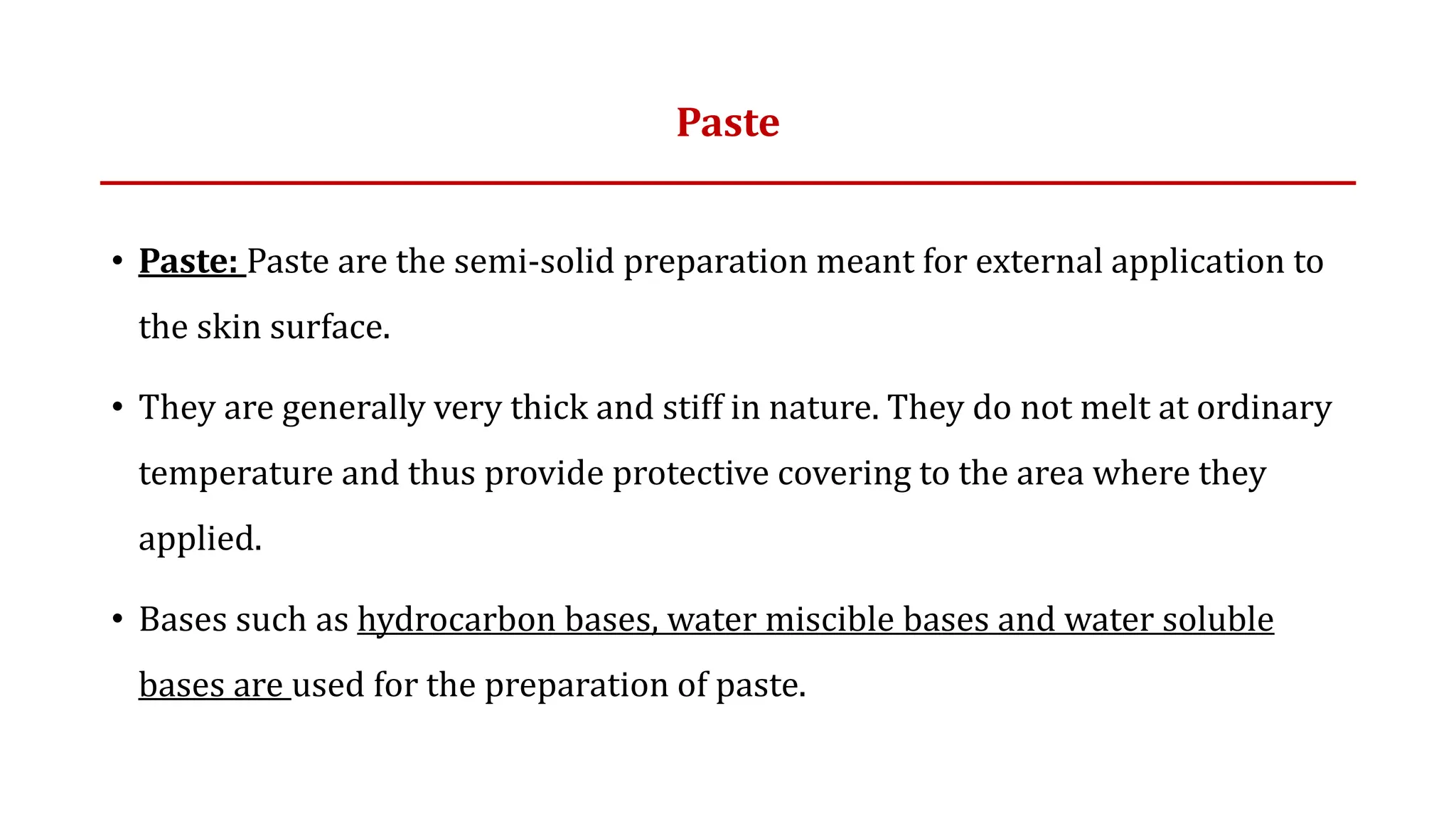
• Paste: Paste are the semi-solid preparation meant for external application to
the skin surface.
• They are generally very thick and stiff in nature. They do not melt at ordinary
temperature and thus provide protective covering to the area where they
applied.
• Bases such as hydrocarbon bases, water miscible bases and water soluble
bases are used for the preparation of paste.
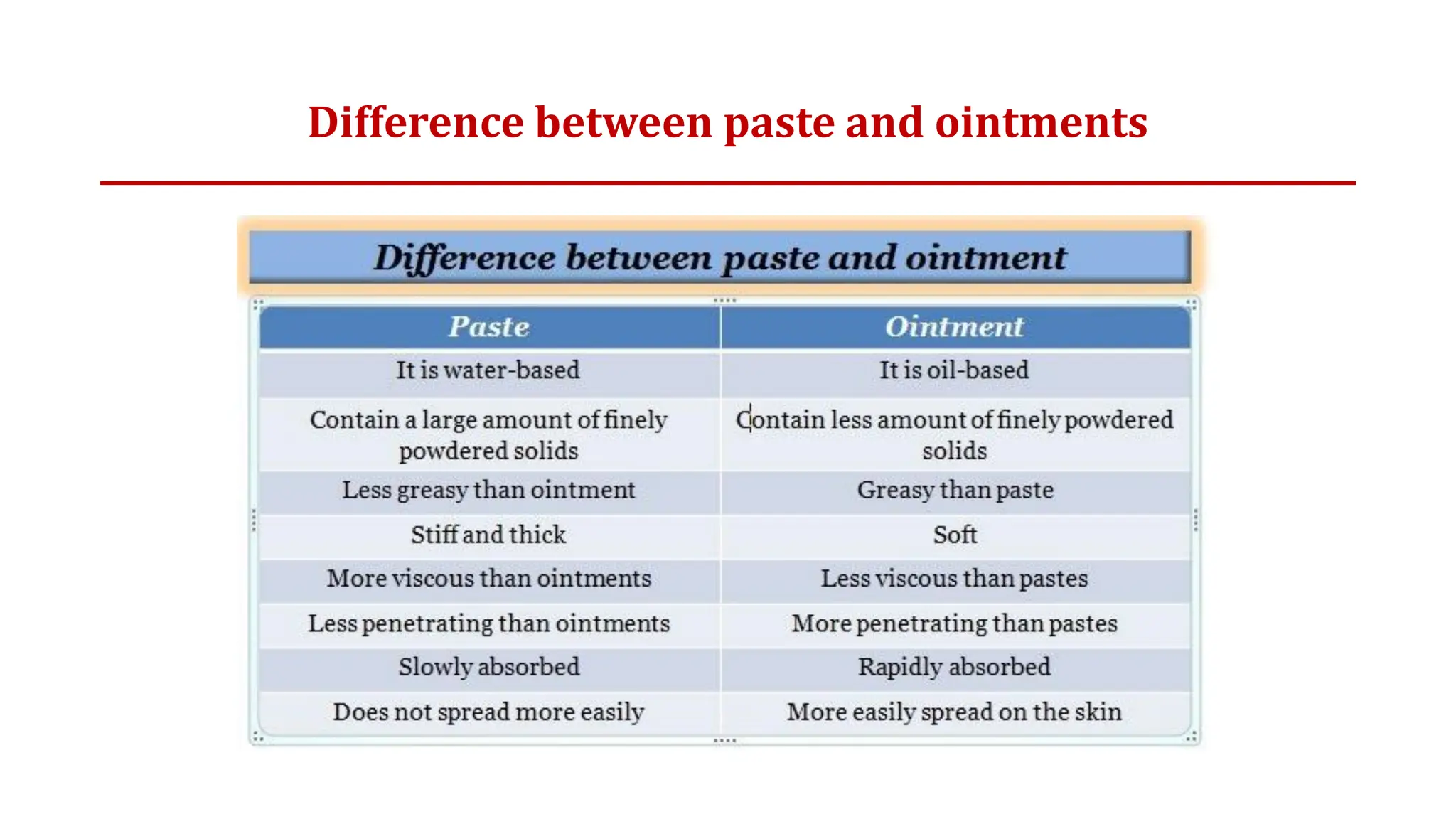
Difference between paste and ointments
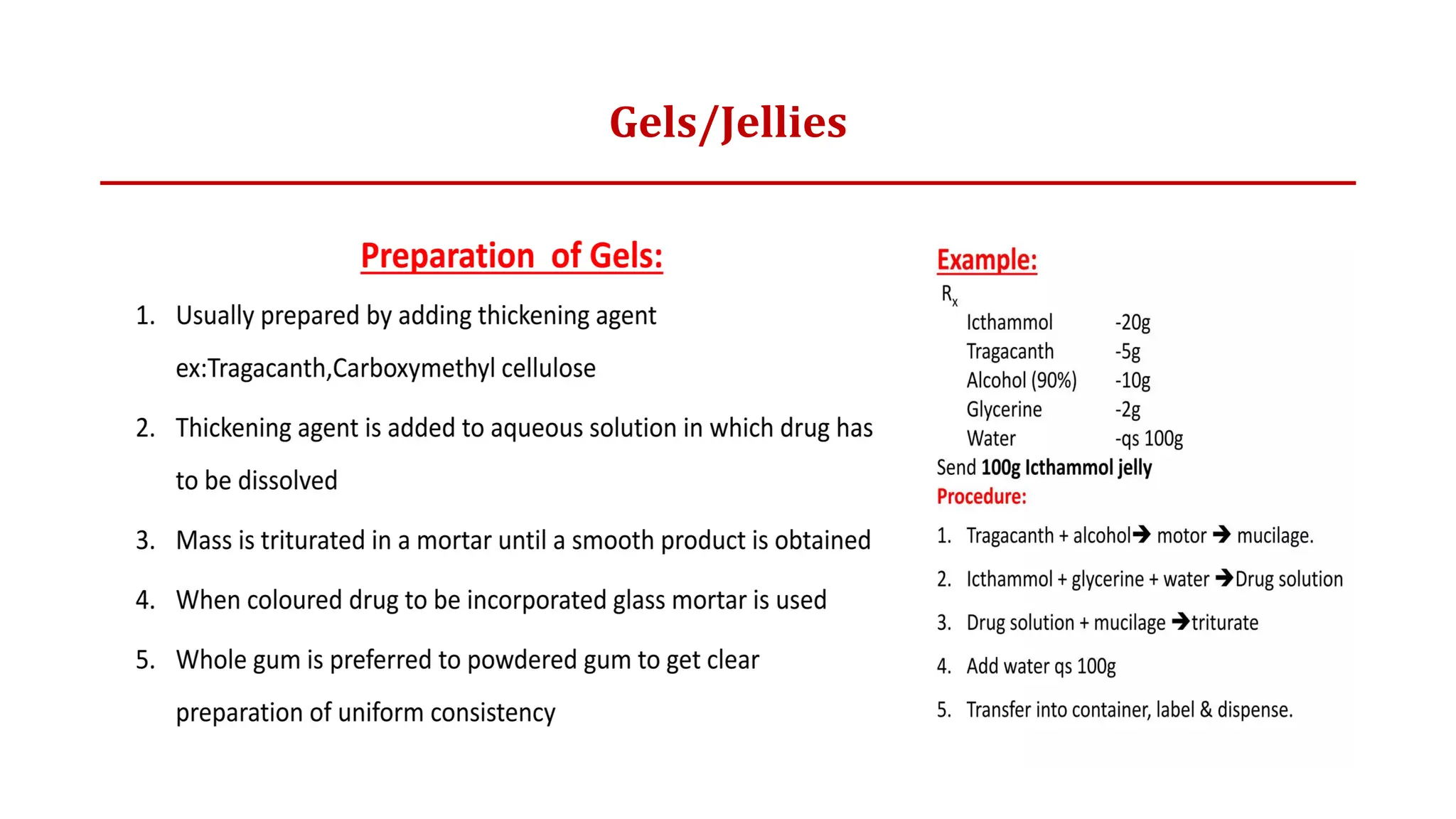
Gels/Jellies
• Gels/Jellies: Gels/jellies are the transparent or translucent non-greasy,
semisolid preparations meant for external application to the skin or mucous
membrane.
• They are generally prepared from natural gums such as pectin, sodium
alginate or from synthetic derivatives such as methyl cellulose.
• Types of jellies: Medicate jellies, Lubricating jellies, and Miscellaneous jellies.
Gels/Jellies
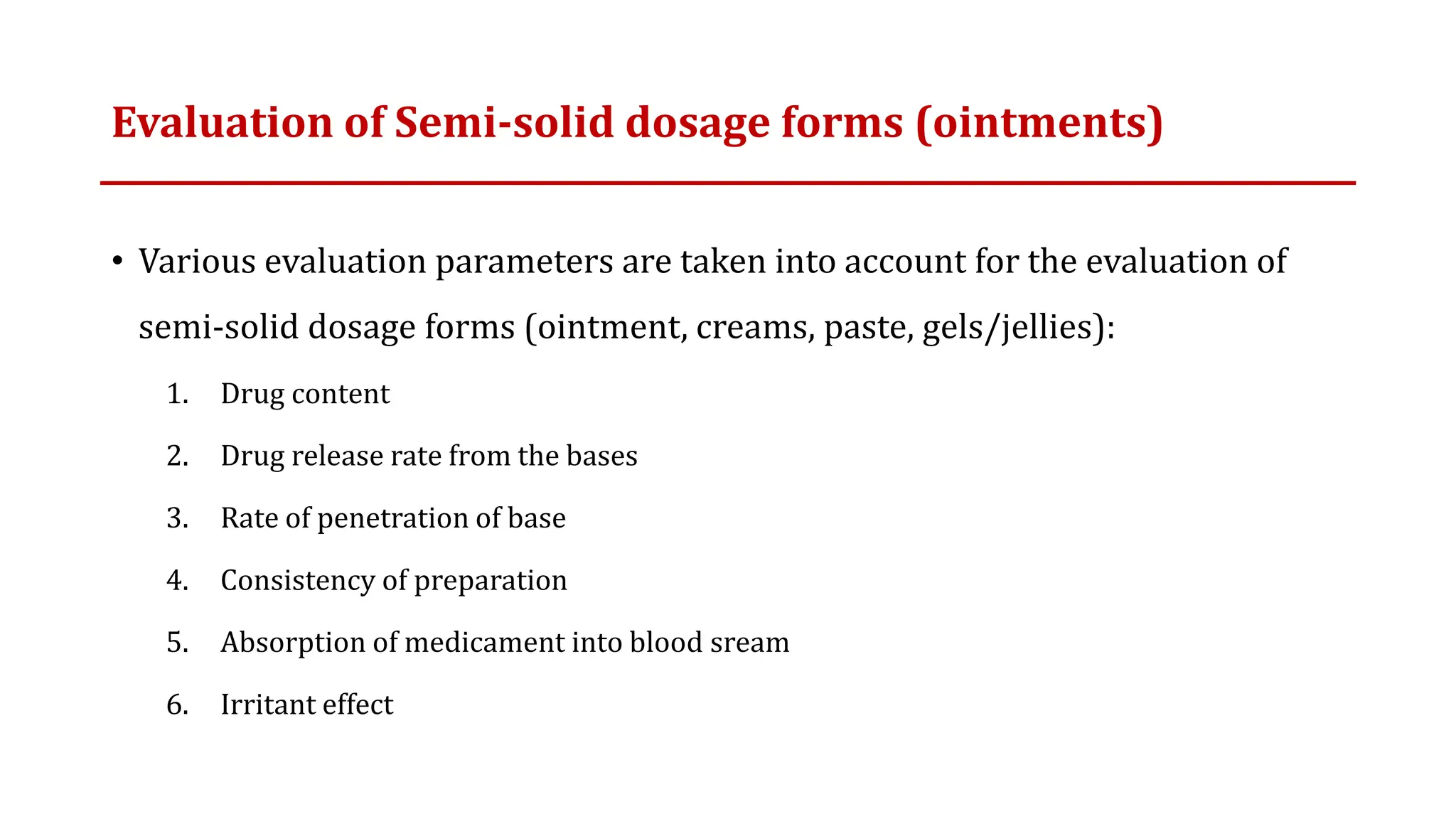
Evaluation of Semi-solid dosage forms (ointments)
• Various evaluation parameters are taken into account for the evaluation of
semi-solid dosage forms (ointment, creams, paste, gels/jellies):
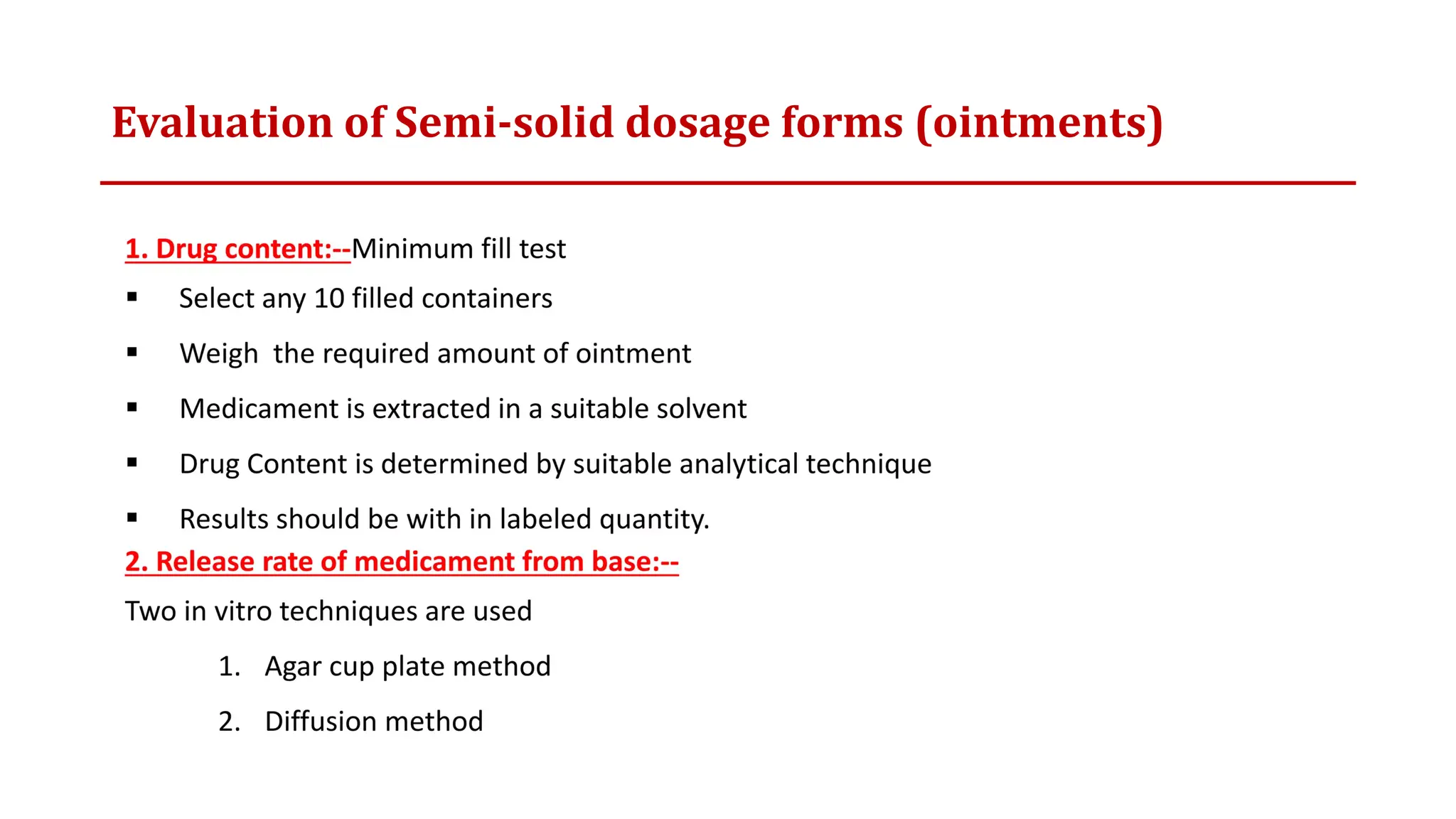
1. Drug content
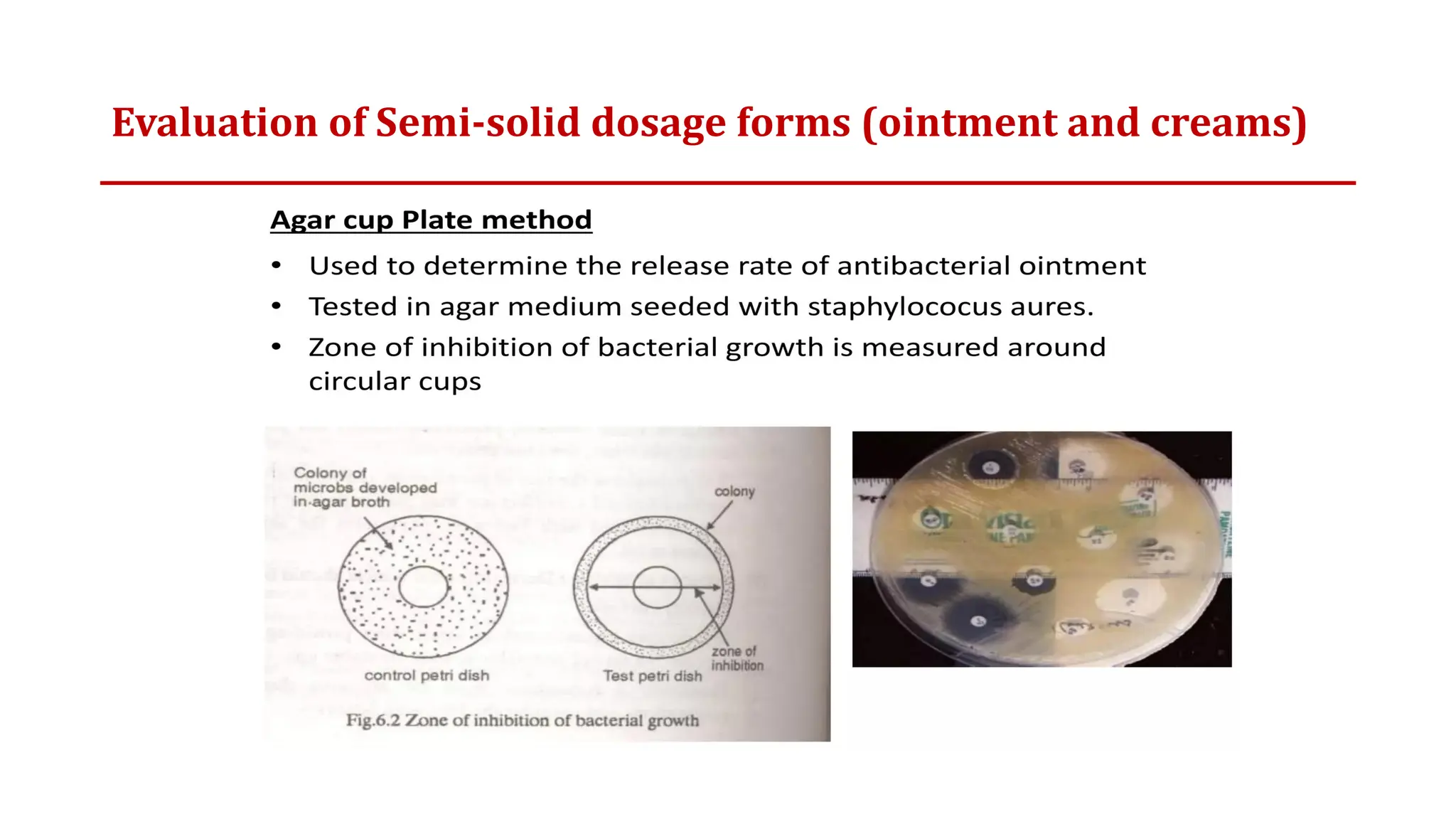
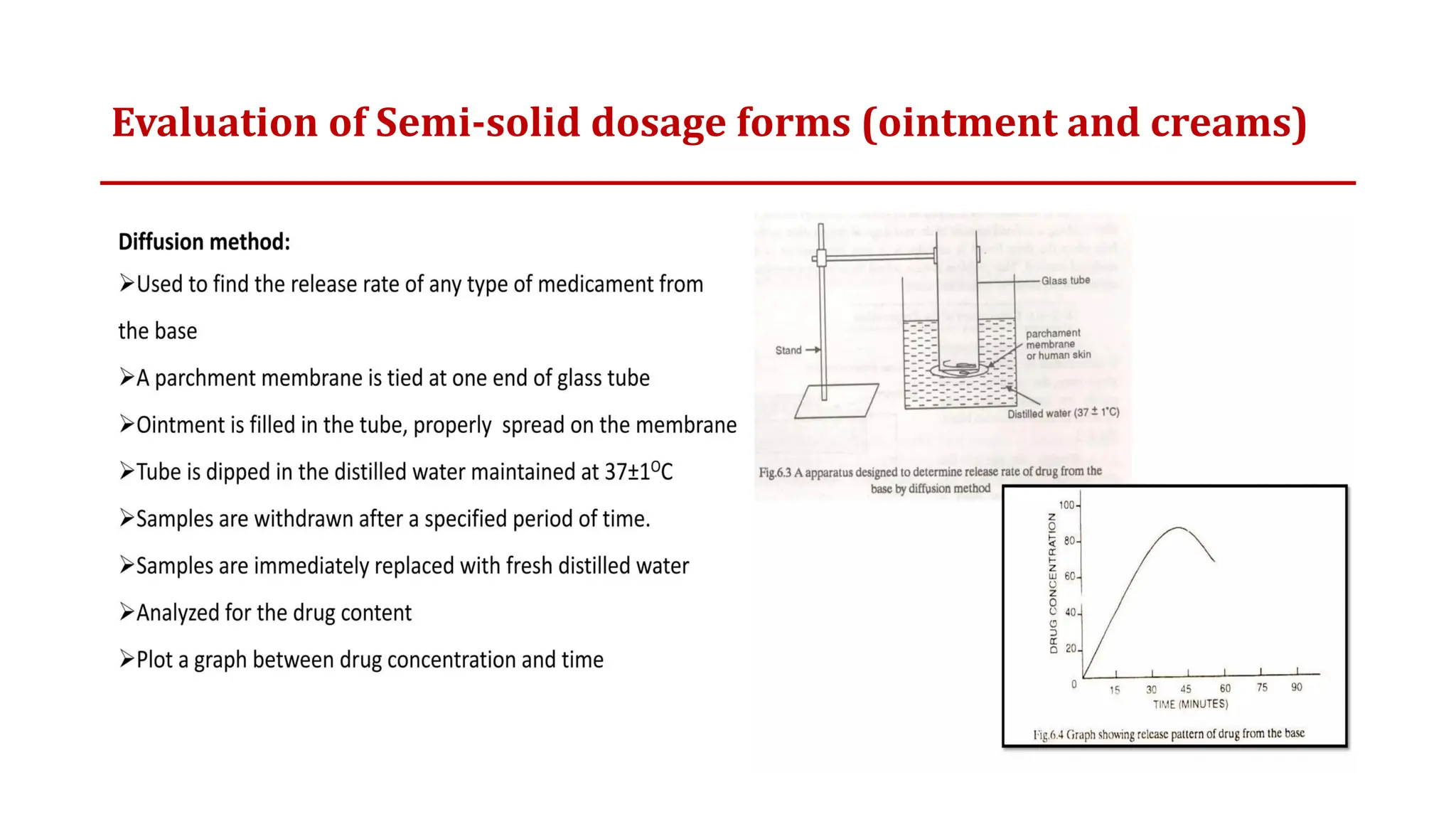
2. Drug release rate from the bases
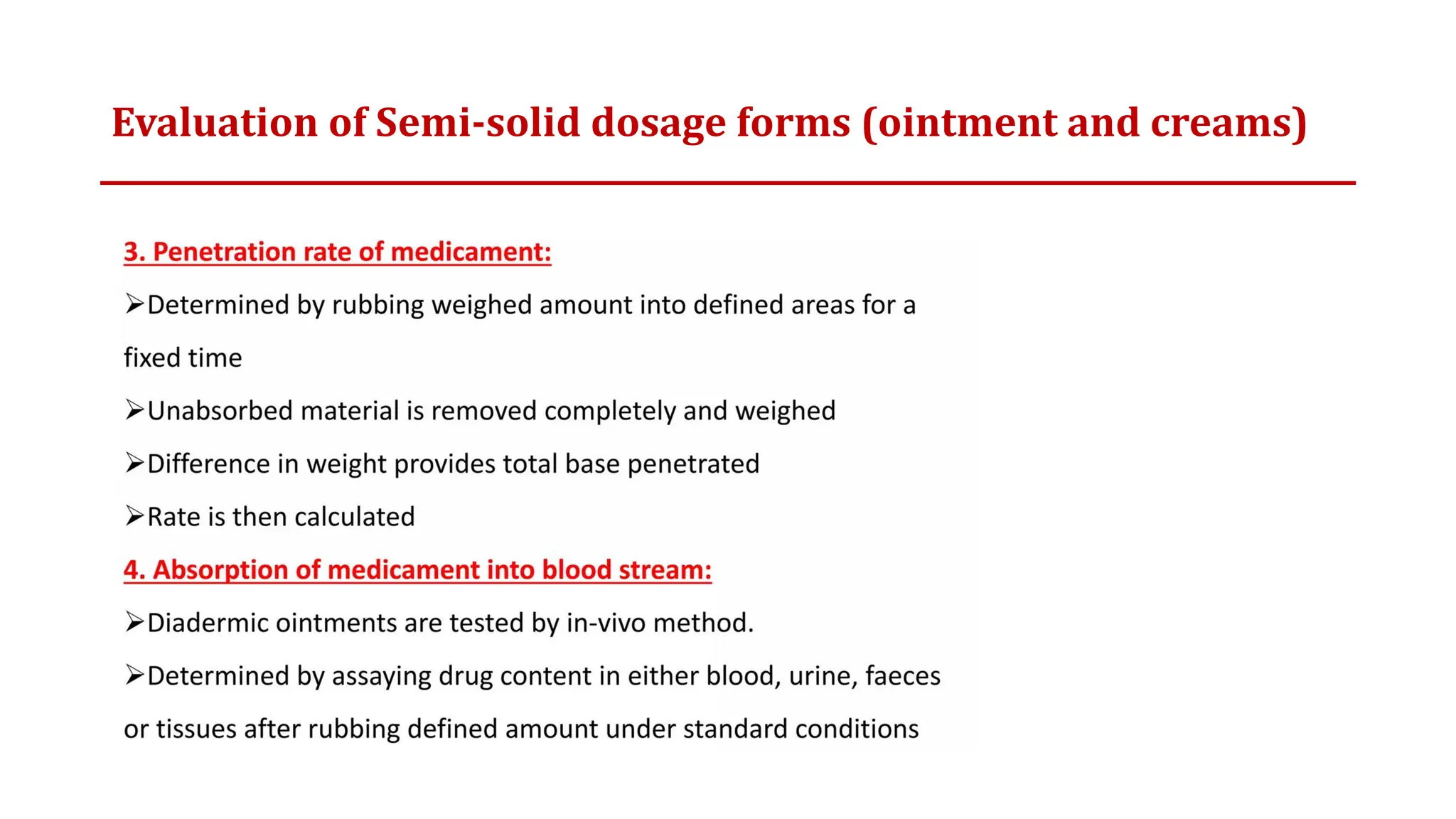
3. Rate of penetration of base
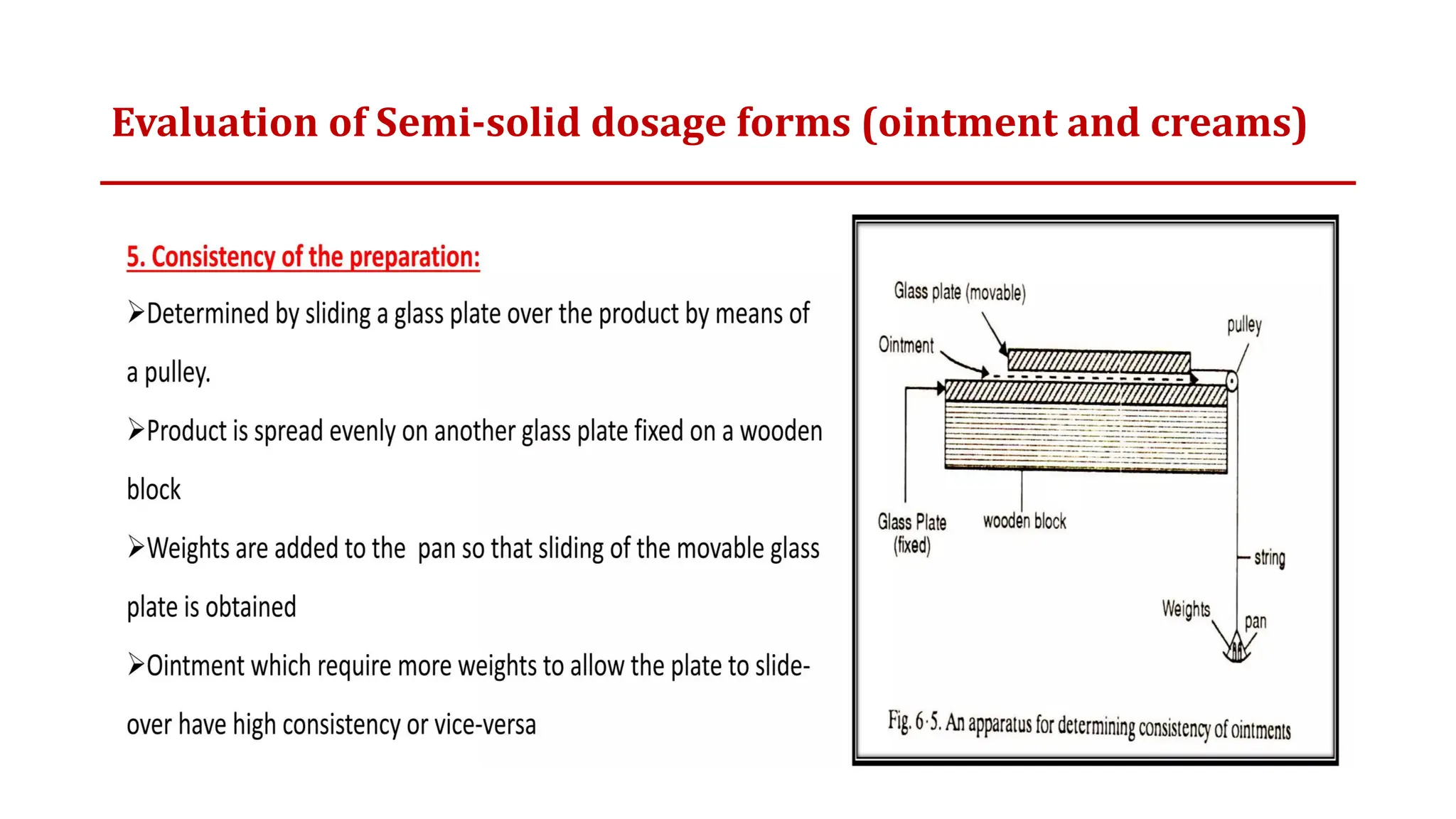
4. Consistency of preparation
5. Absorption of medicament into blood sream
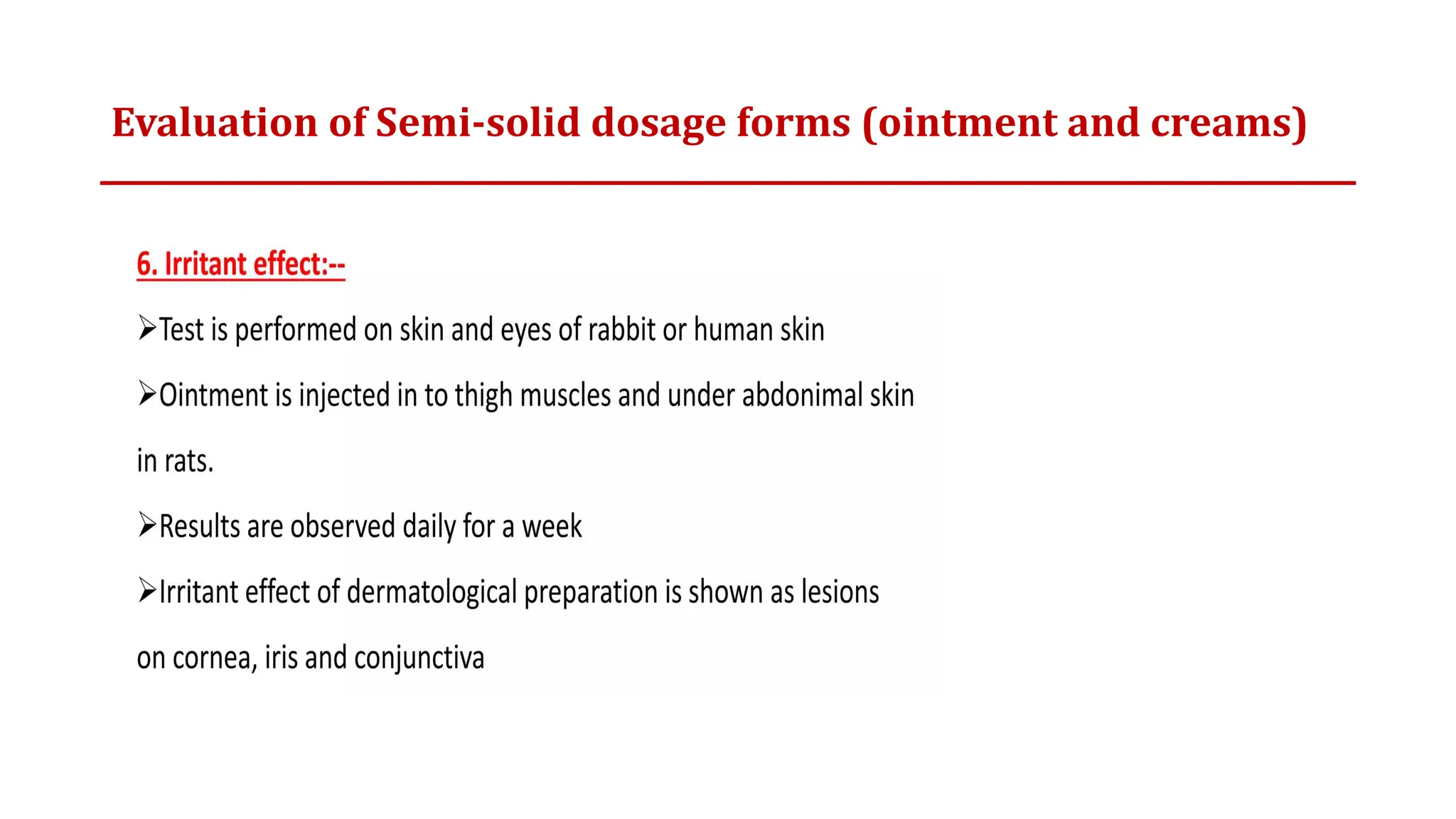
6. Irritant effect
Evaluation of Semi-solid dosage forms (ointments)
Evaluation of Semi-solid dosage forms (ointment and creams)
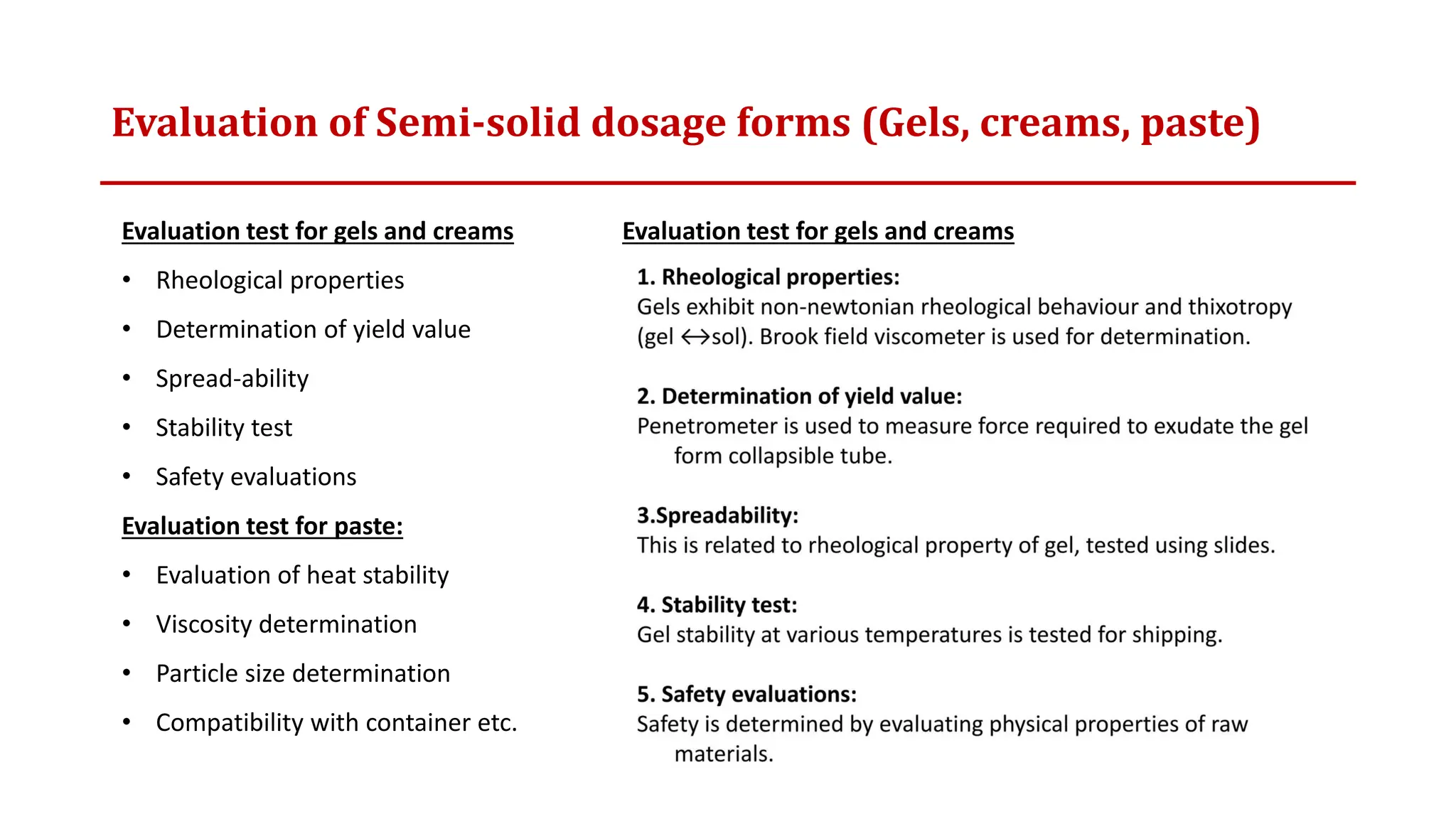
Evaluation of Semi-solid dosage forms (Gels, creams, paste)
Evaluation test for gels and creams
• Rheological properties
• Determination of yield value
• Spread-ability
• Stability test
• Safety evaluations
Evaluation test for paste:
• Evaluation of heat stability
• Viscosity determination
• Particle size determination
• Compatibility with container etc.
Evaluation test for gels and creams
References:
1. Dispensing Pharmacy by R.M. Mehta, Vallabh Prakashan, Page No: 230-259
2. Google.com/semi-solid_dosage_forms
3. Remington: Essential of Pharmaceutics

Unit V Semisolid Dosage Forms.pdf

  • 1.
    Semisolid Dosage Forms -Preparedand presented by Mr. Gaurav S. Patil Assistant Professor, Dept. of Pharmaceutics KVPS’s, Institute of Pharmaceutical Education, Boradi, Maharashtra Department of Pharmaceutics UNIT :V
  • 2.
    Content • Definition • Classification •Mechanism and Factor affecting dermal penetration of drugs • Excipient used in semi-solid dosage forms • Preparation of Ointments, Paste, Creams, and Gels • Evaluation of semi-solid dosage forms.
  • 3.
    Definition • Definition: Semi-soliddosage forms are the dermatological preparations mainly meant for external application to the skin to produce local or systemic effect. • Examples: Ointment, Gel, Suppositories, Paste, Jellies, Creams. • They contain one or more active ingredients dissolved or uniformly dispersed in a suitable base and any suitable excipients such as emulsifiers, viscosity increasing agents, anti microbial agents, antioxidants, or stabilizing agents etc.
  • 4.
  • 5.
    Mechanism of dermalpenetration of drugs Three potential routes for drug penetration into skin: 1. Via Sweat Ducts (Para-cellular) 2. Across the stratum corneum (Trans-cellular) 3. Through the hair follicles with their associated sebaceous glands
  • 6.
    Mechanism of dermalpenetration of drugs
  • 7.
    Factors affecting dermalpenetration of drugs • The dermal penetration of drugs refers to the absorption of medications through the skin and into the systemic circulation. • Several factors influence this process, and the mechanisms involved can vary depending on the properties of the drug and the skin barrier. • These factors are mainly categorized into two main headings: 1. Biological factors 2. Physiochemical factors.
  • 8.
    Factors affecting dermalpenetration of drugs • Some of the key factors affecting dermal penetration of drugs and the mechanisms at play:
  • 9.
    Factors affecting dermalpenetration of drugs Biological Factors: 1. Skin condition: • Thickness: Thinner skin, such as on the face, neck, and flexor surfaces, is generally more permeable than thicker skin, like the soles of the feet or the palms of the hands. • Disease alter the skin condition, skin inflamed, with loss of stratum corneum thus permeability increases. • Intact and healthy skin is a more effective barrier than compromised or damaged skin, such as in the case of cuts, burns, or dermatitis
  • 10.
    Factors affecting dermalpenetration of drugs 2. Skin Age: Skin of young and elder is more permeable than adult tissues. 3. Blood flow: Increase blood flow could reduce the amount of time a penetrant remains in the dermis, also raise the concentration gradient across the skin. 4. Skin Metabolism: The skin metabolizes steroid hormones, chemical carcinogens, and some drugs. Skin also metabolizes 5% of topical drugs.
  • 11.
    Factors affecting dermalpenetration of drugs Physicochemical Factors: 1. Skin hydration: When the water saturate the skin, the tissue swells, soften. Wrinkles and hydration of the stratum corneum increases the permeability of the skin. 2. Temperature : The rate of permeation increased exponentially with increasing skin surface temperature. During the gradually increasing of skin temperature swells the polymer and sustained release of drug to stratum corneum. 3. Molecular size and shape: Absorption is apparently inversely related to molecular weight. Small molecules penetrate faster than larger ones. Effect of molecular shape is difficult to determine as it is related to partition coefficient.
  • 12.
    Preparation of Ointments,Paste, Creams, and Gels
  • 13.
    Ointments 1. Ointments: • Definition:Ointments are the topical semi-solid preparations meant for external application to the skin or mucous membrane to produce local or systemic effect. • Ointments usually contain a medicament(s) dissolved, suspended or emulsified in an ointment base. • They may contain suitable antimicrobial preservative to avoid microbial contamination. • The ointments are usually acts as protective or emollient for skin.
  • 14.
    Ointments • Classification ofOintments: 1. Based on the property of penetration 1. Epidermic ointment: Meant for epidermis application for local effect. 2. Endodermic ointment: Meant for action on deeper layer of cutaneous tissue. 3. Diadermic ointment: Meant for deep penetration and release the drug through skin. 2. Based on the therapeutic uses 1. Antibiotic ointment 2. Antifungal ointment 3. Anti-inflammatory ointment 4. Parastiticide ointment
  • 15.
    Ointments • Ointment Bases:The ointment base is a substance or part of an ointment, which is acts as a carrier or vehicle for the medicament. • While selecting the suitable the ointment various factors are taken into consideration such as desired action, nature of medicament, stability of ointment etc. • Hence, an ideal ointment base should possess the following properties: • It should be inert, smooth and odorless. • It should be physically and chemically stable. • It should not retard healing of the wound. It should not produce irritation to the skin. • It should be compatible with the skin.
  • 16.
    Ointments Classification of OintmentBases:. 1. Oleaginous bases 2. Absorption bases 3. Emulsion bases 4. Water soluble bases
  • 17.
    Ointments 1. Oleaginous bases: •Oleaginous bases are also termed as hydrocarbon bases, on application to the skin they have an emollient and protective effect. • It is difficult to remove hydrocarbon bases from skin due to their oily nature. • These bases consist of vegetable oils, animal fats and waxes. • Examples of these bases includes; soft paraffin, hard paraffin, and liquid paraffin (mineral oils). • Petrolatum (Soft Paraffin): • It is purified mixture of semi-solid hydrocarbons obtained form petroleum. • It is available in two varieties namely, yellow soft paraffin and white soft paraffin. • Both of these having melting point between 38-56 o C.
  • 18.
    Ointments • Hard paraffin: •It is purified mixture of solid hydrocarbons obtained form petrolatum. • It is colorless or white, translucent, odorless and tasteless wax like substance. • It is used to harden or soften the ointment base. • Liquid paraffin: • It consist of mixture of liquid hydrocarbons and obtained from petroleum by distillation. • It is also known as liquid petroleum or mineral oil. • It is colorless, odorless, tasteless and transparent oily liquid. The oleaginous bases are loosing their importance nowadays due to reasons like, their greasy and sticky nature, do not helpful in absorption of medicaments.
  • 19.
    Ointments 2. Absorption bases: •These are generally anhydrous substances having property of absorbing considerable amount of water but still retaining their ointment-like consistency. • They are of two types: Non-emulsified bases and Water in oil emulsions. • The non-emulsified bases absorb water and aqueous solutions producing w/o emulsion. • Examples of non-emulsified bases: wool fat, wool alcohol, and beeswax. • The water in oil emulsion are capable of absorbing more water. Examples: Hydrous wool fat (lanolin).
  • 20.
    Ointments • Wool fat •It is purified fat-like substance obtained from the wool of sheep. Also k/a anhydrous lanolin. • It can absorb 50% of its weight of water. It is important constituent for simple ointment base and eye ointment base. • Hydrous wool fat (Lanolin) • It is purified fat-like substance obtained from the wool of sheep. It is also know as lanolin. • It is insoluble in water but soluble in ether and chloroform. • It consist of 70% w/w wool fat and 30% w/w purified water.
  • 21.
    Ointments • Beeswax: • Itis wax obtained from the honey comb of bees • It is available in yellow beeswax and white-bees wax. • Wool alcohol: • It is obtained from the wool fat by treating it with alkali and separating the fraction containing cholesterol and other alcohols. • It is used as emulsifying agent for w/o type of emulsion. These base have numerous advantages such as; compatible with large number of medicaments, absorb large amount of water, they are heat stable, quite greasy, removed easily from skin.
  • 22.
    Ointments 3. Emulsion bases: •These are semi-solid or have cream like consistency. Both o/w and w/o emulsions are used as ointment base. • The o/w type emulsion bases are more popular type of base because they are easily removable from the skin or clothes by washing with water. • While the w/o type of emulsion bases are greasy and sticky. • Examples: Hydrophilic ointment USP
  • 23.
    Ointments 4. Water solublebases: • These are generally known as “greaseless ointment bases”. • They consist of water soluble ingredients, such as polyethylene glycol (PEG) polymers commonly known as carbowaxes. • These carbowaxes are water soluble, non-volatile, and inert substances. • Examples: Gelatin, pectin, sodium alginate, and tragacanth are used as water soluble bases.
  • 24.
    Excipient's used insemisolid dosage forms  Ingredients used in the preparation of Semi-solid dosage forms: • Bases • Preservative • Humectants • Antioxidants • Emulsifier • Gelling agent • Permeation enhancer • Buffers
  • 25.
    Preparation of Ointments,Paste, Creams, and Gels
  • 26.
    Preparation of Ointments,Creams and Paste 1. Trituration method: • Most commonly used method for ointment preparation. This method is used when base is soft and medicament is insoluble in the base. Stepwise Procedure: • Reduce the solid medicament to fine powder. • Medicament is mixed with small amount of base on ointment slab with stainless still spatula until homogenous product is formed. • Add remaining quantity of base with uniform mixing. • Add/incorporate any liquid medicament if present.
  • 27.
    2. Fusion method: Procedure: •This method is useful when ointment base consist of number of solid ingredient of different melting points. • Initially ointment bases are melted in decreasing order of their melting point (Substance with high melting point should be melt first then subsequent.). • This avoid over heating of low melting point substances. • Now incorporate the medicament slowly into the melted mass. • Stir it thoroughly until the mass cools down and homogenous product is formed. • If any other liquid ingredient is to be added then heat it to the same temp. as that of melted base. • Then mix these two portions with stirring uniformly. Avoid vigorous stirring to prevent air entrapment. Preparation of Ointments, Creams and Paste
  • 28.
    3. Chemical reactionmethod: Preparation of Ointments
  • 29.
  • 30.
    • Containers: Ointmentsare dispensed in glass or plastic jars having screw caps with impermeable liners. Amber colored glass containers are used for ointments containing light sensitive drugs. Nowadays, ointments are generally supplied in plastic or metallic collapsible tubes. • Labeling: The ointment container should be labelled “for external use only” • Storage: Ointments should be store in cool and dry place. Protected from the sunlight and higher temperature. Container, Labeling and Storage of Ointments
  • 31.
    Creams • Creams: Creamsare the viscous semi-solid emulsions which are meant for external application to the skin. • They usually contain water soluble base due to which they can be easily removed from the skin. • They are softer and light weight in comparison to ointment • They are of two types: Aqueous creams and Oily creams.
  • 32.
    Creams • Aqueous creams:In aqueous creams, the emulsions are o/w type. These creams are relatively non-greasy than oily creams. • They are further classified in various heading depending upon emulsifying agent used for preparing them. • Anionic emulsifying wax cream • Cationic emulsifying wax cream • Non-anionic emulsifying wax creams
  • 33.
    Creams • Oily creams:In aqueous creams, the emulsions are w/o type. These creams are greasy in nature. • They are further classified in various heading depending upon emulsifying agent used for preparing them. • Sterol creams: emulsifying agents are wool fat or wool alcohol. • Soap creams: emulsifying agents are triehanolamine soap, calcium or borax soap.
  • 34.
    Creams • Containers: Creamsare store in wide mouth squat jars. The container should be well and tightly closed to avoid evaporation of water. Mouth of the jar should be covered with disc of grease proof paper. Collapsible tubes are prefer to store creams due to their low risk of contamination. • Labeling: The ointment container should be labelled “for external use only” • Storage: Ointments should be store in cool and dry place. Protected from the sunlight and higher temperature.
  • 35.
    Paste • Paste: Pasteare the semi-solid preparation meant for external application to the skin surface. • They are generally very thick and stiff in nature. They do not melt at ordinary temperature and thus provide protective covering to the area where they applied. • Bases such as hydrocarbon bases, water miscible bases and water soluble bases are used for the preparation of paste.
  • 36.
  • 37.
    Gels/Jellies • Gels/Jellies: Gels/jelliesare the transparent or translucent non-greasy, semisolid preparations meant for external application to the skin or mucous membrane. • They are generally prepared from natural gums such as pectin, sodium alginate or from synthetic derivatives such as methyl cellulose. • Types of jellies: Medicate jellies, Lubricating jellies, and Miscellaneous jellies.
  • 38.
  • 39.
    Evaluation of Semi-soliddosage forms (ointments) • Various evaluation parameters are taken into account for the evaluation of semi-solid dosage forms (ointment, creams, paste, gels/jellies): 1. Drug content 2. Drug release rate from the bases 3. Rate of penetration of base 4. Consistency of preparation 5. Absorption of medicament into blood sream 6. Irritant effect
  • 40.
    Evaluation of Semi-soliddosage forms (ointments)
  • 41.
    Evaluation of Semi-soliddosage forms (ointment and creams)
  • 42.
    Evaluation of Semi-soliddosage forms (ointment and creams)
  • 43.
    Evaluation of Semi-soliddosage forms (ointment and creams)
  • 44.
    Evaluation of Semi-soliddosage forms (ointment and creams)
  • 45.
    Evaluation of Semi-soliddosage forms (ointment and creams)
  • 46.
    Evaluation of Semi-soliddosage forms (Gels, creams, paste) Evaluation test for gels and creams • Rheological properties • Determination of yield value • Spread-ability • Stability test • Safety evaluations Evaluation test for paste: • Evaluation of heat stability • Viscosity determination • Particle size determination • Compatibility with container etc. Evaluation test for gels and creams
  • 47.
    References: 1. Dispensing Pharmacyby R.M. Mehta, Vallabh Prakashan, Page No: 230-259 2. Google.com/semi-solid_dosage_forms 3. Remington: Essential of Pharmaceutics