This document discusses phantom limbs from the past to the present and future. It begins by introducing the topic and defining phantom limbs. It then discusses various concepts related to phantom limbs including:
1. The gate control theory of pain which proposes a spinal gating mechanism that modulates pain transmission.
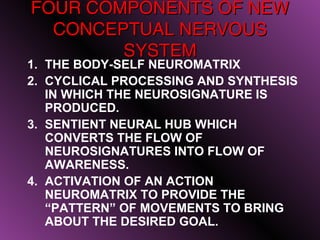
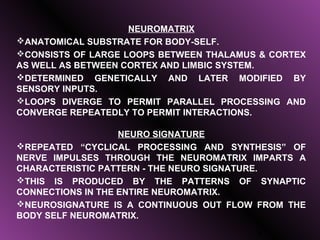
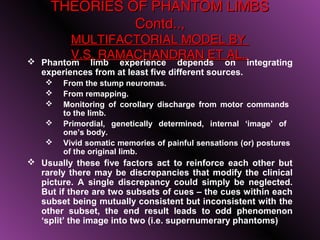
2. The neuromatrix theory which proposes that the brain can generate body experiences without sensory input through neural networks in the brain.
3. Neural plasticity and cortical reorganization which allows the brain to adapt and change representations after amputation.
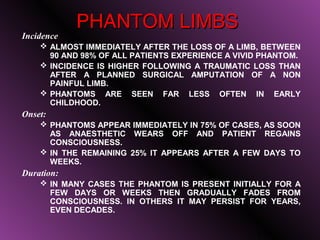
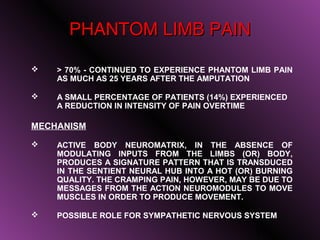
It concludes by discussing various phenomena related to phantom limbs like their incidence, sensations, referral of sensations between limbs, and potential mechanisms of intermanual referral.













![Relieving phantom limb pain [Autosaved].pptx](https://cdn.slidesharecdn.com/ss_thumbnails/relievingphantomlimbpainautosaved-221103113804-9947bcef-thumbnail.jpg?width=640&height=640&fit=bounds)


