PRESSURE  ULCERS  and  NUTRITIONAL  SUPPORT  (Prevention  and  Treatment) Dr. George  C.  SPATHARAKIS  Clinical  Director Geriatrician - Gerontologist Public  Primary  Health  Care  Center  Itea, Phokida, Greece
ETYMOLOGY Pressure  Ulcers or Pressure  Sores (ENGL): Description of  Pathogenetic  Mechanism Decubitus  Ulcers (ENGL): Epidemiological (Pathophysiological)  Description Escarre (FRAN): From the late Latin medical term  “eschara”   derivative of the ancient greek word  “ εσχάρα ”  signifying  « the   crust on the wound »
IS  NUTRITIONAL  STATUS  RELATED  TO PRESSURE  ULCERS?  -  1 Relevant  Epidemiological  Data Relevant  Experimental  Data Role  of  Nutrition  in  the  Prevention  of  Pressure  Ulcers Pressure Ulcers Enhance Undernutrition  Status and  Vice Versa
IS  NUTRITIONAL  STATUS  RELATED  TO PRESSURE  ULCERS?  -  2 Necessity of  Nutritional Supplementation in Pressure Ulcers Type of Nutritional Supplementation in terms of:  - Caloric  Charge - Protein  Content - Specific  Nutrients *  EPILOGUE - SUMMARY
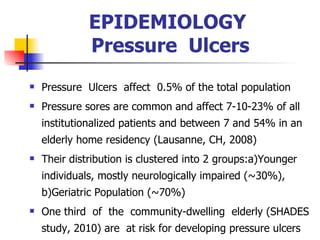
EPIDEMIOLOGY  Pressure  Ulcers Pressure  Ulcers  affect  0.5% of the total population Pressure sores are common and affect  7- 10-2 3 % of all institutionalized patients  and  between 7 and 54% in an elderly home residency  (Lausanne, CH, 2008) Their distribution is clustered into 2 groups:a)Younger  individuals, mostly neurologically impaired (~30%), b)Geriatric Population (~70%) O ne third  of  the  community-dwelling  elderly (SHADES study, 2010)   are  at risk for developing pressure ulcers
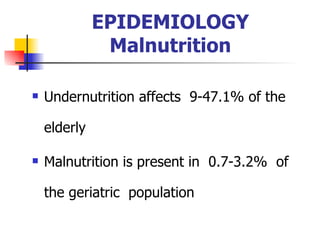
EPIDEMIOLOGY Malnutrition Undernutrition affects  9-47.1% of the  elderly  Malnutrition is present in  0.7-3.2%  of the geriatric  population
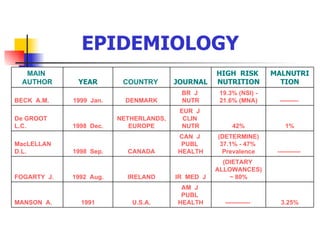
EPIDEMIOLOGY 3.25% ------------   AM  J  PUBL  HEALTH U.S.A. 1991 MANSON  A.   (DIETARY  ALLOWANCES) ~ 80% IR  MED  J IRELAND 1992  Aug. FOGARTY  J. -----------   (DETERMINE) 37.1% - 47%  Prevalence CAN  J  PUBL  HEALTH CANADA 1998  Sep. MacLELLAN  D.L. 1% 42% EUR  J  CLIN  NUTR NETHERLANDS , EUROPE 1998  Dec. De GROOT  L.C. ---------   1 9 .3% (NS I ) - 21.6% (MNA) BR  J  NUTR DENMARK 1999  Jan. BECK  A.M. MALNUTRITION HIGH  RISK  NUTRITION JOURNAL COUNTRY   YEAR MAIN  AUTHOR
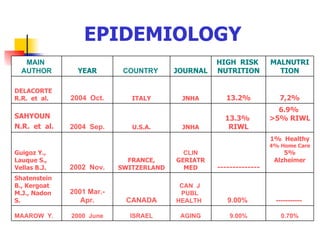
EPIDEMIOLOGY MALNUTRITION HIGH  RISK  NUTRITION JOURNAL COUNTRY   YEAR MAIN  AUTHOR 6.9%  >5% RIWL 13.3%  RIWL JNHA U.S.A. 2004  Sep. S AHYOUN   N.R.  et  al.   7,2% 13.2% JNHA ITALY 2004  Oct. DELACORTE R.R.  et  al. -----------   9.00%   CAN  J  PUBL  HEALTH   CANADA 200 1 Mar.-Apr. Shatenstein B . , Kergoat M . J . , Nadon S. 0.70% 9.00% AGING ISRAEL 2000  June MAAROW  Y. 1%  Healthy 4% Home Care 5% Alzheimer -------------- CLIN  G ERIATR  M ED FRANCE, SWITZERLAND 200 2   Nov. Guigoz Y . , Lauque S . , Vellas B . J.
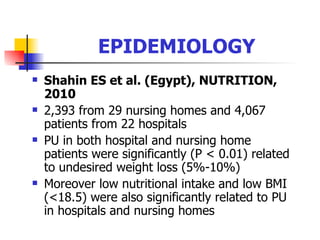
EPIDEMIOLOGY Shahin ES  et al. (Egypt), NUTRITION, 2010 2,393  from 29 nursing homes and 4 , 067 patients from 22 hospitals  PU in both hospital and nursing home patients were significantly (P < 0.01) related to undesired weight loss (5%-10%) Moreover low nutritional intake and low BMI (<18.5) were also significantly related to PU in hospitals and nursing homes
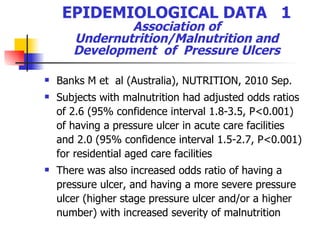
EPIDEMIOLOGICAL DATA  1  Association of  Undernutrition/Malnutrition and Development  of  Pressure Ulcers Banks M et  al (Australia),  NUTRITION , 201 0 Sep. Subjects with malnutrition had adjusted odds ratios of 2.6 (95% confidence interval 1.8-3.5, P<0.001) of having a pressure ulcer in acute care facilities and 2.0 (95% confidence interval 1.5-2.7, P<0.001) for residential aged care facilities There was also increased odds ratio of having a pressure ulcer, and having a more severe pressure ulcer (higher stage pressure ulcer and/or a higher number) with increased severity of malnutrition
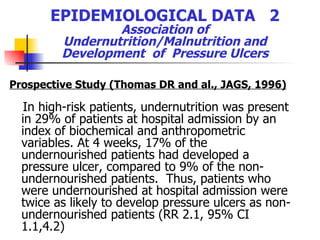
EPIDEMIOLOGICAL DATA  2  Association of  Undernutrition/Malnutrition and Development  of  Pressure Ulcers Prospective Study (Thomas DR and al., JAGS, 1996) In high-risk patients, undernutrition was present in 29% of patients at hospital admission by an index of biochemical and anthropometric variables. At 4 weeks, 17% of the undernourished patients had developed a pressure ulcer, compared to 9% of the non-undernourished patients.  Thus, patients who were undernourished at hospital admission were twice as likely to develop pressure ulcers as non-undernourished patients (RR 2.1, 95% CI 1.1,4.2)
EPIDEMIOLOGICAL DATA  3   Association   of  Undernutrition/Malnutrition and Development  of  Pressure Ulcers Prospective  Study (Pinchcofsky-Devin GD.  Kaminski MV Jr., JAGS, 1986) In a long-term-care setting, 59% of residents were diagnosed as undernourished on admission.  Among these residents, 7.3% were classified as severely undernourished.  Pressure ulcers occurred in 65% of these severely undernourished residents.  No pressure ulcers developed in the mild-to-moderately undernourished or well-nourished groups
EPIDEMIOLOGICAL DATA  4   Association   of  Undernutrition/Malnutrition and Development  of  Pressure Ulcers Epidemiological Study (Bergstrom N.-Braden B., JAGS, 1992) In a long-term care setting, the estimated percent intake of dietary protein, but not total caloric intake,  predicted development of pressure ulcers.  Patients with pressure ulcers ingested 93% of the recommended daily intake of protein compared to an intake of 119% of the  recommended protein in the non-pressure ulcer group.  Only dietary intake of protein was important in this study.  The total dietary intake of calories or the calculated intake of vitamins A and C, iron and zinc did not predict ulcer development
EPIDEMIOLOGICAL DATA  5   Association   of  Undernutrition/Malnutrition and Development  of  Pressure Ulcers Epidemiological Study (Ter Riet G. and coll., J. CLIN. EPIDEM., 1995) Impaired nutritional intake, defined as a persistently poor appetite, meals held due to gastrointestinal disease, or a prescribed diet less than 1100 kcal or 50 gm protein per day, predicted pressure ulcer development in another long-term care setting. However, no other nutritional variable was univariately significant
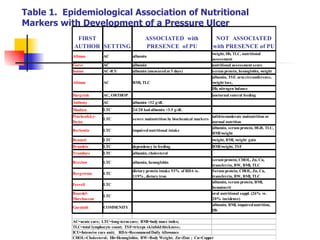
EPIDEMIOLOGICAL DATA  6   Association   of  Undernutrition/Malnutrition and Development  of  Pressure Ulcers COMMENT In spite of data like the precedent, the association of undernutrition and pressure ulcers remains problematic.  The controversy apparent in defining the relationship of pressure ulcers and nutrition may have roots in the physiological variables used to define malnutrition. There is no accepted gold standard for the diagnosis of undernutrition and the markers for nutritional status may reflect underlying disease rather than undernutrition in older, ill persons .
EPIDEMIOLOGICAL DATA  7   Association   of  Undernutrition/Malnutrition and Development  of  Pressure Ulcers Decreases in serum albumin may reflect the presence of inflammatory cytokine production or comorbidity, rather than poor nutritional status.  Large reductions in body weight may indicate disease associated cachexia rather than impaired intake alone.  Poor nutritional status defined by these variables may indicate poor health rather than poor nutrient intake
EPIDEMIOLOGICAL DATA  8   Association   of  Undernutrition/Malnutrition and Development  of  Pressure Ulcers Pressure ulcers appear to be associated with traditional markers of nutritional status in some, but not all studies.  The association is confounded by lack of adjustment of comorbidy or severity of illness. Despite a strong association, a causal relationship of poor nutritional status to pressure ulcers has not been established. The association does not confirm that one follows the other (causality), but that both undernutrition and pressure ulcers frequently coexist in the same persons
EXPERIMENTAL  DATA  1 Association  of  Undernutrition/Malnutrition and Development  of  Pressure Ulcers Takeda T. and al.,  J. DERMATOL., 1992 When pressure was applied for four hours to the skin of well-nourished animals and malnourished animals, pressure ulcers occurred equally in both groups. The degree of ischemic skin destruction was more severe in the malnourished animals. At three  days post-injury, epithelialization of the pressure lesions had occurred in normal animals,  while massive necrosis of the epidermis was still present in the malnourished animals.These data suggest that while pressure damage may occur independently of nutritional status, malnourished animals may have impaired healing after a pressure injury
EXPERIMENTAL  DATA  2 Association  of  Undernutrition/Malnutrition and Development  of  Pressure Ulcers Mitotic Activity is  severely depressed  in Mice fed on only 70% of the normal caloric intake (Bullough WS-Eisa EA, BRIT. J.CANCER, 1950) Dietary Restriction to 60% of the normal intake produces  impaired  Collagen Cross-Linking (Reiser KM, J. GER. DERMATOL., 1993) Chronic Protein Undernutrition in Dogs  increases  Wound Dehiscence (Thompson W and coll., ARCH. SURG., 1938
Table 1.  Epidemiological Association of Nutritional Markers with Development of a Pressure Ulcer
ROLE  of  NUTRITION in the  PREVENTION  of  PRESSURE  SORES  -  1 Henderson C.T. and coll.,  J. AM. COLL. CLIN. NUTR., 1992 In a study of enteral tube feedings in a long-term care setting,  49 patients were followed for three months. Patients received 1.6 times basal energy expenditure daily, 1.4 g of protein per kilogram per day, and 85% or more of their total recommended daily allowance. At the end of three months, there was no difference  in number  or healing of pressure ulcers
ROLE  of  NUTRITION in the  PREVENTION  of  PRESSURE  SORES  -  2 Mitchell S.L. and coll., ARCH. INT. MED., 1997 In  a study of survival among residents in long-term care with severe cognitive impairment, 135 residents were followed for 24 months. The reasons for the placement of a feeding tube included the presence of a pressure ulcer.  Having a feeding tube was not associated with increased survival; in fact the risk was slightly increased (OR 1.06).  There was no apparent effect of the prevalence of pressure ulcers in this group of enterally fed persons
ROLE  of  NUTRITION in the  PREVENTION  of  PRESSURE  SORES  -  3 Hartgrink H.H. and al., CLIN. NUTRITION, 1998 The effect of overnight supplemental enteral feeding in patients with a fracture of the hip and a high pressure sore risk score has been evaluated.  Of the 62 patients randomised for enteral feeding, only 25 tolerated their tube for more than one week, and only 16 tolerated their tube for two weeks. No difference  was  found for the development of a pressure ulcer, total serum protein, serum albumin, or the severity of pressure ulcers after one and two weeks
ROLE  of  NUTRITION in the  PREVENTION  of  PRESSURE  SORES  -  4 Hartgrink H.H. and al., CLIN. NUTRITION, 1998 Comparison of the actually tube-fed group (n=25 at one week, n = 16 at two weeks) and the control group showed two to three times higher protein and energy intake (P < 0.0001), and a significantly higher total serum protein and serum albumin after one and two weeks in the actually tube-fed group (all P < 0.001).  However, the development of a pressure ulcers and severity were not significantly influenced in the actually tube-fed group. It is possible that the lack of effect on supplemental enteral feeding was due to poor tolerance of the feedings
ROLE  of  NUTRITION in the  PREVENTION  of  PRESSURE  SORES  -  5 Bourdel-Marchasson I.  and al., CLIN. NUTRITION,  1999 Oral nutrition supplements were given to 32.6% of one group compared to 86.9% of another group.  There was no difference in pressure ulcer incidence (26.4% vs. 20.2%), pressure ulcer prevalence at discharge (14.7% v.s. 10.3%), mortality (15.6% vs. 14.2%),  length of stay (17.3 days vs. 17.4 days), or  nosocomial infections (26.4% vs. 19.0%).   This observational study of hospitalised, critically ill patients given nutritional supplements suggests no effect on pressure ulcer incidence
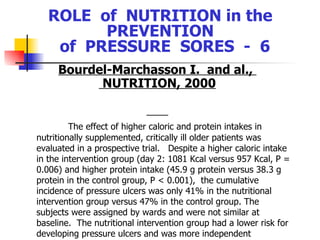
ROLE  of  NUTRITION in the  PREVENTION  of  PRESSURE  SORES  -  6 Bourdel-Marchasson I.  and al.,  NUTRITION, 2000 The effect of higher caloric and protein intakes in nutritionally supplemented, critically ill older patients was evaluated in a prospective trial.  Despite a higher caloric intake in the intervention group (day 2: 1081 Kcal versus 957 Kcal, P = 0.006) and higher protein intake (45.9 g protein versus 38.3 g protein in the control group, P < 0.001),  the cumulative incidence of pressure ulcers was only 41% in the nutritional intervention group versus 47% in the control group.   The subjects were assigned by wards and were not similar at baseline.  The nutritional intervention group had a lower risk for developing pressure ulcers and was more independent
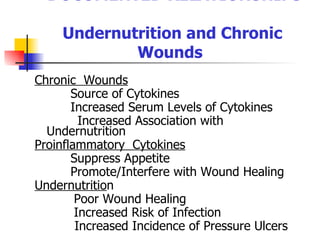
DOCUMENTED RELATIONSHIPS   Undernutrition and Chronic Wounds Chronic  Wounds   Source of Cytokines   Increased Serum Levels of Cytokines Increased Association with  Undernutrition Proinflammatory  Cytokines   Suppress Appetite   Promote/Interfere with Wound Healing Undernutritio n   Poor Wound Healing   Increased Risk of Infection   Increased Incidence of Pressure Ulcers
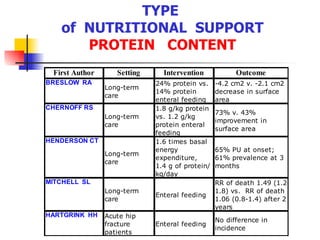
UTILITY  of  NUTRITIONAL SUPPLEMENTATION  in  PRESSURE  ULCERS  -  1 Breslow RA et al., JAGS, 1993 In 48 patients with stage II through IV pressure ulcers who were being fed enterally,  undernutrition was defined as a serum albumin below 35 g/L  or  body weight more than 10% below the midpoint of the age-specific weight range. Total truncal pressure ulcer surface area showed more decrease (-4.2 cm 2  v. -2.1 cm 2 ) in surface area in patients fed the enteral formula containing 24% protein compared to a formula containing 14% protein.  However, changes in body weight or in biochemical parameters of nutritional status did not occur between groups.  The study was limited by a small sample size (only 28 patients completed the study), non-random assignment to treatment groups, confounding effects of air-fluidised beds, and the use of two different feeding routes
UTILITY  of  NUTRITIONAL SUPPLEMENTATION  in  PRESSURE  ULCERS  -  2 Chernoff RS et al., J. AMER. DIET. ASSOC., 1990  In a small study of 12 enterally fed patients with pressure ulcers, the group who received 1.8 g/kg of protein had a 73% improvement in pressure ulcer surface area compared to a 42% improvement in surface area in the group receiving 1.2 g/kg of protein despite the fact that the group that received the higher protein level began the study with larger surface area pressure ulcers (22.6 cm 2  v. 9.1 cm 2 )
UTILITY  of  NUTRITIONAL SUPPLEMENTATION  in  PRESSURE  ULCERS  -  3 Henderson C.T. and coll.,  J. AM. COLL. CLIN. NUTR., 1992 In a study of enteral tube feedings in a long-term care setting,  49 patients were followed for three months. Patients received 1.6 times basal energy expenditure daily, 1.4 g of protein per kilogram per day, and 85% or more of their total recommended daily allowance. At the end of three months, there was no difference in number  or healing of pressure ulcers   (65% pressure ulcers  at onset and 61% prevalence at three months)
UTILITY  of  NUTRITIONAL SUPPLEMENTATION  in  PRESSURE  ULCERS  -  4 Mitchell S.L. and coll., ARCH. INT. MED., 1997 In  a study of survival among residents in long-term care with severe cognitive impairment, 135 residents were followed for 24 months. The reasons for the placement of a feeding tube included the presence of a pressure ulcer. The relative risk (RR) of death was 1.49(1.2-1.8) at the onset versus 1.06 (0.8-1.4) after two  years
TYPE of  NUTRITIONAL  SUPPORT CALORIC  CHARGE Caloric  Requirements: - Sedentary  Adults: 25 kcal/kg/day - Stressed  Adults:  40 kcal/kg/day - Moderately Stressed  Elderly:  30-35  kcal/kg/day *  Henderson C.T. and coll.,  J. AM. COLL. CLIN. NUTR., 1992 1.6 times  Basal  Energy  Expenditure
TYPE  of  NUTRITIONAL  SUPPORT PROTEIN  CONTENT
TYPE of  NUTRITIONAL  SUPPORT DIETARY  PROTEIN INTAKE Current Recommendations: 1.2-1.5 gm/kg/day Seem Inadequate in half of chronically ill elderly to MAINTAIN  Nitrogen Balance Possible- Logical  Recommendation:  1.5-1.8 gm/kg/day (values beyond that may cause dehydration)
WHICH  KIND  of  PROTEIN? García - Talavera   Espín  NV ,  Gómez   Sánchez  MB ,  et  al.,  Nutr Hosp. ,  2010 Jul-Aug   CASEIN  Vs  SOYBEAN  PROTEIN A significant reduction in the incidence of gastrointestinal complications, a reduction in the incidence of ulcers by pressure and less mortality occurred on the group that took formula based on the soybean protein
TYPE of  NUTRITIONAL  SUPPORT SPECIFIC  NUTRIENTS:  AMINOACIDS  -  1 Arginine [8.5gr, 17gr/day] does not enhance Lymphocyte Proliferation or Interleukin Production,  Langkamp-Henken B. and coll., JPEN, 2000
TYPE of  NUTRITIONAL  SUPPORT SPECIFIC  NUTRIENTS:  AMINOACIDS  -  2 Mostly  Indirect Evidence concerning other types of Wounds’  Healing Arginine enhances wound collagen disposition in healthy volunteers (Barbul A et al. and Kirk SJ et al., SURGERY, 1990 and 1993) Glutamine in supplementation showed no effects on wound healing (McCauley Ret al., JPEN, 1991) No improvement in wound healing by high supplements of branched amino acid formulations (McCauley C et al., AUST. NZ  J. SURG., 1990
TYPE of  NUTRITIONAL  SUPPORT SPECIFIC  NUTRIENTS:  AMINOACIDS  -  3 43, Stage  III or IV  PU  patients, RCT, multicountry, 8  weeks Supplementation with the specific ONS accelerated pressure ulcer healing, indicated by a significantly different decrease in ulcer size  van  Anholt RD, Sobotka L  et  al., NUTRITION, Sep  2010
TYPE of  NUTRITIONAL  SUPPORT SPECIFIC  NUTRIENTS:  AMINOACIDS  -  4 18  patients, observational  study Results show a promising benefit of arginine supplementation on PU healing for individuals with spinal cord injury living in the community 9 gr / day
TYPE of  NUTRITIONAL  SUPPORT SPECIFIC  NUTRIENTS: VITAMIN  C  -  1 Taylor TV  and coll., LANCET, 1974 In a prospective double-blind controlled trial the effect of large doses of ascorbic acid on the healing of pressure-sores has been assessed. 20 surgical patients were studied, the pressure areas being assessed by serial photography and ulcer tracings. The mean ascorbic-acid levels in treated and non-treated groups one month after the start of treatment were 65.6 and 25.8 mug per 10-8 white blood-cells. In the group treated with ascorbic acid there was a mean reduction in pressure-sore area of 84% after one month compared with 42.7% in the placebo group. These findings are statistically significant (P less than 0.005) and suggest that ascorbic acid may accelerate the healing of pressure-sores
TYPE of  NUTRITIONAL  SUPPORT SPECIFIC  NUTRIENTS: VITAMIN  C  -  2 Ringsdorf  WM  Jr  et  al.,  O RAL  S URG.  O RAL  M ED.  O RAL  P ATHOL.,  1982 Clinical studies provide evidence that wound healing in subjects judged not deficient in vitamin C can be significantly accelerated with supplements of this nutrient above the recommended daily allowance (RDA). The authors administered daily dosages of 500 to 3,000 mg., which is roughly 8 to 50 times the RDA of 60 mg., to subjects recovering from surgery, other injuries, decubital ulcers, and leg ulcers induced by hemolytic anemia. Four grams of ascorbic acid daily produced a significant improvement in the quality of newly synthesized collagen but did not alter that formed prior to the supplementation of C
TYPE of  NUTRITIONAL  SUPPORT SPECIFIC  NUTRIENTS: VITAMIN  C  -  3 Ter Riet G. et al., J.CLIN.EPIDEMIOL.,1995 The objective of this study was to assess the effects of ascorbic acid supplementation, 500 mg twice daily in the treatment of pressure ulcers  of 88 patients in a  blinded randomized trial   over 12 weeks.  A nalysis showed that the wound closure rate was not higher in the intervention group than in the control group (Cox hazard ratio of 0.78 [90% precision interval, 0.44-1.39]). Mean absolute healing rates were 0.21 and 0.27 cm2/week in the intervention and control group, respectively (PI of the adjusted difference: -0.17 to 0.13). Relative healing rates and healing velocities did not show favorable results of ascorbic acid supplementation, either. The improvement was 0.45 and 0.72 points per week in the intervention and control group, respectively
TYPE of  NUTRITIONAL  SUPPORT SPECIFIC  NUTRIENTS: VITAMINS  A, C, E Vitamin E deficiency does not play a role in wound healing (Waldorf H., ADV. DERM.,1995) Prophylactic administration of vit .  E may influence the occurrence of pressure ulcers in humans undergoing elective surgery  (Houwing R., J. WOUND CARE, 2000) Low concentrations of leucocyte vitamin C appear to be associated with subsequent development of pressure sores in elderly patients with femoral neck fractures  (Goode HF and coll., BMJ, 1992) Con centrations of albumin, haemoglobin, and vitamins A and E were similar in patients who developed a pressure sore and those who did not  (idem) Negative correlations with  pressure  ulcer number were observed for cholesterol, albumin, zinc, retinol, alpha-tocopherol and iron  (Henderson CT et al., J. AM. COLL. NUTR., 1992) in 40 ill, tube-fed elderly
TYPE of  NUTRITIONAL  SUPPORT SPECIFIC  NUTRIENTS: VITAMIN  D and  ELECTROLYTES Zhou XJ et al., J. AM. PARAPLEGIA SOC., 1993 In a  S pinal  C ord  I njured (SCI) Men, those  wh o  w ere the  least physically active, i.e., those with pressure ulcers, showed the greatest depression of serum 25(OH)-vitamin D, calcium, and magnesium concentrations. The observed reduction in serum 25(OH)-vitamin D in SCI patients appears to be partly related to reduced cutaneous vitamin D biosynthesis from sunlight deprivation occasioned by physical disability and hospitalization. In addition, nutritional deficiency and altered intestinal transport may be involved. The reduction in serum calcium concentration may be related to abnormal vitamin D metabolism and hypoalbuminemia (reduced protein-bound calcium)
TYPE of  NUTRITIONAL  SUPPORT SPECIFIC  NUTRIENTS: ZINC  -  1 NORRIS JR-REYNOLDS RE, JAGS, 1971 In a long-term care setting patients with pressure ulcers were orally administered  with 200mg  of Zinc  Sulfate  TID. No significant difference in wound healing was observed However, high serum zinc levels may inhibit healing, impair phagocytosis and interfere with copper metabolism
TYPE of  NUTRITIONAL  SUPPORT SPECIFIC  NUTRIENTS: ZINC  -  2 Low Zinc levels in patients who will develop or have developed pressure ulcers have been reported by many authors: - BERGSTROM  M. et al., JAGS, 1992 - BRESLOW  RA et al., JPEN, 1991  - GOODE  HF et al., BMJ, 1992 - HENDERSON  CT et al., J. AM. COLL. NUTR., 1992 - RUDMAN  N. et al., J.AM.COL.NUTR., 1995 - CRUSE JM et al., EXP. MOL. PATHOL., 2000
TYPE of  NUTRITIONAL  SUPPORT SPECIFIC  NUTRIENTS: ZINC  -  3 Usual Elderly Persons Daily Intake of Zinc: 7-11 mg of zinc /day Recommended  Daily  Recommendations: 12-15 mg of zinc /day
TYPE of  NUTRITIONAL  SUPPORT SPECIFIC  NUTRIENTS COPPER Low Copper levels in patients with pressure ulcers have been reported by: - BERGSTROM  M. et al., JAGS, 1992
EPILOGUE HIPPOCRATES  « Of  Ancient  Medicine » Paragraph  9:  “ …because insufficient feeding is possible, precisely on account of the human nature, not only paralyze it and weaken it but also bring it to death. But many other sufferings other of those caused by overnutrition, and I think not less harmful (injurious), are produced by undernutrition and are miscellaneous and difficult to diagnose. So, it is necessary to devise some measure of reasoning; but such a measure does not exist neither by count (number)  nor by weight in accordance to which one could come to the exact, but (the only measure is) the organism’s endurance (resistance, sensitivity) …” Personal  Translation
MALNUTRITION and  PUs Fontaine  J ,  Raynaud - Simon  A . ,  Presse Med. 2008 Jul-Aug;37(7-8):1150-7 CRITERIA  for  MALNUTRITION  in   the  elderly   subjects   are : W eight   loss  >  or  =5%  in  3  months   or  >  or  =10%  in  6  months ,  BMI<21  kg/m (2),  A lbumin <35  g/L   MNA ( Mini   Nutritional   Assessment )  score <17
SUMMARY NUTRITIONAL  SUPPORT  of PRESSURE  ULCERS  PATIENTS 1.2-1.6 base energy expenditure 30-35 kcal/kg/day 1.5-1.8 gr of protein/kg/day Arginine Electrolytes (Na, Ca,Mg), if necessary Vitamin  C  500-1000 mg/day Zinc  12-15 mg/day (???)  Ellinger  S ,  Stehle  P . :   Efficacy   of   vitamin   supplementation   in   situations   with     wound   healing   disorders :  results   from   clinical   intervention   studies C urr Opin Clin Nutr Metab Care. 2009 Nov;12(6):588-95
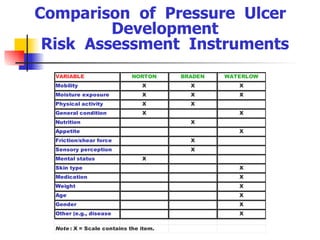
Comparison  of  Pressure  Ulcer  Development Risk  Assessment  Instruments

Spatharakis

  • 1.
    PRESSURE ULCERS and NUTRITIONAL SUPPORT (Prevention and Treatment) Dr. George C. SPATHARAKIS Clinical Director Geriatrician - Gerontologist Public Primary Health Care Center Itea, Phokida, Greece
  • 2.
    ETYMOLOGY Pressure Ulcers or Pressure Sores (ENGL): Description of Pathogenetic Mechanism Decubitus Ulcers (ENGL): Epidemiological (Pathophysiological) Description Escarre (FRAN): From the late Latin medical term “eschara” derivative of the ancient greek word “ εσχάρα ” signifying « the crust on the wound »
  • 3.
    IS NUTRITIONAL STATUS RELATED TO PRESSURE ULCERS? - 1 Relevant Epidemiological Data Relevant Experimental Data Role of Nutrition in the Prevention of Pressure Ulcers Pressure Ulcers Enhance Undernutrition Status and Vice Versa
  • 4.
    IS NUTRITIONAL STATUS RELATED TO PRESSURE ULCERS? - 2 Necessity of Nutritional Supplementation in Pressure Ulcers Type of Nutritional Supplementation in terms of: - Caloric Charge - Protein Content - Specific Nutrients * EPILOGUE - SUMMARY
  • 5.
    EPIDEMIOLOGY Pressure Ulcers Pressure Ulcers affect 0.5% of the total population Pressure sores are common and affect 7- 10-2 3 % of all institutionalized patients and between 7 and 54% in an elderly home residency (Lausanne, CH, 2008) Their distribution is clustered into 2 groups:a)Younger individuals, mostly neurologically impaired (~30%), b)Geriatric Population (~70%) O ne third of the community-dwelling elderly (SHADES study, 2010) are at risk for developing pressure ulcers
  • 6.
    EPIDEMIOLOGY Malnutrition Undernutritionaffects 9-47.1% of the elderly Malnutrition is present in 0.7-3.2% of the geriatric population
  • 7.
    EPIDEMIOLOGY 3.25% ------------  AM J PUBL HEALTH U.S.A. 1991 MANSON A.   (DIETARY ALLOWANCES) ~ 80% IR MED J IRELAND 1992 Aug. FOGARTY J. -----------   (DETERMINE) 37.1% - 47% Prevalence CAN J PUBL HEALTH CANADA 1998 Sep. MacLELLAN D.L. 1% 42% EUR J CLIN NUTR NETHERLANDS , EUROPE 1998 Dec. De GROOT L.C. ---------   1 9 .3% (NS I ) - 21.6% (MNA) BR J NUTR DENMARK 1999 Jan. BECK A.M. MALNUTRITION HIGH RISK NUTRITION JOURNAL COUNTRY YEAR MAIN AUTHOR
  • 8.
    EPIDEMIOLOGY MALNUTRITION HIGH RISK NUTRITION JOURNAL COUNTRY YEAR MAIN AUTHOR 6.9% >5% RIWL 13.3% RIWL JNHA U.S.A. 2004 Sep. S AHYOUN N.R. et al. 7,2% 13.2% JNHA ITALY 2004 Oct. DELACORTE R.R. et al. -----------   9.00%   CAN J PUBL HEALTH   CANADA 200 1 Mar.-Apr. Shatenstein B . , Kergoat M . J . , Nadon S. 0.70% 9.00% AGING ISRAEL 2000 June MAAROW Y. 1% Healthy 4% Home Care 5% Alzheimer -------------- CLIN G ERIATR M ED FRANCE, SWITZERLAND 200 2 Nov. Guigoz Y . , Lauque S . , Vellas B . J.
  • 9.
    EPIDEMIOLOGY Shahin ES et al. (Egypt), NUTRITION, 2010 2,393 from 29 nursing homes and 4 , 067 patients from 22 hospitals PU in both hospital and nursing home patients were significantly (P < 0.01) related to undesired weight loss (5%-10%) Moreover low nutritional intake and low BMI (<18.5) were also significantly related to PU in hospitals and nursing homes
  • 10.
    EPIDEMIOLOGICAL DATA 1 Association of Undernutrition/Malnutrition and Development of Pressure Ulcers Banks M et al (Australia), NUTRITION , 201 0 Sep. Subjects with malnutrition had adjusted odds ratios of 2.6 (95% confidence interval 1.8-3.5, P<0.001) of having a pressure ulcer in acute care facilities and 2.0 (95% confidence interval 1.5-2.7, P<0.001) for residential aged care facilities There was also increased odds ratio of having a pressure ulcer, and having a more severe pressure ulcer (higher stage pressure ulcer and/or a higher number) with increased severity of malnutrition
  • 11.
    EPIDEMIOLOGICAL DATA 2 Association of Undernutrition/Malnutrition and Development of Pressure Ulcers Prospective Study (Thomas DR and al., JAGS, 1996) In high-risk patients, undernutrition was present in 29% of patients at hospital admission by an index of biochemical and anthropometric variables. At 4 weeks, 17% of the undernourished patients had developed a pressure ulcer, compared to 9% of the non-undernourished patients. Thus, patients who were undernourished at hospital admission were twice as likely to develop pressure ulcers as non-undernourished patients (RR 2.1, 95% CI 1.1,4.2)
  • 12.
    EPIDEMIOLOGICAL DATA 3 Association of Undernutrition/Malnutrition and Development of Pressure Ulcers Prospective Study (Pinchcofsky-Devin GD. Kaminski MV Jr., JAGS, 1986) In a long-term-care setting, 59% of residents were diagnosed as undernourished on admission. Among these residents, 7.3% were classified as severely undernourished. Pressure ulcers occurred in 65% of these severely undernourished residents. No pressure ulcers developed in the mild-to-moderately undernourished or well-nourished groups
  • 13.
    EPIDEMIOLOGICAL DATA 4 Association of Undernutrition/Malnutrition and Development of Pressure Ulcers Epidemiological Study (Bergstrom N.-Braden B., JAGS, 1992) In a long-term care setting, the estimated percent intake of dietary protein, but not total caloric intake, predicted development of pressure ulcers. Patients with pressure ulcers ingested 93% of the recommended daily intake of protein compared to an intake of 119% of the recommended protein in the non-pressure ulcer group. Only dietary intake of protein was important in this study. The total dietary intake of calories or the calculated intake of vitamins A and C, iron and zinc did not predict ulcer development
  • 14.
    EPIDEMIOLOGICAL DATA 5 Association of Undernutrition/Malnutrition and Development of Pressure Ulcers Epidemiological Study (Ter Riet G. and coll., J. CLIN. EPIDEM., 1995) Impaired nutritional intake, defined as a persistently poor appetite, meals held due to gastrointestinal disease, or a prescribed diet less than 1100 kcal or 50 gm protein per day, predicted pressure ulcer development in another long-term care setting. However, no other nutritional variable was univariately significant
  • 15.
    EPIDEMIOLOGICAL DATA 6 Association of Undernutrition/Malnutrition and Development of Pressure Ulcers COMMENT In spite of data like the precedent, the association of undernutrition and pressure ulcers remains problematic. The controversy apparent in defining the relationship of pressure ulcers and nutrition may have roots in the physiological variables used to define malnutrition. There is no accepted gold standard for the diagnosis of undernutrition and the markers for nutritional status may reflect underlying disease rather than undernutrition in older, ill persons .
  • 16.
    EPIDEMIOLOGICAL DATA 7 Association of Undernutrition/Malnutrition and Development of Pressure Ulcers Decreases in serum albumin may reflect the presence of inflammatory cytokine production or comorbidity, rather than poor nutritional status. Large reductions in body weight may indicate disease associated cachexia rather than impaired intake alone. Poor nutritional status defined by these variables may indicate poor health rather than poor nutrient intake
  • 17.
    EPIDEMIOLOGICAL DATA 8 Association of Undernutrition/Malnutrition and Development of Pressure Ulcers Pressure ulcers appear to be associated with traditional markers of nutritional status in some, but not all studies. The association is confounded by lack of adjustment of comorbidy or severity of illness. Despite a strong association, a causal relationship of poor nutritional status to pressure ulcers has not been established. The association does not confirm that one follows the other (causality), but that both undernutrition and pressure ulcers frequently coexist in the same persons
  • 18.
    EXPERIMENTAL DATA 1 Association of Undernutrition/Malnutrition and Development of Pressure Ulcers Takeda T. and al., J. DERMATOL., 1992 When pressure was applied for four hours to the skin of well-nourished animals and malnourished animals, pressure ulcers occurred equally in both groups. The degree of ischemic skin destruction was more severe in the malnourished animals. At three days post-injury, epithelialization of the pressure lesions had occurred in normal animals, while massive necrosis of the epidermis was still present in the malnourished animals.These data suggest that while pressure damage may occur independently of nutritional status, malnourished animals may have impaired healing after a pressure injury
  • 19.
    EXPERIMENTAL DATA 2 Association of Undernutrition/Malnutrition and Development of Pressure Ulcers Mitotic Activity is severely depressed in Mice fed on only 70% of the normal caloric intake (Bullough WS-Eisa EA, BRIT. J.CANCER, 1950) Dietary Restriction to 60% of the normal intake produces impaired Collagen Cross-Linking (Reiser KM, J. GER. DERMATOL., 1993) Chronic Protein Undernutrition in Dogs increases Wound Dehiscence (Thompson W and coll., ARCH. SURG., 1938
  • 20.
    Table 1. Epidemiological Association of Nutritional Markers with Development of a Pressure Ulcer
  • 21.
    ROLE of NUTRITION in the PREVENTION of PRESSURE SORES - 1 Henderson C.T. and coll., J. AM. COLL. CLIN. NUTR., 1992 In a study of enteral tube feedings in a long-term care setting, 49 patients were followed for three months. Patients received 1.6 times basal energy expenditure daily, 1.4 g of protein per kilogram per day, and 85% or more of their total recommended daily allowance. At the end of three months, there was no difference in number or healing of pressure ulcers
  • 22.
    ROLE of NUTRITION in the PREVENTION of PRESSURE SORES - 2 Mitchell S.L. and coll., ARCH. INT. MED., 1997 In a study of survival among residents in long-term care with severe cognitive impairment, 135 residents were followed for 24 months. The reasons for the placement of a feeding tube included the presence of a pressure ulcer. Having a feeding tube was not associated with increased survival; in fact the risk was slightly increased (OR 1.06). There was no apparent effect of the prevalence of pressure ulcers in this group of enterally fed persons
  • 23.
    ROLE of NUTRITION in the PREVENTION of PRESSURE SORES - 3 Hartgrink H.H. and al., CLIN. NUTRITION, 1998 The effect of overnight supplemental enteral feeding in patients with a fracture of the hip and a high pressure sore risk score has been evaluated. Of the 62 patients randomised for enteral feeding, only 25 tolerated their tube for more than one week, and only 16 tolerated their tube for two weeks. No difference was found for the development of a pressure ulcer, total serum protein, serum albumin, or the severity of pressure ulcers after one and two weeks
  • 24.
    ROLE of NUTRITION in the PREVENTION of PRESSURE SORES - 4 Hartgrink H.H. and al., CLIN. NUTRITION, 1998 Comparison of the actually tube-fed group (n=25 at one week, n = 16 at two weeks) and the control group showed two to three times higher protein and energy intake (P < 0.0001), and a significantly higher total serum protein and serum albumin after one and two weeks in the actually tube-fed group (all P < 0.001). However, the development of a pressure ulcers and severity were not significantly influenced in the actually tube-fed group. It is possible that the lack of effect on supplemental enteral feeding was due to poor tolerance of the feedings
  • 25.
    ROLE of NUTRITION in the PREVENTION of PRESSURE SORES - 5 Bourdel-Marchasson I. and al., CLIN. NUTRITION, 1999 Oral nutrition supplements were given to 32.6% of one group compared to 86.9% of another group. There was no difference in pressure ulcer incidence (26.4% vs. 20.2%), pressure ulcer prevalence at discharge (14.7% v.s. 10.3%), mortality (15.6% vs. 14.2%), length of stay (17.3 days vs. 17.4 days), or nosocomial infections (26.4% vs. 19.0%). This observational study of hospitalised, critically ill patients given nutritional supplements suggests no effect on pressure ulcer incidence
  • 26.
    ROLE of NUTRITION in the PREVENTION of PRESSURE SORES - 6 Bourdel-Marchasson I. and al., NUTRITION, 2000 The effect of higher caloric and protein intakes in nutritionally supplemented, critically ill older patients was evaluated in a prospective trial. Despite a higher caloric intake in the intervention group (day 2: 1081 Kcal versus 957 Kcal, P = 0.006) and higher protein intake (45.9 g protein versus 38.3 g protein in the control group, P < 0.001), the cumulative incidence of pressure ulcers was only 41% in the nutritional intervention group versus 47% in the control group. The subjects were assigned by wards and were not similar at baseline. The nutritional intervention group had a lower risk for developing pressure ulcers and was more independent
  • 27.
    DOCUMENTED RELATIONSHIPS Undernutrition and Chronic Wounds Chronic Wounds Source of Cytokines Increased Serum Levels of Cytokines Increased Association with Undernutrition Proinflammatory Cytokines Suppress Appetite Promote/Interfere with Wound Healing Undernutritio n Poor Wound Healing Increased Risk of Infection Increased Incidence of Pressure Ulcers
  • 28.
    UTILITY of NUTRITIONAL SUPPLEMENTATION in PRESSURE ULCERS - 1 Breslow RA et al., JAGS, 1993 In 48 patients with stage II through IV pressure ulcers who were being fed enterally, undernutrition was defined as a serum albumin below 35 g/L or body weight more than 10% below the midpoint of the age-specific weight range. Total truncal pressure ulcer surface area showed more decrease (-4.2 cm 2 v. -2.1 cm 2 ) in surface area in patients fed the enteral formula containing 24% protein compared to a formula containing 14% protein. However, changes in body weight or in biochemical parameters of nutritional status did not occur between groups. The study was limited by a small sample size (only 28 patients completed the study), non-random assignment to treatment groups, confounding effects of air-fluidised beds, and the use of two different feeding routes
  • 29.
    UTILITY of NUTRITIONAL SUPPLEMENTATION in PRESSURE ULCERS - 2 Chernoff RS et al., J. AMER. DIET. ASSOC., 1990 In a small study of 12 enterally fed patients with pressure ulcers, the group who received 1.8 g/kg of protein had a 73% improvement in pressure ulcer surface area compared to a 42% improvement in surface area in the group receiving 1.2 g/kg of protein despite the fact that the group that received the higher protein level began the study with larger surface area pressure ulcers (22.6 cm 2 v. 9.1 cm 2 )
  • 30.
    UTILITY of NUTRITIONAL SUPPLEMENTATION in PRESSURE ULCERS - 3 Henderson C.T. and coll., J. AM. COLL. CLIN. NUTR., 1992 In a study of enteral tube feedings in a long-term care setting, 49 patients were followed for three months. Patients received 1.6 times basal energy expenditure daily, 1.4 g of protein per kilogram per day, and 85% or more of their total recommended daily allowance. At the end of three months, there was no difference in number or healing of pressure ulcers (65% pressure ulcers at onset and 61% prevalence at three months)
  • 31.
    UTILITY of NUTRITIONAL SUPPLEMENTATION in PRESSURE ULCERS - 4 Mitchell S.L. and coll., ARCH. INT. MED., 1997 In a study of survival among residents in long-term care with severe cognitive impairment, 135 residents were followed for 24 months. The reasons for the placement of a feeding tube included the presence of a pressure ulcer. The relative risk (RR) of death was 1.49(1.2-1.8) at the onset versus 1.06 (0.8-1.4) after two years
  • 32.
    TYPE of NUTRITIONAL SUPPORT CALORIC CHARGE Caloric Requirements: - Sedentary Adults: 25 kcal/kg/day - Stressed Adults: 40 kcal/kg/day - Moderately Stressed Elderly: 30-35 kcal/kg/day * Henderson C.T. and coll., J. AM. COLL. CLIN. NUTR., 1992 1.6 times Basal Energy Expenditure
  • 33.
    TYPE of NUTRITIONAL SUPPORT PROTEIN CONTENT
  • 34.
    TYPE of NUTRITIONAL SUPPORT DIETARY PROTEIN INTAKE Current Recommendations: 1.2-1.5 gm/kg/day Seem Inadequate in half of chronically ill elderly to MAINTAIN Nitrogen Balance Possible- Logical Recommendation: 1.5-1.8 gm/kg/day (values beyond that may cause dehydration)
  • 35.
    WHICH KIND of PROTEIN? García - Talavera Espín NV , Gómez Sánchez MB , et al., Nutr Hosp. , 2010 Jul-Aug CASEIN Vs SOYBEAN PROTEIN A significant reduction in the incidence of gastrointestinal complications, a reduction in the incidence of ulcers by pressure and less mortality occurred on the group that took formula based on the soybean protein
  • 36.
    TYPE of NUTRITIONAL SUPPORT SPECIFIC NUTRIENTS: AMINOACIDS - 1 Arginine [8.5gr, 17gr/day] does not enhance Lymphocyte Proliferation or Interleukin Production, Langkamp-Henken B. and coll., JPEN, 2000
  • 37.
    TYPE of NUTRITIONAL SUPPORT SPECIFIC NUTRIENTS: AMINOACIDS - 2 Mostly Indirect Evidence concerning other types of Wounds’ Healing Arginine enhances wound collagen disposition in healthy volunteers (Barbul A et al. and Kirk SJ et al., SURGERY, 1990 and 1993) Glutamine in supplementation showed no effects on wound healing (McCauley Ret al., JPEN, 1991) No improvement in wound healing by high supplements of branched amino acid formulations (McCauley C et al., AUST. NZ J. SURG., 1990
  • 38.
    TYPE of NUTRITIONAL SUPPORT SPECIFIC NUTRIENTS: AMINOACIDS - 3 43, Stage III or IV PU patients, RCT, multicountry, 8 weeks Supplementation with the specific ONS accelerated pressure ulcer healing, indicated by a significantly different decrease in ulcer size van Anholt RD, Sobotka L et al., NUTRITION, Sep 2010
  • 39.
    TYPE of NUTRITIONAL SUPPORT SPECIFIC NUTRIENTS: AMINOACIDS - 4 18 patients, observational study Results show a promising benefit of arginine supplementation on PU healing for individuals with spinal cord injury living in the community 9 gr / day
  • 40.
    TYPE of NUTRITIONAL SUPPORT SPECIFIC NUTRIENTS: VITAMIN C - 1 Taylor TV and coll., LANCET, 1974 In a prospective double-blind controlled trial the effect of large doses of ascorbic acid on the healing of pressure-sores has been assessed. 20 surgical patients were studied, the pressure areas being assessed by serial photography and ulcer tracings. The mean ascorbic-acid levels in treated and non-treated groups one month after the start of treatment were 65.6 and 25.8 mug per 10-8 white blood-cells. In the group treated with ascorbic acid there was a mean reduction in pressure-sore area of 84% after one month compared with 42.7% in the placebo group. These findings are statistically significant (P less than 0.005) and suggest that ascorbic acid may accelerate the healing of pressure-sores
  • 41.
    TYPE of NUTRITIONAL SUPPORT SPECIFIC NUTRIENTS: VITAMIN C - 2 Ringsdorf WM Jr et al., O RAL S URG. O RAL M ED. O RAL P ATHOL., 1982 Clinical studies provide evidence that wound healing in subjects judged not deficient in vitamin C can be significantly accelerated with supplements of this nutrient above the recommended daily allowance (RDA). The authors administered daily dosages of 500 to 3,000 mg., which is roughly 8 to 50 times the RDA of 60 mg., to subjects recovering from surgery, other injuries, decubital ulcers, and leg ulcers induced by hemolytic anemia. Four grams of ascorbic acid daily produced a significant improvement in the quality of newly synthesized collagen but did not alter that formed prior to the supplementation of C
  • 42.
    TYPE of NUTRITIONAL SUPPORT SPECIFIC NUTRIENTS: VITAMIN C - 3 Ter Riet G. et al., J.CLIN.EPIDEMIOL.,1995 The objective of this study was to assess the effects of ascorbic acid supplementation, 500 mg twice daily in the treatment of pressure ulcers of 88 patients in a blinded randomized trial over 12 weeks. A nalysis showed that the wound closure rate was not higher in the intervention group than in the control group (Cox hazard ratio of 0.78 [90% precision interval, 0.44-1.39]). Mean absolute healing rates were 0.21 and 0.27 cm2/week in the intervention and control group, respectively (PI of the adjusted difference: -0.17 to 0.13). Relative healing rates and healing velocities did not show favorable results of ascorbic acid supplementation, either. The improvement was 0.45 and 0.72 points per week in the intervention and control group, respectively
  • 43.
    TYPE of NUTRITIONAL SUPPORT SPECIFIC NUTRIENTS: VITAMINS A, C, E Vitamin E deficiency does not play a role in wound healing (Waldorf H., ADV. DERM.,1995) Prophylactic administration of vit . E may influence the occurrence of pressure ulcers in humans undergoing elective surgery (Houwing R., J. WOUND CARE, 2000) Low concentrations of leucocyte vitamin C appear to be associated with subsequent development of pressure sores in elderly patients with femoral neck fractures (Goode HF and coll., BMJ, 1992) Con centrations of albumin, haemoglobin, and vitamins A and E were similar in patients who developed a pressure sore and those who did not (idem) Negative correlations with pressure ulcer number were observed for cholesterol, albumin, zinc, retinol, alpha-tocopherol and iron (Henderson CT et al., J. AM. COLL. NUTR., 1992) in 40 ill, tube-fed elderly
  • 44.
    TYPE of NUTRITIONAL SUPPORT SPECIFIC NUTRIENTS: VITAMIN D and ELECTROLYTES Zhou XJ et al., J. AM. PARAPLEGIA SOC., 1993 In a S pinal C ord I njured (SCI) Men, those wh o w ere the least physically active, i.e., those with pressure ulcers, showed the greatest depression of serum 25(OH)-vitamin D, calcium, and magnesium concentrations. The observed reduction in serum 25(OH)-vitamin D in SCI patients appears to be partly related to reduced cutaneous vitamin D biosynthesis from sunlight deprivation occasioned by physical disability and hospitalization. In addition, nutritional deficiency and altered intestinal transport may be involved. The reduction in serum calcium concentration may be related to abnormal vitamin D metabolism and hypoalbuminemia (reduced protein-bound calcium)
  • 45.
    TYPE of NUTRITIONAL SUPPORT SPECIFIC NUTRIENTS: ZINC - 1 NORRIS JR-REYNOLDS RE, JAGS, 1971 In a long-term care setting patients with pressure ulcers were orally administered with 200mg of Zinc Sulfate TID. No significant difference in wound healing was observed However, high serum zinc levels may inhibit healing, impair phagocytosis and interfere with copper metabolism
  • 46.
    TYPE of NUTRITIONAL SUPPORT SPECIFIC NUTRIENTS: ZINC - 2 Low Zinc levels in patients who will develop or have developed pressure ulcers have been reported by many authors: - BERGSTROM M. et al., JAGS, 1992 - BRESLOW RA et al., JPEN, 1991 - GOODE HF et al., BMJ, 1992 - HENDERSON CT et al., J. AM. COLL. NUTR., 1992 - RUDMAN N. et al., J.AM.COL.NUTR., 1995 - CRUSE JM et al., EXP. MOL. PATHOL., 2000
  • 47.
    TYPE of NUTRITIONAL SUPPORT SPECIFIC NUTRIENTS: ZINC - 3 Usual Elderly Persons Daily Intake of Zinc: 7-11 mg of zinc /day Recommended Daily Recommendations: 12-15 mg of zinc /day
  • 48.
    TYPE of NUTRITIONAL SUPPORT SPECIFIC NUTRIENTS COPPER Low Copper levels in patients with pressure ulcers have been reported by: - BERGSTROM M. et al., JAGS, 1992
  • 49.
    EPILOGUE HIPPOCRATES « Of Ancient Medicine » Paragraph 9: “ …because insufficient feeding is possible, precisely on account of the human nature, not only paralyze it and weaken it but also bring it to death. But many other sufferings other of those caused by overnutrition, and I think not less harmful (injurious), are produced by undernutrition and are miscellaneous and difficult to diagnose. So, it is necessary to devise some measure of reasoning; but such a measure does not exist neither by count (number) nor by weight in accordance to which one could come to the exact, but (the only measure is) the organism’s endurance (resistance, sensitivity) …” Personal Translation
  • 50.
    MALNUTRITION and PUs Fontaine J , Raynaud - Simon A . , Presse Med. 2008 Jul-Aug;37(7-8):1150-7 CRITERIA for MALNUTRITION in the elderly subjects are : W eight loss > or =5% in 3 months or > or =10% in 6 months , BMI<21 kg/m (2), A lbumin <35 g/L MNA ( Mini Nutritional Assessment ) score <17
  • 51.
    SUMMARY NUTRITIONAL SUPPORT of PRESSURE ULCERS PATIENTS 1.2-1.6 base energy expenditure 30-35 kcal/kg/day 1.5-1.8 gr of protein/kg/day Arginine Electrolytes (Na, Ca,Mg), if necessary Vitamin C 500-1000 mg/day Zinc 12-15 mg/day (???) Ellinger S , Stehle P . : Efficacy of vitamin supplementation in situations with wound healing disorders : results from clinical intervention studies C urr Opin Clin Nutr Metab Care. 2009 Nov;12(6):588-95
  • 52.
    Comparison of Pressure Ulcer Development Risk Assessment Instruments