Vertigo
วัตถุประสงค์

 1.ระบุอาการและอาการแสดงของกลุ่มอาการเวียนศีรษะที่
  พบบ่อย ๆ ได้
 2.วินิจฉัยและวินจฉัยจำาแนกโรคได้จากประวัติและการ
                  ิ
  ตรวจร่างกาย แยก peripheral vertigo ออกจาก
  central vertigo ได้
 3.อธิบายแนวทางการส่งตรวจทางห้องปฏิบัติการเพือให้
                                                ่
  ได้การวินิจฉัยโรคได้
 4.อธิบายหลักการและแนวทางในการรักษากลุ่มอาการ
  เวียนศีรษะได้
 5.ประเมินขีดความสามารถในการดูแลผู้ป่วย และส่งต่อ
 การรักษาการสมดุลย์ของการทรงตัวต้อง
 อาศัย
  visual system
  Proprioception
   vestibular system
Vertigo
 Illusionor hallucination of movement
 Vestibular system
Vertigo
 History   taking
   Character  of disorientation
   Time course of vertigo , duration
   Precipitating factors
   Associated symptoms : hearing loss , tinnitus , nausea ,
    vomiting , diplopia , CNS symptoms
   Predisposing symptoms : general condition, trauma ,
    drugs
Vertigo
 Physical   examination
   ENT  examination
   CNS examination
   Vestibular system examination :
      Unterberger test
      Caloric test
      Dix-Hallpike maneuver
      Evaluation of pathologic nystagmus
Vertigo
 Investigation
   Audiometry
   ABR   : Auditory Brainstem Response
   ENG : Electronystagmography
   Others : CBC,U/A,FBS,electrolyte,cholesterol,
    triglyceride,TFT,VDRL,CT scan ,MRI
Peripheral       Central
 1.Onset         sudden          insidious
 2.Pattern       episodic        continuous
 3.Sensation     frequent        infrequent
    of rotation
 4.Severity      often intense   seldom intense
 5.Duration      min.,hr.        mo. to yr.
Peripheral   Central
 6.Influence of    marked      slight or none
  head movement
 7.Syncope        never        rare
 8.Convulsion     never        rare
 9.Tinnitus       common       rare
 10.Deafness      common       rare
Peripheral   Central
 11.Spontaneous   may be       may be
     nystagmus     present      present
 12.Type of       horizontal   horizontal,
     nystagmus                  vertical
 13.Other CNS     rare         common
     involvement
Peripheral Cause of Vertigo

 BPPV
 Meniere’s  disease
 Sudden hearing loss
 Vestibular neuritis
 Labyrinthitis
BPPV

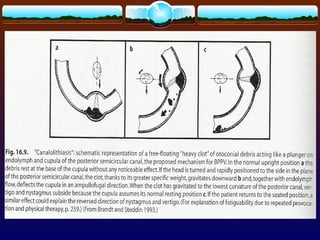
 Benign paroxysmal positional vertigo
 The most common vestibular disorder
 Age range 11-84 yr. Mean age at onset 54 yr
 Cupulolithiasis
 Canalithiasis
BPPV

 Signs    and Symptoms
   Vertigo and nystagmus
     Latency of onset , usually 2-6 sec.
     Short duration , usually less than 30 sec.
     Reversibility
     Fatigability

 Nausea , vomiting
 Dix-Hallpike maneuver
BPPV

 Cause
   Idiopathic
   Trauma
   Otitismedia
   Vestibular neuritis
   Meniere’s disease
   Otosclerosis
BPPV

 Cause
   Sudden SNHL
   CNS disease
   Vertebral basilar insufficiency
   Acoustic neuroma
BPPV

 Treatment
   Reassurance
   Medication  : minor transquilizer
   Vestibular rehabilitation
     Repositioning maneuver
   Surgery
Meniere’s disease

 Idiopathic endolymphatic hydrop
 Signs and symptoms
    Episodic vertigo lasting min to hr.
    Fluctuating hearing loss
    Tinnitus , fullness
Meniere’s disease

 Audiogram : low tone hearing loss
 ABR
 ENG
 Radiography
Meniere’s disease

   Treatment
     Vasodilator
     Cinnarizine , Dramamine
     K-sparing diuretic drug
     Stellate ganglion block
     Intratympanic gentamicin therapy
     Vestibular neurectomy
Sudden hearing loss

 Hearing loss : hr or day
 Vertigo
 Tinnitus
 Others : headache , URI symptoms
 Nystagmus
 Tuning fork
 Audiogram : unilateral SNHL
Sudden hearing loss

 Cause
   Known   cause : Syphilis, Meniere’s disease,multiple
    sclerosis , acoustic neuroma
   Unknown : เชื่อว่าเกิดจากvirus,ความผิดปกติของหลอด
    เลือด autoimmune disease, labyrinthine membrane
    rupture ( LMR)
Sudden hearing loss

 Treatment
   Bed rest
   Repeat audiogram
   Steroid
   Vasodilator
   Heparin
Vestibular neuritis

 Vertigo เป็นทันทีทนใดและเป็นอยู่นาน
                      ั
 Spontaneous nystagmus
 มักมีไข้หวัดนำามาก่อน
 มักเดินเซข้างทีมี lesion
                  ่
 Audiogram : normal
 Caloric test : canal paresis or nonresponsive
Vestibular neuritis

 Treatment
   Rest
   Dramamine     , diazepam
   Steroid
   Physical   therapy : Cawthorne-Cooksey exercise
Labyrinthitis

 Virus : mump, measles, Herpes
 Bacteria : syphilis , OM ,meningitis
   TB more often a complication of Tubercuolus
    meningitis than of Tuberculous otitis media.
   Syphilis : congenital , acquire
      Fluctuating episodes of hearing loss and vertigo
Acoustic neuroma

 Acoustic schwannoma
 Schwann cell tumor of vestibular part of CN VIII มักเกิด
  บริเวณ Internal acoustic canal แล้วยื่นเข้าไปบริเวณ CP
  angle
 Initially,slowly progressive hearing loss and tinnitus .
 Postural imbalance or disequilibrium.
Acoustic neuroma

 Once the lesion compress the brainstem and
  vestibulocerebellum ,central compensation becomes
  impaired : vertigo , ataxia.
 Audiogram : unilateral SNHL
 ABR
 Caloric test : hypofunction
 MRI
 Treatment : surgery, radiation
Central cause of vertigo

 1.Vertebrobasilar     insufficiency
   Elderly
   Atherosclerosis
   Vertigo
   Nausea,vomiting
   Ataxia
   Visual   illusion ,visual field defect, diplopia, headache
Central cause of vertigo

 1.1Brainstem TIA
 1.2Wallenberg’s syndrome ( Lateral medullary
  infartion )
 1.3Acute posterior cerebellar infarction
 1.4Acute inferior cerebellar infarction
Central cause of vertigo

 2.Cerebellar   hemorrhage
   Vertigo
   Nausea,  vomiting
   Headache
   Stiffness of neck, incoordination
   50% loss of consciousness in 24 hr.
Central cause of vertigo

 3.Vestibular   migraine
   Episodes of vertigo
   Increased sensitivity to motion during the attack and
    increased susceptibility to motion sickness in between
    attacks
   In 33% of pt episodic vertigo is not associated with
    headache.
Central cause of vertigo

 3.Vestibular   migraine
   In 33% vertigo is associated with visual symptoms ,
    dysarthria , tinnitus, decreased hearing , diplopia,
    ataxia, bilateral paraesthesia, bilateral paresis or
    decreased level of consciousness
Central cause of vertigo

 3.Vestibular   migraine
   Treatment
     Acute attack : analgesic , antiemetic
     Prophylaxis for migraine attack : beta-blocker,
      calcium antagonist
Central cause of vertigo

 4.   Multiple sclerosis
   Vertigo without hearing loss
   Optic neuritis, transverse myelitis, others brainstem
    signs
Central cause of vertigo

 5.Vestibular   epilepsy
   Dysequilibrium with rotational or linear vertigo
   Accompany by body , head and eye rotation with or
    without nystagmus
   May associated with mild nausea(vomiting not typical )
Medical treatment

 1.Labyrinthine   suppressant
   Decreased  vertigo , nausea, vomiting
   1.1 Antihistamine : dimenhydrinate,meclizine
   1.2 Antiemetic : prochlorperazine (Compazine),
    diphenidol
   1.3 Anticholinergic : scopolamine
   1.4 Minor tranquilizer : diazepam
Medical treatment

 2.Vasodilator
   B-histine   , cinnarizine

 3.Steroid

Vertigo2010

  • 1.
  • 2.
    วัตถุประสงค์  1.ระบุอาการและอาการแสดงของกลุ่มอาการเวียนศีรษะที่ พบบ่อย ๆ ได้  2.วินิจฉัยและวินจฉัยจำาแนกโรคได้จากประวัติและการ ิ ตรวจร่างกาย แยก peripheral vertigo ออกจาก central vertigo ได้  3.อธิบายแนวทางการส่งตรวจทางห้องปฏิบัติการเพือให้ ่ ได้การวินิจฉัยโรคได้  4.อธิบายหลักการและแนวทางในการรักษากลุ่มอาการ เวียนศีรษะได้  5.ประเมินขีดความสามารถในการดูแลผู้ป่วย และส่งต่อ
  • 3.
  • 4.
    Vertigo  Illusionor hallucinationof movement  Vestibular system
  • 5.
    Vertigo  History taking  Character of disorientation  Time course of vertigo , duration  Precipitating factors  Associated symptoms : hearing loss , tinnitus , nausea , vomiting , diplopia , CNS symptoms  Predisposing symptoms : general condition, trauma , drugs
  • 6.
    Vertigo  Physical examination  ENT examination  CNS examination  Vestibular system examination :  Unterberger test  Caloric test  Dix-Hallpike maneuver  Evaluation of pathologic nystagmus
  • 7.
    Vertigo  Investigation  Audiometry  ABR : Auditory Brainstem Response  ENG : Electronystagmography  Others : CBC,U/A,FBS,electrolyte,cholesterol, triglyceride,TFT,VDRL,CT scan ,MRI
  • 8.
    Peripheral Central  1.Onset sudden insidious  2.Pattern episodic continuous  3.Sensation frequent infrequent of rotation  4.Severity often intense seldom intense  5.Duration min.,hr. mo. to yr.
  • 9.
    Peripheral Central  6.Influence of marked slight or none head movement  7.Syncope never rare  8.Convulsion never rare  9.Tinnitus common rare  10.Deafness common rare
  • 10.
    Peripheral Central  11.Spontaneous may be may be nystagmus present present  12.Type of horizontal horizontal, nystagmus vertical  13.Other CNS rare common involvement
  • 11.
    Peripheral Cause ofVertigo  BPPV  Meniere’s disease  Sudden hearing loss  Vestibular neuritis  Labyrinthitis
  • 12.
    BPPV  Benign paroxysmalpositional vertigo  The most common vestibular disorder  Age range 11-84 yr. Mean age at onset 54 yr  Cupulolithiasis  Canalithiasis
  • 15.
    BPPV  Signs and Symptoms  Vertigo and nystagmus  Latency of onset , usually 2-6 sec.  Short duration , usually less than 30 sec.  Reversibility  Fatigability  Nausea , vomiting  Dix-Hallpike maneuver
  • 17.
    BPPV  Cause  Idiopathic  Trauma  Otitismedia  Vestibular neuritis  Meniere’s disease  Otosclerosis
  • 18.
    BPPV  Cause  Sudden SNHL  CNS disease  Vertebral basilar insufficiency  Acoustic neuroma
  • 19.
    BPPV  Treatment  Reassurance  Medication : minor transquilizer  Vestibular rehabilitation Repositioning maneuver  Surgery
  • 22.
    Meniere’s disease  Idiopathicendolymphatic hydrop  Signs and symptoms  Episodic vertigo lasting min to hr.  Fluctuating hearing loss  Tinnitus , fullness
  • 23.
    Meniere’s disease  Audiogram: low tone hearing loss  ABR  ENG  Radiography
  • 24.
    Meniere’s disease  Treatment  Vasodilator  Cinnarizine , Dramamine  K-sparing diuretic drug  Stellate ganglion block  Intratympanic gentamicin therapy  Vestibular neurectomy
  • 25.
    Sudden hearing loss Hearing loss : hr or day  Vertigo  Tinnitus  Others : headache , URI symptoms  Nystagmus  Tuning fork  Audiogram : unilateral SNHL
  • 26.
    Sudden hearing loss Cause  Known cause : Syphilis, Meniere’s disease,multiple sclerosis , acoustic neuroma  Unknown : เชื่อว่าเกิดจากvirus,ความผิดปกติของหลอด เลือด autoimmune disease, labyrinthine membrane rupture ( LMR)
  • 27.
    Sudden hearing loss Treatment  Bed rest  Repeat audiogram  Steroid  Vasodilator  Heparin
  • 28.
    Vestibular neuritis  Vertigoเป็นทันทีทนใดและเป็นอยู่นาน ั  Spontaneous nystagmus  มักมีไข้หวัดนำามาก่อน  มักเดินเซข้างทีมี lesion ่  Audiogram : normal  Caloric test : canal paresis or nonresponsive
  • 29.
    Vestibular neuritis  Treatment  Rest  Dramamine , diazepam  Steroid  Physical therapy : Cawthorne-Cooksey exercise
  • 30.
    Labyrinthitis  Virus :mump, measles, Herpes  Bacteria : syphilis , OM ,meningitis  TB more often a complication of Tubercuolus meningitis than of Tuberculous otitis media.  Syphilis : congenital , acquire Fluctuating episodes of hearing loss and vertigo
  • 31.
    Acoustic neuroma  Acousticschwannoma  Schwann cell tumor of vestibular part of CN VIII มักเกิด บริเวณ Internal acoustic canal แล้วยื่นเข้าไปบริเวณ CP angle  Initially,slowly progressive hearing loss and tinnitus .  Postural imbalance or disequilibrium.
  • 32.
    Acoustic neuroma  Oncethe lesion compress the brainstem and vestibulocerebellum ,central compensation becomes impaired : vertigo , ataxia.  Audiogram : unilateral SNHL  ABR  Caloric test : hypofunction  MRI  Treatment : surgery, radiation
  • 33.
    Central cause ofvertigo  1.Vertebrobasilar insufficiency  Elderly  Atherosclerosis  Vertigo  Nausea,vomiting  Ataxia  Visual illusion ,visual field defect, diplopia, headache
  • 34.
    Central cause ofvertigo  1.1Brainstem TIA  1.2Wallenberg’s syndrome ( Lateral medullary infartion )  1.3Acute posterior cerebellar infarction  1.4Acute inferior cerebellar infarction
  • 35.
    Central cause ofvertigo  2.Cerebellar hemorrhage  Vertigo  Nausea, vomiting  Headache  Stiffness of neck, incoordination  50% loss of consciousness in 24 hr.
  • 36.
    Central cause ofvertigo  3.Vestibular migraine  Episodes of vertigo  Increased sensitivity to motion during the attack and increased susceptibility to motion sickness in between attacks  In 33% of pt episodic vertigo is not associated with headache.
  • 37.
    Central cause ofvertigo  3.Vestibular migraine  In 33% vertigo is associated with visual symptoms , dysarthria , tinnitus, decreased hearing , diplopia, ataxia, bilateral paraesthesia, bilateral paresis or decreased level of consciousness
  • 38.
    Central cause ofvertigo  3.Vestibular migraine  Treatment Acute attack : analgesic , antiemetic Prophylaxis for migraine attack : beta-blocker, calcium antagonist
  • 39.
    Central cause ofvertigo  4. Multiple sclerosis  Vertigo without hearing loss  Optic neuritis, transverse myelitis, others brainstem signs
  • 40.
    Central cause ofvertigo  5.Vestibular epilepsy  Dysequilibrium with rotational or linear vertigo  Accompany by body , head and eye rotation with or without nystagmus  May associated with mild nausea(vomiting not typical )
  • 41.
    Medical treatment  1.Labyrinthine suppressant  Decreased vertigo , nausea, vomiting  1.1 Antihistamine : dimenhydrinate,meclizine  1.2 Antiemetic : prochlorperazine (Compazine), diphenidol  1.3 Anticholinergic : scopolamine  1.4 Minor tranquilizer : diazepam
  • 42.
    Medical treatment  2.Vasodilator  B-histine , cinnarizine  3.Steroid