JUNAID AHMED
M.SC. BIOINFORMATICS
REG NO. 181706016
MSOLS, MAHE
1
TABLE OF CONTENTS
Introduction
What is personalized medicine
What is whole exome sequencing
What is Big data
Big data characteristics of WES
NGS data analysis
Biological databases & BI tools
AI driven genomics
2
Introduction
NGS -> Genomic sequence data
person’s genome data has been instrumental in assessing the substantial portion of person-to-
person variability in response to diagnosis, treatment, and prevention strategies.
DNA sequence – Reference -> variability map (large scale)
Individual variability -> “Chemical Individuality”
3
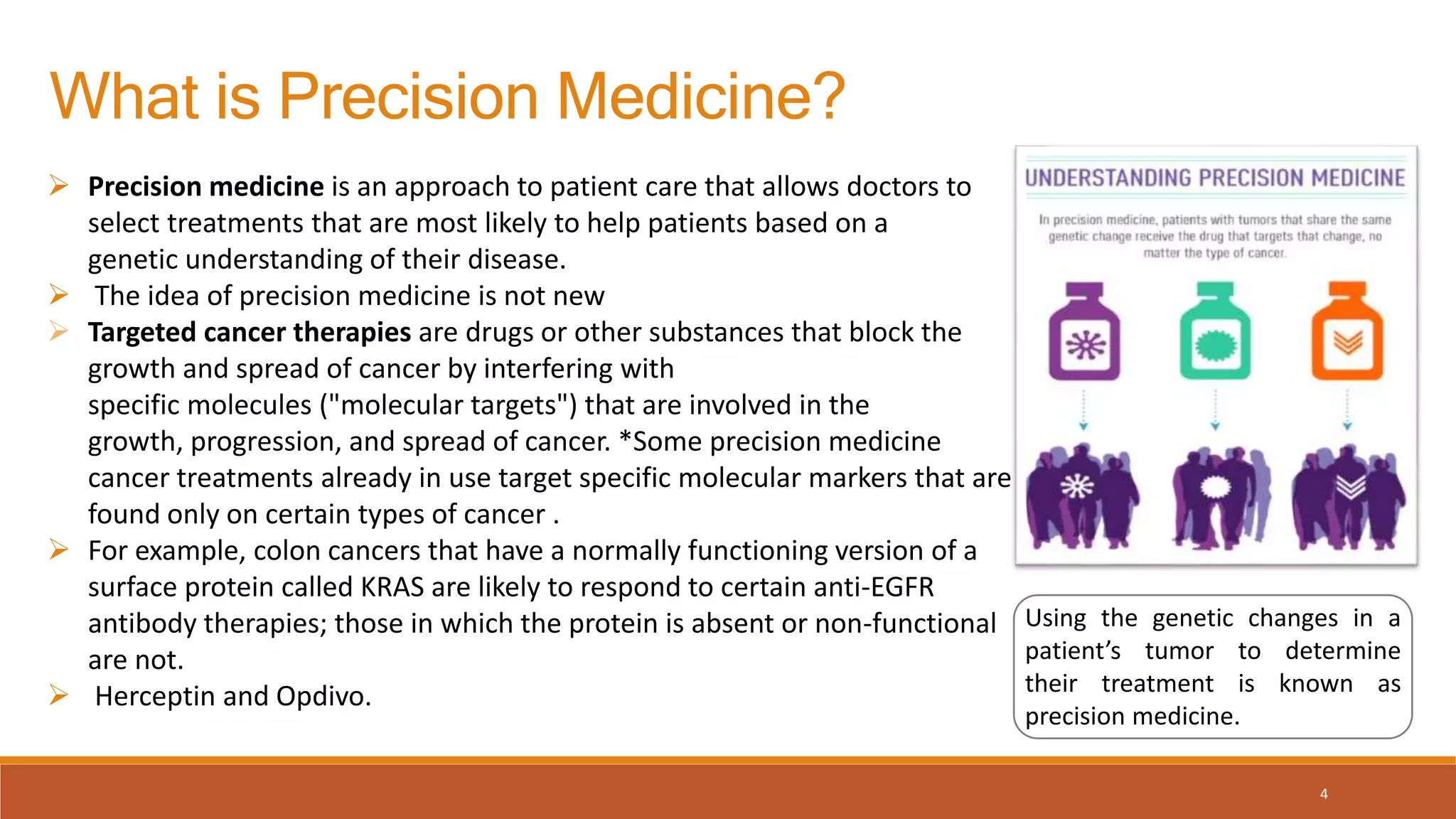
What is Precision Medicine?
Using the genetic changes in a
patient’s tumor to determine
their treatment is known as
precision medicine.
 Precision medicine is an approach to patient care that allows doctors to
select treatments that are most likely to help patients based on a
genetic understanding of their disease.
 The idea of precision medicine is not new
 Targeted cancer therapies are drugs or other substances that block the
growth and spread of cancer by interfering with
specific molecules ("molecular targets") that are involved in the
growth, progression, and spread of cancer. *Some precision medicine
cancer treatments already in use target specific molecular markers that are
found only on certain types of cancer .
 For example, colon cancers that have a normally functioning version of a
surface protein called KRAS are likely to respond to certain anti-EGFR
antibody therapies; those in which the protein is absent or non-functional
are not.
 Herceptin and Opdivo.
4
What is whole Exome sequencing?
DNA Sequencing
NGS – WES, WGS
The original sequencing technology, called Sanger sequencing, was a
breakthrough that helped scientists determine the human genetic code, but it is
time-consuming and expensive. The Sanger method has been automated to
make it faster and is still used in laboratories today to sequence short pieces of
DNA, but it would take years to sequence all of a person's DNA ( genome). Next-
generation sequencing has speed up the process (taking only days to weeks to
sequence a human genome) while reducing the cost.
5
With NGS, it is now feasible to sequence large amounts of DNA.
Exons, are thought to make up 1 percent of a person's genome.(Exome) and the
method of sequencing them is known as whole exome sequencing.
This method allows variations in the protein-coding region of any gene to be
identified, rather than in only a select few genes. Because most known mutations
that cause disease occur in exons, whole exome sequencing is thought to be an
efficient method to identify possible disease-causing mutations.
However, researchers have found that DNA variations outside the exons can affect
gene activity and protein production and lead to genetic disorders
variations that whole exome sequencing would miss. Another method, called
whole genome sequencing, determines the order of all the nucleotides in an
individual's DNA and can determine variations in any part of the genome.
6
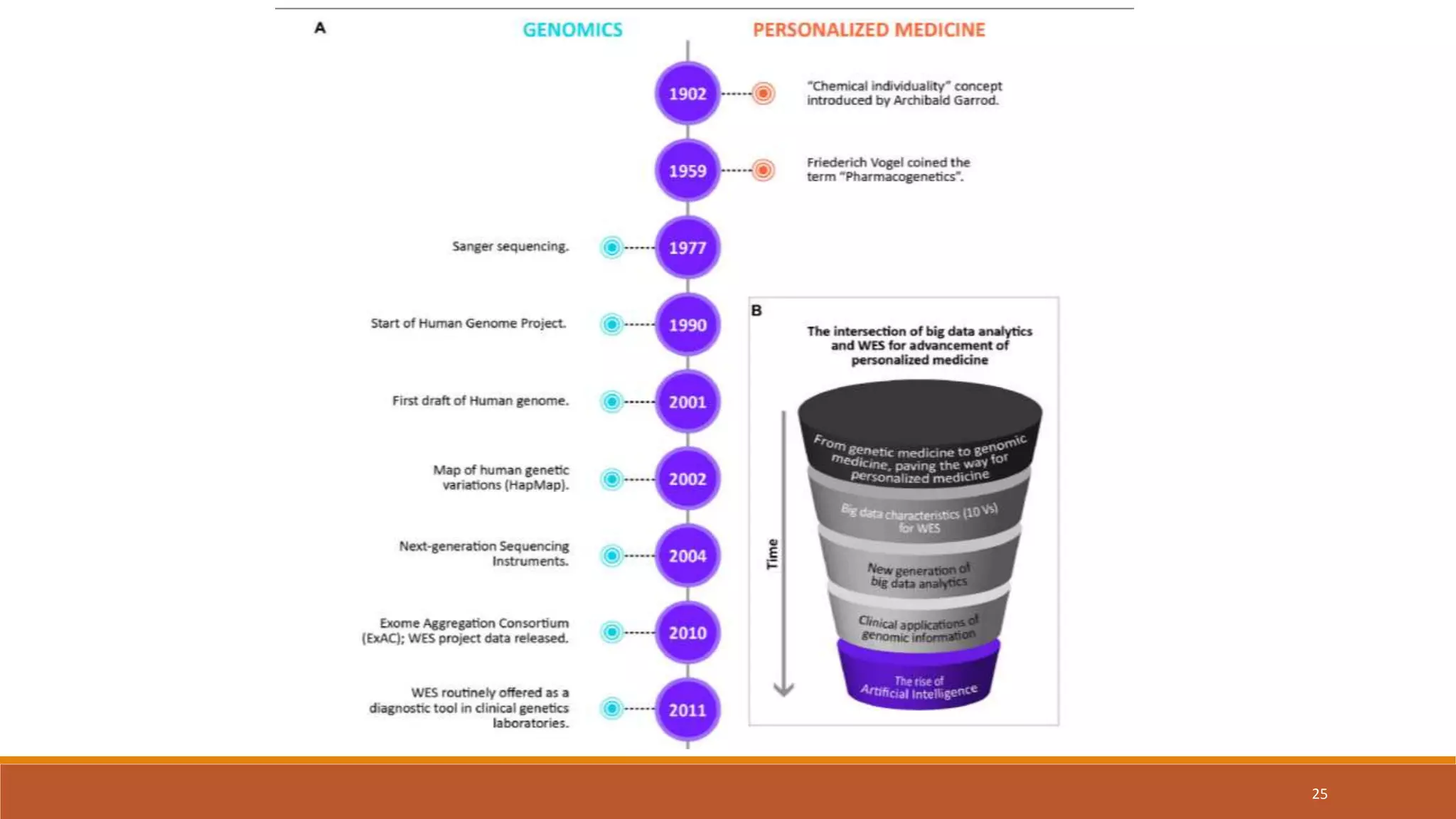
FROM GENETIC MEDICINE GENOMIC MEDICINE -
PAVING THE WAY FOR PERSONALIZED MEDICINE
Knowing the sequence data was simply not enough to understand the etiological and
pathogenic processes in complex diseases – the genomic data had a low predictive power and
penetrance.
The sequencing of the human genome was more of a technological achievement rather than
scientific
HapMap project- Variations in the genome
GWAS discoveries- it was possible to identify essential metabolic pathways in many traits and
medical conditions, paving the way for the first predictive and prognostic genetic test related to
multifactorial diseases, and drug metabolism and response(pharmacogenetics).
Cancer genetic tests: Predictive, Prognostic, Targeted treatments.
Cancer genomics.
7
8
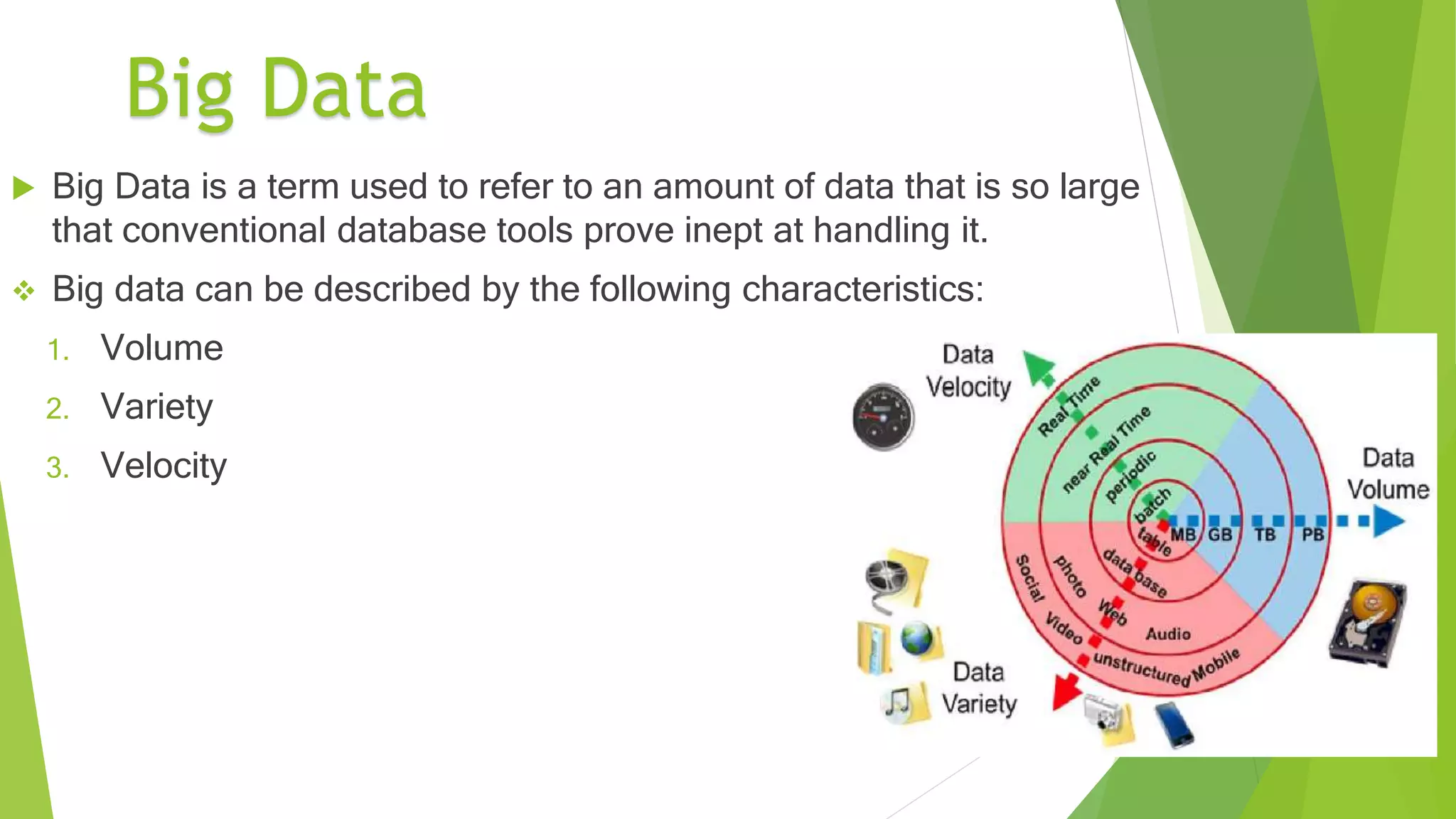
 Big Data is a term used to refer to an amount of data that is so large
that conventional database tools prove inept at handling it.
 Big data can be described by the following characteristics:
1. Volume
2. Variety
3. Velocity
Big Data
Big Data Characteristics of Whole Exome
Sequencing
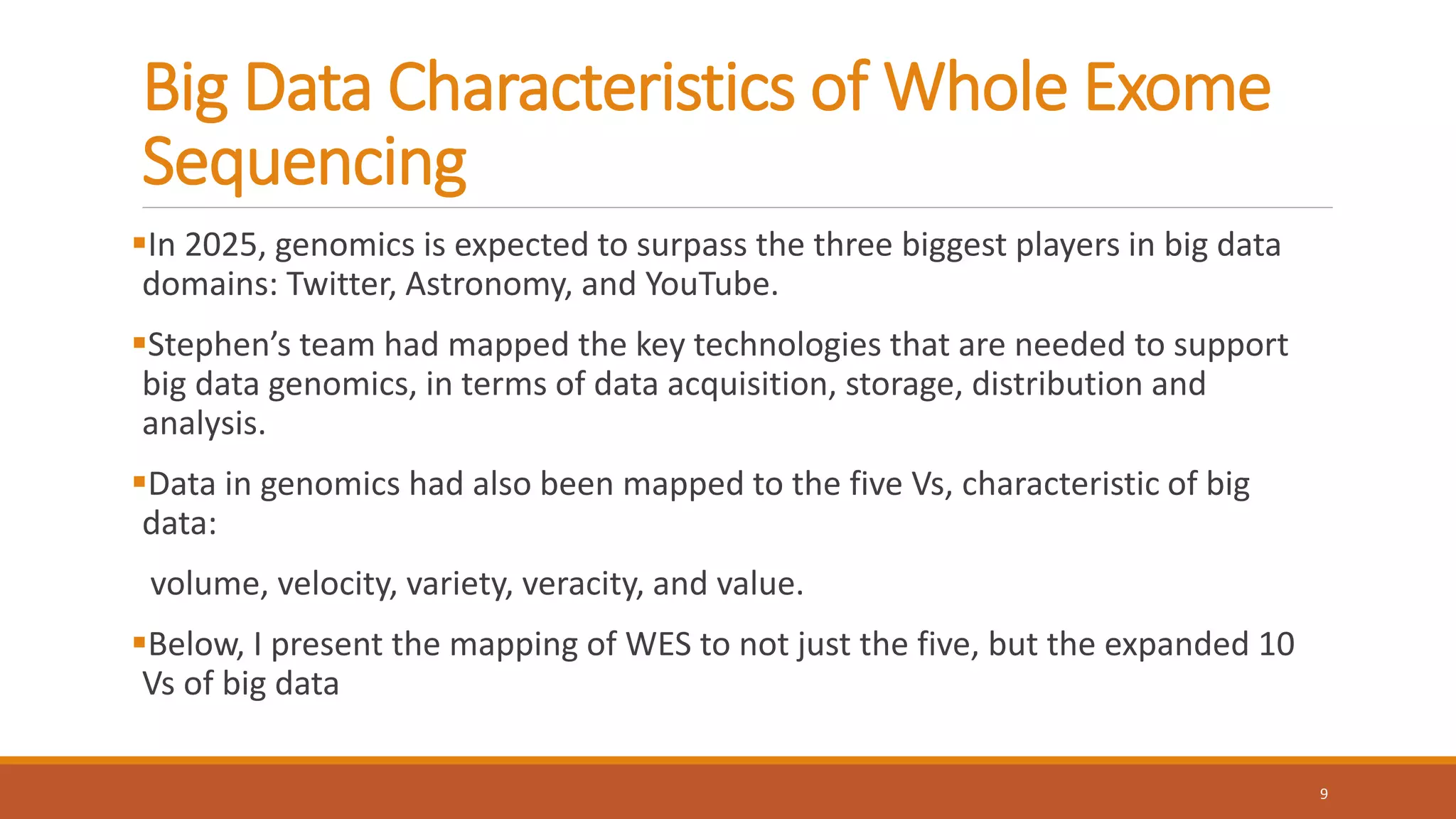
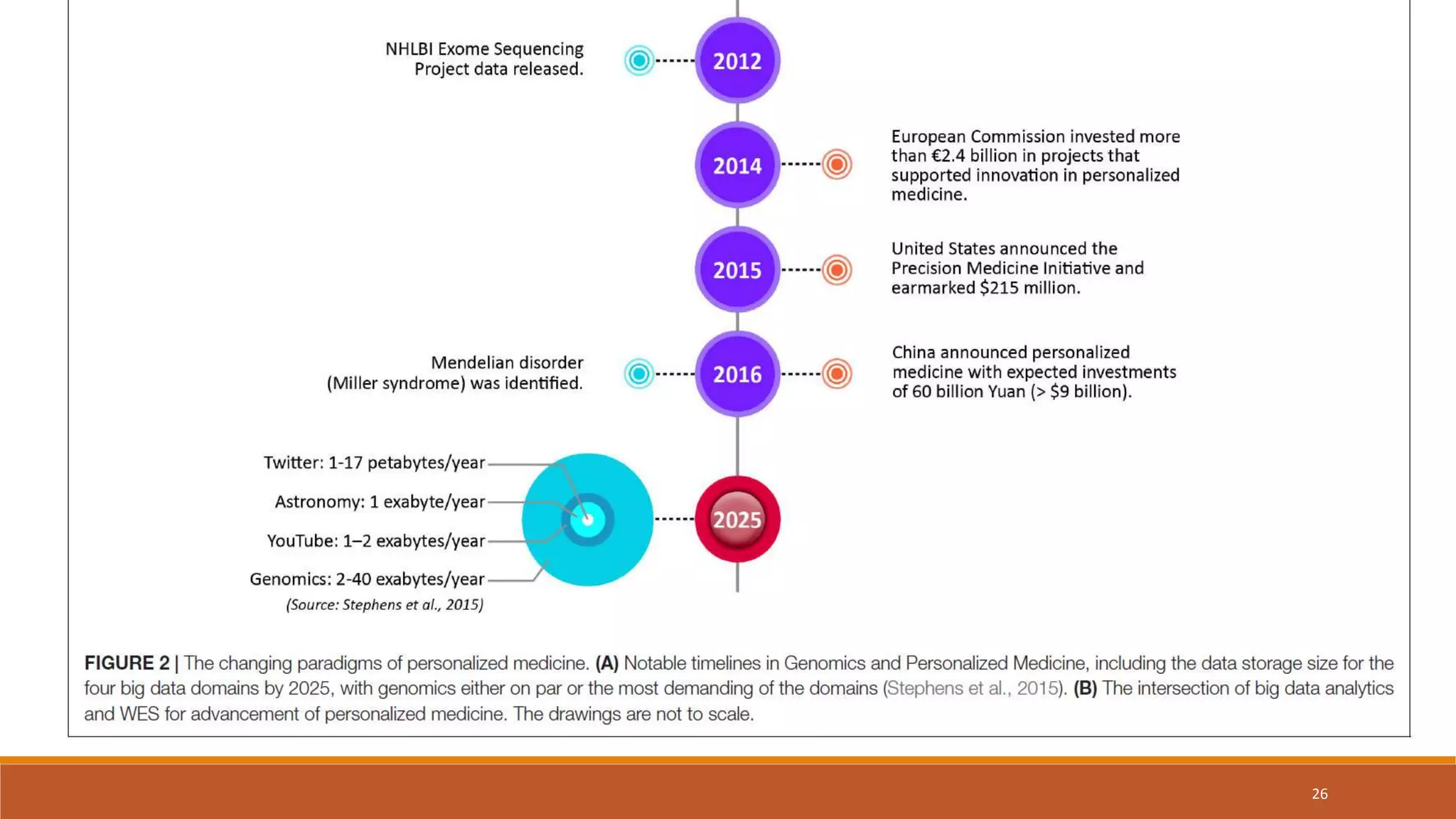
In 2025, genomics is expected to surpass the three biggest players in big data
domains: Twitter, Astronomy, and YouTube.
Stephen’s team had mapped the key technologies that are needed to support
big data genomics, in terms of data acquisition, storage, distribution and
analysis.
Data in genomics had also been mapped to the five Vs, characteristic of big
data:
volume, velocity, variety, veracity, and value.
Below, I present the mapping of WES to not just the five, but the expanded 10
Vs of big data
9
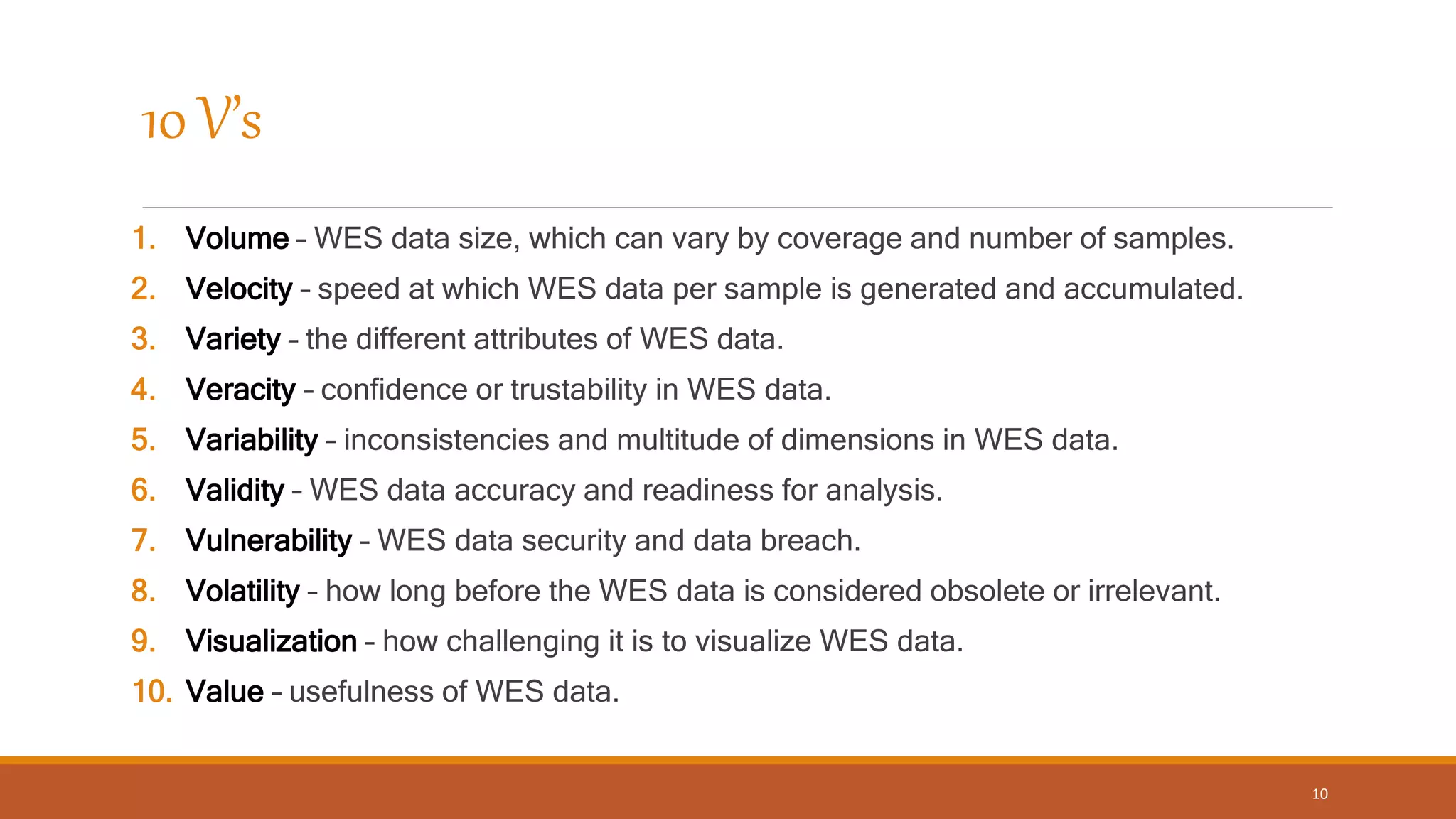
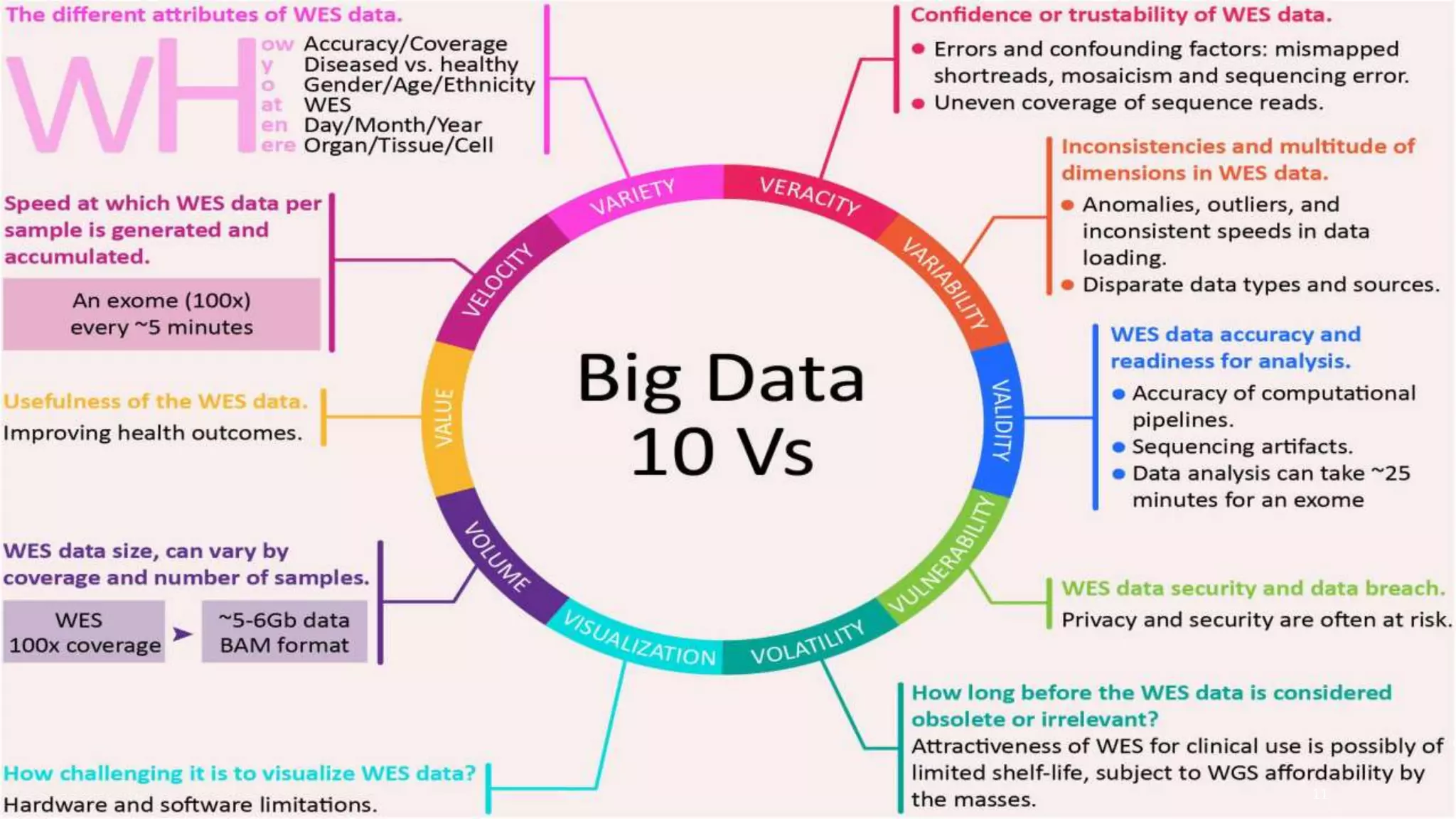
10 V’s
1. Volume – WES data size, which can vary by coverage and number of samples.
2. Velocity – speed at which WES data per sample is generated and accumulated.
3. Variety – the different attributes of WES data.
4. Veracity – confidence or trustability in WES data.
5. Variability – inconsistencies and multitude of dimensions in WES data.
6. Validity – WES data accuracy and readiness for analysis.
7. Vulnerability – WES data security and data breach.
8. Volatility – how long before the WES data is considered obsolete or irrelevant.
9. Visualization – how challenging it is to visualize WES data.
10. Value – usefulness of WES data.
10
11
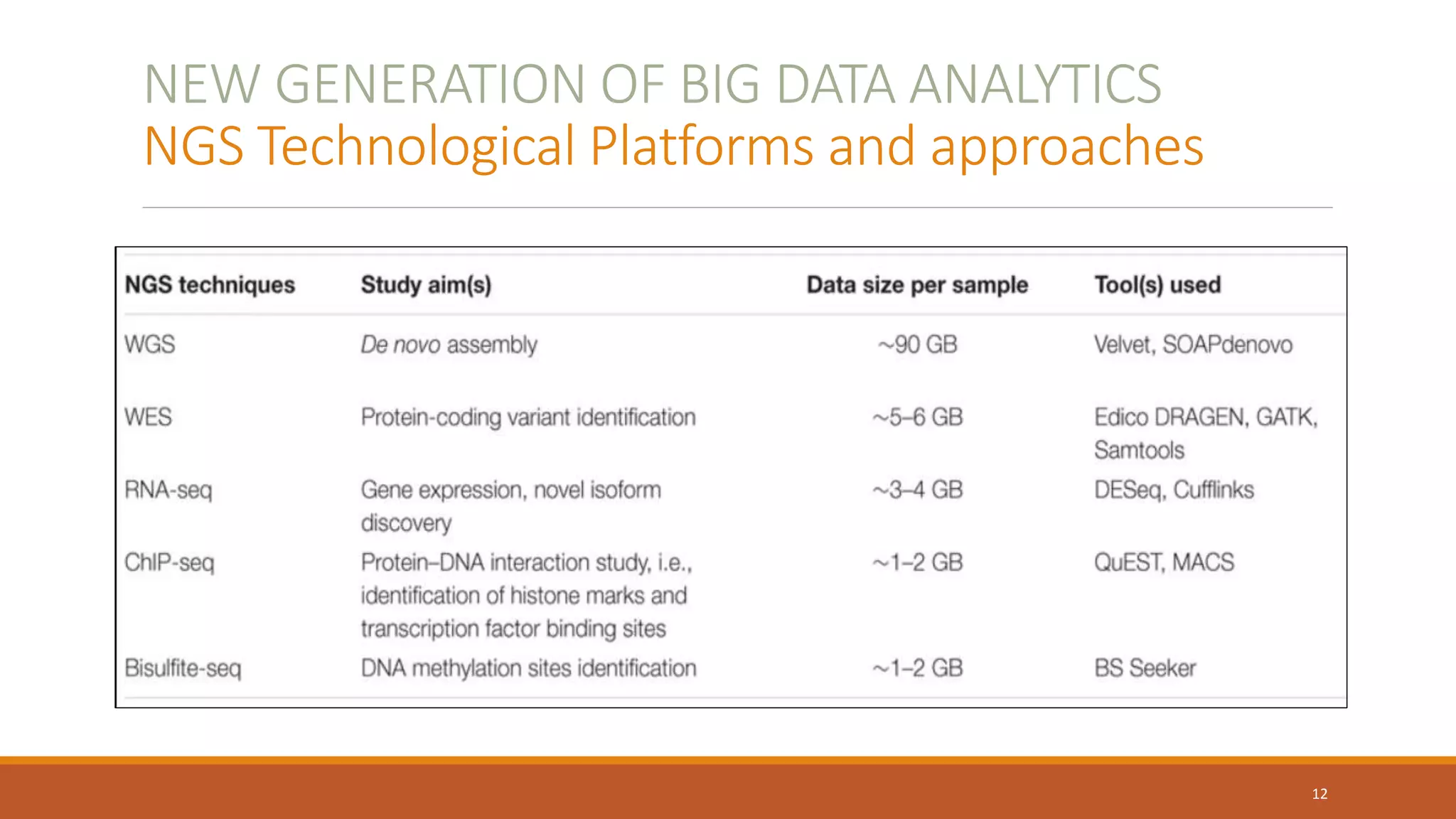
NEW GENERATION OF BIG DATA ANALYTICS
NGS Technological Platforms and approaches
12
NGS Data Analysis
Massive parallel sequencing of short reads through NGS generate big data, which has to
be aligned for analysis.
When a reference genome is available, the first step in data analysis is mapping the reads
onto the reference genome. The intention is to “stack” each reads on the reference
genome “floorplan.”
Genome annotation on the other hand, is direct analysis of the reads by two steps. In the
first step, each read is annotated using tools such as BLAST This is followed by the second
step during which reads are mapped onto a scaffold; such as, a genome or a pathway map.
When mapped by BLAST to another genome; for example, BLAST of Bacillus subtilis NGS
data to Escherichia coli genome; then E. Coli genome can be used as a reference genome.
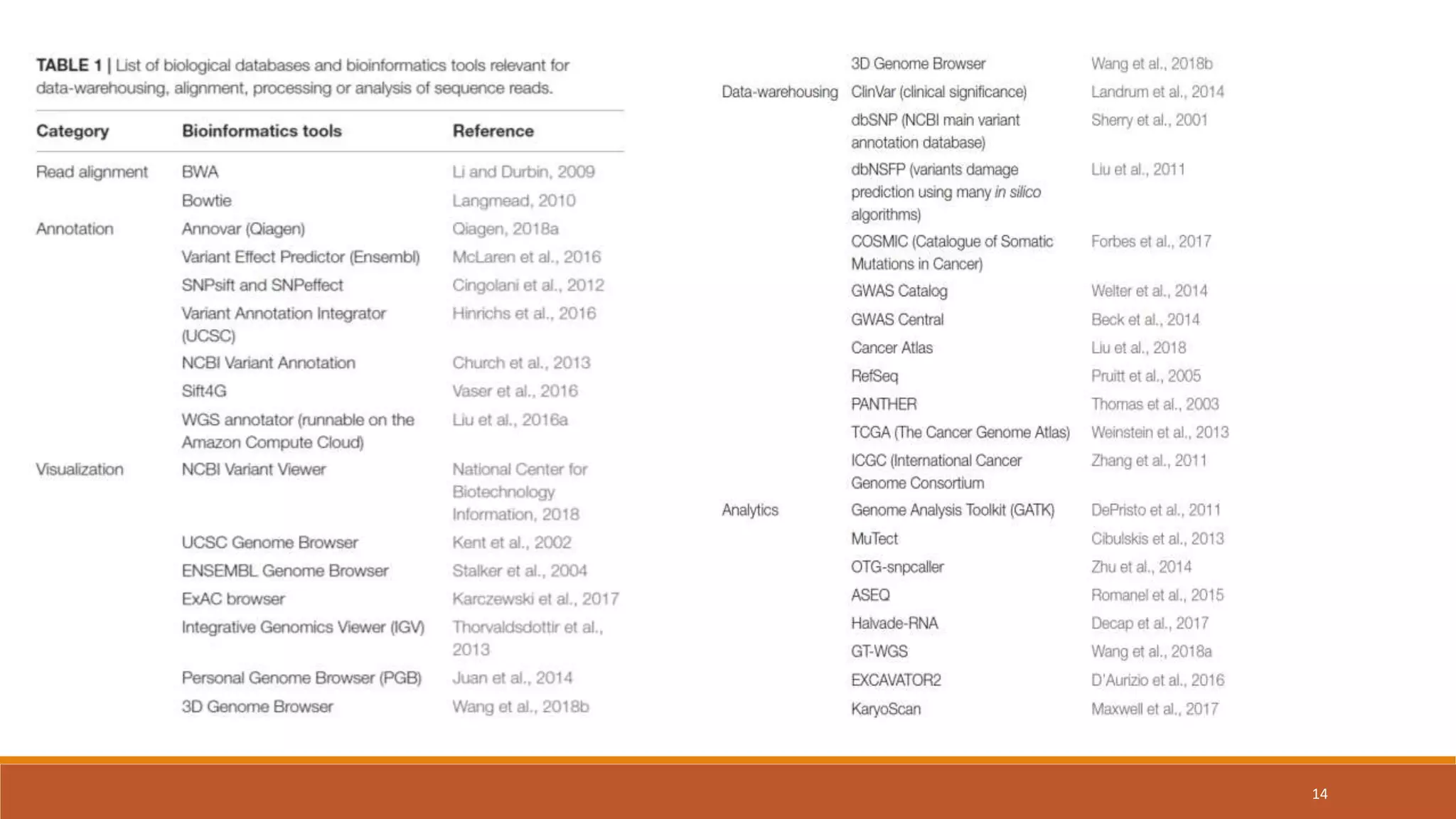
The Broad Institute had developed a set of tools, the Genome Analysis Toolkit or GATK for
analysis of reads with the ability to combine various tools within GATK into a workflow for
better documentation and reproducibility.
13
14
15
New Generation Analytics for
Multi-Omics Big Data
Although data generation is not an issue with the advent of NGS and there are
bioinformatics tools and databases to handle the resulting big data, the upcoming long
read, single DNA molecule sequencing, such as the Oxford Nanopore, can offset the
volume of data generation from the second generation NGS. However, while the
sequencing data can be decreased, the omics data needed for personalized medicine
presents higher complexity and is more voluminous than second-generation
sequencing data, and would require continuous evolution or new generation of
bioinformatics tools and data-warehousing approaches.
Example: in April 2016, AstraZeneca announced an integrative genomics initiative to
transform drug discovery and development by delivering novel insights into the biology
of diseases, identifying new drug targets, supporting patients’ selection for clinical trials
and matching patients to the therapies most likely to benefit them(personalized
medicine)
16
THE CLINICAL UTILITY LANDSCAPE OF
GENOMIC INFORMATION
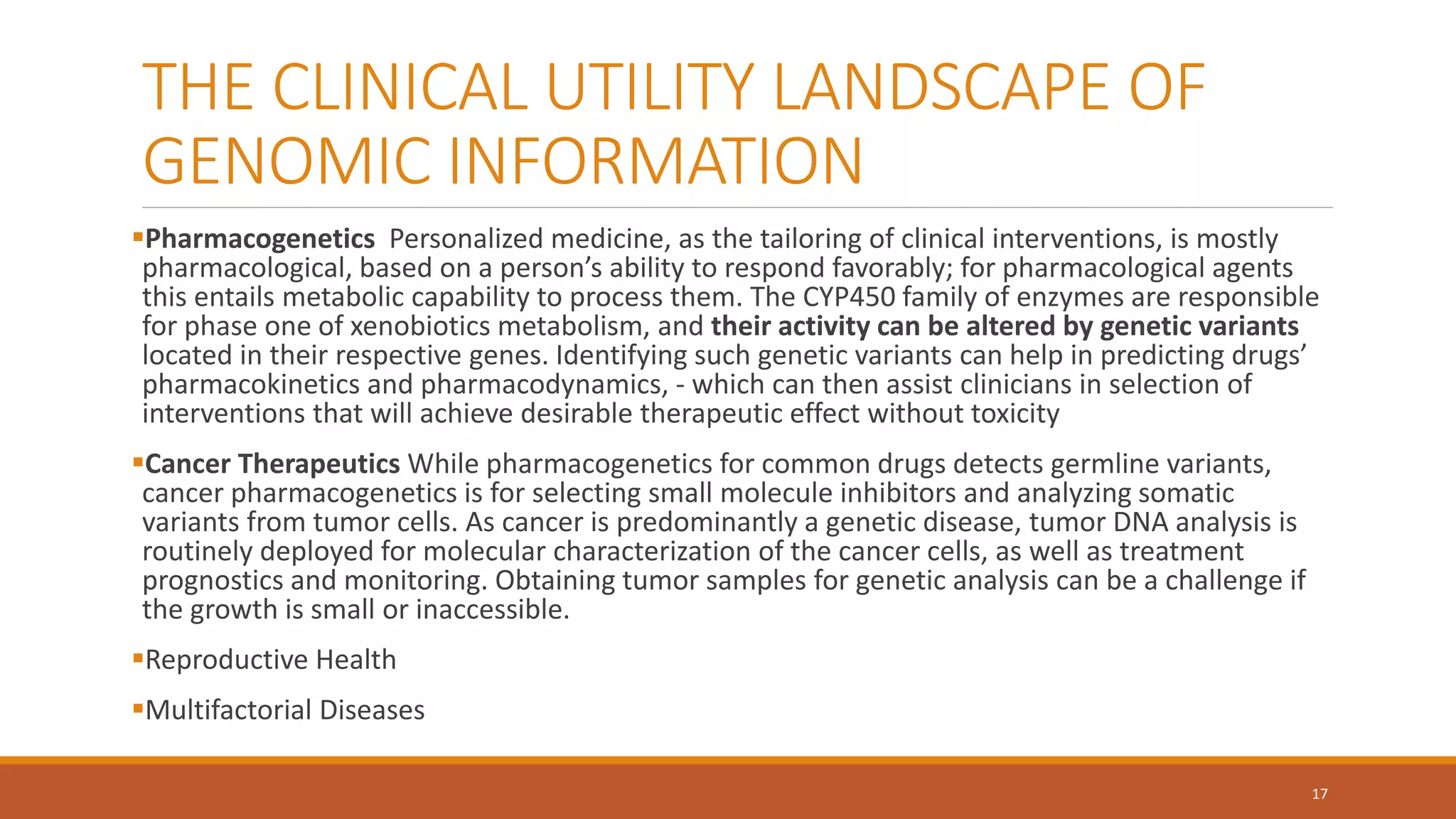
Pharmacogenetics Personalized medicine, as the tailoring of clinical interventions, is mostly
pharmacological, based on a person’s ability to respond favorably; for pharmacological agents
this entails metabolic capability to process them. The CYP450 family of enzymes are responsible
for phase one of xenobiotics metabolism, and their activity can be altered by genetic variants
located in their respective genes. Identifying such genetic variants can help in predicting drugs’
pharmacokinetics and pharmacodynamics, - which can then assist clinicians in selection of
interventions that will achieve desirable therapeutic effect without toxicity
Cancer Therapeutics While pharmacogenetics for common drugs detects germline variants,
cancer pharmacogenetics is for selecting small molecule inhibitors and analyzing somatic
variants from tumor cells. As cancer is predominantly a genetic disease, tumor DNA analysis is
routinely deployed for molecular characterization of the cancer cells, as well as treatment
prognostics and monitoring. Obtaining tumor samples for genetic analysis can be a challenge if
the growth is small or inaccessible.
Reproductive Health
Multifactorial Diseases
17
THE RISE OF ARTIFICIAL INTELLIGENCE
AI-Driven Genomics
AI-driven machines, are being deployed to cut costs, especially in overcoming the enormous volume
of collected patient data.
AI-driven machines are even predicted to perform better than humans, from driving a truck to
performing a surgery by 2053 (Grace et al., 2018)
Examples:
o Congenica’s Sapientia uses the Exomiser tool to accelerate the annotation and prioritization of
variants from whole-exome sequencing in the diagnosis of rare diseases.
oSapientia empowers clinical decision-making by organizing the data into an easily comprehensible
fashion, which helps to cut diagnosis times down from 5 years to 5 days.
oDeep Genomics uses deep learning to tease out genetic causes of diseases and potential drug
therapies.
18
•The Google Brain team, a group that focuses on developing an AI application and Verily, another
Alphabet subsidiary that focuses on life sciences, released a tool known as DeepVariant that uses
the latest AI techniques to construct a more accurate picture of a person’s genome from their
sequencing data.
oIt automatically identifies indels and single-base pair mutation in sequencing data. Millions of high-
throughput reads and genomes from the Genome in a Bottle (BIAB) project, were collected to feed
the data to the deep-learning system and the parameters of the model was painstakingly tweaked
until it learned to interpret the sequences data with a high level of accuracy.
•In 2016, DeepVariant won the first place in the PrecisionFDA Truth Challenge, in the best SNP
performance category, and thus highly accurate. DeepVariant is also extensively fast, robust, cost
efficient, flexible, easy to use, and where you need it by using Google Cloud Platform
19
Omics Analytics Powered by AI
Technologies
AI can improve statistical computation, but it needs more data to do the guess-work. Although
the size of NGS data is significantly dropping, Due to the introduction of single-molecule
sequencing (Oxford Nanopore)
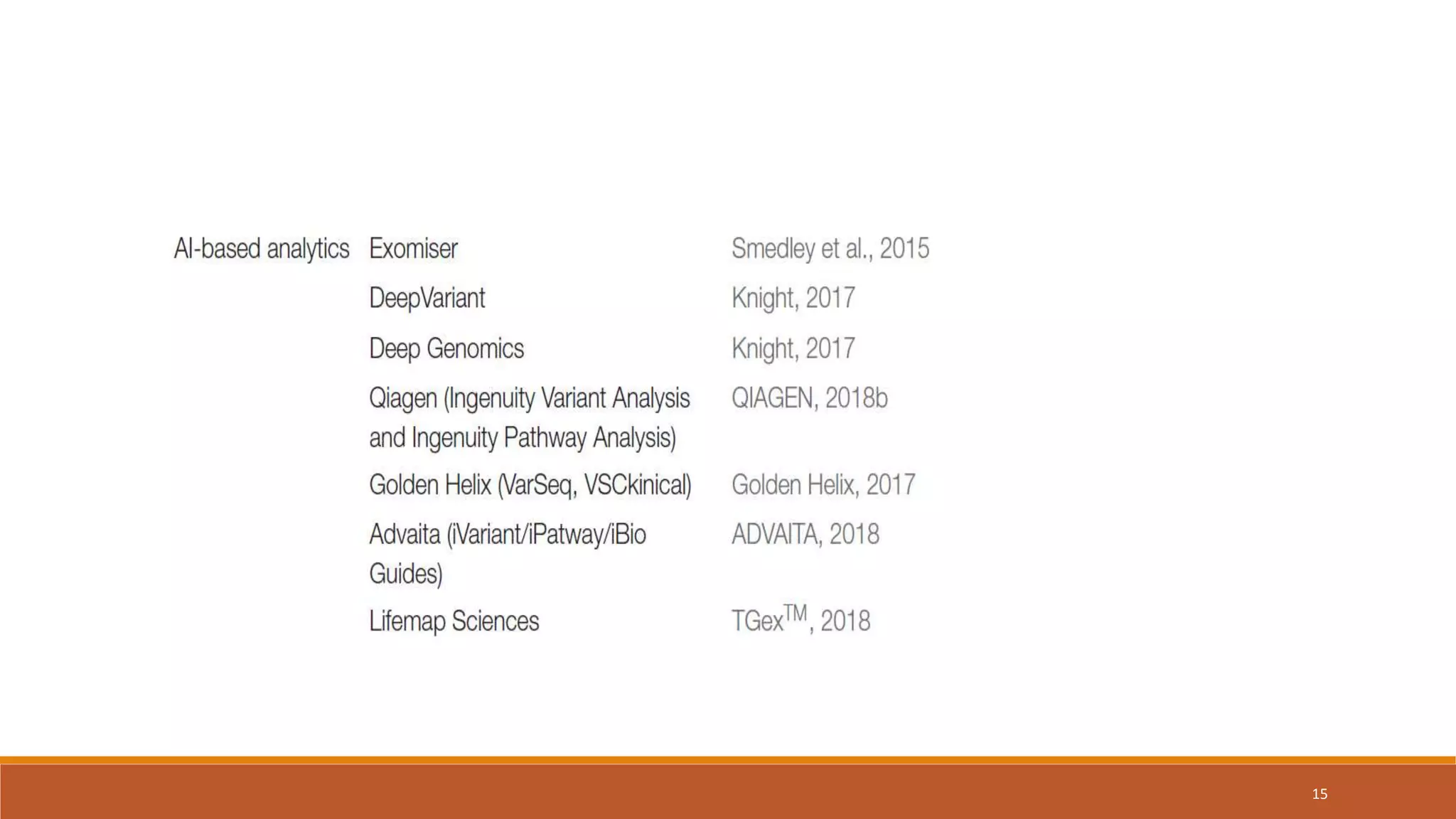
In recent years, some companies have made inroads into NGS clinical reporting using omics
analytics powered by AI technologies. In the industry sector of integrated WGS/WES clinical
reporting, there are at least four commercial entities that offer clinician-friendly analytics and
reporting:
Qiagen (Ingenuity Variant Analysis and Ingenuity Pathway Analysis)
Golden Helix (VarSeq, VSCkinical)
Advaita (iVariant/iPatway/iBio Guides)
Lifemap Sciences
20
FUTURE CONSIDERATIONS
The advancement of personalized medicine in many ways is being driven by the intersection of
big data analytics and WES.
However, there are many barriers still for WES to have a wider use in mainstream medical
practice. The major challenges include results reproducibility, reporting standards, and
affordability.
21
Results Reproducibility
A recent study conducted by the American College of Medical Genetics and Genomics (ACMG)
showed significant variability in results reproducibility between different genetic laboratories.
As a result, the Association together with industry players have developed the standards for
genetic tests assessment. Although it is still voluntary, laboratories are encouraged to validate
their products against industry standards.
22
Reporting Standards
Standards for reporting results of genetic tests have also been developed by ACMG; however,
they only address pathogenic variants detected in ACMG recommended 59 genes.
 The Harvard School of Medicine, in collaboration with Healthcare Partners, designed a more
comprehensive template for reporting results related to genetic diseases,
polygenic/multifactorial diseases, and pharmacogenetics
23
Affordability
•Generally, genetic tests are expensive.
The tests can be divided into two technological groups: genotyping and sequencing.
Genotyping tests are less costly (USD 100–400), but analyze a limited number of variants, genes
(regions). Since scientific progress produces new information on a daily basis, genotyping tests need to
be repeated when current findings are included.
 Sequencing, on the other hand, is much more expensive (>USD 400) but detects variants at any
location within the queried region. Also, the clinical utility of sequencing is higher, and there is no need
for repeated tests. The cost of WGS is still prohibitive (>USD 1000) for routine application in medical
practice. It also produces a large amount of unusable data.
A more practical approach is the sequencing of all coding and flanking regions (WES), which covers
between 3 and 6% of the genome, and the cost for commercial use can be as low as USD 400.
Unfortunately, the total cost of WES clinical interpretation is still high (>USD 1000), which makes it more
of a premium service rather than first line modality.
24
25
26
ACKNOWLEDGMENTS
I would like to express my special thanks of gratitude to my teacher Mr. Sandeep
Mallya as well as our director Dr.K Satyamoorthy who gave me the golden
opportunity to do this wonderful presentation, which also helped me in doing a
lot of Research and I came to know about so many new things I am really
thankful to them.
Secondly I would also like to thank my parents and friends, who helped me a lot
in finalizing this presentation within the limited time frame.
27
REFERENCES
Abdullah Said, M., Verweij, N., and Van Der Harst, P. (2018). Associations of combined genetic
and lifestyle risks with incident cardiovascular disease and diabetes in the UK biobank study.
JAMA Cardiol. 3, 693–702. doi: 10.1001/jamacardio.2018.1717
ADVAITA (2018). ADVAITA [Online]. Available at: https://apps.advaitabio.com/oauth-provider
(accessed December 22, 2018).
Ahn, D. H., Ozer, H. G., Hancioglu, B., Lesinski, G. B., Timmers, C., and Bekaii-Saab, T. (2016).
Whole-exome tumor sequencing study in biliary cancer patients with a response to MEK
inhibitors. Oncotarget 7, 5306–5312. doi:10.18632/oncotarget.6632
AllSeq (2018). WGS vs. WES. Available at: http://allseq.com/kb/wgsvswes/[accessed November
16, 2018].
Altschul, S. F., Gish, W., Miller, W., Myers, E. W., and Lipman, D. J. (1990). Basic local alignment
search tool. J. Mol. Biol. 215, 403–410. doi: 10.1016/S0022-2836(05)80360-2
28
Alyass, A., Turcotte, M., and Meyre, D. (2015). From big data analysis to personalized medicine for all: challenges and
opportunities. BMC Med. Genomics 8:33. doi: 10.1186/s12920-015-0108-y
Amendola, L. M., Jarvik, G. P., Leo, M. C.,McLaughlin, H. M., Akkari, Y., Amaral,M. D., et al. (2016). Performance of
ACMG-AMP Variant-Interpretation Guidelines among Nine Laboratories in the Clinical Sequencing Exploratory
Research Consortium. Am. J. Hum. Genet. 98, 1067–1076. doi: 10.1016/j.ajhg.2016.03.024
Amundadottir, L. T., Sulem, P., Gudmundsson, J., Helgason, A., Baker, A., Agnarsson, B. A., et al. (2006). A common
variant associated with prostate cancer in European and African populations. Nat. Genet. 38, 652–658.
doi:10.1038/ng1808
Anders, S., and Huber, W. (2010). Differential expression analysis for sequence count data. Genome Biol. 11:R106. doi:
10.1186/gb-2010-11-10-r106
Ardui, S., Ameur, A., Vermeesch, J. R., and Hestand, M. S. (2018). Single molecule real-time (SMRT) sequencing comes
of age: applications and utilities for medical diagnostics. Nucleic Acids Res. 46, 2159–2168. doi: 10.1093/nar/gky066
Artomov, M., Stratigos, A. J., Kim, I., Kumar, R., Lauss, M., Reddy, B. Y., et al.(2017). Rare variant, gene-based
association study of hereditary melanoma using whole-exome sequencing. J. Natl. Cancer Inst. 109:djx083. doi:
10.1093/jnci/djx083
Beck, T.,Hastings, R. K., Gollapudi, S., Free, R. C., and Brookes, A. J. (2014).GWAS Central: a comprehensive resource
for the comparison and interrogation of genome-wide association studies. Eur. J. Hum. Genet. 22, 949–952. doi:
10.1038/ejhg.2013.274
Belkadi, A., Bolze, A., Itan, Y., Cobat, A., Vincent, Q. B., Antipenko, A., et al. (2015). Whole-genome sequencing is more
powerful than whole-exome sequencing for detecting exome variants. Proc. Natl. Acad. Sci. U.S.A. 112, 5473–5478.
doi: 10.1073/pnas.1418631112
29
Bomba, L., Walter, K., and Soranzo, N. (2017). The impact of rare and lowfrequency genetic variants in common
disease. Genome Biol. 18, 77–77. doi:10.1186/s13059-017-1212-4
Buermans, H. P., and den Dunnen, J. T. (2014). Next generation sequencing technology: advances and
applications. Biochim. Biophys. Acta 1842, 1932–1941. doi: 10.1016/j.bbadis.2014.06.015
Business Wire (2017). DNAnexus to Partner With AstraZeneca’s Centre for Genomics Research. Available at:
https://www.businesswire.com/news/home/20170523005582/en/DNAnexus-Partner-AstraZeneca%E2%80%99s-
Centre-Genomics-Research [accessed August 6, 2018].
Camacho, D. M., Collins, K. M., Powers, R. K., Costello, J. C., and Collins, J. J. (2018). Next-generation machine
learning for biological networks. Cell 173,1581–1592. doi: 10.1016/j.cell.2018.05.015
Carr, D., Alfirevic, A., and Pirmohamed, M. (2014). Pharmacogenomics: current State-of-the-Art. Genes 5, 430-
443. doi: 10.3390/genes5020430
Carter, T. C., and He, M. M. (2016). Challenges of identifying clinically actionable genetic variants for precision
medicine. J. Healthc. Eng. 2016:3617572 doi: 10.1155/2016/3617572
Caswell-Jin, J. L., Gupta, T., Hall, E., Petrovchich, I. M., Mills, M. A., Kingham,K. E., et al. (2018). Racial/ethnic
differences in multiple-gene sequencing results for hereditary cancer risk. Genet. Med. 20, 234–239. doi:
10.1038/gim.2017.96
Centre for Genetics Education (2015). Fact sheet 11 – Environmental and genetic interactions. Centre Genet. Educ.
1–3.
Chen, P. Y., Cokus, S. J., and Pellegrini, M. (2010). BS seeker: precise mapping for bisulfite sequencing. BMC
Bioinformatics 11:203. doi: 10.1186/1471-2105-11-203
30
Cho, N., Hwang, B., Yoon, J. K., Park, S., Lee, J., Seo, H. N., et al. (2015). De novo assembly and next-generation
sequencing to analyse full-length gene variants from codon-barcoded libraries. Nat. Commun. 6:8351. doi:
10.1038/Ncomms9351
Chong, J. X., Buckingham, K. J., Jhangiani, S. N., Boehm, C., Sobreira, N., Smith, J. D., et al. (2015). The genetic
basis of mendelian phenotypes: discoveries, challenges, and opportunities. Am. J. Hum. Genet. 97, 199–215.
doi: 10.1016/j.ajhg.2015.06.009
Church, D., Sherry, S., Phan, L., Ward, M., Landrum, M., and Maglott, D. (2013).Variation Overview. Available
at: http://www.ncbi.nlm.nih.gov/variation[accessed November 28, 2018].
Cibulskis, K., Lawrence, M. S., Carter, S. L., Sivachenko, A., Jaffe, D., Sougnez, C. et al. (2013). Sensitive
detection of somatic point mutations in impure and heterogeneous cancer samples. Nat. Biotechnol. 31, 213–
219. doi: 10.1038/nbt.2514
Cingolani, P., Patel, V. M., Coon, M., Nguyen, T., Land, S. J., Ruden, D. M., et al. (2012). Using Drosophila
melanogaster as a model for genotoxic chemical mutational studies with a New Program, SnpSift. Front.
Genet. 3:35. doi: 10.3389/fgene.2012.00035
Conesa, A., Madrigal, P., Tarazona, S., Gomez-Cabrero, D., Cervera, A., McPherson, A., et al. (2016). A survey of
best practices for RNA-seq data analysis. Genome Biol. 17:13. doi: 10.1186/s13059-016-0881-8 Congenica
(2018). Artificial Intelligence & Machine Learning in Genomics. Available at:
https://www.congenica.com/2018/01/09/artificial-intelligence-machine-learning-genomics/ [accessed
November18, 2018].
Coudray, A., Battenhouse, A. M., Bucher, P., and Iyer, V. R. (2018). Detection and benchmarking of somatic
mutations in cancer genomes using RNA-seq data. PeerJ 6:e5362. doi: 10.7717/peerj.5362
31
D’Aurizio, R., Pippucci, T., Tattini, L., Giusti, B., Pellegrini, M., andMagi, A. (2016). Enhanced copy number variants
detection from whole-exome sequencing data using EXCAVATOR2. Nucleic Acids Res. 44:e154. doi: 10.1093/nar/
gkw695
Dawood, S., Broglio, K., Gonzalez-Angulo, A. M., Buzdar, A. U., Hortobagyi, G. N., and Giordano, S. H. (2008). Trends in
survival over the past two decades among white and black patients with newly diagnosed stage IV breast cancer. J
Clin.Oncol. 26, 4891–4898. doi: 10.1200/JCO.2007.14.1168
de Sá, P. H. C. G., Guimarães, L. C., Graças, D. A. D., de Oliveira Veras, A. A., Barh, D., Azevedo, V., et al. (2018).
“Chapter 11 next-generation sequencing and data analysis strategies, tools, pipelines and protocols,” in Omics
Technologies and Bio-Engineering, eds D. Barh and V. Azevedo, 191–207. Belém: Federal University of Para.
Decap, D., Reumers, J., Herzeel, C., Costanza, P., and Fostier, J. (2017). Halvade- RNA: parallel variant calling from
transcriptomic data using MapReduce. PLoS One 12:e0174575. doi: 10.1371/journal.pone.0174575
DeepVariant (2016). DeepVariant is an Analysis Pipeline that Uses a Deep Neural Network to Call Genetic Variants
From Next-Generation DNA Sequencing Data. Available at: https://github.com/google/deepvariant myfootnote1
[accessed November 17, 2018].
Deng, X., Naccache, S. N., Ng, T., Federman, S., Li, L., Chiu, C. Y., et al. (2015). An ensemble strategy that significantly
improves de novo assembly of microbial genomes from metagenomic next-generation sequencing data. Nucleic
Acids Res. 43:e46. doi: 10.1093/nar/gkv002
DePristo, M. A., Banks, E., Poplin, R., Garimella, K. V., Maguire, J. R., Hartl, C., et al. (2011). A framework for variation
discovery and genotyping using nextgeneration DNA sequencing data. Nat. Genet. 43, 491–498. doi: 10.1038/ng.
806
32
do Valle, I. F., Giampieri, E., Simonetti, G., Padella, A., Manfrini, M., Ferrari, A., et al. (2016). Optimized pipeline of
MuTect and GATK tools to improve the detection of somatic single nucleotide polymorphisms in whole-exome
sequencing data. BMC Bioinformatics 17(Suppl. 12):341. doi: 10.1186/s12859-016-1190-7
Druker, B. J., Guilhot, F., O’Brien, S. G., Gathmann, I., Kantarjian, H., Gattermann, N., et al. (2006). Five-Year Follow-up of
Patients Receiving Imatinib for Chronic Myeloid Leukemia. New Engl. J. Med. 355, 2408–2417.doi:
10.1056/NEJMoa062867
Edico Genome (2018). DRAGEN Onsite Solutions. Available at: http://edicogenome.com/dragen-bioit-platform/
[accessed November 28, 2018].
Eheman, C., Henley, S. J., Ballard-Barbash, R., Jacobs, E. J., Schymura, M. J., Noone, A. M., et al. (2012). Annual report to
the nation on the status of cancer, 1975-2008, featuring cancers associated with excess weight and lack of sufficient
physical activity. Cancer 118, 2338–2366. doi: 10.1002/cncr.27514
Eichler, E. E., Nickerson, D. A., Altshuler, D., Bowcock, A. M., Brooks, L. D., Carter, N. P., et al. (2007). Completing the
map of human genetic variation. Nature 447,161–165. doi: 10.1038/447161a
Engelhardt, K. R., Xu, Y., Grainger, A., Germani Batacchi, M. G., Swan, D. J., Willet, J. D., et al. (2017). Identification of
Heterozygous Single- and Multi-exon Deletions in IL7R by Whole Exome Sequencing. J. Clin. Immunol. 37, 42–50.
doi: 10.1007/s10875-016-0343-9
Evans, W. E., and Relling, M. V. (2004). Moving towards individualized medicine with pharmacogenomics. Nature 429,
464–468. doi: 10.1038/nature02626
Faltas, B. M., Prandi, D., Tagawa, S. T., Molina, A. M., Nanus, D. M., Sternberg, C., et al. (2016). Clonal evolution of
chemotherapy-resistant urothelial carcinoma. Nat Genet 48, 1490–1499. doi: 10.1038/ng.3692
FDA (2018). Science & Research (Drugs) – Table of Pharmacogenomic Biomarkers in Drug Labeling. Silver Spring, MD:
FDA.
33
Feero, W. G., Guttmacher, A. E., and Collins, F. S. (2008). The genome gets personal – Almost. JAMA 299, 1351–
1352. doi: 10.1001/jama.299.11.1351
Feng, B. J. (2017). PERCH: a unified framework for disease gene prioritization.Hum. Mutat. 38, 243–251. doi:
10.1002/humu.23158
Firican, G. (2017). The 10 Vs of Big Data. Available at: https://tdwi.org/articles/2017/02/08/10-vs-of-big-
data.aspx?m=1 [accessed August 17, 2018].
Forbes, S. A., Beare, D., Boutselakis, H., Bamford, S., Bindal, N., Tate, J., et al.(2017). COSMIC: somatic cancer
genetics at high-resolution. Nucleic Acids Res.45, D777–D783. doi: 10.1093/nar/gkw1121
Galas, D. J. (2001). Making sense of the sequence. Science 291, 1257–1260.
doi:10.1126/science.291.5507.1257
Gambin, T., Akdemir, Z. C., Yuan, B., Gu, S., Chiang, T., Carvalho, C. M. B., et al. (2017). Homozygous and
hemizygous CNV detection from exome sequencing data in a Mendelian disease cohort. Nucleic Acids Res. 45,
1633–1648. doi: 10.1093/nar/gkw1237
Gameiro, D. N. (2016). AstraZeneca Partners up With Genomics Elite for new Biobank. Available
at:https://labiotech.eu/medical/astrazeneca-partners-upwith-genomics-elite-for-new-biobank/ [accessed
August 6, 2018].
Garrod, A. E. (1996). The incidence of alkaptonuria: a study in chemical individuality. 1902. Mol. Med. 2, 274–
282. doi: 10.1007/BF03401625
Genomes Project, C., Abecasis, G. R., Auton, A., Brooks, L. D., DePristo, M. A., Durbin, R. M., et al. (2012). An
integrated map of genetic variation from 1,092 human genomes. Nature 491, 56–65. doi:10.1038/nature11632
Global Market Insights (2017). Digital Genome Market worth over $45 billion by 2024. Available at:
https://www.gminsights.com/pressrelease/digital-genomemarket[accessed December, 2 2018].
34
Golden Helix (2017). Clinical Interpretation of Variants Based on ACMG Guidelines. London: Golden Helix Inc.
Goodwin, S., McPherson, J. D., and McCombie, W. R. (2016). Coming of age: ten years of next-generation
sequencing technologies. Nat. Rev. Genet. 17, 333–351. doi: 10.1038/nrg.2016.49
Gorski, M. M., Blighe, K., Lotta, L. A., Pappalardo, E.,Garagiola, I.,Mancini, I., et al. (2016). Whole-exome
sequencing to identify genetic risk variants underlying inhibitor development in severe hemophilia A patients.
Blood 127, 2924–2933. doi: 10.1182/blood-2015-12-685735
Grace, K., Salvatier, J., Dafoe, A., Zhang, B., and Evans, O. (2018). When will AI exceed human performance?
Evidence from AI experts. J. Artif. Intell. 62, 729–754. doi: 10.1613/jair.1.11222
Grandori, C., and Kemp, C. J. (2018). Personalized Cancer Models for Target Discovery and Precision Medicine.
Trends Cancer 4, 634–642. doi: 10.1016/j. trecan.2018.07.005
Guo, Y., Dai, Y., Yu, H., Zhao, S., Samuels, D. C., and Shyr, Y. (2017). Improvements and impacts of GRCh38
human reference on high throughput sequencing data analysis. Genomics 109, 83–90. doi:
10.1016/j.ygeno.2017.01.005
Gupta, S., Chatterjee, S., Mukherjee, A., and Mutsuddi, M. (2017). Whole exome sequencing: uncovering causal
genetic variants for ocular diseases. Exp. Eye Res. 164, 139–150. doi: 10.1016/j.exer.2017.08.013
Gymrek, M., McGuire, A. L., Golan, D., Halperin, E., and Erlich, Y. (2013). Identifying personal genomes by
surname inference. Science 339, 321–324. doi: 10.1126/science.1229566
Firican, G. (2017). The 10 Vs of Big Data. Available at: https://tdwi.org/articles/2017/02/08/10-vs-of-big-
data.aspx?m=1 [accessed August 17, 2018].
Forbes, S. A., Beare, D., Boutselakis, H., Bamford, S., Bindal, N., Tate, J., et al. (2017). COSMIC: somatic cancer
genetics at high-resolution. Nucleic Acids Res.45, D777–D783. doi: 10.1093/nar/gkw1121
35
Galas, D. J. (2001). Making sense of the sequence. Science 291, 1257–1260. doi: 10.1126/science.291.5507.1257
Gambin, T., Akdemir, Z. C., Yuan, B., Gu, S., Chiang, T., Carvalho, C. M. B., et al (2017). Homozygous and hemizygous
CNV detection from exome sequencing data in a Mendelian disease cohort. Nucleic Acids Res. 45, 1633–1648. doi:
10.1093/nar/gkw1237
Gameiro, D. N. (2016). AstraZeneca Partners up With Genomics Elite for new Biobank. Available at:
https://labiotech.eu/medical/astrazeneca-partners-upwith-genomics-elite-for-new-biobank/ [accessed August 6,
2018].
Garrod, A. E. (1996). The incidence of alkaptonuria: a study in chemical individuality. 1902. Mol. Med. 2, 274–282. doi:
10.1007/BF03401625
Genomes Project, C., Abecasis, G. R., Auton, A., Brooks, L. D., DePristo, M. A., Durbin, R. M., et al. (2012). An integrated
map of genetic variation from 1,092 human genomes. Nature 491, 56–65. doi: 10.1038/nature11632
Global Market Insights (2017). Digital Genome Market worth over $45 billion by 2024. Available at:
https://www.gminsights.com/pressrelease/digital-genomemarket[accessed December, 2 2018].
He, K., Ge, D., and He, M. (2017). Big data analytics for genomic medicine. Int. J.Mol. Sci. 18:412. doi:
10.3390/ijms18020412
Herper, M. (2017). Illumina Promises To Sequence Human Genome For $100 –But Not Quite Yet. Available at:
https://www.forbes.com/sites/matthewherper/2017/01/09/illumina-promises-to-sequence-human-genome-for-100-
butnot-quite-yet/#6924957a386d [accessed November, 28 2018].
Hinrichs, A. S., Raney, B. J., Speir, M. L., Rhead, B., Casper, J., Karolchik, D., et al(2016). UCSC data integrator and variant
annotation integrator. Bioinformatics 32, 1430–1432. doi: 10.1093/bioinformatics/btv766
Hixson, J. E., Jun, G., Shimmin, L. C., Wang, Y., Yu, G., Mao, C., et al. (2017).
36
Whole exome sequencing to identify genetic variants associated with raised atherosclerotic lesions in young
persons. Sci. Rep. 7:4091. doi: 10.1038/s41598-017-04433-x
Hofmann, A. L., Behr, J., Singer, J., Kuipers, J., Beisel, C., Schraml, P., et al. (2017). Detailed simulation of cancer
exome sequencing data reveals differences and common limitations of variant callers. BMC Bioinformatics 18:8.
doi: 10.1186/s12859-016-1417-7
Hoischen, A., Krumm, N., and Eichler, E. E. (2014). Prioritization of neurodevelopmental disease genes by
discovery of new mutations. Nat. Neurosci. 17, 764–772. doi: 10.1038/nn.3703
Homer, N., Szelinger, S., Redman, M., Duggan, D., Tembe, W., Muehling, J., et al.(2008). Resolving individuals
contributing trace amounts of DNA to highly complex mixtures using high-density SNP genotyping microarrays.
PLoS Genet.4:e1000167. doi: 10.1371/journal.pgen.1000167
Honey, K. (2018). FDA Approves First Targeted Therapeutic Based on TumorBiomarker, Not Tumor Origin.
Available at: https://blog.aacr.org/fda-approvesfirst-targeted-therapeutic-based-on-tumor-biomarker-not-
tumor-origin/[ACCESSED November, 30 2018].
Haiman, C. A., Chen, G. K., Blot, W. J., Strom, S. S., Berndt, S. I., Kittles, R. A., et al. (2011). Genome-wide
association study of prostate cancer in men of African ancestry identifies a susceptibility locus at 17q21. Nat.
Genet. 43, 570–573.doi: 10.1038/ng.839
Haiman, C. A., Patterson, N., Freedman, M. L., Myers, S. R., Pike, M. C., Waliszewska, A., et al. (2007). Multiple
regions within 8q24 independently affect risk for prostate cancer. Nat. Genet. 39, 638–644. doi: 10.1038/
ng2015
Halvaei, S., Daryani, S., Eslami-S, Z., Samadi, T., Jafarbeik-Iravani, N., Bakhshayesh, T. O., et al. (2018). Exosomes
in cancer liquid biopsy: a focus on breast cancer. Mol. Ther. – Nucleic Acids 10, 131–141. doi:
10.1016/j.omtn.2017.11.014
37
Han, Z., Xiao, S., Li, W., Ye, K., and Wang, Z. Y. (2018). The identification of growth, immune related genes and
marker discovery through transcriptome in the yellow drum (Nibea albiflora). Genes Genomics 40, 881–891.
doi: 10.1007/s13258-018-0697-x
Harmanci, A., and Gerstein, M. (2016). Quantification of private information leakage from phenotype-genotype
data: linking attacks. Nat. Methods 13,251–256. doi: 10.1038/nmeth.3746
Harvard Medical School (2015). Cardiac Risk Report. Boston, MA: Harvard Medical School
He, K., Ge, D., and He, M. (2017). Big data analytics for genomic medicine. Int. J. Mol. Sci. 18:412. doi:
10.3390/ijms18020412
Herper, M. (2017). Illumina Promises To Sequence Human Genome For $100 – But Not Quite Yet. Available at:
https://www.forbes.com/sites/matthewherper/2017/01/09/illumina-promises-to-sequence-human-genome-
for-100-butnot-quite-yet/#6924957a386d [accessed November, 28 2018].
Hinrichs, A. S., Raney, B. J., Speir, M. L., Rhead, B., Casper, J., Karolchik, D., et al.(2016). UCSC data integrator
and variant annotation integrator. Bioinformatics 32, 1430–1432. doi: 10.1093/bioinformatics/btv766
Hixson, J. E., Jun, G., Shimmin, L. C., Wang, Y., Yu, G., Mao, C., et al. (2017). Whole exome sequencing to identify
genetic variants associated with raised atherosclerotic lesions in young persons. Sci. Rep. 7:4091. doi:
10.1038/s41598-017-04433-x
Hofmann, A. L., Behr, J., Singer, J., Kuipers, J., Beisel, C., Schraml, P., et al. (2017). Detailed simulation of cancer
exome sequencing data reveals differences and common limitations of variant callers. BMC Bioinformatics 18:8.
doi: 10.1186/s12859-016-1417-7
Hoischen, A., Krumm, N., and Eichler, E. E. (2014). Prioritization of neurodevelopmental disease genes by
discovery of new mutations. Nat. Neurosci. 17, 764–772. doi: 10.1038/nn.3703
38
Homer, N., Szelinger, S., Redman, M., Duggan, D., Tembe, W., Muehling, J., et al. (2008). Resolving individuals
contributing trace amounts of DNA to highly complex mixtures using high-density SNP genotyping microarrays. PLoS
Genet. 4:e1000167. doi: 10.1371/journal.pgen.1000167
Honey, K. (2018). FDA Approves First Targeted Therapeutic Based on Tumor Biomarker, Not Tumor Origin. Available at:
https://blog.aacr.org/fda-approvesfirst- targeted-therapeutic-based-on-tumor-biomarker-not-tumor-origin/
[ACCESSED November, 30 2018].
Huang, T., Shu, Y., and Cai, Y. D. (2015). Genetic differences among ethnic groups. BMC Genomics 16:1093. doi:
10.1186/s12864-015-2328-0.
Hung, C. M., Lin, R. C., Chu, J. H., Yeh, C. F., Yao, C. J., and Li, S. H. (2013). The de novo assembly of mitochondrial
genomes of the extinct passenger pigeon(Ectopistes migratorius) with next generation sequencing. PLoS One
8:e56301.doi: 10.1371/journal.pone.0056301
Ikegawa, S. (2012). A short history of the genome-wide association study: where we were and where we are going.
Genomics Informatics 10:220. doi: 10.5808/GI.2012.10.4.220
Illumina (2018). Scalability for Sequencing Like Never Before. Available at:
https://sapac.illumina.com/systems/sequencing-platforms/novaseq/ specifications.html [accessed November, 30
2018].
Jemal, A., Bray, F., Center, M. M., Ferlay, J., Ward, E., and Forman, D. (2011). Global cancer statistics. CA Cancer J. Clin.
61, 69–90. doi: 10.3322/caac.20107
Jeste, S. S., and Geschwind, D. H. (2014). Disentangling the heterogeneity of autism spectrum disorder through genetic
findings. Nat. Rev. Neurol. 10, 74–81. doi: 10.1038/nrneurol.2013.278
Johannessen, C. M., and Boehm, J. S. (2017). Progress towards precision functional genomics in cancer. Curr. Opin.
Syst. Biol. 2, 74–83. doi: 10.1016/j.coisb.2017.02.002
39
40

Personalized medicine through wes and big data analytics

  • 1.
    JUNAID AHMED M.SC. BIOINFORMATICS REGNO. 181706016 MSOLS, MAHE 1
  • 2.
    TABLE OF CONTENTS Introduction Whatis personalized medicine What is whole exome sequencing What is Big data Big data characteristics of WES NGS data analysis Biological databases & BI tools AI driven genomics 2
  • 3.
    Introduction NGS -> Genomicsequence data person’s genome data has been instrumental in assessing the substantial portion of person-to- person variability in response to diagnosis, treatment, and prevention strategies. DNA sequence – Reference -> variability map (large scale) Individual variability -> “Chemical Individuality” 3
  • 4.
    What is PrecisionMedicine? Using the genetic changes in a patient’s tumor to determine their treatment is known as precision medicine.  Precision medicine is an approach to patient care that allows doctors to select treatments that are most likely to help patients based on a genetic understanding of their disease.  The idea of precision medicine is not new  Targeted cancer therapies are drugs or other substances that block the growth and spread of cancer by interfering with specific molecules ("molecular targets") that are involved in the growth, progression, and spread of cancer. *Some precision medicine cancer treatments already in use target specific molecular markers that are found only on certain types of cancer .  For example, colon cancers that have a normally functioning version of a surface protein called KRAS are likely to respond to certain anti-EGFR antibody therapies; those in which the protein is absent or non-functional are not.  Herceptin and Opdivo. 4
  • 5.
    What is wholeExome sequencing? DNA Sequencing NGS – WES, WGS The original sequencing technology, called Sanger sequencing, was a breakthrough that helped scientists determine the human genetic code, but it is time-consuming and expensive. The Sanger method has been automated to make it faster and is still used in laboratories today to sequence short pieces of DNA, but it would take years to sequence all of a person's DNA ( genome). Next- generation sequencing has speed up the process (taking only days to weeks to sequence a human genome) while reducing the cost. 5
  • 6.
    With NGS, itis now feasible to sequence large amounts of DNA. Exons, are thought to make up 1 percent of a person's genome.(Exome) and the method of sequencing them is known as whole exome sequencing. This method allows variations in the protein-coding region of any gene to be identified, rather than in only a select few genes. Because most known mutations that cause disease occur in exons, whole exome sequencing is thought to be an efficient method to identify possible disease-causing mutations. However, researchers have found that DNA variations outside the exons can affect gene activity and protein production and lead to genetic disorders variations that whole exome sequencing would miss. Another method, called whole genome sequencing, determines the order of all the nucleotides in an individual's DNA and can determine variations in any part of the genome. 6
  • 7.
    FROM GENETIC MEDICINEGENOMIC MEDICINE - PAVING THE WAY FOR PERSONALIZED MEDICINE Knowing the sequence data was simply not enough to understand the etiological and pathogenic processes in complex diseases – the genomic data had a low predictive power and penetrance. The sequencing of the human genome was more of a technological achievement rather than scientific HapMap project- Variations in the genome GWAS discoveries- it was possible to identify essential metabolic pathways in many traits and medical conditions, paving the way for the first predictive and prognostic genetic test related to multifactorial diseases, and drug metabolism and response(pharmacogenetics). Cancer genetic tests: Predictive, Prognostic, Targeted treatments. Cancer genomics. 7
  • 8.
    8  Big Datais a term used to refer to an amount of data that is so large that conventional database tools prove inept at handling it.  Big data can be described by the following characteristics: 1. Volume 2. Variety 3. Velocity Big Data
  • 9.
    Big Data Characteristicsof Whole Exome Sequencing In 2025, genomics is expected to surpass the three biggest players in big data domains: Twitter, Astronomy, and YouTube. Stephen’s team had mapped the key technologies that are needed to support big data genomics, in terms of data acquisition, storage, distribution and analysis. Data in genomics had also been mapped to the five Vs, characteristic of big data: volume, velocity, variety, veracity, and value. Below, I present the mapping of WES to not just the five, but the expanded 10 Vs of big data 9
  • 10.
    10 V’s 1. Volume– WES data size, which can vary by coverage and number of samples. 2. Velocity – speed at which WES data per sample is generated and accumulated. 3. Variety – the different attributes of WES data. 4. Veracity – confidence or trustability in WES data. 5. Variability – inconsistencies and multitude of dimensions in WES data. 6. Validity – WES data accuracy and readiness for analysis. 7. Vulnerability – WES data security and data breach. 8. Volatility – how long before the WES data is considered obsolete or irrelevant. 9. Visualization – how challenging it is to visualize WES data. 10. Value – usefulness of WES data. 10
  • 11.
  • 12.
    NEW GENERATION OFBIG DATA ANALYTICS NGS Technological Platforms and approaches 12
  • 13.
    NGS Data Analysis Massiveparallel sequencing of short reads through NGS generate big data, which has to be aligned for analysis. When a reference genome is available, the first step in data analysis is mapping the reads onto the reference genome. The intention is to “stack” each reads on the reference genome “floorplan.” Genome annotation on the other hand, is direct analysis of the reads by two steps. In the first step, each read is annotated using tools such as BLAST This is followed by the second step during which reads are mapped onto a scaffold; such as, a genome or a pathway map. When mapped by BLAST to another genome; for example, BLAST of Bacillus subtilis NGS data to Escherichia coli genome; then E. Coli genome can be used as a reference genome. The Broad Institute had developed a set of tools, the Genome Analysis Toolkit or GATK for analysis of reads with the ability to combine various tools within GATK into a workflow for better documentation and reproducibility. 13
  • 14.
  • 15.
  • 16.
    New Generation Analyticsfor Multi-Omics Big Data Although data generation is not an issue with the advent of NGS and there are bioinformatics tools and databases to handle the resulting big data, the upcoming long read, single DNA molecule sequencing, such as the Oxford Nanopore, can offset the volume of data generation from the second generation NGS. However, while the sequencing data can be decreased, the omics data needed for personalized medicine presents higher complexity and is more voluminous than second-generation sequencing data, and would require continuous evolution or new generation of bioinformatics tools and data-warehousing approaches. Example: in April 2016, AstraZeneca announced an integrative genomics initiative to transform drug discovery and development by delivering novel insights into the biology of diseases, identifying new drug targets, supporting patients’ selection for clinical trials and matching patients to the therapies most likely to benefit them(personalized medicine) 16
  • 17.
    THE CLINICAL UTILITYLANDSCAPE OF GENOMIC INFORMATION Pharmacogenetics Personalized medicine, as the tailoring of clinical interventions, is mostly pharmacological, based on a person’s ability to respond favorably; for pharmacological agents this entails metabolic capability to process them. The CYP450 family of enzymes are responsible for phase one of xenobiotics metabolism, and their activity can be altered by genetic variants located in their respective genes. Identifying such genetic variants can help in predicting drugs’ pharmacokinetics and pharmacodynamics, - which can then assist clinicians in selection of interventions that will achieve desirable therapeutic effect without toxicity Cancer Therapeutics While pharmacogenetics for common drugs detects germline variants, cancer pharmacogenetics is for selecting small molecule inhibitors and analyzing somatic variants from tumor cells. As cancer is predominantly a genetic disease, tumor DNA analysis is routinely deployed for molecular characterization of the cancer cells, as well as treatment prognostics and monitoring. Obtaining tumor samples for genetic analysis can be a challenge if the growth is small or inaccessible. Reproductive Health Multifactorial Diseases 17
  • 18.
    THE RISE OFARTIFICIAL INTELLIGENCE AI-Driven Genomics AI-driven machines, are being deployed to cut costs, especially in overcoming the enormous volume of collected patient data. AI-driven machines are even predicted to perform better than humans, from driving a truck to performing a surgery by 2053 (Grace et al., 2018) Examples: o Congenica’s Sapientia uses the Exomiser tool to accelerate the annotation and prioritization of variants from whole-exome sequencing in the diagnosis of rare diseases. oSapientia empowers clinical decision-making by organizing the data into an easily comprehensible fashion, which helps to cut diagnosis times down from 5 years to 5 days. oDeep Genomics uses deep learning to tease out genetic causes of diseases and potential drug therapies. 18
  • 19.
    •The Google Brainteam, a group that focuses on developing an AI application and Verily, another Alphabet subsidiary that focuses on life sciences, released a tool known as DeepVariant that uses the latest AI techniques to construct a more accurate picture of a person’s genome from their sequencing data. oIt automatically identifies indels and single-base pair mutation in sequencing data. Millions of high- throughput reads and genomes from the Genome in a Bottle (BIAB) project, were collected to feed the data to the deep-learning system and the parameters of the model was painstakingly tweaked until it learned to interpret the sequences data with a high level of accuracy. •In 2016, DeepVariant won the first place in the PrecisionFDA Truth Challenge, in the best SNP performance category, and thus highly accurate. DeepVariant is also extensively fast, robust, cost efficient, flexible, easy to use, and where you need it by using Google Cloud Platform 19
  • 20.
    Omics Analytics Poweredby AI Technologies AI can improve statistical computation, but it needs more data to do the guess-work. Although the size of NGS data is significantly dropping, Due to the introduction of single-molecule sequencing (Oxford Nanopore) In recent years, some companies have made inroads into NGS clinical reporting using omics analytics powered by AI technologies. In the industry sector of integrated WGS/WES clinical reporting, there are at least four commercial entities that offer clinician-friendly analytics and reporting: Qiagen (Ingenuity Variant Analysis and Ingenuity Pathway Analysis) Golden Helix (VarSeq, VSCkinical) Advaita (iVariant/iPatway/iBio Guides) Lifemap Sciences 20
  • 21.
    FUTURE CONSIDERATIONS The advancementof personalized medicine in many ways is being driven by the intersection of big data analytics and WES. However, there are many barriers still for WES to have a wider use in mainstream medical practice. The major challenges include results reproducibility, reporting standards, and affordability. 21
  • 22.
    Results Reproducibility A recentstudy conducted by the American College of Medical Genetics and Genomics (ACMG) showed significant variability in results reproducibility between different genetic laboratories. As a result, the Association together with industry players have developed the standards for genetic tests assessment. Although it is still voluntary, laboratories are encouraged to validate their products against industry standards. 22
  • 23.
    Reporting Standards Standards forreporting results of genetic tests have also been developed by ACMG; however, they only address pathogenic variants detected in ACMG recommended 59 genes.  The Harvard School of Medicine, in collaboration with Healthcare Partners, designed a more comprehensive template for reporting results related to genetic diseases, polygenic/multifactorial diseases, and pharmacogenetics 23
  • 24.
    Affordability •Generally, genetic testsare expensive. The tests can be divided into two technological groups: genotyping and sequencing. Genotyping tests are less costly (USD 100–400), but analyze a limited number of variants, genes (regions). Since scientific progress produces new information on a daily basis, genotyping tests need to be repeated when current findings are included.  Sequencing, on the other hand, is much more expensive (>USD 400) but detects variants at any location within the queried region. Also, the clinical utility of sequencing is higher, and there is no need for repeated tests. The cost of WGS is still prohibitive (>USD 1000) for routine application in medical practice. It also produces a large amount of unusable data. A more practical approach is the sequencing of all coding and flanking regions (WES), which covers between 3 and 6% of the genome, and the cost for commercial use can be as low as USD 400. Unfortunately, the total cost of WES clinical interpretation is still high (>USD 1000), which makes it more of a premium service rather than first line modality. 24
  • 25.
  • 26.
  • 27.
    ACKNOWLEDGMENTS I would liketo express my special thanks of gratitude to my teacher Mr. Sandeep Mallya as well as our director Dr.K Satyamoorthy who gave me the golden opportunity to do this wonderful presentation, which also helped me in doing a lot of Research and I came to know about so many new things I am really thankful to them. Secondly I would also like to thank my parents and friends, who helped me a lot in finalizing this presentation within the limited time frame. 27
  • 28.
    REFERENCES Abdullah Said, M.,Verweij, N., and Van Der Harst, P. (2018). Associations of combined genetic and lifestyle risks with incident cardiovascular disease and diabetes in the UK biobank study. JAMA Cardiol. 3, 693–702. doi: 10.1001/jamacardio.2018.1717 ADVAITA (2018). ADVAITA [Online]. Available at: https://apps.advaitabio.com/oauth-provider (accessed December 22, 2018). Ahn, D. H., Ozer, H. G., Hancioglu, B., Lesinski, G. B., Timmers, C., and Bekaii-Saab, T. (2016). Whole-exome tumor sequencing study in biliary cancer patients with a response to MEK inhibitors. Oncotarget 7, 5306–5312. doi:10.18632/oncotarget.6632 AllSeq (2018). WGS vs. WES. Available at: http://allseq.com/kb/wgsvswes/[accessed November 16, 2018]. Altschul, S. F., Gish, W., Miller, W., Myers, E. W., and Lipman, D. J. (1990). Basic local alignment search tool. J. Mol. Biol. 215, 403–410. doi: 10.1016/S0022-2836(05)80360-2 28
  • 29.
    Alyass, A., Turcotte,M., and Meyre, D. (2015). From big data analysis to personalized medicine for all: challenges and opportunities. BMC Med. Genomics 8:33. doi: 10.1186/s12920-015-0108-y Amendola, L. M., Jarvik, G. P., Leo, M. C.,McLaughlin, H. M., Akkari, Y., Amaral,M. D., et al. (2016). Performance of ACMG-AMP Variant-Interpretation Guidelines among Nine Laboratories in the Clinical Sequencing Exploratory Research Consortium. Am. J. Hum. Genet. 98, 1067–1076. doi: 10.1016/j.ajhg.2016.03.024 Amundadottir, L. T., Sulem, P., Gudmundsson, J., Helgason, A., Baker, A., Agnarsson, B. A., et al. (2006). A common variant associated with prostate cancer in European and African populations. Nat. Genet. 38, 652–658. doi:10.1038/ng1808 Anders, S., and Huber, W. (2010). Differential expression analysis for sequence count data. Genome Biol. 11:R106. doi: 10.1186/gb-2010-11-10-r106 Ardui, S., Ameur, A., Vermeesch, J. R., and Hestand, M. S. (2018). Single molecule real-time (SMRT) sequencing comes of age: applications and utilities for medical diagnostics. Nucleic Acids Res. 46, 2159–2168. doi: 10.1093/nar/gky066 Artomov, M., Stratigos, A. J., Kim, I., Kumar, R., Lauss, M., Reddy, B. Y., et al.(2017). Rare variant, gene-based association study of hereditary melanoma using whole-exome sequencing. J. Natl. Cancer Inst. 109:djx083. doi: 10.1093/jnci/djx083 Beck, T.,Hastings, R. K., Gollapudi, S., Free, R. C., and Brookes, A. J. (2014).GWAS Central: a comprehensive resource for the comparison and interrogation of genome-wide association studies. Eur. J. Hum. Genet. 22, 949–952. doi: 10.1038/ejhg.2013.274 Belkadi, A., Bolze, A., Itan, Y., Cobat, A., Vincent, Q. B., Antipenko, A., et al. (2015). Whole-genome sequencing is more powerful than whole-exome sequencing for detecting exome variants. Proc. Natl. Acad. Sci. U.S.A. 112, 5473–5478. doi: 10.1073/pnas.1418631112 29
  • 30.
    Bomba, L., Walter,K., and Soranzo, N. (2017). The impact of rare and lowfrequency genetic variants in common disease. Genome Biol. 18, 77–77. doi:10.1186/s13059-017-1212-4 Buermans, H. P., and den Dunnen, J. T. (2014). Next generation sequencing technology: advances and applications. Biochim. Biophys. Acta 1842, 1932–1941. doi: 10.1016/j.bbadis.2014.06.015 Business Wire (2017). DNAnexus to Partner With AstraZeneca’s Centre for Genomics Research. Available at: https://www.businesswire.com/news/home/20170523005582/en/DNAnexus-Partner-AstraZeneca%E2%80%99s- Centre-Genomics-Research [accessed August 6, 2018]. Camacho, D. M., Collins, K. M., Powers, R. K., Costello, J. C., and Collins, J. J. (2018). Next-generation machine learning for biological networks. Cell 173,1581–1592. doi: 10.1016/j.cell.2018.05.015 Carr, D., Alfirevic, A., and Pirmohamed, M. (2014). Pharmacogenomics: current State-of-the-Art. Genes 5, 430- 443. doi: 10.3390/genes5020430 Carter, T. C., and He, M. M. (2016). Challenges of identifying clinically actionable genetic variants for precision medicine. J. Healthc. Eng. 2016:3617572 doi: 10.1155/2016/3617572 Caswell-Jin, J. L., Gupta, T., Hall, E., Petrovchich, I. M., Mills, M. A., Kingham,K. E., et al. (2018). Racial/ethnic differences in multiple-gene sequencing results for hereditary cancer risk. Genet. Med. 20, 234–239. doi: 10.1038/gim.2017.96 Centre for Genetics Education (2015). Fact sheet 11 – Environmental and genetic interactions. Centre Genet. Educ. 1–3. Chen, P. Y., Cokus, S. J., and Pellegrini, M. (2010). BS seeker: precise mapping for bisulfite sequencing. BMC Bioinformatics 11:203. doi: 10.1186/1471-2105-11-203 30
  • 31.
    Cho, N., Hwang,B., Yoon, J. K., Park, S., Lee, J., Seo, H. N., et al. (2015). De novo assembly and next-generation sequencing to analyse full-length gene variants from codon-barcoded libraries. Nat. Commun. 6:8351. doi: 10.1038/Ncomms9351 Chong, J. X., Buckingham, K. J., Jhangiani, S. N., Boehm, C., Sobreira, N., Smith, J. D., et al. (2015). The genetic basis of mendelian phenotypes: discoveries, challenges, and opportunities. Am. J. Hum. Genet. 97, 199–215. doi: 10.1016/j.ajhg.2015.06.009 Church, D., Sherry, S., Phan, L., Ward, M., Landrum, M., and Maglott, D. (2013).Variation Overview. Available at: http://www.ncbi.nlm.nih.gov/variation[accessed November 28, 2018]. Cibulskis, K., Lawrence, M. S., Carter, S. L., Sivachenko, A., Jaffe, D., Sougnez, C. et al. (2013). Sensitive detection of somatic point mutations in impure and heterogeneous cancer samples. Nat. Biotechnol. 31, 213– 219. doi: 10.1038/nbt.2514 Cingolani, P., Patel, V. M., Coon, M., Nguyen, T., Land, S. J., Ruden, D. M., et al. (2012). Using Drosophila melanogaster as a model for genotoxic chemical mutational studies with a New Program, SnpSift. Front. Genet. 3:35. doi: 10.3389/fgene.2012.00035 Conesa, A., Madrigal, P., Tarazona, S., Gomez-Cabrero, D., Cervera, A., McPherson, A., et al. (2016). A survey of best practices for RNA-seq data analysis. Genome Biol. 17:13. doi: 10.1186/s13059-016-0881-8 Congenica (2018). Artificial Intelligence & Machine Learning in Genomics. Available at: https://www.congenica.com/2018/01/09/artificial-intelligence-machine-learning-genomics/ [accessed November18, 2018]. Coudray, A., Battenhouse, A. M., Bucher, P., and Iyer, V. R. (2018). Detection and benchmarking of somatic mutations in cancer genomes using RNA-seq data. PeerJ 6:e5362. doi: 10.7717/peerj.5362 31
  • 32.
    D’Aurizio, R., Pippucci,T., Tattini, L., Giusti, B., Pellegrini, M., andMagi, A. (2016). Enhanced copy number variants detection from whole-exome sequencing data using EXCAVATOR2. Nucleic Acids Res. 44:e154. doi: 10.1093/nar/ gkw695 Dawood, S., Broglio, K., Gonzalez-Angulo, A. M., Buzdar, A. U., Hortobagyi, G. N., and Giordano, S. H. (2008). Trends in survival over the past two decades among white and black patients with newly diagnosed stage IV breast cancer. J Clin.Oncol. 26, 4891–4898. doi: 10.1200/JCO.2007.14.1168 de Sá, P. H. C. G., Guimarães, L. C., Graças, D. A. D., de Oliveira Veras, A. A., Barh, D., Azevedo, V., et al. (2018). “Chapter 11 next-generation sequencing and data analysis strategies, tools, pipelines and protocols,” in Omics Technologies and Bio-Engineering, eds D. Barh and V. Azevedo, 191–207. Belém: Federal University of Para. Decap, D., Reumers, J., Herzeel, C., Costanza, P., and Fostier, J. (2017). Halvade- RNA: parallel variant calling from transcriptomic data using MapReduce. PLoS One 12:e0174575. doi: 10.1371/journal.pone.0174575 DeepVariant (2016). DeepVariant is an Analysis Pipeline that Uses a Deep Neural Network to Call Genetic Variants From Next-Generation DNA Sequencing Data. Available at: https://github.com/google/deepvariant myfootnote1 [accessed November 17, 2018]. Deng, X., Naccache, S. N., Ng, T., Federman, S., Li, L., Chiu, C. Y., et al. (2015). An ensemble strategy that significantly improves de novo assembly of microbial genomes from metagenomic next-generation sequencing data. Nucleic Acids Res. 43:e46. doi: 10.1093/nar/gkv002 DePristo, M. A., Banks, E., Poplin, R., Garimella, K. V., Maguire, J. R., Hartl, C., et al. (2011). A framework for variation discovery and genotyping using nextgeneration DNA sequencing data. Nat. Genet. 43, 491–498. doi: 10.1038/ng. 806 32
  • 33.
    do Valle, I.F., Giampieri, E., Simonetti, G., Padella, A., Manfrini, M., Ferrari, A., et al. (2016). Optimized pipeline of MuTect and GATK tools to improve the detection of somatic single nucleotide polymorphisms in whole-exome sequencing data. BMC Bioinformatics 17(Suppl. 12):341. doi: 10.1186/s12859-016-1190-7 Druker, B. J., Guilhot, F., O’Brien, S. G., Gathmann, I., Kantarjian, H., Gattermann, N., et al. (2006). Five-Year Follow-up of Patients Receiving Imatinib for Chronic Myeloid Leukemia. New Engl. J. Med. 355, 2408–2417.doi: 10.1056/NEJMoa062867 Edico Genome (2018). DRAGEN Onsite Solutions. Available at: http://edicogenome.com/dragen-bioit-platform/ [accessed November 28, 2018]. Eheman, C., Henley, S. J., Ballard-Barbash, R., Jacobs, E. J., Schymura, M. J., Noone, A. M., et al. (2012). Annual report to the nation on the status of cancer, 1975-2008, featuring cancers associated with excess weight and lack of sufficient physical activity. Cancer 118, 2338–2366. doi: 10.1002/cncr.27514 Eichler, E. E., Nickerson, D. A., Altshuler, D., Bowcock, A. M., Brooks, L. D., Carter, N. P., et al. (2007). Completing the map of human genetic variation. Nature 447,161–165. doi: 10.1038/447161a Engelhardt, K. R., Xu, Y., Grainger, A., Germani Batacchi, M. G., Swan, D. J., Willet, J. D., et al. (2017). Identification of Heterozygous Single- and Multi-exon Deletions in IL7R by Whole Exome Sequencing. J. Clin. Immunol. 37, 42–50. doi: 10.1007/s10875-016-0343-9 Evans, W. E., and Relling, M. V. (2004). Moving towards individualized medicine with pharmacogenomics. Nature 429, 464–468. doi: 10.1038/nature02626 Faltas, B. M., Prandi, D., Tagawa, S. T., Molina, A. M., Nanus, D. M., Sternberg, C., et al. (2016). Clonal evolution of chemotherapy-resistant urothelial carcinoma. Nat Genet 48, 1490–1499. doi: 10.1038/ng.3692 FDA (2018). Science & Research (Drugs) – Table of Pharmacogenomic Biomarkers in Drug Labeling. Silver Spring, MD: FDA. 33
  • 34.
    Feero, W. G.,Guttmacher, A. E., and Collins, F. S. (2008). The genome gets personal – Almost. JAMA 299, 1351– 1352. doi: 10.1001/jama.299.11.1351 Feng, B. J. (2017). PERCH: a unified framework for disease gene prioritization.Hum. Mutat. 38, 243–251. doi: 10.1002/humu.23158 Firican, G. (2017). The 10 Vs of Big Data. Available at: https://tdwi.org/articles/2017/02/08/10-vs-of-big- data.aspx?m=1 [accessed August 17, 2018]. Forbes, S. A., Beare, D., Boutselakis, H., Bamford, S., Bindal, N., Tate, J., et al.(2017). COSMIC: somatic cancer genetics at high-resolution. Nucleic Acids Res.45, D777–D783. doi: 10.1093/nar/gkw1121 Galas, D. J. (2001). Making sense of the sequence. Science 291, 1257–1260. doi:10.1126/science.291.5507.1257 Gambin, T., Akdemir, Z. C., Yuan, B., Gu, S., Chiang, T., Carvalho, C. M. B., et al. (2017). Homozygous and hemizygous CNV detection from exome sequencing data in a Mendelian disease cohort. Nucleic Acids Res. 45, 1633–1648. doi: 10.1093/nar/gkw1237 Gameiro, D. N. (2016). AstraZeneca Partners up With Genomics Elite for new Biobank. Available at:https://labiotech.eu/medical/astrazeneca-partners-upwith-genomics-elite-for-new-biobank/ [accessed August 6, 2018]. Garrod, A. E. (1996). The incidence of alkaptonuria: a study in chemical individuality. 1902. Mol. Med. 2, 274– 282. doi: 10.1007/BF03401625 Genomes Project, C., Abecasis, G. R., Auton, A., Brooks, L. D., DePristo, M. A., Durbin, R. M., et al. (2012). An integrated map of genetic variation from 1,092 human genomes. Nature 491, 56–65. doi:10.1038/nature11632 Global Market Insights (2017). Digital Genome Market worth over $45 billion by 2024. Available at: https://www.gminsights.com/pressrelease/digital-genomemarket[accessed December, 2 2018]. 34
  • 35.
    Golden Helix (2017).Clinical Interpretation of Variants Based on ACMG Guidelines. London: Golden Helix Inc. Goodwin, S., McPherson, J. D., and McCombie, W. R. (2016). Coming of age: ten years of next-generation sequencing technologies. Nat. Rev. Genet. 17, 333–351. doi: 10.1038/nrg.2016.49 Gorski, M. M., Blighe, K., Lotta, L. A., Pappalardo, E.,Garagiola, I.,Mancini, I., et al. (2016). Whole-exome sequencing to identify genetic risk variants underlying inhibitor development in severe hemophilia A patients. Blood 127, 2924–2933. doi: 10.1182/blood-2015-12-685735 Grace, K., Salvatier, J., Dafoe, A., Zhang, B., and Evans, O. (2018). When will AI exceed human performance? Evidence from AI experts. J. Artif. Intell. 62, 729–754. doi: 10.1613/jair.1.11222 Grandori, C., and Kemp, C. J. (2018). Personalized Cancer Models for Target Discovery and Precision Medicine. Trends Cancer 4, 634–642. doi: 10.1016/j. trecan.2018.07.005 Guo, Y., Dai, Y., Yu, H., Zhao, S., Samuels, D. C., and Shyr, Y. (2017). Improvements and impacts of GRCh38 human reference on high throughput sequencing data analysis. Genomics 109, 83–90. doi: 10.1016/j.ygeno.2017.01.005 Gupta, S., Chatterjee, S., Mukherjee, A., and Mutsuddi, M. (2017). Whole exome sequencing: uncovering causal genetic variants for ocular diseases. Exp. Eye Res. 164, 139–150. doi: 10.1016/j.exer.2017.08.013 Gymrek, M., McGuire, A. L., Golan, D., Halperin, E., and Erlich, Y. (2013). Identifying personal genomes by surname inference. Science 339, 321–324. doi: 10.1126/science.1229566 Firican, G. (2017). The 10 Vs of Big Data. Available at: https://tdwi.org/articles/2017/02/08/10-vs-of-big- data.aspx?m=1 [accessed August 17, 2018]. Forbes, S. A., Beare, D., Boutselakis, H., Bamford, S., Bindal, N., Tate, J., et al. (2017). COSMIC: somatic cancer genetics at high-resolution. Nucleic Acids Res.45, D777–D783. doi: 10.1093/nar/gkw1121 35
  • 36.
    Galas, D. J.(2001). Making sense of the sequence. Science 291, 1257–1260. doi: 10.1126/science.291.5507.1257 Gambin, T., Akdemir, Z. C., Yuan, B., Gu, S., Chiang, T., Carvalho, C. M. B., et al (2017). Homozygous and hemizygous CNV detection from exome sequencing data in a Mendelian disease cohort. Nucleic Acids Res. 45, 1633–1648. doi: 10.1093/nar/gkw1237 Gameiro, D. N. (2016). AstraZeneca Partners up With Genomics Elite for new Biobank. Available at: https://labiotech.eu/medical/astrazeneca-partners-upwith-genomics-elite-for-new-biobank/ [accessed August 6, 2018]. Garrod, A. E. (1996). The incidence of alkaptonuria: a study in chemical individuality. 1902. Mol. Med. 2, 274–282. doi: 10.1007/BF03401625 Genomes Project, C., Abecasis, G. R., Auton, A., Brooks, L. D., DePristo, M. A., Durbin, R. M., et al. (2012). An integrated map of genetic variation from 1,092 human genomes. Nature 491, 56–65. doi: 10.1038/nature11632 Global Market Insights (2017). Digital Genome Market worth over $45 billion by 2024. Available at: https://www.gminsights.com/pressrelease/digital-genomemarket[accessed December, 2 2018]. He, K., Ge, D., and He, M. (2017). Big data analytics for genomic medicine. Int. J.Mol. Sci. 18:412. doi: 10.3390/ijms18020412 Herper, M. (2017). Illumina Promises To Sequence Human Genome For $100 –But Not Quite Yet. Available at: https://www.forbes.com/sites/matthewherper/2017/01/09/illumina-promises-to-sequence-human-genome-for-100- butnot-quite-yet/#6924957a386d [accessed November, 28 2018]. Hinrichs, A. S., Raney, B. J., Speir, M. L., Rhead, B., Casper, J., Karolchik, D., et al(2016). UCSC data integrator and variant annotation integrator. Bioinformatics 32, 1430–1432. doi: 10.1093/bioinformatics/btv766 Hixson, J. E., Jun, G., Shimmin, L. C., Wang, Y., Yu, G., Mao, C., et al. (2017). 36
  • 37.
    Whole exome sequencingto identify genetic variants associated with raised atherosclerotic lesions in young persons. Sci. Rep. 7:4091. doi: 10.1038/s41598-017-04433-x Hofmann, A. L., Behr, J., Singer, J., Kuipers, J., Beisel, C., Schraml, P., et al. (2017). Detailed simulation of cancer exome sequencing data reveals differences and common limitations of variant callers. BMC Bioinformatics 18:8. doi: 10.1186/s12859-016-1417-7 Hoischen, A., Krumm, N., and Eichler, E. E. (2014). Prioritization of neurodevelopmental disease genes by discovery of new mutations. Nat. Neurosci. 17, 764–772. doi: 10.1038/nn.3703 Homer, N., Szelinger, S., Redman, M., Duggan, D., Tembe, W., Muehling, J., et al.(2008). Resolving individuals contributing trace amounts of DNA to highly complex mixtures using high-density SNP genotyping microarrays. PLoS Genet.4:e1000167. doi: 10.1371/journal.pgen.1000167 Honey, K. (2018). FDA Approves First Targeted Therapeutic Based on TumorBiomarker, Not Tumor Origin. Available at: https://blog.aacr.org/fda-approvesfirst-targeted-therapeutic-based-on-tumor-biomarker-not- tumor-origin/[ACCESSED November, 30 2018]. Haiman, C. A., Chen, G. K., Blot, W. J., Strom, S. S., Berndt, S. I., Kittles, R. A., et al. (2011). Genome-wide association study of prostate cancer in men of African ancestry identifies a susceptibility locus at 17q21. Nat. Genet. 43, 570–573.doi: 10.1038/ng.839 Haiman, C. A., Patterson, N., Freedman, M. L., Myers, S. R., Pike, M. C., Waliszewska, A., et al. (2007). Multiple regions within 8q24 independently affect risk for prostate cancer. Nat. Genet. 39, 638–644. doi: 10.1038/ ng2015 Halvaei, S., Daryani, S., Eslami-S, Z., Samadi, T., Jafarbeik-Iravani, N., Bakhshayesh, T. O., et al. (2018). Exosomes in cancer liquid biopsy: a focus on breast cancer. Mol. Ther. – Nucleic Acids 10, 131–141. doi: 10.1016/j.omtn.2017.11.014 37
  • 38.
    Han, Z., Xiao,S., Li, W., Ye, K., and Wang, Z. Y. (2018). The identification of growth, immune related genes and marker discovery through transcriptome in the yellow drum (Nibea albiflora). Genes Genomics 40, 881–891. doi: 10.1007/s13258-018-0697-x Harmanci, A., and Gerstein, M. (2016). Quantification of private information leakage from phenotype-genotype data: linking attacks. Nat. Methods 13,251–256. doi: 10.1038/nmeth.3746 Harvard Medical School (2015). Cardiac Risk Report. Boston, MA: Harvard Medical School He, K., Ge, D., and He, M. (2017). Big data analytics for genomic medicine. Int. J. Mol. Sci. 18:412. doi: 10.3390/ijms18020412 Herper, M. (2017). Illumina Promises To Sequence Human Genome For $100 – But Not Quite Yet. Available at: https://www.forbes.com/sites/matthewherper/2017/01/09/illumina-promises-to-sequence-human-genome- for-100-butnot-quite-yet/#6924957a386d [accessed November, 28 2018]. Hinrichs, A. S., Raney, B. J., Speir, M. L., Rhead, B., Casper, J., Karolchik, D., et al.(2016). UCSC data integrator and variant annotation integrator. Bioinformatics 32, 1430–1432. doi: 10.1093/bioinformatics/btv766 Hixson, J. E., Jun, G., Shimmin, L. C., Wang, Y., Yu, G., Mao, C., et al. (2017). Whole exome sequencing to identify genetic variants associated with raised atherosclerotic lesions in young persons. Sci. Rep. 7:4091. doi: 10.1038/s41598-017-04433-x Hofmann, A. L., Behr, J., Singer, J., Kuipers, J., Beisel, C., Schraml, P., et al. (2017). Detailed simulation of cancer exome sequencing data reveals differences and common limitations of variant callers. BMC Bioinformatics 18:8. doi: 10.1186/s12859-016-1417-7 Hoischen, A., Krumm, N., and Eichler, E. E. (2014). Prioritization of neurodevelopmental disease genes by discovery of new mutations. Nat. Neurosci. 17, 764–772. doi: 10.1038/nn.3703 38
  • 39.
    Homer, N., Szelinger,S., Redman, M., Duggan, D., Tembe, W., Muehling, J., et al. (2008). Resolving individuals contributing trace amounts of DNA to highly complex mixtures using high-density SNP genotyping microarrays. PLoS Genet. 4:e1000167. doi: 10.1371/journal.pgen.1000167 Honey, K. (2018). FDA Approves First Targeted Therapeutic Based on Tumor Biomarker, Not Tumor Origin. Available at: https://blog.aacr.org/fda-approvesfirst- targeted-therapeutic-based-on-tumor-biomarker-not-tumor-origin/ [ACCESSED November, 30 2018]. Huang, T., Shu, Y., and Cai, Y. D. (2015). Genetic differences among ethnic groups. BMC Genomics 16:1093. doi: 10.1186/s12864-015-2328-0. Hung, C. M., Lin, R. C., Chu, J. H., Yeh, C. F., Yao, C. J., and Li, S. H. (2013). The de novo assembly of mitochondrial genomes of the extinct passenger pigeon(Ectopistes migratorius) with next generation sequencing. PLoS One 8:e56301.doi: 10.1371/journal.pone.0056301 Ikegawa, S. (2012). A short history of the genome-wide association study: where we were and where we are going. Genomics Informatics 10:220. doi: 10.5808/GI.2012.10.4.220 Illumina (2018). Scalability for Sequencing Like Never Before. Available at: https://sapac.illumina.com/systems/sequencing-platforms/novaseq/ specifications.html [accessed November, 30 2018]. Jemal, A., Bray, F., Center, M. M., Ferlay, J., Ward, E., and Forman, D. (2011). Global cancer statistics. CA Cancer J. Clin. 61, 69–90. doi: 10.3322/caac.20107 Jeste, S. S., and Geschwind, D. H. (2014). Disentangling the heterogeneity of autism spectrum disorder through genetic findings. Nat. Rev. Neurol. 10, 74–81. doi: 10.1038/nrneurol.2013.278 Johannessen, C. M., and Boehm, J. S. (2017). Progress towards precision functional genomics in cancer. Curr. Opin. Syst. Biol. 2, 74–83. doi: 10.1016/j.coisb.2017.02.002 39
  • 40.

Editor's Notes

  • #2 1. there is a growing attention toward personalized medicine. This is led by a fundamental shift from the ‘one size fits all’ paradigm for treatment of patients with conditions or predisposition to diseases, to one that embraces novel approaches, such as tailored target therapies, to achieve the best possible outcomes. 2.Driven by these, several national and international genome projects have been initiated to reap the benefits of personalized medicine. 3.Exome and targeted sequencing provide a balance between cost and benefit, in contrast to whole genome sequencing (WGS). 4. Whole exome sequencing (WES) targets approximately 1% of the whole genome, which is the basis for protein-coding genes. 5. Nonetheless, it has the characteristics of big data in large deployment.
  • #3 - the application of WES and its relevance in advancing personalized medicine. -And WES is mapped to Big Data “10 Vs” and the resulting challenges discussed. Application of existing biological databases and bioinformatics tools to address the problems in data processing and analysis, including the need for new generation big data analytics for the multi-omics challenges of personalized medicine. And also including the incorporation of artificial intelligence (AI) in the clinical utility of genomic information, and future consideration to create anew frontier toward advancing the field of personalized medicine.
  • #4 1.We all know that Advances in NGS technologies have resulted in unprecedented proliferation of genomic data 2.This data is helpful in assessing a persons variability in response to diagnosis, treatment and prevention of diseases. 3.This is done by comparing an individual’s genomic information to the DNA sequence of another “reference,” leading to a variability map of the population when done at a large scale. 4. The notion of individual variability dates back to Garrod, who in 1902 coined the term "chemical individuality”
  • #5 1.Patients biopsy – lab- dna sequencing 2. , but recent advances in science and technology have helped speed up the pace of this area of research. Biomarker- is a characteristic that is objectively measured and evaluated as an indicator of normal biological processes, disease processes or a biological response to a therapeutic intervention.
  • #6 DNA Sequencing- The order of the building blocks of DNA (nucleotides) is called DNA seq. Two methods, WES and WGS, are increasingly used in healthcare and research to identify genetic variations; both methods rely on new technologies that allow rapid sequencing of large amounts of DNA. These approaches are known as next-generation sequencing (or next-gen sequencing). 3. Developed by Fredrick Sanger
  • #7 , Exon- all the pieces of an individual's DNA that provide instructions for making proteins. In addition to the clinical utility in Diagnostics, whole exome and whole genome sequencing are valuable methods for researchers as the study of exome and genome sequences can help determine whether new genetic variations are associated with health conditions, which will aid disease diagnosis in the future.
  • #8 Penetrance – the extent to which a particular gene or set of genes are expressed in the phenotypes of individuals. 2. Knowing the exact position of all nucleic acids within the DNA molecule (99.9%) did not automatically mean we understand the functional implications of the sequence. 3. International HapMap project was initiated to develop a Haplotype map of the entire genome. 4. GWAS project– genome wide association study is an observational study of the Genome wide set of genetic variants in different individuals to see if any variant is associated with a trait. 5. Researching somatic cells from cancer cells – Neoplasms – is the study between the totality of DNA seq and Gene expression differences in Somatic cells and cancer cells.
  • #9  Big data is data that contains greater variety arriving in increasing volumes and with ever-higher velocity. This is known as the three Vs The amount of data matters. With big data, you’ll have to process high volumes of low-density, unstructured data. This can be data of unknown value, such as Twitter data feeds, clickstreams on a webpage or a mobile app, or sensor-enabled equipment. For some organizations, this might be tens of terabytes of data. For others, it may be hundreds of petabytes. Big data is growing bigger day by day. For example- Walmart collects over 2.5 petabytes (1015bytes) of data every hour from its customers’ transactions.  2. Variety refers to the many types of data that are available. Traditional data types were structured and fit neatly in a relational database. With the rise of big data, data comes in new unstructured data types. Unstructured and semistructured data types, such as text, audio, and video require additional preprocessing to derive meaning and support metadata. Velocity is the fast rate at which data is received and (perhaps) acted on. Normally, the highest velocity of data streams directly into memory versus being written to disk. Some internet-enabled smart products operate in real time or near real time and will require real-time evaluation and action.
  • #11 1.Coverage or depth in DNA seq is number of unique reads that contain a given nucleotide 100x coverage will generate 5-6 GB data 2. By 2018, the latest Illumina NovaSeq 6000 System is able to sequence a human genome (30,>120 GB) at a pace of every 55 min,
  • #12 Variety – the different attributes of WES data. One aspect of this can be in terms of the five Ws and one H: what (WES), who (gender/age/ethnicity), why(diseased versus healthy), where (organ/tissue/cell), when(day/month/year), and how (accuracy/coverage)? Forexample, a 100 (how?) WES dataset (what?) can be generated from a centenarian (who?) with tumor (why?)in the neck and bladder (where?) that is in the late stage (when?). Volume BAM – binary alignment map
  • #13 The completion of the human genome project marked the start of an era of significant growth in genome sequencing technologies, termed as “Next Generation Sequencing.” De novo seq -refers to sequencing of a novel genome where there is no reference genome for alignment. Chip sequencing- proteins interaction with dna No… Short read sequencing approach, such as by use of Illumina HiSeq X, provides a reduced cost and higher accuracy data, which are geared toward population level studies and clinical variant discovery, whilst, long read approaches, such as by use of PacBio’s single molecule real-time (SMRT) sequencing machines, are designed more for de novo genome assembly applications or isoforms discovery
  • #14 Now that we have generated the data the next step is Analysis of NGS data. First- The analysis of NGS data set is a huge challenge. It needs systematic and intelligent approach to process the NGS data. The steps for Exome data analysis:- -Quality check and filtering -Read alignment -Variant calling -Comprehensive disease and common variants annotation WES is primarily used for the detection of SNV/SNPs and indels within the coding regions of a genome. Medical conditions that are genetically determined or have a strong genetic component arise from a variety of DNA alterations. These molecular events include (SNP) if they occur to some appreciable degree (>1%) in a population) and structural DNA changes, such as copy number variation (CNV), short insertions and deletions (indels), repetitions, large insertions and deletions, translocations (can result in fusion genes), inversions, aneuploidy, and ploidy 2. If the template molecules are mRNA (thus, known as RNA-seq), the “height” of each stack corresponds to the abundance of mRNA for the specific genomic locus In the case where the template molecules are DNA (thus, known as DNA-seq), the “height” of the stack corresponds to the multiple of copy number and number of haploids. In this case, SNPs is rendered as mismatches on the stack 3. functional annotations using tools such as InterProScan or pathways by sequence similarities to known enzymes. This is sometimes known as read annotation
  • #15  In shotgun sequencing, sequences are obtained from each cloned fragment of DNA. Each nucleotide sequences is called a "read." The reads are used later to reconstruct the original sequence. Reads are obtained from the data files produced by DNA sequencing  1.Burrows-Wheeler aligner BWA . Shot read alignment tool. 3. Data warehousing is the process of constructing and using adata warehouse. A data warehouse is constructed by integrating data from multiple heterogeneous sources that support analytical reporting, structured and/or ad hoc queries, and decision making.
  • #17 Multi-omics- is Biological analysis approach in which the data sets are multiple ‘omes’ such as genome proteome trancsptom epigenome microbiome The platform also provides a secure environment where genetic data can be combined with de-identified clinical data, paving the way for novel scientific insights.
  • #18 Here I am going to present some examples in which the genomic information is used in Clinical utility. In different fields such as…. 3. Reproductive health is another area that has benefited from WGS and WES. Shallow WGS (3X) is performed for preimplantation assessment of embryos. 4. The clinical utility of genomic information for multifactorial diseases still lacks enough predictive power and strong scientific evidence.
  • #19 First: tech giants, such as Google and its competitors are furiously adding machine-learning features to their cloud platforms in an effort to attract people to tap into the latest AI techniques
  • #20 Deepvariant is Free and more accurate . DeepVariant does not work on somatic calls – only germline Deepvariant beat GATK with 0.5% accuracy -----The method is insane they created millions of images encoding read information as colours and alpha and then uses their image processing neural network to do pattern recognition for calling Limitations: High costs and limitations in terms of technologies have remained the main barriers for the greater omics-based implementation of personalized medicine.
  • #21 All four solutions are available through a Web-based interface and offer clinical prioritization (using as input Variant Calling File – VCF) that deploys some aspect of AI. Qiagen applications (Annovar is part of the suite) are the clear leaders, as traditionally most genomic laboratory companies use their offerings
  • #22 This is the conclusion
  • #27 Timeline