In The Name Of God
PERSONALIZED MEDICINE
By Shahrzad Moradifard
Flow of Presentation
o What is personalized medicine?
o Why we need personalized medicine?
o What’s Pharmacogenetics?
o DNA polymorphism
o Biomarkers
o Today’s treatments with PM
o Future insights
o Challenges
o What we still need to know more
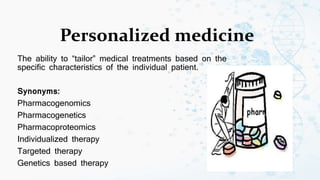
Personalized medicine
The ability to “tailor” medical treatments based on the
specific characteristics of the individual patient.
Synonyms:
Pharmacogenomics
Pharmacogenetics
Pharmacoproteomics
Individualized therapy
Targeted therapy
Genetics based therapy
History
• Prior to 1990 the genetic code and the ability to
sequence DNA
• In 1902 Lucien Cuenot’s hypothesis:
There may be genetic determinants that caused differences in
the biochemical process that could be the cause of adverse
reactions after ingestion of drugs genetic variations may
affect the physiological processes needed for drug metabolism
• In 1959 Friedrich Vogel “Pharmacogenetics”
• 1990-2003 Human Genome Project
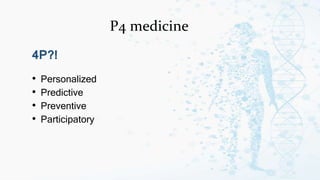
P4 medicine
4P?!
• Personalized
• Predictive
• Preventive
• Participatory
Why we need PM ?
“One therapy treats all”
• Every year in the USA 2 million
people die due to adverse drug
effects
• Drug efficacy is only in 60 % of
the population
• Other 40 % have poor drug
effects or no effect at all
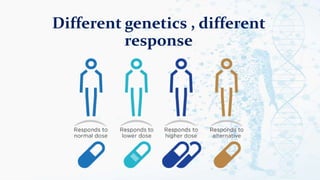
Different genetics , different
response
What is Pharmacogenetics and how it works
Pharmacogenetics is the pharmaceutical arm of
personalized medicine.
It focuses on understanding how small differences
in DNA affect whether a particular drug will be
effective,
ineffective, or harmful for a particular individual.
PM is not "genetic medicine"!
• Genetics, a field more than 50 years old, is the study of
heredity. It examines individual genes and their effects
as they relate to biology and medicine.
• In PM we study DNA polymorphisms
Genes
• Give a rise to proteins that play key roles in biological
processes
• In rare instances, one single mutated or malfunctioning
gene leads to a distinct genetic disease or syndrome.
Such disorders are termed “monogenic”.
• The most familiar of these rare disorders include
sickle cell anemia and cystic fibrosis.
• Also multiple genes can influence the development of
many common and complex diseases, as well as a
response to the pharmaceuticals designed to treat them.
• The contribution of several genes to these complex
disorders is termed “polygenic.”
SO …
• one disease can be reclassified as several different
diseases, each of which might respond to a different
treatment.
• Like asthma and many forms of cancer.
DNA polymorphisms
• It is the natural variations in our genes that
plays a role in our risk of getting or not getting
certain diseases.
• The combination of these variations across several
genes affects each individual’s risk.
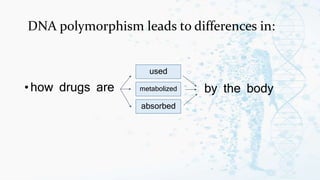
DNA polymorphism leads to differences in:
• how drugs are
used
metabolized
absorbed
by the body
Biomarkers
• Historically used as a physiologic measurement to indicate
the presence of a disease or the potential of developing
a pathological state.
• Body temperature biomarker of fever
• increased serum glucose biomarker for diabetes
• high blood pressure biomarker for cardiac infarction
or a stroke.
Laboratory medicine methods
biologic substances :
• Cells
• Enzymes
• Hormones
• Genes
Biomarker’s analysis can help classify:
• Sub-types within a disease
• Sub-groups of patients who have the same
molecular variation of the disease
So physicians can decide accurately about the type of
treatment and planning for the future
Specific advantages that PM may offer
patients and clinicians
• Ability to make more informed medical decisions
• Higher probability of desired outcomes thanks to better-
targeted therapies
• Reduced probability of negative side effects
• Focus on prevention and prediction of disease rather than
reaction to it
• Earlier disease intervention than has been possible in the
past
• Reduced healthcare costs
PM is already having an impact on
patient treatments:
 Molecular testing is being used to identify breast cancer
and
colon cancer patients likely to benefit from new
treatments
 Newly diagnosed patients with early stage invasive breast
cancer
can now be tested for the likelihood of recurrence.
Using natural genetic variations
PM aims …
 To tackle more complex diseases, such as cancer,
heart disease, and diabetes … Believed to be
influenced primarily by environmental factors and
their interaction with the human genome.
 To develop new safe and effective treatments for
genetically defined subgroups of patients.
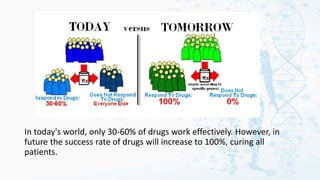
In today's world, only 30-60% of drugs work effectively. However, in
future the success rate of drugs will increase to 100%, curing all
patients.
In your wallet May be by 2050...
Challenges for PM
• will people with certain genetic predispositions be covered
by insurance companies, or determined to be too high of a
risk?
• issues of privacy, confidentiality, and patients’ rights
• will therapies be reimbursed only for those patients who
are identified, using whatever tests are available at the
time, as likely to respond?
What we still need to know more
• Different kinds of diseases
• Genes and proteins that are responsible for diseases
• Different causes of diseases
• Other environmental determinants
• Role of metabolic pathways in each illness
Thanks for your attention

Personalized medicine and future insights

  • 1.
    In The NameOf God PERSONALIZED MEDICINE By Shahrzad Moradifard
  • 2.
    Flow of Presentation oWhat is personalized medicine? o Why we need personalized medicine? o What’s Pharmacogenetics? o DNA polymorphism o Biomarkers o Today’s treatments with PM o Future insights o Challenges o What we still need to know more
  • 3.
    Personalized medicine The abilityto “tailor” medical treatments based on the specific characteristics of the individual patient. Synonyms: Pharmacogenomics Pharmacogenetics Pharmacoproteomics Individualized therapy Targeted therapy Genetics based therapy
  • 4.
    History • Prior to1990 the genetic code and the ability to sequence DNA • In 1902 Lucien Cuenot’s hypothesis: There may be genetic determinants that caused differences in the biochemical process that could be the cause of adverse reactions after ingestion of drugs genetic variations may affect the physiological processes needed for drug metabolism • In 1959 Friedrich Vogel “Pharmacogenetics” • 1990-2003 Human Genome Project
  • 5.
    P4 medicine 4P?! • Personalized •Predictive • Preventive • Participatory
  • 6.
    Why we needPM ? “One therapy treats all” • Every year in the USA 2 million people die due to adverse drug effects • Drug efficacy is only in 60 % of the population • Other 40 % have poor drug effects or no effect at all
  • 7.
    Different genetics ,different response
  • 8.
    What is Pharmacogeneticsand how it works Pharmacogenetics is the pharmaceutical arm of personalized medicine. It focuses on understanding how small differences in DNA affect whether a particular drug will be effective, ineffective, or harmful for a particular individual.
  • 9.
    PM is not"genetic medicine"! • Genetics, a field more than 50 years old, is the study of heredity. It examines individual genes and their effects as they relate to biology and medicine. • In PM we study DNA polymorphisms
  • 10.
    Genes • Give arise to proteins that play key roles in biological processes • In rare instances, one single mutated or malfunctioning gene leads to a distinct genetic disease or syndrome. Such disorders are termed “monogenic”. • The most familiar of these rare disorders include sickle cell anemia and cystic fibrosis.
  • 11.
    • Also multiplegenes can influence the development of many common and complex diseases, as well as a response to the pharmaceuticals designed to treat them. • The contribution of several genes to these complex disorders is termed “polygenic.” SO … • one disease can be reclassified as several different diseases, each of which might respond to a different treatment. • Like asthma and many forms of cancer.
  • 12.
    DNA polymorphisms • Itis the natural variations in our genes that plays a role in our risk of getting or not getting certain diseases. • The combination of these variations across several genes affects each individual’s risk.
  • 13.
    DNA polymorphism leadsto differences in: • how drugs are used metabolized absorbed by the body
  • 14.
    Biomarkers • Historically usedas a physiologic measurement to indicate the presence of a disease or the potential of developing a pathological state. • Body temperature biomarker of fever • increased serum glucose biomarker for diabetes • high blood pressure biomarker for cardiac infarction or a stroke.
  • 15.
    Laboratory medicine methods biologicsubstances : • Cells • Enzymes • Hormones • Genes
  • 16.
    Biomarker’s analysis canhelp classify: • Sub-types within a disease • Sub-groups of patients who have the same molecular variation of the disease So physicians can decide accurately about the type of treatment and planning for the future
  • 17.
    Specific advantages thatPM may offer patients and clinicians • Ability to make more informed medical decisions • Higher probability of desired outcomes thanks to better- targeted therapies • Reduced probability of negative side effects • Focus on prevention and prediction of disease rather than reaction to it • Earlier disease intervention than has been possible in the past • Reduced healthcare costs
  • 18.
    PM is alreadyhaving an impact on patient treatments:  Molecular testing is being used to identify breast cancer and colon cancer patients likely to benefit from new treatments  Newly diagnosed patients with early stage invasive breast cancer can now be tested for the likelihood of recurrence.
  • 19.
    Using natural geneticvariations PM aims …  To tackle more complex diseases, such as cancer, heart disease, and diabetes … Believed to be influenced primarily by environmental factors and their interaction with the human genome.  To develop new safe and effective treatments for genetically defined subgroups of patients.
  • 20.
    In today's world,only 30-60% of drugs work effectively. However, in future the success rate of drugs will increase to 100%, curing all patients.
  • 21.
    In your walletMay be by 2050...
  • 22.
    Challenges for PM •will people with certain genetic predispositions be covered by insurance companies, or determined to be too high of a risk? • issues of privacy, confidentiality, and patients’ rights • will therapies be reimbursed only for those patients who are identified, using whatever tests are available at the time, as likely to respond?
  • 23.
    What we stillneed to know more • Different kinds of diseases • Genes and proteins that are responsible for diseases • Different causes of diseases • Other environmental determinants • Role of metabolic pathways in each illness
  • 24.
    Thanks for yourattention