Download to read offline
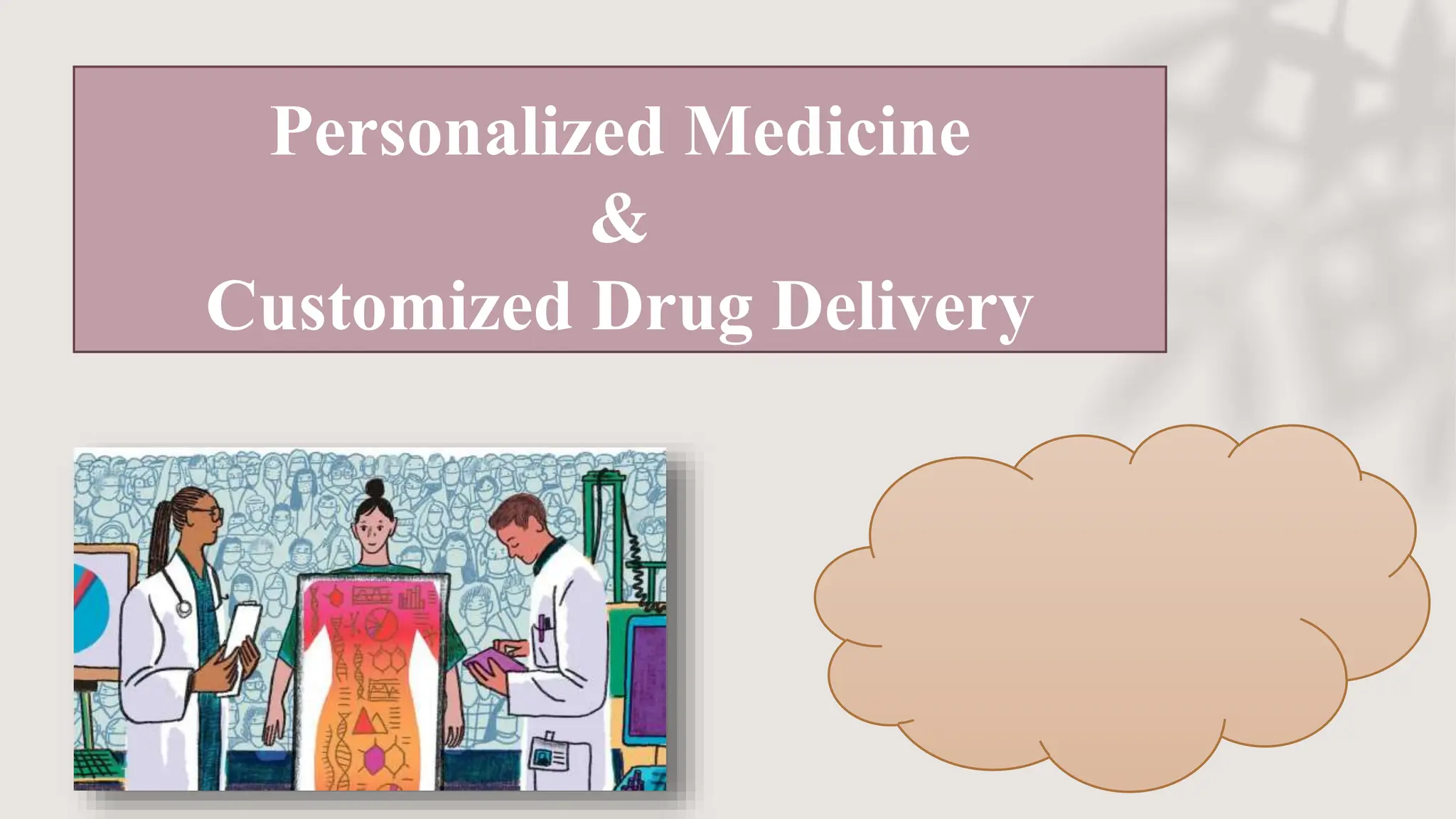







1. Personalized medicine aims to provide tailored treatment based on an individual's unique attributes by using diagnostic tools to identify biological markers, often genetic, to help assess which medical treatments will be most effective. 2. Pharmacogenomics plays a key role by studying how genetic variations affect individual responses to drugs to optimize efficacy and minimize adverse reactions. This allows for more targeted therapies and precise dosing. 3. The Human Genome Project mapped the entire human genetic code, opening up possibilities for diagnosing and treating diseases based on a person's genetic profile. Now, molecular testing guides treatment decisions and replaces some invasive procedures.


