
Suresh Babu G
Assistant Professor
CTE CPAS Paippad , Kottayam
 Adjustment – Meaning
 Definition – Adjustment
 Nature of Adjustment
 Need and importance of Adjustment
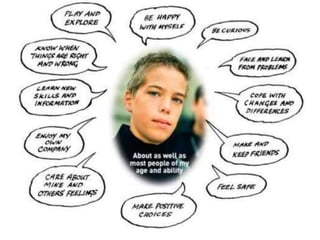
 Characteristics of a well adjusted person
 Characteristics of a well adjusted students in class
 Adjustment Process
 Role of teacher in pupils adjustment
 Maladjustment
 Causes of Maladjustment
 School factors contributing to maladjustment of students
 Diagnosis and Treatment of Maladjusted Children
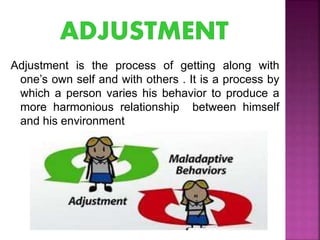
Adjustment is the process of getting along with
one’s own self and with others . It is a process by
which a person varies his behavior to produce a
more harmonious relationship between himself
and his environment
According to Shaffer , adjustment is a process by
which an individual maintains a balance between his
needs and circumstances that influence the
satisfaction of those needs.
Webster considers adjustment as the establishment of
a satisfactory relationship as representing harmony ,
conformance , adaptation or the like.
Good defines adjustment as the process of finding and
adopting modes of behavior suitable to the
environment or the change in the environment.
 It is an achievement
 It is the process need reduction
 States relationship between
person and his environment
 It brings happiness , efficiency and some
degree of social feelings
 It depends on external and internal demands
 It refers both to a process and to a state
 It involves psychological and physiological
adaptation
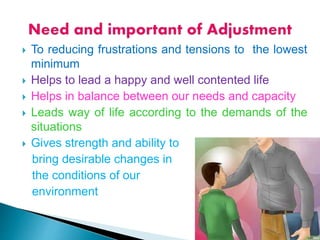
 To reducing frustrations and tensions to the lowest
minimum
 Helps to lead a happy and well contented life
 Helps in balance between our needs and capacity
 Leads way of life according to the demands of the
situations
 Gives strength and ability to
bring desirable changes in
the conditions of our
environment
 He knows his strength and limitations
 Has an adequate level of aspiration
 His basic needs like organic , emotional and social
needs are fully satisfied
 He does not possess critical or fault finding
attitude
 His behavior is flexible
 He is capable of struggling with odd
circumstances
 He has got a realistic perception of world
 He has his own philosophy of life
 Has good physical health
 Psychologically comfort
 Has work efficiency
 Social acceptance
The adjustment process occurs when conflict
occurs . Conflicts occurs between internal needs
and external demand , in such condition , there
are three alternatives
1. The individual may inhibits or modify his internal
need or demand
2. He can alter the environment and can satisfy his
demands
3. He can use some mental mechanism to escape
from conflicting situation and may able to
maintain the balance of personality
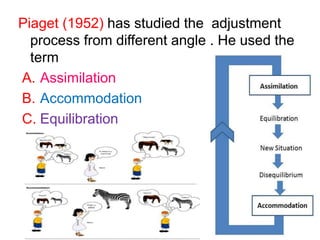
Piaget (1952) has studied the adjustment
process from different angle . He used the
term
A. Assimilation
B. Accommodation
C. Equilibration
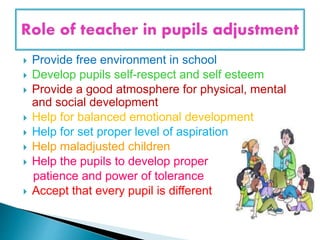
 Provide free environment in school
 Develop pupils self-respect and self esteem
 Provide a good atmosphere for physical, mental
and social development
 Help for balanced emotional development
 Help for set proper level of aspiration
 Help maladjusted children
 Help the pupils to develop proper
patience and power of tolerance
 Accept that every pupil is different
 Maladjustment literally means faulty or
unsatisfactory adjustment.
 In psychology, the term is used to mention the
inability to adjust to the demand of interpersonal
relationships and the stresses of daily living.
 It refers to the degree of disharmony between the
person and his environment.
 It result in frustration and conflicts.
 Frustration
It means emotional tension resulting from the
blocking of a desire. It is an individual’s goal-seeking
activity is obstructed. It result in mental tension.
 Conflicts
It means a state of tension brought by the presence
of two or more opposing desire in the individual.
Lewin considers conflicts as a clash of motives. They
are
Approach-approach conflict,
Approach-avoidance conflict,
Avoidance-avoidance conflict.
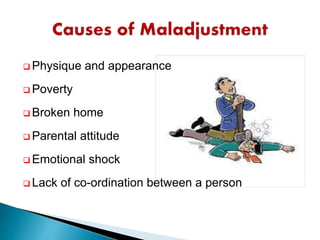
 Physique and appearance
 Poverty
 Broken home
 Parental attitude
 Emotional shock
 Lack of co-ordination between a person
 Maladjusted teachers
 Attitude of teachers
 Inadequate curriculum
 Lack of co-curricular activities
 Defective examination system
1. Diagnosis of Maladjustment
Physical symptoms – stuttering, stammering,
scratching head, facial twitching, biting nails,
rocking feet, restlessness, drumming with fingers
and vomiting
Behavioral Symptoms – Aggression, lying, bullying,
stealing, truancy, wandering, poor school
achievement, frequent absence, hyperactivity,
withdrawal tendencies, negativism, and sex
disturbances
Emotional symptoms – Excessive worry, fear,
inferiority, hatred, extreme timidity, temper
tantrum, persistent anxiety, conflicts and tension.
2. Detection of Maladjusted Children
 Observation and interview
 Use of test : Number of Psychological tests,
inventories, and rating scale can be used Eg:
The Bell Adjustment Inventory, The Moony
Checklist, Taylor Anxiety Scale etc
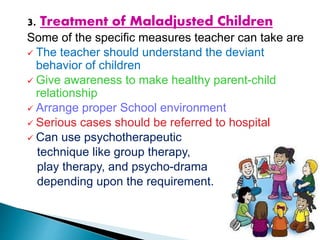
3. Treatment of Maladjusted Children
Some of the specific measures teacher can take are
 The teacher should understand the deviant
behavior of children
 Give awareness to make healthy parent-child
relationship
 Arrange proper School environment
 Serious cases should be referred to hospital
 Can use psychotherapeutic
technique like group therapy,
play therapy, and psycho-drama
depending upon the requirement.
Adjustment and maladjustment

Adjustment and maladjustment

  • 1.
    Suresh Babu G AssistantProfessor CTE CPAS Paippad , Kottayam
  • 2.
     Adjustment –Meaning  Definition – Adjustment  Nature of Adjustment  Need and importance of Adjustment  Characteristics of a well adjusted person  Characteristics of a well adjusted students in class  Adjustment Process  Role of teacher in pupils adjustment  Maladjustment  Causes of Maladjustment  School factors contributing to maladjustment of students  Diagnosis and Treatment of Maladjusted Children
  • 3.
    Adjustment is theprocess of getting along with one’s own self and with others . It is a process by which a person varies his behavior to produce a more harmonious relationship between himself and his environment
  • 4.
    According to Shaffer, adjustment is a process by which an individual maintains a balance between his needs and circumstances that influence the satisfaction of those needs. Webster considers adjustment as the establishment of a satisfactory relationship as representing harmony , conformance , adaptation or the like. Good defines adjustment as the process of finding and adopting modes of behavior suitable to the environment or the change in the environment.
  • 5.
     It isan achievement  It is the process need reduction  States relationship between person and his environment  It brings happiness , efficiency and some degree of social feelings  It depends on external and internal demands  It refers both to a process and to a state  It involves psychological and physiological adaptation
  • 6.
     To reducingfrustrations and tensions to the lowest minimum  Helps to lead a happy and well contented life  Helps in balance between our needs and capacity  Leads way of life according to the demands of the situations  Gives strength and ability to bring desirable changes in the conditions of our environment
  • 7.
     He knowshis strength and limitations  Has an adequate level of aspiration  His basic needs like organic , emotional and social needs are fully satisfied  He does not possess critical or fault finding attitude  His behavior is flexible  He is capable of struggling with odd circumstances  He has got a realistic perception of world  He has his own philosophy of life
  • 8.
     Has goodphysical health  Psychologically comfort  Has work efficiency  Social acceptance
  • 9.
    The adjustment processoccurs when conflict occurs . Conflicts occurs between internal needs and external demand , in such condition , there are three alternatives 1. The individual may inhibits or modify his internal need or demand 2. He can alter the environment and can satisfy his demands 3. He can use some mental mechanism to escape from conflicting situation and may able to maintain the balance of personality
  • 10.
    Piaget (1952) hasstudied the adjustment process from different angle . He used the term A. Assimilation B. Accommodation C. Equilibration
  • 11.
     Provide freeenvironment in school  Develop pupils self-respect and self esteem  Provide a good atmosphere for physical, mental and social development  Help for balanced emotional development  Help for set proper level of aspiration  Help maladjusted children  Help the pupils to develop proper patience and power of tolerance  Accept that every pupil is different
  • 13.
     Maladjustment literallymeans faulty or unsatisfactory adjustment.  In psychology, the term is used to mention the inability to adjust to the demand of interpersonal relationships and the stresses of daily living.  It refers to the degree of disharmony between the person and his environment.  It result in frustration and conflicts.
  • 14.
     Frustration It meansemotional tension resulting from the blocking of a desire. It is an individual’s goal-seeking activity is obstructed. It result in mental tension.  Conflicts It means a state of tension brought by the presence of two or more opposing desire in the individual. Lewin considers conflicts as a clash of motives. They are Approach-approach conflict, Approach-avoidance conflict, Avoidance-avoidance conflict.
  • 15.
     Physique andappearance  Poverty  Broken home  Parental attitude  Emotional shock  Lack of co-ordination between a person
  • 16.
     Maladjusted teachers Attitude of teachers  Inadequate curriculum  Lack of co-curricular activities  Defective examination system
  • 17.
    1. Diagnosis ofMaladjustment Physical symptoms – stuttering, stammering, scratching head, facial twitching, biting nails, rocking feet, restlessness, drumming with fingers and vomiting Behavioral Symptoms – Aggression, lying, bullying, stealing, truancy, wandering, poor school achievement, frequent absence, hyperactivity, withdrawal tendencies, negativism, and sex disturbances
  • 18.
    Emotional symptoms –Excessive worry, fear, inferiority, hatred, extreme timidity, temper tantrum, persistent anxiety, conflicts and tension. 2. Detection of Maladjusted Children  Observation and interview  Use of test : Number of Psychological tests, inventories, and rating scale can be used Eg: The Bell Adjustment Inventory, The Moony Checklist, Taylor Anxiety Scale etc
  • 19.
    3. Treatment ofMaladjusted Children Some of the specific measures teacher can take are  The teacher should understand the deviant behavior of children  Give awareness to make healthy parent-child relationship  Arrange proper School environment  Serious cases should be referred to hospital  Can use psychotherapeutic technique like group therapy, play therapy, and psycho-drama depending upon the requirement.