Meaning & Definition of Personal
Grooming
Definition: Personal grooming is the art of cleaning,
grooming, and maintaining parts of the body.
Personal hygiene (cleanliness) refers to the cleaning
and grooming of the body. In addition to improving
appearance, personal hygiene is an important form
of protection against disease and infections of all
kinds.
Personal hygiene entails (requires) bathing
regularly, keeping your hair clean, trimming
fingernails and toenails, brushing your teeth
and using deodorant.
Personal Grooming can enhance (improve)
your self-confidence and improve your
chances of success in many areas of your life.
Grooming is caring for fingernails and hair
examples of these activities would be styling
hair, shaving, trimming and painting
fingernails.
Importance of Personal Grooming & Hygiene
The importance of personal grooming goes beyond
simply looking and smelling good.
Practicing good personal hygiene can help your body
to prevent illnesses by decreasing the amount of germs
you carry.
Your skin protects the rest of your body from germs, so
keeping your skin germ-free and healthy is an
extremely important part of good hygiene. Any break
in the skin, including your mouth, eyes and nose, also
needs to be well-maintained.
Personal Grooming and hygiene helps us look and feel
good. It improves our physical and mental well being.
Grooming Routines
Grooming Routine
includes the following :
a)Hair
b)Skin
c) Teeth
d)Hands
e)Nails
f) Feet
Hair
a. Wash your hair minimum once a
week.
b. Scrub well and rinse properly
when you wash.
c. Brush your hair three to four
times a day with a soft bristled
brush or a wide toothed comb.
Wash your brush and
comb regularly.
d. Always go for hair cuts at regular
intervals.
e. Oil the scalp, once a week,
preferably an hour before hair
wash.
f. Know your scalp and use hair
care products accordingly.
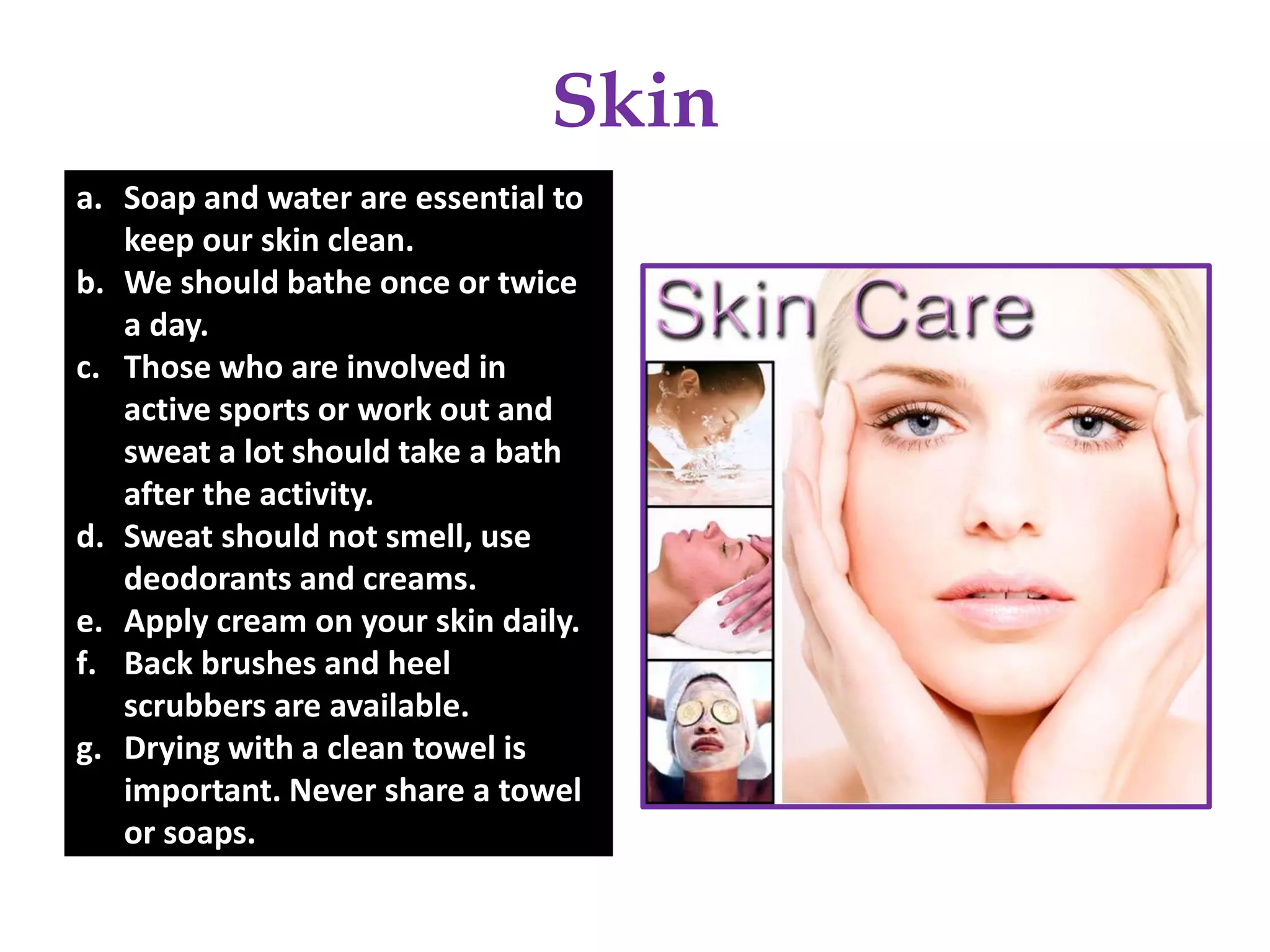
Skin
a. Soap and water are essential to
keep our skin clean.
b. We should bathe once or twice
a day.
c. Those who are involved in
active sports or work out and
sweat a lot should take a bath
after the activity.
d. Sweat should not smell, use
deodorants and creams.
e. Apply cream on your skin daily.
f. Back brushes and heel
scrubbers are available.
g. Drying with a clean towel is
important. Never share a towel
or soaps.
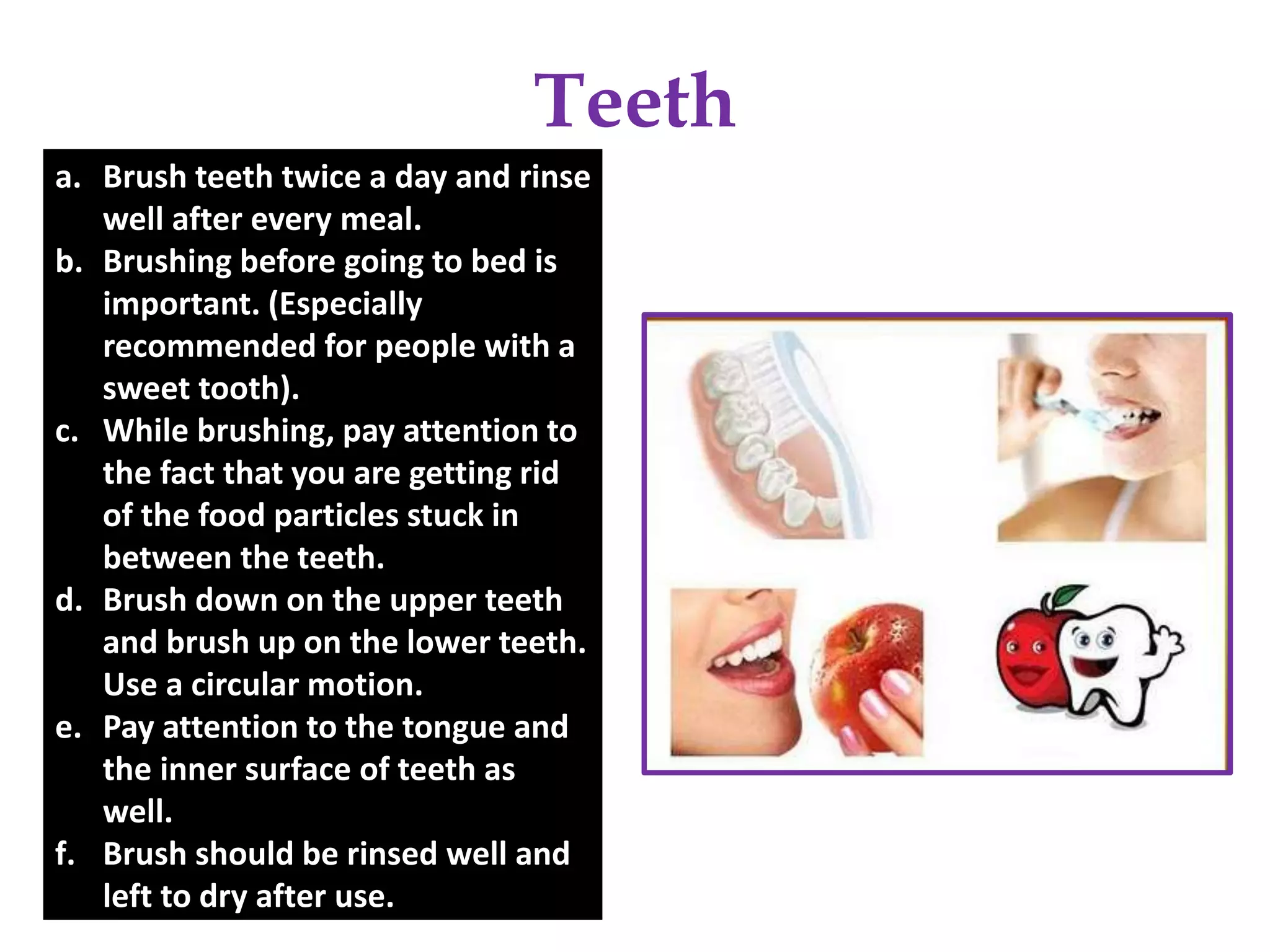
Teeth
a. Brush teeth twice a day and rinse
well after every meal.
b. Brushing before going to bed is
important. (Especially
recommended for people with a
sweet tooth).
c. While brushing, pay attention to
the fact that you are getting rid
of the food particles stuck in
between the teeth.
d. Brush down on the upper teeth
and brush up on the lower teeth.
Use a circular motion.
e. Pay attention to the tongue and
the inner surface of teeth as
well.
f. Brush should be rinsed well and
left to dry after use.
Hands
a) Food is eaten and prepared
with bare hands extra
attention has to be paid to the
cleanliness of hands.
b) Wash hands thoroughly with
soap and water before and
after every meal and after
visiting the toilet.
c) Apply cream regularly.
d) Hands should be dried with a
clean towel after wash. The
towel at the wash stand has to
be washed and changed
everyday.
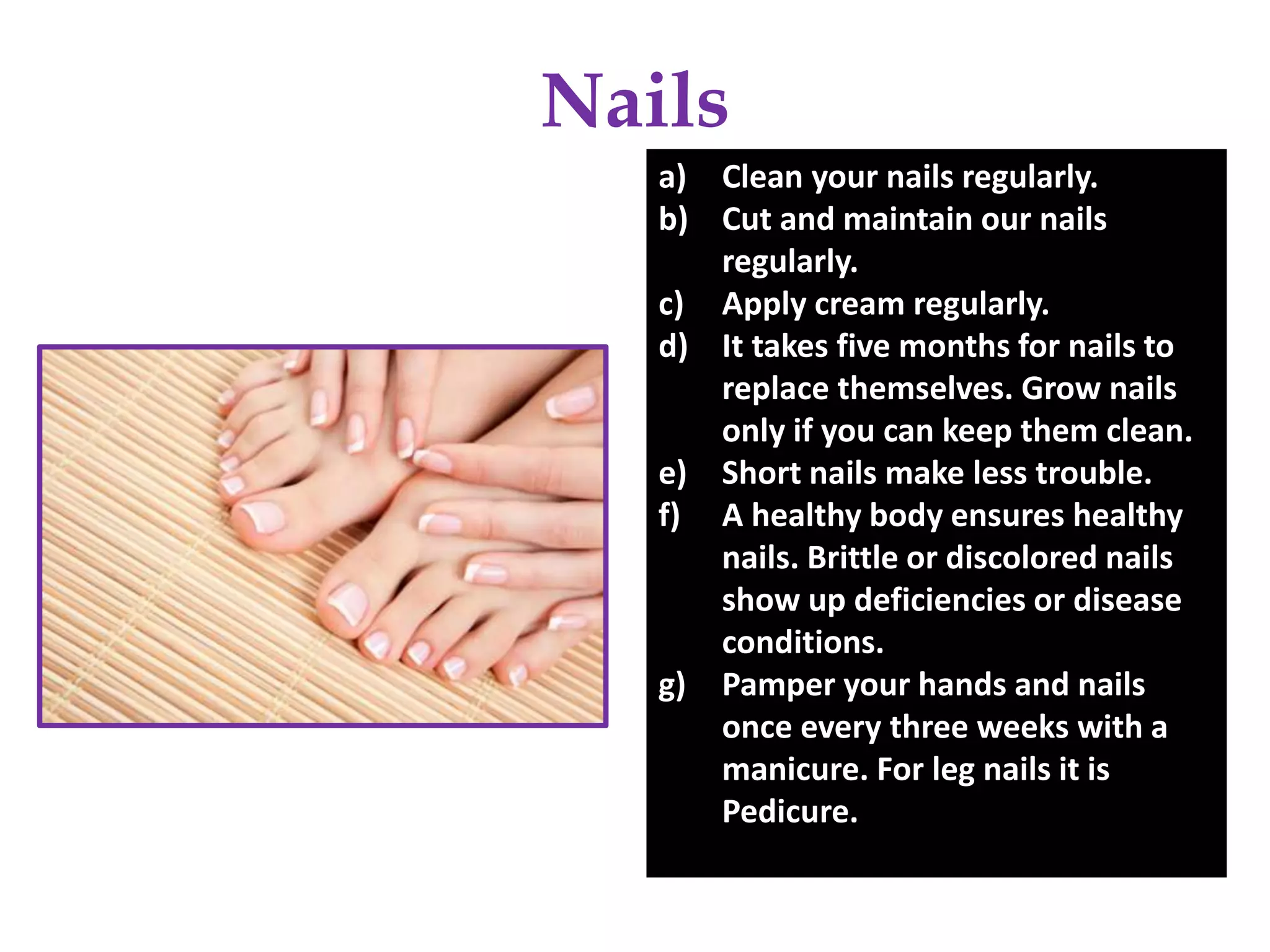
Nails
a) Clean your nails regularly.
b) Cut and maintain our nails
regularly.
c) Apply cream regularly.
d) It takes five months for nails to
replace themselves. Grow nails
only if you can keep them clean.
e) Short nails make less trouble.
f) A healthy body ensures healthy
nails. Brittle or discolored nails
show up deficiencies or disease
conditions.
g) Pamper your hands and nails
once every three weeks with a
manicure. For leg nails it is
Pedicure.
Feet
a) Give your feet a good scrub
with soap or scrubber daily.
b) Apply cream properly and
regularly.
c) Keep toenails clipped.
d) Your feet should not smell. Your
socks should not smell; if
required wear cotton socks.
e) Never repeat your socks.
f) Go for Pedicure regularly.
g) Give importance to wearing
comfort in the choice of
footwear.
h) Wear slippers indoor.
i) Wash and change doormats
regularly.
Ways to help with Personal Hygiene
Personal Hygiene is the first step to
good health and grooming. Head
Lice, bad breath, perspiration, body
odor, infections, dandruff, ear wax,
etc. are all examples of improper
Personal Hygiene.
1. Always wash hands well before
and after meals.
2. Bathing or showering daily is
necessary to get rid of body
odor and bacteria on the skin.
3. Practice oral hygiene by
brushing your teeth at least
twice a day -- in the morning
after waking and before going
to bed. Make sure to clean your
tongue daily.
4. Fingernails and toenails should be
clipped regularly. If you wish to
maintain long nails then they
should be manicured and cleaned
regularly.
5. To control body odor, rub on a
lightly scented or non-scented
deodorant daily, at the beginning
of the day, and reapply as
necessary.
6. Always comb your hair neatly.
Observe what suits you. Try new
styles daily.
7. Foot odor can be prevented or
blocked by sprinkling foot
powder or baby powder inside
shoes and socks.
8. Washing clothing regularly,
during summers change if
required.
9. Any cut, burn, sore or scrape
should be cleaned and bandaged
as soon as possible. This
prevents the cut from getting
infected and stops the spread of
germs to other people.
10.Use handkerchief while coughing
or sneezing.
11.Hair on your chin, upper lip, ears
and nose can make you look
unsightly. So remember to pluck
it out when they start becoming
visible on your face. Women
should visit the salon every 15
days to shape up the eyebrows.

Grooming skills

  • 2.
    Meaning & Definitionof Personal Grooming Definition: Personal grooming is the art of cleaning, grooming, and maintaining parts of the body. Personal hygiene (cleanliness) refers to the cleaning and grooming of the body. In addition to improving appearance, personal hygiene is an important form of protection against disease and infections of all kinds.
  • 3.
    Personal hygiene entails(requires) bathing regularly, keeping your hair clean, trimming fingernails and toenails, brushing your teeth and using deodorant. Personal Grooming can enhance (improve) your self-confidence and improve your chances of success in many areas of your life. Grooming is caring for fingernails and hair examples of these activities would be styling hair, shaving, trimming and painting fingernails.
  • 4.
    Importance of PersonalGrooming & Hygiene The importance of personal grooming goes beyond simply looking and smelling good. Practicing good personal hygiene can help your body to prevent illnesses by decreasing the amount of germs you carry. Your skin protects the rest of your body from germs, so keeping your skin germ-free and healthy is an extremely important part of good hygiene. Any break in the skin, including your mouth, eyes and nose, also needs to be well-maintained. Personal Grooming and hygiene helps us look and feel good. It improves our physical and mental well being.
  • 5.
    Grooming Routines Grooming Routine includesthe following : a)Hair b)Skin c) Teeth d)Hands e)Nails f) Feet
  • 6.
    Hair a. Wash yourhair minimum once a week. b. Scrub well and rinse properly when you wash. c. Brush your hair three to four times a day with a soft bristled brush or a wide toothed comb. Wash your brush and comb regularly. d. Always go for hair cuts at regular intervals. e. Oil the scalp, once a week, preferably an hour before hair wash. f. Know your scalp and use hair care products accordingly.
  • 7.
    Skin a. Soap andwater are essential to keep our skin clean. b. We should bathe once or twice a day. c. Those who are involved in active sports or work out and sweat a lot should take a bath after the activity. d. Sweat should not smell, use deodorants and creams. e. Apply cream on your skin daily. f. Back brushes and heel scrubbers are available. g. Drying with a clean towel is important. Never share a towel or soaps.
  • 8.
    Teeth a. Brush teethtwice a day and rinse well after every meal. b. Brushing before going to bed is important. (Especially recommended for people with a sweet tooth). c. While brushing, pay attention to the fact that you are getting rid of the food particles stuck in between the teeth. d. Brush down on the upper teeth and brush up on the lower teeth. Use a circular motion. e. Pay attention to the tongue and the inner surface of teeth as well. f. Brush should be rinsed well and left to dry after use.
  • 9.
    Hands a) Food iseaten and prepared with bare hands extra attention has to be paid to the cleanliness of hands. b) Wash hands thoroughly with soap and water before and after every meal and after visiting the toilet. c) Apply cream regularly. d) Hands should be dried with a clean towel after wash. The towel at the wash stand has to be washed and changed everyday.
  • 10.
    Nails a) Clean yournails regularly. b) Cut and maintain our nails regularly. c) Apply cream regularly. d) It takes five months for nails to replace themselves. Grow nails only if you can keep them clean. e) Short nails make less trouble. f) A healthy body ensures healthy nails. Brittle or discolored nails show up deficiencies or disease conditions. g) Pamper your hands and nails once every three weeks with a manicure. For leg nails it is Pedicure.
  • 11.
    Feet a) Give yourfeet a good scrub with soap or scrubber daily. b) Apply cream properly and regularly. c) Keep toenails clipped. d) Your feet should not smell. Your socks should not smell; if required wear cotton socks. e) Never repeat your socks. f) Go for Pedicure regularly. g) Give importance to wearing comfort in the choice of footwear. h) Wear slippers indoor. i) Wash and change doormats regularly.
  • 12.
    Ways to helpwith Personal Hygiene Personal Hygiene is the first step to good health and grooming. Head Lice, bad breath, perspiration, body odor, infections, dandruff, ear wax, etc. are all examples of improper Personal Hygiene. 1. Always wash hands well before and after meals. 2. Bathing or showering daily is necessary to get rid of body odor and bacteria on the skin. 3. Practice oral hygiene by brushing your teeth at least twice a day -- in the morning after waking and before going to bed. Make sure to clean your tongue daily.
  • 13.
    4. Fingernails andtoenails should be clipped regularly. If you wish to maintain long nails then they should be manicured and cleaned regularly. 5. To control body odor, rub on a lightly scented or non-scented deodorant daily, at the beginning of the day, and reapply as necessary. 6. Always comb your hair neatly. Observe what suits you. Try new styles daily. 7. Foot odor can be prevented or blocked by sprinkling foot powder or baby powder inside shoes and socks. 8. Washing clothing regularly, during summers change if required. 9. Any cut, burn, sore or scrape should be cleaned and bandaged as soon as possible. This prevents the cut from getting infected and stops the spread of germs to other people. 10.Use handkerchief while coughing or sneezing. 11.Hair on your chin, upper lip, ears and nose can make you look unsightly. So remember to pluck it out when they start becoming visible on your face. Women should visit the salon every 15 days to shape up the eyebrows.