Dr. Jatinder S. Luthra

   None
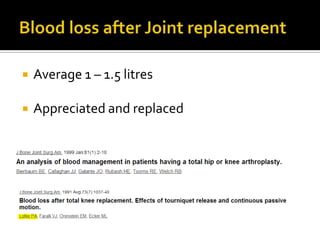
   Average 1 – 1.5 litres

   Appreciated and replaced
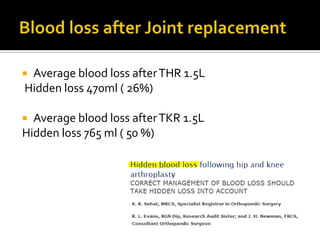
Average blood loss after THR 1.5L
Hidden loss 470ml ( 26%)

 Average blood loss after TKR 1.5L
Hidden loss 765 ml ( 50 %)
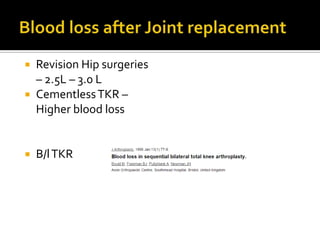
 Revision Hip surgeries
  – 2.5L – 3.0 L
 Cementless TKR –
  Higher blood loss


   B/l TKR
   Allogenic Blood transfusion

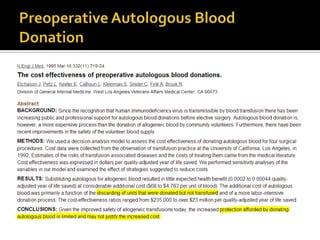
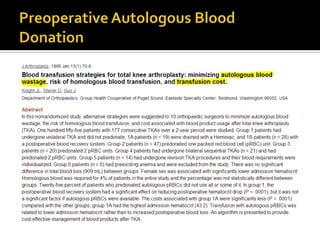
   Preoperative Autologous blood Donation

   Blood conservation measures
   Primary THR – 2.0 ( +/- 1.8)
   Revision THR – 2.9 ( +/- 2.3)
                 Bae et al Arthroplasty 1999


   Primary TKR – 1-2 units
   Revision TKR – 3-4 units
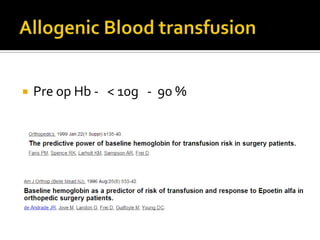
   Pre op Hb - < 10g - 90 %
   Weight
   Age
   Aspirin
   Female
   Comorbidities
   B/L TKR
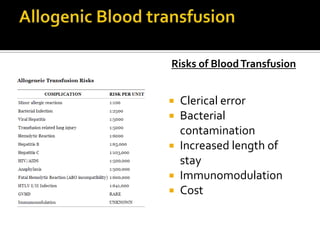
Risks of Blood Transfusion


 Clerical error
 Bacterial
  contamination
 Increased length of
  stay
 Immunomodulation
 Cost
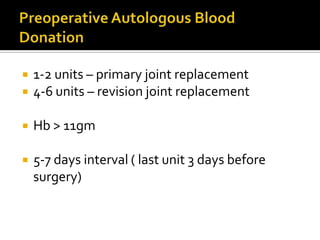
   1-2 units – primary joint replacement
   4-6 units – revision joint replacement

   Hb > 11gm

   5-7 days interval ( last unit 3 days before
    surgery)
   Scheduling difficulties
   Limited shelf life
   Clerical errors
   Bacterial contamination
   Perioperative blood salvage

   Haemodilution

   Intraop Pharmacologic agents

   Increased Haematopoiesis
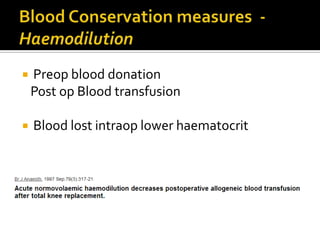
   Preop blood donation
    Post op Blood transfusion

   Blood lost intraop lower haematocrit
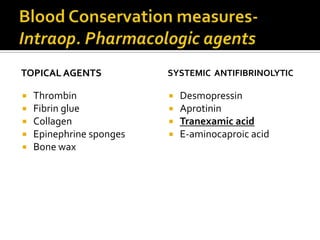
TOPICAL AGENTS            SYSTEMIC ANTIFIBRINOLYTIC

   Thrombin                 Desmopressin
   Fibrin glue              Aprotinin
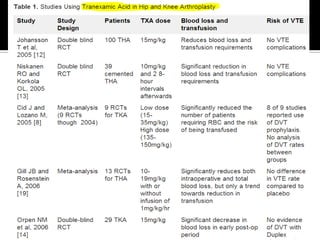
   Collagen                 Tranexamic acid
   Epinephrine sponges      E-aminocaproic acid
   Bone wax
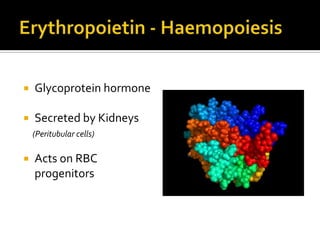
ERYTHROPOIETIN
   Glycoprotein hormone

   Secreted by Kidneys
    (Peritubular cells)

   Acts on RBC
    progenitors
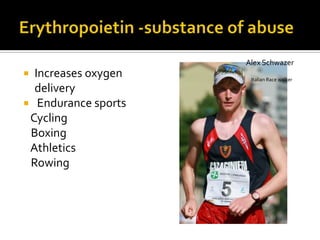
Alex Schwazer
 Increases oxygen    Italian Race walker
  delivery
 Endurance sports
 Cycling
 Boxing
 Athletics
 Rowing
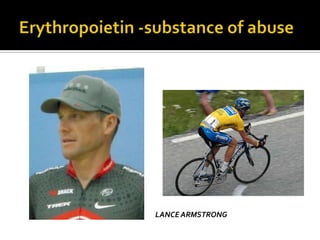
LANCE ARMSTRONG
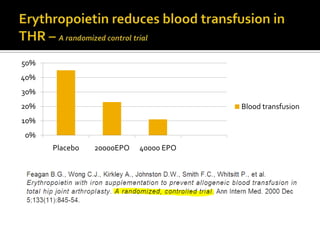
50%
40%
30%
20%                                    Blood transfusion
10%
0%
      Placebo   20000EPO   40000 EPO
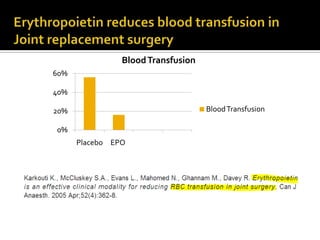
Blood Transfusion
60%

40%

20%                                 Blood Transfusion

0%
      Placebo EPO
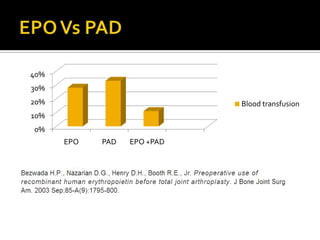
40%
30%
20%                          Blood transfusion
10%
0%
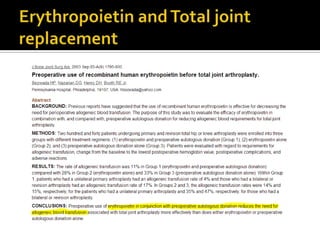
      EPO   PAD   EPO +PAD
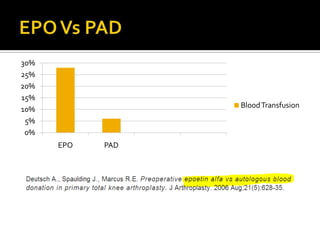
30%
25%
20%
15%
                  Blood Transfusion
10%
 5%
 0%
      EPO   PAD
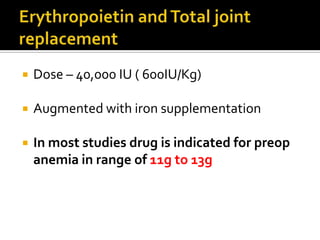
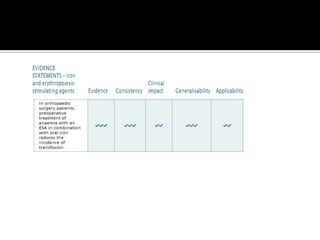
   Dose – 40,000 IU ( 600IU/Kg)

   Augmented with iron supplementation

   In most studies drug is indicated for preop
    anemia in range of 11g to 13g
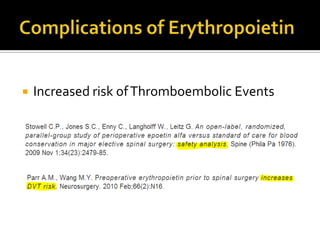
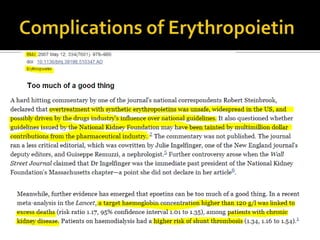
   Increased risk of Thromboembolic Events
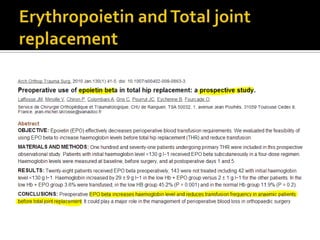
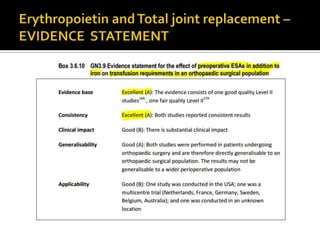
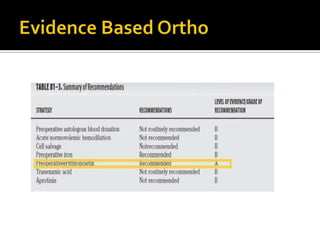
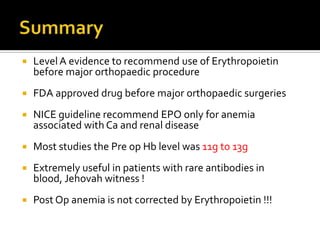
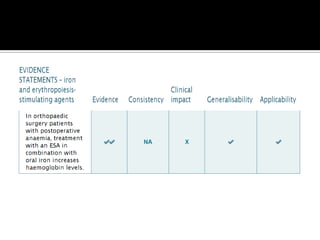
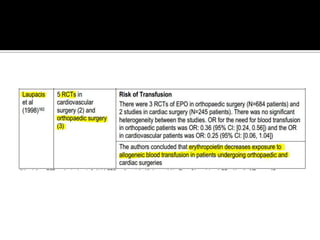
   Level A evidence to recommend use of Erythropoietin
    before major orthopaedic procedure
   FDA approved drug before major orthopaedic surgeries
   NICE guideline recommend EPO only for anemia
    associated with Ca and renal disease
   Most studies the Pre op Hb level was 11g to 13g
   Extremely useful in patients with rare antibodies in
    blood, Jehovah witness !
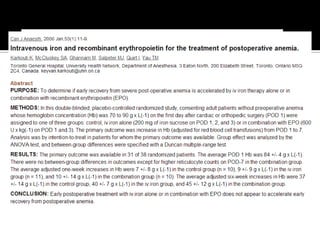
   Post Op anemia is not corrected by Erythropoietin !!!
THANK YOU
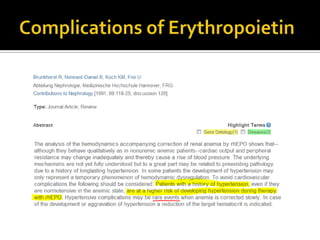
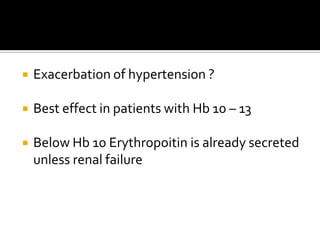
   Exacerbation of hypertension ?

   Best effect in patients with Hb 10 – 13

   Below Hb 10 Erythropoitin is already secreted
    unless renal failure
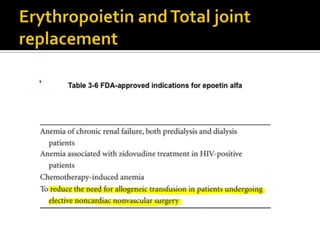
Erythropoitin and total joint replacement

Erythropoitin and total joint replacement

  • 1.
  • 2.
    None
  • 3.
    Average 1 – 1.5 litres  Appreciated and replaced
  • 4.
    Average blood lossafter THR 1.5L Hidden loss 470ml ( 26%)  Average blood loss after TKR 1.5L Hidden loss 765 ml ( 50 %)
  • 5.
     Revision Hipsurgeries – 2.5L – 3.0 L  Cementless TKR – Higher blood loss  B/l TKR
  • 6.
    Allogenic Blood transfusion  Preoperative Autologous blood Donation  Blood conservation measures
  • 7.
    Primary THR – 2.0 ( +/- 1.8)  Revision THR – 2.9 ( +/- 2.3) Bae et al Arthroplasty 1999  Primary TKR – 1-2 units  Revision TKR – 3-4 units
  • 8.
    Pre op Hb - < 10g - 90 %
  • 9.
    Weight  Age  Aspirin  Female  Comorbidities  B/L TKR
  • 10.
    Risks of BloodTransfusion  Clerical error  Bacterial contamination  Increased length of stay  Immunomodulation  Cost
  • 11.
    1-2 units – primary joint replacement  4-6 units – revision joint replacement  Hb > 11gm  5-7 days interval ( last unit 3 days before surgery)
  • 13.
    Scheduling difficulties  Limited shelf life  Clerical errors  Bacterial contamination
  • 16.
    Perioperative blood salvage  Haemodilution  Intraop Pharmacologic agents  Increased Haematopoiesis
  • 17.
    Preop blood donation Post op Blood transfusion  Blood lost intraop lower haematocrit
  • 18.
    TOPICAL AGENTS SYSTEMIC ANTIFIBRINOLYTIC  Thrombin  Desmopressin  Fibrin glue  Aprotinin  Collagen  Tranexamic acid  Epinephrine sponges  E-aminocaproic acid  Bone wax
  • 20.
  • 21.
    Glycoprotein hormone  Secreted by Kidneys (Peritubular cells)  Acts on RBC progenitors
  • 22.
    Alex Schwazer  Increasesoxygen Italian Race walker delivery  Endurance sports Cycling Boxing Athletics Rowing
  • 23.
  • 26.
    50% 40% 30% 20% Blood transfusion 10% 0% Placebo 20000EPO 40000 EPO
  • 27.
    Blood Transfusion 60% 40% 20% Blood Transfusion 0% Placebo EPO
  • 29.
    40% 30% 20% Blood transfusion 10% 0% EPO PAD EPO +PAD
  • 30.
    30% 25% 20% 15% Blood Transfusion 10% 5% 0% EPO PAD
  • 31.
    Dose – 40,000 IU ( 600IU/Kg)  Augmented with iron supplementation  In most studies drug is indicated for preop anemia in range of 11g to 13g
  • 32.
    Increased risk of Thromboembolic Events
  • 38.
    Level A evidence to recommend use of Erythropoietin before major orthopaedic procedure  FDA approved drug before major orthopaedic surgeries  NICE guideline recommend EPO only for anemia associated with Ca and renal disease  Most studies the Pre op Hb level was 11g to 13g  Extremely useful in patients with rare antibodies in blood, Jehovah witness !  Post Op anemia is not corrected by Erythropoietin !!!
  • 39.
  • 40.
    Exacerbation of hypertension ?  Best effect in patients with Hb 10 – 13  Below Hb 10 Erythropoitin is already secreted unless renal failure