Agenda               Bell Work
• Bill Nye: Atoms    • Pick up Crossword
                       Puzzle from front desk
• Notes: Periodic
  Table              • Complete using periodic
                       table
HW: Chp 18 pg 308-
 313, 317-318

Chp 17-18 “Quest”
 Tuesday
Periodic Table
  January 2, 2013
Objectives
1. Describe the structure of the periodic
   table
2. Distinguish between metal, nonmetal,
   metalloid
3. Identify and describe properties of
   halogens, noble gases
Organization of the Table
 Tells about the elements structures,
 and how they behave

 Grouped as metals, nonmetals, and
 metalloids
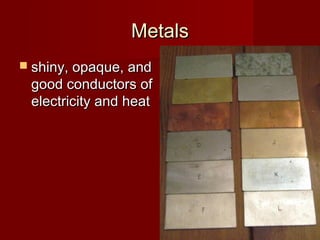
Metals
 shiny, opaque, and
 good conductors of
 electricity and heat
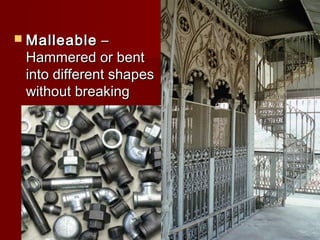
 Malleable   –
 Hammered or bent
 into different shapes
 without breaking
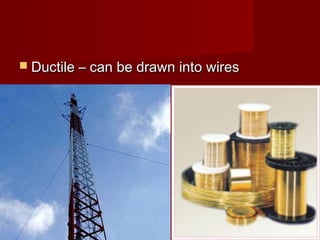
 Ductile – can be drawn into wires
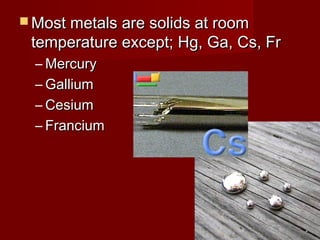
 Most metals are solids at room
 temperature except; Hg, Ga, Cs, Fr
  – Mercury
  – Gallium
  – Cesium
  – Francium
Nonmetals
 Poor conductors of electricity and
 heat

 May be transparent


 Brittle and shatter when hammered
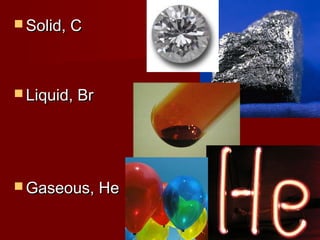
 Solid, C


 Liquid, Br


 Gaseous, He
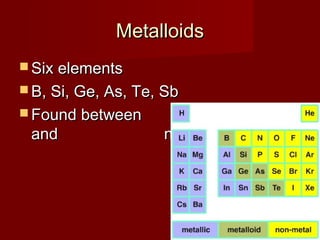
Metalloids
 Six elements
 B, Si, Ge, As, Te, Sb
 Found between                 metals
 and                nonmetals
 Both metallic and nonmetallic
 properties

 Weak conductors of electricity


 Used for electronic equipment, rocket
 fuel, detergents, optical equipment
Organization of the Table
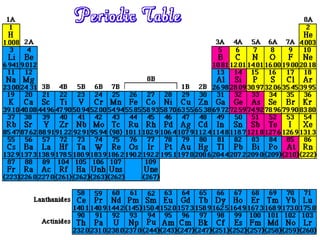
 Periods – horizontal row
 Group(family) – vertical column


 7 periods
 18 groups
Periodic Trend
 Gradual change of atoms across any
  period
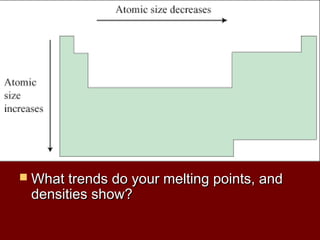
 Ex. Atomic size gets smaller from left
  to right

 Each period represents a full cycle -
 periodicity
 What trends do your melting points, and
 densities show?
Groups
 Properties tend to be similar


 Electrons lost or gained give these
 properties
Group 1 – Alkaline

  – found ashes mixed in water
    produce a slippery solution


  – Arabic for al-qali – ashes


  – Used for soaps

 Brainaic Alkaline Metals
Group 2 - Alkaline Earth Metals

 – Form basic (alkaline) solutions when
   mixed with water


 – Do not melt or change in fire – known to
   alchemists as “earth”
Group 16 – Chalogens

 – “ore-forming” – sulfur and Polonium are
   commonly found in ores


Group 17 – Halogens

 – “salt-forming” – forms various salts
 – Halogen lamps – iodine and bromine
 – Comparing Halogens
Group 18 – Noble gases

– Unreactive, tend not to combine with
  other elements


– Noble Gas Balloons
Group 3 through 12 – Transition
            Metals

 – Harder than alkaline metals, Less
   reactive with water


 – Named for their central position
Inner transition Metals
 Sixth Period – Lanthanides


  – Found mixed together in the same locations
  – Difficult to purify

 Seventh Period – Actinides


  – Heavier than Uranium are synthesized in a
    laboratory
 With the periodic table as your guide,
 describe Se. Use as many of this
 chapter’s key terms as you can

Periodic table 2011

  • 1.
    Agenda Bell Work • Bill Nye: Atoms • Pick up Crossword Puzzle from front desk • Notes: Periodic Table • Complete using periodic table HW: Chp 18 pg 308- 313, 317-318 Chp 17-18 “Quest” Tuesday
  • 2.
    Periodic Table January 2, 2013
  • 3.
    Objectives 1. Describe thestructure of the periodic table 2. Distinguish between metal, nonmetal, metalloid 3. Identify and describe properties of halogens, noble gases
  • 4.
    Organization of theTable  Tells about the elements structures, and how they behave  Grouped as metals, nonmetals, and metalloids
  • 6.
    Metals  shiny, opaque,and good conductors of electricity and heat
  • 7.
     Malleable – Hammered or bent into different shapes without breaking
  • 8.
     Ductile –can be drawn into wires
  • 9.
     Most metalsare solids at room temperature except; Hg, Ga, Cs, Fr – Mercury – Gallium – Cesium – Francium
  • 10.
    Nonmetals  Poor conductorsof electricity and heat  May be transparent  Brittle and shatter when hammered
  • 11.
     Solid, C Liquid, Br  Gaseous, He
  • 12.
    Metalloids  Six elements B, Si, Ge, As, Te, Sb  Found between metals and nonmetals
  • 13.
     Both metallicand nonmetallic properties  Weak conductors of electricity  Used for electronic equipment, rocket fuel, detergents, optical equipment
  • 14.
    Organization of theTable  Periods – horizontal row  Group(family) – vertical column  7 periods  18 groups
  • 15.
    Periodic Trend  Gradualchange of atoms across any period  Ex. Atomic size gets smaller from left to right  Each period represents a full cycle - periodicity
  • 16.
     What trendsdo your melting points, and densities show?
  • 17.
    Groups  Properties tendto be similar  Electrons lost or gained give these properties
  • 18.
    Group 1 –Alkaline – found ashes mixed in water produce a slippery solution – Arabic for al-qali – ashes – Used for soaps  Brainaic Alkaline Metals
  • 19.
    Group 2 -Alkaline Earth Metals – Form basic (alkaline) solutions when mixed with water – Do not melt or change in fire – known to alchemists as “earth”
  • 20.
    Group 16 –Chalogens – “ore-forming” – sulfur and Polonium are commonly found in ores Group 17 – Halogens – “salt-forming” – forms various salts – Halogen lamps – iodine and bromine – Comparing Halogens
  • 21.
    Group 18 –Noble gases – Unreactive, tend not to combine with other elements – Noble Gas Balloons
  • 22.
    Group 3 through12 – Transition Metals – Harder than alkaline metals, Less reactive with water – Named for their central position
  • 23.
    Inner transition Metals Sixth Period – Lanthanides – Found mixed together in the same locations – Difficult to purify  Seventh Period – Actinides – Heavier than Uranium are synthesized in a laboratory
  • 24.
     With theperiodic table as your guide, describe Se. Use as many of this chapter’s key terms as you can