ElementsSection 1-3
Objectives1. Use a periodic table to name elements, given their symbols2. Use a periodic table to write the symbols of elements, given their names3. Describe the arrangement of the periodic table4. List the characteristics that distinguish metals, nonmetals, and metalloids
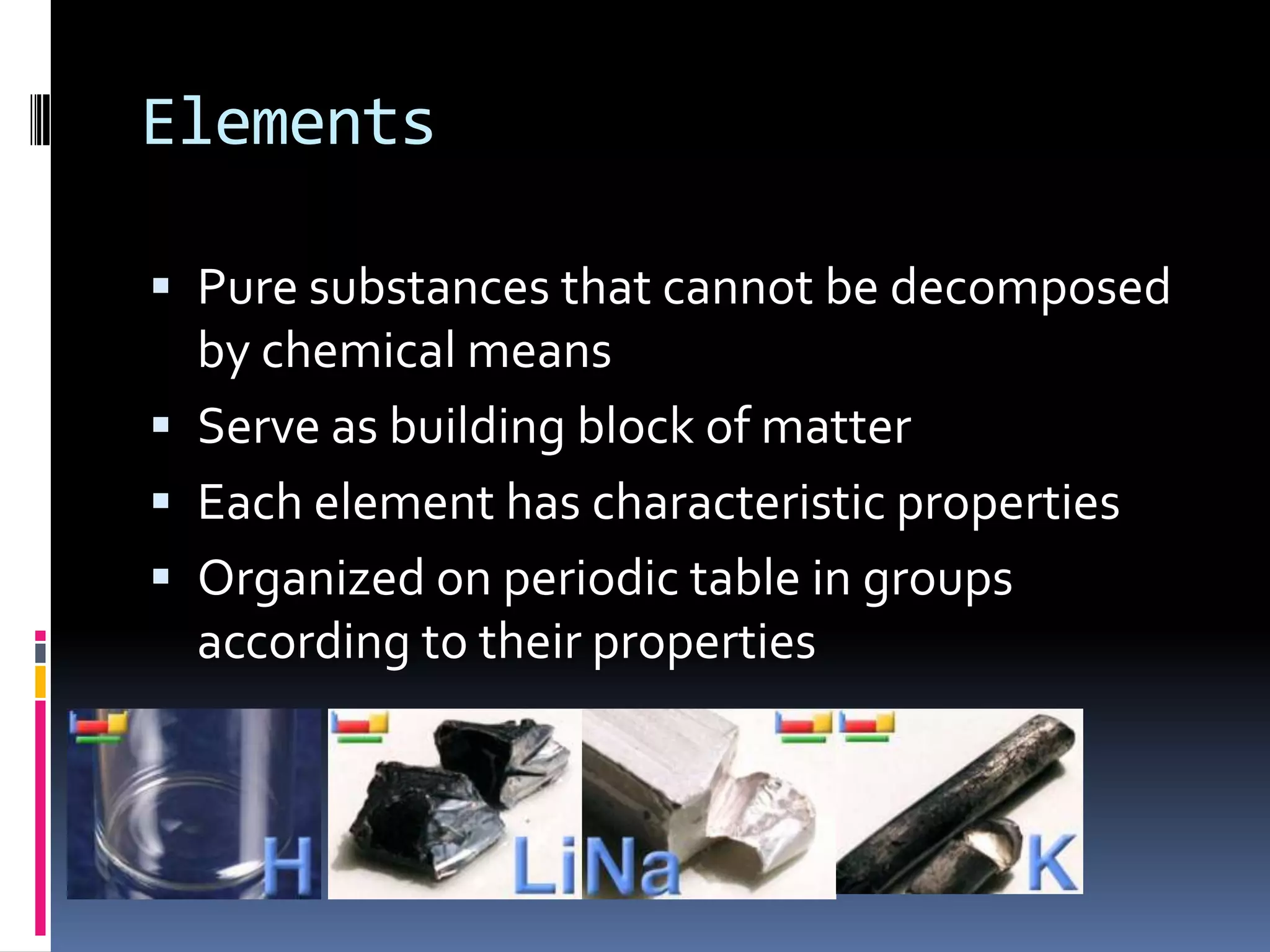
ElementsPure substances that cannot be decomposed by chemical meansServe as building block of matterEach element has characteristic propertiesOrganized on periodic table in groups according to their properties
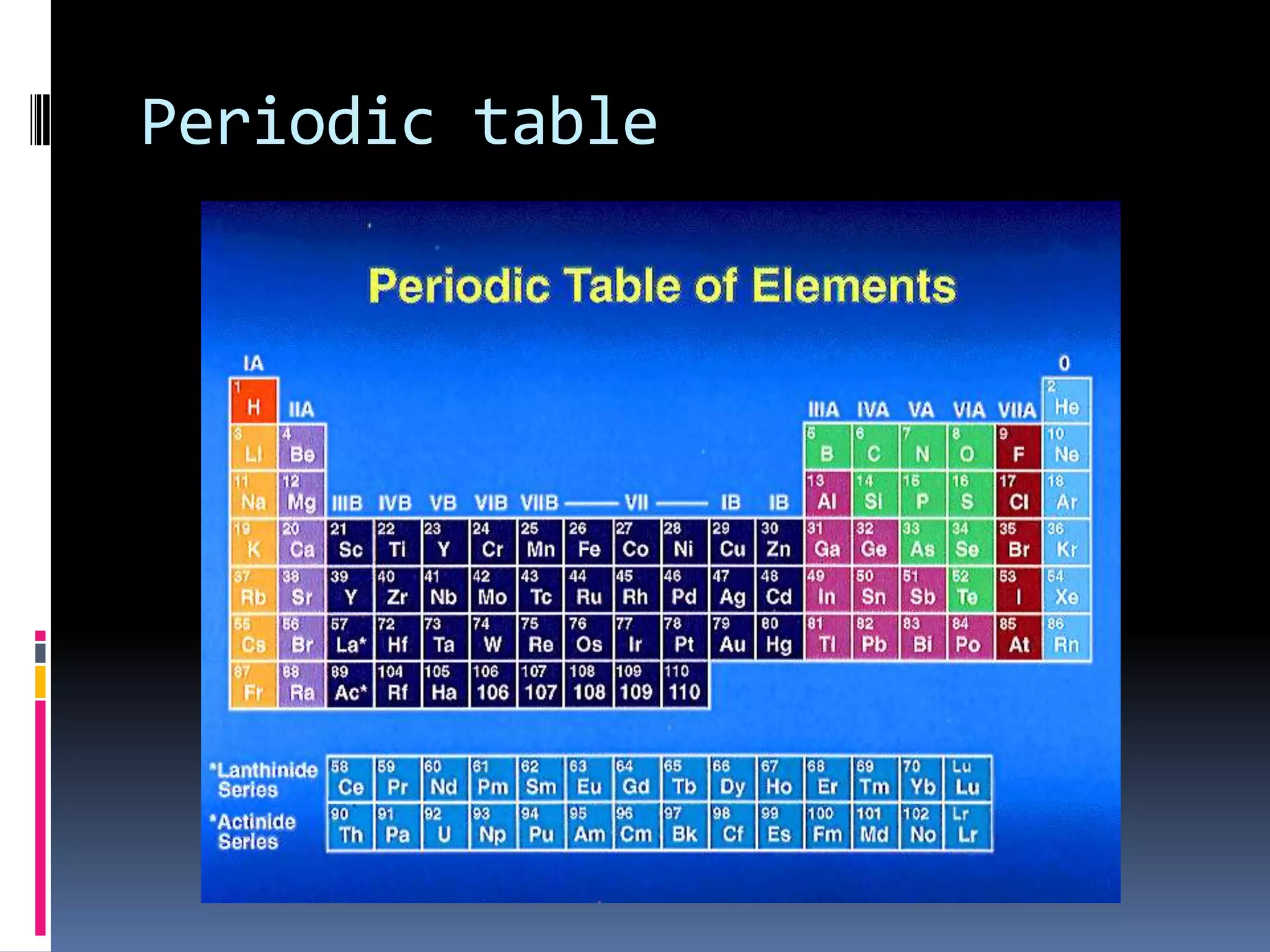
Periodic table
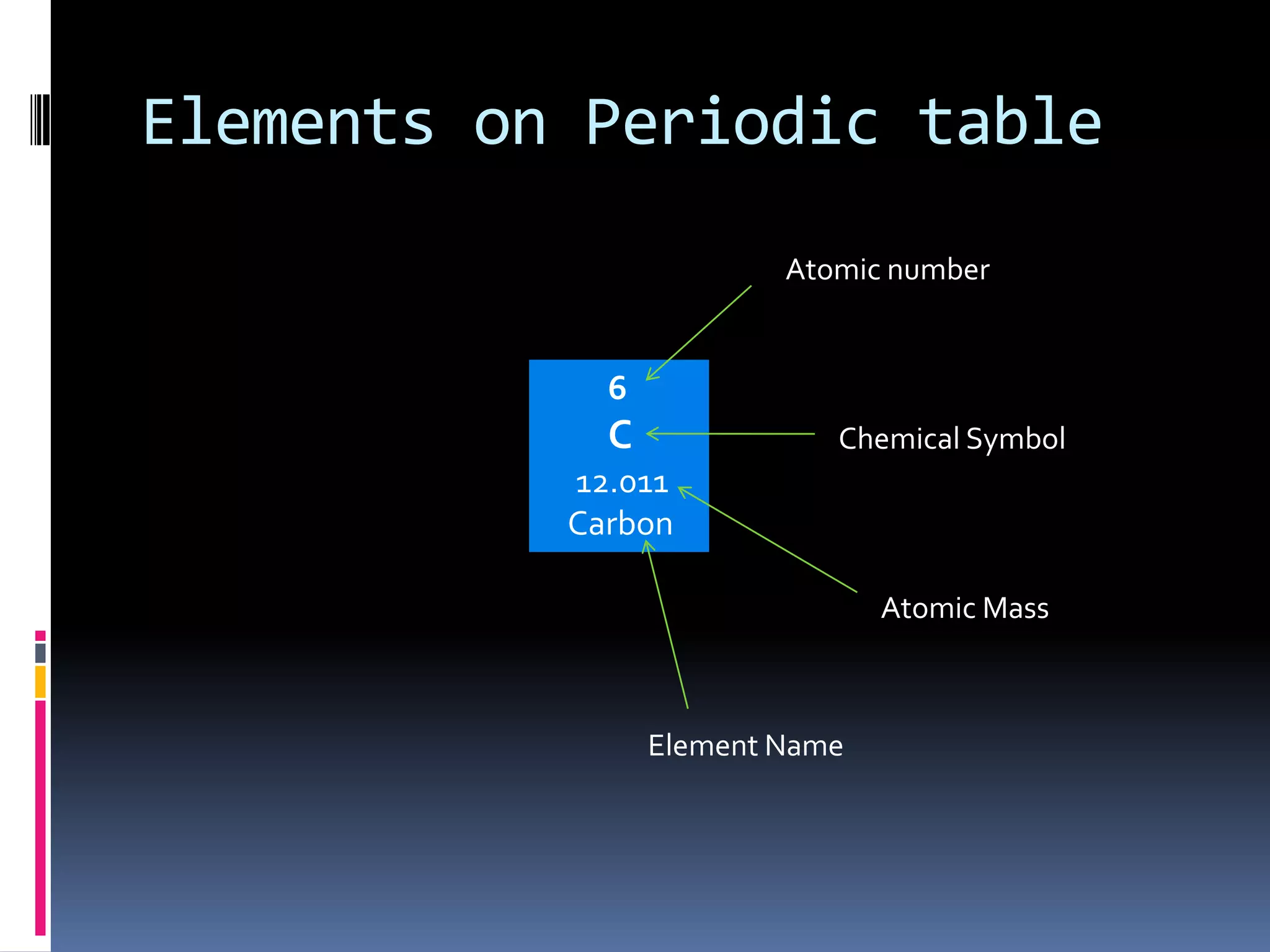
Elements on Periodic tableAtomic number6C   12.011 CarbonChemical SymbolAtomic MassElement Name
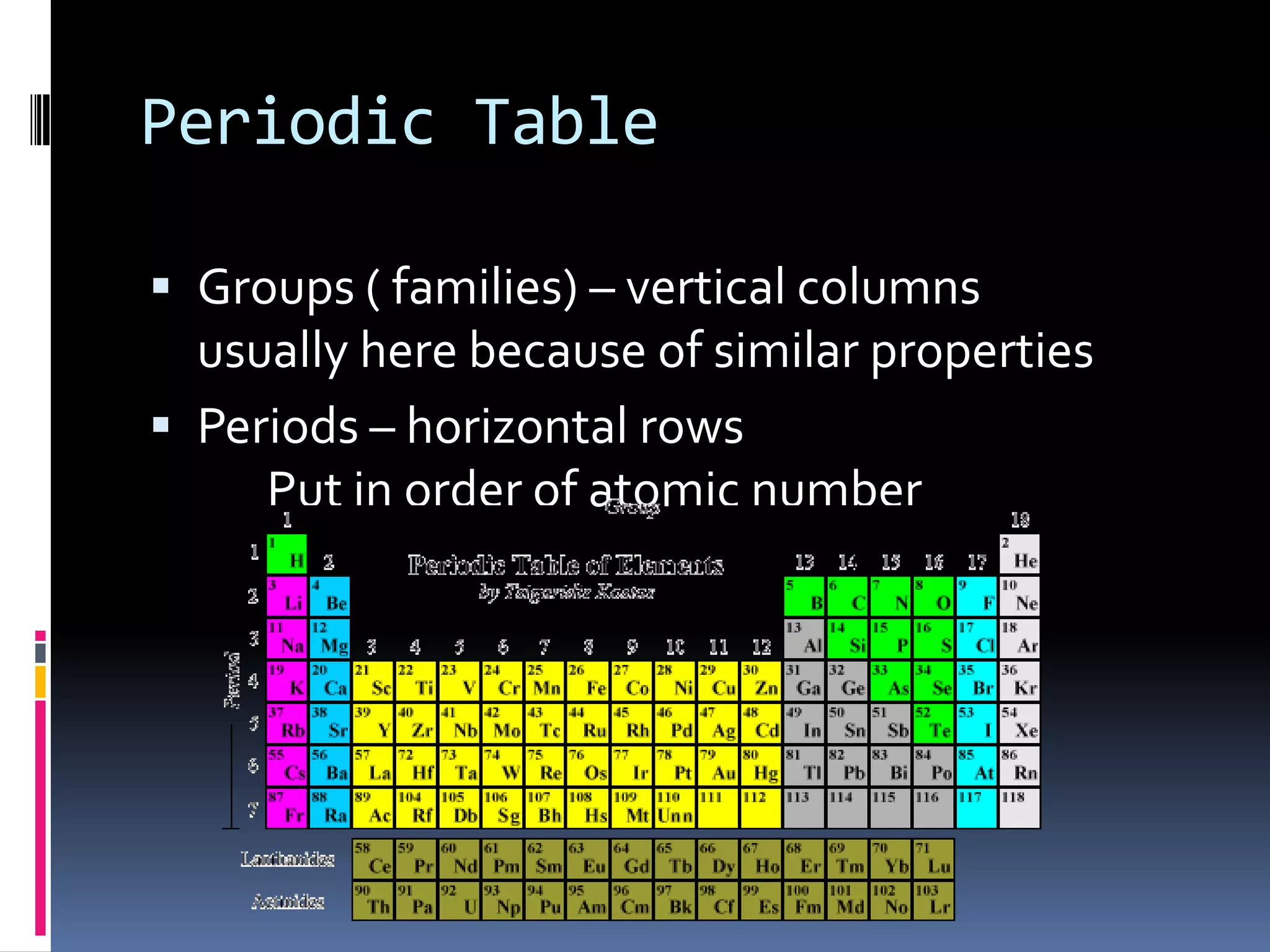
Chemical Symbols and NamesFirst Letter – C, H, FFirst and second letter – Al, Ne, LiFirst and other than second letter – Mg, Zn, SrNon-English names – Na, Sb, Au, FeThese elements have been around for a long time – Most come from Latin namesPeriodic TableGroups ( families) – vertical columns                         usually here because of similar propertiesPeriods – horizontal rows 				Put in order of atomic number
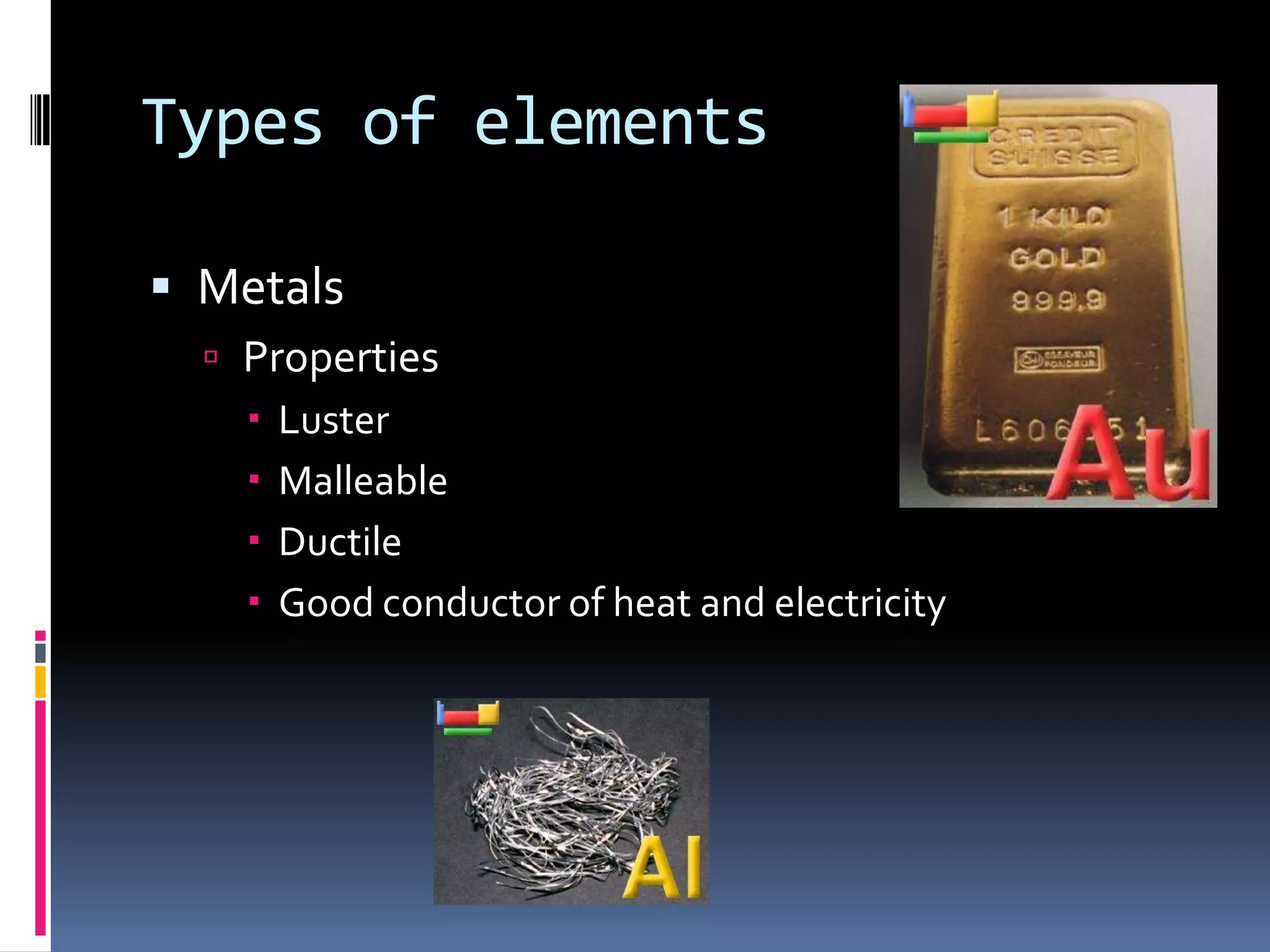
Types of elementsMetalsPropertiesLusterMalleableDuctileGood conductor of heat and electricity
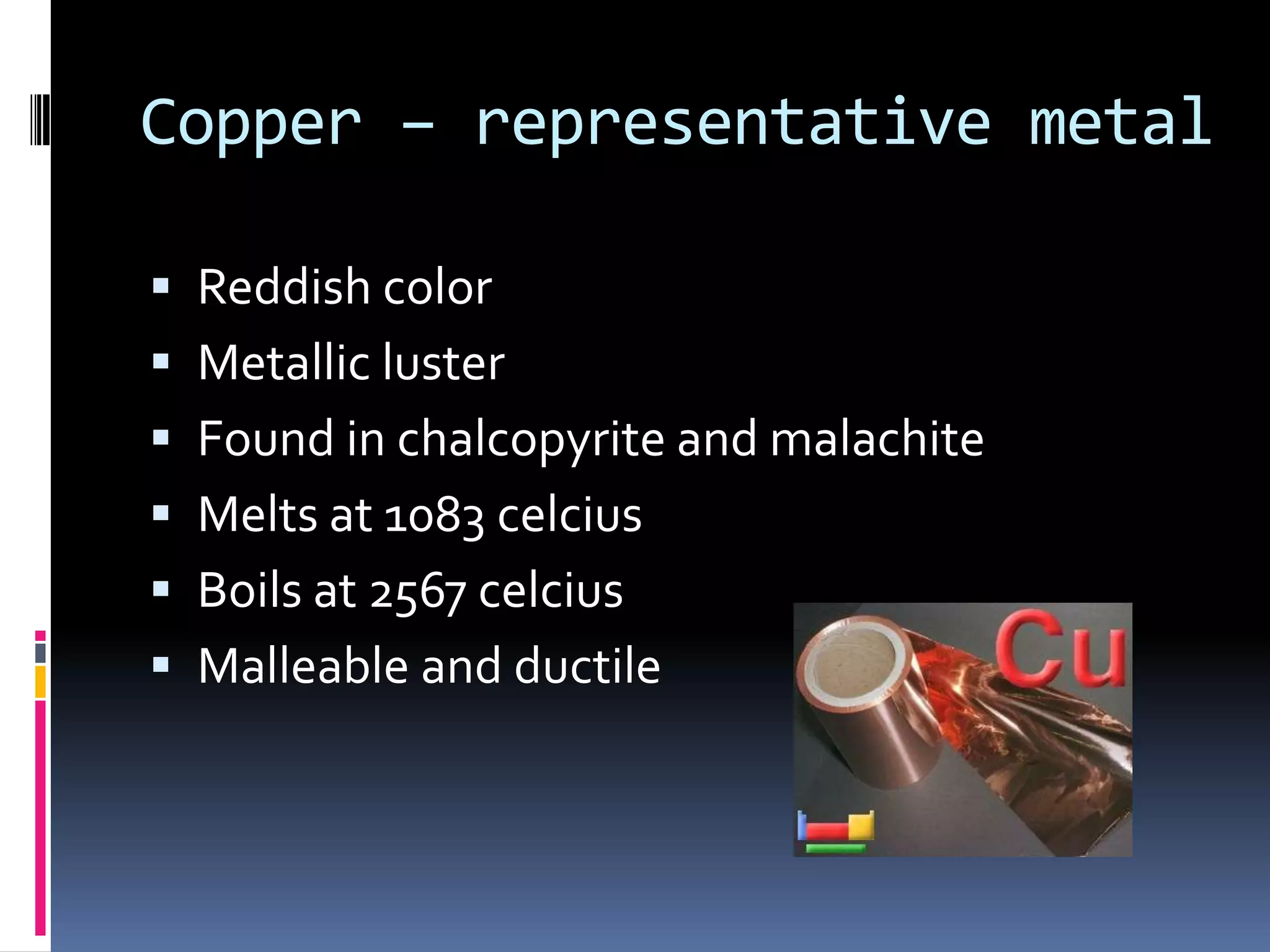
Copper – representative metalReddish colorMetallic lusterFound in chalcopyrite and malachiteMelts at 1083 celciusBoils at 2567 celciusMalleable and ductile
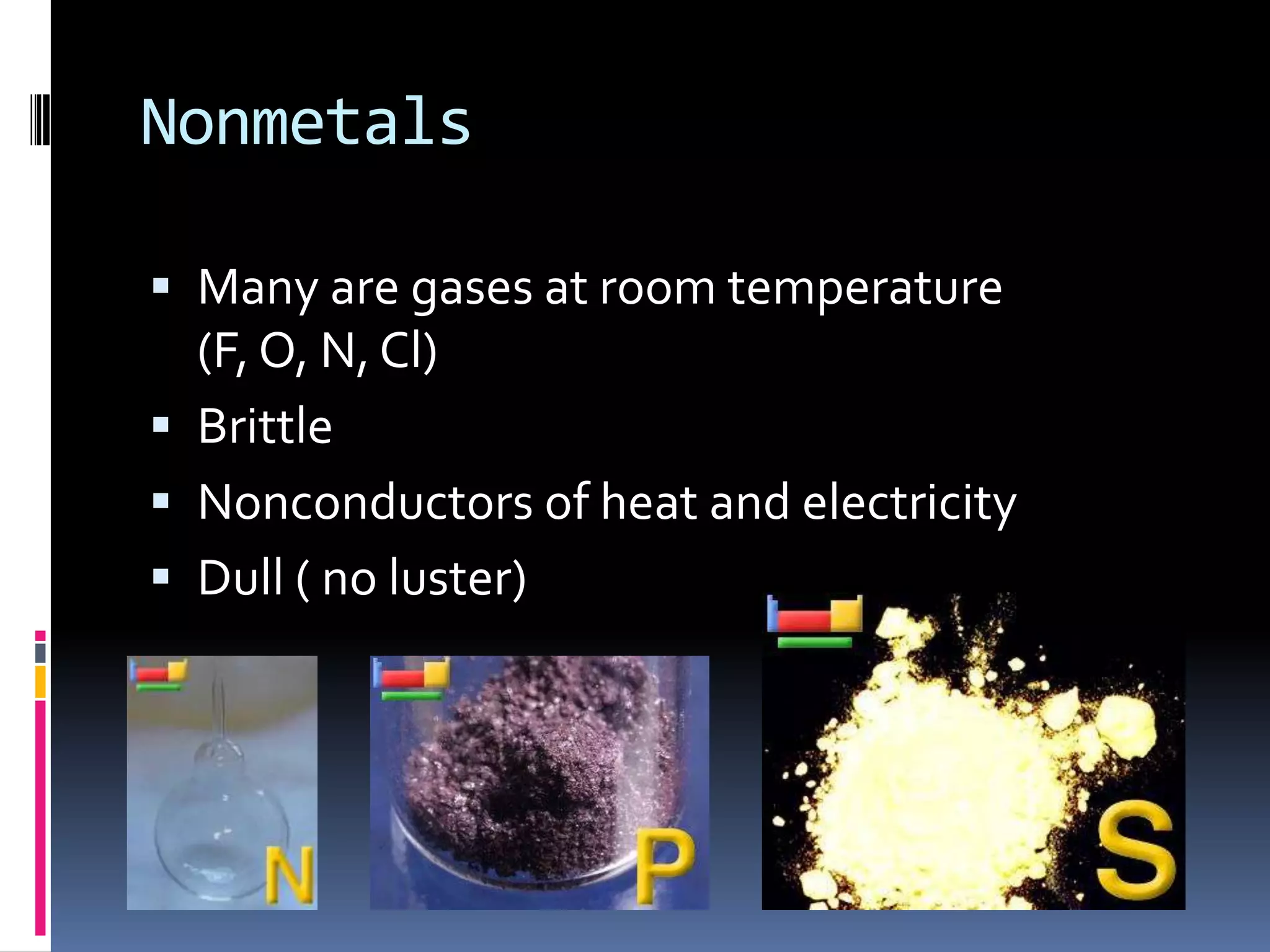
NonmetalsMany are gases at room temperature             (F, O, N, Cl)BrittleNonconductors of heat and electricityDull ( no luster)
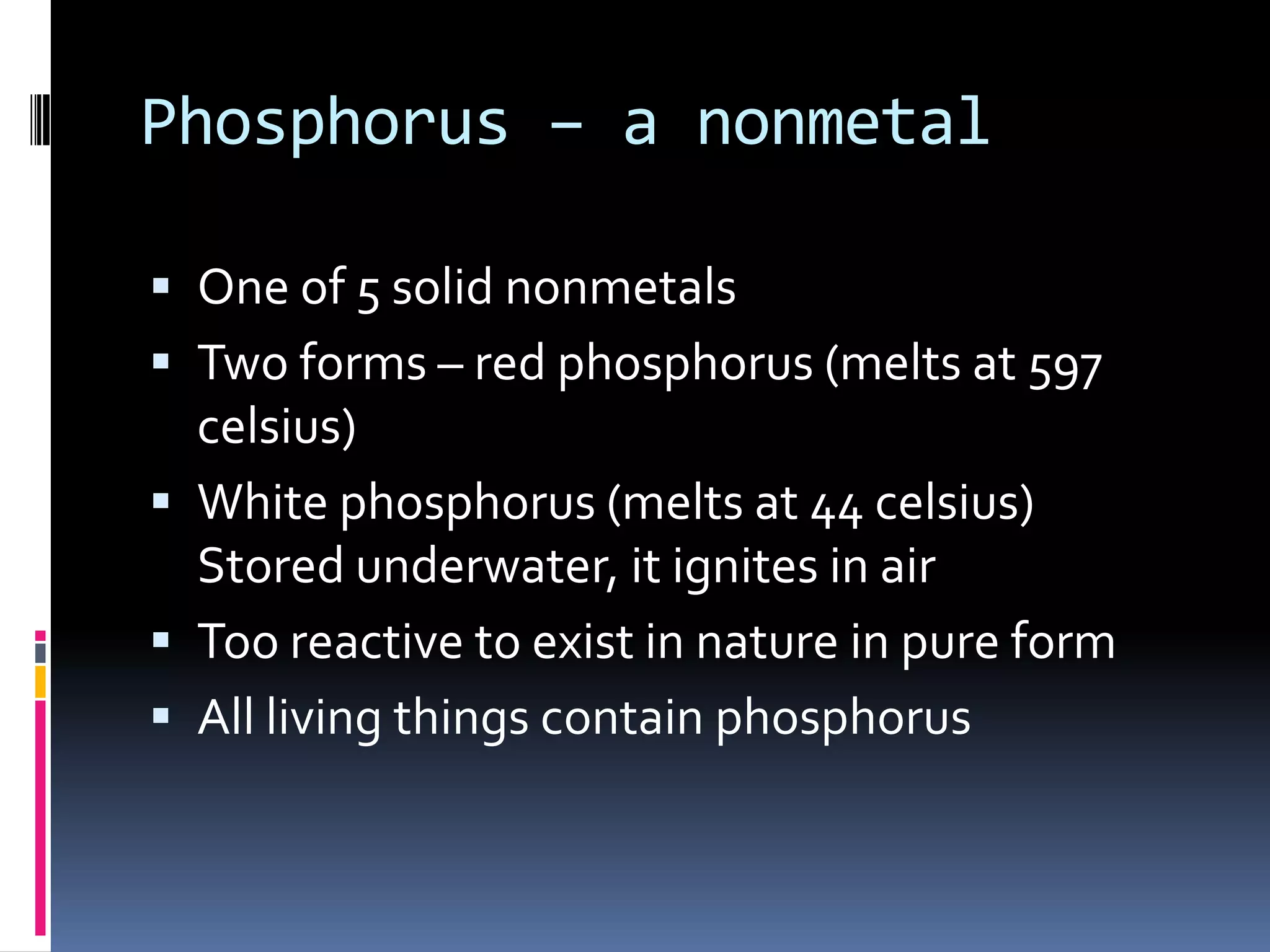
Phosphorus – a nonmetalOne of 5 solid nonmetalsTwo forms – red phosphorus (melts at 597 celsius)   White phosphorus (melts at 44 celsius)               Stored underwater, it ignites in airToo reactive to exist in nature in pure formAll living things contain phosphorus
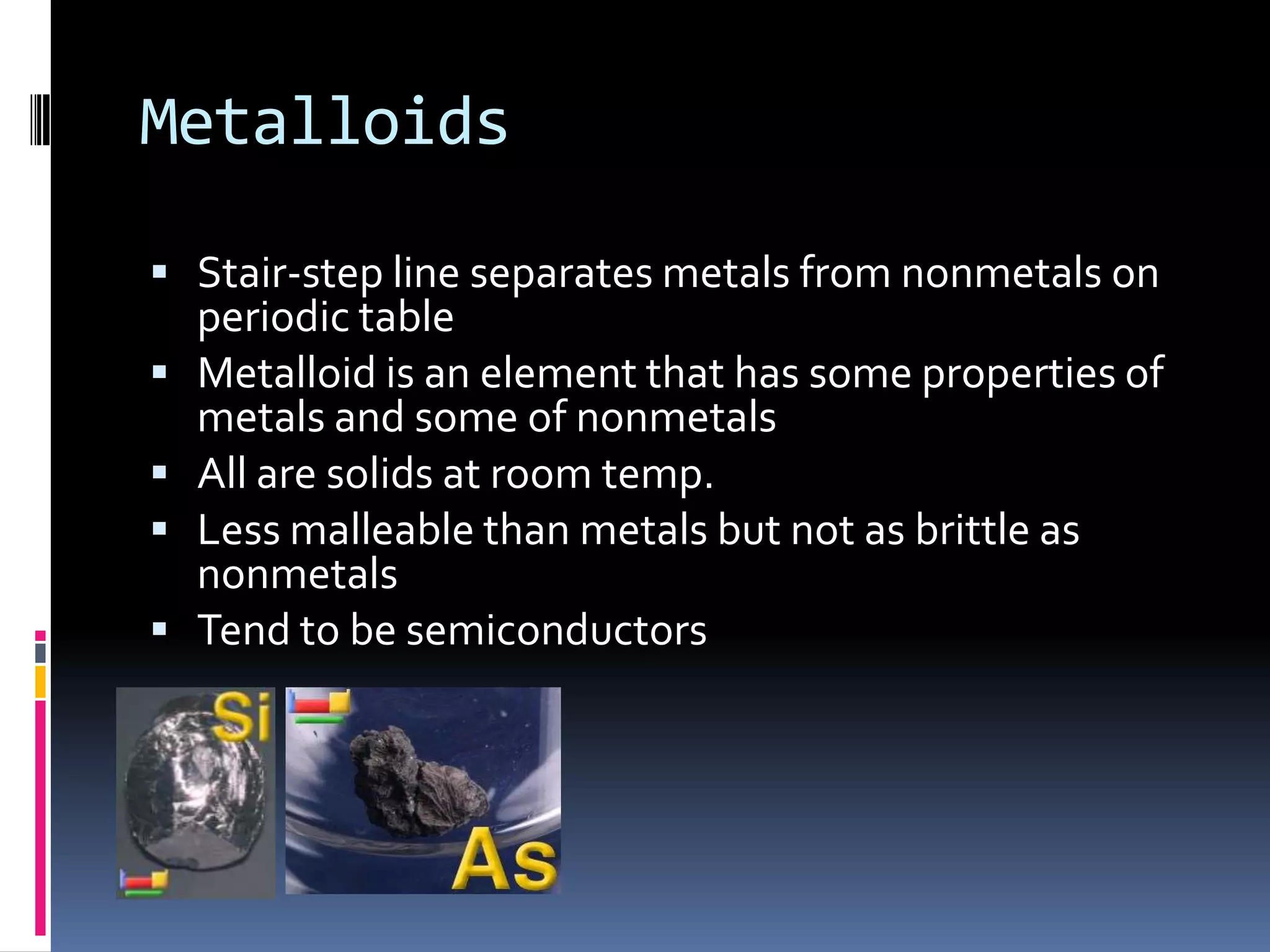
MetalloidsStair-step line separates metals from nonmetals on periodic tableMetalloid is an element that has some properties of metals and some of nonmetalsAll are solids at room temp.Less malleable than metals but not as brittle as nonmetalsTend to be semiconductors
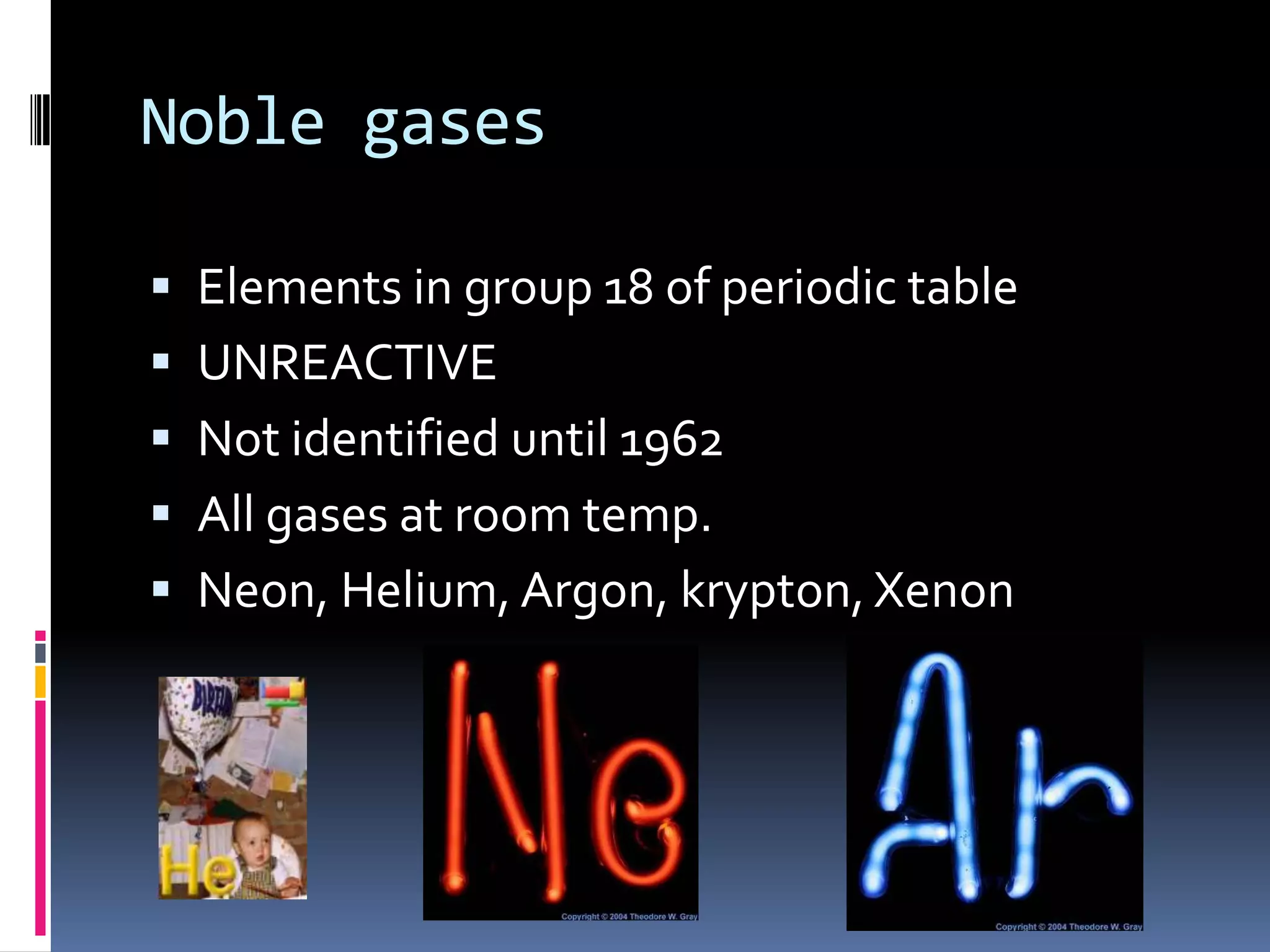
Noble gasesElements in group 18 of periodic tableUNREACTIVENot identified until 1962All gases at room temp.Neon, Helium, Argon, krypton, Xenon
Chapter 1.3 Elements

Chapter 1.3 Elements

  • 1.
  • 2.
    Objectives1. Use aperiodic table to name elements, given their symbols2. Use a periodic table to write the symbols of elements, given their names3. Describe the arrangement of the periodic table4. List the characteristics that distinguish metals, nonmetals, and metalloids
  • 3.
    ElementsPure substances thatcannot be decomposed by chemical meansServe as building block of matterEach element has characteristic propertiesOrganized on periodic table in groups according to their properties
  • 4.
  • 5.
    Elements on PeriodictableAtomic number6C 12.011 CarbonChemical SymbolAtomic MassElement Name
  • 6.
    Chemical Symbols andNamesFirst Letter – C, H, FFirst and second letter – Al, Ne, LiFirst and other than second letter – Mg, Zn, SrNon-English names – Na, Sb, Au, FeThese elements have been around for a long time – Most come from Latin namesPeriodic TableGroups ( families) – vertical columns usually here because of similar propertiesPeriods – horizontal rows Put in order of atomic number
  • 7.
  • 8.
    Copper – representativemetalReddish colorMetallic lusterFound in chalcopyrite and malachiteMelts at 1083 celciusBoils at 2567 celciusMalleable and ductile
  • 9.
    NonmetalsMany are gasesat room temperature (F, O, N, Cl)BrittleNonconductors of heat and electricityDull ( no luster)
  • 10.
    Phosphorus – anonmetalOne of 5 solid nonmetalsTwo forms – red phosphorus (melts at 597 celsius) White phosphorus (melts at 44 celsius) Stored underwater, it ignites in airToo reactive to exist in nature in pure formAll living things contain phosphorus
  • 11.
    MetalloidsStair-step line separatesmetals from nonmetals on periodic tableMetalloid is an element that has some properties of metals and some of nonmetalsAll are solids at room temp.Less malleable than metals but not as brittle as nonmetalsTend to be semiconductors
  • 12.
    Noble gasesElements ingroup 18 of periodic tableUNREACTIVENot identified until 1962All gases at room temp.Neon, Helium, Argon, krypton, Xenon