4-0
Perception
Lecture No.3
4-1
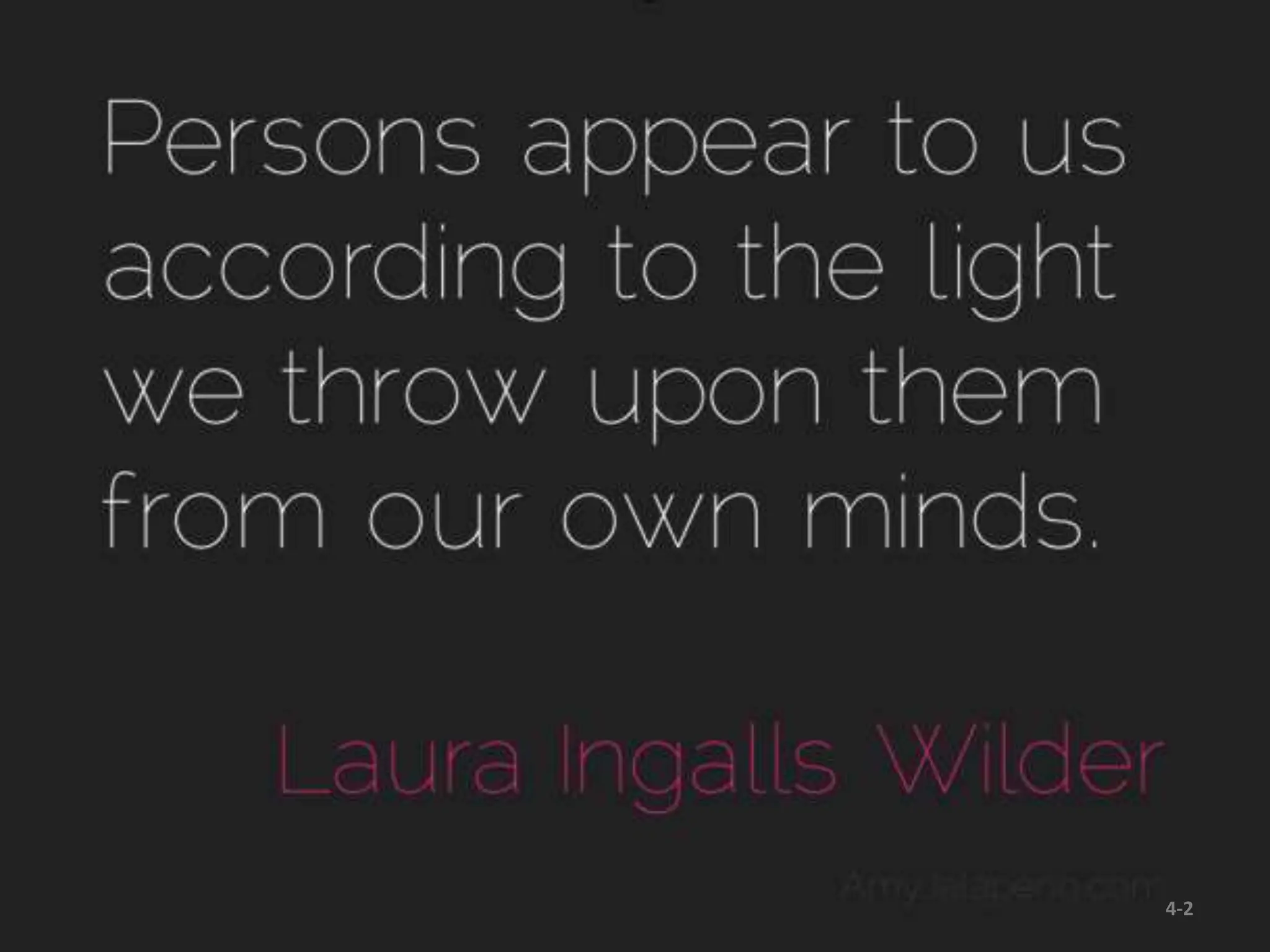
4-2
“You become what you think”
“If everyone perceived everything the
same way, things would be a lot simpler”
- Moorhead & Griffin
4-3
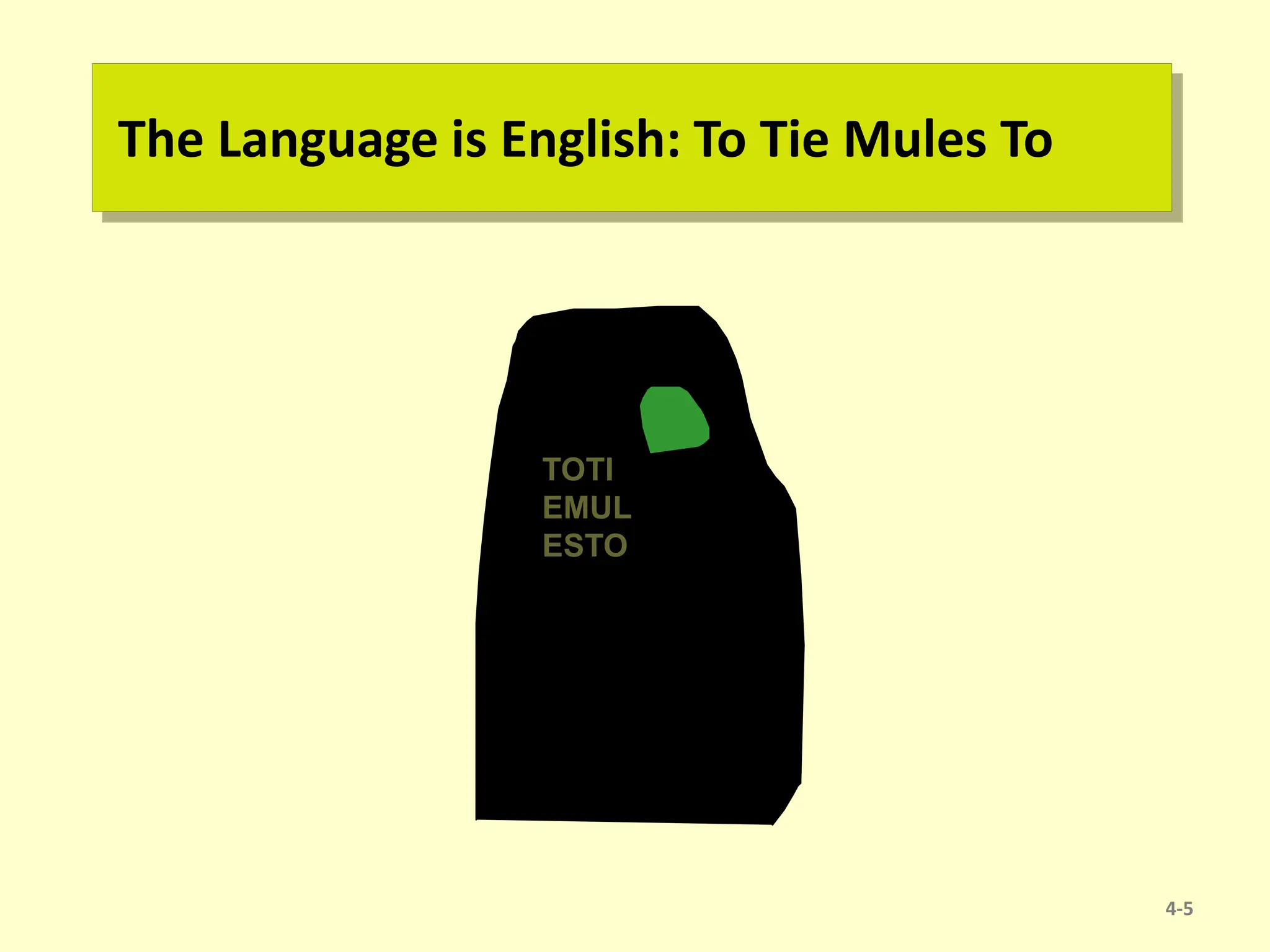
TOTI
EMUL
ESTO
What Language Is Written on This Stone Found by
Archaeologists?
4-4
TOTI
EMUL
ESTO
The Language is English: To Tie Mules To
4-5
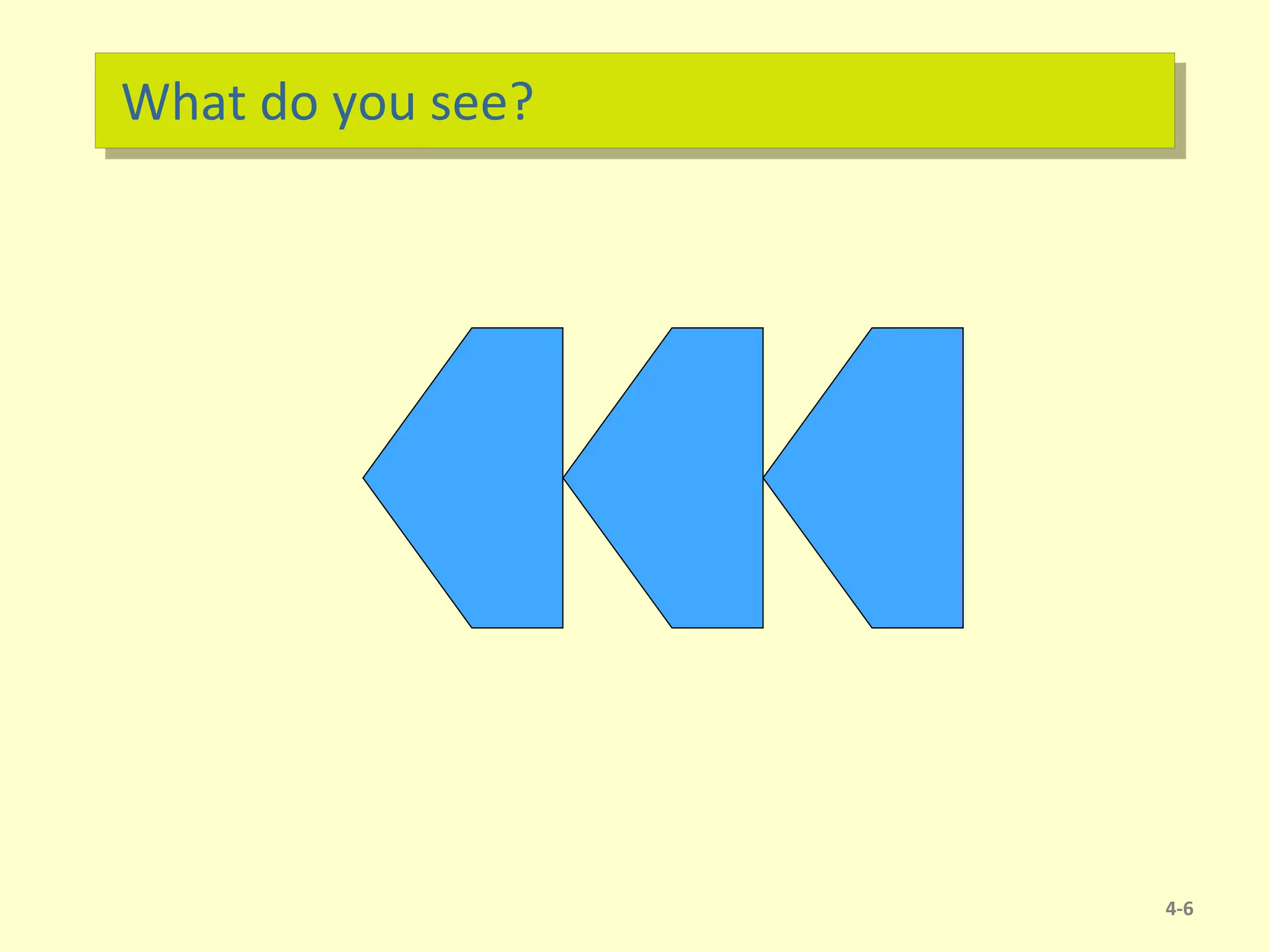
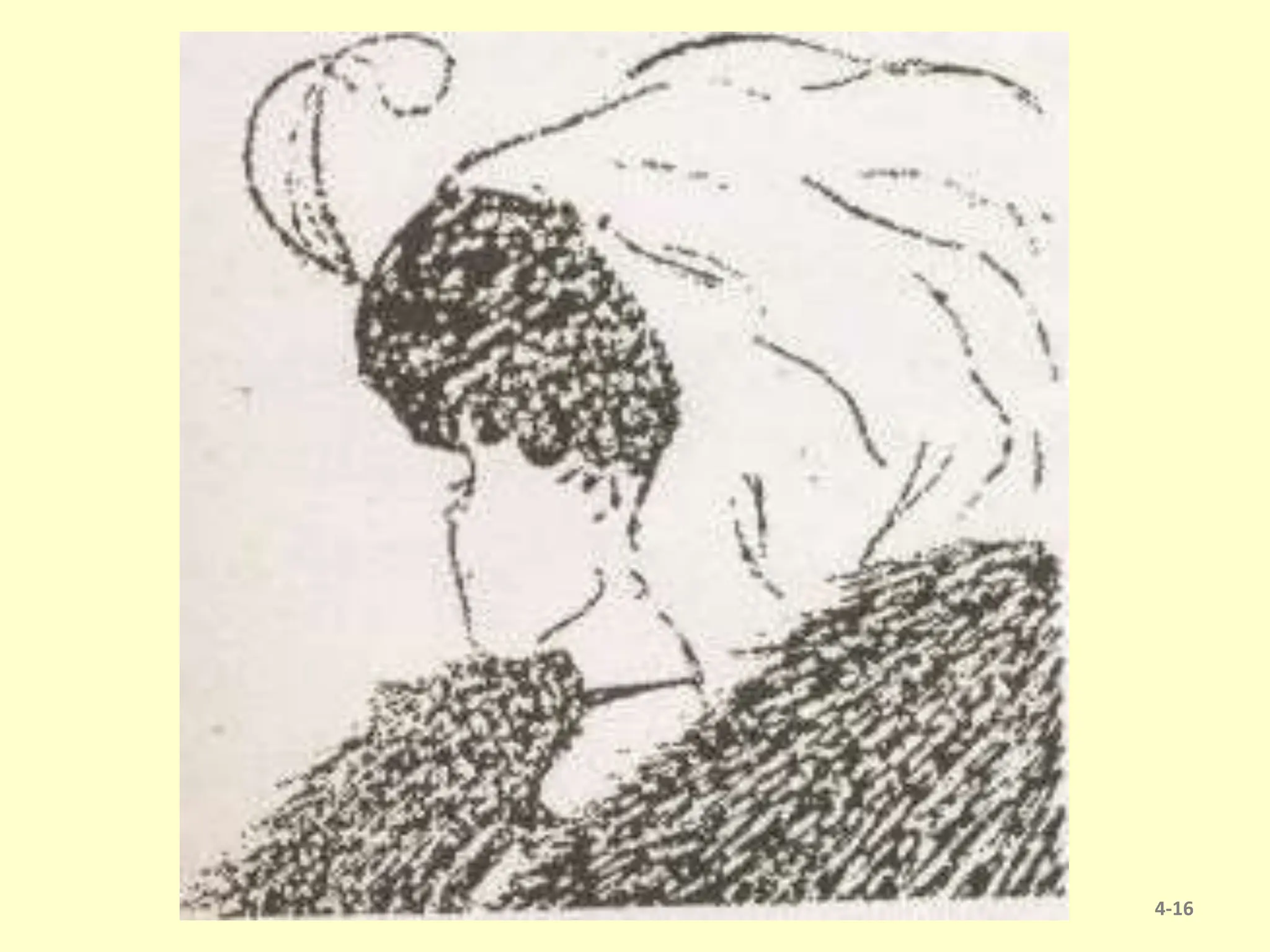
What do you see?
4-6
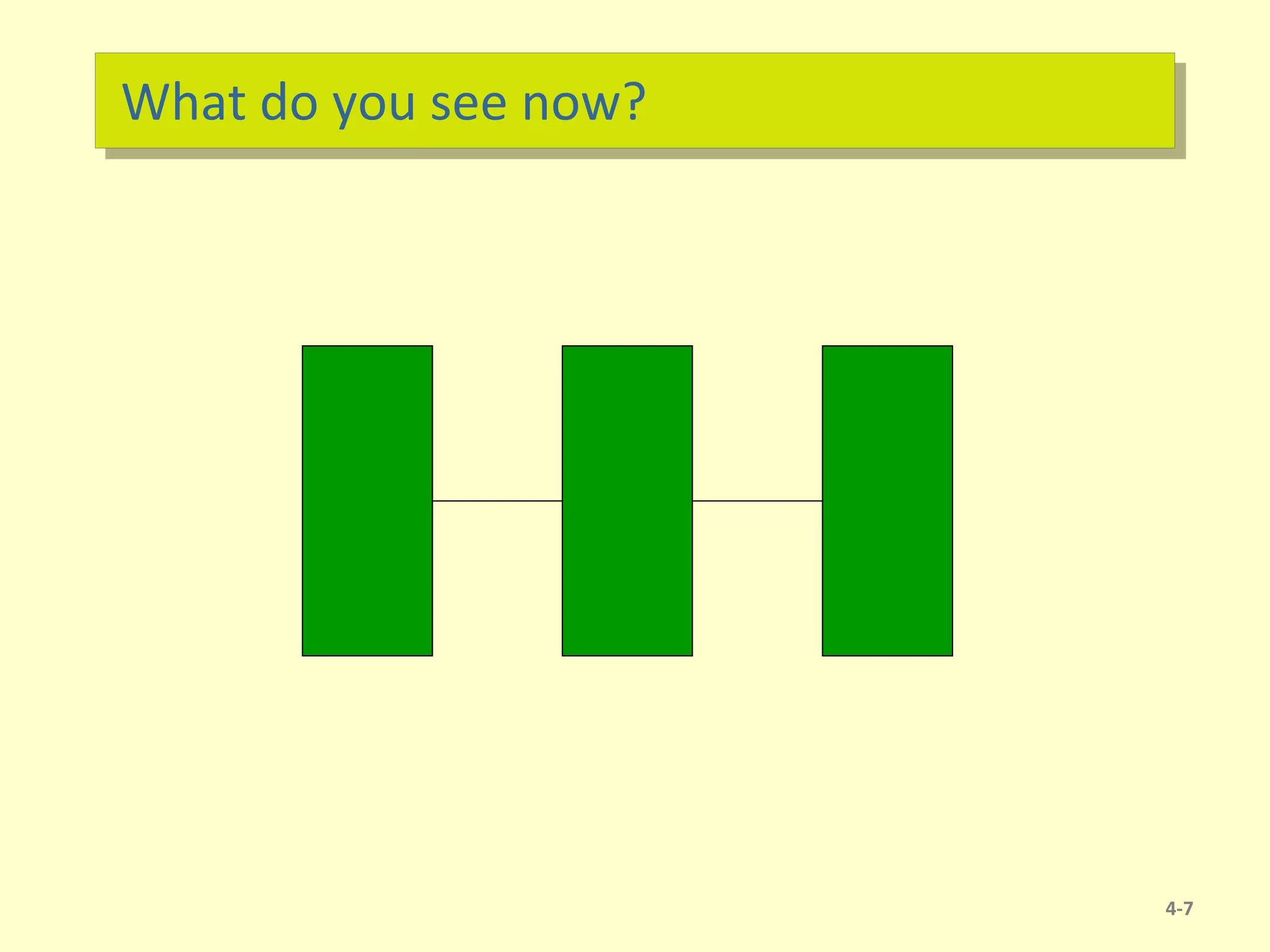
What do you see now?
4-7
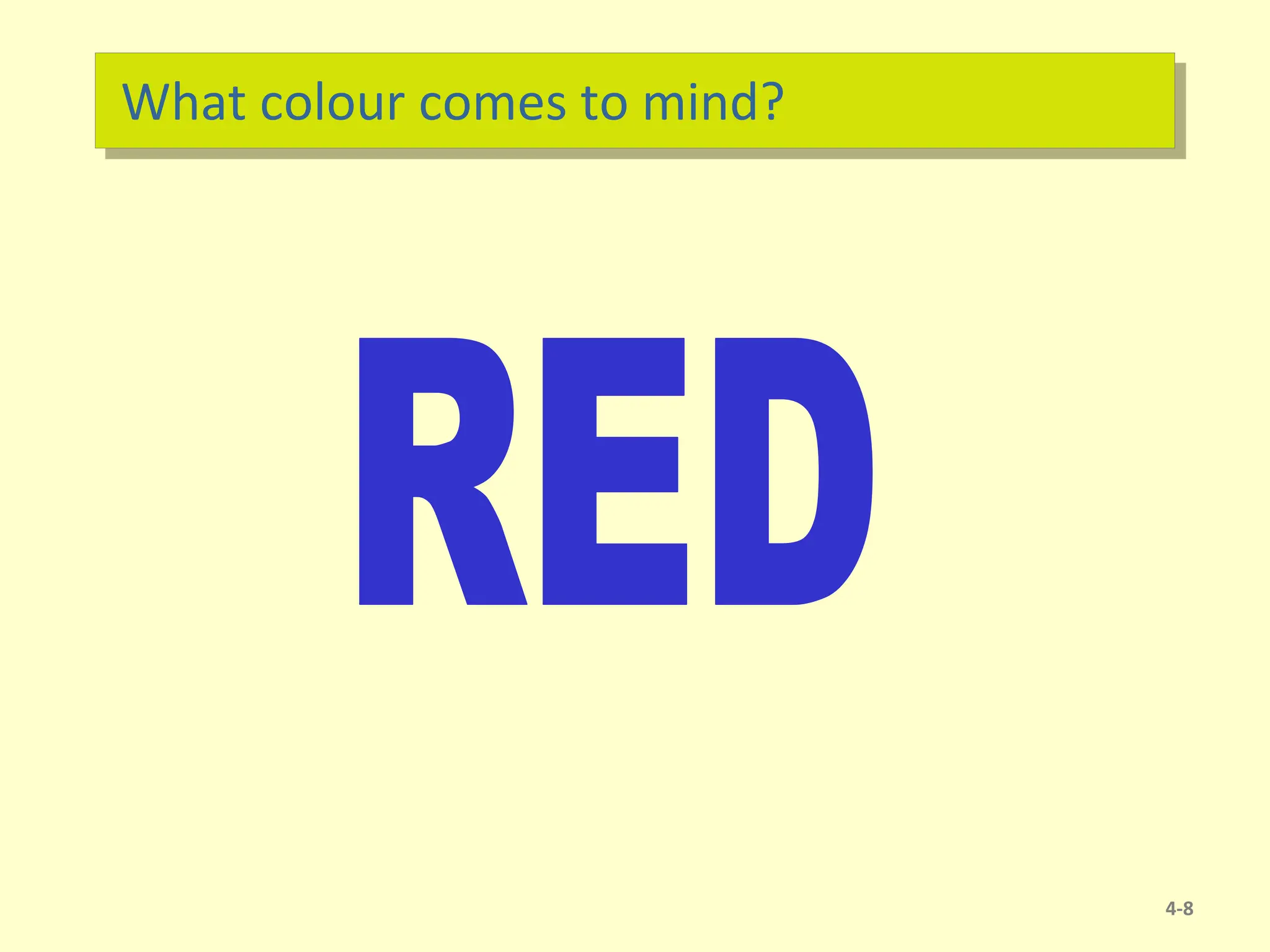
What colour comes to mind?
4-8
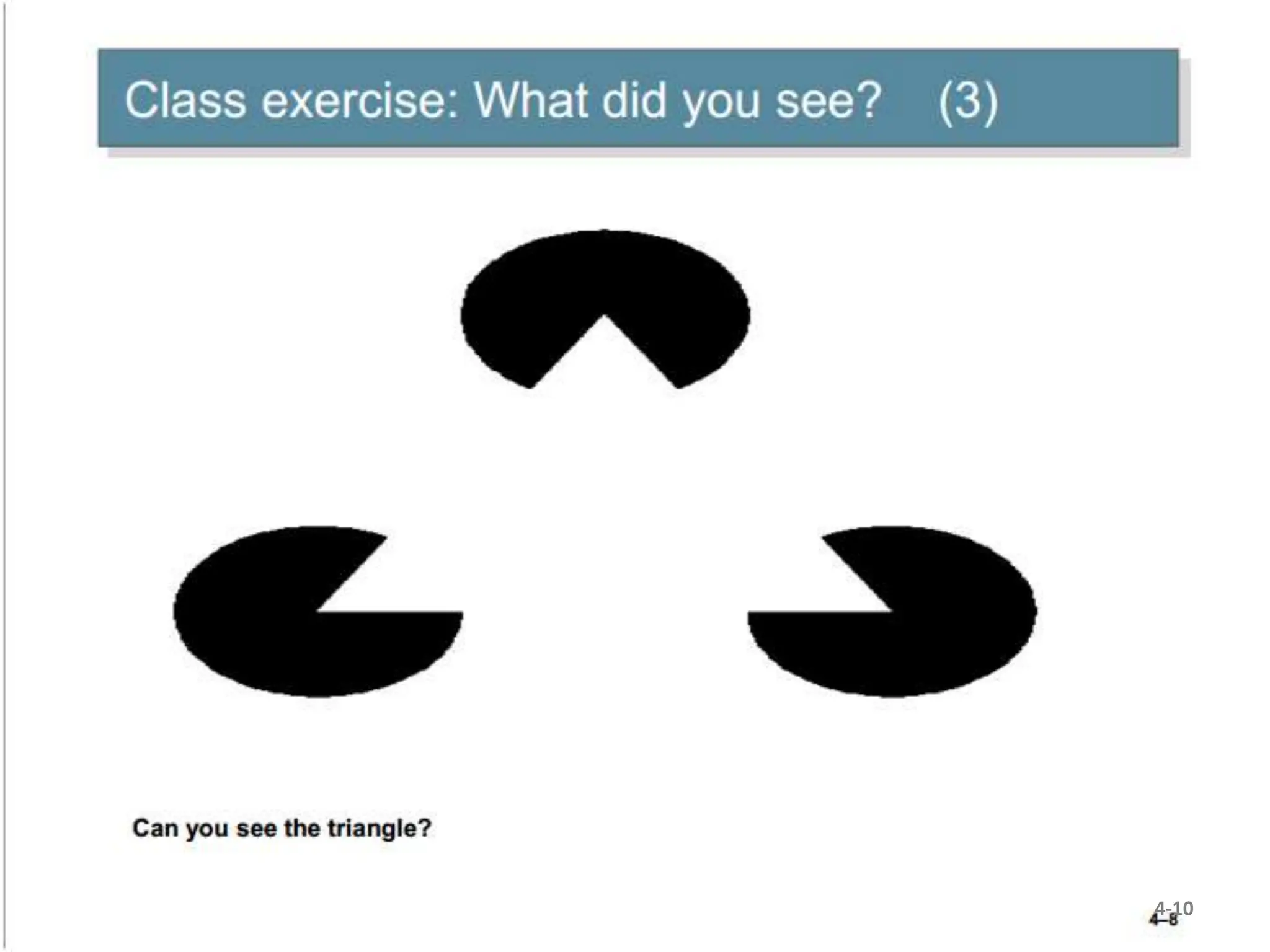
4-9
4-10
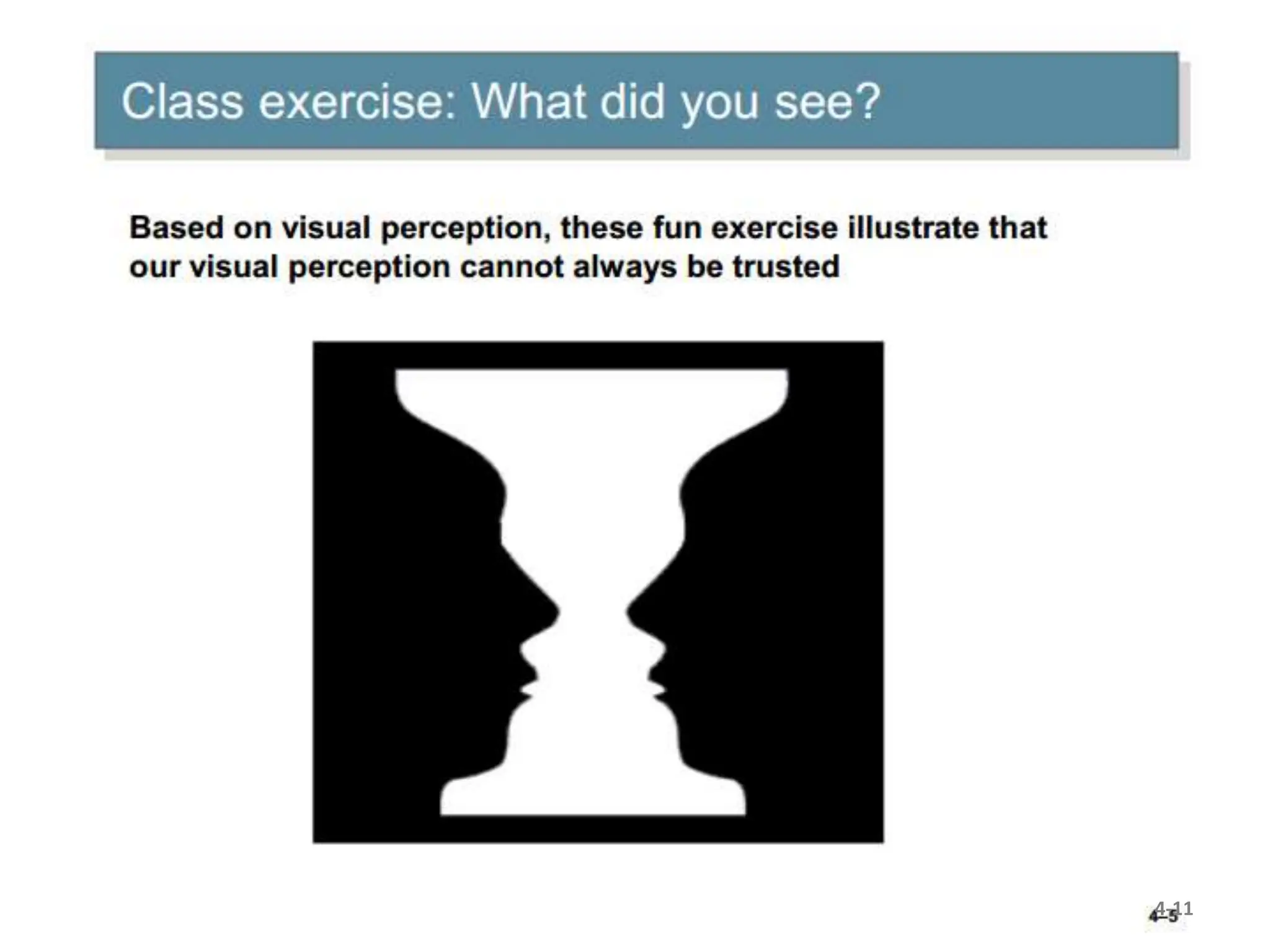
4-11
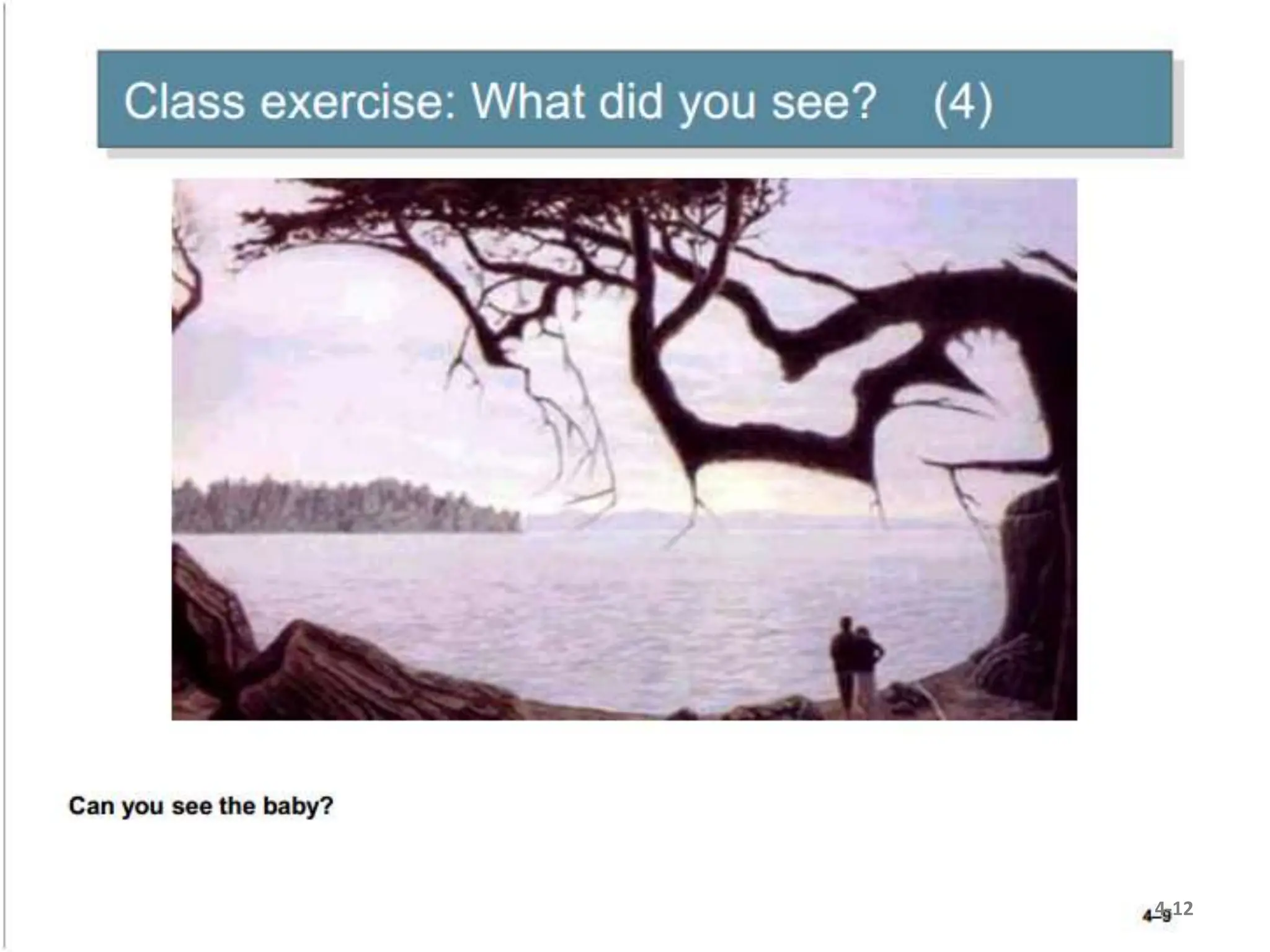
4-12
Why We Study Perceptions?
 To better understand
 We don’t see reality. We interpret it.
 The attribution process guides our behaviour,
4-13
What is Perception?
Definition
A process by which individuals organize and interpret their sensory
impressions in order to give meaning to their environment.
 ( situation or Stimuli – Organizing – interpreting) = Perception
“Perception is an important mediating cognitive process through which
persons make interpretations of the stimulus or situation they are forced
with.”
Unique interpretation of situation, not exact reality or recording.
Why it is important?
People’s behavior is based on their perception of what reality is, not on reality
itself.
The world as it is perceived is the world that is behaviorally important.
What we perceive can be differentiated from objective reality.
4-14
MEANING
Perceptions differ from person to person.
Each individual perceives the same situation
differently.
Group perceptions can influence one’s perception.
Individuals organize and interpret things based on
their past experiences and the important values
they consider important.
Employees tend to behave and act on certain
things on the basis of their perception.
4-15
4-16
NATURE OF PERCEPTION
1)Perception is the process by which an individual gives
meaning to the environment.
2)It is a cognitive and psychological process. The manner in
which a person perceives the environment affects his
behavior. There can be no behavior without perception and
perception lies at the base of every human action.
3)People’s action, emotions, thoughts and feelings are triggered
by their perceptions of their surroundings.
4)Though perception has been defined in a variety of ways, it
basically refers to the manner in which a person experiences
the world.
4-17
4)Perception is an almost automatic process and works in
much the same way within each individual, yet typically
yields different perceptions.
5)Perception is a process that operates constantly between us
and reality.
6)Since perception is subjective process, different people may
perceive the same environment differently. So, perception is
like beauty, that lies in the eyes of the beholder.
4-18
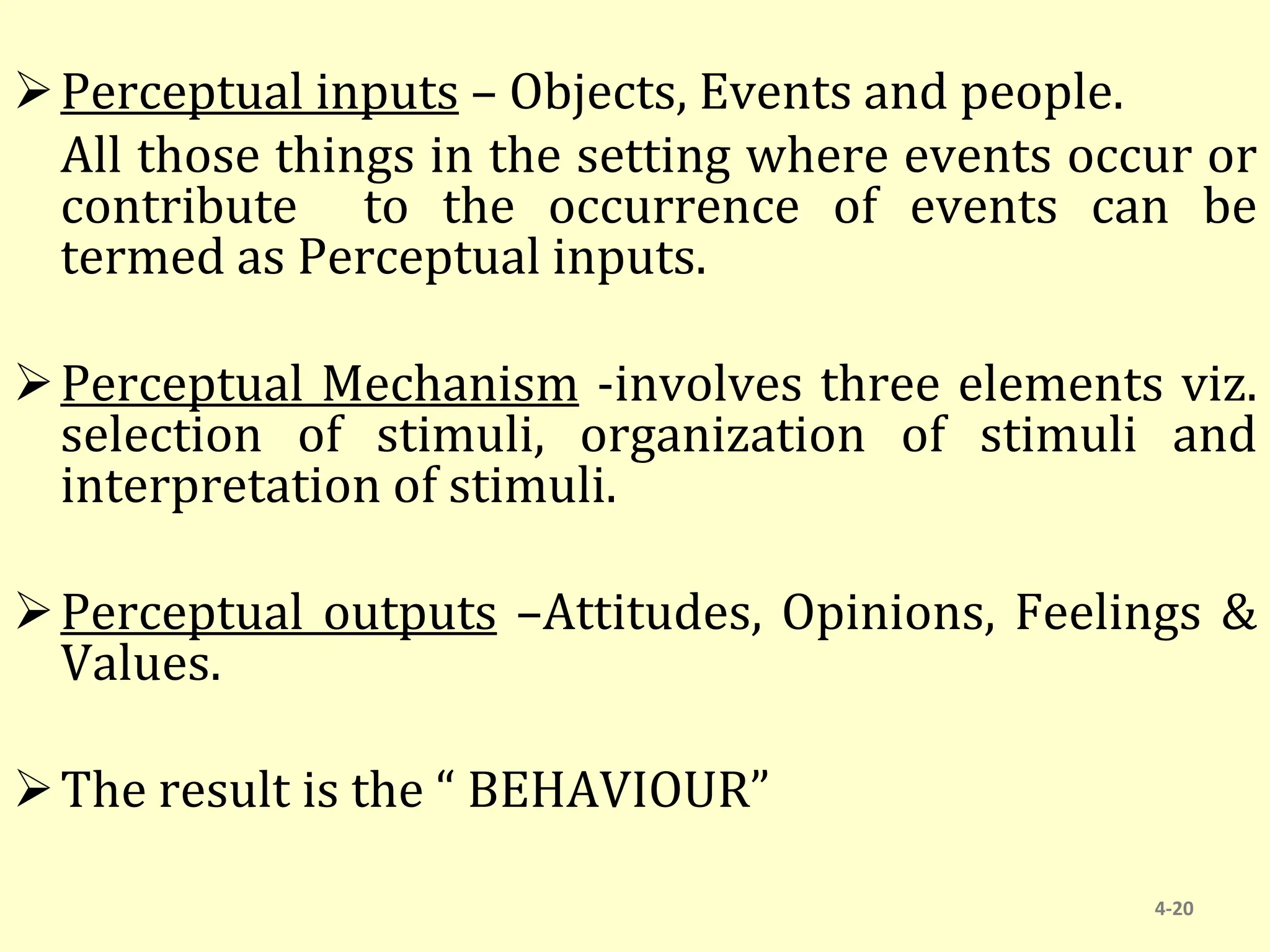
PERCEPTUAL PROCESS…
Simplified process of perception
Perceptual
inputs
Stimuli
Perceptual throughputs
Receiving->Selecting->Organising->Interpreting
Perceptual
Outputs
Actions
4-19
BEHAVIOUR
Perceptual inputs – Objects, Events and people.
All those things in the setting where events occur or
contribute to the occurrence of events can be
termed as Perceptual inputs.
Perceptual Mechanism -involves three elements viz.
selection of stimuli, organization of stimuli and
interpretation of stimuli.
Perceptual outputs –Attitudes, Opinions, Feelings &
Values.
The result is the “ BEHAVIOUR”
4-20
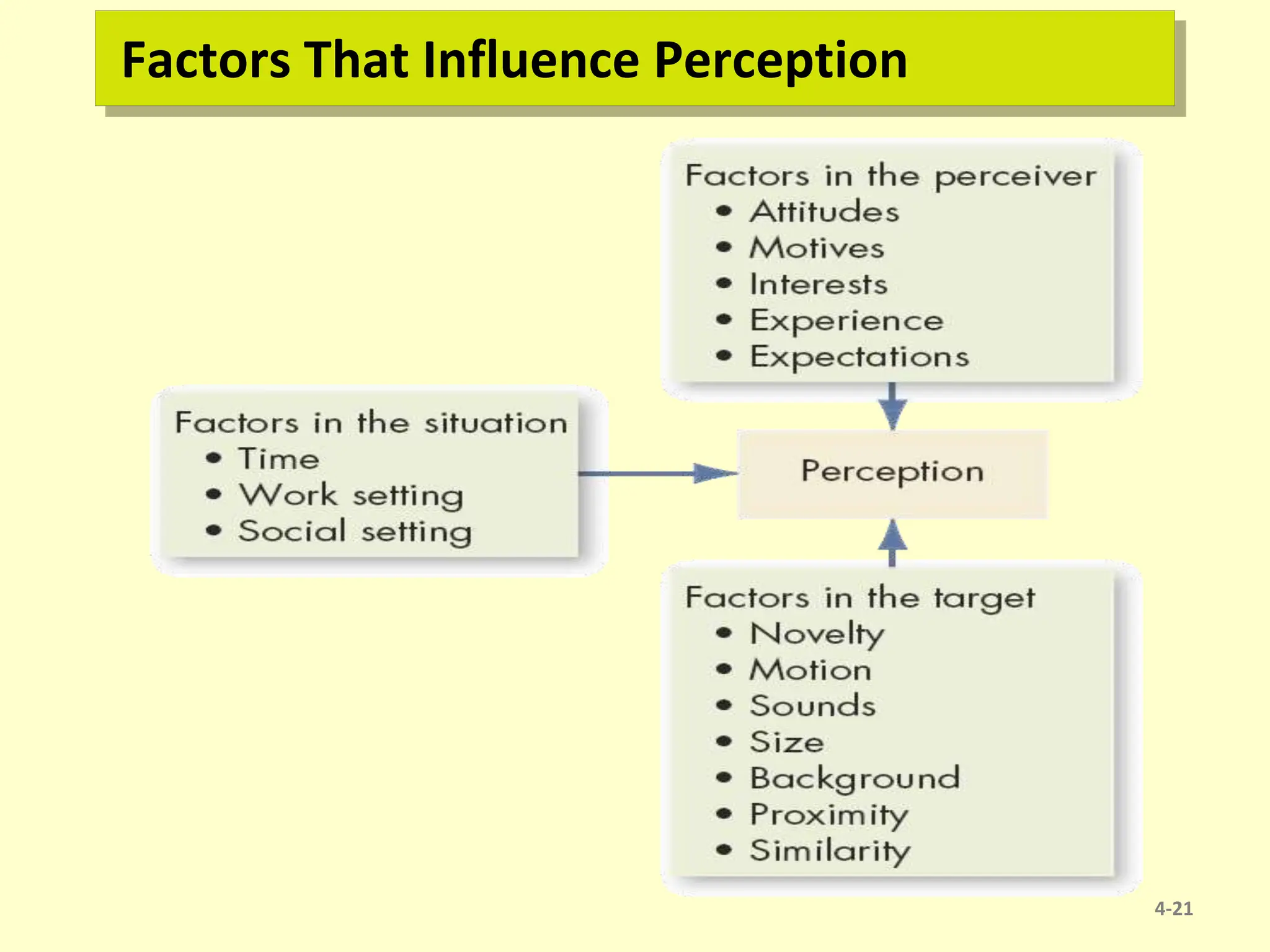
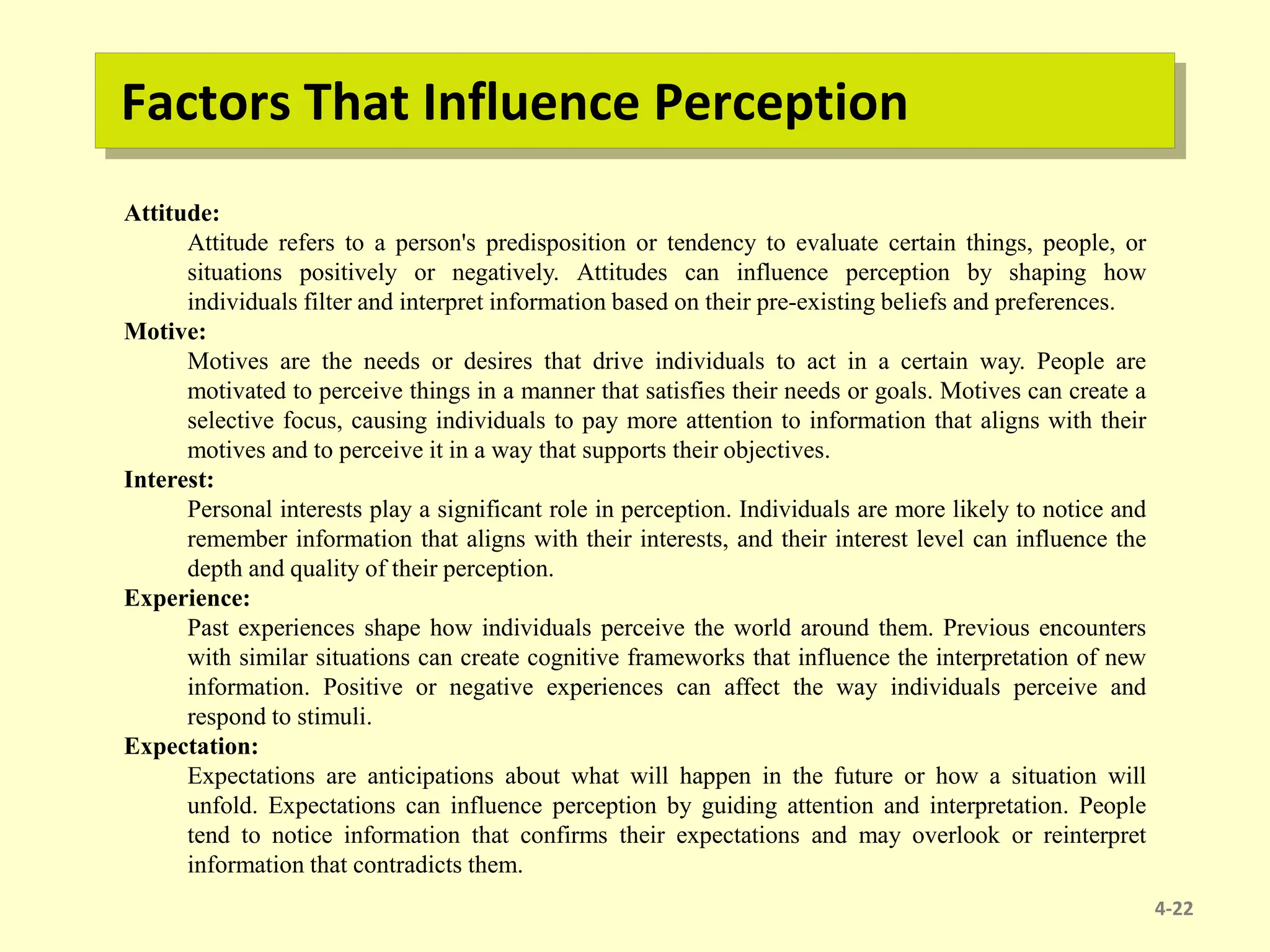
Factors That Influence Perception
4-21
Factors That Influence Perception
4-22
Attitude:
Attitude refers to a person's predisposition or tendency to evaluate certain things, people, or
situations positively or negatively. Attitudes can influence perception by shaping how
individuals filter and interpret information based on their pre-existing beliefs and preferences.
Motive:
Motives are the needs or desires that drive individuals to act in a certain way. People are
motivated to perceive things in a manner that satisfies their needs or goals. Motives can create a
selective focus, causing individuals to pay more attention to information that aligns with their
motives and to perceive it in a way that supports their objectives.
Interest:
Personal interests play a significant role in perception. Individuals are more likely to notice and
remember information that aligns with their interests, and their interest level can influence the
depth and quality of their perception.
Experience:
Past experiences shape how individuals perceive the world around them. Previous encounters
with similar situations can create cognitive frameworks that influence the interpretation of new
information. Positive or negative experiences can affect the way individuals perceive and
respond to stimuli.
Expectation:
Expectations are anticipations about what will happen in the future or how a situation will
unfold. Expectations can influence perception by guiding attention and interpretation. People
tend to notice information that confirms their expectations and may overlook or reinterpret
information that contradicts them.
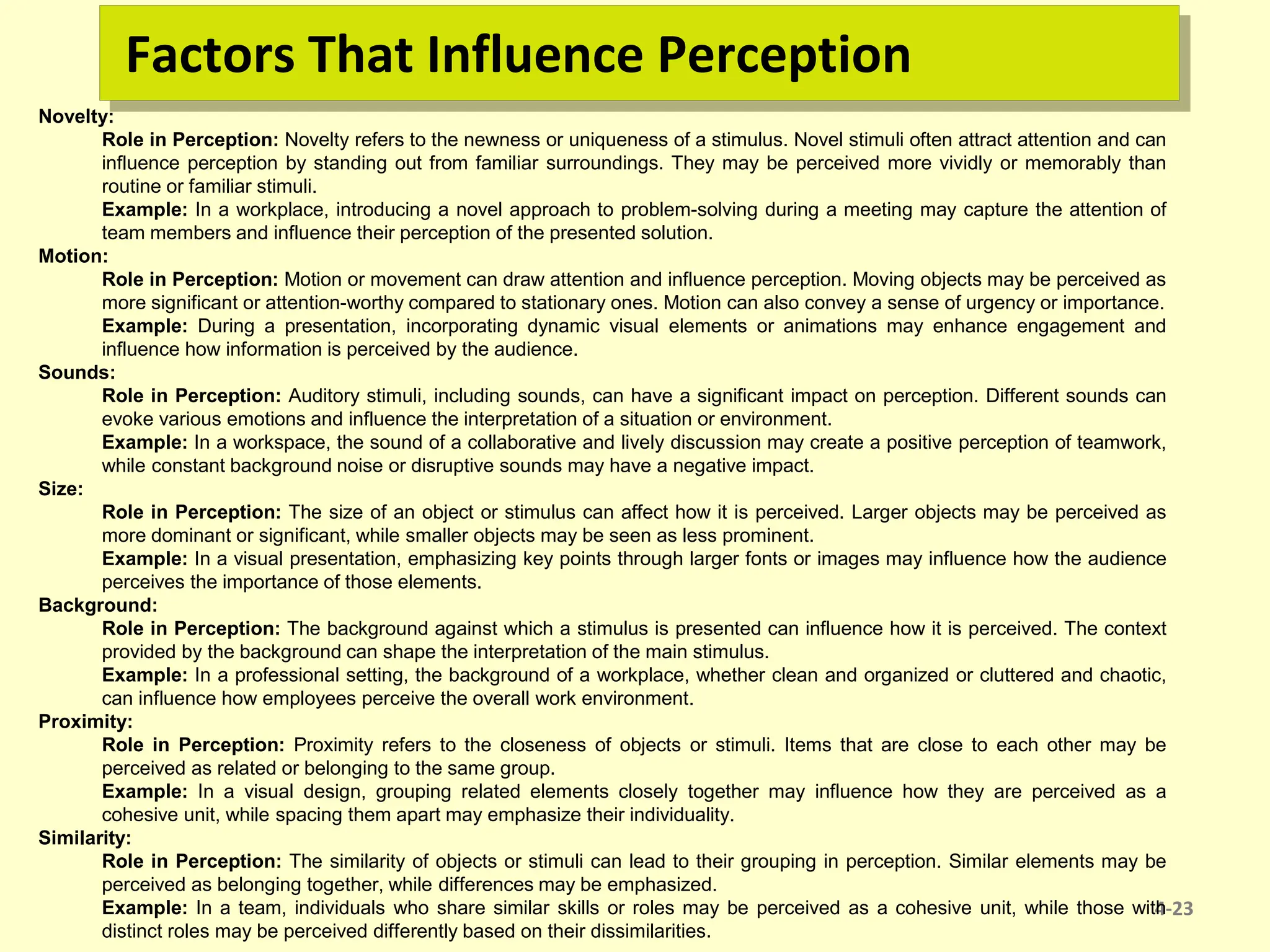
Factors That Influence Perception
4-23
Novelty:
Role in Perception: Novelty refers to the newness or uniqueness of a stimulus. Novel stimuli often attract attention and can
influence perception by standing out from familiar surroundings. They may be perceived more vividly or memorably than
routine or familiar stimuli.
Example: In a workplace, introducing a novel approach to problem-solving during a meeting may capture the attention of
team members and influence their perception of the presented solution.
Motion:
Role in Perception: Motion or movement can draw attention and influence perception. Moving objects may be perceived as
more significant or attention-worthy compared to stationary ones. Motion can also convey a sense of urgency or importance.
Example: During a presentation, incorporating dynamic visual elements or animations may enhance engagement and
influence how information is perceived by the audience.
Sounds:
Role in Perception: Auditory stimuli, including sounds, can have a significant impact on perception. Different sounds can
evoke various emotions and influence the interpretation of a situation or environment.
Example: In a workspace, the sound of a collaborative and lively discussion may create a positive perception of teamwork,
while constant background noise or disruptive sounds may have a negative impact.
Size:
Role in Perception: The size of an object or stimulus can affect how it is perceived. Larger objects may be perceived as
more dominant or significant, while smaller objects may be seen as less prominent.
Example: In a visual presentation, emphasizing key points through larger fonts or images may influence how the audience
perceives the importance of those elements.
Background:
Role in Perception: The background against which a stimulus is presented can influence how it is perceived. The context
provided by the background can shape the interpretation of the main stimulus.
Example: In a professional setting, the background of a workplace, whether clean and organized or cluttered and chaotic,
can influence how employees perceive the overall work environment.
Proximity:
Role in Perception: Proximity refers to the closeness of objects or stimuli. Items that are close to each other may be
perceived as related or belonging to the same group.
Example: In a visual design, grouping related elements closely together may influence how they are perceived as a
cohesive unit, while spacing them apart may emphasize their individuality.
Similarity:
Role in Perception: The similarity of objects or stimuli can lead to their grouping in perception. Similar elements may be
perceived as belonging together, while differences may be emphasized.
Example: In a team, individuals who share similar skills or roles may be perceived as a cohesive unit, while those with
distinct roles may be perceived differently based on their dissimilarities.
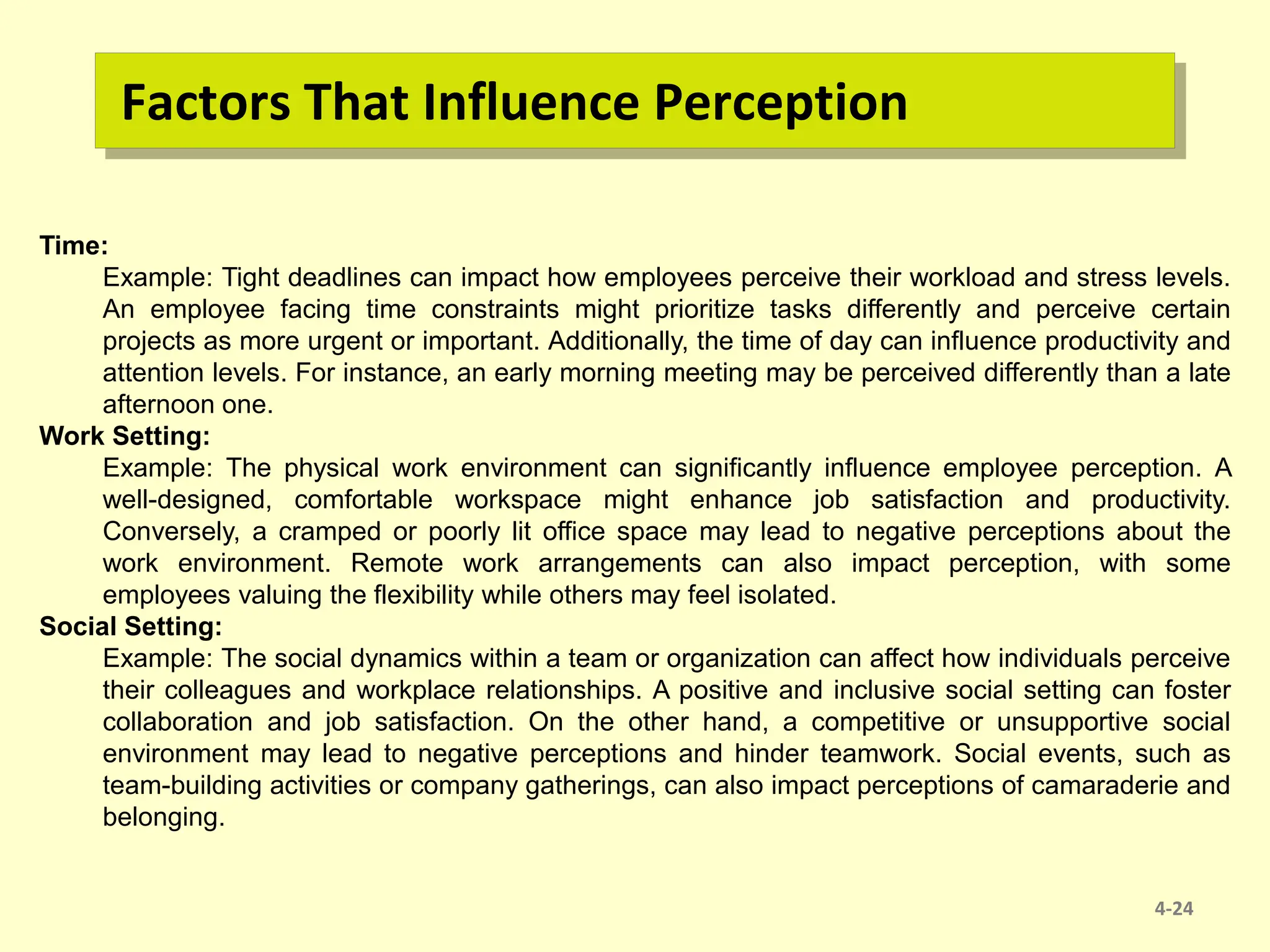
Factors That Influence Perception
4-24
Time:
Example: Tight deadlines can impact how employees perceive their workload and stress levels.
An employee facing time constraints might prioritize tasks differently and perceive certain
projects as more urgent or important. Additionally, the time of day can influence productivity and
attention levels. For instance, an early morning meeting may be perceived differently than a late
afternoon one.
Work Setting:
Example: The physical work environment can significantly influence employee perception. A
well-designed, comfortable workspace might enhance job satisfaction and productivity.
Conversely, a cramped or poorly lit office space may lead to negative perceptions about the
work environment. Remote work arrangements can also impact perception, with some
employees valuing the flexibility while others may feel isolated.
Social Setting:
Example: The social dynamics within a team or organization can affect how individuals perceive
their colleagues and workplace relationships. A positive and inclusive social setting can foster
collaboration and job satisfaction. On the other hand, a competitive or unsupportive social
environment may lead to negative perceptions and hinder teamwork. Social events, such as
team-building activities or company gatherings, can also impact perceptions of camaraderie and
belonging.
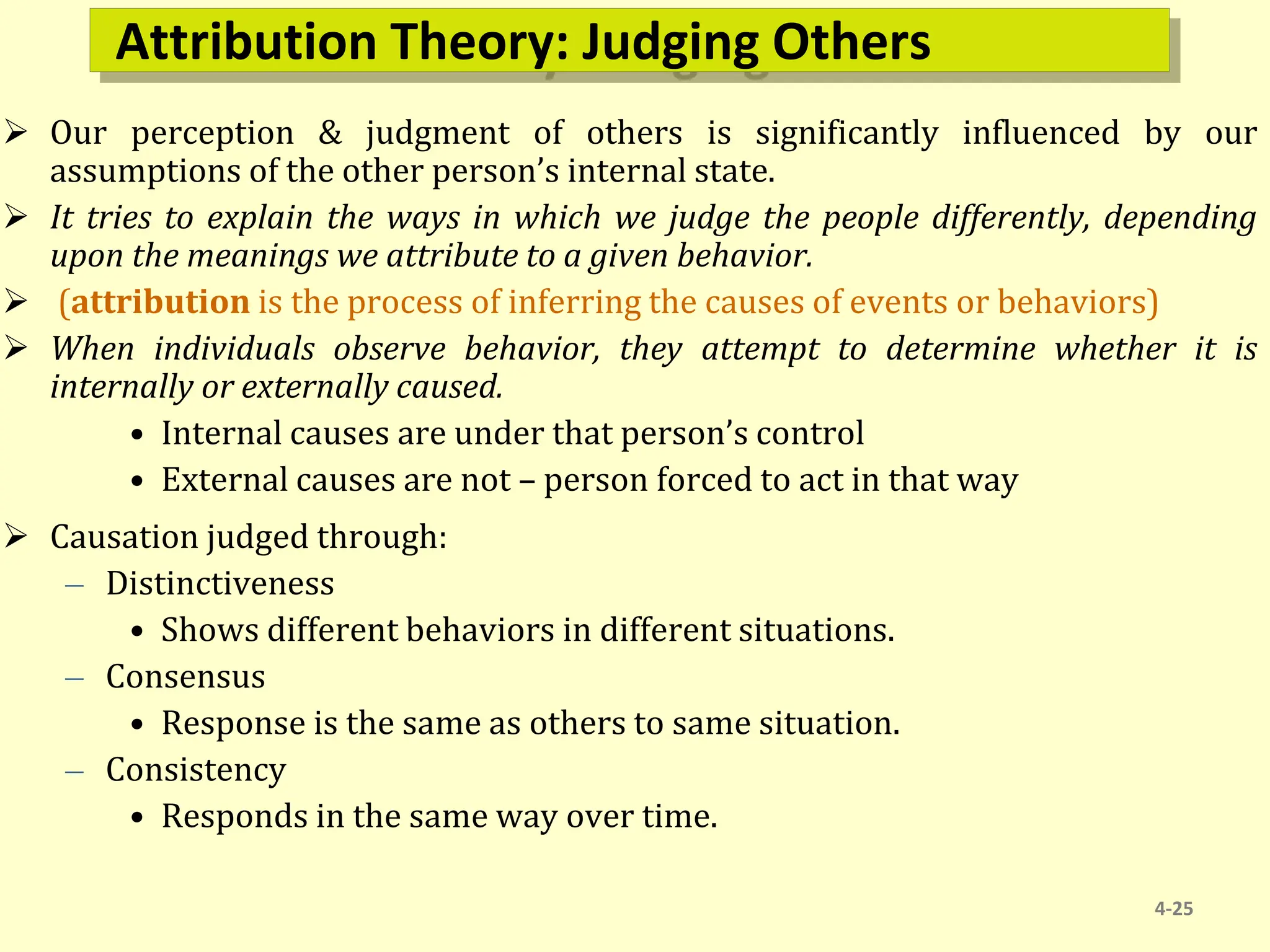
Attribution Theory: Judging Others
 Our perception & judgment of others is significantly influenced by our
assumptions of the other person’s internal state.
 It tries to explain the ways in which we judge the people differently, depending
upon the meanings we attribute to a given behavior.
 (attribution is the process of inferring the causes of events or behaviors)
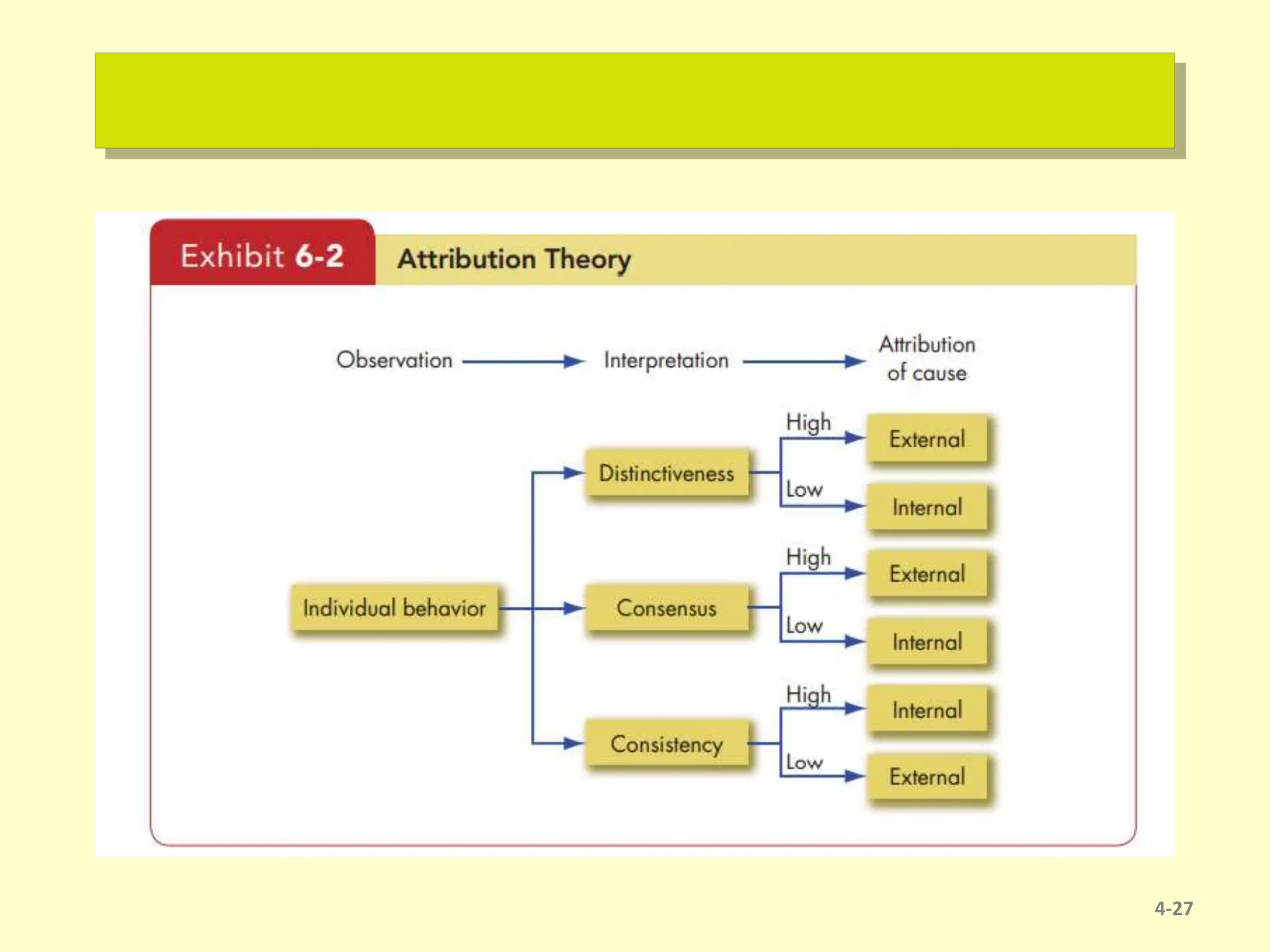
 When individuals observe behavior, they attempt to determine whether it is
internally or externally caused.
• Internal causes are under that person’s control
• External causes are not – person forced to act in that way
 Causation judged through:
– Distinctiveness
• Shows different behaviors in different situations.
– Consensus
• Response is the same as others to same situation.
– Consistency
• Responds in the same way over time.
4-25
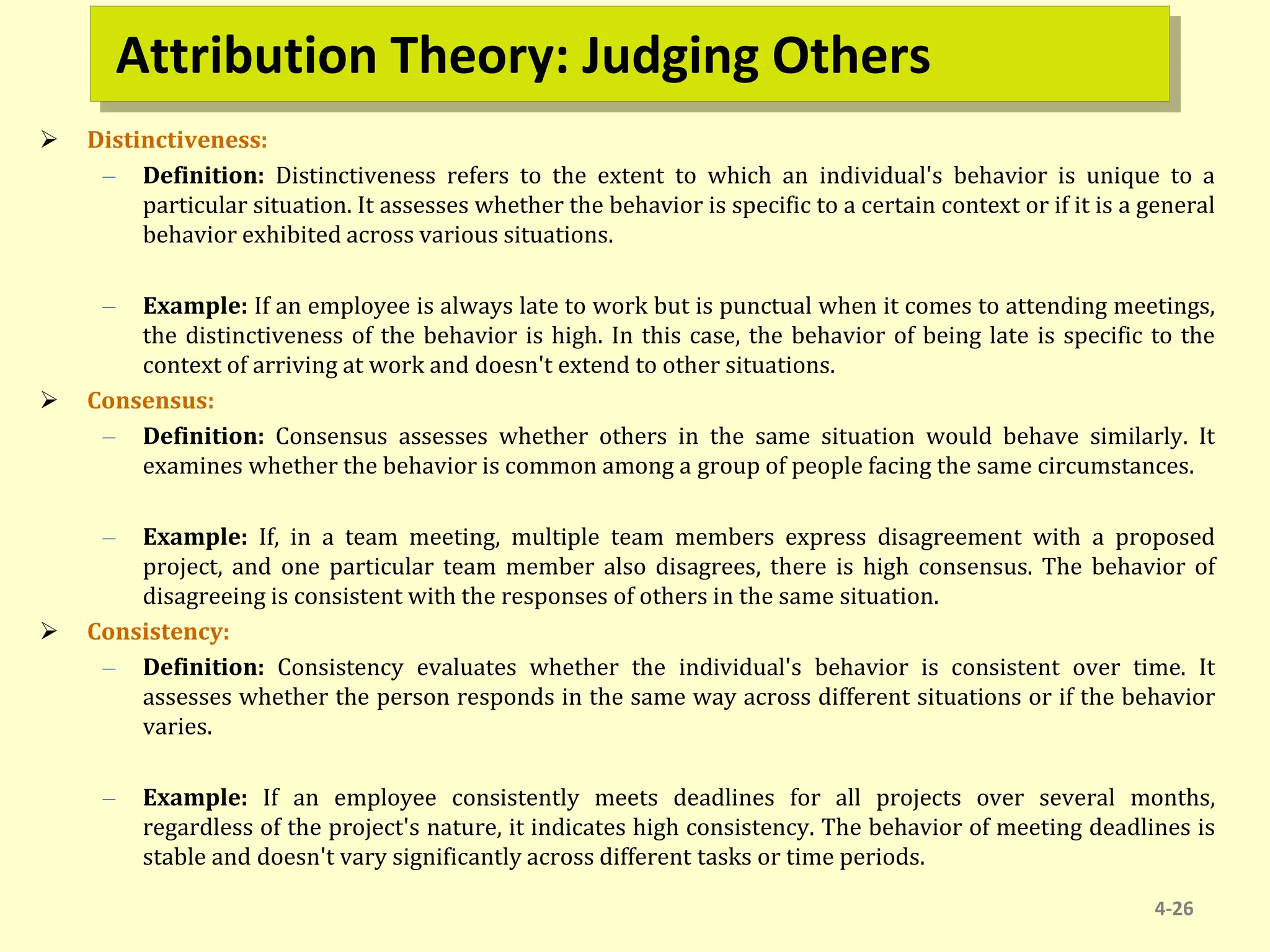
Attribution Theory: Judging Others
 Distinctiveness:
– Definition: Distinctiveness refers to the extent to which an individual's behavior is unique to a
particular situation. It assesses whether the behavior is specific to a certain context or if it is a general
behavior exhibited across various situations.
– Example: If an employee is always late to work but is punctual when it comes to attending meetings,
the distinctiveness of the behavior is high. In this case, the behavior of being late is specific to the
context of arriving at work and doesn't extend to other situations.
 Consensus:
– Definition: Consensus assesses whether others in the same situation would behave similarly. It
examines whether the behavior is common among a group of people facing the same circumstances.
– Example: If, in a team meeting, multiple team members express disagreement with a proposed
project, and one particular team member also disagrees, there is high consensus. The behavior of
disagreeing is consistent with the responses of others in the same situation.
 Consistency:
– Definition: Consistency evaluates whether the individual's behavior is consistent over time. It
assesses whether the person responds in the same way across different situations or if the behavior
varies.
– Example: If an employee consistently meets deadlines for all projects over several months,
regardless of the project's nature, it indicates high consistency. The behavior of meeting deadlines is
stable and doesn't vary significantly across different tasks or time periods.
4-26
4-27
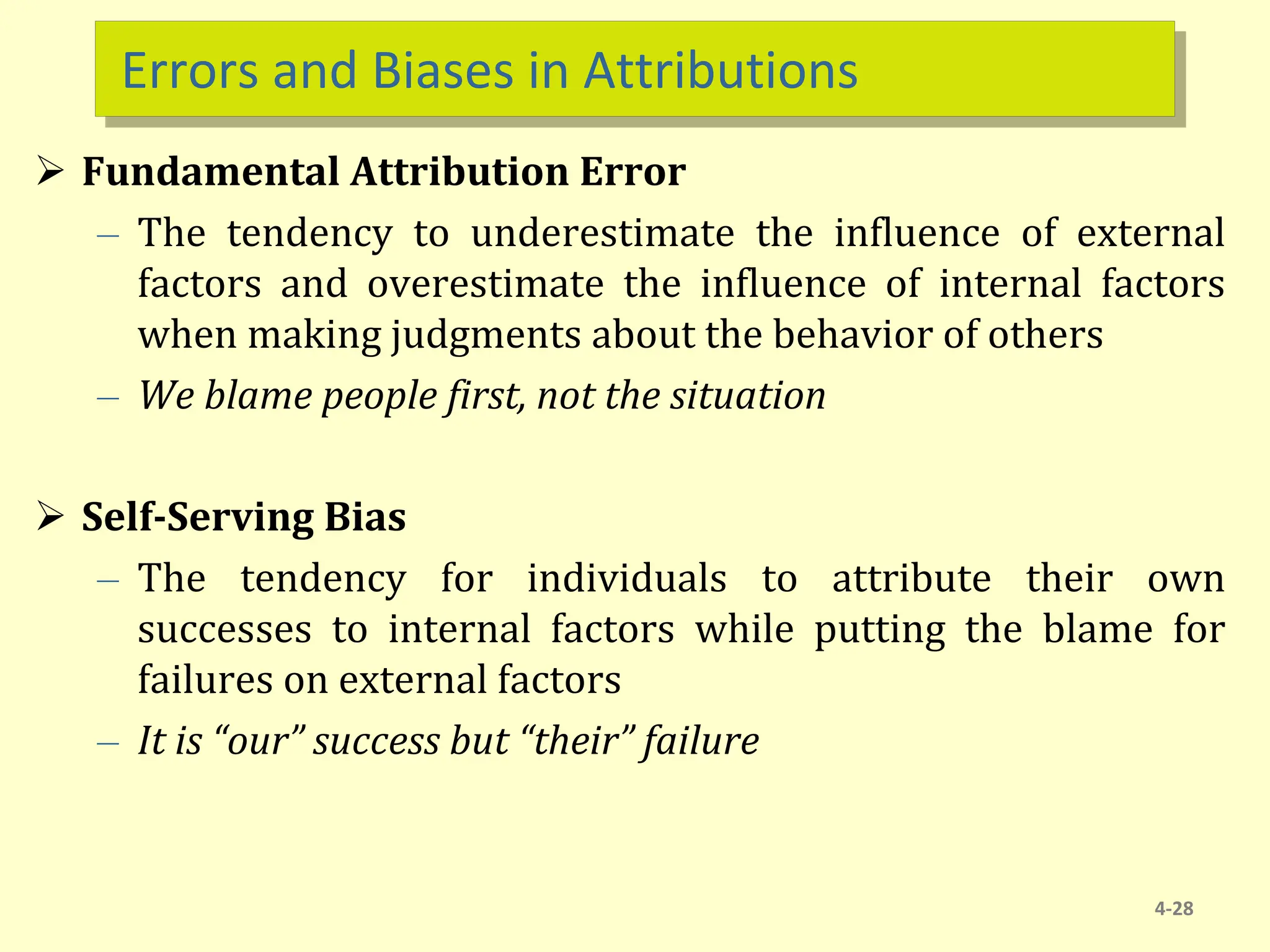
Errors and Biases in Attributions
 Fundamental Attribution Error
– The tendency to underestimate the influence of external
factors and overestimate the influence of internal factors
when making judgments about the behavior of others
– We blame people first, not the situation
 Self-Serving Bias
– The tendency for individuals to attribute their own
successes to internal factors while putting the blame for
failures on external factors
– It is “our” success but “their” failure
4-28
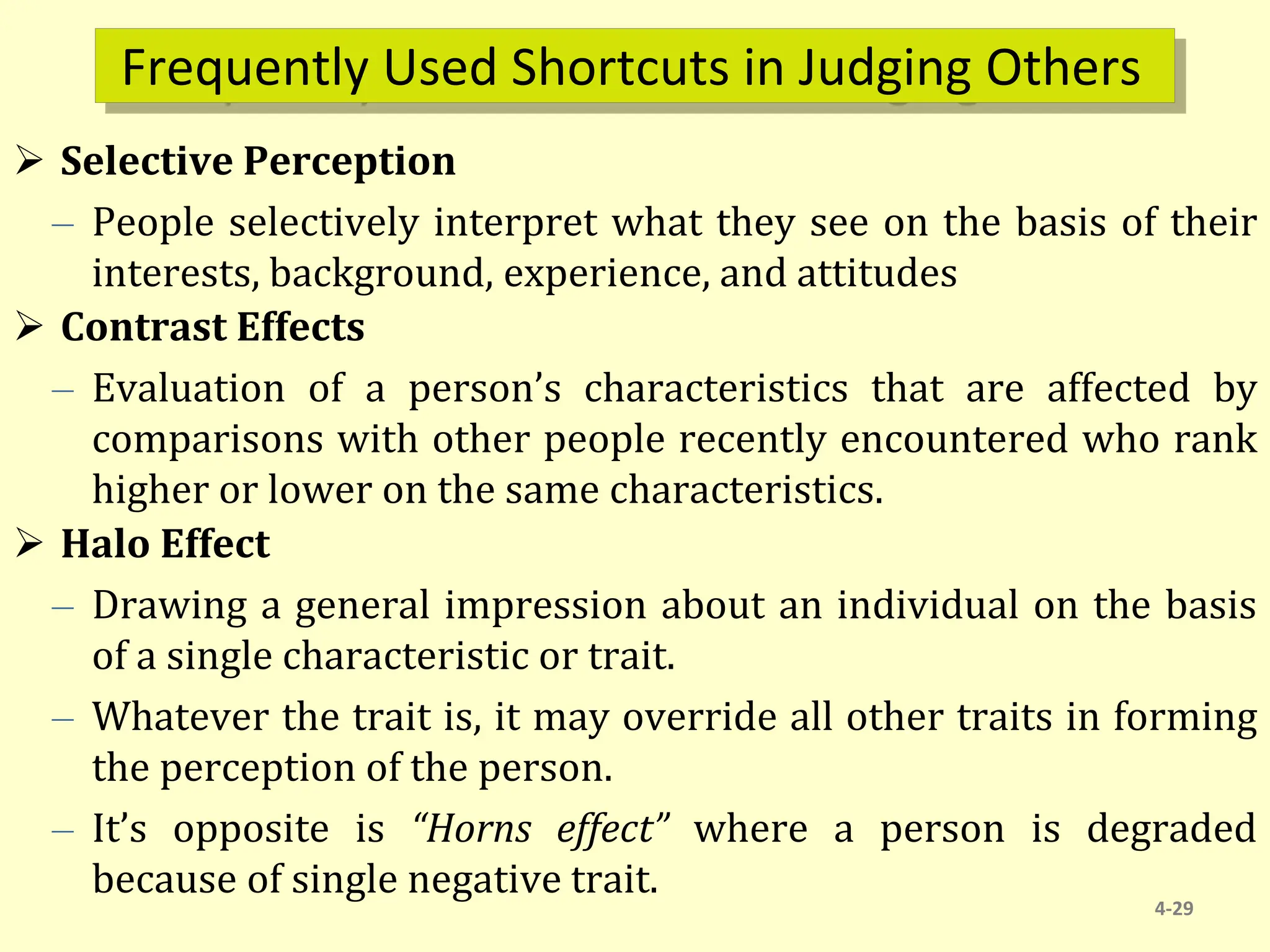
Frequently Used Shortcuts in Judging Others
 Selective Perception
– People selectively interpret what they see on the basis of their
interests, background, experience, and attitudes
 Contrast Effects
– Evaluation of a person’s characteristics that are affected by
comparisons with other people recently encountered who rank
higher or lower on the same characteristics.
 Halo Effect
– Drawing a general impression about an individual on the basis
of a single characteristic or trait.
– Whatever the trait is, it may override all other traits in forming
the perception of the person.
– It’s opposite is “Horns effect” where a person is degraded
because of single negative trait.
4-29
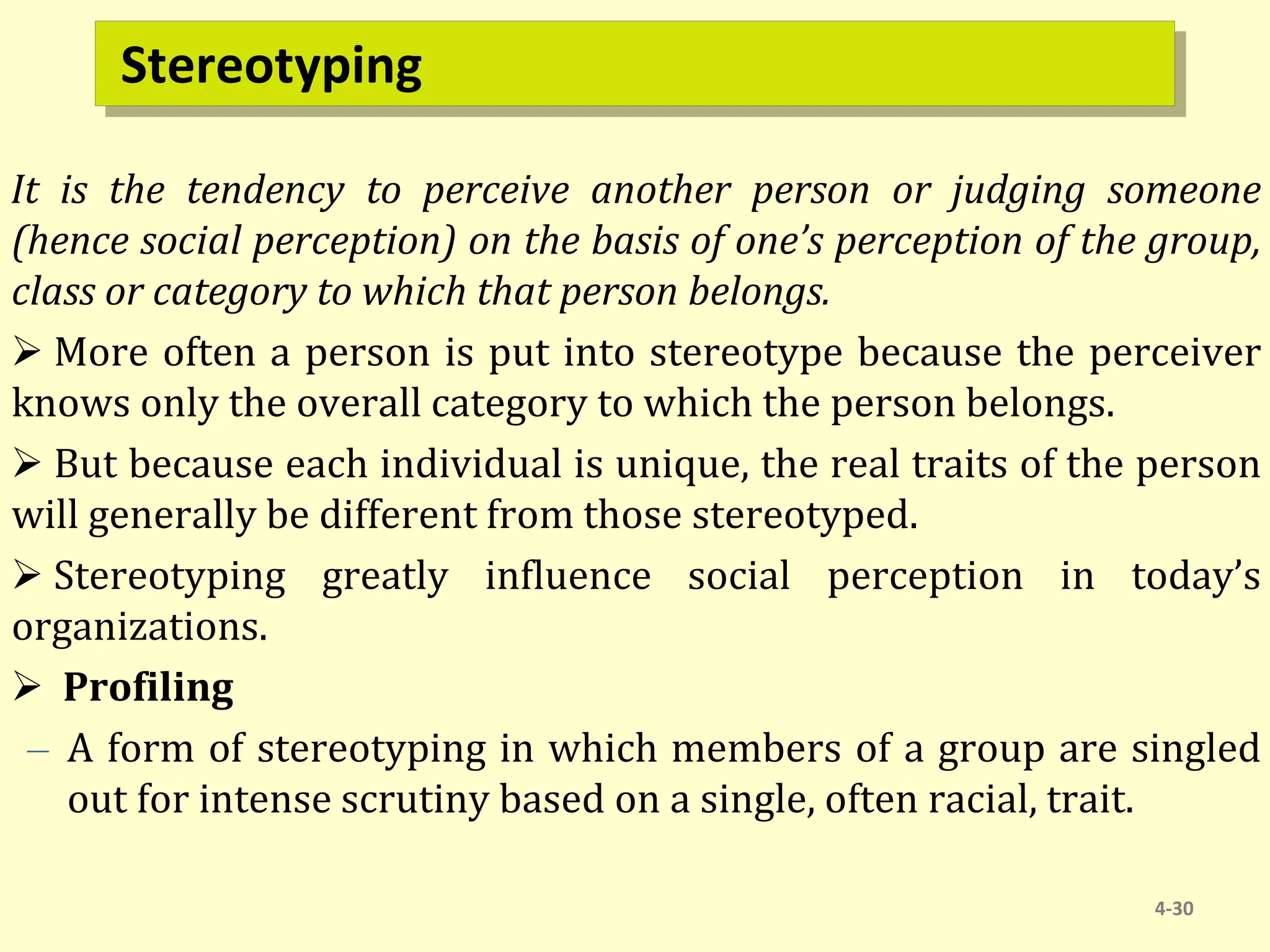
Stereotyping
It is the tendency to perceive another person or judging someone
(hence social perception) on the basis of one’s perception of the group,
class or category to which that person belongs.
 More often a person is put into stereotype because the perceiver
knows only the overall category to which the person belongs.
 But because each individual is unique, the real traits of the person
will generally be different from those stereotyped.
 Stereotyping greatly influence social perception in today’s
organizations.
 Profiling
– A form of stereotyping in which members of a group are singled
out for intense scrutiny based on a single, often racial, trait.
4-30
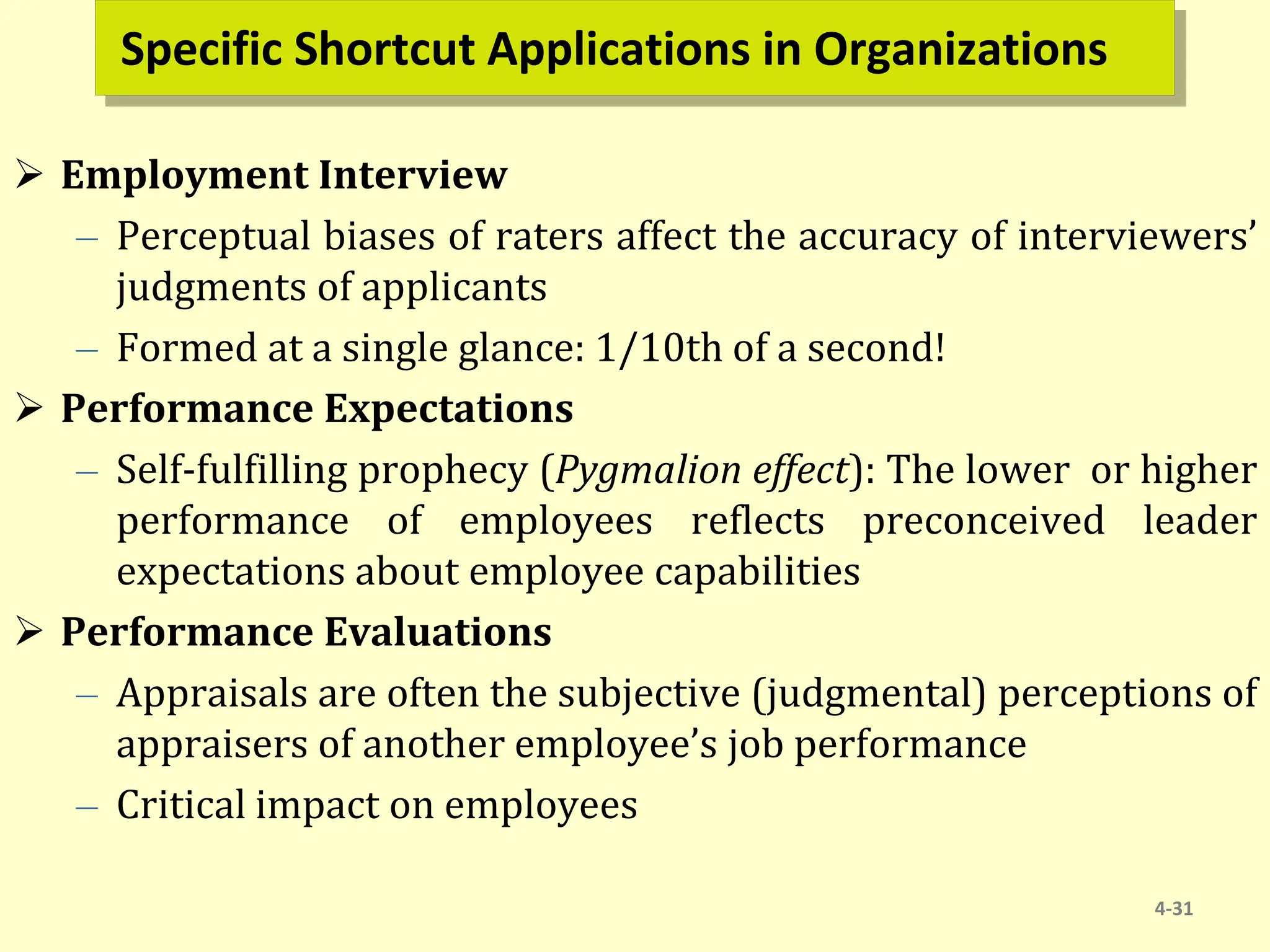
Specific Shortcut Applications in Organizations
 Employment Interview
– Perceptual biases of raters affect the accuracy of interviewers’
judgments of applicants
– Formed at a single glance: 1/10th of a second!
 Performance Expectations
– Self-fulfilling prophecy (Pygmalion effect): The lower or higher
performance of employees reflects preconceived leader
expectations about employee capabilities
 Performance Evaluations
– Appraisals are often the subjective (judgmental) perceptions of
appraisers of another employee’s job performance
– Critical impact on employees
4-31
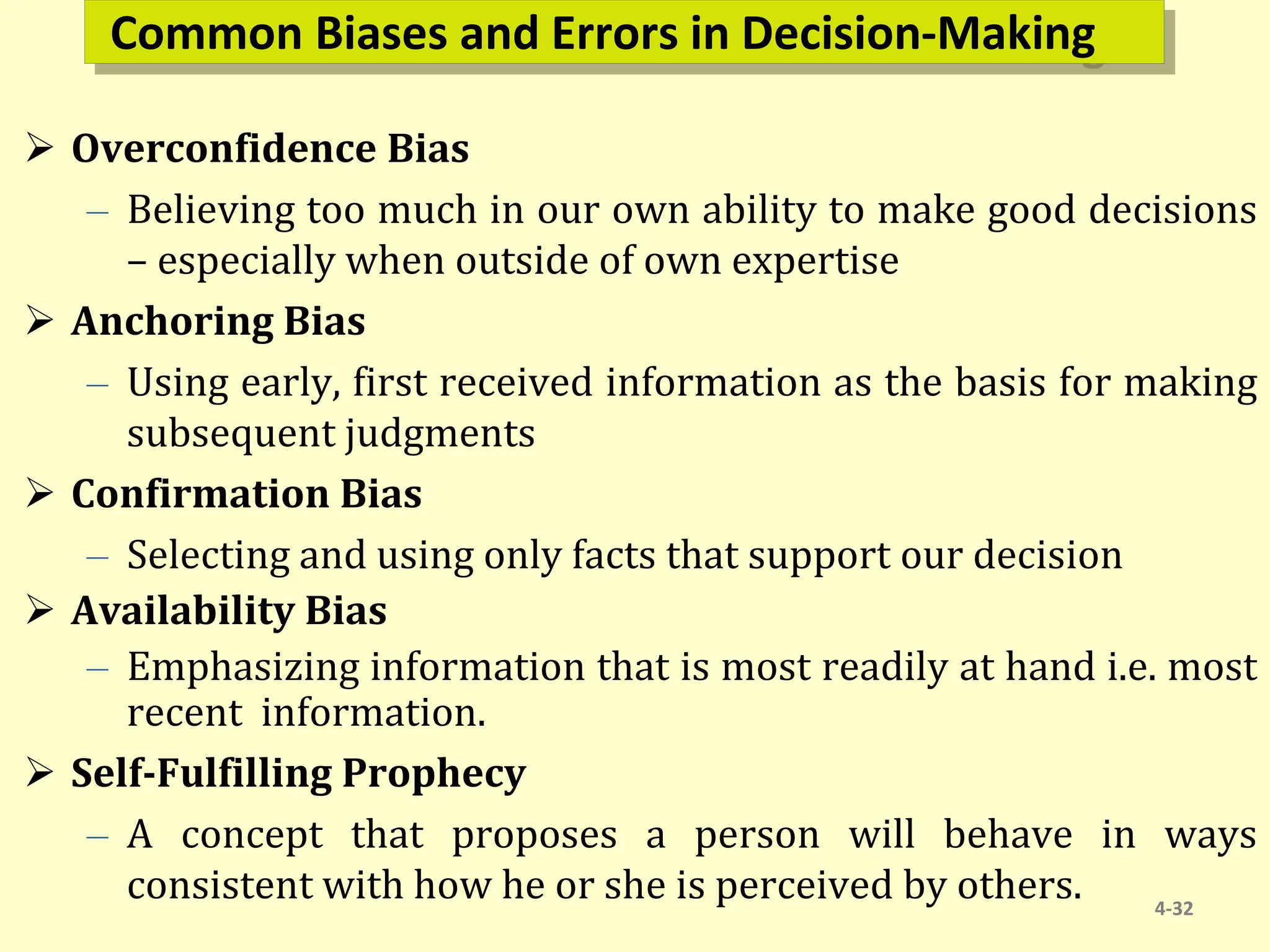
Common Biases and Errors in Decision-Making
 Overconfidence Bias
– Believing too much in our own ability to make good decisions
– especially when outside of own expertise
 Anchoring Bias
– Using early, first received information as the basis for making
subsequent judgments
 Confirmation Bias
– Selecting and using only facts that support our decision
 Availability Bias
– Emphasizing information that is most readily at hand i.e. most
recent information.
 Self-Fulfilling Prophecy
– A concept that proposes a person will behave in ways
consistent with how he or she is perceived by others. 4-32
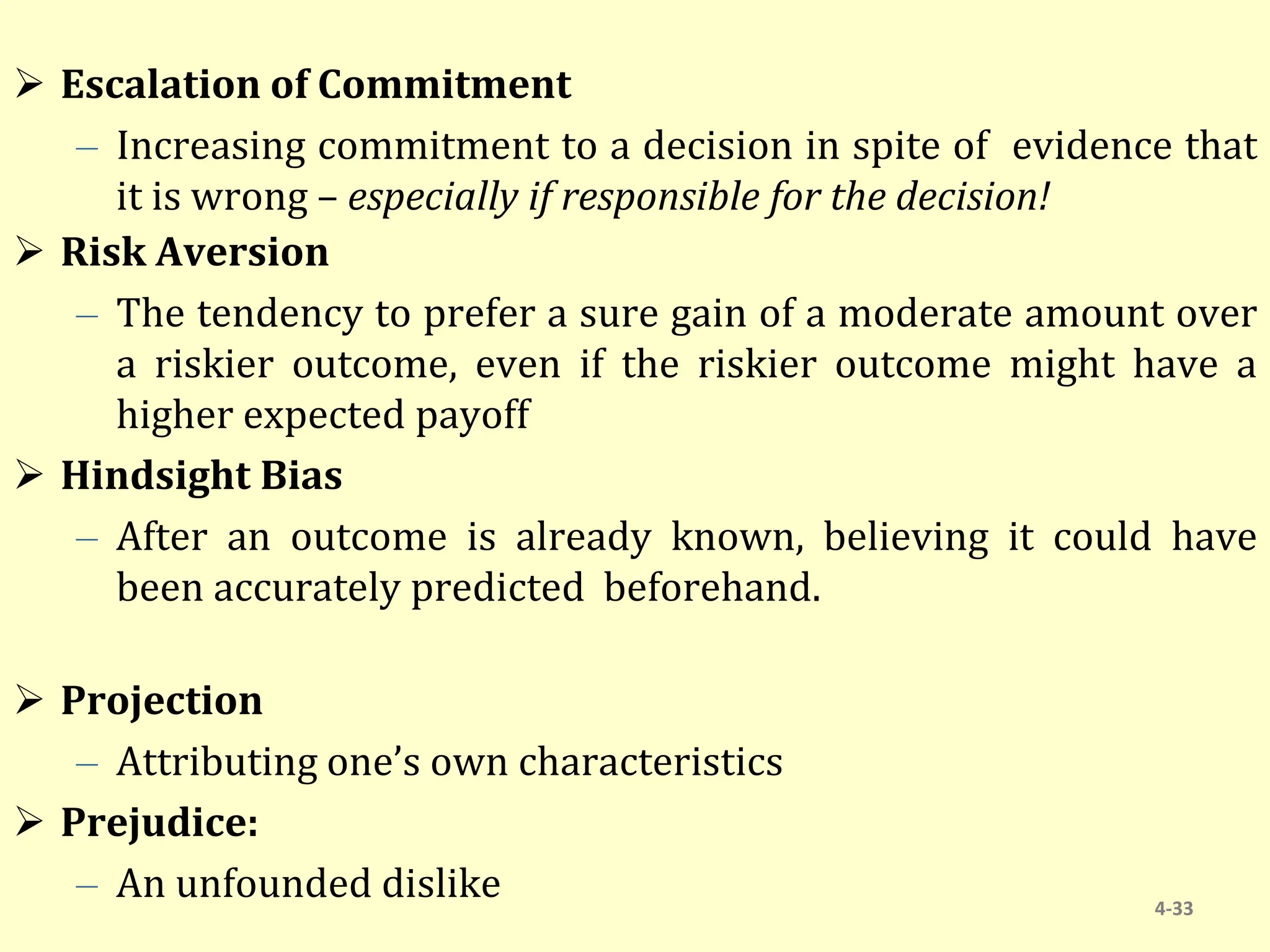
 Escalation of Commitment
– Increasing commitment to a decision in spite of evidence that
it is wrong – especially if responsible for the decision!
 Risk Aversion
– The tendency to prefer a sure gain of a moderate amount over
a riskier outcome, even if the riskier outcome might have a
higher expected payoff
 Hindsight Bias
– After an outcome is already known, believing it could have
been accurately predicted beforehand.
 Projection
– Attributing one’s own characteristics
 Prejudice:
– An unfounded dislike 4-33
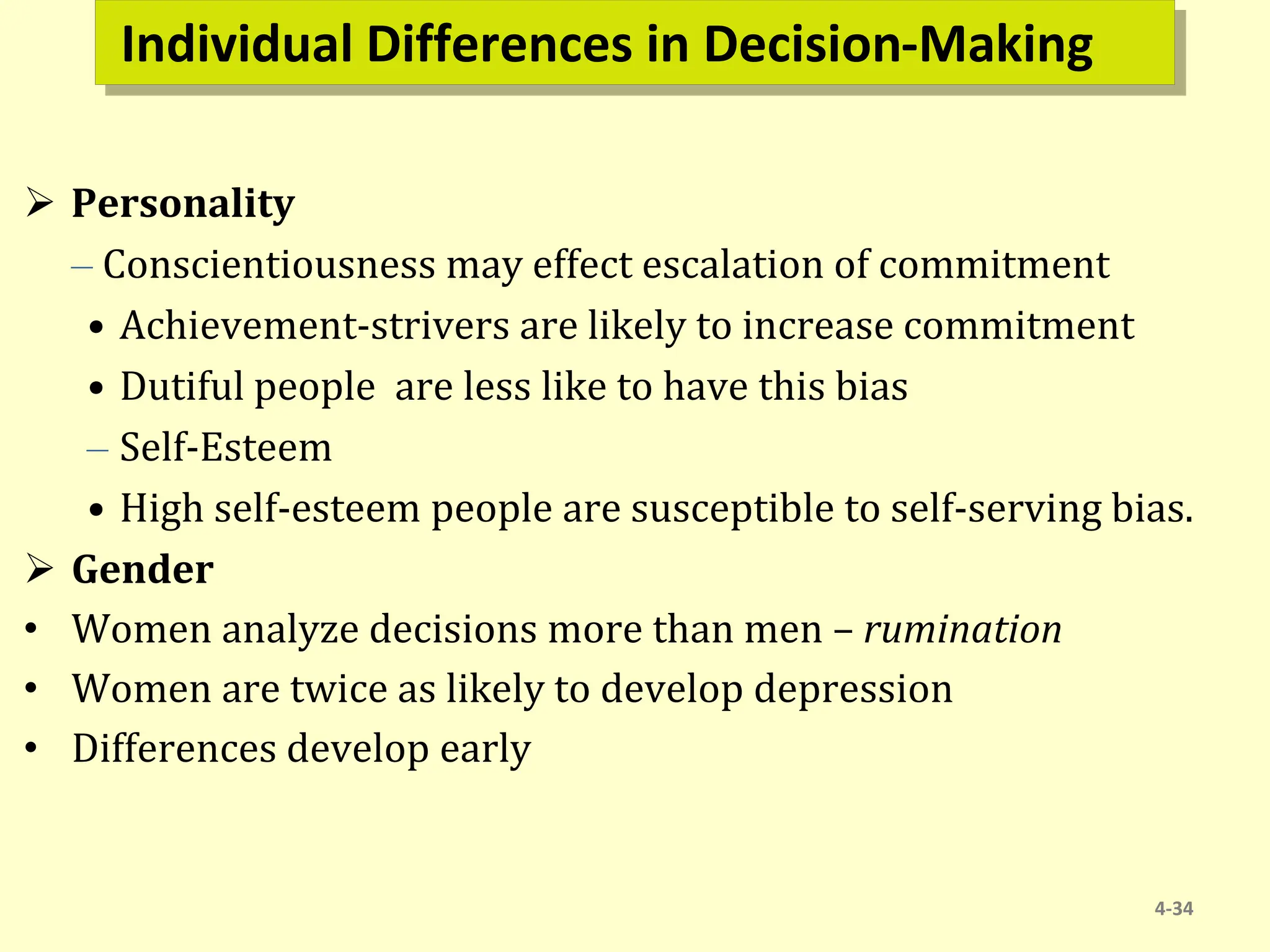
Individual Differences in Decision-Making
 Personality
– Conscientiousness may effect escalation of commitment
• Achievement-strivers are likely to increase commitment
• Dutiful people are less like to have this bias
– Self-Esteem
• High self-esteem people are susceptible to self-serving bias.
 Gender
• Women analyze decisions more than men – rumination
• Women are twice as likely to develop depression
• Differences develop early
4-34
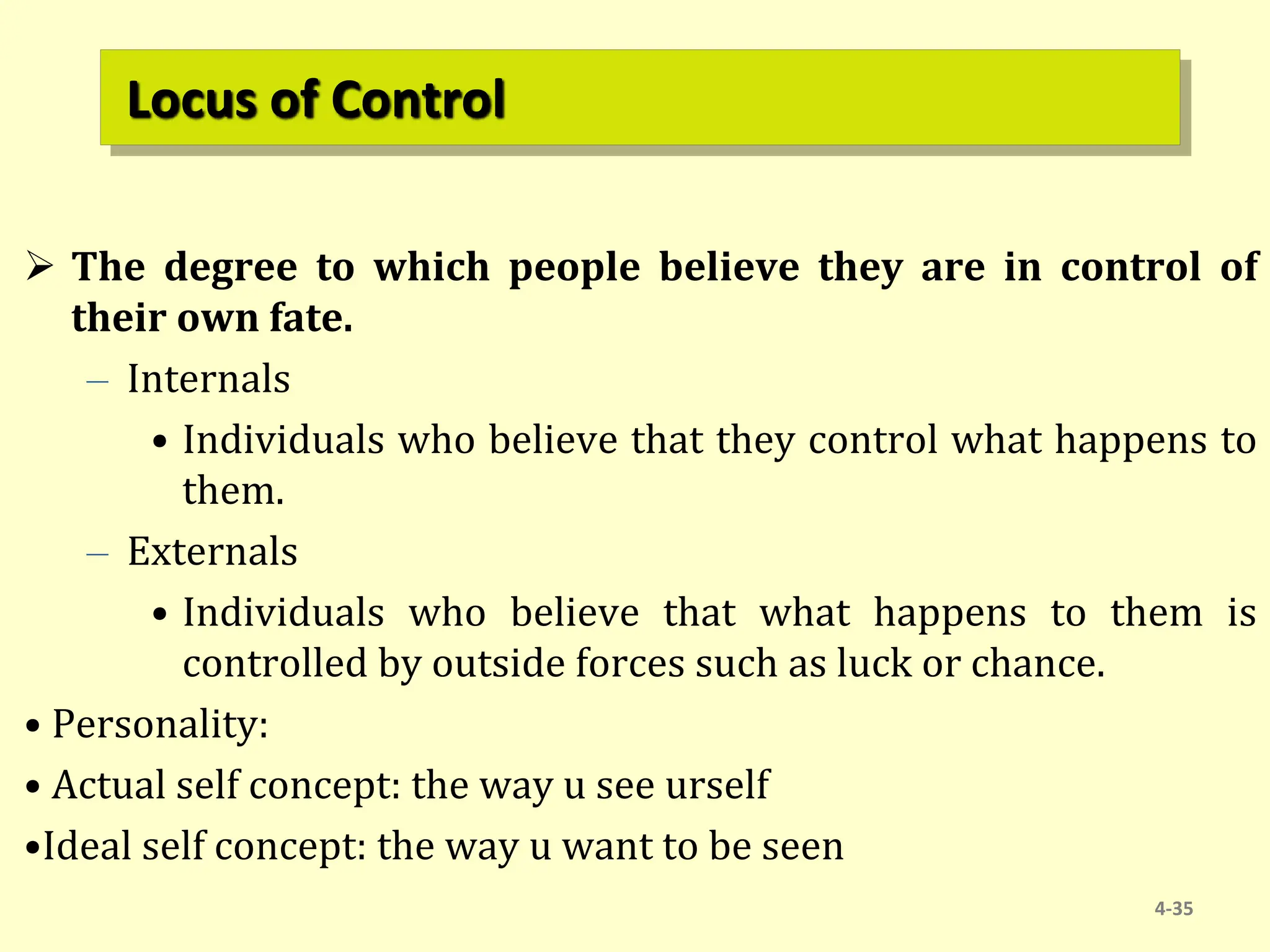
Locus of Control
 The degree to which people believe they are in control of
their own fate.
– Internals
• Individuals who believe that they control what happens to
them.
– Externals
• Individuals who believe that what happens to them is
controlled by outside forces such as luck or chance.
• Personality:
• Actual self concept: the way u see urself
•Ideal self concept: the way u want to be seen
4-35
Thanks to Allah
4-36

3. Lecture Perception.ppt now your possible

  • 1.
  • 2.
  • 3.
  • 4.
    “You become whatyou think” “If everyone perceived everything the same way, things would be a lot simpler” - Moorhead & Griffin 4-3
  • 5.
    TOTI EMUL ESTO What Language IsWritten on This Stone Found by Archaeologists? 4-4
  • 6.
    TOTI EMUL ESTO The Language isEnglish: To Tie Mules To 4-5
  • 7.
    What do yousee? 4-6
  • 8.
    What do yousee now? 4-7
  • 9.
    What colour comesto mind? 4-8
  • 10.
  • 11.
  • 12.
  • 13.
  • 14.
    Why We StudyPerceptions?  To better understand  We don’t see reality. We interpret it.  The attribution process guides our behaviour, 4-13
  • 15.
    What is Perception? Definition Aprocess by which individuals organize and interpret their sensory impressions in order to give meaning to their environment.  ( situation or Stimuli – Organizing – interpreting) = Perception “Perception is an important mediating cognitive process through which persons make interpretations of the stimulus or situation they are forced with.” Unique interpretation of situation, not exact reality or recording. Why it is important? People’s behavior is based on their perception of what reality is, not on reality itself. The world as it is perceived is the world that is behaviorally important. What we perceive can be differentiated from objective reality. 4-14
  • 16.
    MEANING Perceptions differ fromperson to person. Each individual perceives the same situation differently. Group perceptions can influence one’s perception. Individuals organize and interpret things based on their past experiences and the important values they consider important. Employees tend to behave and act on certain things on the basis of their perception. 4-15
  • 17.
  • 18.
    NATURE OF PERCEPTION 1)Perceptionis the process by which an individual gives meaning to the environment. 2)It is a cognitive and psychological process. The manner in which a person perceives the environment affects his behavior. There can be no behavior without perception and perception lies at the base of every human action. 3)People’s action, emotions, thoughts and feelings are triggered by their perceptions of their surroundings. 4)Though perception has been defined in a variety of ways, it basically refers to the manner in which a person experiences the world. 4-17
  • 19.
    4)Perception is analmost automatic process and works in much the same way within each individual, yet typically yields different perceptions. 5)Perception is a process that operates constantly between us and reality. 6)Since perception is subjective process, different people may perceive the same environment differently. So, perception is like beauty, that lies in the eyes of the beholder. 4-18
  • 20.
    PERCEPTUAL PROCESS… Simplified processof perception Perceptual inputs Stimuli Perceptual throughputs Receiving->Selecting->Organising->Interpreting Perceptual Outputs Actions 4-19 BEHAVIOUR
  • 21.
    Perceptual inputs –Objects, Events and people. All those things in the setting where events occur or contribute to the occurrence of events can be termed as Perceptual inputs. Perceptual Mechanism -involves three elements viz. selection of stimuli, organization of stimuli and interpretation of stimuli. Perceptual outputs –Attitudes, Opinions, Feelings & Values. The result is the “ BEHAVIOUR” 4-20
  • 22.
    Factors That InfluencePerception 4-21
  • 23.
    Factors That InfluencePerception 4-22 Attitude: Attitude refers to a person's predisposition or tendency to evaluate certain things, people, or situations positively or negatively. Attitudes can influence perception by shaping how individuals filter and interpret information based on their pre-existing beliefs and preferences. Motive: Motives are the needs or desires that drive individuals to act in a certain way. People are motivated to perceive things in a manner that satisfies their needs or goals. Motives can create a selective focus, causing individuals to pay more attention to information that aligns with their motives and to perceive it in a way that supports their objectives. Interest: Personal interests play a significant role in perception. Individuals are more likely to notice and remember information that aligns with their interests, and their interest level can influence the depth and quality of their perception. Experience: Past experiences shape how individuals perceive the world around them. Previous encounters with similar situations can create cognitive frameworks that influence the interpretation of new information. Positive or negative experiences can affect the way individuals perceive and respond to stimuli. Expectation: Expectations are anticipations about what will happen in the future or how a situation will unfold. Expectations can influence perception by guiding attention and interpretation. People tend to notice information that confirms their expectations and may overlook or reinterpret information that contradicts them.
  • 24.
    Factors That InfluencePerception 4-23 Novelty: Role in Perception: Novelty refers to the newness or uniqueness of a stimulus. Novel stimuli often attract attention and can influence perception by standing out from familiar surroundings. They may be perceived more vividly or memorably than routine or familiar stimuli. Example: In a workplace, introducing a novel approach to problem-solving during a meeting may capture the attention of team members and influence their perception of the presented solution. Motion: Role in Perception: Motion or movement can draw attention and influence perception. Moving objects may be perceived as more significant or attention-worthy compared to stationary ones. Motion can also convey a sense of urgency or importance. Example: During a presentation, incorporating dynamic visual elements or animations may enhance engagement and influence how information is perceived by the audience. Sounds: Role in Perception: Auditory stimuli, including sounds, can have a significant impact on perception. Different sounds can evoke various emotions and influence the interpretation of a situation or environment. Example: In a workspace, the sound of a collaborative and lively discussion may create a positive perception of teamwork, while constant background noise or disruptive sounds may have a negative impact. Size: Role in Perception: The size of an object or stimulus can affect how it is perceived. Larger objects may be perceived as more dominant or significant, while smaller objects may be seen as less prominent. Example: In a visual presentation, emphasizing key points through larger fonts or images may influence how the audience perceives the importance of those elements. Background: Role in Perception: The background against which a stimulus is presented can influence how it is perceived. The context provided by the background can shape the interpretation of the main stimulus. Example: In a professional setting, the background of a workplace, whether clean and organized or cluttered and chaotic, can influence how employees perceive the overall work environment. Proximity: Role in Perception: Proximity refers to the closeness of objects or stimuli. Items that are close to each other may be perceived as related or belonging to the same group. Example: In a visual design, grouping related elements closely together may influence how they are perceived as a cohesive unit, while spacing them apart may emphasize their individuality. Similarity: Role in Perception: The similarity of objects or stimuli can lead to their grouping in perception. Similar elements may be perceived as belonging together, while differences may be emphasized. Example: In a team, individuals who share similar skills or roles may be perceived as a cohesive unit, while those with distinct roles may be perceived differently based on their dissimilarities.
  • 25.
    Factors That InfluencePerception 4-24 Time: Example: Tight deadlines can impact how employees perceive their workload and stress levels. An employee facing time constraints might prioritize tasks differently and perceive certain projects as more urgent or important. Additionally, the time of day can influence productivity and attention levels. For instance, an early morning meeting may be perceived differently than a late afternoon one. Work Setting: Example: The physical work environment can significantly influence employee perception. A well-designed, comfortable workspace might enhance job satisfaction and productivity. Conversely, a cramped or poorly lit office space may lead to negative perceptions about the work environment. Remote work arrangements can also impact perception, with some employees valuing the flexibility while others may feel isolated. Social Setting: Example: The social dynamics within a team or organization can affect how individuals perceive their colleagues and workplace relationships. A positive and inclusive social setting can foster collaboration and job satisfaction. On the other hand, a competitive or unsupportive social environment may lead to negative perceptions and hinder teamwork. Social events, such as team-building activities or company gatherings, can also impact perceptions of camaraderie and belonging.
  • 26.
    Attribution Theory: JudgingOthers  Our perception & judgment of others is significantly influenced by our assumptions of the other person’s internal state.  It tries to explain the ways in which we judge the people differently, depending upon the meanings we attribute to a given behavior.  (attribution is the process of inferring the causes of events or behaviors)  When individuals observe behavior, they attempt to determine whether it is internally or externally caused. • Internal causes are under that person’s control • External causes are not – person forced to act in that way  Causation judged through: – Distinctiveness • Shows different behaviors in different situations. – Consensus • Response is the same as others to same situation. – Consistency • Responds in the same way over time. 4-25
  • 27.
    Attribution Theory: JudgingOthers  Distinctiveness: – Definition: Distinctiveness refers to the extent to which an individual's behavior is unique to a particular situation. It assesses whether the behavior is specific to a certain context or if it is a general behavior exhibited across various situations. – Example: If an employee is always late to work but is punctual when it comes to attending meetings, the distinctiveness of the behavior is high. In this case, the behavior of being late is specific to the context of arriving at work and doesn't extend to other situations.  Consensus: – Definition: Consensus assesses whether others in the same situation would behave similarly. It examines whether the behavior is common among a group of people facing the same circumstances. – Example: If, in a team meeting, multiple team members express disagreement with a proposed project, and one particular team member also disagrees, there is high consensus. The behavior of disagreeing is consistent with the responses of others in the same situation.  Consistency: – Definition: Consistency evaluates whether the individual's behavior is consistent over time. It assesses whether the person responds in the same way across different situations or if the behavior varies. – Example: If an employee consistently meets deadlines for all projects over several months, regardless of the project's nature, it indicates high consistency. The behavior of meeting deadlines is stable and doesn't vary significantly across different tasks or time periods. 4-26
  • 28.
  • 29.
    Errors and Biasesin Attributions  Fundamental Attribution Error – The tendency to underestimate the influence of external factors and overestimate the influence of internal factors when making judgments about the behavior of others – We blame people first, not the situation  Self-Serving Bias – The tendency for individuals to attribute their own successes to internal factors while putting the blame for failures on external factors – It is “our” success but “their” failure 4-28
  • 30.
    Frequently Used Shortcutsin Judging Others  Selective Perception – People selectively interpret what they see on the basis of their interests, background, experience, and attitudes  Contrast Effects – Evaluation of a person’s characteristics that are affected by comparisons with other people recently encountered who rank higher or lower on the same characteristics.  Halo Effect – Drawing a general impression about an individual on the basis of a single characteristic or trait. – Whatever the trait is, it may override all other traits in forming the perception of the person. – It’s opposite is “Horns effect” where a person is degraded because of single negative trait. 4-29
  • 31.
    Stereotyping It is thetendency to perceive another person or judging someone (hence social perception) on the basis of one’s perception of the group, class or category to which that person belongs.  More often a person is put into stereotype because the perceiver knows only the overall category to which the person belongs.  But because each individual is unique, the real traits of the person will generally be different from those stereotyped.  Stereotyping greatly influence social perception in today’s organizations.  Profiling – A form of stereotyping in which members of a group are singled out for intense scrutiny based on a single, often racial, trait. 4-30
  • 32.
    Specific Shortcut Applicationsin Organizations  Employment Interview – Perceptual biases of raters affect the accuracy of interviewers’ judgments of applicants – Formed at a single glance: 1/10th of a second!  Performance Expectations – Self-fulfilling prophecy (Pygmalion effect): The lower or higher performance of employees reflects preconceived leader expectations about employee capabilities  Performance Evaluations – Appraisals are often the subjective (judgmental) perceptions of appraisers of another employee’s job performance – Critical impact on employees 4-31
  • 33.
    Common Biases andErrors in Decision-Making  Overconfidence Bias – Believing too much in our own ability to make good decisions – especially when outside of own expertise  Anchoring Bias – Using early, first received information as the basis for making subsequent judgments  Confirmation Bias – Selecting and using only facts that support our decision  Availability Bias – Emphasizing information that is most readily at hand i.e. most recent information.  Self-Fulfilling Prophecy – A concept that proposes a person will behave in ways consistent with how he or she is perceived by others. 4-32

  • 34.
     Escalation ofCommitment – Increasing commitment to a decision in spite of evidence that it is wrong – especially if responsible for the decision!  Risk Aversion – The tendency to prefer a sure gain of a moderate amount over a riskier outcome, even if the riskier outcome might have a higher expected payoff  Hindsight Bias – After an outcome is already known, believing it could have been accurately predicted beforehand.  Projection – Attributing one’s own characteristics  Prejudice: – An unfounded dislike 4-33
  • 35.
    Individual Differences inDecision-Making  Personality – Conscientiousness may effect escalation of commitment • Achievement-strivers are likely to increase commitment • Dutiful people are less like to have this bias – Self-Esteem • High self-esteem people are susceptible to self-serving bias.  Gender • Women analyze decisions more than men – rumination • Women are twice as likely to develop depression • Differences develop early 4-34
  • 36.
    Locus of Control The degree to which people believe they are in control of their own fate. – Internals • Individuals who believe that they control what happens to them. – Externals • Individuals who believe that what happens to them is controlled by outside forces such as luck or chance. • Personality: • Actual self concept: the way u see urself •Ideal self concept: the way u want to be seen 4-35
  • 37.