1
BIOENERGETICS
BIOENERGETICS
2
What is Bioenergetics?
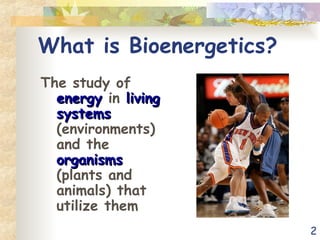
The study of
energy
energy in living
living
systems
systems
(environments)
and the
organisms
organisms
(plants and
animals) that
utilize them
3
Energy
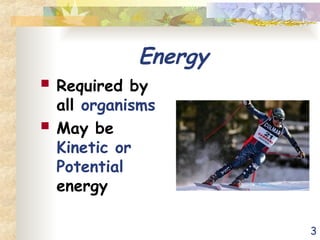
 Required by
all organisms
 May be
Kinetic or
Potential
energy
4
Kinetic Energy
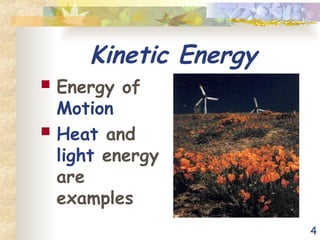
 Energy of
Motion
 Heat and
light energy
are
examples
5
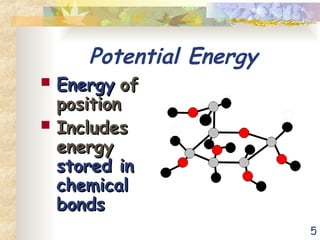
Potential Energy
 Energy
Energy of
of
position
position
 Includes
Includes
energy
energy
stored in
stored in
chemical
chemical
bonds
bonds
6
Two Types of
Energy Reactions
7
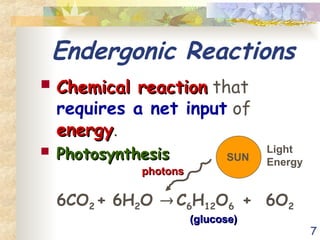
Endergonic Reactions
 Chemical reaction
Chemical reaction that
requires a net input of
energy
energy.
 Photosynthesis
Photosynthesis
6CO2 + 6H2O  C6H12O6 + 6O2
SUN
photons
photons
Light
Energy
(glucose)
(glucose)
8
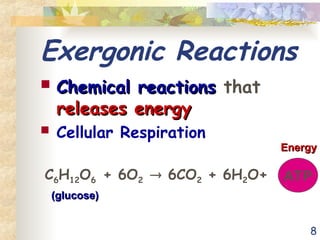
Exergonic Reactions
 Chemical reactions
Chemical reactions that
releases energy
releases energy
 Cellular Respiration
C6H12O6 + 6O2  6CO2 + 6H2O+ ATP
(glucose)
(glucose)
Energy
Energy
9
Metabolic Reactions
of Cells
10
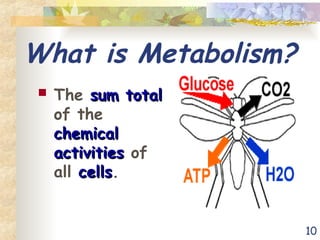
What is Metabolism?
 The sum total
sum total
of the
chemical
chemical
activities
activities of
all cells
cells.
11
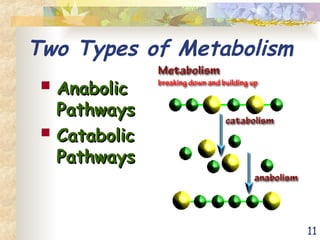
Two Types of Metabolism
 Anabolic
Anabolic
Pathways
Pathways
 Catabolic
Catabolic
Pathways
Pathways
12
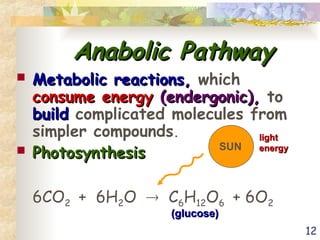
Anabolic Pathway
Anabolic Pathway
 Metabolic reactions,
Metabolic reactions, which
consume energy
consume energy (endergonic),
(endergonic), to
build
build complicated molecules from
simpler compounds.
 Photosynthesis
Photosynthesis
6CO2 + 6H2O  C6H12O6 + 6O2
SUN
light
light
energy
energy
(glucose)
(glucose)
13
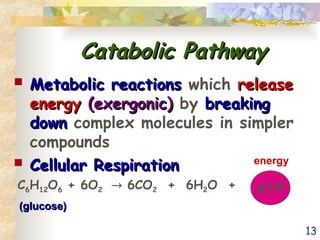
Catabolic Pathway
Catabolic Pathway
 Metabolic reactions
Metabolic reactions which release
release
energy
energy (exergonic)
(exergonic) by breaking
breaking
down
down complex molecules in simpler
compounds
 Cellular Respiration
Cellular Respiration
C6H12O6 + 6O2  6CO2 + 6H2O + ATP
(glucose)
(glucose)
energy
14
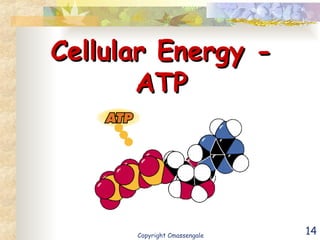
Cellular Energy -
Cellular Energy -
ATP
ATP
Copyright Cmassengale
15
ATP
ATP
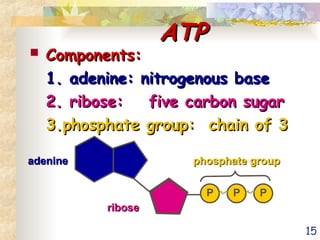
 Components:
Components:
1. adenine: nitrogenous base
2. ribose:
2. ribose: five carbon sugar
five carbon sugar
3.phosphate group: chain of 3
ribose
ribose
adenine
adenine
P P P
phosphate group
phosphate group
16
Adenosine Triphosphate
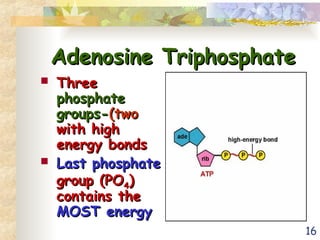
 Three
Three
phosphate
phosphate
groups-
groups-(two
(two
with high
with high
energy bonds
energy bonds
 Last phosphate
Last phosphate
group (PO
group (PO4
4)
)
contains the
contains the
MOST energy
MOST energy
17
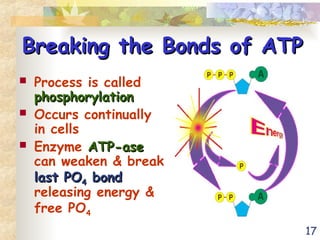
Breaking the Bonds of ATP
 Process is called
phosphorylation
phosphorylation
 Occurs continually
in cells
 Enzyme ATP-ase
ATP-ase
can weaken & break
last PO
last PO4
4 bond
bond
releasing energy &
free PO4
18
How does ATP work ?
How does ATP work ?
 Organisms use enzymes
enzymes to
break down energy-rich
energy-rich
glucose
glucose to release its
potential energy
 This energy is trapped and
stored in the form of
adenosine triphosphate(ATP)
19
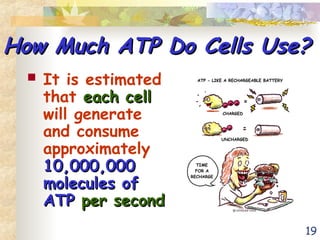
How Much ATP Do Cells Use?
 It is estimated
that each cell
each cell
will generate
and consume
approximately
10,000,000
10,000,000
molecules of
molecules of
ATP
ATP per second
per second
20
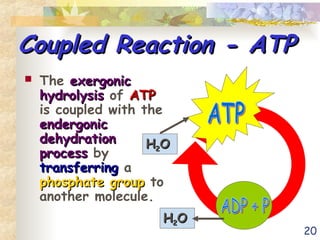
Coupled Reaction - ATP
 The exergonic
exergonic
hydrolysis
hydrolysis of ATP
ATP
is coupled with the
endergonic
endergonic
dehydration
dehydration
process
process by
transferring
transferring a
phosphate group
phosphate group to
another molecule.
H
H2
2O
O
H
H2
2O
O
21
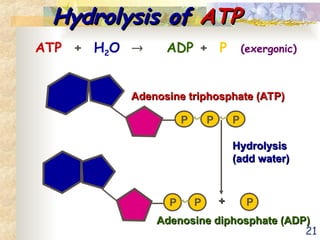
Hydrolysis of
Hydrolysis of ATP
ATP
ATP + H2O  ADP + P (exergonic)
Hydrolysis
Hydrolysis
(add water)
(add water)
P P P
Adenosine triphosphate (ATP)
P P P
+
+
Adenosine diphosphate (ADP)
22
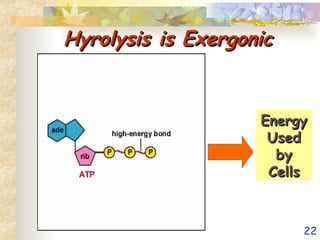
Hyrolysis is Exergonic
Energy
Energy
Used
Used
by
by
Cells
Cells
23
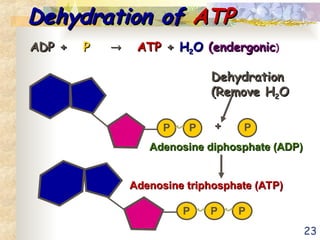
Dehydration of
Dehydration of ATP
ATP
ADP +
ADP + P
P 
 ATP
ATP +
+ H
H2
2O
O (endergonic
(endergonic)
P P P
Adenosine triphosphate (ATP)
P P P
+
+
Adenosine diphosphate (ADP)
Dehydration
Dehydration
(Remove H
(Remove H2
2O
O
24
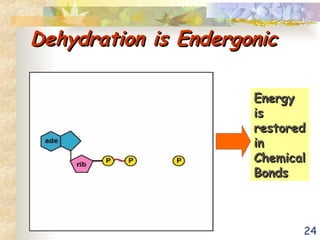
Dehydration is Endergonic
Energy
Energy
is
is
restored
restored
in
in
Chemical
Chemical
Bonds
Bonds

lecture note on Bioenergetics for 300 level

  • 1.
  • 2.
    2 What is Bioenergetics? Thestudy of energy energy in living living systems systems (environments) and the organisms organisms (plants and animals) that utilize them
  • 3.
    3 Energy  Required by allorganisms  May be Kinetic or Potential energy
  • 4.
    4 Kinetic Energy  Energyof Motion  Heat and light energy are examples
  • 5.
    5 Potential Energy  Energy Energyof of position position  Includes Includes energy energy stored in stored in chemical chemical bonds bonds
  • 6.
  • 7.
    7 Endergonic Reactions  Chemicalreaction Chemical reaction that requires a net input of energy energy.  Photosynthesis Photosynthesis 6CO2 + 6H2O  C6H12O6 + 6O2 SUN photons photons Light Energy (glucose) (glucose)
  • 8.
    8 Exergonic Reactions  Chemicalreactions Chemical reactions that releases energy releases energy  Cellular Respiration C6H12O6 + 6O2  6CO2 + 6H2O+ ATP (glucose) (glucose) Energy Energy
  • 9.
  • 10.
    10 What is Metabolism? The sum total sum total of the chemical chemical activities activities of all cells cells.
  • 11.
    11 Two Types ofMetabolism  Anabolic Anabolic Pathways Pathways  Catabolic Catabolic Pathways Pathways
  • 12.
    12 Anabolic Pathway Anabolic Pathway Metabolic reactions, Metabolic reactions, which consume energy consume energy (endergonic), (endergonic), to build build complicated molecules from simpler compounds.  Photosynthesis Photosynthesis 6CO2 + 6H2O  C6H12O6 + 6O2 SUN light light energy energy (glucose) (glucose)
  • 13.
    13 Catabolic Pathway Catabolic Pathway Metabolic reactions Metabolic reactions which release release energy energy (exergonic) (exergonic) by breaking breaking down down complex molecules in simpler compounds  Cellular Respiration Cellular Respiration C6H12O6 + 6O2  6CO2 + 6H2O + ATP (glucose) (glucose) energy
  • 14.
    14 Cellular Energy - CellularEnergy - ATP ATP Copyright Cmassengale
  • 15.
    15 ATP ATP  Components: Components: 1. adenine:nitrogenous base 1. adenine: nitrogenous base 2. ribose: 2. ribose: five carbon sugar five carbon sugar 3.phosphate group: chain of 3 3.phosphate group: chain of 3 ribose ribose adenine adenine P P P phosphate group phosphate group
  • 16.
    16 Adenosine Triphosphate Adenosine Triphosphate Three Three phosphate phosphate groups- groups-(two (two with high with high energy bonds energy bonds  Last phosphate Last phosphate group (PO group (PO4 4) ) contains the contains the MOST energy MOST energy
  • 17.
    17 Breaking the Bondsof ATP Breaking the Bonds of ATP  Process is called phosphorylation phosphorylation  Occurs continually in cells  Enzyme ATP-ase ATP-ase can weaken & break last PO last PO4 4 bond bond releasing energy & free PO4
  • 18.
    18 How does ATPwork ? How does ATP work ?  Organisms use enzymes enzymes to break down energy-rich energy-rich glucose glucose to release its potential energy  This energy is trapped and stored in the form of adenosine triphosphate(ATP) adenosine triphosphate(ATP)
  • 19.
    19 How Much ATPDo Cells Use? How Much ATP Do Cells Use?  It is estimated that each cell each cell will generate and consume approximately 10,000,000 10,000,000 molecules of molecules of ATP ATP per second per second
  • 20.
    20 Coupled Reaction -ATP Coupled Reaction - ATP  The exergonic exergonic hydrolysis hydrolysis of ATP ATP is coupled with the endergonic endergonic dehydration dehydration process process by transferring transferring a phosphate group phosphate group to another molecule. H H2 2O O H H2 2O O
  • 21.
    21 Hydrolysis of Hydrolysis ofATP ATP ATP + H2O  ADP + P (exergonic) Hydrolysis Hydrolysis (add water) (add water) P P P Adenosine triphosphate (ATP) Adenosine triphosphate (ATP) P P P + + Adenosine diphosphate (ADP) Adenosine diphosphate (ADP)
  • 22.
    22 Hyrolysis is Exergonic Hyrolysisis Exergonic Energy Energy Used Used by by Cells Cells
  • 23.
    23 Dehydration of Dehydration ofATP ATP ADP + ADP + P P   ATP ATP + + H H2 2O O (endergonic (endergonic) P P P Adenosine triphosphate (ATP) Adenosine triphosphate (ATP) P P P + + Adenosine diphosphate (ADP) Adenosine diphosphate (ADP) Dehydration Dehydration (Remove H (Remove H2 2O O
  • 24.
    24 Dehydration is Endergonic Dehydrationis Endergonic Energy Energy is is restored restored in in Chemical Chemical Bonds Bonds