PEPTIC ULCER
BY
CHAITHRAAMIN B
1ST M.PHARM
DEPT OF PHARMACOLOGY
1
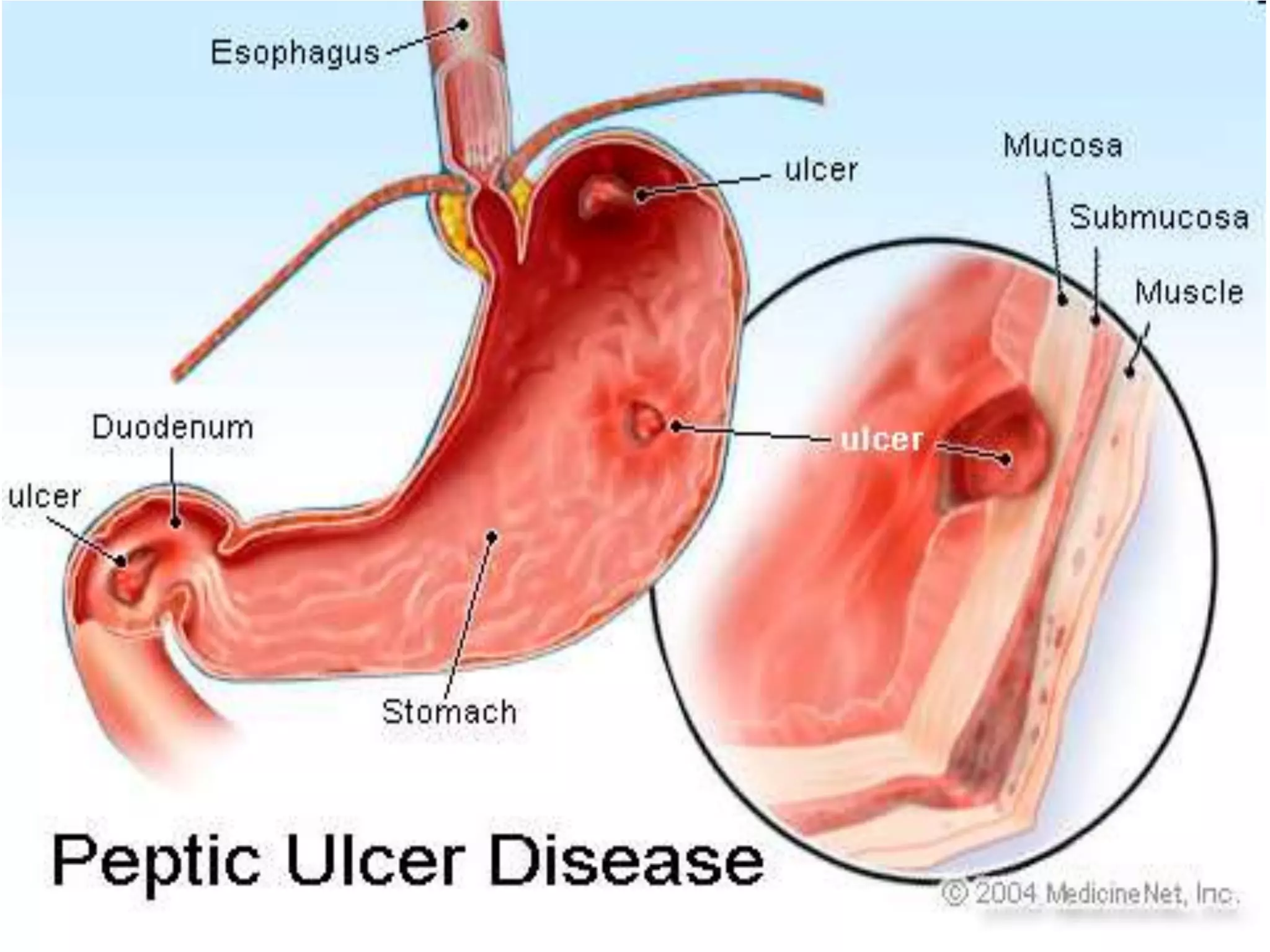
• Peptic ulcer is a lesion in the lining ( mucosa )of the
digestive tract, typically in the stomach or duodenum, caused
by the digestive action of pepsin and acid secreted by
stomach.
• Occurs in the part of the GIT. Which is exposed to gastric acid
and pepsin, i.e. the stomach and duodenum.
INTRODUCTION
2
3
• It results probably due to an imbalance between the two
factors
• 1. Aggressive (acid , pepsin, bile and H.pylori )
• 2. Defensive ( gastric mucus and bicarbonate secretions,
PGs, innate resistance of the mucosal cells )
• In gastric ulcer generally acid secretion is normal or low.
• In duodenal ulcer acid secretion is high in half of the patients
but normal in the rest.
4
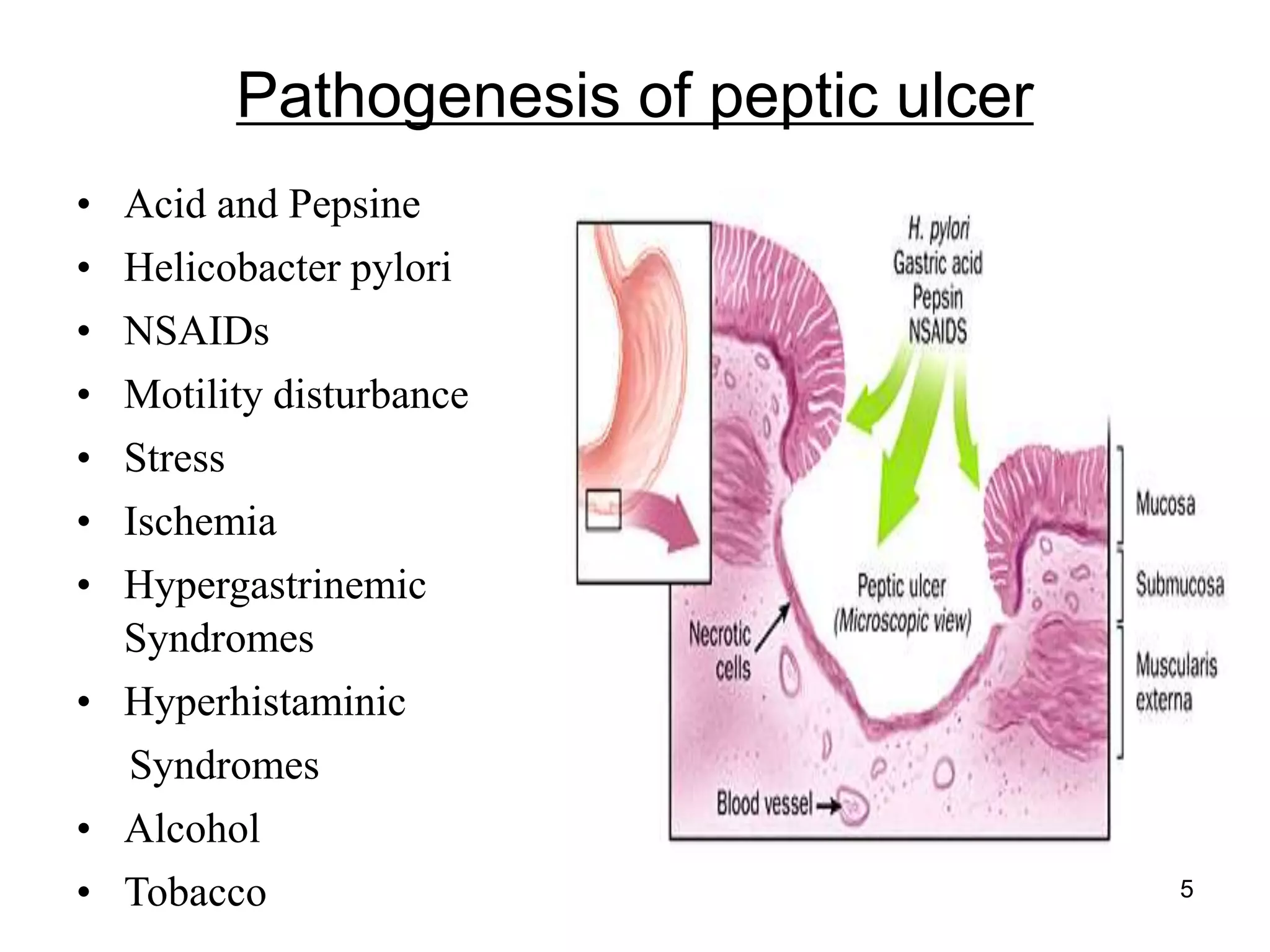
Pathogenesis of peptic ulcer
• Acid and Pepsine
• Helicobacter pylori
• NSAIDs
• Motility disturbance
• Stress
• Ischemia
• Hypergastrinemic
Syndromes
• Hyperhistaminic
Syndromes
• Alcohol
• Tobacco 5
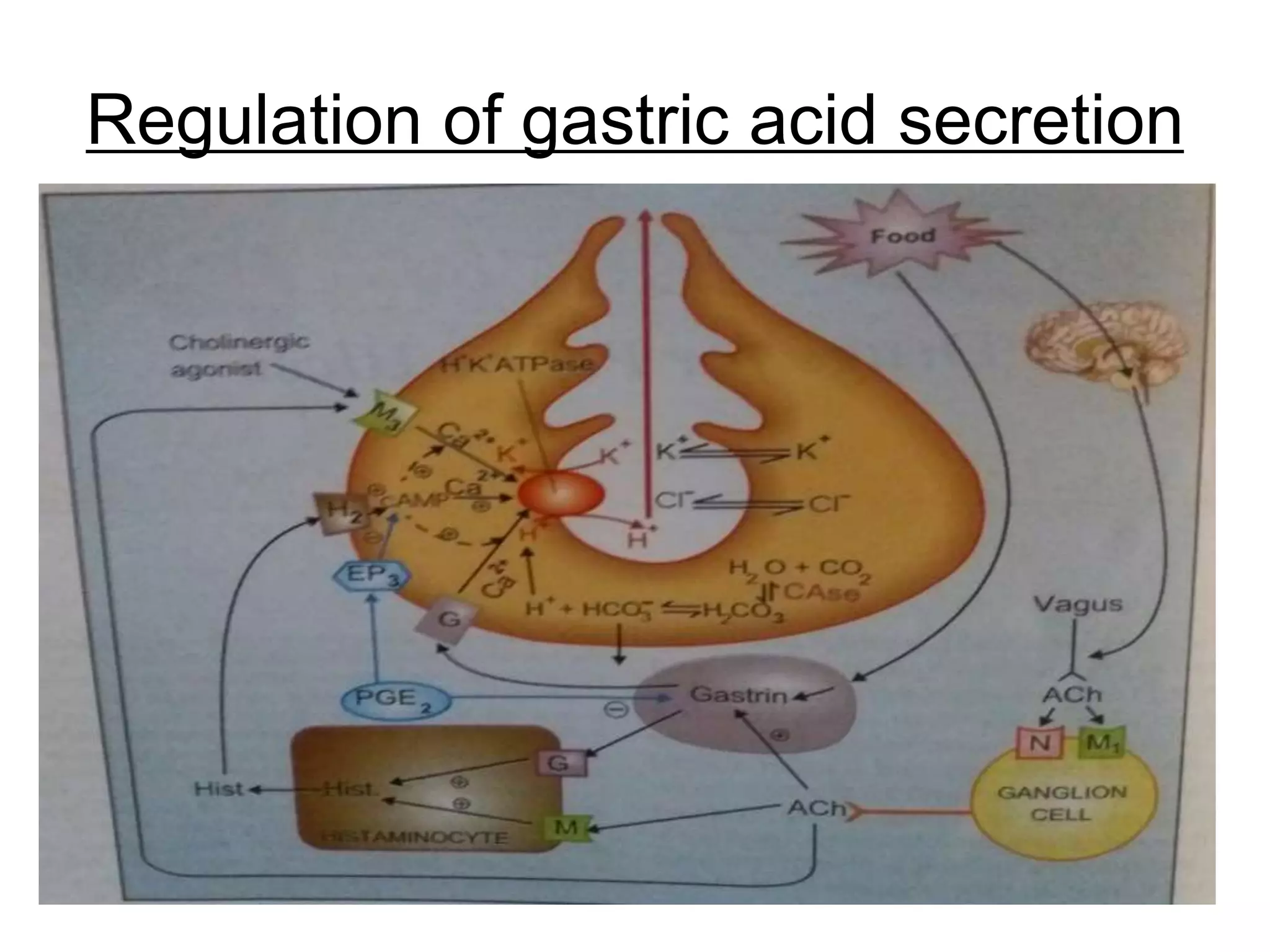
Regulation of gastric acid secretion
6
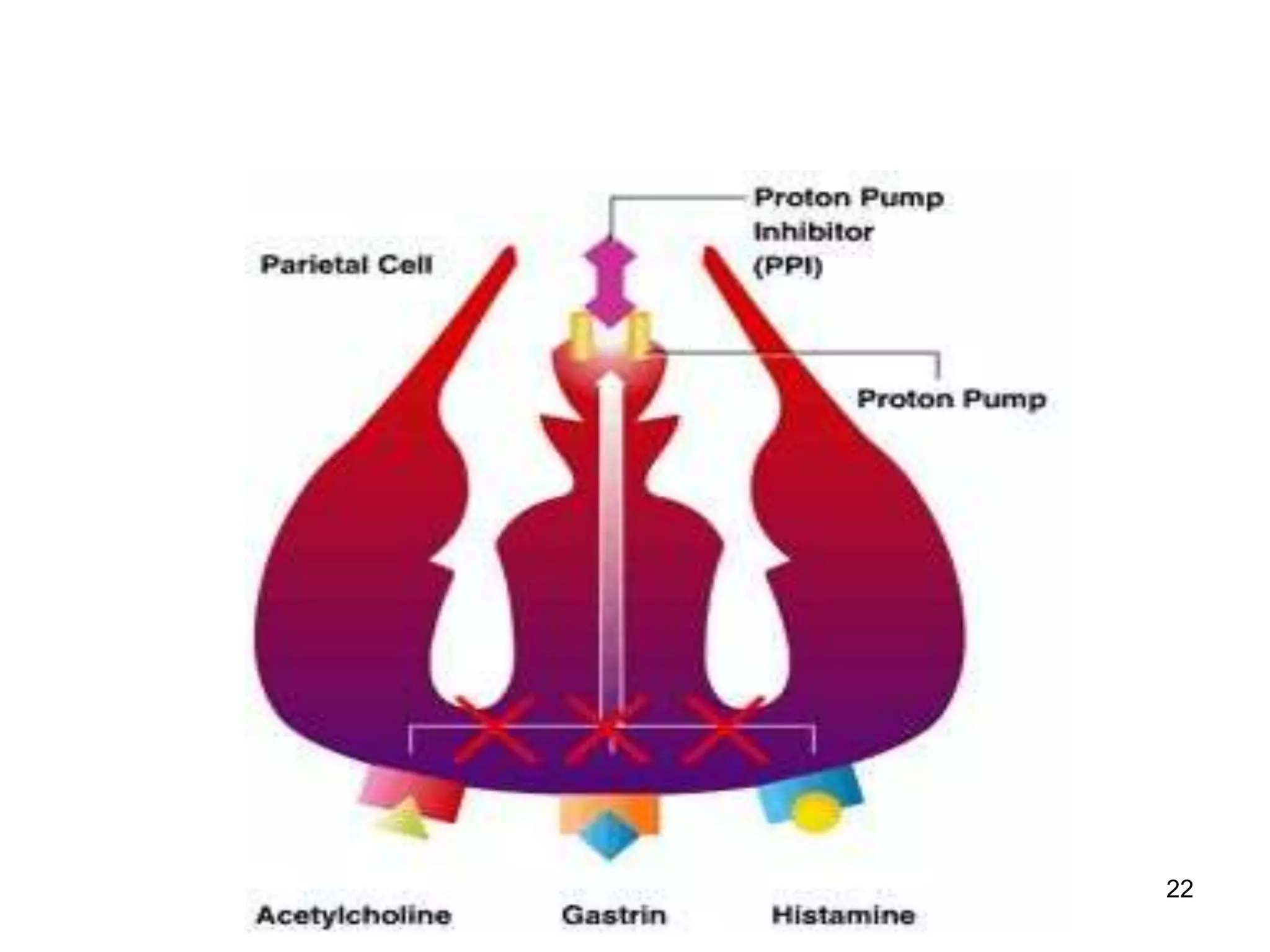
• The terminal enzymes H+K+ATPase which secretes H+ ions
in the apical canaliculi of parietal cells can be activated by
histamine, Ach and gastrin acting via their own receptors
located on the basolateral membrane of these cells.
• Histamine acting through H2 receptors, plays the dominant
role, because the other two, gastrin and Ach partly directly
and to a greater extent indirectly by releasing histamine from
‘ histaminocytes’ located in the oxyntic glands.
7
• While H2 receptors activate H+K+ATPase by generating cAMP,
muscarinic and gastrin receptors appear to function through
the phospholipase C  IP3 – DAG pathway that mobilizes
intracellular Ca+2.
• The cAMP mediated proton pump activation also involves
ca+2.
• The secretomotor response to gastrin and cholinergic agonists
is expressed fully only in the presence of cAMP generated by
H 2 activation. 8
• Histamine participates in the acid response to gastrin, ACh at
more than one levels, and H2antagonists suppress not only
histamine, but also Ach and in fact any other gastric secretion
stimulus.
• Gastrin is secreted from the antrum in response to rise in antral
pH, food constituents and vagally mediated reflexes. The
dominant muscarinic receptor mediating vagal responses is of
theM1 subtype.
9
• Vagus releases Ach in close proximity to histaminocytes and
gastrin secreting cells.
• Prostaglandins have been ascribed a ‘cytoprotective’ role in
the gastric mucosa by augmenting mucus and bicarbonate
secretion, as well as other actions.
• PGE2, produced by gastric mucosa, inhibits acid secretion by
opposing cAMP generation ( in parietal cells ) and gastrin
release ( from antral cells )
10
symptoms
• Epigastric pain after meal or during meal
• Upper dyspeptic syndrome – loss of appetite,
nausea, vomiting.
• Vomiting brings relief
• Reduced nutrition
• Loss of weight
• Oral flatulence, bloating, distension and intolerance
of fatty food
• Heartburn
• Pain radiating to the back
11
1. Reduction of gastric acid secretion
2. Neutralization of gastric acid ( antacids )
3. Ulcer protectives
4. Anti- H.Pylori drugs
APPROACHES FOR THE REDUCTION OF
PEPTIC ULCER
12
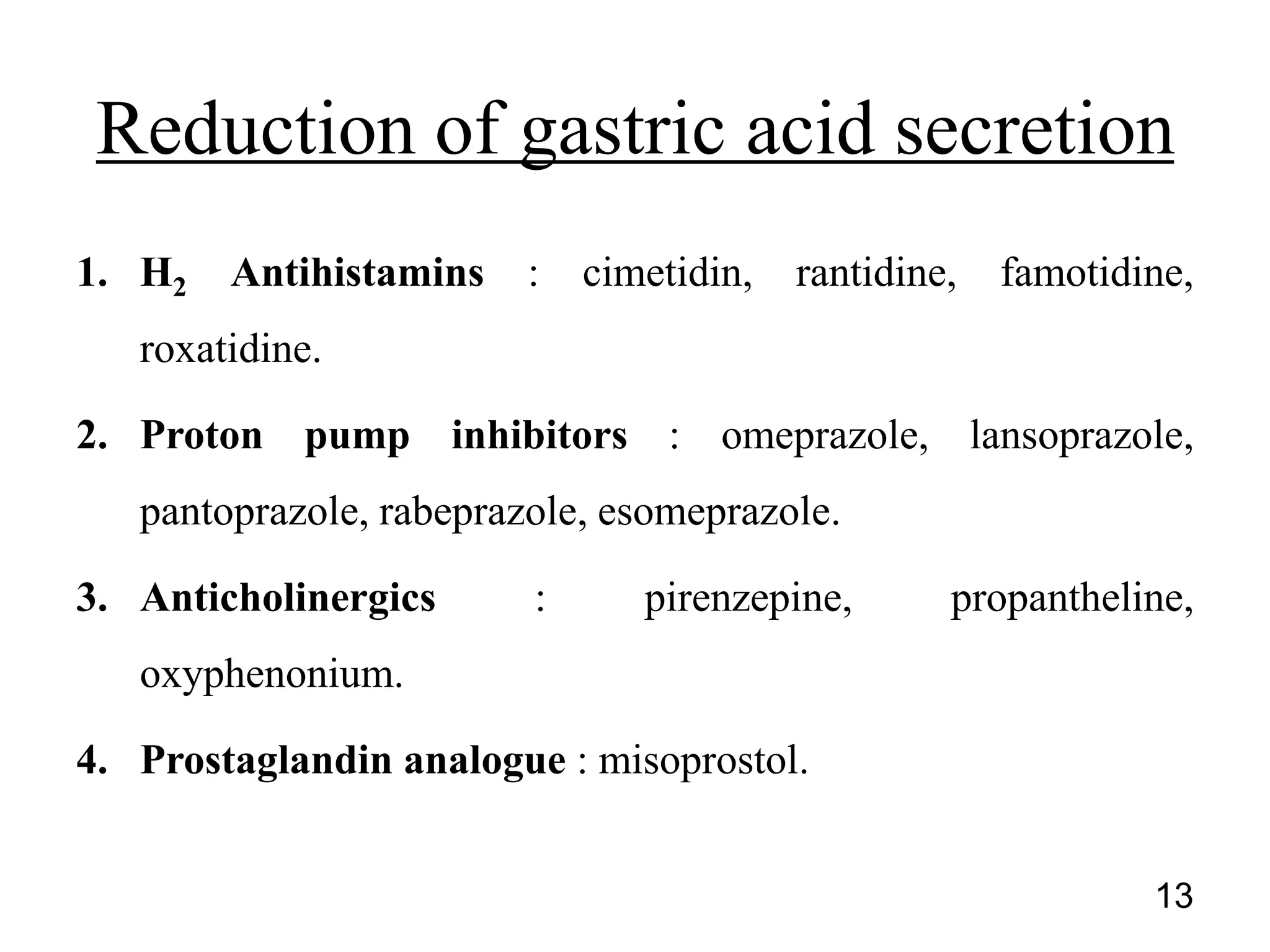
1. H2 Antihistamins : cimetidin, rantidine, famotidine,
roxatidine.
2. Proton pump inhibitors : omeprazole, lansoprazole,
pantoprazole, rabeprazole, esomeprazole.
3. Anticholinergics : pirenzepine, propantheline,
oxyphenonium.
4. Prostaglandin analogue : misoprostol.
Reduction of gastric acid secretion
13
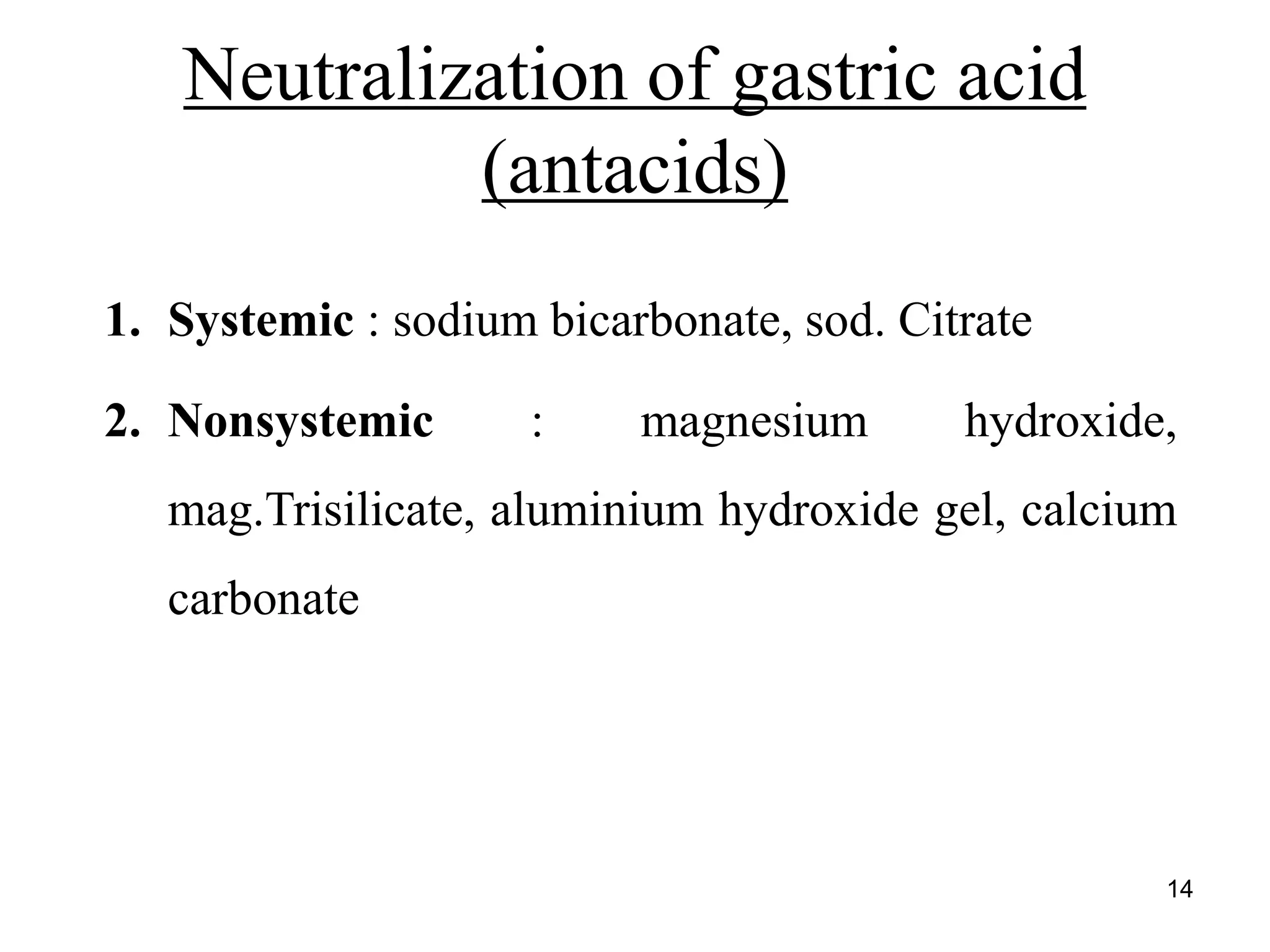
Neutralization of gastric acid
(antacids)
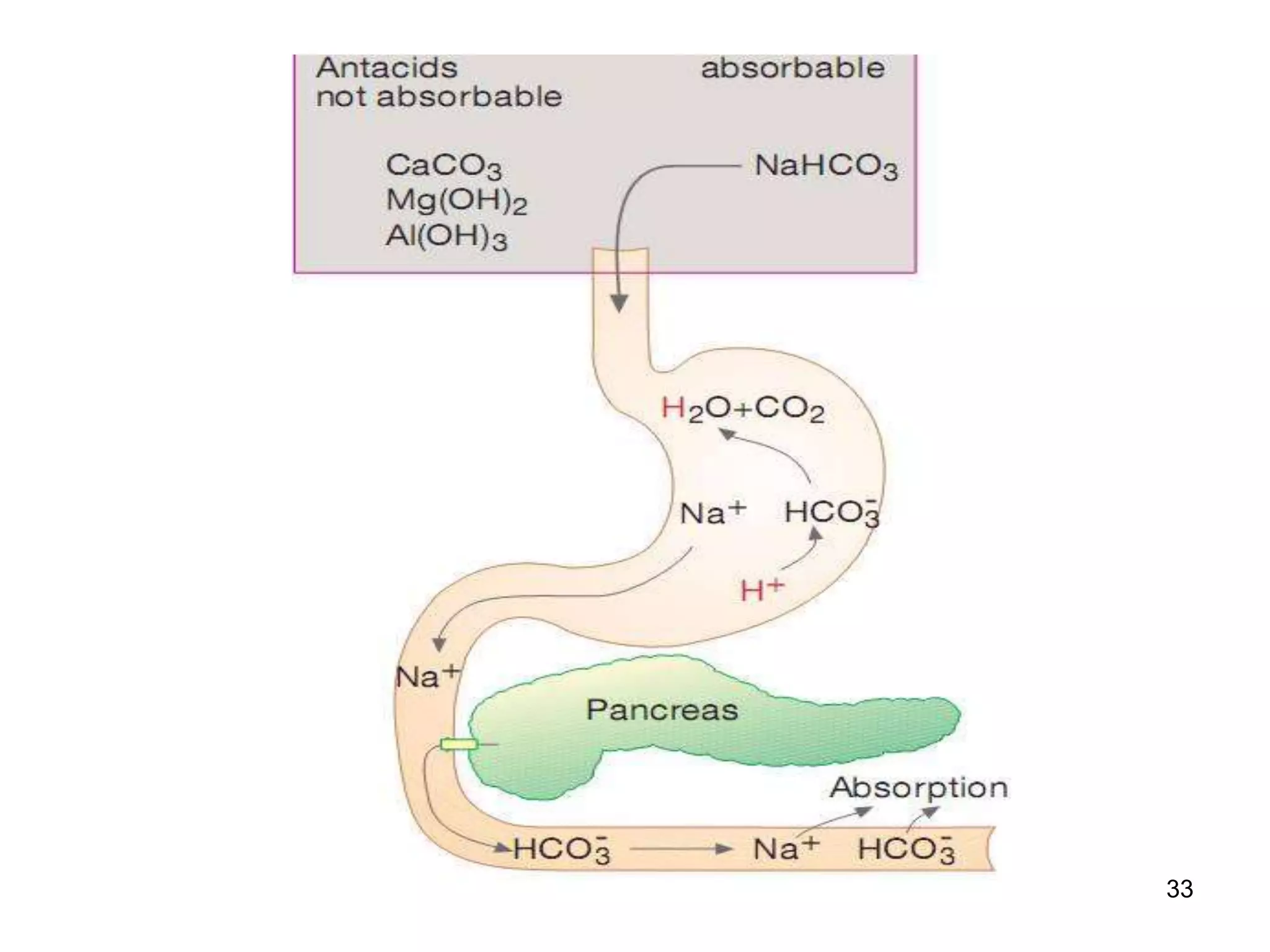
1. Systemic : sodium bicarbonate, sod. Citrate
2. Nonsystemic : magnesium hydroxide,
mag.Trisilicate, aluminium hydroxide gel, calcium
carbonate
14
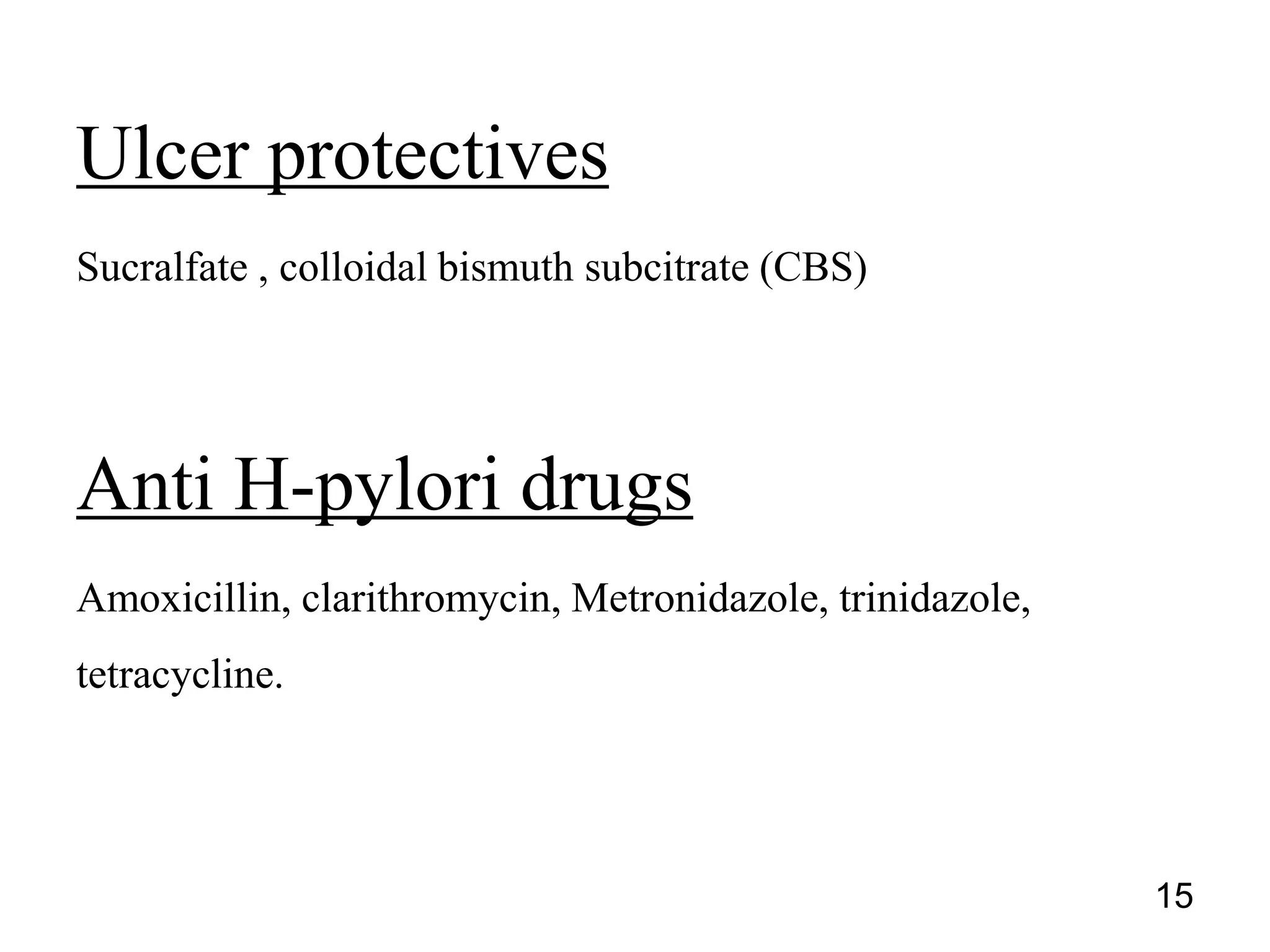
Ulcer protectives
Sucralfate , colloidal bismuth subcitrate (CBS)
Anti H-pylori drugs
Amoxicillin, clarithromycin, Metronidazole, trinidazole,
tetracycline.
15
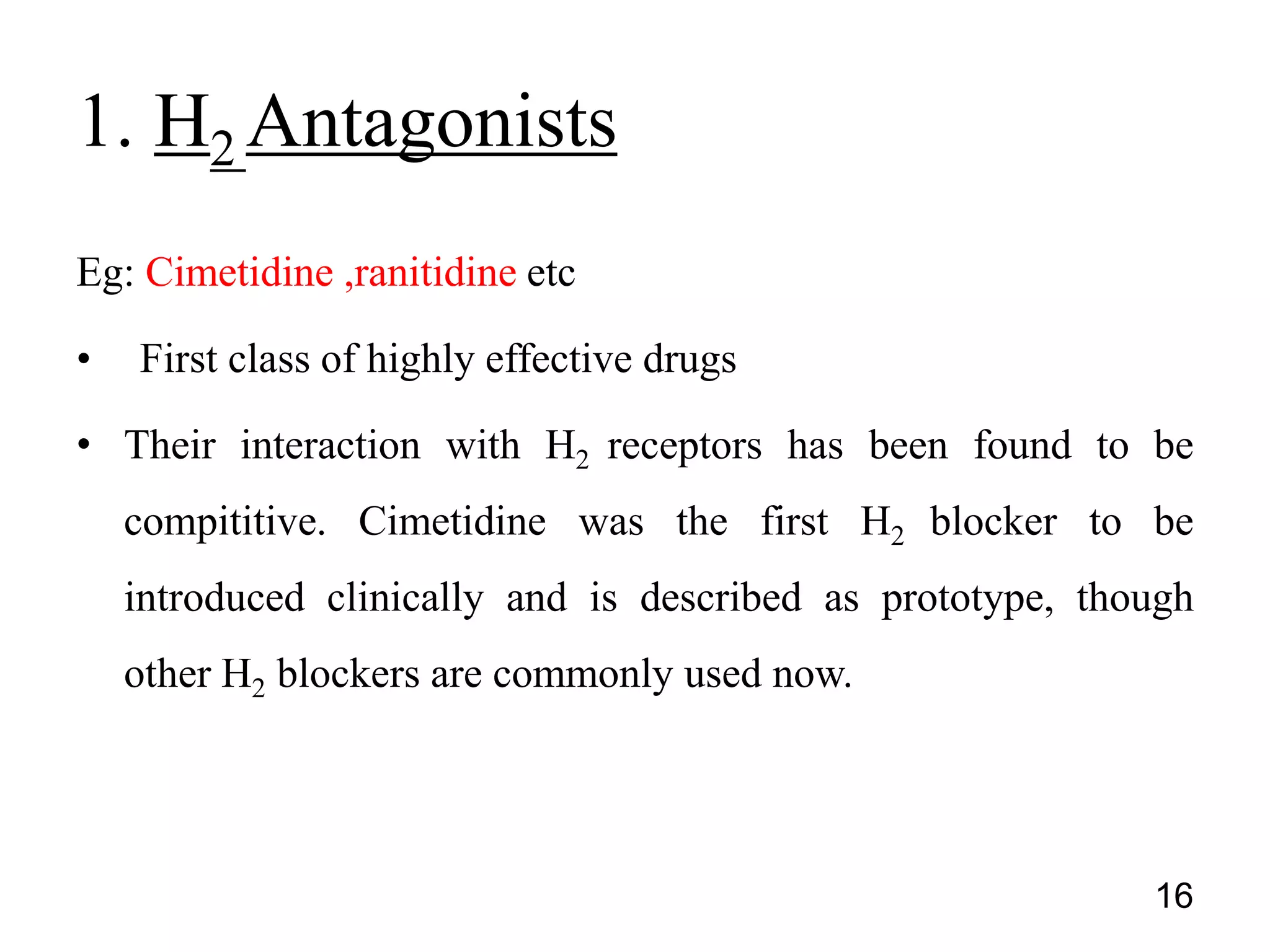
Eg: Cimetidine ,ranitidine etc
• First class of highly effective drugs
• Their interaction with H2 receptors has been found to be
compititive. Cimetidine was the first H2 blocker to be
introduced clinically and is described as prototype, though
other H2 blockers are commonly used now.
1. H2 Antagonists
16
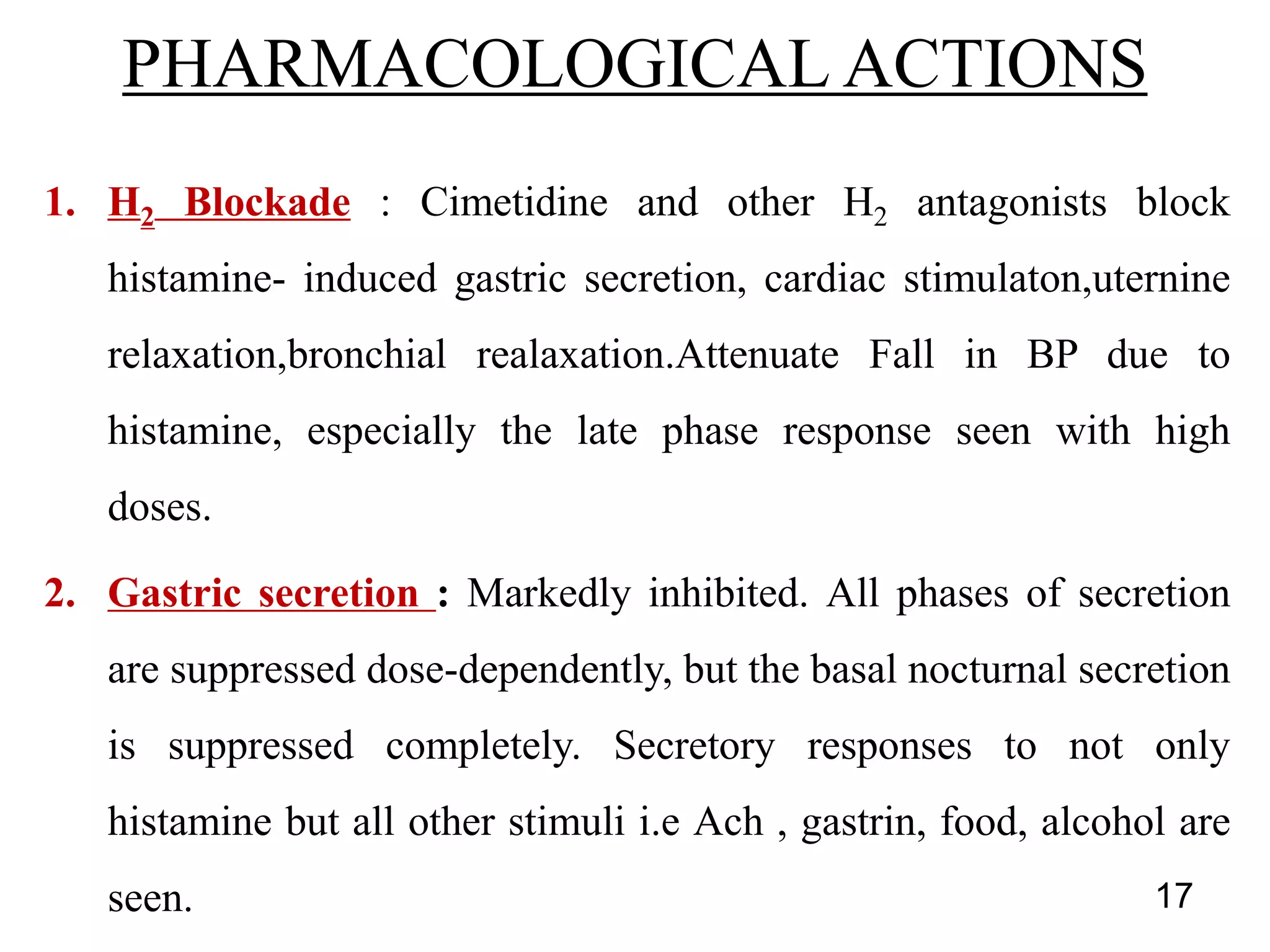
1. H2 Blockade : Cimetidine and other H2 antagonists block
histamine- induced gastric secretion, cardiac stimulaton,uternine
relaxation,bronchial realaxation.Attenuate Fall in BP due to
histamine, especially the late phase response seen with high
doses.
2. Gastric secretion : Markedly inhibited. All phases of secretion
are suppressed dose-dependently, but the basal nocturnal secretion
is suppressed completely. Secretory responses to not only
histamine but all other stimuli i.e Ach , gastrin, food, alcohol are
seen.
PHARMACOLOGICAL ACTIONS
17
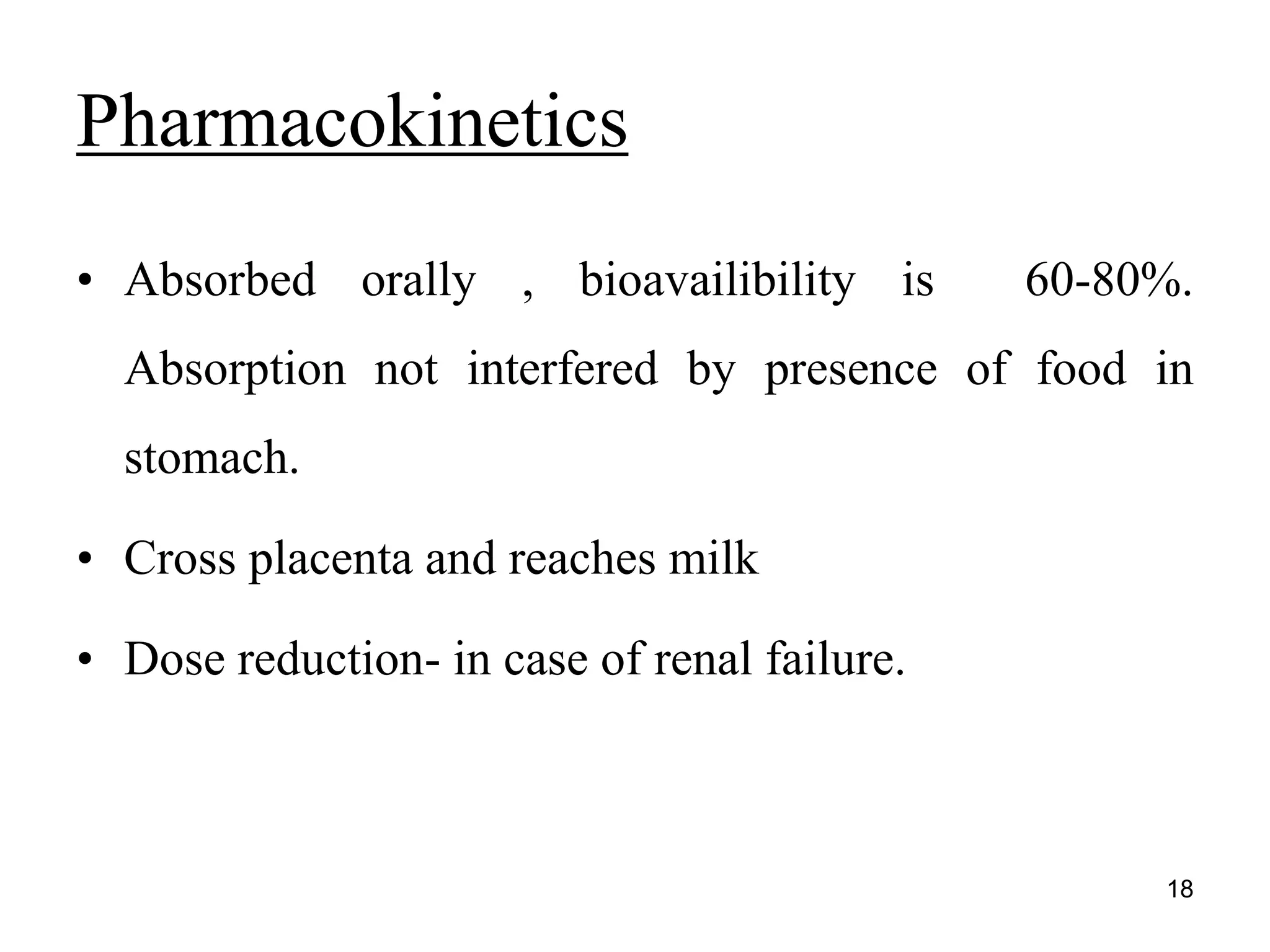
• Absorbed orally , bioavailibility is 60-80%.
Absorption not interfered by presence of food in
stomach.
• Cross placenta and reaches milk
• Dose reduction- in case of renal failure.
Pharmacokinetics
18
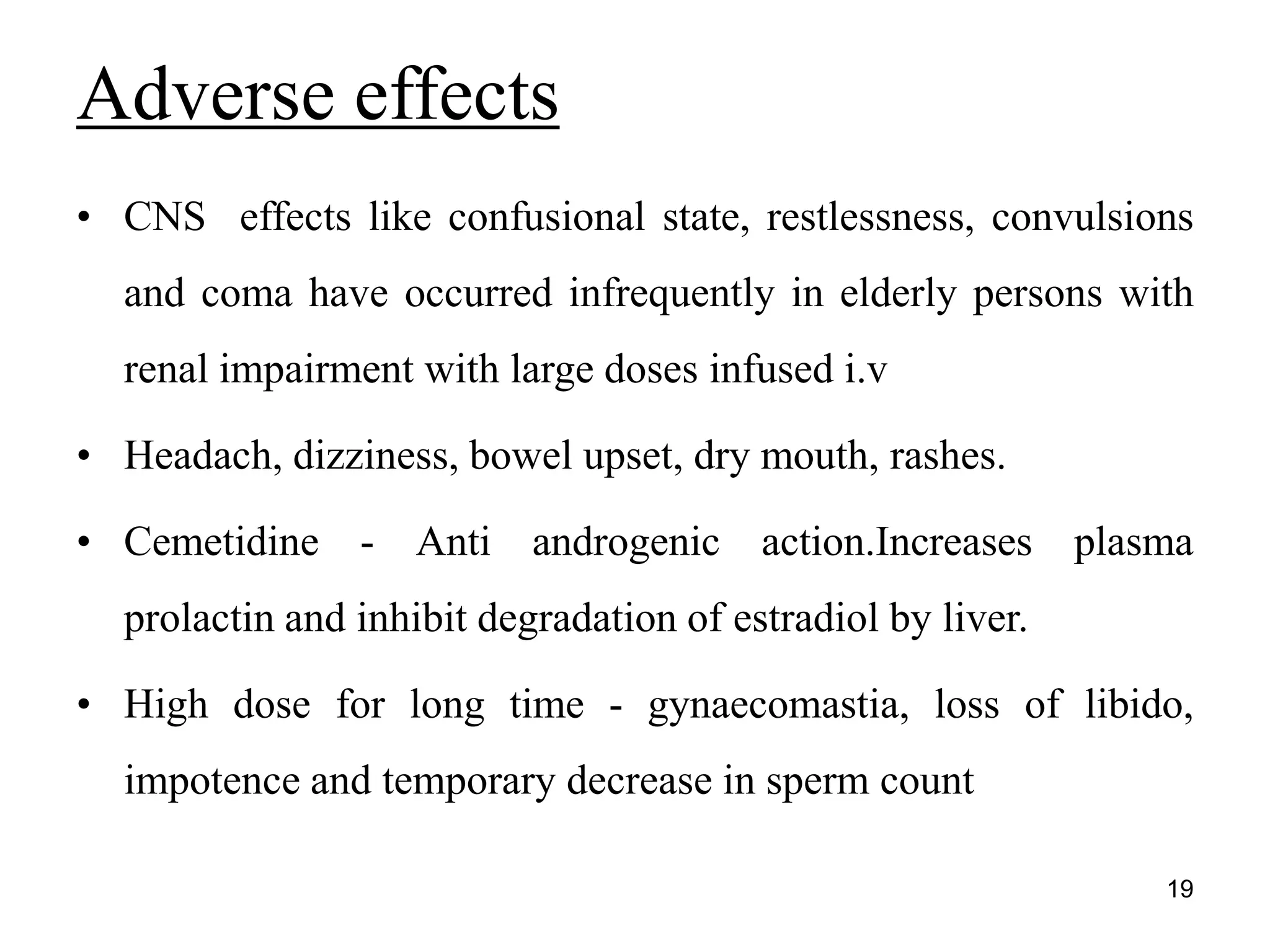
• CNS effects like confusional state, restlessness, convulsions
and coma have occurred infrequently in elderly persons with
renal impairment with large doses infused i.v
• Headach, dizziness, bowel upset, dry mouth, rashes.
• Cemetidine - Anti androgenic action.Increases plasma
prolactin and inhibit degradation of estradiol by liver.
• High dose for long time - gynaecomastia, loss of libido,
impotence and temporary decrease in sperm count
Adverse effects
19
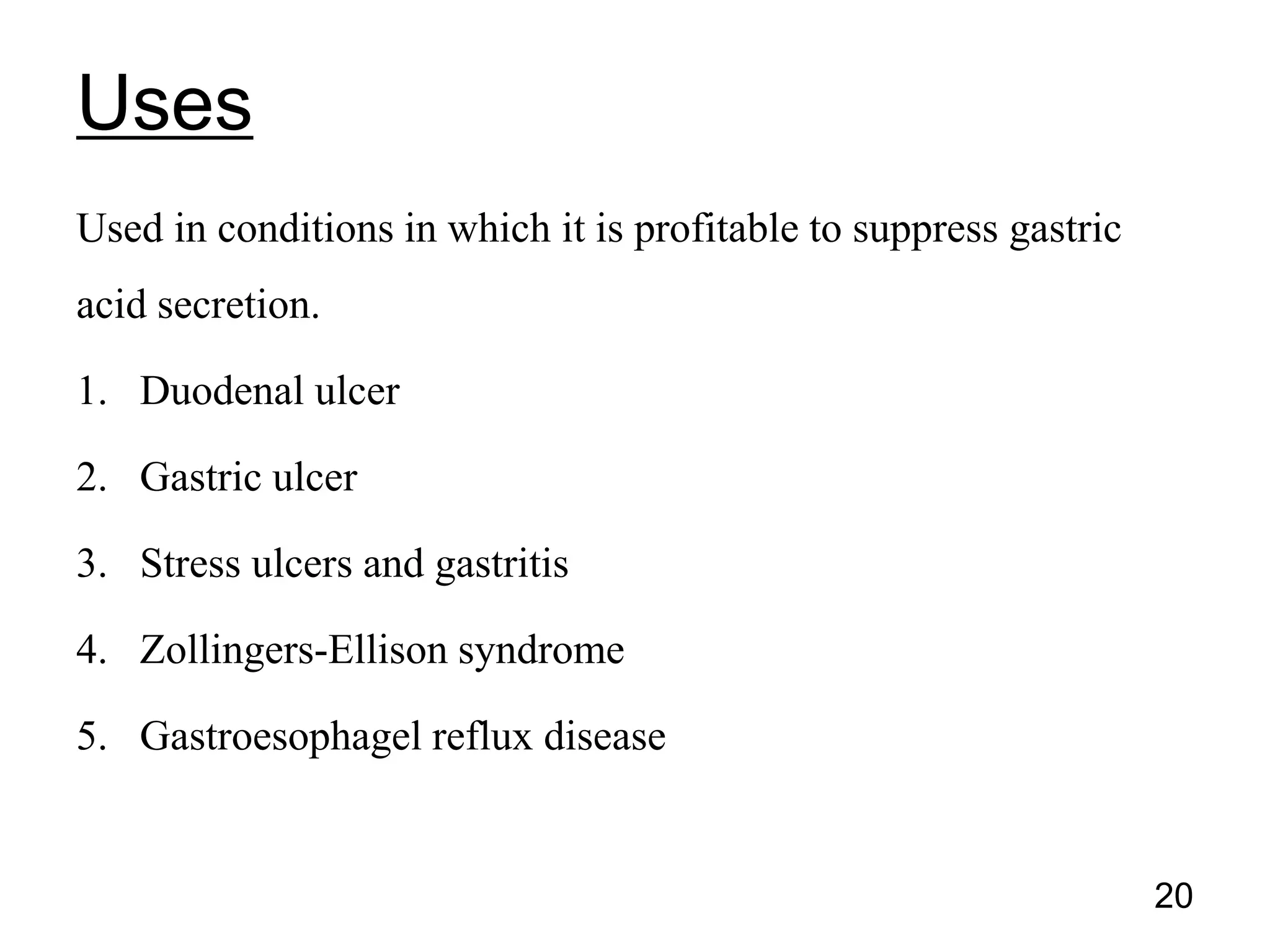
Used in conditions in which it is profitable to suppress gastric
acid secretion.
1. Duodenal ulcer
2. Gastric ulcer
3. Stress ulcers and gastritis
4. Zollingers-Ellison syndrome
5. Gastroesophagel reflux disease
Uses
20
• These are the most effective drug, both for symptomatic relief
as well as for healing of easophagal lesions. Gastric pH is
maintained for 18 hours a day.
• This level of acid suppression can only be achieved by PPIs.
Therefore these are the drug of choice for all stages of GERD
patients. Rapid relief and 80% lesion heal in 4-8 weeks.
2.PROTON PUMP INHIBITORS
21
22
• It is the member of substituted benzimidazoles which inhibits
final step in gastric acid secretion and overtaken by H2
blockers for acid- peptic disorders. Powerful inhibitor of
gastric acid can totally abolish HCL secretion.
• Omeprazole is inactive at neutral pH, but at pH<5 rearranges
to 2 charged cationic forms (sulphanic acid and sulphenamide
configurations )
Eg: omeprazole
23
• That react covalently with SH groups of H+K+ATPase enzyme
and inactivate it irreversibly , especially when two molecules
of omeprazole react with one molecule of the enzyme.
• After diffusing into parietal cell from blood, it get concentrated
in the acidic pH of the canaliculi because the charged forms
generated there are unable to diffuse back.
24
• Moreover , it gets tightly bound to the enzyme. These features
and the specific delocalization of H+K+ATPase to the apical
membrane of the parietal cells confer high degree of selectivity
of action to omeprazole.
• Acid secretion resumes only when new H+K+ATPase
molecules are synthesized.
25
• The oral absorption is about 50% because of instability at
acidic pH. Bioavailibity of PPIs can be reduced by food.
Should be taken in empty stomach . Inhibition of HCL
secretion occurs within 1 hr reaches maximum at 2 hr.
• All PPIs produce 80-98% suppression of 24 hour acid
output with conventional doses.
• Because of long lasting acid suppression , hypergastrinemia
has been observed. This found to increase proliferation of
parietal cells in rats but not in humans.
Pharmacokinetics
26
1. Peptic ulcer : faster healing , omeprazole 20 mg OD is
equally or more effective than H2 blockers.
2. GERD disease: inhibition of gastric acid resulting in rapid
symptoms relief and is more effective than H2blockers in
promoting healing of esophageal lesions . Omeprazole 20-60
mg daily twice.
3. Bleeding peptic ulcer : PPI therapy profoundly inhibit
bleeding.
Uses of PPIs
27
• Abdominal pain
• Headache, dizziness,rashesh.
• Hepatic dysfunction
• Muscle and join pain
• On prolonged use atrophic gastritis
Drug interaction
• Inhibits oxidation of certain drugs like Diazepam, phenytoin.
• Clarithromycin inhibits omeprazole metabolism and increases
its plasma concentration.
Adverse effects
28
• PGE2 and PGI2 are in the gastric mucosa and appear to serve a
protective role by inhibiting acid secretion and promoting
mucous secretion. In addition , PGs inhibit gastrin production ,
increase mucosal blood flow and probably have an ill-defined
cytoprotective action.
• Natural PGs have very short t ½ . Number of stable PG
analogues which exert action for hours rather than minutes
have developed for use in peptic ulcer.
29
3.Prostaglandin analogue
• Misoprostol is commercially available drug. It inhibits acid
output dose dependently. However, reduction in 24 hrs acid
production is less than H2 blockers because of shorter duration
action.
• Problems occurred by the usage of misoprostol are diarrhea,
abdominal crams, uterine bleeding, abortion.
30
• These are the basic substances which neutralize gastric acid
and raise pH of gastric contents. Peptic activity is reduced if
the pH rises above 4, because pepsin is secreted as a complex
with an inhibitory terminal moiety that dissociates below pH 5
. Optimum peptic activity is exerted between pH 2-4 .
• Antacids do no decrease acid production; rather, agents that
rise antral pH to >4 evoke reflex gastrin release more acid
is secreted especially in patients with hyperacidity; “ acid
rebound ” and gastric motility is increased.
31
4.ANTACIDS
Eg: SODIUM BICARBONATE :
• It is water soluble , acts instantaneously, but the duration of
action is short. It is a potent neutralizer, pH may rise above 7.
• However it has several demerits
a) Absorbed systemically , large doses will induce alkalosis.
b) Produces carbon dioxide in stomach which creates
discomfort, risk of ulcer perforation.
c) Acid rebound
32
a) SYSTEMIC ANTACIDS
33
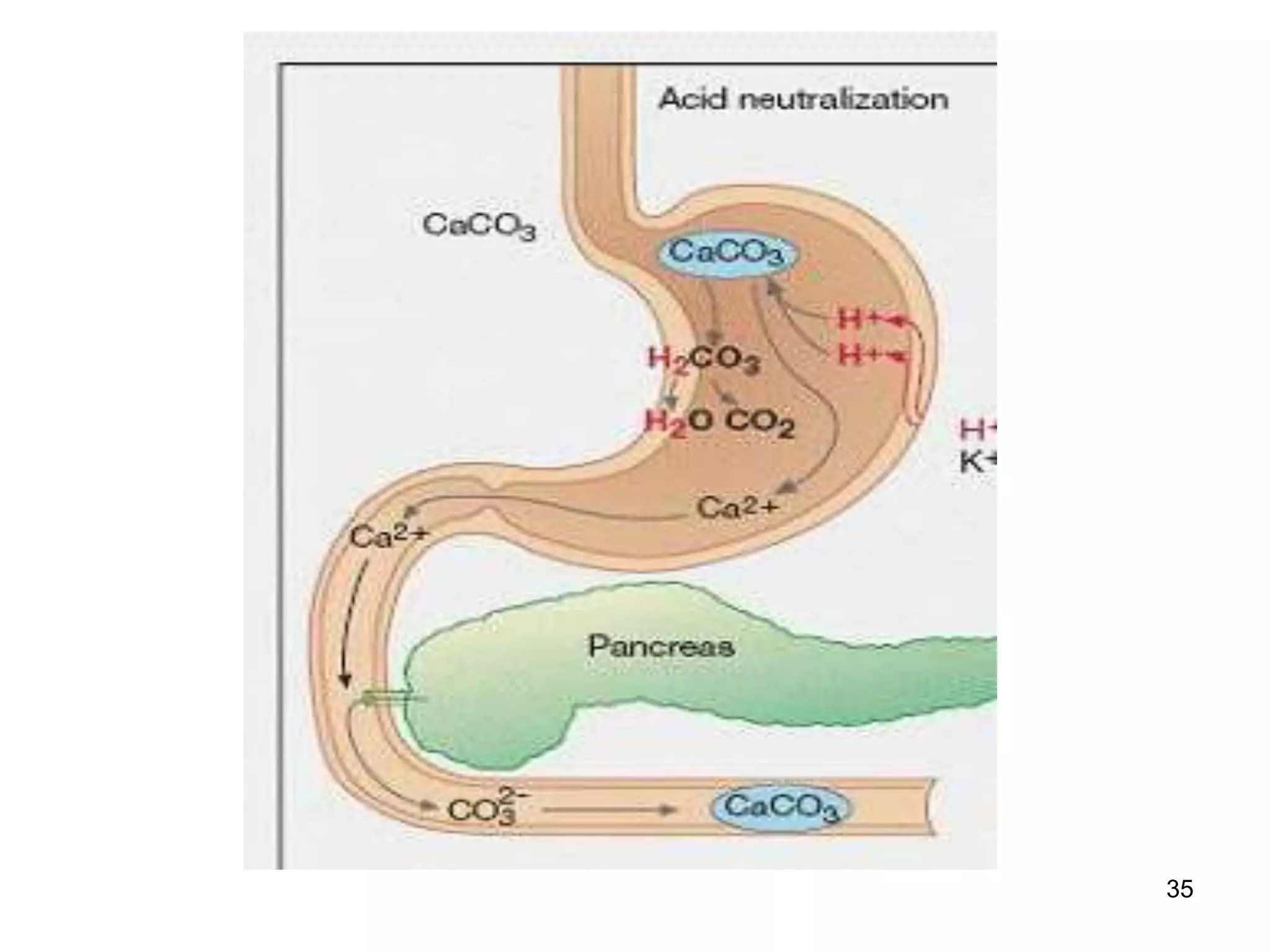
• These are insoluble and poorly absorbed basic compounds ,
react in stomach to form the corresponding chloride salt. The
chloride salt again reacts with the intestinal bicarbonate so that
HCO3 is not spared for absorption so that no acid base
disturbance occurs. However small amount that are absorbed
have the same alkalinizing effect as NaHCO3.
34
b)Nonsystemic antacids
35
• Has low water solubility ; its aqueous suspension has low
concentration of OH- ions and thus low alkalinity. However it
reacts with HCL promptly and is an efficacious antacid.
• MILK OF MAGNESIA - 0.4 g / 5 ml suspension
36
Eg: Mag. hydroxide
By raising gastric pH and by forming complexes the non-
absorbable antacids decrease the absorption of many drugs
especially tetracycline, H2 blockers, diazepam,
indomethacin,isoniazid etc.
Drug interactions
37
• Gastroesophageal reflix: antacids afford faster symptom relief
than drugs which inhibit acid secretion, but donot provide
sustained benefit.
No longer used for healing peptic ulcer because they are needed
in large and frequent doses, are inconvenient can cause acid
rebound and bowel upset, and have poor patient acceptability.
38
Uses of antacids
Eg: SUCRALFATE :
• It is a basic aluminum salt of sulfated sucrose. It strongly
adhere to ulcer base , especially duodenal ulcer. Precipitates
surface proteins at ulcer base and acts as a physical barrier
preventing acid, pepsin , bile from coming in contact with
ulcer base.
• Dose: ulcer healing dose is 1g , taken 1 hr before 3 major
meals and at bed time for 4-8 weeks.
39
5) Ulcer protectives
6) Anti H.pylori drugs
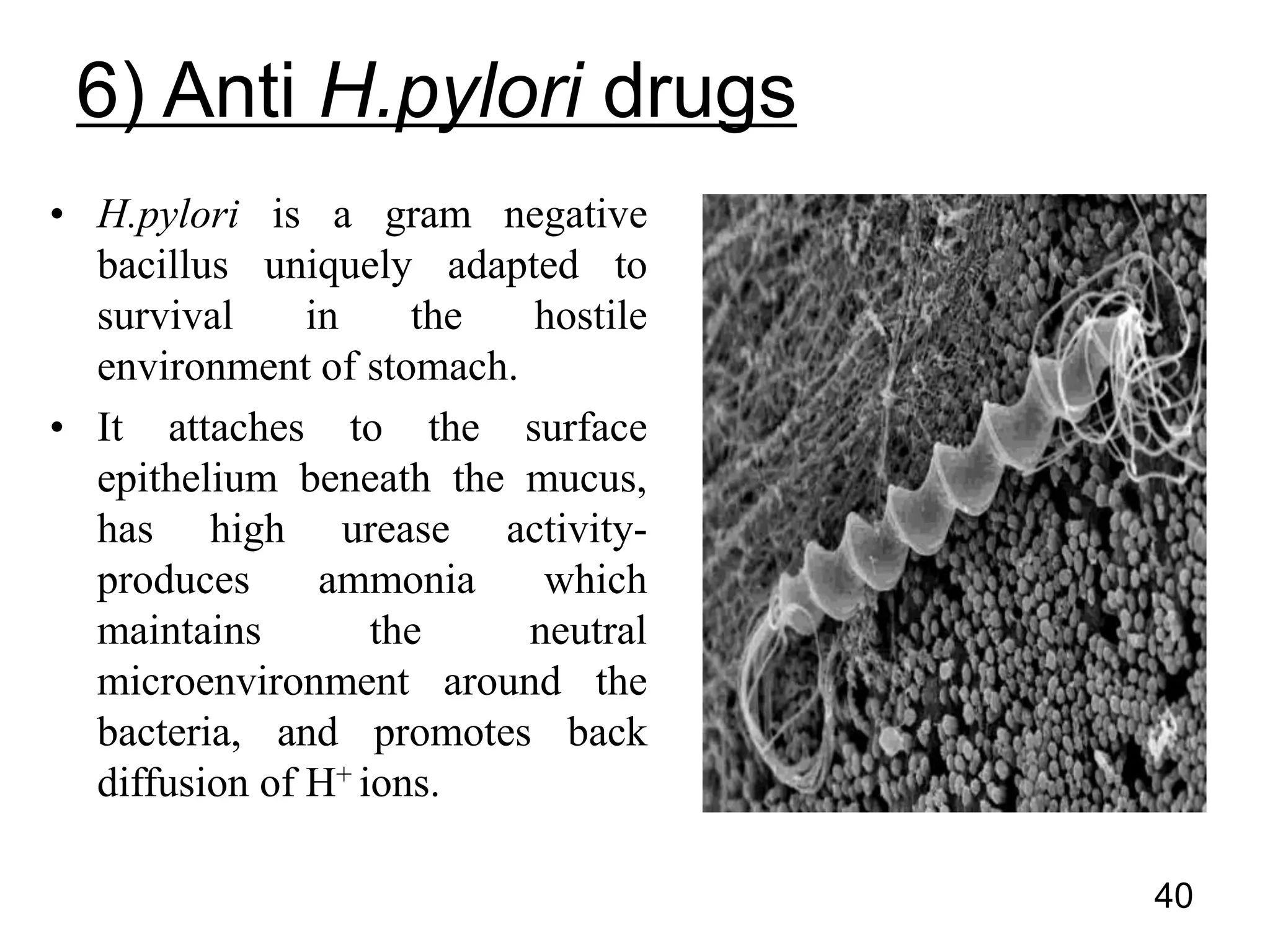
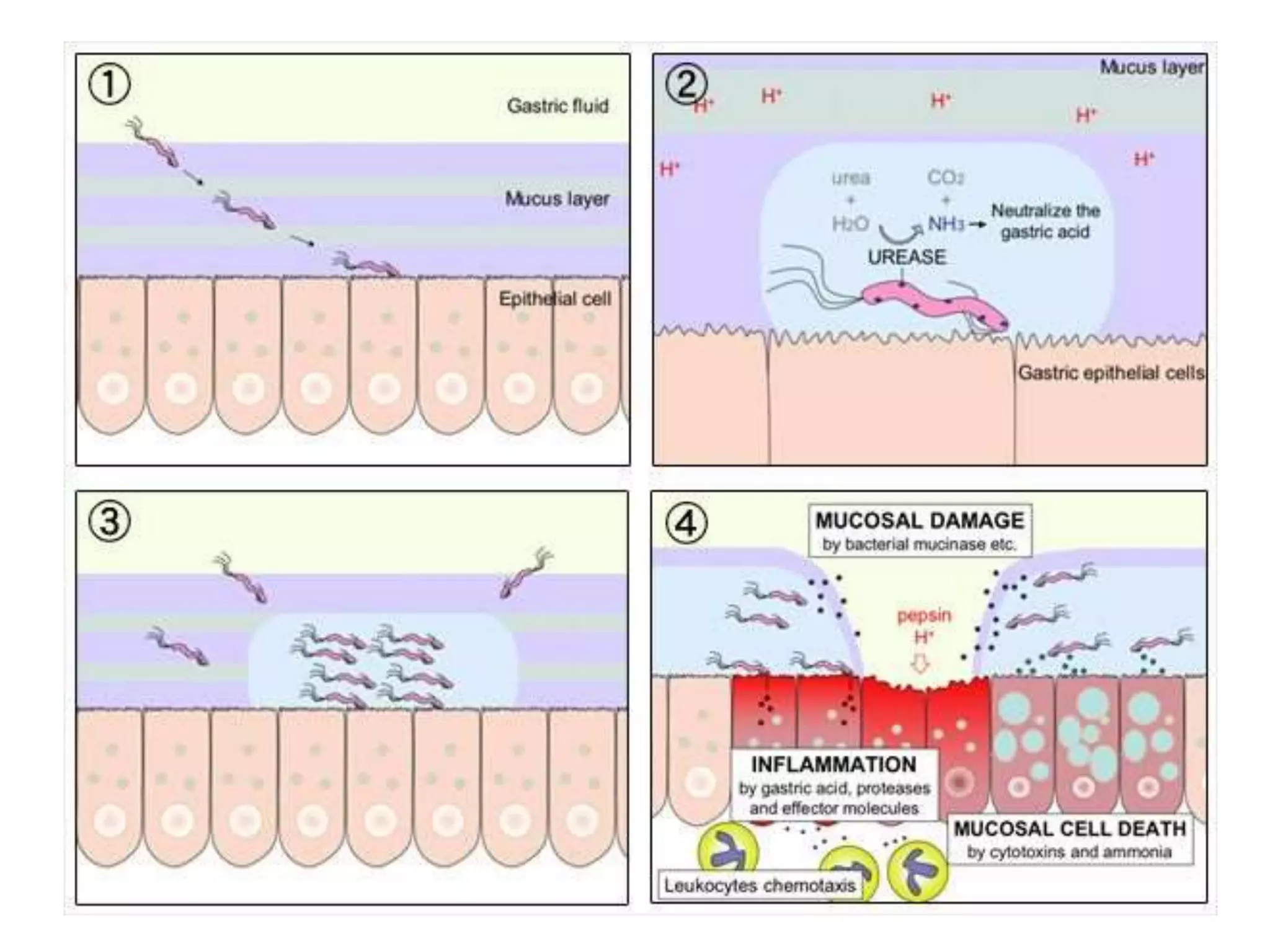
• H.pylori is a gram negative
bacillus uniquely adapted to
survival in the hostile
environment of stomach.
• It attaches to the surface
epithelium beneath the mucus,
has high urease activity-
produces ammonia which
maintains the neutral
microenvironment around the
bacteria, and promotes back
diffusion of H+ ions.
40
41
• Eradication of H.pylori concurrently with H2 blocker/ PPI
therapy of peptic ulcer has been associated with faster healing
and lower relapse rate. Antimicrobials that have been found
clinically effective against H.pylori are: amoxicillin,
clarithromycin, tetracycline and metronidazole.
42
• Bismuth is active against H.pylori and resistance does not
develop to it.
• Omeprazole monotherapy reduces the population of H.pylori
in gastric antrum, probably by altering the acid environment as
well as direct inhibitory effect.
• Rise in the intragastric pH enhances the anti- H.pylori action
of the antibiotics.
43
• US FDA approved regimen is : Lansoprozole 30 mg +
Amoxicillin 100 mg + Clarithromycin 500 mg all given twice
daily for 2 weeks.
• A 4 drug regimen ( PPI + Tetracycline + CBS + Metronidazole
) has also been advocated.
• Regimens are expensive, complex, side effects are frequent
and compliance is poor.
44
• Benefits of anti H.pylori drugs include lowering ulcer desease,
prevalence and prevention of gastric carcinoma.
• H.pylori vaccines are under development.
• Available anti H.pylori kit are PYLOMOX, LANSI KIT,
HELIBACT.
45
I. Relief of pain
II. Ulcer healing
III. Prevention of complications
IV.Prevension of relapse
46
ROLE OF DRUG IN PEPTIC ULCER
DESEASE
References
1. K.D Tripathi. Essential of medical
pharmacology. 6th ed. pg no: 627-37
2. P a d m a j a U d a y k u m a r . m e d i c a l
pharmacology. 4th ed. pg no: 359-68
3. Rang and dale's pharmacology. 6th ed.
pgno: 385-90
47
THANK
YOU 48

peptic ulcer by B chaitra amin

  • 1.
    PEPTIC ULCER BY CHAITHRAAMIN B 1STM.PHARM DEPT OF PHARMACOLOGY 1
  • 2.
    • Peptic ulceris a lesion in the lining ( mucosa )of the digestive tract, typically in the stomach or duodenum, caused by the digestive action of pepsin and acid secreted by stomach. • Occurs in the part of the GIT. Which is exposed to gastric acid and pepsin, i.e. the stomach and duodenum. INTRODUCTION 2
  • 3.
  • 4.
    • It resultsprobably due to an imbalance between the two factors • 1. Aggressive (acid , pepsin, bile and H.pylori ) • 2. Defensive ( gastric mucus and bicarbonate secretions, PGs, innate resistance of the mucosal cells ) • In gastric ulcer generally acid secretion is normal or low. • In duodenal ulcer acid secretion is high in half of the patients but normal in the rest. 4
  • 5.
    Pathogenesis of pepticulcer • Acid and Pepsine • Helicobacter pylori • NSAIDs • Motility disturbance • Stress • Ischemia • Hypergastrinemic Syndromes • Hyperhistaminic Syndromes • Alcohol • Tobacco 5
  • 6.
    Regulation of gastricacid secretion 6
  • 7.
    • The terminalenzymes H+K+ATPase which secretes H+ ions in the apical canaliculi of parietal cells can be activated by histamine, Ach and gastrin acting via their own receptors located on the basolateral membrane of these cells. • Histamine acting through H2 receptors, plays the dominant role, because the other two, gastrin and Ach partly directly and to a greater extent indirectly by releasing histamine from ‘ histaminocytes’ located in the oxyntic glands. 7
  • 8.
    • While H2receptors activate H+K+ATPase by generating cAMP, muscarinic and gastrin receptors appear to function through the phospholipase C  IP3 – DAG pathway that mobilizes intracellular Ca+2. • The cAMP mediated proton pump activation also involves ca+2. • The secretomotor response to gastrin and cholinergic agonists is expressed fully only in the presence of cAMP generated by H 2 activation. 8
  • 9.
    • Histamine participatesin the acid response to gastrin, ACh at more than one levels, and H2antagonists suppress not only histamine, but also Ach and in fact any other gastric secretion stimulus. • Gastrin is secreted from the antrum in response to rise in antral pH, food constituents and vagally mediated reflexes. The dominant muscarinic receptor mediating vagal responses is of theM1 subtype. 9
  • 10.
    • Vagus releasesAch in close proximity to histaminocytes and gastrin secreting cells. • Prostaglandins have been ascribed a ‘cytoprotective’ role in the gastric mucosa by augmenting mucus and bicarbonate secretion, as well as other actions. • PGE2, produced by gastric mucosa, inhibits acid secretion by opposing cAMP generation ( in parietal cells ) and gastrin release ( from antral cells ) 10
  • 11.
    symptoms • Epigastric painafter meal or during meal • Upper dyspeptic syndrome – loss of appetite, nausea, vomiting. • Vomiting brings relief • Reduced nutrition • Loss of weight • Oral flatulence, bloating, distension and intolerance of fatty food • Heartburn • Pain radiating to the back 11
  • 12.
    1. Reduction ofgastric acid secretion 2. Neutralization of gastric acid ( antacids ) 3. Ulcer protectives 4. Anti- H.Pylori drugs APPROACHES FOR THE REDUCTION OF PEPTIC ULCER 12
  • 13.
    1. H2 Antihistamins: cimetidin, rantidine, famotidine, roxatidine. 2. Proton pump inhibitors : omeprazole, lansoprazole, pantoprazole, rabeprazole, esomeprazole. 3. Anticholinergics : pirenzepine, propantheline, oxyphenonium. 4. Prostaglandin analogue : misoprostol. Reduction of gastric acid secretion 13
  • 14.
    Neutralization of gastricacid (antacids) 1. Systemic : sodium bicarbonate, sod. Citrate 2. Nonsystemic : magnesium hydroxide, mag.Trisilicate, aluminium hydroxide gel, calcium carbonate 14
  • 15.
    Ulcer protectives Sucralfate ,colloidal bismuth subcitrate (CBS) Anti H-pylori drugs Amoxicillin, clarithromycin, Metronidazole, trinidazole, tetracycline. 15
  • 16.
    Eg: Cimetidine ,ranitidineetc • First class of highly effective drugs • Their interaction with H2 receptors has been found to be compititive. Cimetidine was the first H2 blocker to be introduced clinically and is described as prototype, though other H2 blockers are commonly used now. 1. H2 Antagonists 16
  • 17.
    1. H2 Blockade: Cimetidine and other H2 antagonists block histamine- induced gastric secretion, cardiac stimulaton,uternine relaxation,bronchial realaxation.Attenuate Fall in BP due to histamine, especially the late phase response seen with high doses. 2. Gastric secretion : Markedly inhibited. All phases of secretion are suppressed dose-dependently, but the basal nocturnal secretion is suppressed completely. Secretory responses to not only histamine but all other stimuli i.e Ach , gastrin, food, alcohol are seen. PHARMACOLOGICAL ACTIONS 17
  • 18.
    • Absorbed orally, bioavailibility is 60-80%. Absorption not interfered by presence of food in stomach. • Cross placenta and reaches milk • Dose reduction- in case of renal failure. Pharmacokinetics 18
  • 19.
    • CNS effectslike confusional state, restlessness, convulsions and coma have occurred infrequently in elderly persons with renal impairment with large doses infused i.v • Headach, dizziness, bowel upset, dry mouth, rashes. • Cemetidine - Anti androgenic action.Increases plasma prolactin and inhibit degradation of estradiol by liver. • High dose for long time - gynaecomastia, loss of libido, impotence and temporary decrease in sperm count Adverse effects 19
  • 20.
    Used in conditionsin which it is profitable to suppress gastric acid secretion. 1. Duodenal ulcer 2. Gastric ulcer 3. Stress ulcers and gastritis 4. Zollingers-Ellison syndrome 5. Gastroesophagel reflux disease Uses 20
  • 21.
    • These arethe most effective drug, both for symptomatic relief as well as for healing of easophagal lesions. Gastric pH is maintained for 18 hours a day. • This level of acid suppression can only be achieved by PPIs. Therefore these are the drug of choice for all stages of GERD patients. Rapid relief and 80% lesion heal in 4-8 weeks. 2.PROTON PUMP INHIBITORS 21
  • 22.
  • 23.
    • It isthe member of substituted benzimidazoles which inhibits final step in gastric acid secretion and overtaken by H2 blockers for acid- peptic disorders. Powerful inhibitor of gastric acid can totally abolish HCL secretion. • Omeprazole is inactive at neutral pH, but at pH<5 rearranges to 2 charged cationic forms (sulphanic acid and sulphenamide configurations ) Eg: omeprazole 23
  • 24.
    • That reactcovalently with SH groups of H+K+ATPase enzyme and inactivate it irreversibly , especially when two molecules of omeprazole react with one molecule of the enzyme. • After diffusing into parietal cell from blood, it get concentrated in the acidic pH of the canaliculi because the charged forms generated there are unable to diffuse back. 24
  • 25.
    • Moreover ,it gets tightly bound to the enzyme. These features and the specific delocalization of H+K+ATPase to the apical membrane of the parietal cells confer high degree of selectivity of action to omeprazole. • Acid secretion resumes only when new H+K+ATPase molecules are synthesized. 25
  • 26.
    • The oralabsorption is about 50% because of instability at acidic pH. Bioavailibity of PPIs can be reduced by food. Should be taken in empty stomach . Inhibition of HCL secretion occurs within 1 hr reaches maximum at 2 hr. • All PPIs produce 80-98% suppression of 24 hour acid output with conventional doses. • Because of long lasting acid suppression , hypergastrinemia has been observed. This found to increase proliferation of parietal cells in rats but not in humans. Pharmacokinetics 26
  • 27.
    1. Peptic ulcer: faster healing , omeprazole 20 mg OD is equally or more effective than H2 blockers. 2. GERD disease: inhibition of gastric acid resulting in rapid symptoms relief and is more effective than H2blockers in promoting healing of esophageal lesions . Omeprazole 20-60 mg daily twice. 3. Bleeding peptic ulcer : PPI therapy profoundly inhibit bleeding. Uses of PPIs 27
  • 28.
    • Abdominal pain •Headache, dizziness,rashesh. • Hepatic dysfunction • Muscle and join pain • On prolonged use atrophic gastritis Drug interaction • Inhibits oxidation of certain drugs like Diazepam, phenytoin. • Clarithromycin inhibits omeprazole metabolism and increases its plasma concentration. Adverse effects 28
  • 29.
    • PGE2 andPGI2 are in the gastric mucosa and appear to serve a protective role by inhibiting acid secretion and promoting mucous secretion. In addition , PGs inhibit gastrin production , increase mucosal blood flow and probably have an ill-defined cytoprotective action. • Natural PGs have very short t ½ . Number of stable PG analogues which exert action for hours rather than minutes have developed for use in peptic ulcer. 29 3.Prostaglandin analogue
  • 30.
    • Misoprostol iscommercially available drug. It inhibits acid output dose dependently. However, reduction in 24 hrs acid production is less than H2 blockers because of shorter duration action. • Problems occurred by the usage of misoprostol are diarrhea, abdominal crams, uterine bleeding, abortion. 30
  • 31.
    • These arethe basic substances which neutralize gastric acid and raise pH of gastric contents. Peptic activity is reduced if the pH rises above 4, because pepsin is secreted as a complex with an inhibitory terminal moiety that dissociates below pH 5 . Optimum peptic activity is exerted between pH 2-4 . • Antacids do no decrease acid production; rather, agents that rise antral pH to >4 evoke reflex gastrin release more acid is secreted especially in patients with hyperacidity; “ acid rebound ” and gastric motility is increased. 31 4.ANTACIDS
  • 32.
    Eg: SODIUM BICARBONATE: • It is water soluble , acts instantaneously, but the duration of action is short. It is a potent neutralizer, pH may rise above 7. • However it has several demerits a) Absorbed systemically , large doses will induce alkalosis. b) Produces carbon dioxide in stomach which creates discomfort, risk of ulcer perforation. c) Acid rebound 32 a) SYSTEMIC ANTACIDS
  • 33.
  • 34.
    • These areinsoluble and poorly absorbed basic compounds , react in stomach to form the corresponding chloride salt. The chloride salt again reacts with the intestinal bicarbonate so that HCO3 is not spared for absorption so that no acid base disturbance occurs. However small amount that are absorbed have the same alkalinizing effect as NaHCO3. 34 b)Nonsystemic antacids
  • 35.
  • 36.
    • Has lowwater solubility ; its aqueous suspension has low concentration of OH- ions and thus low alkalinity. However it reacts with HCL promptly and is an efficacious antacid. • MILK OF MAGNESIA - 0.4 g / 5 ml suspension 36 Eg: Mag. hydroxide
  • 37.
    By raising gastricpH and by forming complexes the non- absorbable antacids decrease the absorption of many drugs especially tetracycline, H2 blockers, diazepam, indomethacin,isoniazid etc. Drug interactions 37
  • 38.
    • Gastroesophageal reflix:antacids afford faster symptom relief than drugs which inhibit acid secretion, but donot provide sustained benefit. No longer used for healing peptic ulcer because they are needed in large and frequent doses, are inconvenient can cause acid rebound and bowel upset, and have poor patient acceptability. 38 Uses of antacids
  • 39.
    Eg: SUCRALFATE : •It is a basic aluminum salt of sulfated sucrose. It strongly adhere to ulcer base , especially duodenal ulcer. Precipitates surface proteins at ulcer base and acts as a physical barrier preventing acid, pepsin , bile from coming in contact with ulcer base. • Dose: ulcer healing dose is 1g , taken 1 hr before 3 major meals and at bed time for 4-8 weeks. 39 5) Ulcer protectives
  • 40.
    6) Anti H.pyloridrugs • H.pylori is a gram negative bacillus uniquely adapted to survival in the hostile environment of stomach. • It attaches to the surface epithelium beneath the mucus, has high urease activity- produces ammonia which maintains the neutral microenvironment around the bacteria, and promotes back diffusion of H+ ions. 40
  • 41.
  • 42.
    • Eradication ofH.pylori concurrently with H2 blocker/ PPI therapy of peptic ulcer has been associated with faster healing and lower relapse rate. Antimicrobials that have been found clinically effective against H.pylori are: amoxicillin, clarithromycin, tetracycline and metronidazole. 42
  • 43.
    • Bismuth isactive against H.pylori and resistance does not develop to it. • Omeprazole monotherapy reduces the population of H.pylori in gastric antrum, probably by altering the acid environment as well as direct inhibitory effect. • Rise in the intragastric pH enhances the anti- H.pylori action of the antibiotics. 43
  • 44.
    • US FDAapproved regimen is : Lansoprozole 30 mg + Amoxicillin 100 mg + Clarithromycin 500 mg all given twice daily for 2 weeks. • A 4 drug regimen ( PPI + Tetracycline + CBS + Metronidazole ) has also been advocated. • Regimens are expensive, complex, side effects are frequent and compliance is poor. 44
  • 45.
    • Benefits ofanti H.pylori drugs include lowering ulcer desease, prevalence and prevention of gastric carcinoma. • H.pylori vaccines are under development. • Available anti H.pylori kit are PYLOMOX, LANSI KIT, HELIBACT. 45
  • 46.
    I. Relief ofpain II. Ulcer healing III. Prevention of complications IV.Prevension of relapse 46 ROLE OF DRUG IN PEPTIC ULCER DESEASE
  • 47.
    References 1. K.D Tripathi.Essential of medical pharmacology. 6th ed. pg no: 627-37 2. P a d m a j a U d a y k u m a r . m e d i c a l pharmacology. 4th ed. pg no: 359-68 3. Rang and dale's pharmacology. 6th ed. pgno: 385-90 47
  • 48.