


Pelvic floor muscles and
it’s dysfunction!!
Dr. Dhwani kawedia
pelvic floor muscle and it's dysfunction 1
pelvic floor muscle and it's dysfunction 2
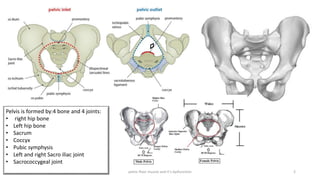
Pelvis is formed by:4 bone and 4 joints:
• right hip bone
• Left hip bone
• Sacrum
• Coccyx
• Pubic symphysis
• Left and right Sacro iliac joint
• Sacrococcygeal joint
pelvic floor muscle and it's dysfunction 3
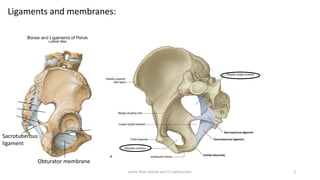
Ligaments and membranes:
Obturator membrane
Sacrotuberous
ligament
pelvic floor muscle and it's dysfunction 4
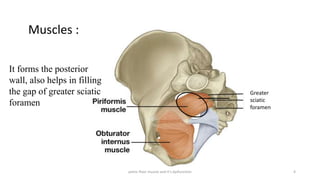
Muscles :
It forms the posterior
wall, also helps in filling
the gap of greater sciatic
foramen
Greater
sciatic
foramen
pelvic floor muscle and it's dysfunction 5
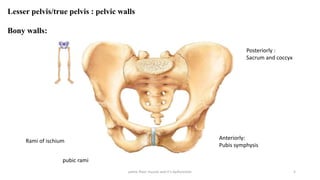
Lesser pelvis/true pelvis : pelvic walls
Bony walls:
Anteriorly:
Pubis symphysis
Posteriorly :
Sacrum and coccyx
Rami of ischium
pubic rami
pelvic floor muscle and it's dysfunction 6
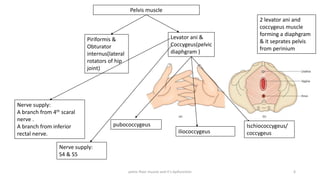
Pelvis muscle
Piriformis &
Obturator
internus(lateral
rotators of hip
joint)
Levator ani &
Coccygeus(pelvic
diaphgram )
2 levator ani and
coccygeus muscle
forming a diaphgram
& it seprates pelvis
from perinium
pubococcygeus
iliococcygeus
Ischiococcygeus/
coccygeus
Nerve supply:
A branch from 4th scaral
nerve .
A branch from inferior
rectal nerve.
Nerve supply:
S4 & S5
pelvic floor muscle and it's dysfunction 7
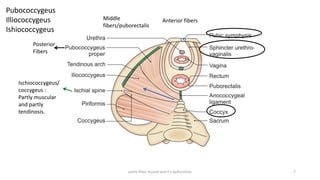
Pubococcygeus
Illiococcygeus
Ishiococcygeus
Anterior fibers
Middle
fibers/puborectalis
Posterior
Fibers
Ischiococcygeus/
coccygeus :
Partly muscular
and partly
tendinosis.
pelvic floor muscle and it's dysfunction 8
Actions : levator ani:
Counteract or resist
increased intra abdominal
pressure and help to
maintain continence of
the bladder and rectum
Micturition, parturition, defecation Pelvic outlet is open
Contraction of fibers resist intra abdominal
pressure and prevents further prolapse
pelvic floor muscle and it's dysfunction 9
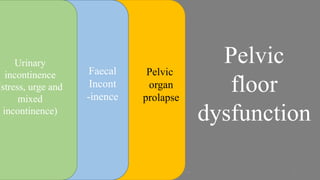
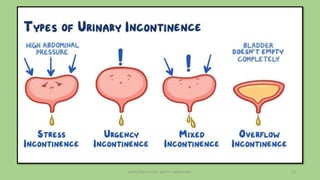
Urinary
incontinence
(stress, urge and
mixed
incontinence)
Pelvic
floor
dysfunction
Faecal
Incont
-inence
Pelvic
organ
prolapse
pelvic floor muscle and it's dysfunction 10
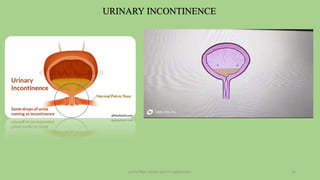
URINARY INCONTINENCE
pelvic floor muscle and it's dysfunction 11
pelvic floor muscle and it's dysfunction 12
pelvic floor muscle and it's dysfunction 13
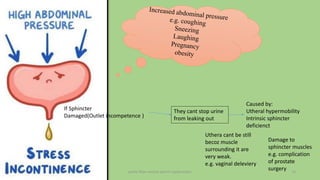
If Sphincter
Damaged(Outlet incompetence )
They cant stop urine
from leaking out
Caused by:
Utheral hypermobility
Intrinsic sphincter
deficienct
Uthera cant be still
becoz muscle
surrounding it are
very weak.
e.g. vaginal deleviery
Damage to
sphincter muscles
e.g. complication
of prostate
surgery
pelvic floor muscle and it's dysfunction 14
Sudden urge to urinate.
Involuntary urination
(unhibited detrusor
muscle ) Associated with
Urinary tract infection
pelvic floor muscle and it's dysfunction 15
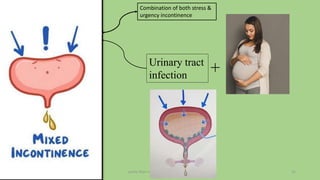
Combination of both stress &
urgency incontinence
+
Urinary tract
infection
pelvic floor muscle and it's dysfunction 16
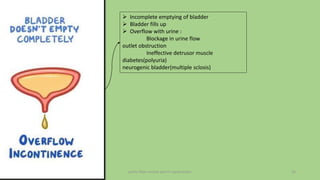
 Incomplete emptying of bladder
 Bladder fills up
 Overflow with urine :
Blockage in urine flow
outlet obstruction
Ineffective detrusor muscle
diabetes(polyuria)
neurogenic bladder(multiple sclosis)
pelvic floor muscle and it's dysfunction 17
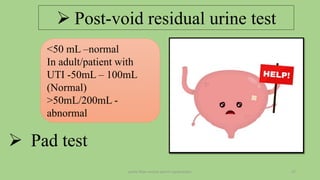
 Post-void residual urine test
<50 mL –normal
In adult/patient with
UTI -50mL – 100mL
(Normal)
>50mL/200mL -
abnormal
 Pad test
pelvic floor muscle and it's dysfunction 18
Bladder
training
Pelvic
floor
muscle
exercises
Biofeedback
Electric
stimulati
on
Vaginal
and
urethral
tools
Medicinal
therapy
Acupuncture
Non
surgical
treatment
options
pelvic floor muscle and it's dysfunction
19
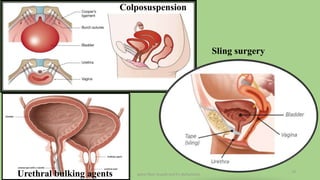
Colposuspension
Sling surgery
Urethral bulking agents
pelvic floor muscle and it's dysfunction 20
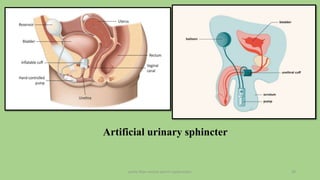
Artificial urinary sphincter
pelvic floor muscle and it's dysfunction 21
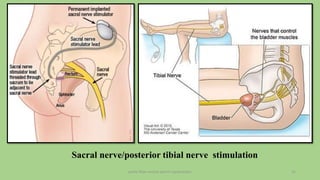
Sacral nerve/posterior tibial nerve stimulation
pelvic floor muscle and it's dysfunction 22
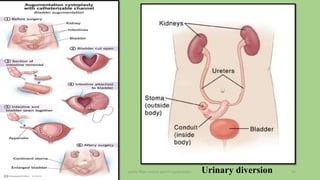
Urinary diversion
pelvic floor muscle and it's dysfunction 23
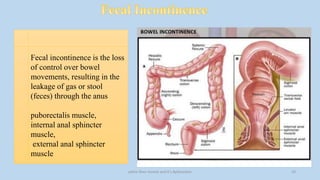
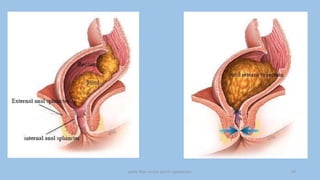
Fecal incontinence is the loss
of control over bowel
movements, resulting in the
leakage of gas or stool
(feces) through the anus
puborectalis muscle,
internal anal sphincter
muscle,
external anal sphincter
muscle
pelvic floor muscle and it's dysfunction 24
pelvic floor muscle and it's dysfunction 25
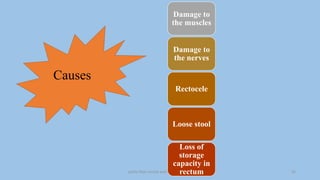
Causes
Damage to
the muscles
Damage to
the nerves
Rectocele
Loose stool
Loss of
storage
capacity in
rectum
pelvic floor muscle and it's dysfunction 26
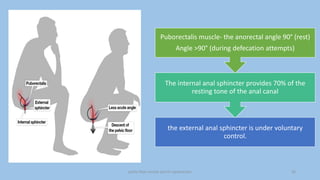
the external anal sphincter is under voluntary
control.
The internal anal sphincter provides 70% of the
resting tone of the anal canal
Puborectalis muscle- the anorectal angle 90° (rest)
Angle >90° (during defecation attempts)
pelvic floor muscle and it's dysfunction 27
pelvic floor muscle and it's dysfunction 28
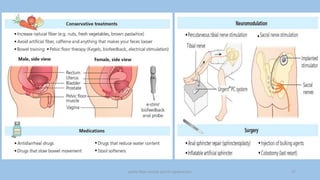
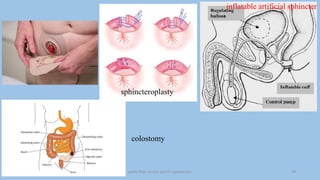
sphincteroplasty
inflatable artificial sphincter
colostomy
pelvic floor muscle and it's dysfunction 29
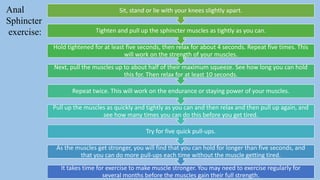
Anal
Sphincter
exercise:
It takes time for exercise to make muscle stronger. You may need to exercise regularly for
several months before the muscles gain their full strength.
As the muscles get stronger, you will find that you can hold for longer than five seconds, and
that you can do more pull-ups each time without the muscle getting tired.
Try for five quick pull-ups.
Pull up the muscles as quickly and tightly as you can and then relax and then pull up again, and
see how many times you can do this before you get tired.
Repeat twice. This will work on the endurance or staying power of your muscles.
Next, pull the muscles up to about half of their maximum squeeze. See how long you can hold
this for. Then relax for at least 10 seconds.
Hold tightened for at least five seconds, then relax for about 4 seconds. Repeat five times. This
will work on the strength of your muscles.
Tighten and pull up the sphincter muscles as tightly as you can.
Sit, stand or lie with your knees slightly apart.
pelvic floor muscle and it's dysfunction 30
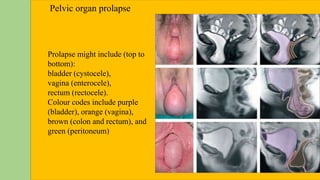
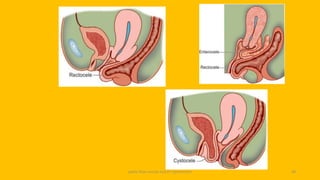
Pelvic organ prolapse
Prolapse might include (top to
bottom):
bladder (cystocele),
vagina (enterocele),
rectum (rectocele).
Colour codes include purple
(bladder), orange (vagina),
brown (colon and rectum), and
green (peritoneum)
pelvic floor muscle and it's dysfunction 31
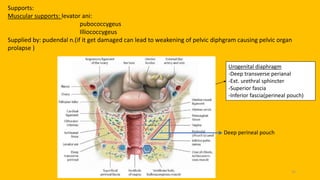
Supports:
Muscular supports: levator ani:
pubococcygeus
Illiococcygeus
Supplied by: pudendal n.(if it get damaged can lead to weakening of pelvic diphgram causing pelvic organ
prolapse )
Urogenital diaphragm
-Deep transverse perianal
-Ext. urethral sphincter
-Superior fascia
-Inferior fascia(perineal pouch)
Deep perineal pouch
pelvic floor muscle and it's dysfunction 32
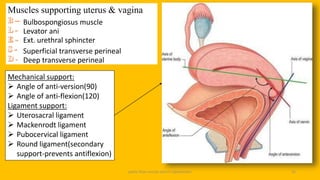
Muscles supporting uterus & vagina
Bulbospongiosus muscle
Levator ani
Ext. urethral sphincter
Superficial transverse perineal
Deep transverse perineal
Mechanical support:
 Angle of anti-version(90)
 Angle of anti-flexion(120)
Ligament support:
 Uterosacral ligament
 Mackenrodt ligament
 Pubocervical ligament
 Round ligament(secondary
support-prevents antiflexion)
pelvic floor muscle and it's dysfunction 33
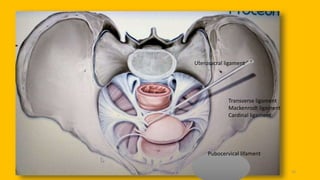
Uterosacral ligament
Transverse ligament
Mackenrodt ligament
Cardinal ligament
Pubocervical lifament
pelvic floor muscle and it's dysfunction 34
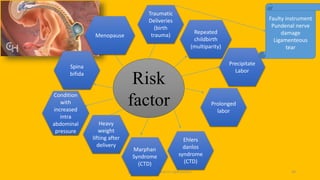
Risk
factor
Traumatic
Deliveries
(birth
trauma)
Repeated
childbirth
(multiparity)
Precipitate
Labor
Prolonged
labor
Ehlers
danlos
syndrome
(CTD)
Marphan
Syndrome
(CTD)
Heavy
weight
lifting after
delivery
Condition
with
increased
intra
abdominal
pressure
Spina
bifida
Menopause
Faulty instrument
Pundenal nerve
damage
Ligamenteous
tear
pelvic floor muscle and it's dysfunction 35
Patient feels something is coming out of vagina.
Groin/back pain (stretching of uterosacral ligament).
Difficulty in urinating & defacting.
increased risk of uti.
Decubitus ulcer (venous congestion)
pelvic floor muscle and it's dysfunction 36
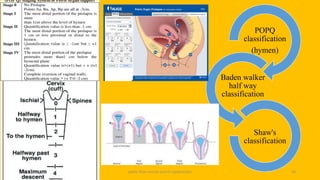
POPQ
classification
(hymen)
Baden walker
half way
classification
Shaw's
classification
pelvic floor muscle and it's dysfunction 37
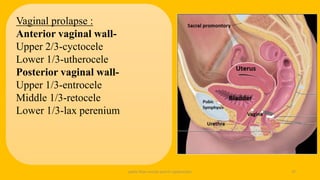
Vaginal prolapse :
Anterior vaginal wall-
Upper 2/3-cyctocele
Lower 1/3-utherocele
Posterior vaginal wall-
Upper 1/3-entrocele
Middle 1/3-retocele
Lower 1/3-lax perenium
pelvic floor muscle and it's dysfunction 38
pelvic floor muscle and it's dysfunction 39
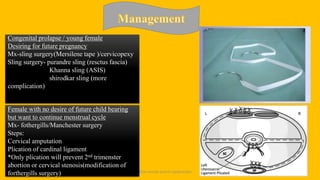
Congenital prolapse / young female
Desiring for future pregnancy
Mx-sling surgery(Mersilene tape )/cervicopexy
Sling surgery- purandre sling (resctus fascia)
Khanna sling (ASIS)
shirodkar sling (more
complication)
Female with no desire of future child bearing
but want to continue menstrual cycle
Mx- fothergills/Manchester surgery
Steps:
Cervical amputation
Plication of cardinal ligament
*Only plication will prevent 2nd trimenster
abortion or cervical stenosis(modification of
forthergills surgery)
pelvic floor muscle and it's dysfunction 40
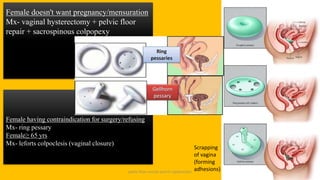
Female doesn't want pregnancy/mensuration
Mx- vaginal hysterectomy + pelvic floor
repair + sacrospinous colpopexy
Female having contraindication for surgery/refusing
Mx- ring pessary
Female≥ 65 yrs
Mx- leforts colpoclesis (vaginal closure)
Scrapping
of vagina
(forming
adhesions)
pelvic floor muscle and it's dysfunction 41
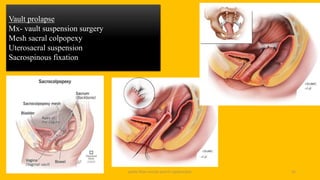
Vault prolapse
Mx- vault suspension surgery
Mesh sacral colpopexy
Uterosacral suspension
Sacrospinous fixation
pelvic floor muscle and it's dysfunction 42
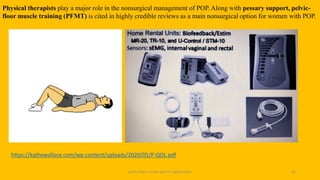
Physical therapists play a major role in the nonsurgical management of POP. Along with pessary support, pelvic-
floor muscle training (PFMT) is cited in highly credible reviews as a main nonsurgical option for women with POP.
https://kathewallace.com/wp-content/uploads/2020/05/P-QOL.pdf
pelvic floor muscle and it's dysfunction 43
Take home message:
 When biofeedback is used in combination with electric stimulation,
significant increase in pelvic floor strength and reduction in severity of
incontinence have been reported. In urinary incontinence treatment, electric
stimulation can be applied for 6-8 weeks in sessions of 20-30 minutes 3 times
a week.
 Pad test > 1g is significant
pelvic floor muscle and it's dysfunction 44
References :
 DC Dutta'ss Textbook of Gynecology
 Kari_Bo,_Bary_Berghmans,_Siv_Morkved,_Marijke_Van_Kampen_Evidence
 Volume 2, BD Chaurasia’s Human Anatomy, Lower Limb, Abdomen and Pelvis
 https://www.yourpelvicfloor.org/conditions/fecal-incontinence/
 https://www.anadolumedicalcenter.com/en/health-technologies/urine-
kidnappingumeda-biofeedback
 https://www.nhs.uk/conditions/urinary-incontinence/surgery/
 https://www.stmarkshospital.nhs.uk/wp-content/uploads/2014/05/Anal-
sphincter-exercises-for-leakage.pdf
 https://www.med.umich.edu/1libr/Gyn/AnalSphincteroplasty.pdf

PELVIC FLOOR anatomy, muscles AND ITS DYSFUNCTION.pptx

  • 1.
    Pelvic floor musclesand it’s dysfunction!! Dr. Dhwani kawedia pelvic floor muscle and it's dysfunction 1
  • 2.
    pelvic floor muscleand it's dysfunction 2 Pelvis is formed by:4 bone and 4 joints: • right hip bone • Left hip bone • Sacrum • Coccyx • Pubic symphysis • Left and right Sacro iliac joint • Sacrococcygeal joint
  • 3.
    pelvic floor muscleand it's dysfunction 3 Ligaments and membranes: Obturator membrane Sacrotuberous ligament
  • 4.
    pelvic floor muscleand it's dysfunction 4 Muscles : It forms the posterior wall, also helps in filling the gap of greater sciatic foramen Greater sciatic foramen
  • 5.
    pelvic floor muscleand it's dysfunction 5 Lesser pelvis/true pelvis : pelvic walls Bony walls: Anteriorly: Pubis symphysis Posteriorly : Sacrum and coccyx Rami of ischium pubic rami
  • 6.
    pelvic floor muscleand it's dysfunction 6 Pelvis muscle Piriformis & Obturator internus(lateral rotators of hip joint) Levator ani & Coccygeus(pelvic diaphgram ) 2 levator ani and coccygeus muscle forming a diaphgram & it seprates pelvis from perinium pubococcygeus iliococcygeus Ischiococcygeus/ coccygeus Nerve supply: A branch from 4th scaral nerve . A branch from inferior rectal nerve. Nerve supply: S4 & S5
  • 7.
    pelvic floor muscleand it's dysfunction 7 Pubococcygeus Illiococcygeus Ishiococcygeus Anterior fibers Middle fibers/puborectalis Posterior Fibers Ischiococcygeus/ coccygeus : Partly muscular and partly tendinosis.
  • 8.
    pelvic floor muscleand it's dysfunction 8 Actions : levator ani: Counteract or resist increased intra abdominal pressure and help to maintain continence of the bladder and rectum Micturition, parturition, defecation Pelvic outlet is open Contraction of fibers resist intra abdominal pressure and prevents further prolapse
  • 9.
    pelvic floor muscleand it's dysfunction 9 Urinary incontinence (stress, urge and mixed incontinence) Pelvic floor dysfunction Faecal Incont -inence Pelvic organ prolapse
  • 10.
    pelvic floor muscleand it's dysfunction 10 URINARY INCONTINENCE
  • 11.
    pelvic floor muscleand it's dysfunction 11
  • 12.
    pelvic floor muscleand it's dysfunction 12
  • 13.
    pelvic floor muscleand it's dysfunction 13 If Sphincter Damaged(Outlet incompetence ) They cant stop urine from leaking out Caused by: Utheral hypermobility Intrinsic sphincter deficienct Uthera cant be still becoz muscle surrounding it are very weak. e.g. vaginal deleviery Damage to sphincter muscles e.g. complication of prostate surgery
  • 14.
    pelvic floor muscleand it's dysfunction 14 Sudden urge to urinate. Involuntary urination (unhibited detrusor muscle ) Associated with Urinary tract infection
  • 15.
    pelvic floor muscleand it's dysfunction 15 Combination of both stress & urgency incontinence + Urinary tract infection
  • 16.
    pelvic floor muscleand it's dysfunction 16  Incomplete emptying of bladder  Bladder fills up  Overflow with urine : Blockage in urine flow outlet obstruction Ineffective detrusor muscle diabetes(polyuria) neurogenic bladder(multiple sclosis)
  • 17.
    pelvic floor muscleand it's dysfunction 17  Post-void residual urine test <50 mL –normal In adult/patient with UTI -50mL – 100mL (Normal) >50mL/200mL - abnormal  Pad test
  • 18.
    pelvic floor muscleand it's dysfunction 18 Bladder training Pelvic floor muscle exercises Biofeedback Electric stimulati on Vaginal and urethral tools Medicinal therapy Acupuncture Non surgical treatment options
  • 19.
    pelvic floor muscleand it's dysfunction 19 Colposuspension Sling surgery Urethral bulking agents
  • 20.
    pelvic floor muscleand it's dysfunction 20 Artificial urinary sphincter
  • 21.
    pelvic floor muscleand it's dysfunction 21 Sacral nerve/posterior tibial nerve stimulation
  • 22.
    pelvic floor muscleand it's dysfunction 22 Urinary diversion
  • 23.
    pelvic floor muscleand it's dysfunction 23 Fecal incontinence is the loss of control over bowel movements, resulting in the leakage of gas or stool (feces) through the anus puborectalis muscle, internal anal sphincter muscle, external anal sphincter muscle
  • 24.
    pelvic floor muscleand it's dysfunction 24
  • 25.
    pelvic floor muscleand it's dysfunction 25 Causes Damage to the muscles Damage to the nerves Rectocele Loose stool Loss of storage capacity in rectum
  • 26.
    pelvic floor muscleand it's dysfunction 26 the external anal sphincter is under voluntary control. The internal anal sphincter provides 70% of the resting tone of the anal canal Puborectalis muscle- the anorectal angle 90° (rest) Angle >90° (during defecation attempts)
  • 27.
    pelvic floor muscleand it's dysfunction 27
  • 28.
    pelvic floor muscleand it's dysfunction 28 sphincteroplasty inflatable artificial sphincter colostomy
  • 29.
    pelvic floor muscleand it's dysfunction 29 Anal Sphincter exercise: It takes time for exercise to make muscle stronger. You may need to exercise regularly for several months before the muscles gain their full strength. As the muscles get stronger, you will find that you can hold for longer than five seconds, and that you can do more pull-ups each time without the muscle getting tired. Try for five quick pull-ups. Pull up the muscles as quickly and tightly as you can and then relax and then pull up again, and see how many times you can do this before you get tired. Repeat twice. This will work on the endurance or staying power of your muscles. Next, pull the muscles up to about half of their maximum squeeze. See how long you can hold this for. Then relax for at least 10 seconds. Hold tightened for at least five seconds, then relax for about 4 seconds. Repeat five times. This will work on the strength of your muscles. Tighten and pull up the sphincter muscles as tightly as you can. Sit, stand or lie with your knees slightly apart.
  • 30.
    pelvic floor muscleand it's dysfunction 30 Pelvic organ prolapse Prolapse might include (top to bottom): bladder (cystocele), vagina (enterocele), rectum (rectocele). Colour codes include purple (bladder), orange (vagina), brown (colon and rectum), and green (peritoneum)
  • 31.
    pelvic floor muscleand it's dysfunction 31 Supports: Muscular supports: levator ani: pubococcygeus Illiococcygeus Supplied by: pudendal n.(if it get damaged can lead to weakening of pelvic diphgram causing pelvic organ prolapse ) Urogenital diaphragm -Deep transverse perianal -Ext. urethral sphincter -Superior fascia -Inferior fascia(perineal pouch) Deep perineal pouch
  • 32.
    pelvic floor muscleand it's dysfunction 32 Muscles supporting uterus & vagina Bulbospongiosus muscle Levator ani Ext. urethral sphincter Superficial transverse perineal Deep transverse perineal Mechanical support:  Angle of anti-version(90)  Angle of anti-flexion(120) Ligament support:  Uterosacral ligament  Mackenrodt ligament  Pubocervical ligament  Round ligament(secondary support-prevents antiflexion)
  • 33.
    pelvic floor muscleand it's dysfunction 33 Uterosacral ligament Transverse ligament Mackenrodt ligament Cardinal ligament Pubocervical lifament
  • 34.
    pelvic floor muscleand it's dysfunction 34 Risk factor Traumatic Deliveries (birth trauma) Repeated childbirth (multiparity) Precipitate Labor Prolonged labor Ehlers danlos syndrome (CTD) Marphan Syndrome (CTD) Heavy weight lifting after delivery Condition with increased intra abdominal pressure Spina bifida Menopause Faulty instrument Pundenal nerve damage Ligamenteous tear
  • 35.
    pelvic floor muscleand it's dysfunction 35 Patient feels something is coming out of vagina. Groin/back pain (stretching of uterosacral ligament). Difficulty in urinating & defacting. increased risk of uti. Decubitus ulcer (venous congestion)
  • 36.
    pelvic floor muscleand it's dysfunction 36 POPQ classification (hymen) Baden walker half way classification Shaw's classification
  • 37.
    pelvic floor muscleand it's dysfunction 37 Vaginal prolapse : Anterior vaginal wall- Upper 2/3-cyctocele Lower 1/3-utherocele Posterior vaginal wall- Upper 1/3-entrocele Middle 1/3-retocele Lower 1/3-lax perenium
  • 38.
    pelvic floor muscleand it's dysfunction 38
  • 39.
    pelvic floor muscleand it's dysfunction 39 Congenital prolapse / young female Desiring for future pregnancy Mx-sling surgery(Mersilene tape )/cervicopexy Sling surgery- purandre sling (resctus fascia) Khanna sling (ASIS) shirodkar sling (more complication) Female with no desire of future child bearing but want to continue menstrual cycle Mx- fothergills/Manchester surgery Steps: Cervical amputation Plication of cardinal ligament *Only plication will prevent 2nd trimenster abortion or cervical stenosis(modification of forthergills surgery)
  • 40.
    pelvic floor muscleand it's dysfunction 40 Female doesn't want pregnancy/mensuration Mx- vaginal hysterectomy + pelvic floor repair + sacrospinous colpopexy Female having contraindication for surgery/refusing Mx- ring pessary Female≥ 65 yrs Mx- leforts colpoclesis (vaginal closure) Scrapping of vagina (forming adhesions)
  • 41.
    pelvic floor muscleand it's dysfunction 41 Vault prolapse Mx- vault suspension surgery Mesh sacral colpopexy Uterosacral suspension Sacrospinous fixation
  • 42.
    pelvic floor muscleand it's dysfunction 42 Physical therapists play a major role in the nonsurgical management of POP. Along with pessary support, pelvic- floor muscle training (PFMT) is cited in highly credible reviews as a main nonsurgical option for women with POP. https://kathewallace.com/wp-content/uploads/2020/05/P-QOL.pdf
  • 43.
    pelvic floor muscleand it's dysfunction 43 Take home message:  When biofeedback is used in combination with electric stimulation, significant increase in pelvic floor strength and reduction in severity of incontinence have been reported. In urinary incontinence treatment, electric stimulation can be applied for 6-8 weeks in sessions of 20-30 minutes 3 times a week.  Pad test > 1g is significant
  • 44.
    pelvic floor muscleand it's dysfunction 44 References :  DC Dutta'ss Textbook of Gynecology  Kari_Bo,_Bary_Berghmans,_Siv_Morkved,_Marijke_Van_Kampen_Evidence  Volume 2, BD Chaurasia’s Human Anatomy, Lower Limb, Abdomen and Pelvis  https://www.yourpelvicfloor.org/conditions/fecal-incontinence/  https://www.anadolumedicalcenter.com/en/health-technologies/urine- kidnappingumeda-biofeedback  https://www.nhs.uk/conditions/urinary-incontinence/surgery/  https://www.stmarkshospital.nhs.uk/wp-content/uploads/2014/05/Anal- sphincter-exercises-for-leakage.pdf  https://www.med.umich.edu/1libr/Gyn/AnalSphincteroplasty.pdf

Editor's Notes

  • #7 Pelvis diaphgram ke inferior jo organs hai they are part of perineum and pelvis diaphgram ke uppr ke jo parts hai vo aate hai pelvis meh