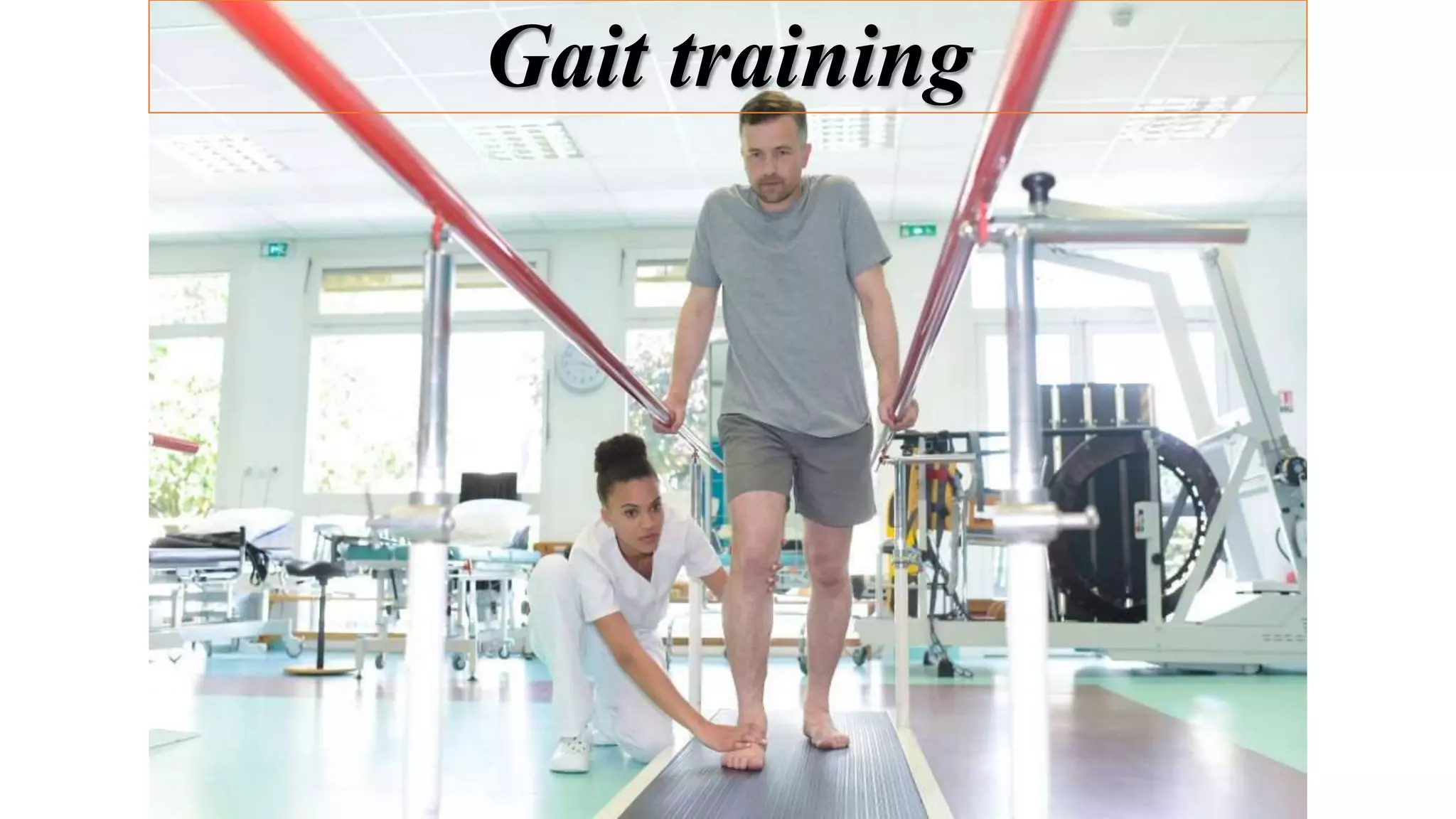
Gait training
Gait Pre- requisites
• Bed mobility
• Sitting balance
• Sit to stand
• Standing balance- start on a parallel bar progress to assistive aids and
independent walking
How to initiate gait as early as possible?
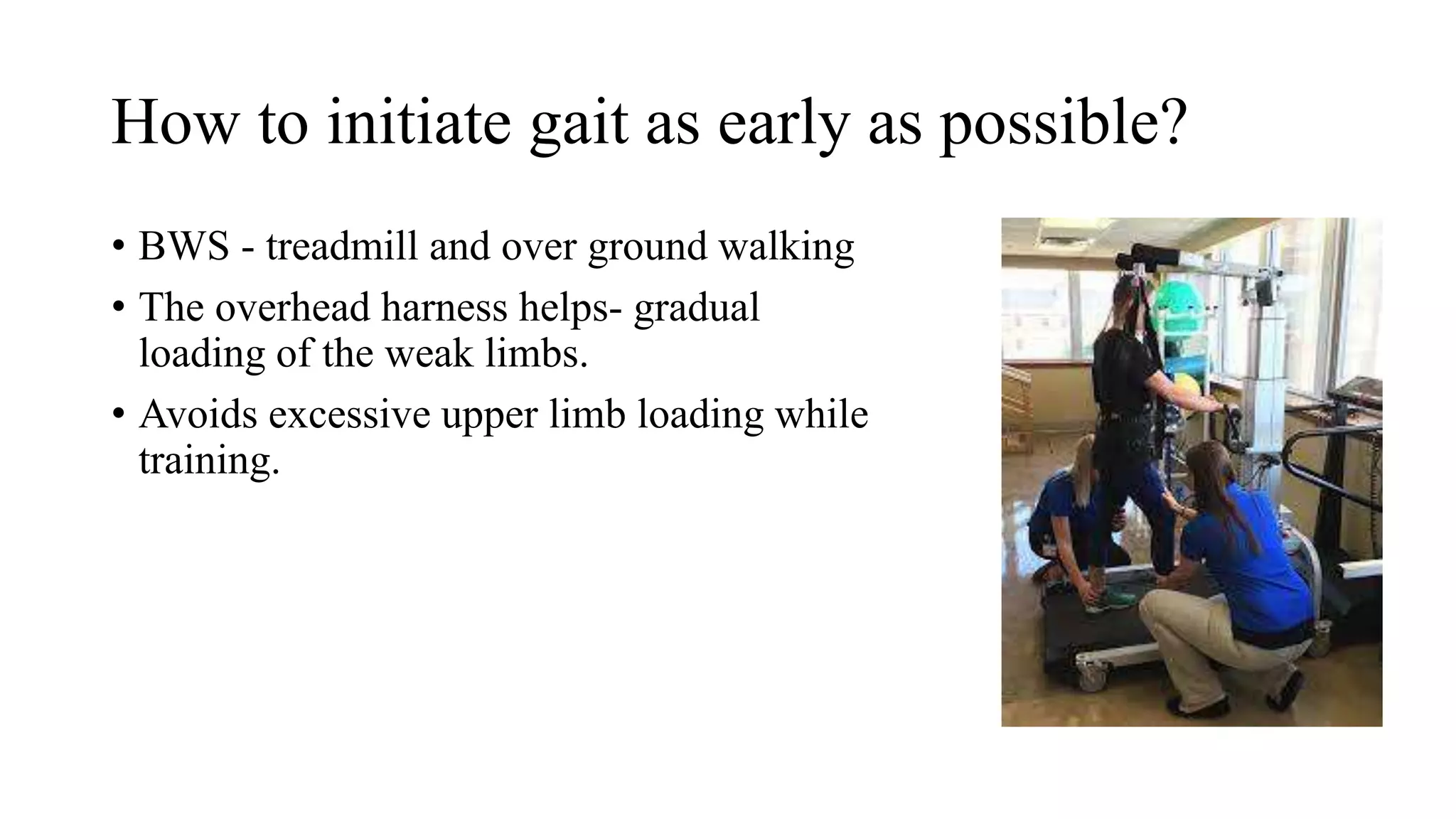
• BWS - treadmill and over ground walking
• The overhead harness helps- gradual
loading of the weak limbs.
• Avoids excessive upper limb loading while
training.
! Identify the impairments !
Management
Restorative Compensatory
Restorative
1. Tone management
2. Stretching
3. Facilitation/ Strengthening
4. Stimulation- Functional Electrical stimulation
5. Break down phases of gait and retrain phase wise
6. Working on the spatiotemporal parameters
STIMULATION- Functional Electrical Stimulation
Break down phases of gait and retrain phase wise
• Give verbal, visual or tactile cues during walking.
• Ex-
• walking on heels
• marching with exaggerate hip flexion to facilitate hip flexion during swing
Working on the spatiotemporal parameters
• Give verbal visual cues
COMPENSATORY
• Orthosis
• Assistive devices- walker, crutches, or quadpod.
Functional gait training
Adaptability of gait-
• Walking side ways, backways
• Walking over obstacles
• Taking pivot turns
Dual tasking-
• Walking talking
• Walking while looking around
OUTDOOR TRAINING
• Dynamic, real life environment.
• Training here is more meaningful for the patient.
• EX-
• uneven roads, climbing curbs, walking in crowded places, walking while holding onto his bag,
crossing roads.
SAFETY OF THE PATIENT IS THE PRIORITY
REFERENCES
• Physical rehabilitation. O Sullivan 6th edition
• Motor control Anne Shumway cook
THANK YOU

Gait training in physiotherapy.pptx

  • 1.
  • 2.
    Gait Pre- requisites •Bed mobility • Sitting balance • Sit to stand • Standing balance- start on a parallel bar progress to assistive aids and independent walking
  • 3.
    How to initiategait as early as possible? • BWS - treadmill and over ground walking • The overhead harness helps- gradual loading of the weak limbs. • Avoids excessive upper limb loading while training.
  • 4.
    ! Identify theimpairments ! Management Restorative Compensatory
  • 5.
    Restorative 1. Tone management 2.Stretching 3. Facilitation/ Strengthening 4. Stimulation- Functional Electrical stimulation 5. Break down phases of gait and retrain phase wise 6. Working on the spatiotemporal parameters
  • 6.
  • 7.
    Break down phasesof gait and retrain phase wise • Give verbal, visual or tactile cues during walking. • Ex- • walking on heels • marching with exaggerate hip flexion to facilitate hip flexion during swing
  • 8.
    Working on thespatiotemporal parameters • Give verbal visual cues
  • 9.
    COMPENSATORY • Orthosis • Assistivedevices- walker, crutches, or quadpod.
  • 10.
    Functional gait training Adaptabilityof gait- • Walking side ways, backways • Walking over obstacles • Taking pivot turns Dual tasking- • Walking talking • Walking while looking around
  • 11.
    OUTDOOR TRAINING • Dynamic,real life environment. • Training here is more meaningful for the patient. • EX- • uneven roads, climbing curbs, walking in crowded places, walking while holding onto his bag, crossing roads. SAFETY OF THE PATIENT IS THE PRIORITY
  • 12.
    REFERENCES • Physical rehabilitation.O Sullivan 6th edition • Motor control Anne Shumway cook
  • 13.