Professional Attitudes and 
Behaviours - Workshop 9 
Customer Relationship 
Management
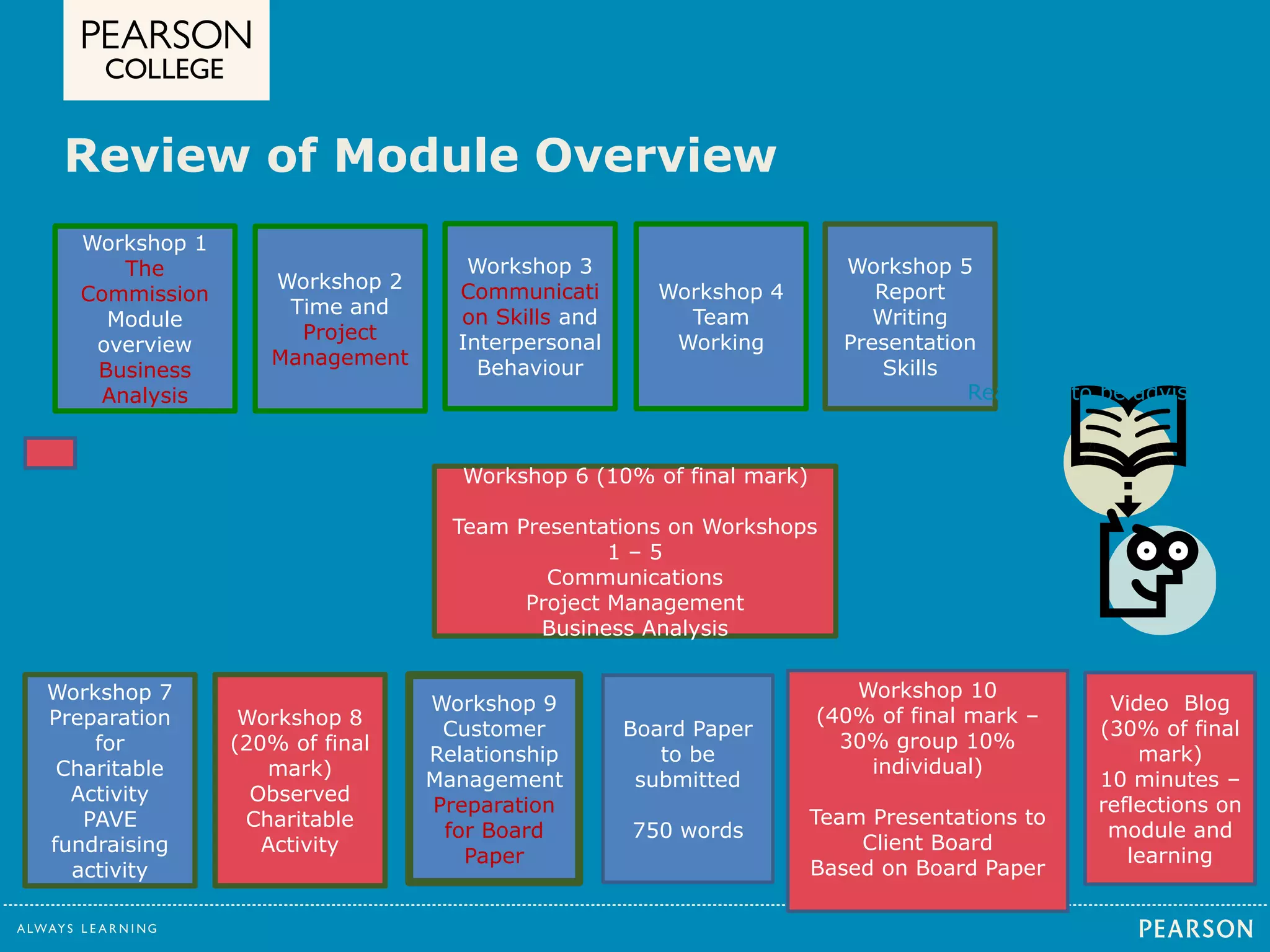
Review of Module Overview 
Workshop 3 
Communicati 
on Skills and 
Interpersonal 
Behaviour 
Workshop 2 
Time and 
Project 
Management 
Workshop 4 
Team 
Working 
Workshop 1 
The 
Commission 
Module 
overview 
Business 
Analysis 
Workshop 5 
Report 
Writing 
Presentation 
Skills 
Workshop 6 (10% of final mark) 
Team Presentations on Workshops 
1 – 5 
Communications 
Project Management 
Business Analysis 
Workshop 9 
Customer 
Relationship 
Management 
Preparation 
for Board 
Paper 
Workshop 7 
Preparation 
for 
Charitable 
Activity 
PAVE 
fundraising 
activity 
Workshop 8 
(20% of final 
mark) 
Observed 
Charitable 
Activity 
Video Blog 
(30% of final 
mark) 
10 minutes – 
reflections on 
module and 
learning 
Workshop 10 
(40% of final mark – 
30% group 10% 
individual) 
Team Presentations to 
Client Board 
Based on Board Paper 
Board Paper 
to be 
submitted 
750 words 
Readings to be advised 
Assessable content
Workshop Objectives 
Understand the importance of developing good work 
based relationships 
Strive towards greater consistency in managing 
relationships, both internal and external 
Look at ways of approaching potential new relationships 
Provide hints tips and techniques around a four step 
relationship management process 
Consider ways of developing and improving your 
relationship management style
Relationships 
Who do people have work based relationships with?
Business Relationships and Friendships 
What actually is the difference? 
Where are they similar? 
Give some examples
Relationship Management and YOU 
Who do you currently have a good relationships with? 
Are they friendships or business relationships? 
How do you currently go about managing that 
relationship?
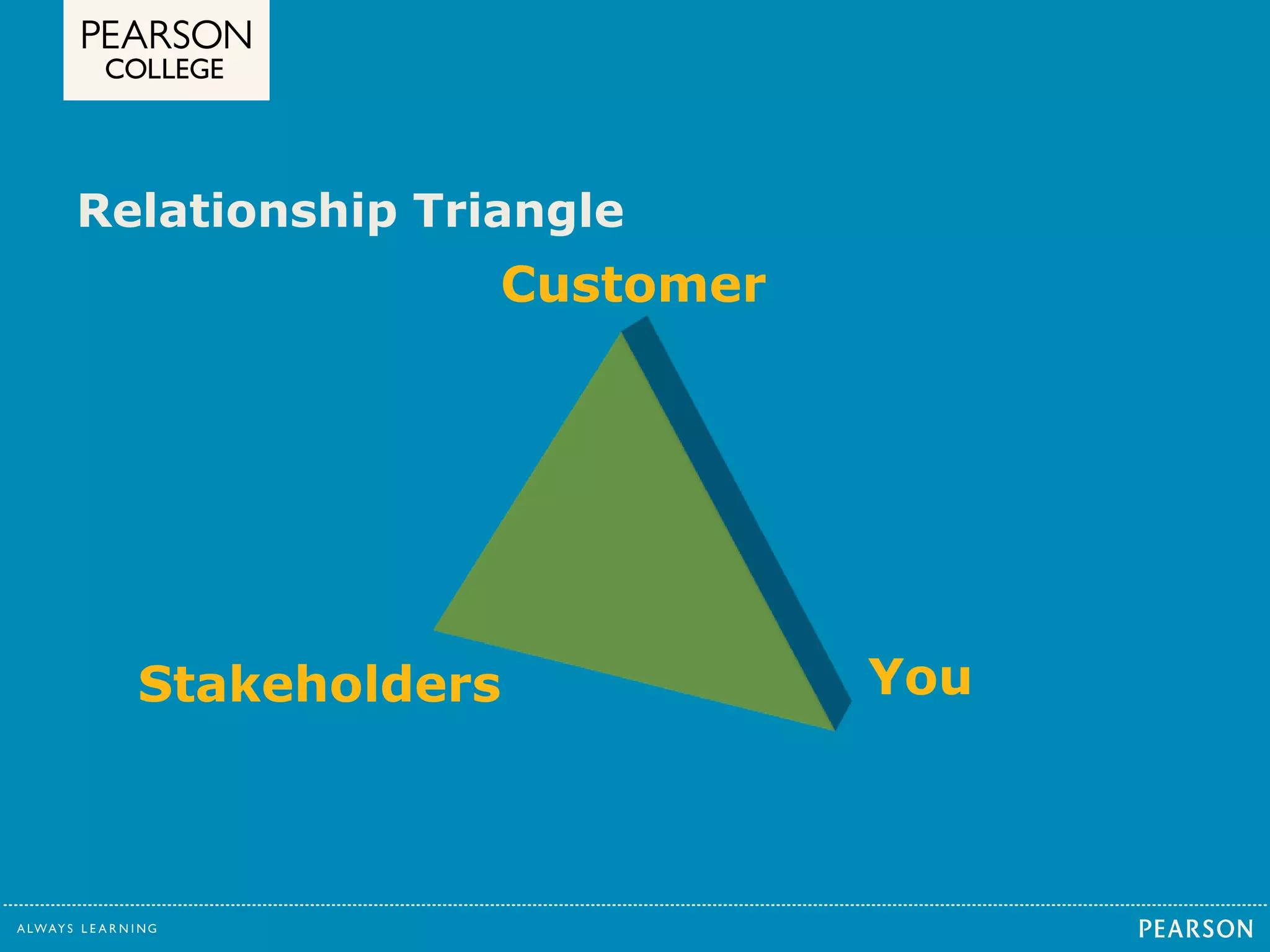
Relationship Triangle 
Customer 
Stakeholders You
Good Relationship Management 
• Trust 
Behave honourably and make credible commitments 
Understand your Customer’s needs and working to THEM 
• Exchange of Knowledge 
•Share perspectives/insight 
•Remove barriers 
• Communication 
•Speak the right language 
•Influence at all levels 
• Flexibility 
•Adapting your style
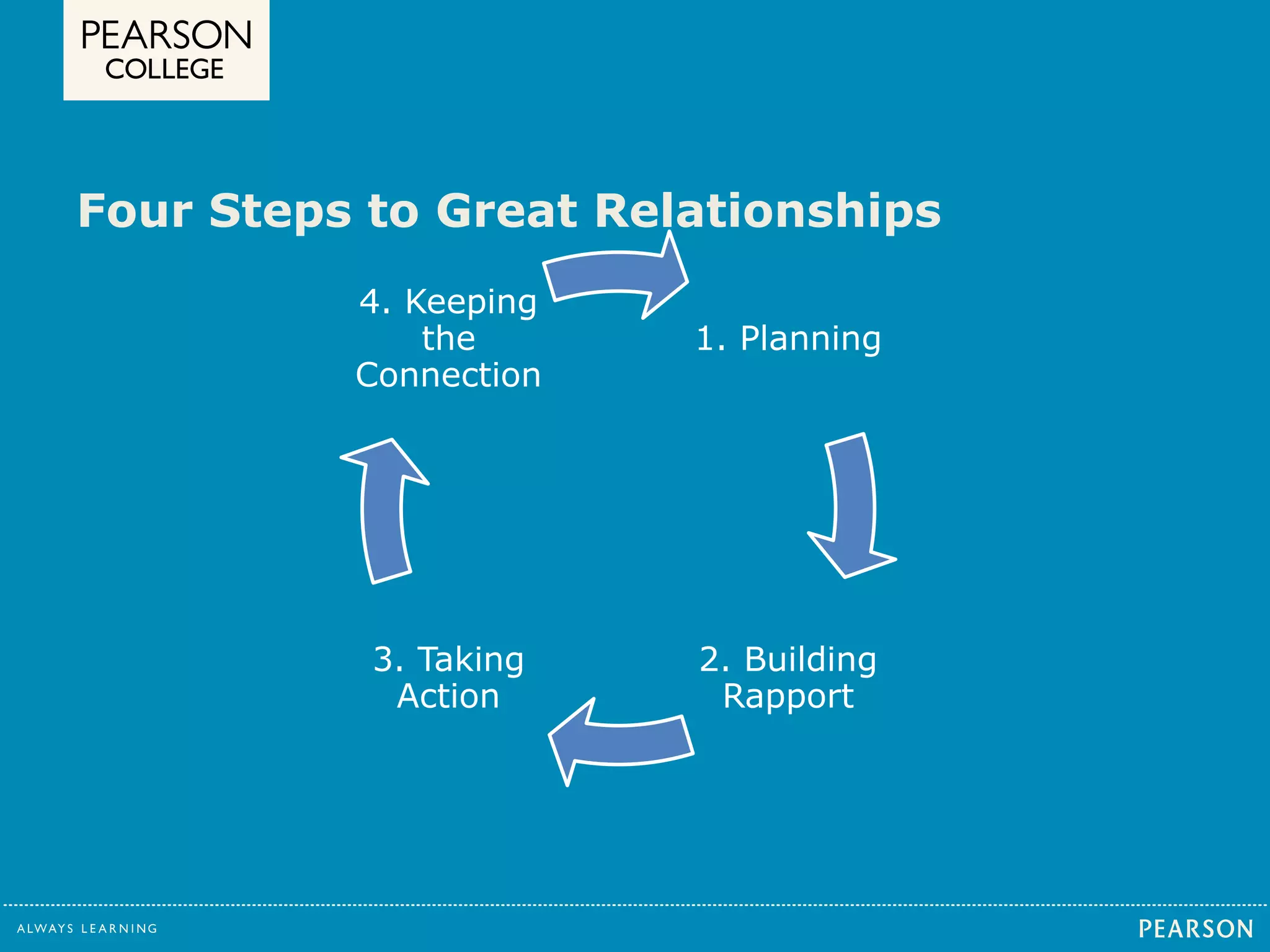
Four Steps to Great Relationships 
1. Planning 
2. Building 
Rapport 
4. Keeping 
the 
Connection 
3. Taking 
Action
Planning 
A meeting has been arranged with your 
supplier/donor/ sponsor/partner. 
What actions do you take prior to the meeting?
Do your Homework 
Give yourself time and space for important meetings 
How long is the meeting scheduled for? 
Make sure all the right people are there on both sides 
Do your research on the organisation and people 
Understand the history 
Plan HOW you meet as well as WHAT is on the agenda 
Be clear about what the meeting is to achieve 
Prepare the questions you want to ask in advance 
What stories do you need to tell? 
What will ‘wins’ look like – to both sides. However small? 
What objections might there be, - how will you deal with them? 
Rehearse, rehearse, rehearse!
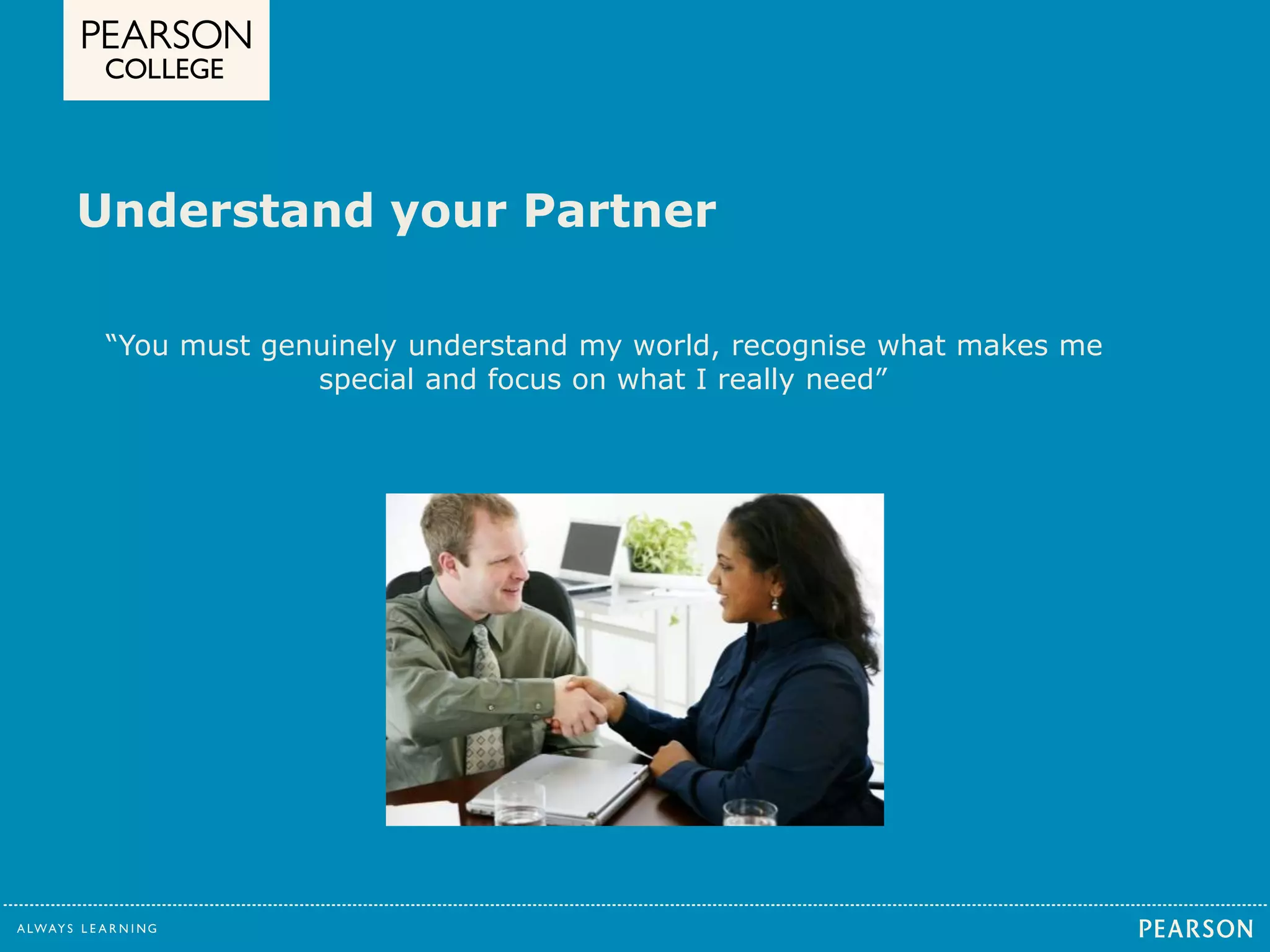
Understand your Partner 
“You must genuinely understand my world, recognise what makes me 
special and focus on what I really need”
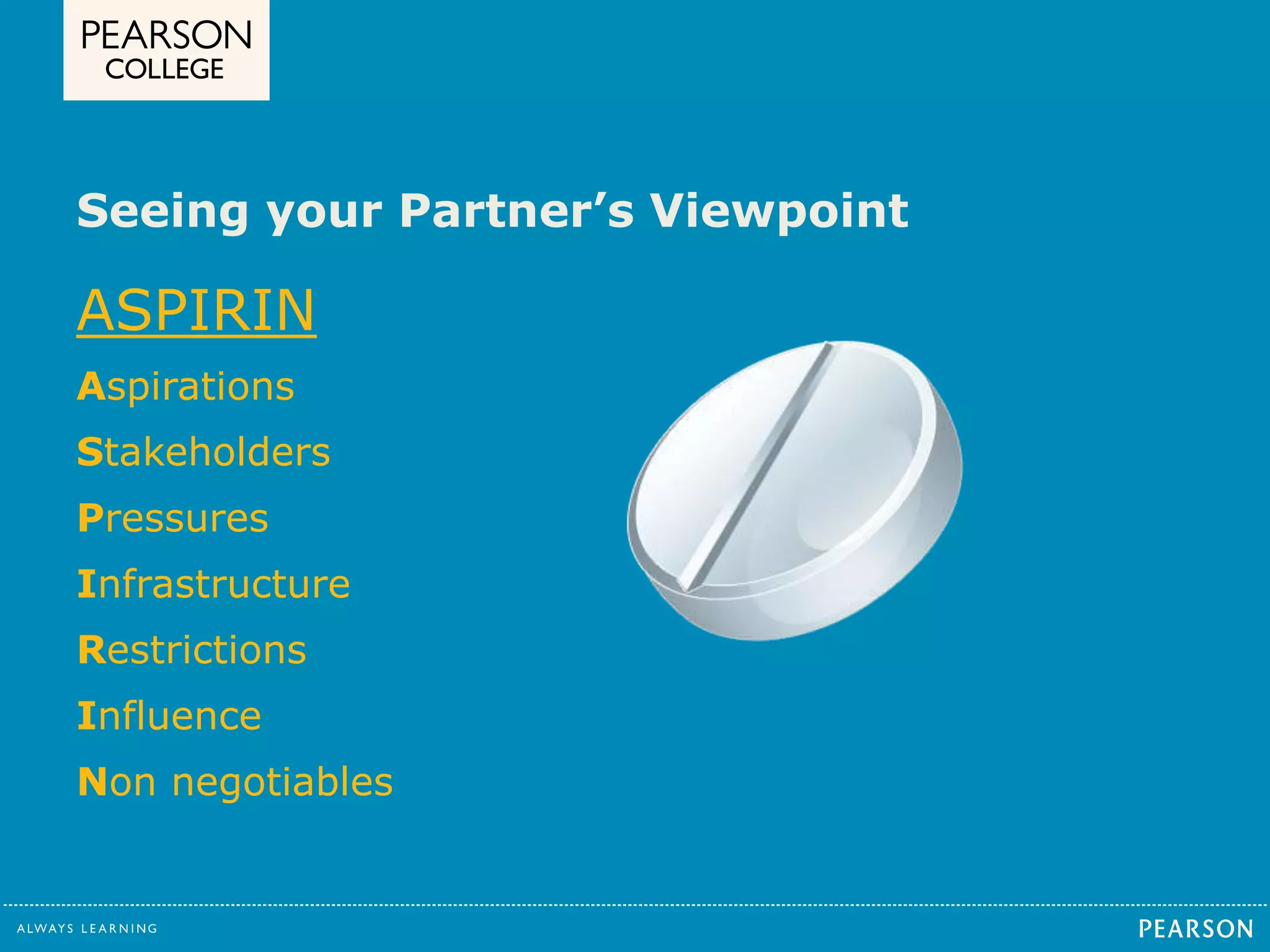
Seeing your Partner’s Viewpoint 
ASPIRIN 
Aspirations 
Stakeholders 
Pressures 
Infrastructure 
Restrictions 
Influence 
Non negotiables
The initial meeting 
Arrive early to get orientated and find things to talk 
about 
Turn your mobile phone etc OFF! 
Show enthusiasm from the outset and respond to 
your partner’s enthusiasm 
Remember the obvious – Smile and make eye 
contact! 
Look immediately for opportunities to build rapport 
Consider what experiences you have that might map 
together
Never…. 
Use jargon or acronyms 
Bring huge decks of slides 
Push products, ideas, opportunities, proposals 
Assume understanding of the partner’s vision 
Keep saying we …we…we… (except when referring to 
you and the partner) 
Offer a canned solution 
Immediately disagree with the partner or dismiss 
their comments/lifestyle 
Do the lion’s share of the talking
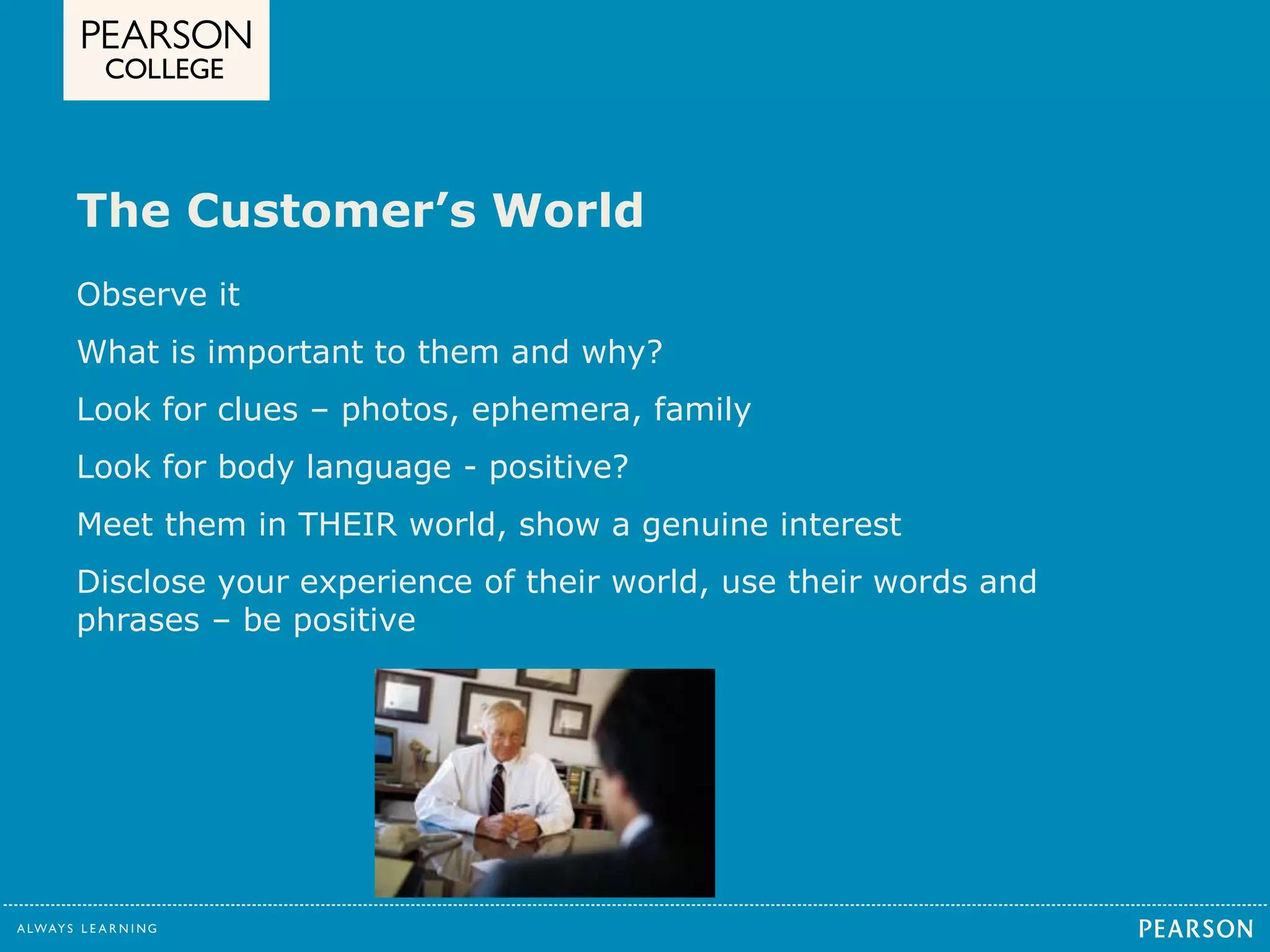
The Customer’s World 
Observe it 
What is important to them and why? 
Look for clues – photos, ephemera, family 
Look for body language - positive? 
Meet them in THEIR world, show a genuine interest 
Disclose your experience of their world, use their words and 
phrases – be positive
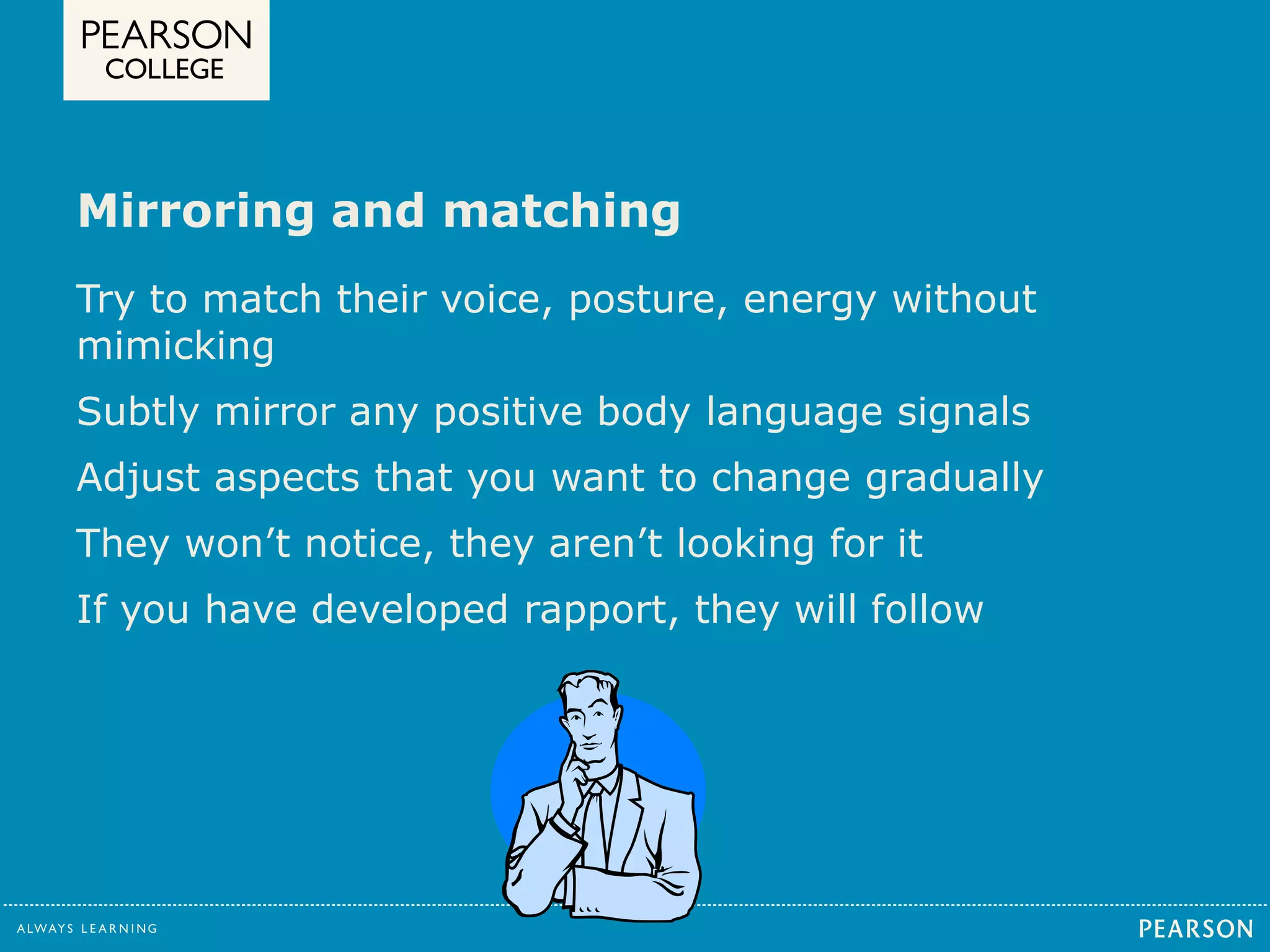
Mirroring and matching 
Try to match their voice, posture, energy without 
mimicking 
Subtly mirror any positive body language signals 
Adjust aspects that you want to change gradually 
They won’t notice, they aren’t looking for it 
If you have developed rapport, they will follow
Listening and Reflecting 
Two eyes, two ears and one mouth 
Listen with your eyes and your head 
Get them talking and keep them talking 
Confirm back what you think you have heard 
Ask focused questions – open and closed 
Use humour – particularly self deprecating but 
carefully! 
Visual, auditory, kinaesthetic
The Partner’s Agenda 
Don’t force it 
Ask what your partner wants before stating your aims 
Listen, suspend judgement, reflect 
Be prepared to adjust and flex 
Invite disclosure 
Ask what your partner wants from a personal viewpoint, Keep the 
conversation general to start and respect their privacy 
“What is your perspective on this?”; “What is important to YOU” 
Build shared ownership 
Use ‘Us’ and ‘We’ rather than ‘I’ ‘Me’ and ‘You’ 
Make yourself useful to them 
Make sure everyone’s needs are met
Validate what you have heard 
Share insight and demonstrate your credibility and 
credentials 
Test for reactions and understand any challenges 
they express 
Be honest about your own situation, goals, ambitions 
Tell stories – be flexible not linear
Keeping the Connection 
The meeting ends – what next?
Act Immediately 
Agree next steps (issue – action – value) 
Agree the method of operation (next page) 
Personalised letter or email 
More substantive follow up 
Set up follow up meetings – introduce new players 
Clarify roles and timescales (RACI) 
Show you have listened and understood 
Do what you say you’ll do: “when do you need it?” 
Produce an update within EveryChild and circulate as appropriate 
Implement suggestions – and tell them!
Confirm working practices 
How much contact do you want? 
Discuss openly, it’s a two way process 
Agree how you will communicate 
Don’t agree things you don’t want 
Be prepared for polite rejection 
Keep the connection alive 
Manage actively to make sure contacts don’t die off 
Make diary notes, don’t let things drift 
Let them know you are thinking about them
Preparing for the presentation 
- Take the rest of the time available to: 
- Finalise your presentation for next week 
- Finalise your report 
- Make some notes about your blog – even go and do it 
- Get some guidance from the tutor on any of the above

Pearson professional attitudes_and_behaviours_ws_nine sept14 without notes (2)

  • 1.
    Professional Attitudes and Behaviours - Workshop 9 Customer Relationship Management
  • 2.
    Review of ModuleOverview Workshop 3 Communicati on Skills and Interpersonal Behaviour Workshop 2 Time and Project Management Workshop 4 Team Working Workshop 1 The Commission Module overview Business Analysis Workshop 5 Report Writing Presentation Skills Workshop 6 (10% of final mark) Team Presentations on Workshops 1 – 5 Communications Project Management Business Analysis Workshop 9 Customer Relationship Management Preparation for Board Paper Workshop 7 Preparation for Charitable Activity PAVE fundraising activity Workshop 8 (20% of final mark) Observed Charitable Activity Video Blog (30% of final mark) 10 minutes – reflections on module and learning Workshop 10 (40% of final mark – 30% group 10% individual) Team Presentations to Client Board Based on Board Paper Board Paper to be submitted 750 words Readings to be advised Assessable content
  • 3.
    Workshop Objectives Understandthe importance of developing good work based relationships Strive towards greater consistency in managing relationships, both internal and external Look at ways of approaching potential new relationships Provide hints tips and techniques around a four step relationship management process Consider ways of developing and improving your relationship management style
  • 4.
    Relationships Who dopeople have work based relationships with?
  • 5.
    Business Relationships andFriendships What actually is the difference? Where are they similar? Give some examples
  • 6.
    Relationship Management andYOU Who do you currently have a good relationships with? Are they friendships or business relationships? How do you currently go about managing that relationship?
  • 7.
  • 8.
    Good Relationship Management • Trust Behave honourably and make credible commitments Understand your Customer’s needs and working to THEM • Exchange of Knowledge •Share perspectives/insight •Remove barriers • Communication •Speak the right language •Influence at all levels • Flexibility •Adapting your style
  • 9.
    Four Steps toGreat Relationships 1. Planning 2. Building Rapport 4. Keeping the Connection 3. Taking Action
  • 10.
    Planning A meetinghas been arranged with your supplier/donor/ sponsor/partner. What actions do you take prior to the meeting?
  • 11.
    Do your Homework Give yourself time and space for important meetings How long is the meeting scheduled for? Make sure all the right people are there on both sides Do your research on the organisation and people Understand the history Plan HOW you meet as well as WHAT is on the agenda Be clear about what the meeting is to achieve Prepare the questions you want to ask in advance What stories do you need to tell? What will ‘wins’ look like – to both sides. However small? What objections might there be, - how will you deal with them? Rehearse, rehearse, rehearse!
  • 12.
    Understand your Partner “You must genuinely understand my world, recognise what makes me special and focus on what I really need”
  • 13.
    Seeing your Partner’sViewpoint ASPIRIN Aspirations Stakeholders Pressures Infrastructure Restrictions Influence Non negotiables
  • 14.
    The initial meeting Arrive early to get orientated and find things to talk about Turn your mobile phone etc OFF! Show enthusiasm from the outset and respond to your partner’s enthusiasm Remember the obvious – Smile and make eye contact! Look immediately for opportunities to build rapport Consider what experiences you have that might map together
  • 15.
    Never…. Use jargonor acronyms Bring huge decks of slides Push products, ideas, opportunities, proposals Assume understanding of the partner’s vision Keep saying we …we…we… (except when referring to you and the partner) Offer a canned solution Immediately disagree with the partner or dismiss their comments/lifestyle Do the lion’s share of the talking
  • 16.
    The Customer’s World Observe it What is important to them and why? Look for clues – photos, ephemera, family Look for body language - positive? Meet them in THEIR world, show a genuine interest Disclose your experience of their world, use their words and phrases – be positive
  • 17.
    Mirroring and matching Try to match their voice, posture, energy without mimicking Subtly mirror any positive body language signals Adjust aspects that you want to change gradually They won’t notice, they aren’t looking for it If you have developed rapport, they will follow
  • 18.
    Listening and Reflecting Two eyes, two ears and one mouth Listen with your eyes and your head Get them talking and keep them talking Confirm back what you think you have heard Ask focused questions – open and closed Use humour – particularly self deprecating but carefully! Visual, auditory, kinaesthetic
  • 19.
    The Partner’s Agenda Don’t force it Ask what your partner wants before stating your aims Listen, suspend judgement, reflect Be prepared to adjust and flex Invite disclosure Ask what your partner wants from a personal viewpoint, Keep the conversation general to start and respect their privacy “What is your perspective on this?”; “What is important to YOU” Build shared ownership Use ‘Us’ and ‘We’ rather than ‘I’ ‘Me’ and ‘You’ Make yourself useful to them Make sure everyone’s needs are met
  • 20.
    Validate what youhave heard Share insight and demonstrate your credibility and credentials Test for reactions and understand any challenges they express Be honest about your own situation, goals, ambitions Tell stories – be flexible not linear
  • 21.
    Keeping the Connection The meeting ends – what next?
  • 22.
    Act Immediately Agreenext steps (issue – action – value) Agree the method of operation (next page) Personalised letter or email More substantive follow up Set up follow up meetings – introduce new players Clarify roles and timescales (RACI) Show you have listened and understood Do what you say you’ll do: “when do you need it?” Produce an update within EveryChild and circulate as appropriate Implement suggestions – and tell them!
  • 23.
    Confirm working practices How much contact do you want? Discuss openly, it’s a two way process Agree how you will communicate Don’t agree things you don’t want Be prepared for polite rejection Keep the connection alive Manage actively to make sure contacts don’t die off Make diary notes, don’t let things drift Let them know you are thinking about them
  • 24.
    Preparing for thepresentation - Take the rest of the time available to: - Finalise your presentation for next week - Finalise your report - Make some notes about your blog – even go and do it - Get some guidance from the tutor on any of the above