Products & Business Think
A Primer
Anand K Padmanaban
The Top 10 Survival Skills
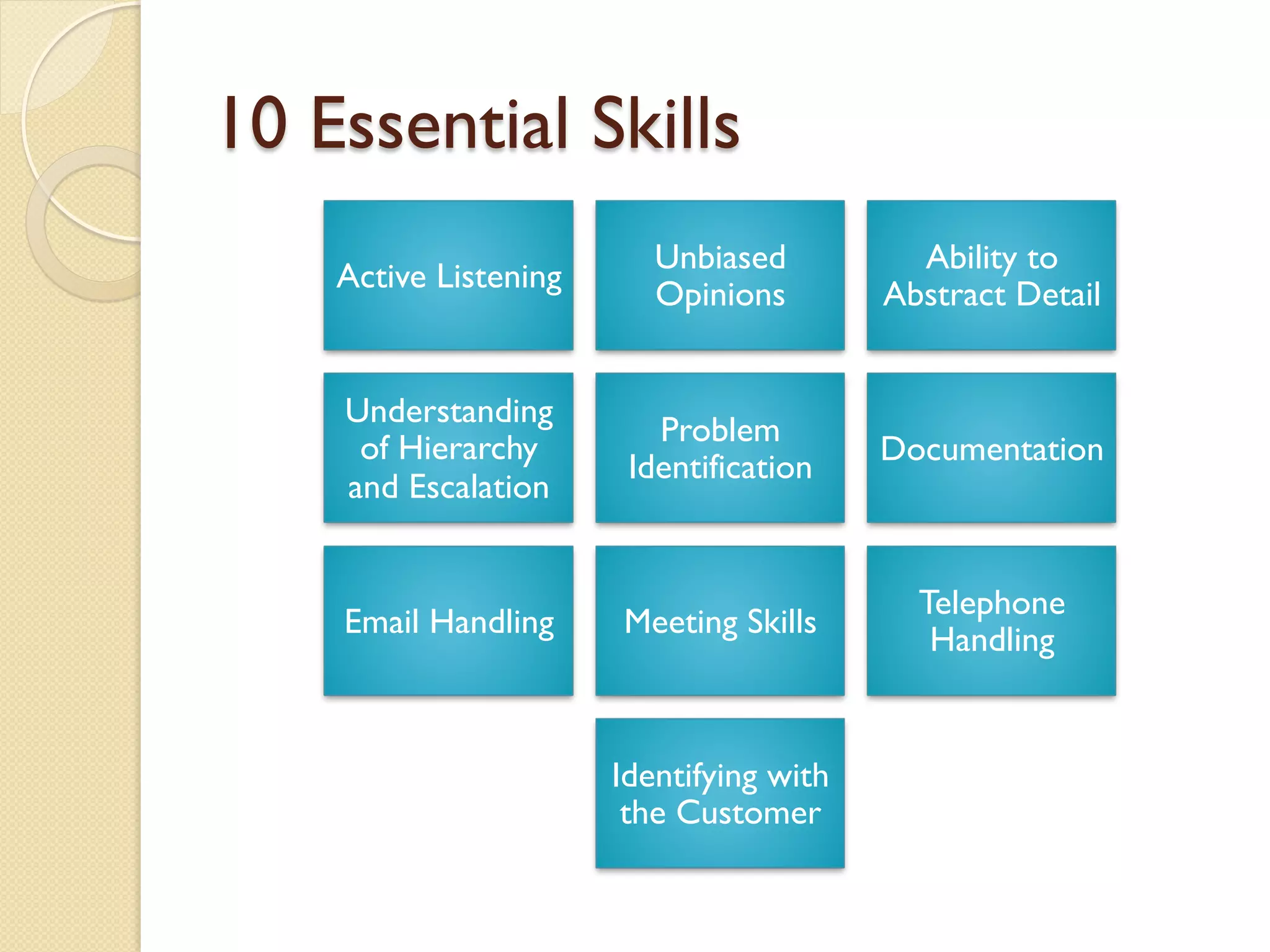
10 Essential Skills
Active Listening
Unbiased
Opinions
Ability to
Abstract Detail
Understanding
of Hierarchy
and Escalation
Problem
Identification
Documentation
Email Handling Meeting Skills
Telephone
Handling
Identifying with
the Customer
1.Active Listening
—  What is it:
◦  If you are speaking more than the client, there
is something wrong
◦  Ask open ended questions
◦  Do not give your view while listening
◦  Do not jump to conclusions
◦  Listen to the ‘unsaid’
2. Unbiased Opinions
—  What it is:
◦  Do not give a one sided opinion
◦  Make every attempt to find out the person’s opinion
on an issue
◦  You must communicate that you value every person’s
opinion and inputs
◦  Do not communicate one person’s opinion to
another
3.Ability to Abstract Detail
—  What it is:
◦  Communicate at the level that one is expecting the
information
◦  Synthesize the main points and be ready with the
details
◦  If you cannot express the issue in a few key points,
the client will not get the confidence that you have
understood it
◦  To quote Denzel Washington in Philadelhia:“Now
speak to me as if I were a three year old, what were
you saying again”
4. Hierarchy and Escalation
—  What it is:
◦  Must know who reports to whom. Who has
power, who is very important and who is
important
◦  In order to do your work, need to escalate
issues. Need to know when to escalate, to
whom and how
◦  From developer to client partner, need to be
able to understand which issues need
bumping up
5. Problem Identification
—  What it is:
◦  Ability to not only outline what has happened
but also why
◦  Identifying the dependencies and the root of
an issue
◦  To know what to do when a problem has
been identified
–  Who to inform
–  Who is responsible
–  When is it expected
6. Documentation
—  What it is:
◦  A legacy of your work. If you do not tell people what
you have done, they will not know
◦  The Style: Introduction must introduce the entire
document, use active voice, do not use first person,
make statements, not opinions
◦  The Format: Header, footer, front page, using
headings and subheadings, having a table of contents
◦  The deliverable: Documentation is a part of the
project. Not something done after the project
7. Email Handling
—  What it is:
◦  The most important mode of communication
◦  Must understand the cultural nature of email. Must know when to use email, when to use
word and when to use the telephone or a face to face meeting
—  Do’s and Don’ts:
◦  Do not have a fight on email. Not the right medium. Never reply to an email when you are
disturbed
◦  When escalating over email, show it to someone and wait for some time before sending it.
Be very very careful before escalating over email. Seldom does it pan out as you expected
◦  Carefully consider the issues before putting too many people in the ‘To’ field in an email. If
you ask many people for help, nobody will
◦  When someone asks you to do something, acknowledge that you have received the mail
although you will take action only later
◦  If you want someone to do something for you, refrain from copying too many people –
specially their boss
◦  Do not treat email medium as a chat with your friends list on IM. Read every mail before
sending it
◦  Each of these media is a different mode of communication:
–  Sending a list of points in an email
–  Putting those points in a document and attaching the document
–  Putting those points in a powerpoint slide and attaching the PPT to an email
Ability to use email effectively is going to be a critical success factor for all people
An Example Of Email Communication
Dear John,
Opening Component List section of an ING specification (414239). Double click on Component List heading in
Spec List. DataWindow Error appeared (Select error: ORA-00942 Table or view does not exist). When OK
clicked it disappears and the list appears as expected…………………..
Dear John,
As per our Discussion with the CIO, we agreed upon that the Call Logging would be done in the similar way
explained below. The users would raise the issue with Local CIO, which in turn, through work flow, would be
assigned to the Helpdesk. But we are yet to decide upon this, which is scheduled for the meeting with Customer
Service.
Apart from that, during the discussion with Mike regarding access to Clarify from Michigan, she mentioned that
there is some work going on related to shared services and that work is still in Process.
Hence as long as support mechanism, Call logging and CIO interaction is concerned, I feel it has to be carried out
by the Helpdesk.
If you have any questions or concerns, you can …………
■  Mail written by the same after three months
8. Meeting Skills
—  What it is:
◦  The essence of how any organization functions. Meetings do not take
you away from your work – they are your work
◦  A place where people come to share ideas, take stock of situations and
take decisions for the future
◦  A place where your professionalism will be most in view
—  Do’s and Don’ts
◦  If you did not add value to a meeting, you probably should not have
been there
◦  Ensure that decisions are documented
◦  Actively listen. Be and look attentive
◦  Know when to bring up an issue and when to take it outside the
meeting – key skill
9.Telephone Handling
—  Do’s and Don’ts
–  Do not pick up the phone and say ‘Hello’
–  Every call must have an introduction, content and closure
–  If you are trying to reach a client and there is a no reply – leave a voice mail.
Do not call again and again every two minutes
–  In a conference call, the unseen voice always sounds more confrontational –
remember that when articulating your point
–  If some decisions were taken over the phone, follow it up with an email to the
concerned person
–  Telephone is not a good medium for handling confrontation. In a collocated
team, go over and speak with the person rather than calling
–  Remember: to the person on the other end of the phone, the voice he/she is
hearing is an expression of your entire personality, professionalism and
competence
10. Identifying with the Customer
◦  You can never be successful if you do not believe that your customer is
a ‘good person’. You must like your customer
◦  Put yourself in your customer’s shoes – sometimes it will help explain
some of his/her behavior
◦  Identification with customer does not mean giving things away free –
free work is seldom appreciated. Must get acknowledged for it
◦  Must know the organization, the peers and bosses of your customer.
◦  Do not compete with your client
◦  Do not identify a problem without a solution
◦  You will be successful if your customer is successful
Why AreYou Developing A Product
Or A Service ?
Financial Pain Point
Productivity Pain Point
Process Pain Point
Support Pain Point
Identifying Pain Points
andValidating them is
extremely crucial for
product success
2 Examples – Spread
across centuries
First Example
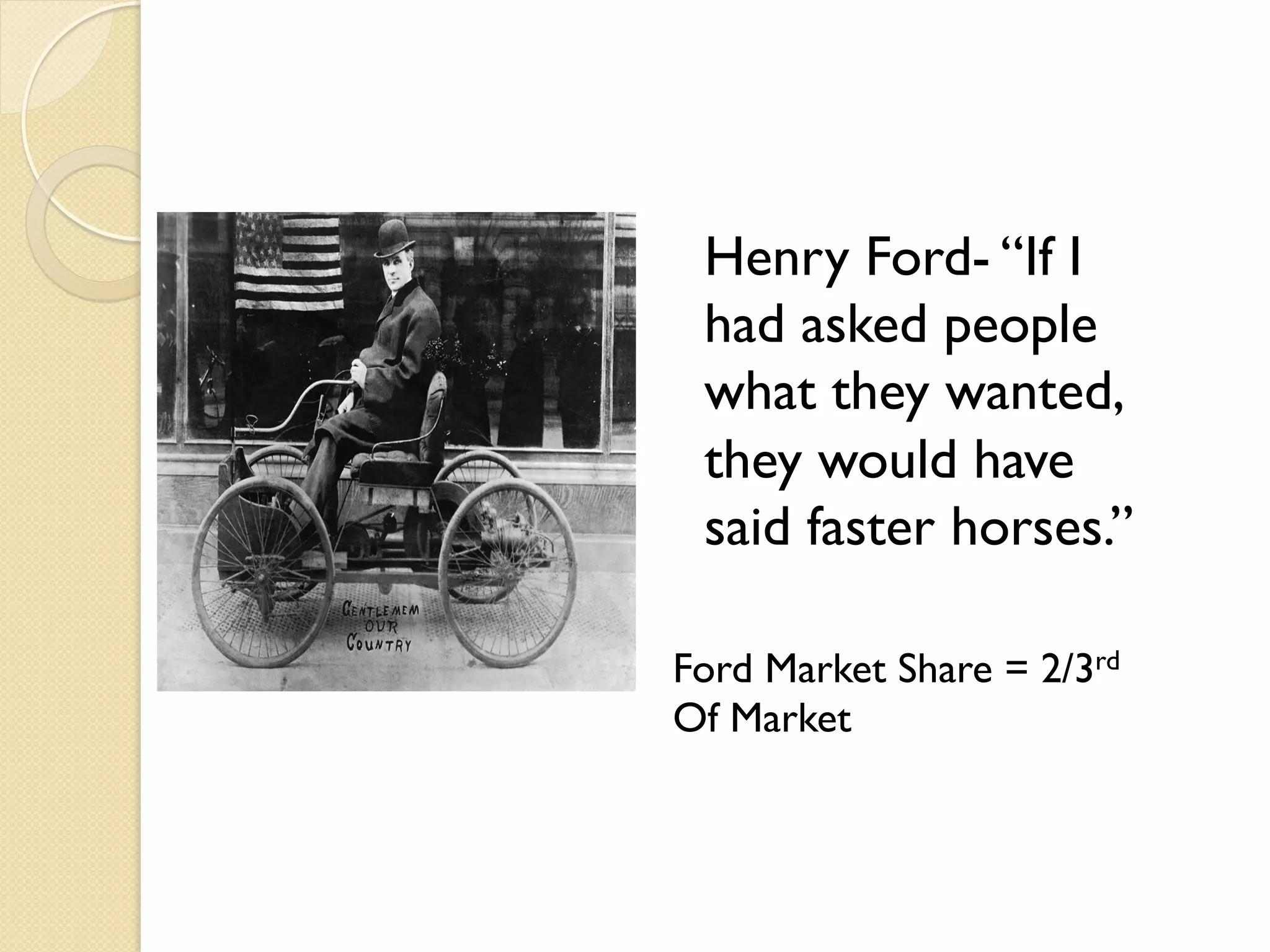
Henry Ford- “If I
had asked people
what they wanted,
they would have
said faster horses.”
Ford Market Share = 2/3rd
Of Market
Henry Ford believed that customers don’t
know what they want (implicit and explicit)
He froze the design and mass produced
which gave low cost product in a growing
market
Do you innovate after soliciting customer
feedback or do something prophetic based
on what you think the vision of tomorrow
will be ?
GM
All was well until Alfred Sloan (GM) came
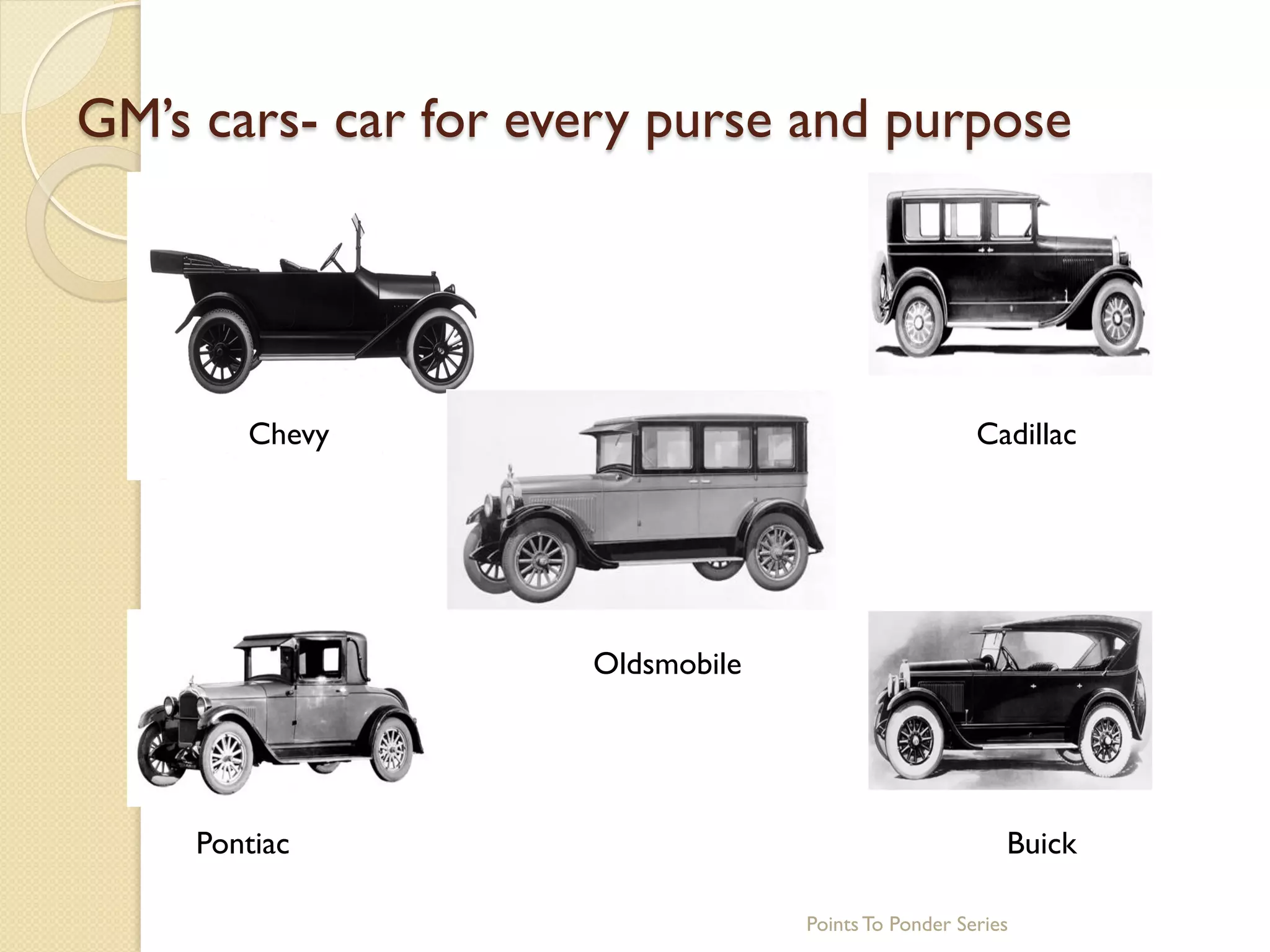
up with “a car for every purse and purpose”
model
—  Chevrolet at low end, Cadillac at high end
and many intermediate models
—  Installment payment
—  End of year closed model sales
GM’s cars- car for every purse and purpose
Points To Ponder Series
Chevy Cadillac
Pontiac Buick
Oldsmobile
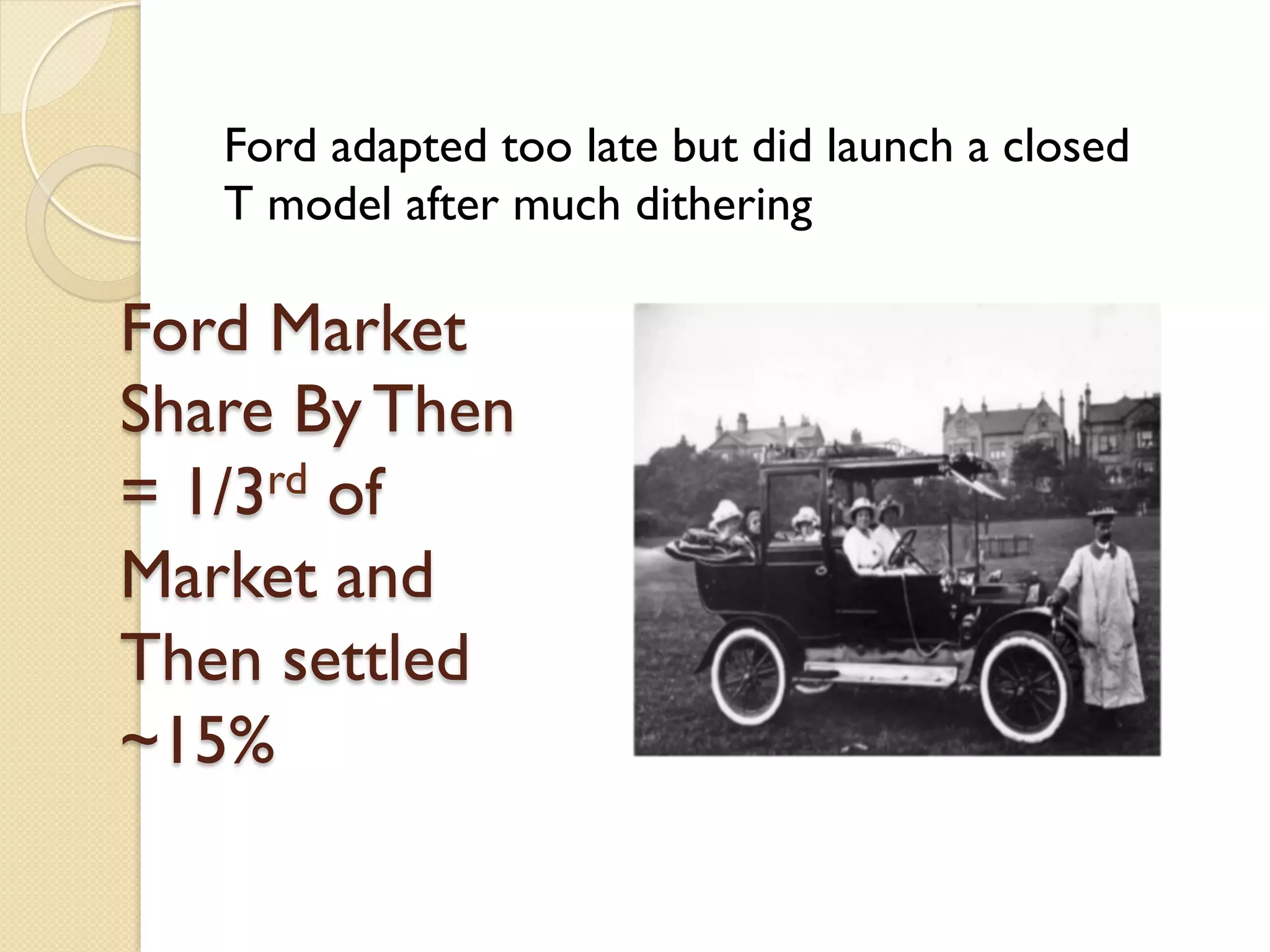
Ford Market
Share By Then
= 1/3rd of
Market and
Then settled
~15%
Ford adapted too late but did launch a closed
T model after much dithering
Point-Counter Point
—  Customers did not want faster horses,
they wanted more options and better
financing
—  Some customers in some business will be
clear what they want, some will not
—  The real lesson learned was not that
Ford’s failure was one of not listening to
his customers, but of his refusal to
continuously test his vision against reality,
It is very key in product development to
continuously check your bearings
The 2nd Example
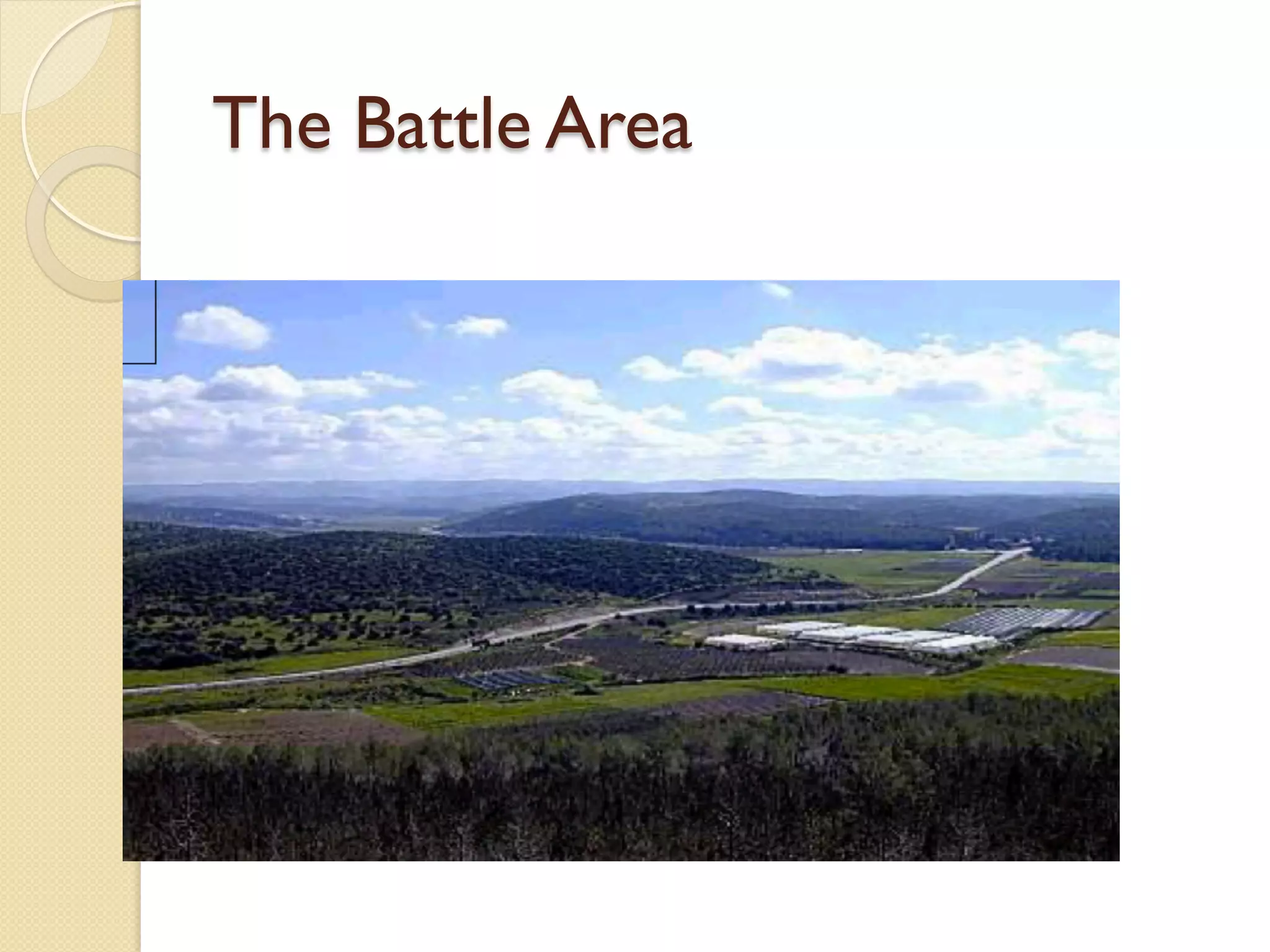
The Battle Area
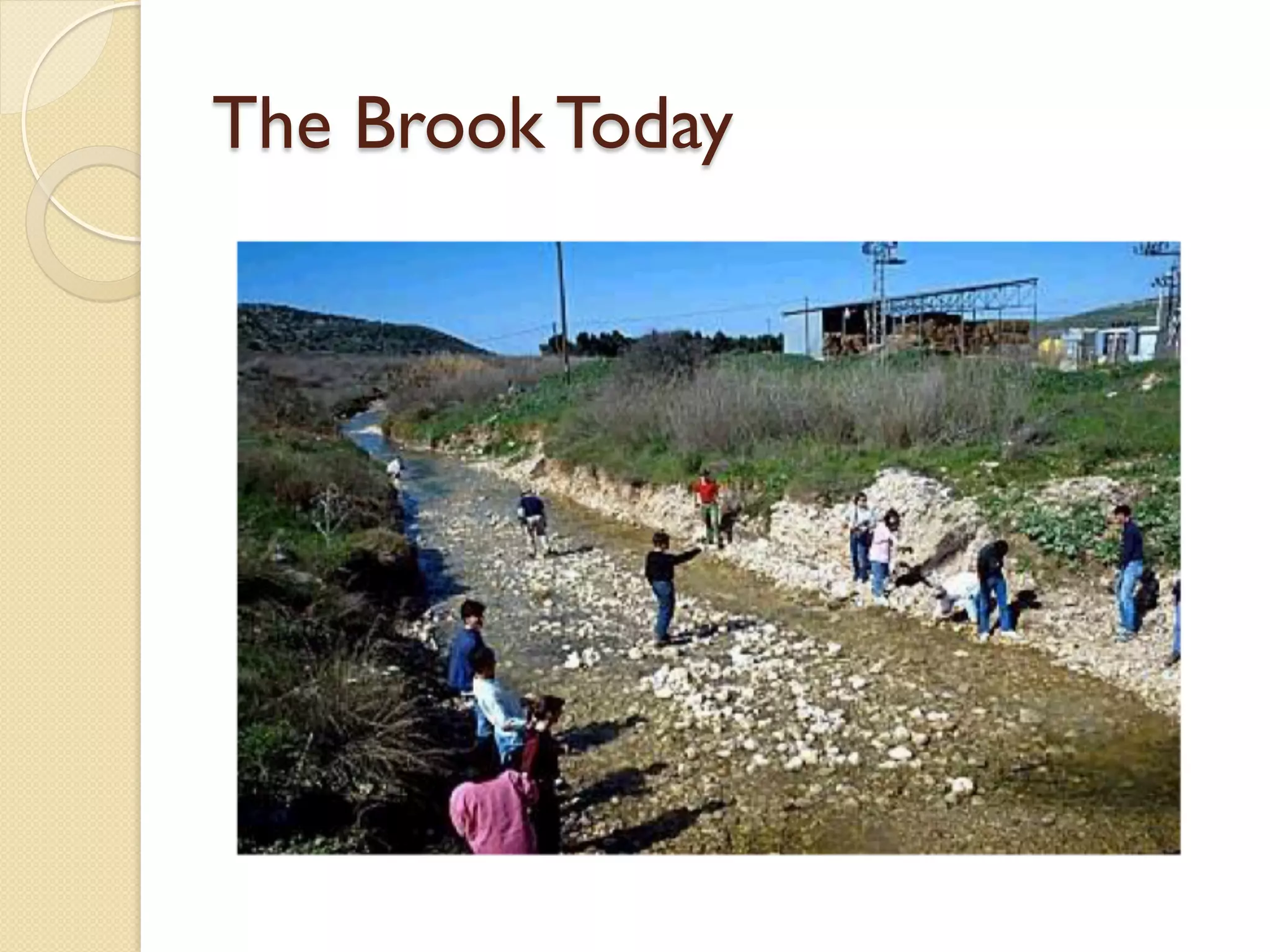
The Brook Today
The Battle
The Current Point OfView
—  David killed Goliath with a sling shot and
was brave and courageous and had good
will and god on his side
—  David used the element of surpise in his
battle
What If ?
—  There were warriors and there were far deadlier
soldiers called slingers – they would pelt stones or
projectile from far away. David had learnt the art of
slinging and used it to protect his sheep from lions
and other animals successfully
—  Goliath is a giant--a mighty, 6-foot-9 Philistine
warrior and suffers from acromegaly.This condition
leads to a person growing extremely tall--but also
often leads to double-vision and severe vision
problems.
—  David found the forehead of Goliath as the sweet
spot to attack from a distance where Goliath spears
or swords could not harm him
Point - CounterPoint
—  When you are working on solving a
problem or pain point, make sure you
look at it from various view points
—  Identify the problem from the customer
point of view and the viability point of
view
Rendanheyi Model (HAIER)
—  Ren – employee
—  Dan – user value
—  Heyi – unity
Every aspect of what the employee does
should have unity with customer value
AreYou Doing That ?
ThankYou

Top 10 Survival skills

  • 1.
    Products & BusinessThink A Primer Anand K Padmanaban
  • 2.
    The Top 10Survival Skills
  • 3.
    10 Essential Skills ActiveListening Unbiased Opinions Ability to Abstract Detail Understanding of Hierarchy and Escalation Problem Identification Documentation Email Handling Meeting Skills Telephone Handling Identifying with the Customer
  • 4.
    1.Active Listening —  Whatis it: ◦  If you are speaking more than the client, there is something wrong ◦  Ask open ended questions ◦  Do not give your view while listening ◦  Do not jump to conclusions ◦  Listen to the ‘unsaid’
  • 5.
    2. Unbiased Opinions — What it is: ◦  Do not give a one sided opinion ◦  Make every attempt to find out the person’s opinion on an issue ◦  You must communicate that you value every person’s opinion and inputs ◦  Do not communicate one person’s opinion to another
  • 6.
    3.Ability to AbstractDetail —  What it is: ◦  Communicate at the level that one is expecting the information ◦  Synthesize the main points and be ready with the details ◦  If you cannot express the issue in a few key points, the client will not get the confidence that you have understood it ◦  To quote Denzel Washington in Philadelhia:“Now speak to me as if I were a three year old, what were you saying again”
  • 7.
    4. Hierarchy andEscalation —  What it is: ◦  Must know who reports to whom. Who has power, who is very important and who is important ◦  In order to do your work, need to escalate issues. Need to know when to escalate, to whom and how ◦  From developer to client partner, need to be able to understand which issues need bumping up
  • 8.
    5. Problem Identification — What it is: ◦  Ability to not only outline what has happened but also why ◦  Identifying the dependencies and the root of an issue ◦  To know what to do when a problem has been identified –  Who to inform –  Who is responsible –  When is it expected
  • 9.
    6. Documentation —  Whatit is: ◦  A legacy of your work. If you do not tell people what you have done, they will not know ◦  The Style: Introduction must introduce the entire document, use active voice, do not use first person, make statements, not opinions ◦  The Format: Header, footer, front page, using headings and subheadings, having a table of contents ◦  The deliverable: Documentation is a part of the project. Not something done after the project
  • 10.
    7. Email Handling — What it is: ◦  The most important mode of communication ◦  Must understand the cultural nature of email. Must know when to use email, when to use word and when to use the telephone or a face to face meeting —  Do’s and Don’ts: ◦  Do not have a fight on email. Not the right medium. Never reply to an email when you are disturbed ◦  When escalating over email, show it to someone and wait for some time before sending it. Be very very careful before escalating over email. Seldom does it pan out as you expected ◦  Carefully consider the issues before putting too many people in the ‘To’ field in an email. If you ask many people for help, nobody will ◦  When someone asks you to do something, acknowledge that you have received the mail although you will take action only later ◦  If you want someone to do something for you, refrain from copying too many people – specially their boss ◦  Do not treat email medium as a chat with your friends list on IM. Read every mail before sending it ◦  Each of these media is a different mode of communication: –  Sending a list of points in an email –  Putting those points in a document and attaching the document –  Putting those points in a powerpoint slide and attaching the PPT to an email Ability to use email effectively is going to be a critical success factor for all people
  • 11.
    An Example OfEmail Communication Dear John, Opening Component List section of an ING specification (414239). Double click on Component List heading in Spec List. DataWindow Error appeared (Select error: ORA-00942 Table or view does not exist). When OK clicked it disappears and the list appears as expected………………….. Dear John, As per our Discussion with the CIO, we agreed upon that the Call Logging would be done in the similar way explained below. The users would raise the issue with Local CIO, which in turn, through work flow, would be assigned to the Helpdesk. But we are yet to decide upon this, which is scheduled for the meeting with Customer Service. Apart from that, during the discussion with Mike regarding access to Clarify from Michigan, she mentioned that there is some work going on related to shared services and that work is still in Process. Hence as long as support mechanism, Call logging and CIO interaction is concerned, I feel it has to be carried out by the Helpdesk. If you have any questions or concerns, you can ………… ■  Mail written by the same after three months
  • 12.
    8. Meeting Skills — What it is: ◦  The essence of how any organization functions. Meetings do not take you away from your work – they are your work ◦  A place where people come to share ideas, take stock of situations and take decisions for the future ◦  A place where your professionalism will be most in view —  Do’s and Don’ts ◦  If you did not add value to a meeting, you probably should not have been there ◦  Ensure that decisions are documented ◦  Actively listen. Be and look attentive ◦  Know when to bring up an issue and when to take it outside the meeting – key skill
  • 13.
    9.Telephone Handling —  Do’sand Don’ts –  Do not pick up the phone and say ‘Hello’ –  Every call must have an introduction, content and closure –  If you are trying to reach a client and there is a no reply – leave a voice mail. Do not call again and again every two minutes –  In a conference call, the unseen voice always sounds more confrontational – remember that when articulating your point –  If some decisions were taken over the phone, follow it up with an email to the concerned person –  Telephone is not a good medium for handling confrontation. In a collocated team, go over and speak with the person rather than calling –  Remember: to the person on the other end of the phone, the voice he/she is hearing is an expression of your entire personality, professionalism and competence
  • 14.
    10. Identifying withthe Customer ◦  You can never be successful if you do not believe that your customer is a ‘good person’. You must like your customer ◦  Put yourself in your customer’s shoes – sometimes it will help explain some of his/her behavior ◦  Identification with customer does not mean giving things away free – free work is seldom appreciated. Must get acknowledged for it ◦  Must know the organization, the peers and bosses of your customer. ◦  Do not compete with your client ◦  Do not identify a problem without a solution ◦  You will be successful if your customer is successful
  • 15.
    Why AreYou DevelopingA Product Or A Service ? Financial Pain Point Productivity Pain Point Process Pain Point Support Pain Point
  • 16.
    Identifying Pain Points andValidatingthem is extremely crucial for product success 2 Examples – Spread across centuries
  • 17.
  • 19.
    Henry Ford- “IfI had asked people what they wanted, they would have said faster horses.” Ford Market Share = 2/3rd Of Market
  • 20.
    Henry Ford believedthat customers don’t know what they want (implicit and explicit) He froze the design and mass produced which gave low cost product in a growing market Do you innovate after soliciting customer feedback or do something prophetic based on what you think the vision of tomorrow will be ?
  • 21.
    GM All was welluntil Alfred Sloan (GM) came up with “a car for every purse and purpose” model —  Chevrolet at low end, Cadillac at high end and many intermediate models —  Installment payment —  End of year closed model sales
  • 22.
    GM’s cars- carfor every purse and purpose Points To Ponder Series Chevy Cadillac Pontiac Buick Oldsmobile
  • 23.
    Ford Market Share ByThen = 1/3rd of Market and Then settled ~15% Ford adapted too late but did launch a closed T model after much dithering
  • 24.
    Point-Counter Point —  Customersdid not want faster horses, they wanted more options and better financing —  Some customers in some business will be clear what they want, some will not —  The real lesson learned was not that Ford’s failure was one of not listening to his customers, but of his refusal to continuously test his vision against reality, It is very key in product development to continuously check your bearings
  • 25.
  • 26.
  • 27.
  • 28.
  • 29.
    The Current PointOfView —  David killed Goliath with a sling shot and was brave and courageous and had good will and god on his side —  David used the element of surpise in his battle
  • 30.
    What If ? — There were warriors and there were far deadlier soldiers called slingers – they would pelt stones or projectile from far away. David had learnt the art of slinging and used it to protect his sheep from lions and other animals successfully —  Goliath is a giant--a mighty, 6-foot-9 Philistine warrior and suffers from acromegaly.This condition leads to a person growing extremely tall--but also often leads to double-vision and severe vision problems. —  David found the forehead of Goliath as the sweet spot to attack from a distance where Goliath spears or swords could not harm him
  • 31.
    Point - CounterPoint — When you are working on solving a problem or pain point, make sure you look at it from various view points —  Identify the problem from the customer point of view and the viability point of view
  • 32.
    Rendanheyi Model (HAIER) — Ren – employee —  Dan – user value —  Heyi – unity Every aspect of what the employee does should have unity with customer value AreYou Doing That ?
  • 33.