PCR-SSCP(Single Strand Conformation
Polymorphism)
Presented to:
•Dr. Atif Kamran
Presented by:
• Fatima Iftikhar MS-19
Session:
• 2020-2022
• University of the Punjab
Rationale
PCR-SSCP (single-strand conformation
polymorphism) analysis is the easiest and one of the
most sensitive mutation detection technique.
This technique has been widely used for the detection
of mutations.
This technique has also been useful for detecting
polymorphisms that are linked to various genes.
1
While the
sensitivity of
PCR-SSCP
tends to decrease
with increasing
fragment length.
PCR-SSCP
analysis is much
more sensitive to
the replication
errors that occur
during the PCR.
In PCR-SSCP
analysis,
changes in
several hundred
bases are
detected.
DETECTION
2
More
laboratory
skills are
required to
optimize it.
When the main
purpose of a
particular
genotyping
experiment is
the detection of
an unknown
SNP, the best
technique is
PCR SSCP.
The concept of
PCR-SSCP is
based on the
presence or
absence of a
particular
mutation
between
normal and
mutant
amplicons.
3
How PCR-SSCP works?
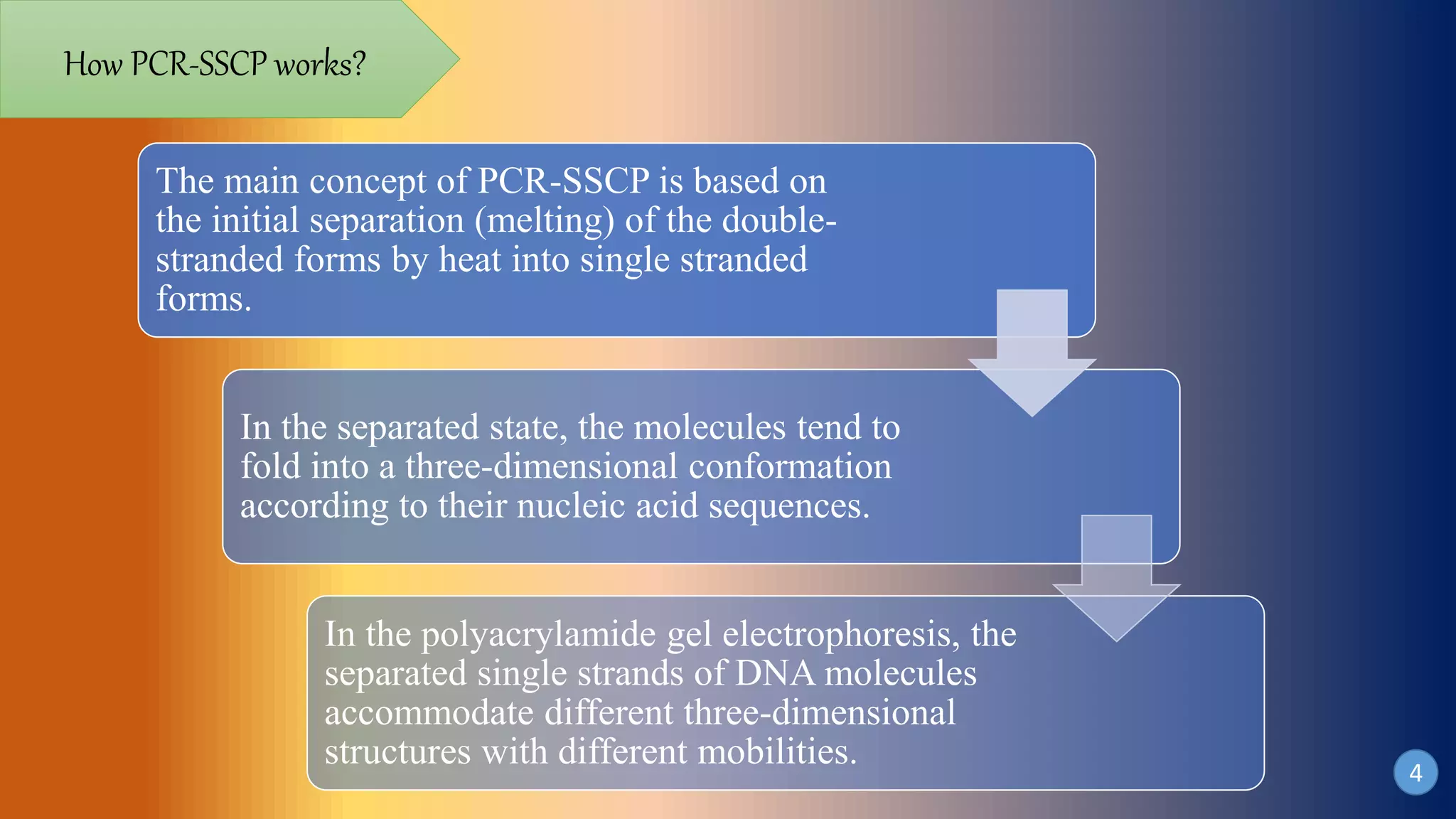
The main concept of PCR-SSCP is based on
the initial separation (melting) of the double-
stranded forms by heat into single stranded
forms.
In the separated state, the molecules tend to
fold into a three-dimensional conformation
according to their nucleic acid sequences.
In the polyacrylamide gel electrophoresis, the
separated single strands of DNA molecules
accommodate different three-dimensional
structures with different mobilities. 4
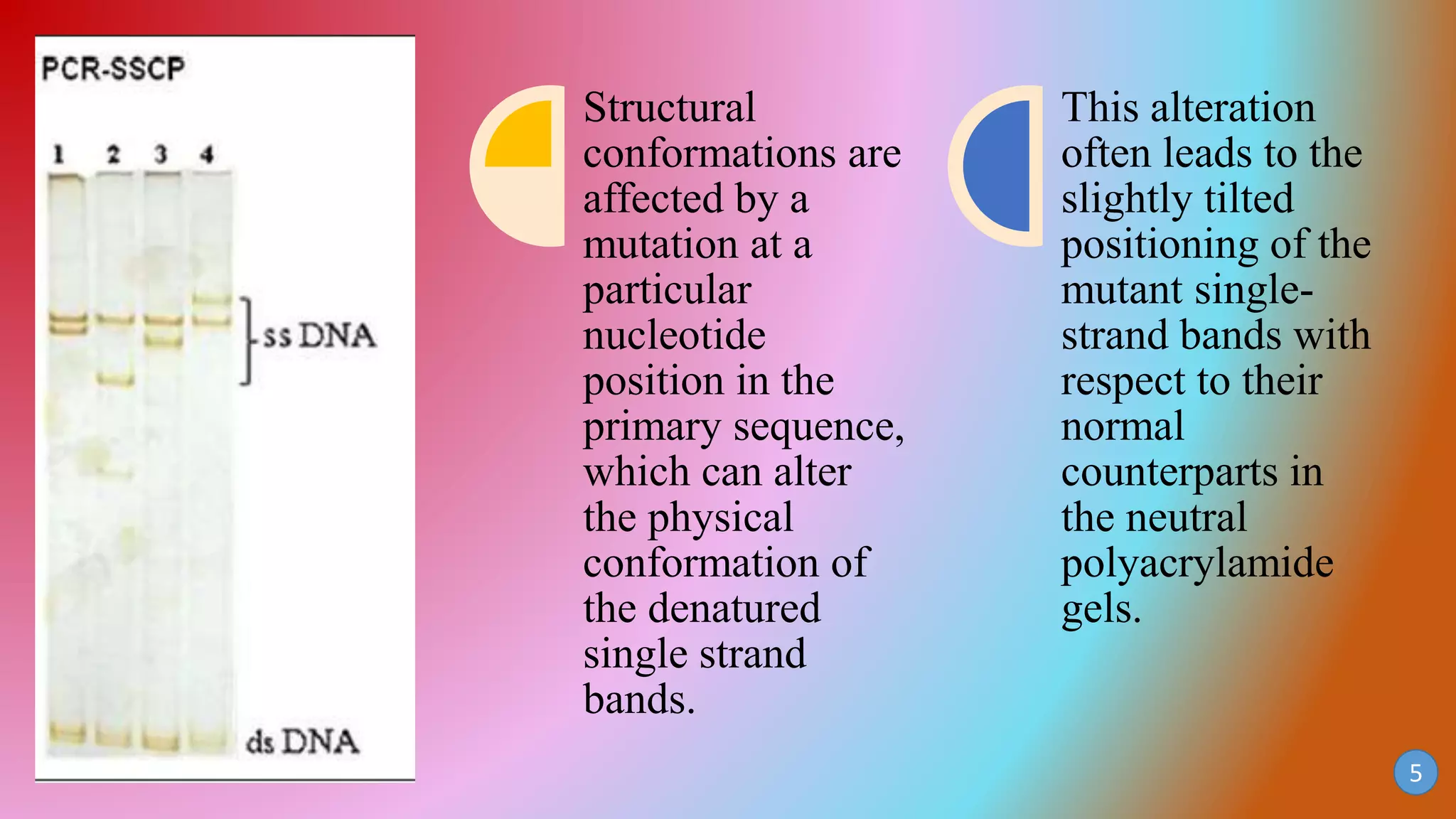
Structural
conformations are
affected by a
mutation at a
particular
nucleotide
position in the
primary sequence,
which can alter
the physical
conformation of
the denatured
single strand
bands.
This alteration
often leads to the
slightly tilted
positioning of the
mutant single-
strand bands with
respect to their
normal
counterparts in
the neutral
polyacrylamide
gels.
5
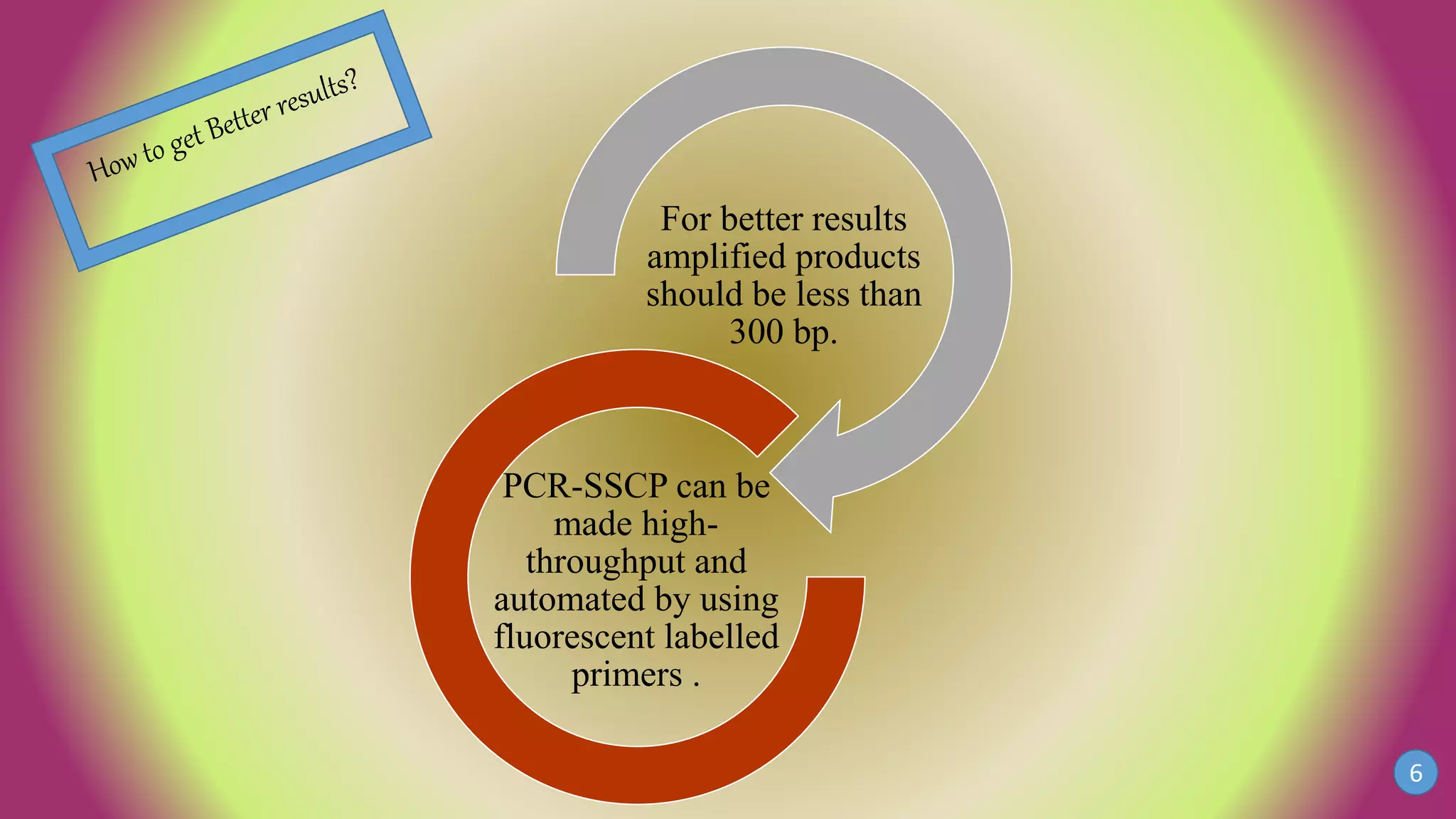
For better results
amplified products
should be less than
300 bp.
PCR-SSCP can be
made high-
throughput and
automated by using
fluorescent labelled
primers .
6
7
Applications
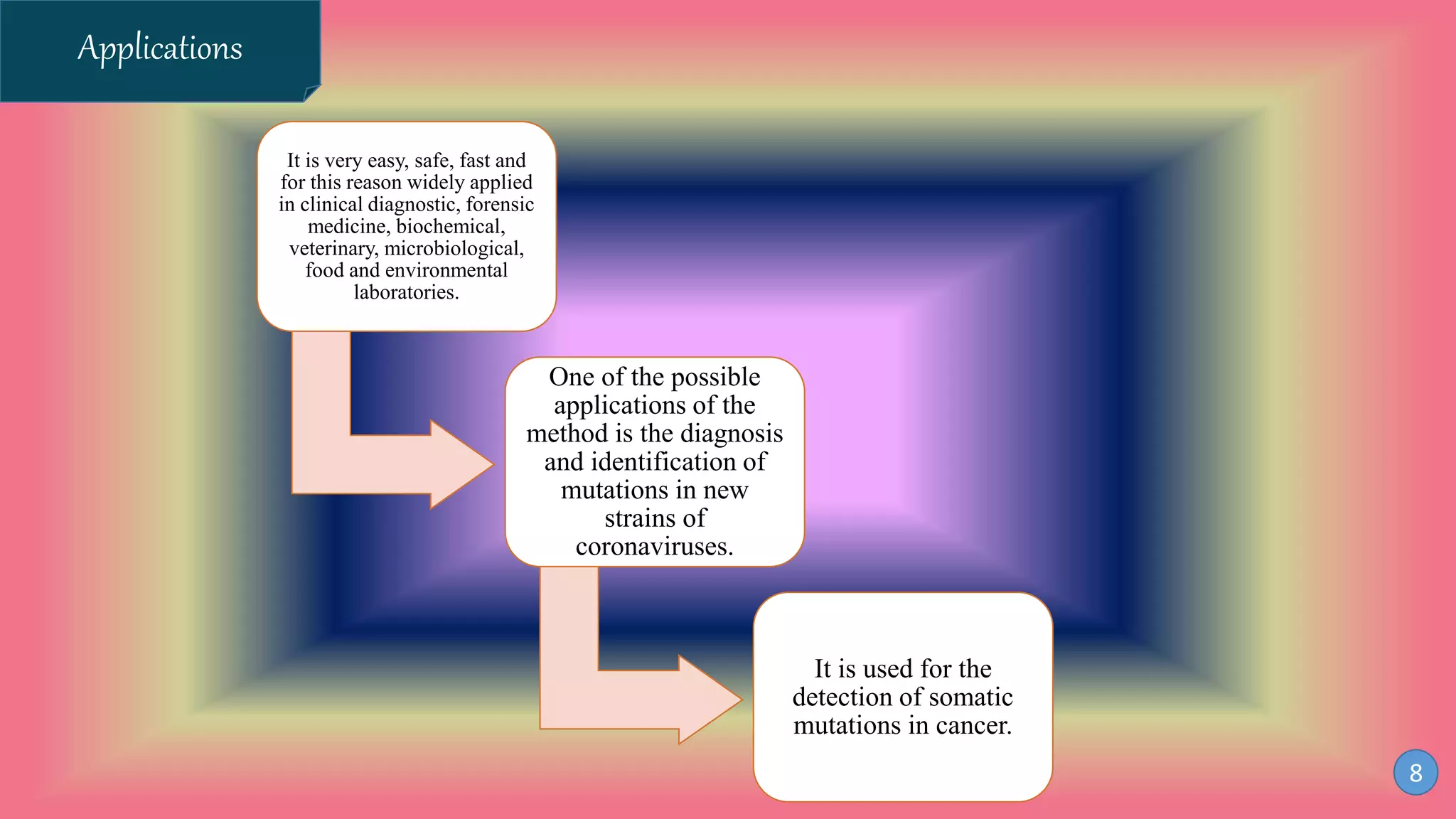
It is very easy, safe, fast and
for this reason widely applied
in clinical diagnostic, forensic
medicine, biochemical,
veterinary, microbiological,
food and environmental
laboratories.
One of the possible
applications of the
method is the diagnosis
and identification of
mutations in new
strains of
coronaviruses.
It is used for the
detection of somatic
mutations in cancer.
8
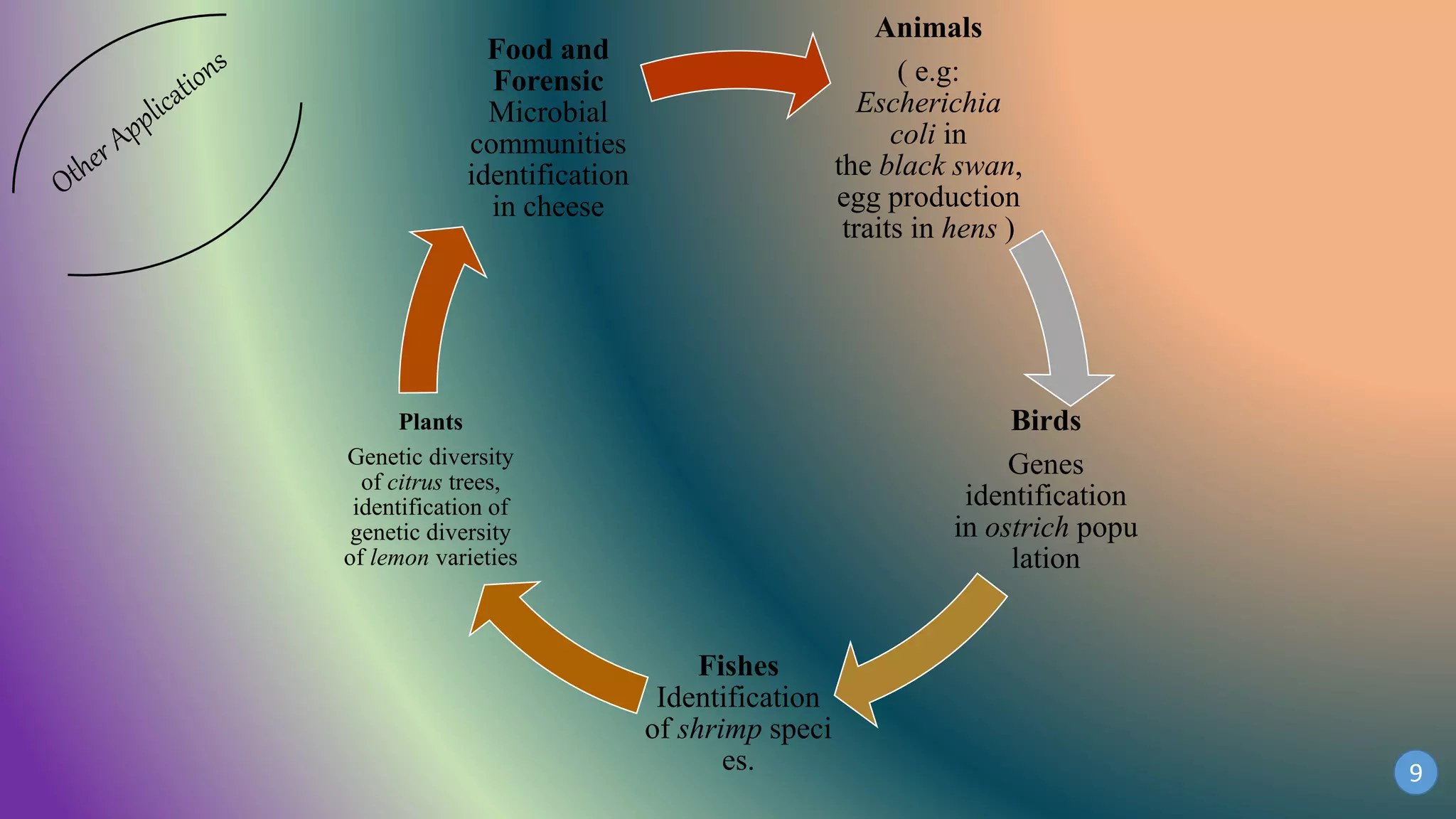
Animals
( e.g:
Escherichia
coli in
the black swan,
egg production
traits in hens )
Birds
Genes
identification
in ostrich popu
lation
Fishes
Identification
of shrimp speci
es.
Plants
Genetic diversity
of citrus trees,
identification of
genetic diversity
of lemon varieties
Food and
Forensic
Microbial
communities
identification
in cheese
9
References
Al-Shuhaib, M. B. S., Al-Lamy, S. M., Al-Tayy, H. M., Al-Thuwaini, T. M., & Radhi, A. H. (2018). Single
nucleotide polymorphism (SNP) of leptin gene in Holstein cattle. Thai Journal of Veterinary Medicine, 48(2),
187-201.
Battilani, M., Coradin, T., Scagliarini, A., Ciulli, S., Ostanello, F., Prosperi, S., & Morganti, L. (2003).
Quasispecies composition and phylogenetic analysis of feline coronaviruses (FCoVs) in naturally infected cats.
FEMS Immunol Med Microbiol, 39, 141-147.
Csikos, A., Hodzic, A., Pasic-Juhas, E., Javor, A., Hrković-Porobija, A., Goletic, T., & Czegledi, L. (2016).
Applicability and sensitivity of PCR-SSCP method for milk species identification in cheese. Acta
Alimentaria, 45(1), 69-76.
Gasser, R. B., Hu, M., Chilton, N. B., Campbell, B. E., Jex, A. J., Otranto, D., & Zhu, X. (2006). Single-strand
conformation polymorphism (SSCP) for the analysis of genetic variation. Nature protocols, 1(6), 3121-3128.
Hayashi, K. (1992). PCR-SSCP: a method for detection of mutations. Genetic Analysis: Biomolecular
Engineering, 9(3), 73-79.
Kakavas, K.V. (2021). Sensitivity and applications of the PCR Single-Strand Conformation Polymorphism
method. Mol Biol Rep, 48, 3629-3635. 10
Pcr single strand conformation polymorphism

Pcr single strand conformation polymorphism

  • 1.
    PCR-SSCP(Single Strand Conformation Polymorphism) Presentedto: •Dr. Atif Kamran Presented by: • Fatima Iftikhar MS-19 Session: • 2020-2022 • University of the Punjab
  • 2.
    Rationale PCR-SSCP (single-strand conformation polymorphism)analysis is the easiest and one of the most sensitive mutation detection technique. This technique has been widely used for the detection of mutations. This technique has also been useful for detecting polymorphisms that are linked to various genes. 1
  • 3.
    While the sensitivity of PCR-SSCP tendsto decrease with increasing fragment length. PCR-SSCP analysis is much more sensitive to the replication errors that occur during the PCR. In PCR-SSCP analysis, changes in several hundred bases are detected. DETECTION 2
  • 4.
    More laboratory skills are required to optimizeit. When the main purpose of a particular genotyping experiment is the detection of an unknown SNP, the best technique is PCR SSCP. The concept of PCR-SSCP is based on the presence or absence of a particular mutation between normal and mutant amplicons. 3
  • 5.
    How PCR-SSCP works? Themain concept of PCR-SSCP is based on the initial separation (melting) of the double- stranded forms by heat into single stranded forms. In the separated state, the molecules tend to fold into a three-dimensional conformation according to their nucleic acid sequences. In the polyacrylamide gel electrophoresis, the separated single strands of DNA molecules accommodate different three-dimensional structures with different mobilities. 4
  • 6.
    Structural conformations are affected bya mutation at a particular nucleotide position in the primary sequence, which can alter the physical conformation of the denatured single strand bands. This alteration often leads to the slightly tilted positioning of the mutant single- strand bands with respect to their normal counterparts in the neutral polyacrylamide gels. 5
  • 7.
    For better results amplifiedproducts should be less than 300 bp. PCR-SSCP can be made high- throughput and automated by using fluorescent labelled primers . 6
  • 8.
  • 9.
    Applications It is veryeasy, safe, fast and for this reason widely applied in clinical diagnostic, forensic medicine, biochemical, veterinary, microbiological, food and environmental laboratories. One of the possible applications of the method is the diagnosis and identification of mutations in new strains of coronaviruses. It is used for the detection of somatic mutations in cancer. 8
  • 10.
    Animals ( e.g: Escherichia coli in theblack swan, egg production traits in hens ) Birds Genes identification in ostrich popu lation Fishes Identification of shrimp speci es. Plants Genetic diversity of citrus trees, identification of genetic diversity of lemon varieties Food and Forensic Microbial communities identification in cheese 9
  • 11.
    References Al-Shuhaib, M. B.S., Al-Lamy, S. M., Al-Tayy, H. M., Al-Thuwaini, T. M., & Radhi, A. H. (2018). Single nucleotide polymorphism (SNP) of leptin gene in Holstein cattle. Thai Journal of Veterinary Medicine, 48(2), 187-201. Battilani, M., Coradin, T., Scagliarini, A., Ciulli, S., Ostanello, F., Prosperi, S., & Morganti, L. (2003). Quasispecies composition and phylogenetic analysis of feline coronaviruses (FCoVs) in naturally infected cats. FEMS Immunol Med Microbiol, 39, 141-147. Csikos, A., Hodzic, A., Pasic-Juhas, E., Javor, A., Hrković-Porobija, A., Goletic, T., & Czegledi, L. (2016). Applicability and sensitivity of PCR-SSCP method for milk species identification in cheese. Acta Alimentaria, 45(1), 69-76. Gasser, R. B., Hu, M., Chilton, N. B., Campbell, B. E., Jex, A. J., Otranto, D., & Zhu, X. (2006). Single-strand conformation polymorphism (SSCP) for the analysis of genetic variation. Nature protocols, 1(6), 3121-3128. Hayashi, K. (1992). PCR-SSCP: a method for detection of mutations. Genetic Analysis: Biomolecular Engineering, 9(3), 73-79. Kakavas, K.V. (2021). Sensitivity and applications of the PCR Single-Strand Conformation Polymorphism method. Mol Biol Rep, 48, 3629-3635. 10