PCA AND LDA (MACHINE
LEARNING)
Akhilesh Joshi
akhileshjoshi123@gmail
.com
PCA
PRINCIPAL COMPONENT ANALYSIS
DEFINED
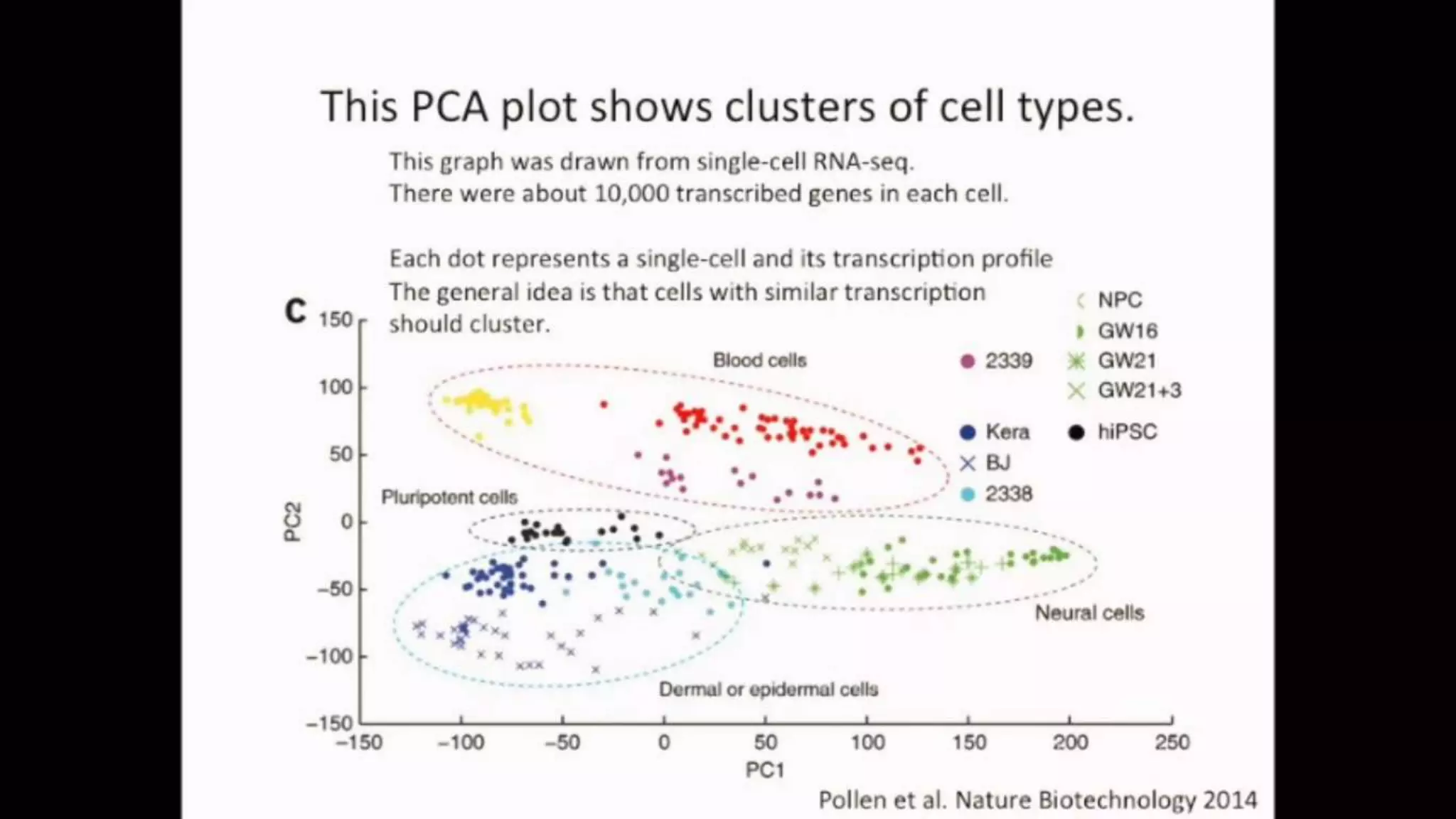
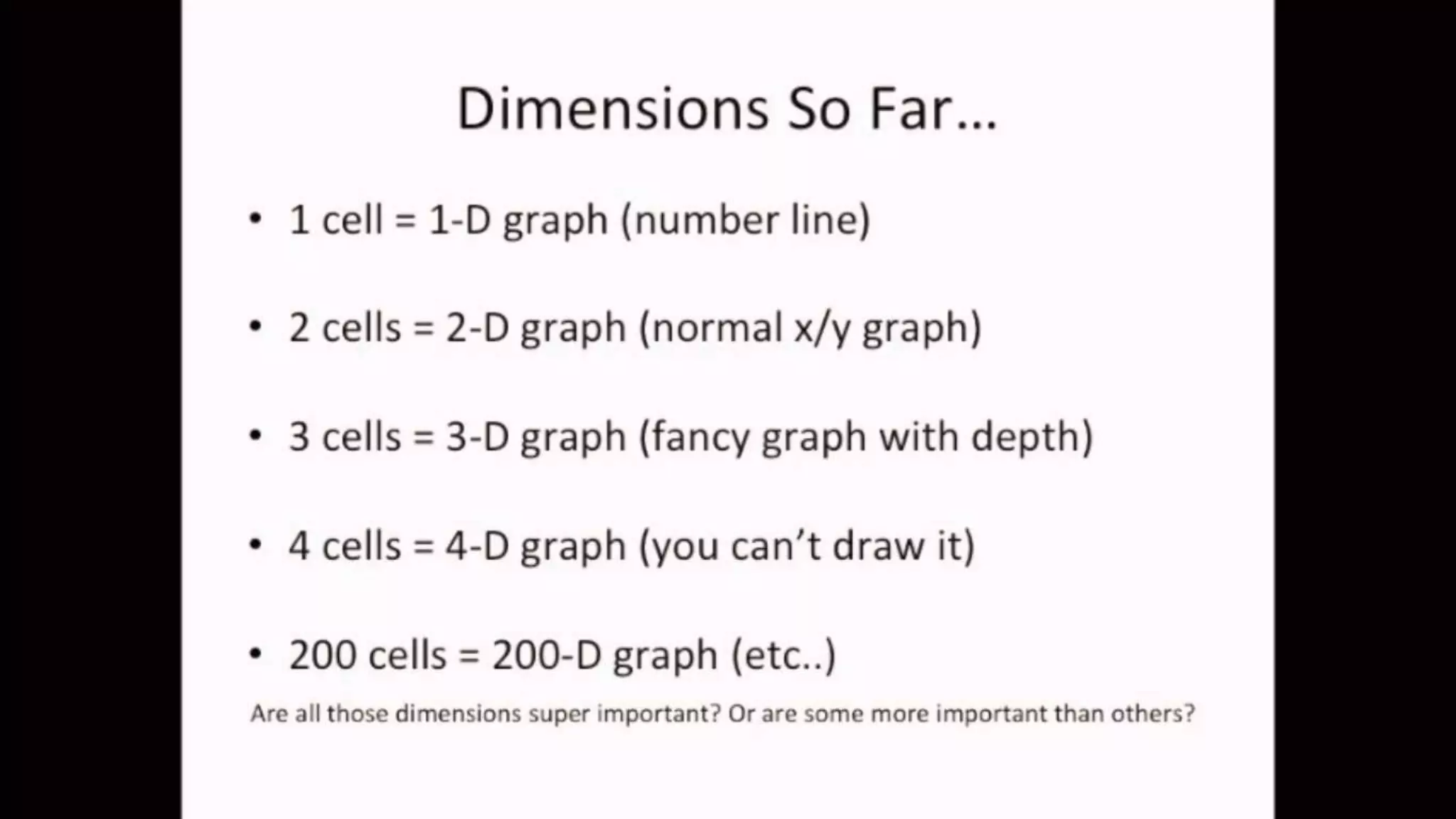
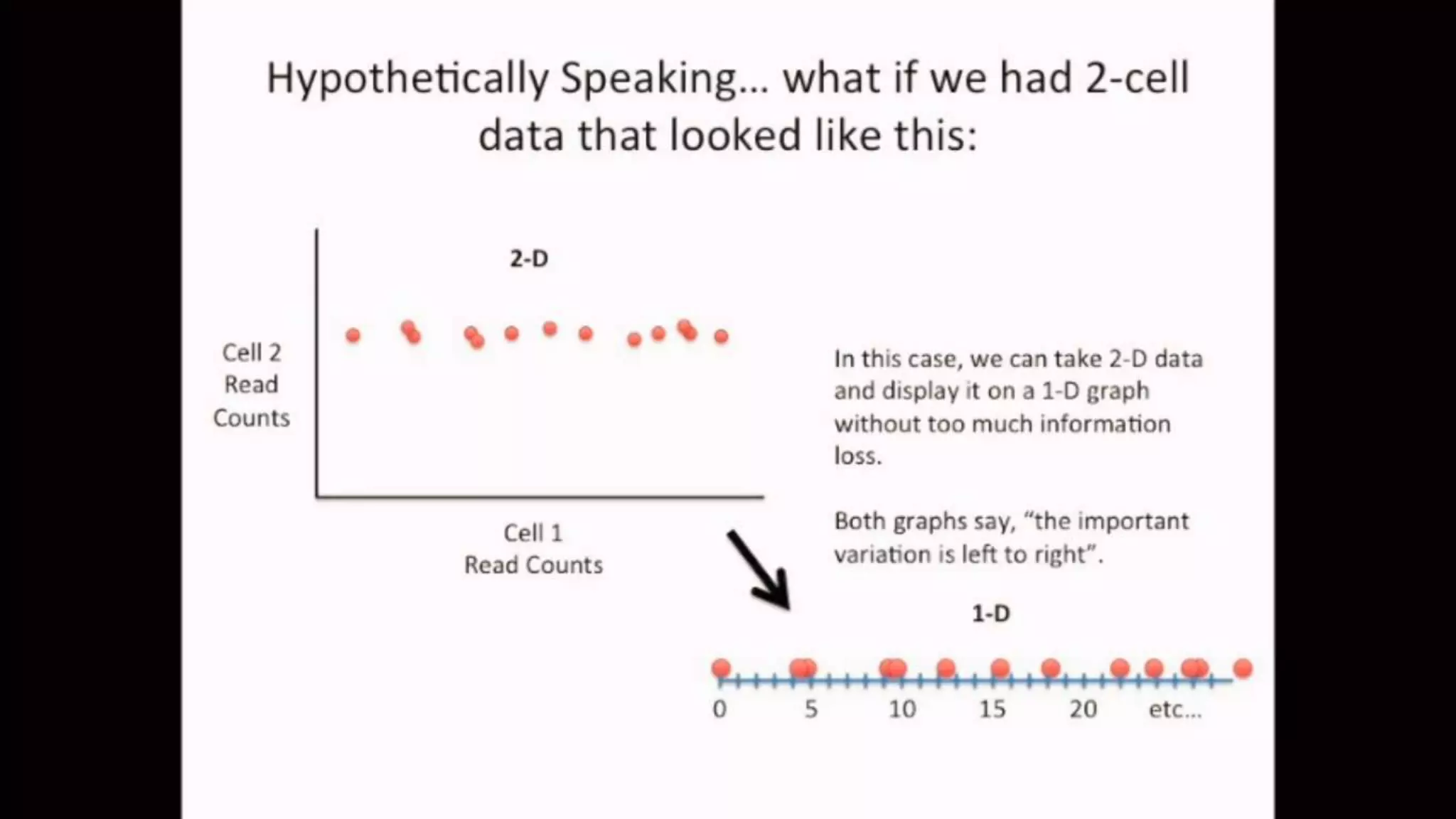
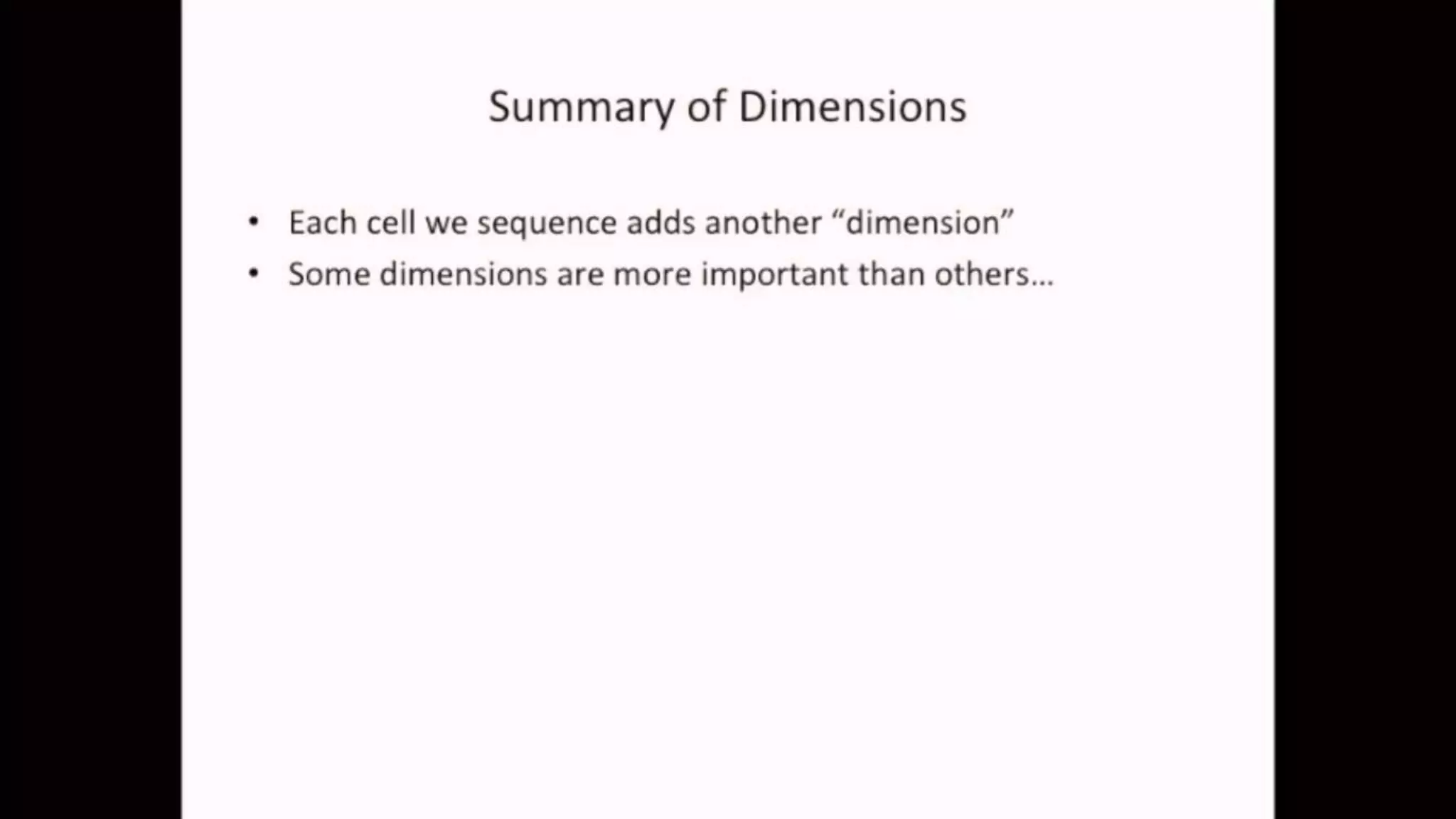
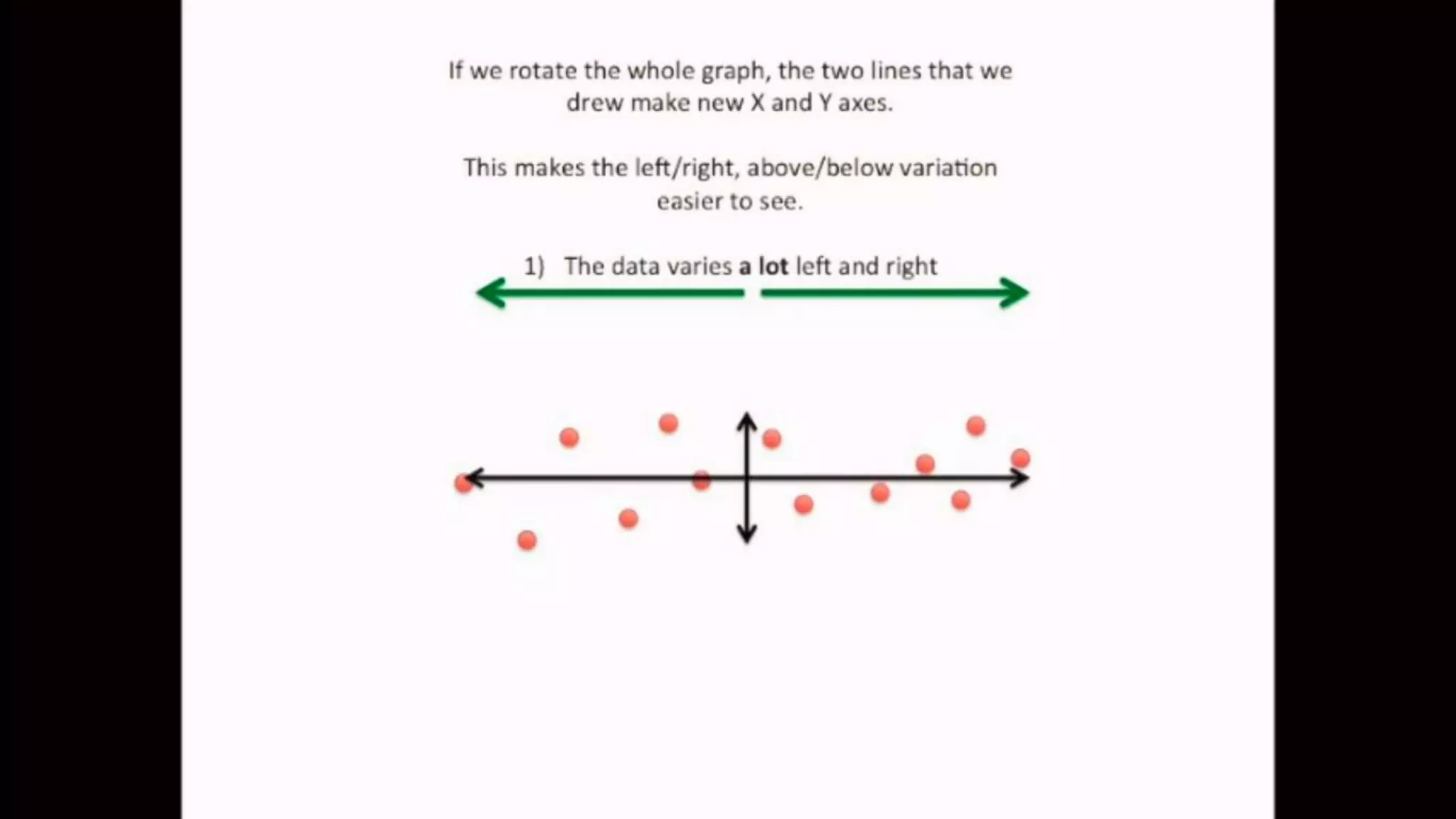
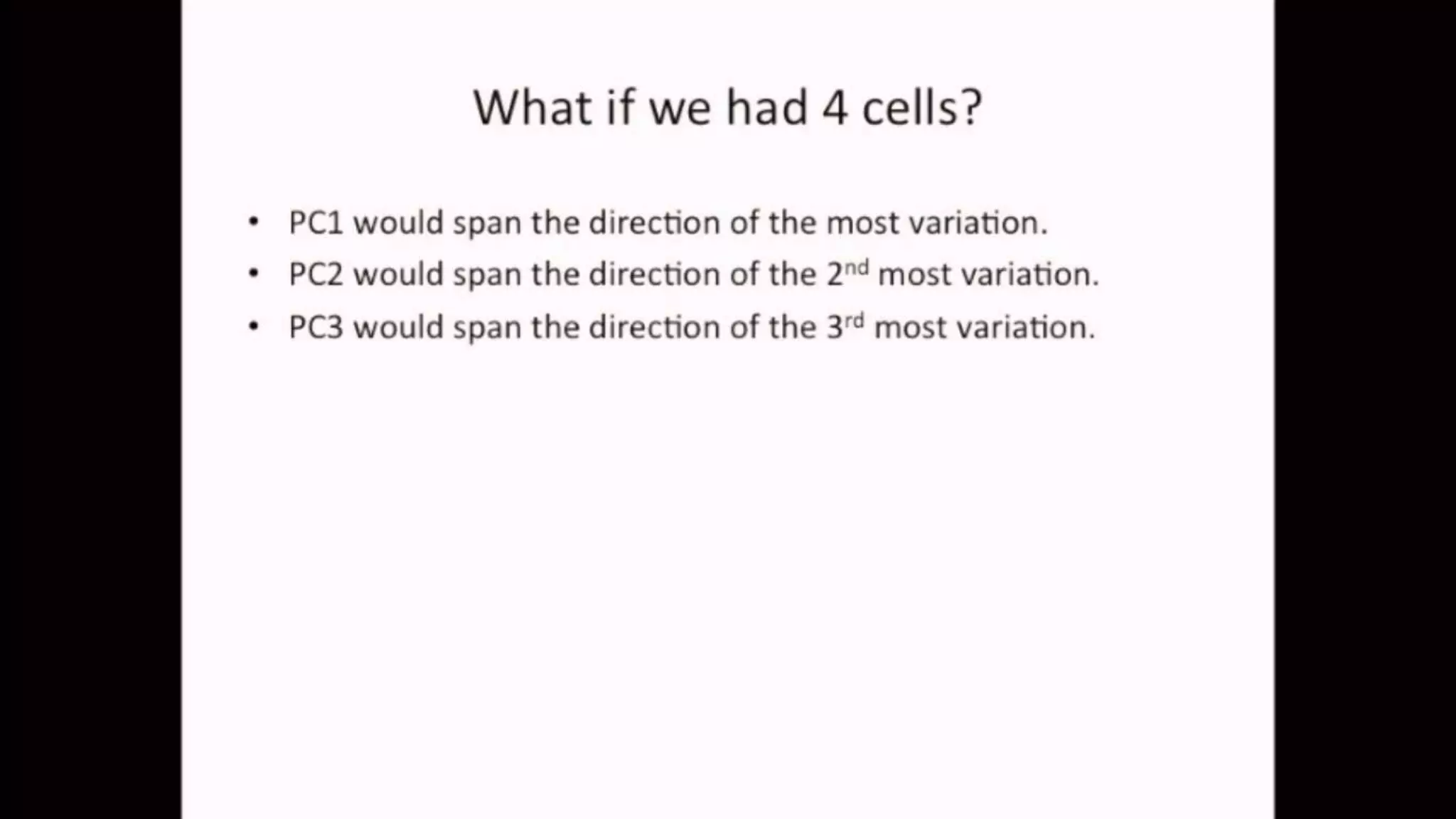
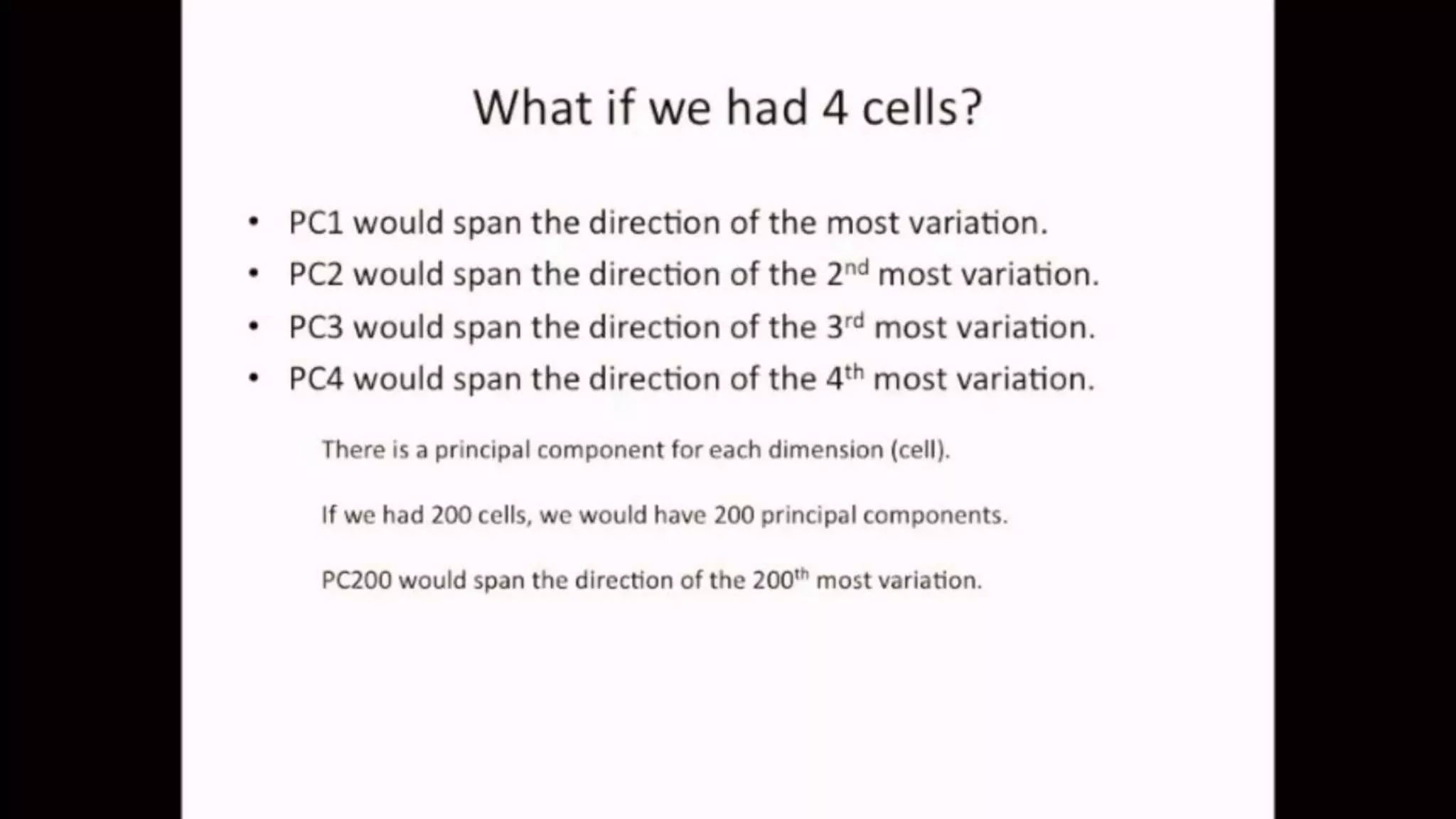
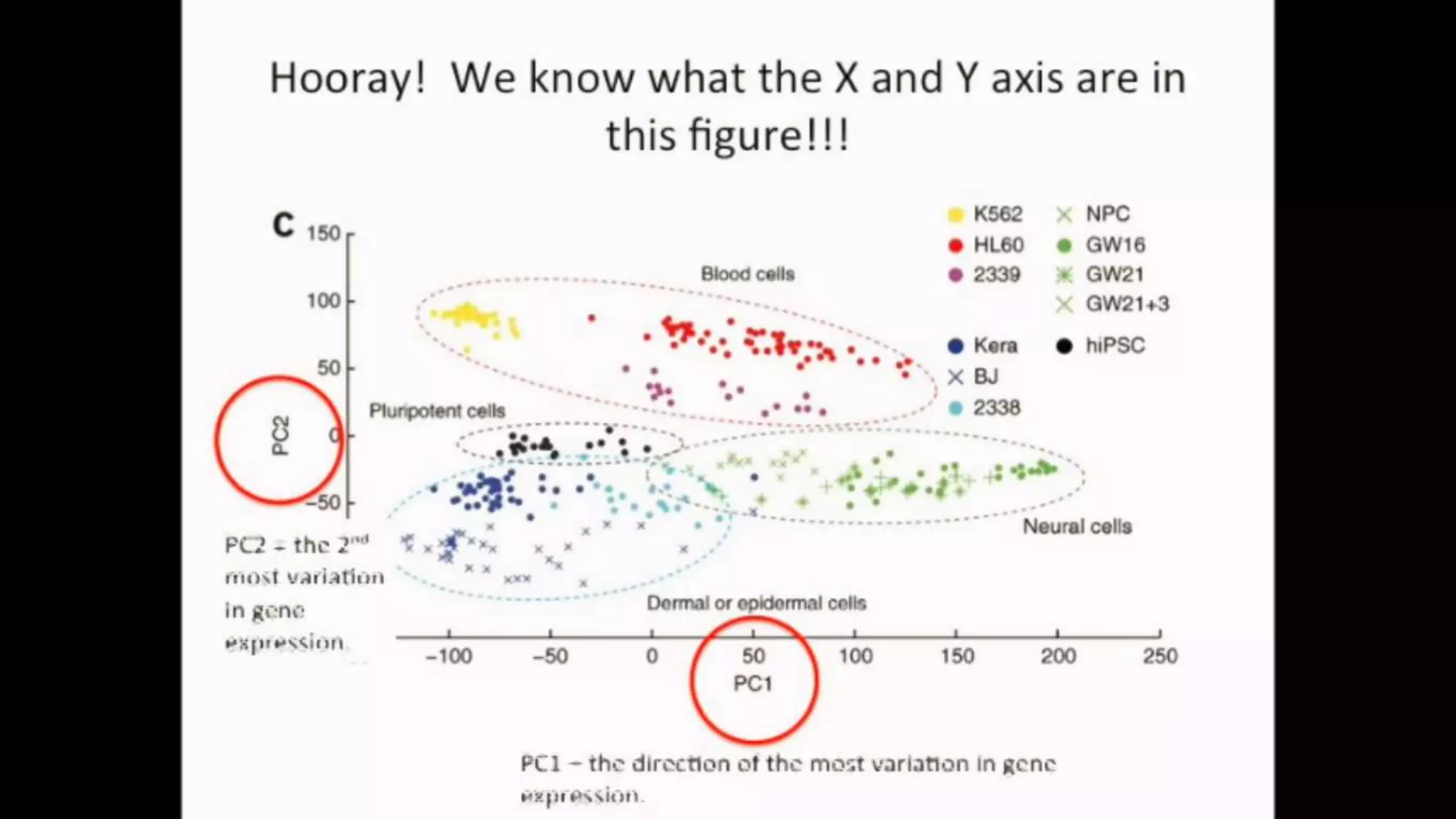
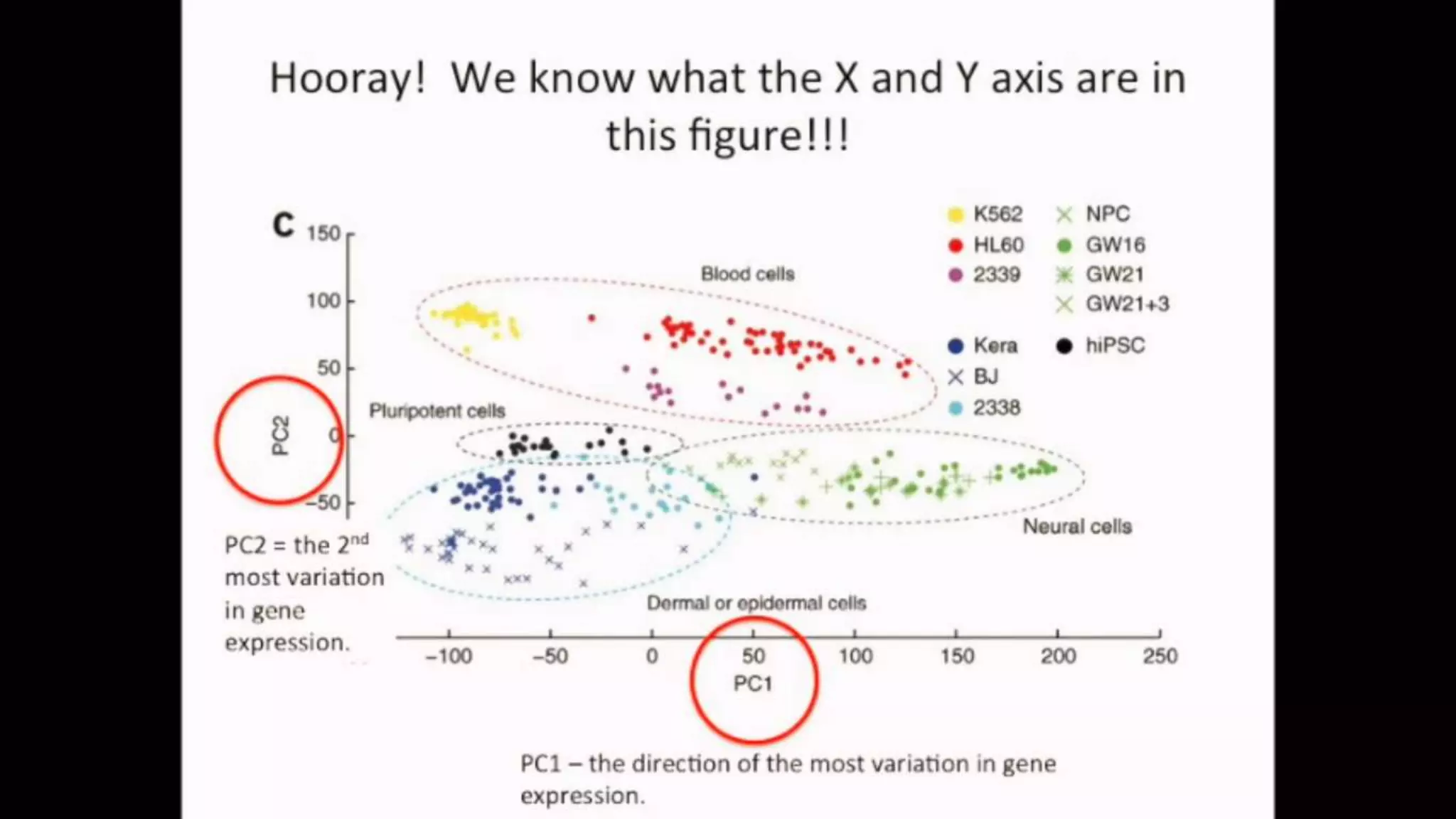
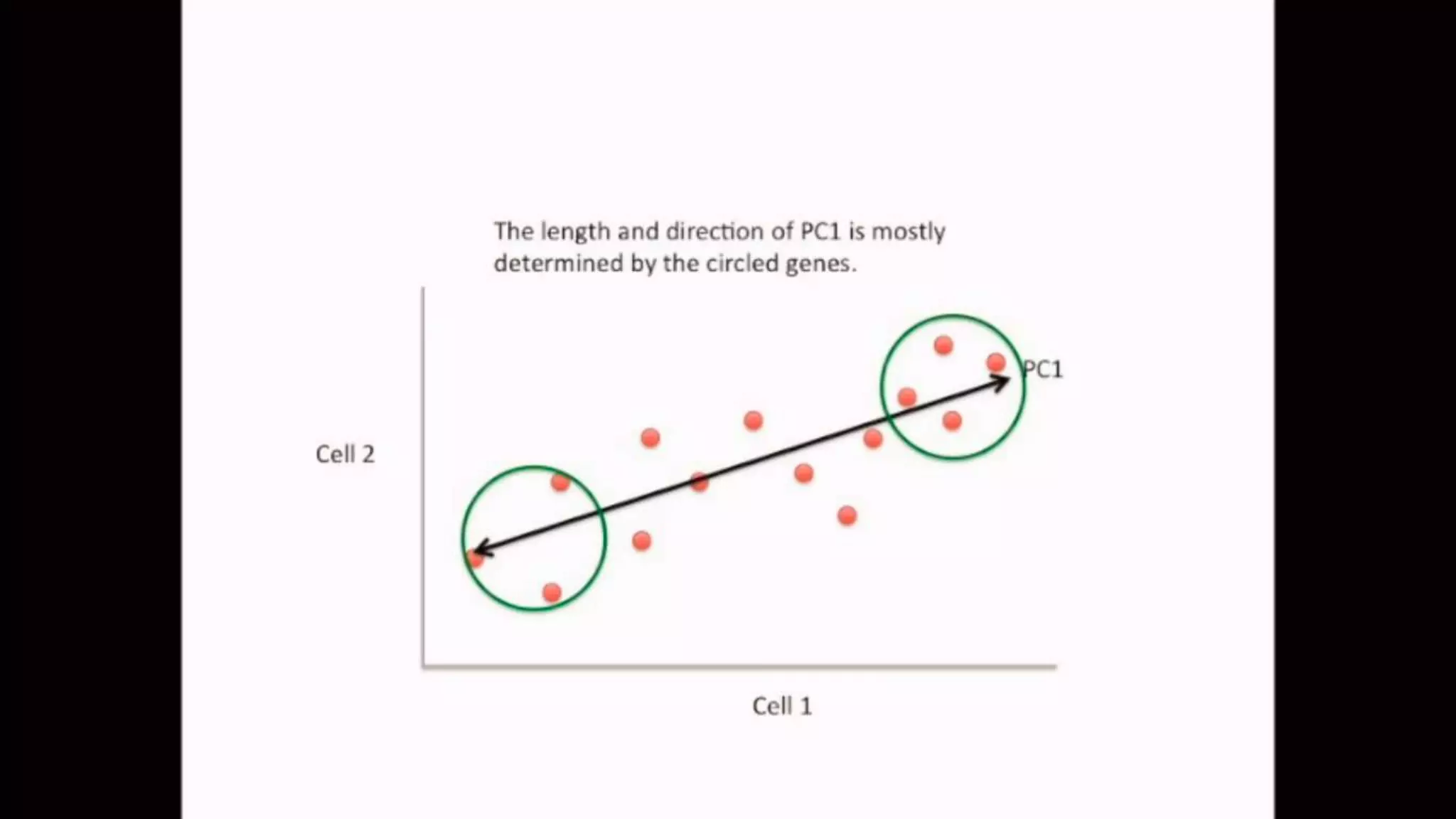
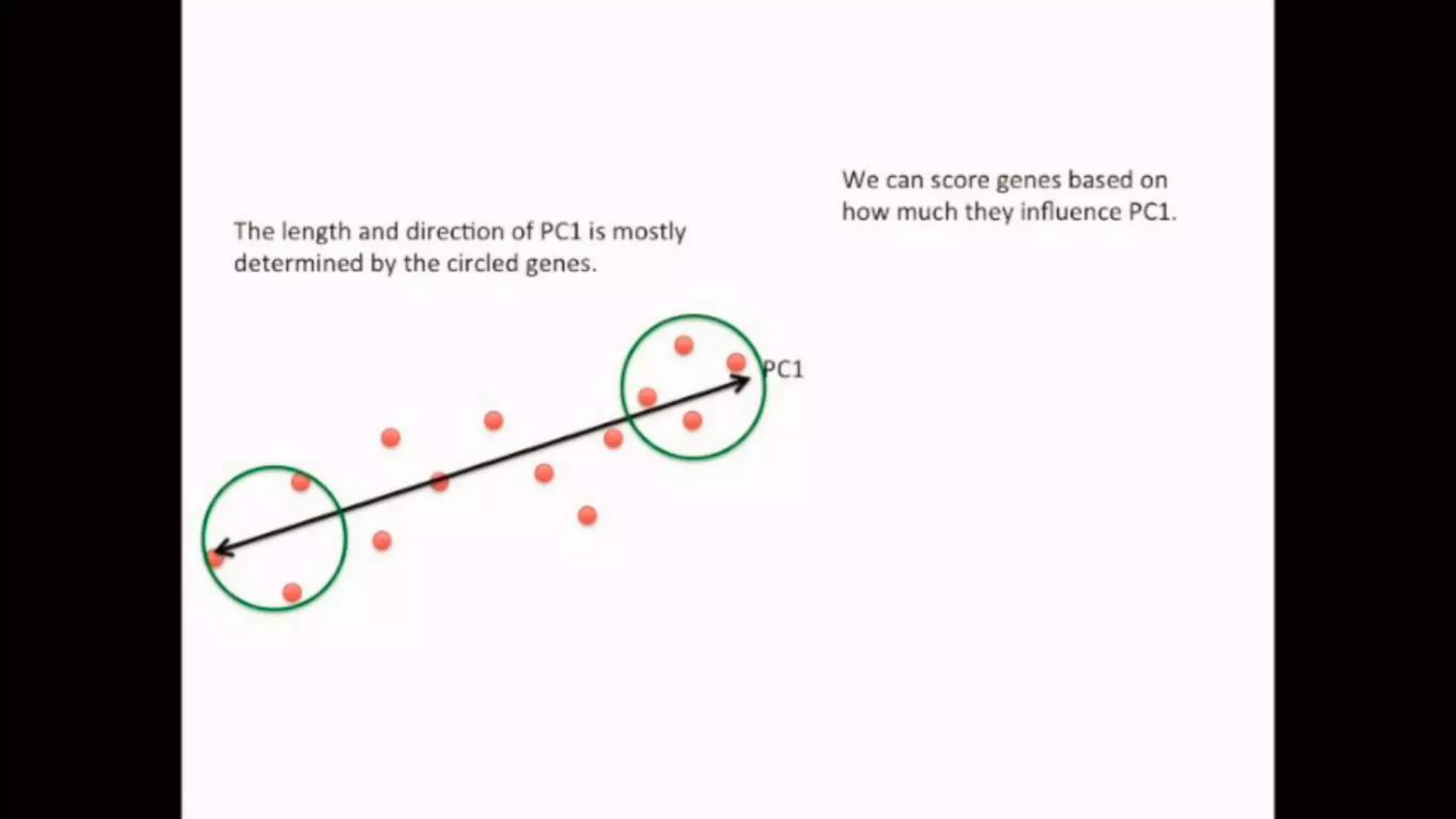
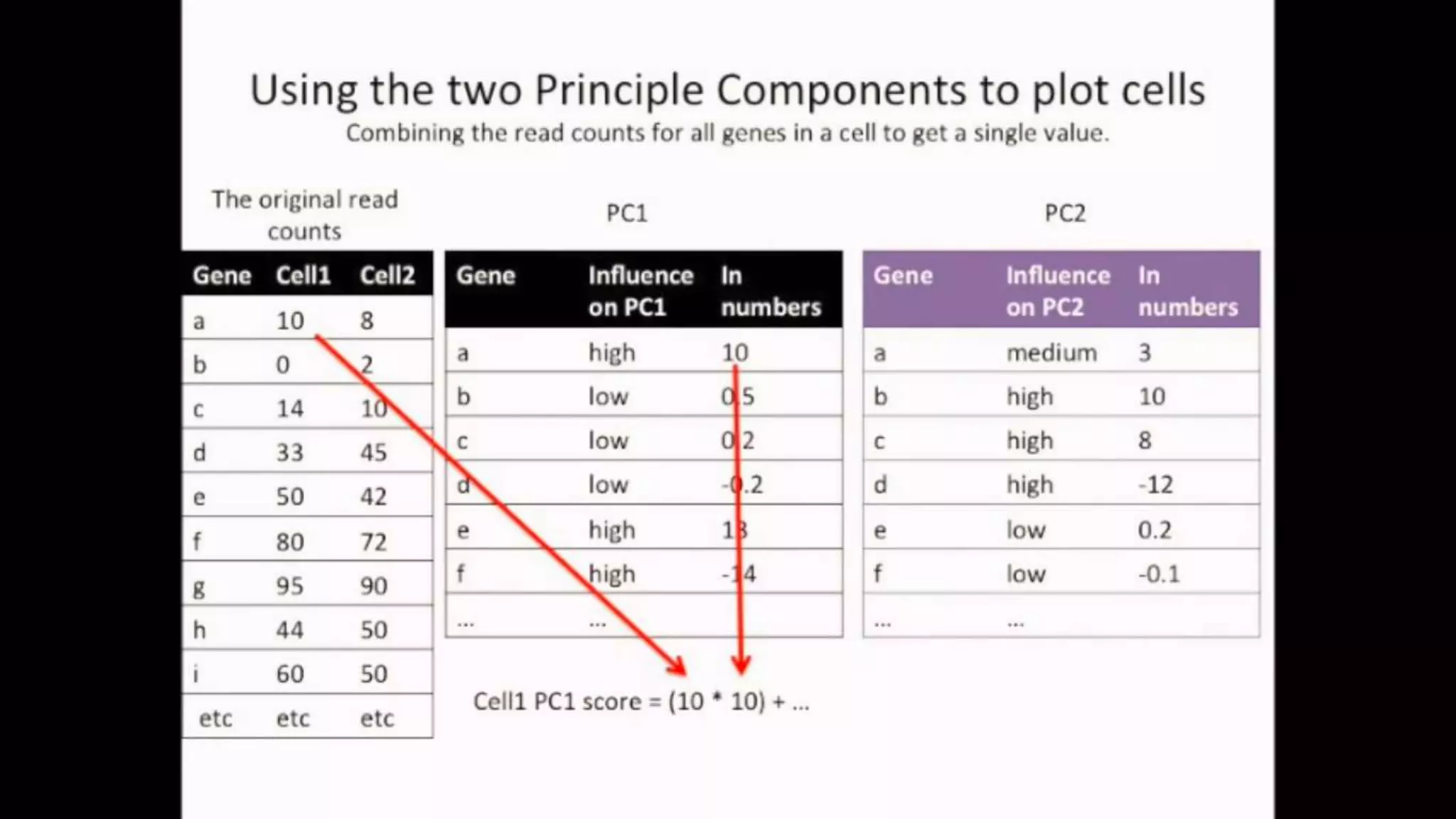
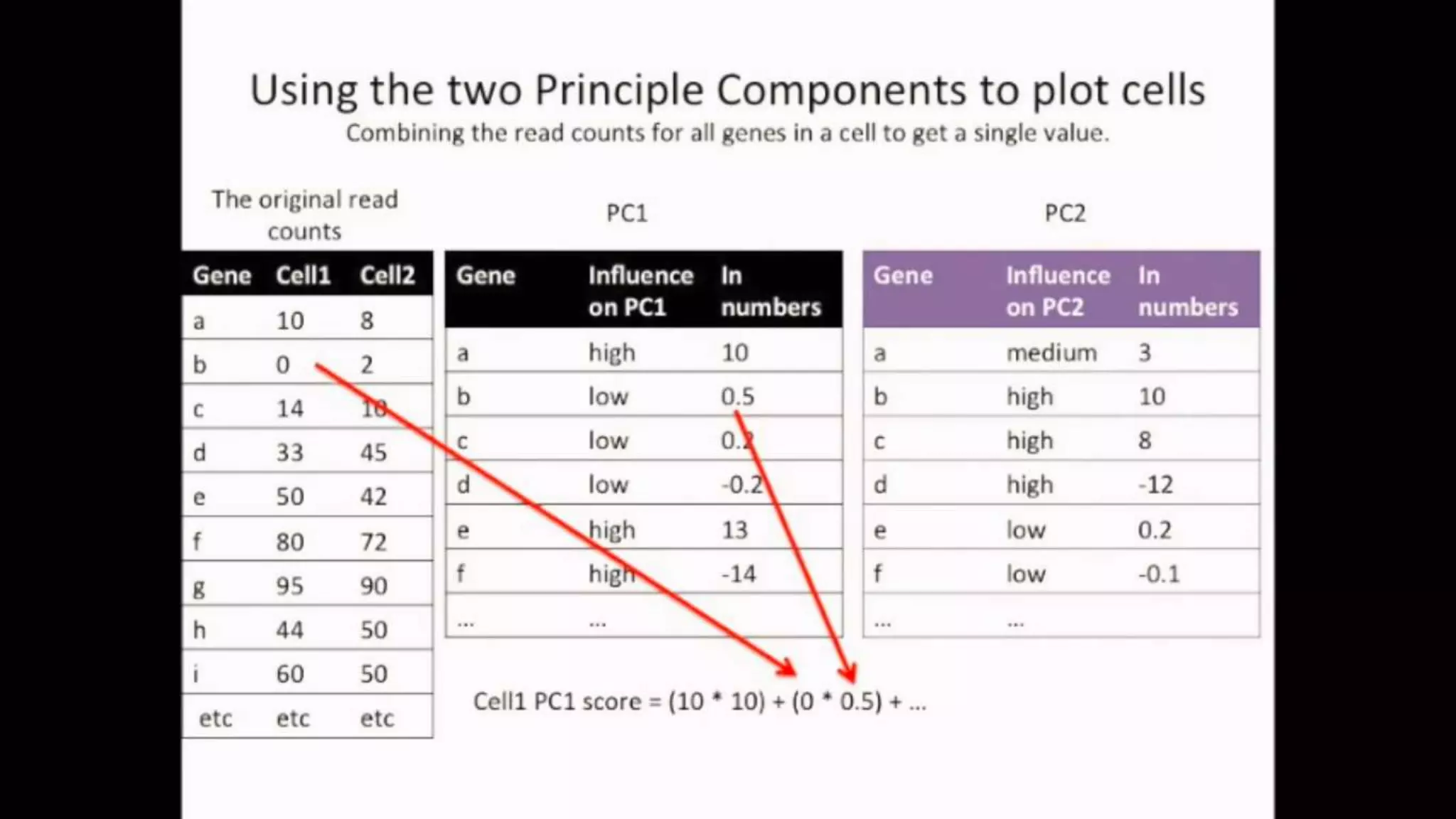
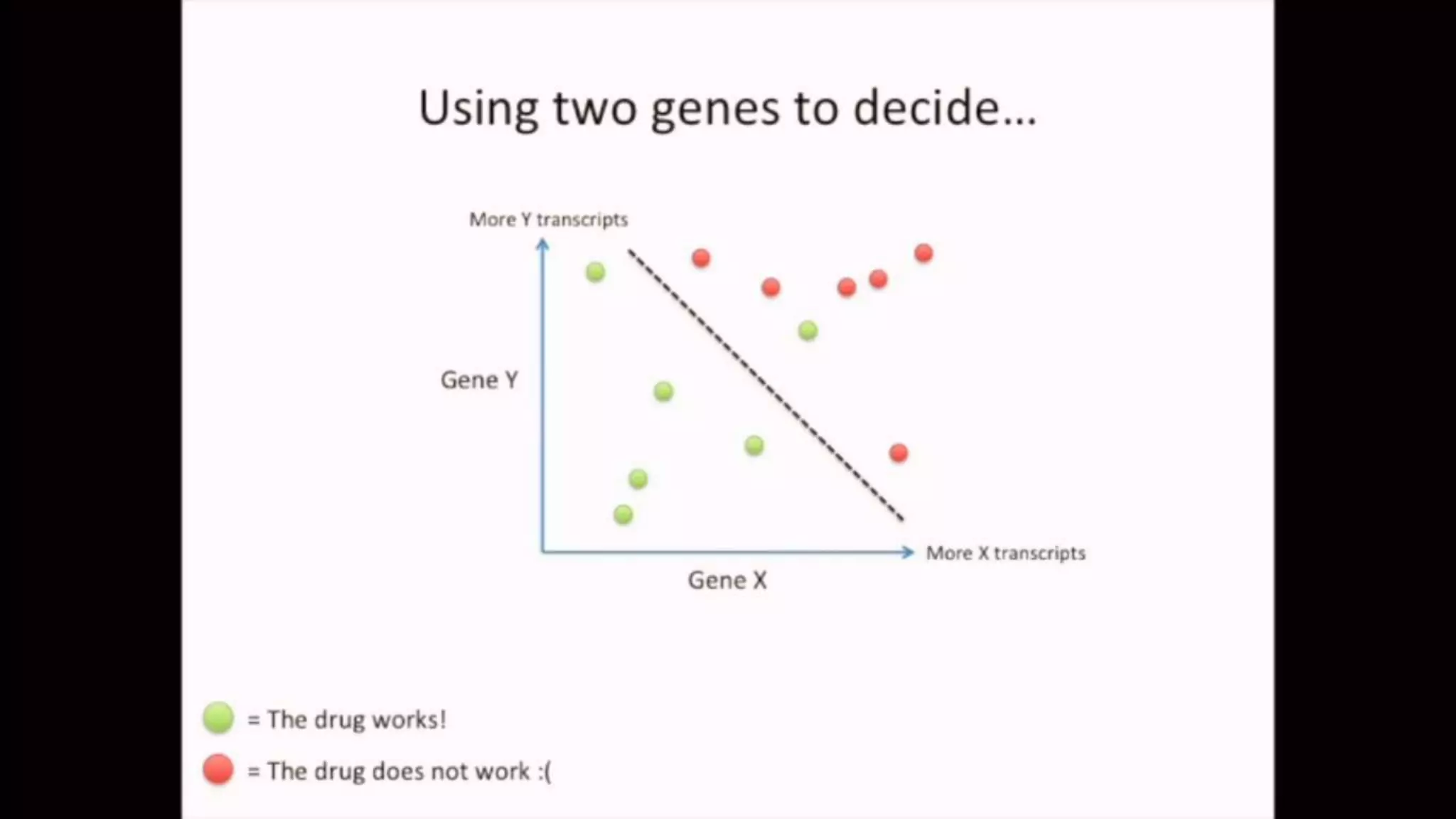
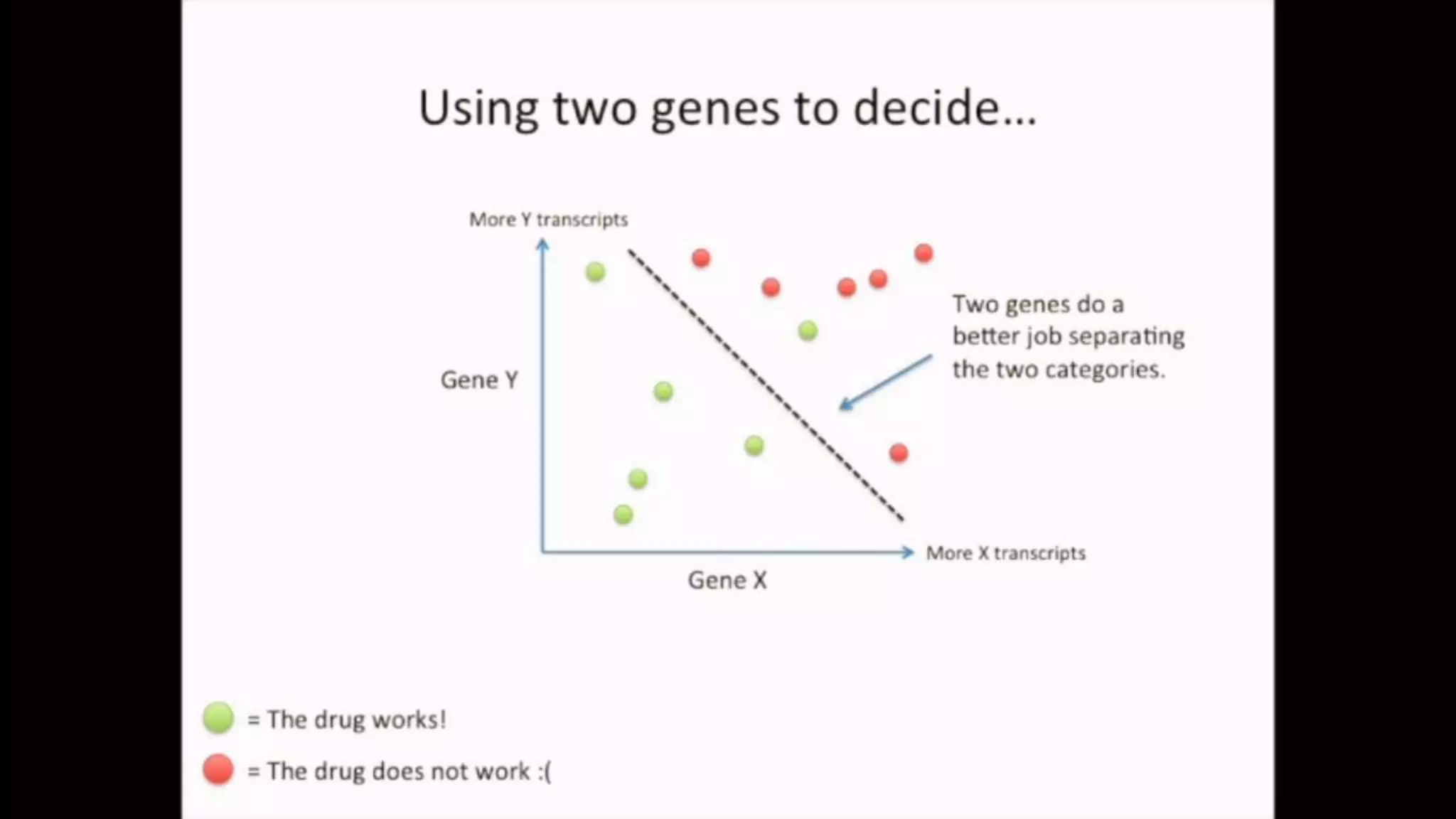
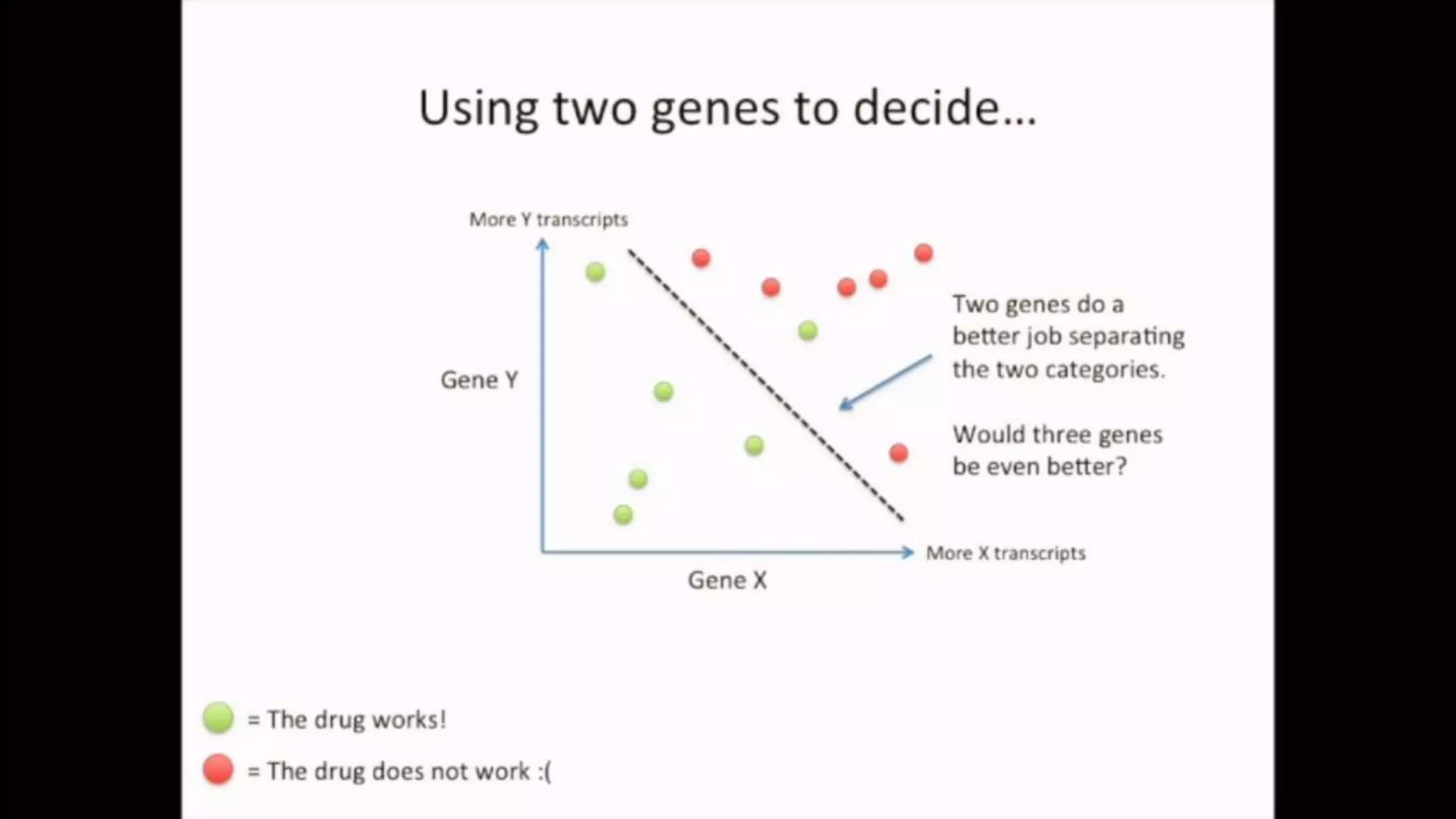
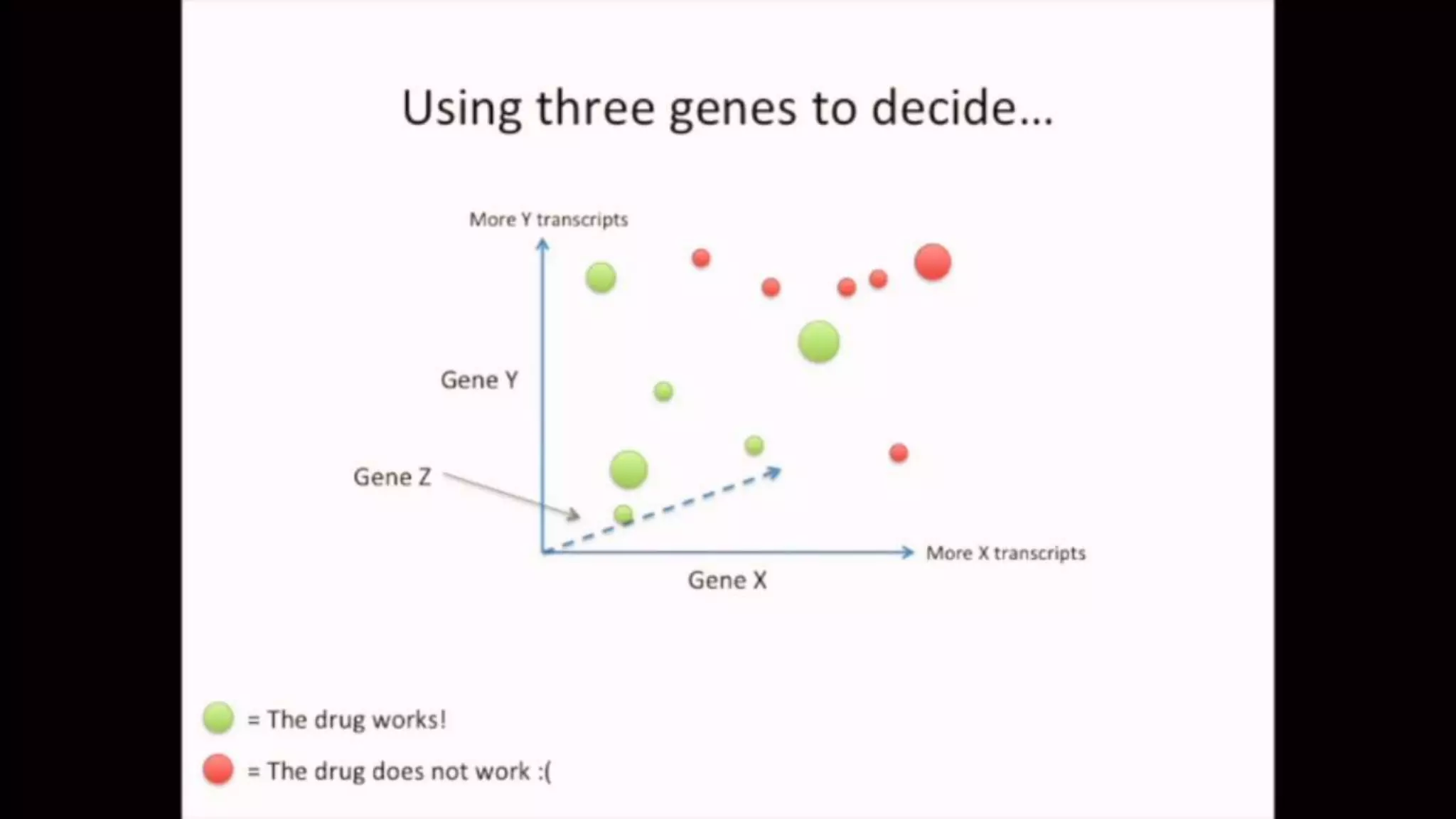
The main idea of principal component analysis (PCA) is to reduce the
dimensionality of a data set consisting of many variables correlated
with each other, either heavily or lightly, while retaining the variation
present in the dataset, up to the maximum extent.
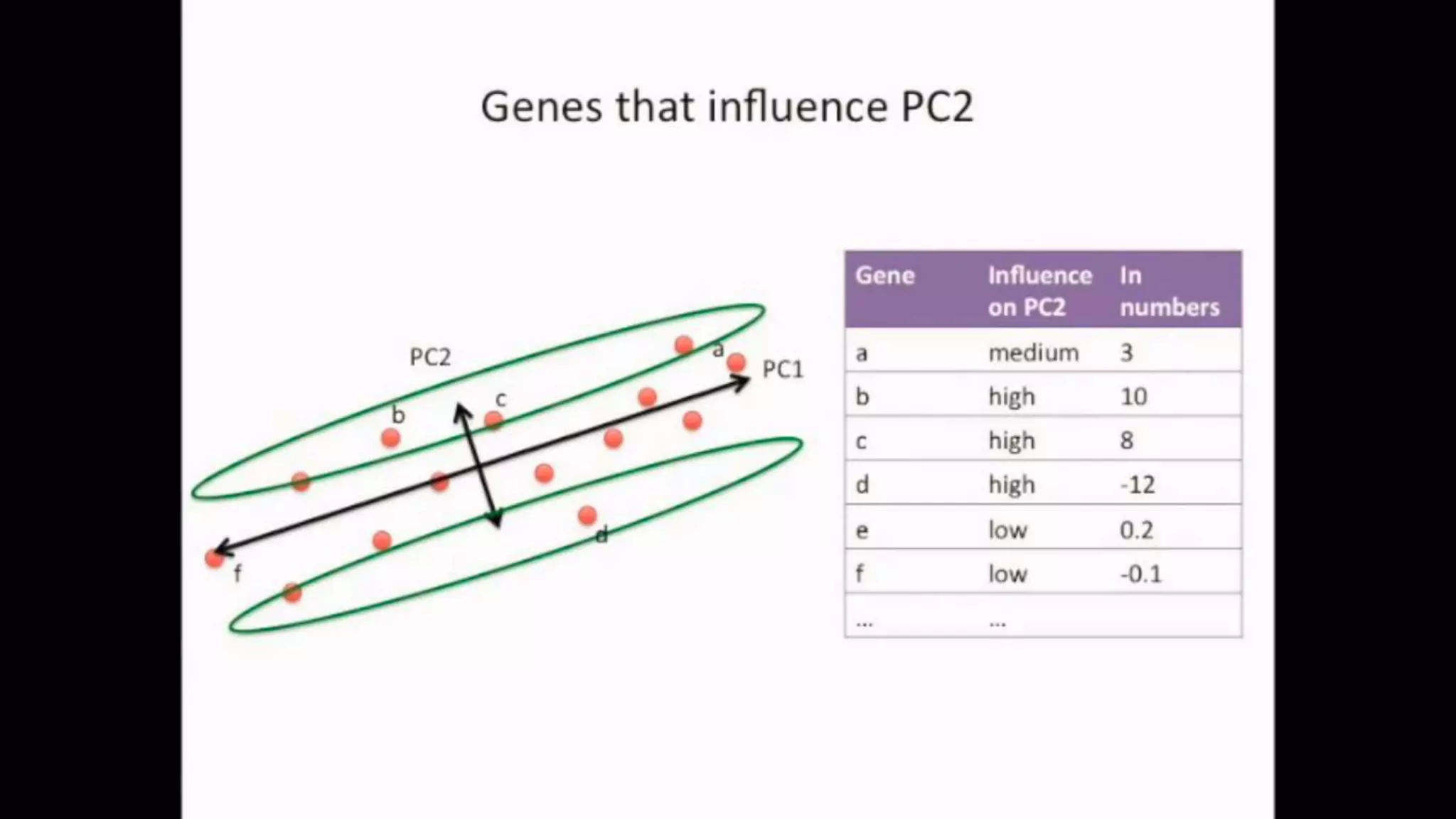
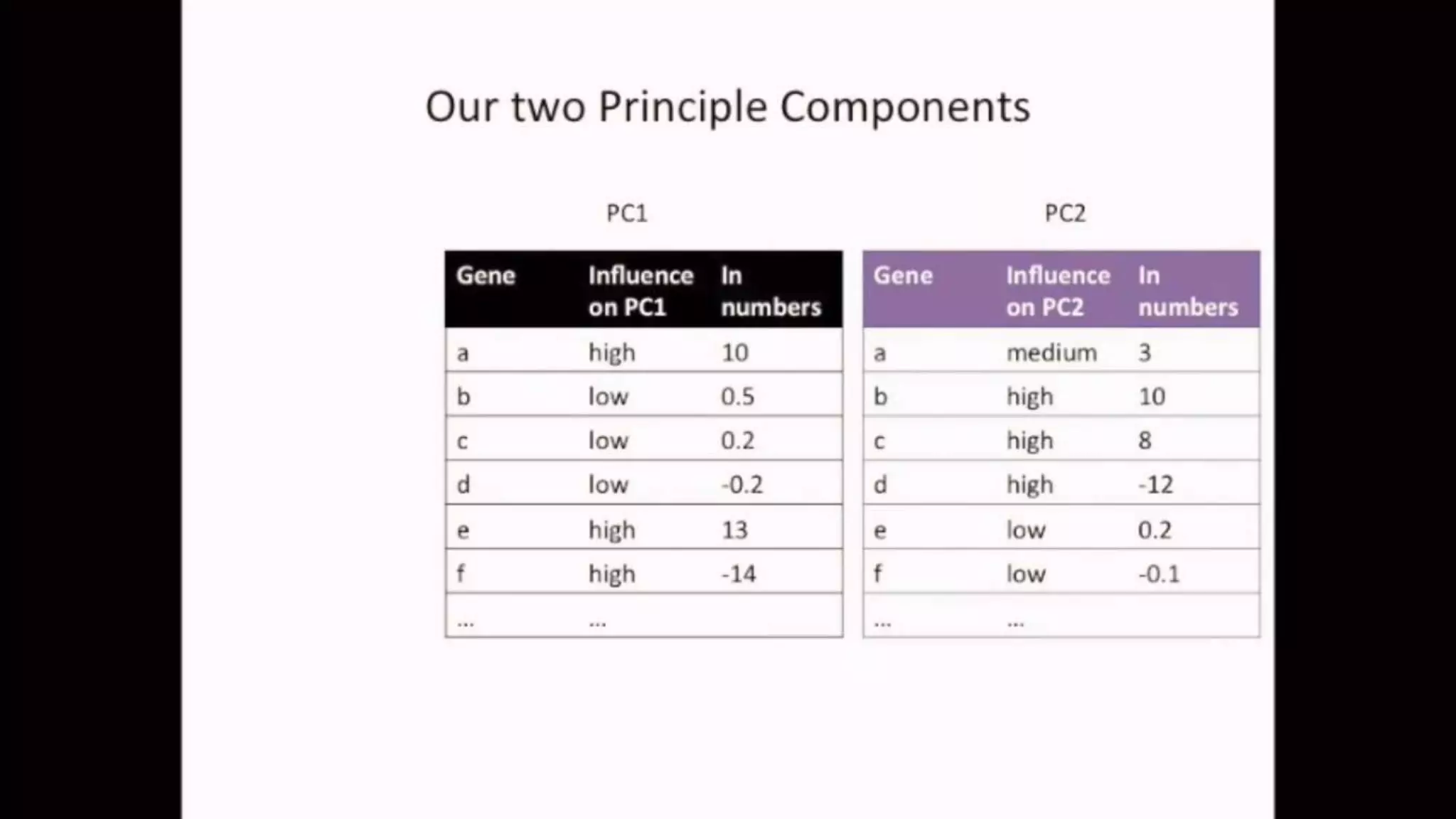
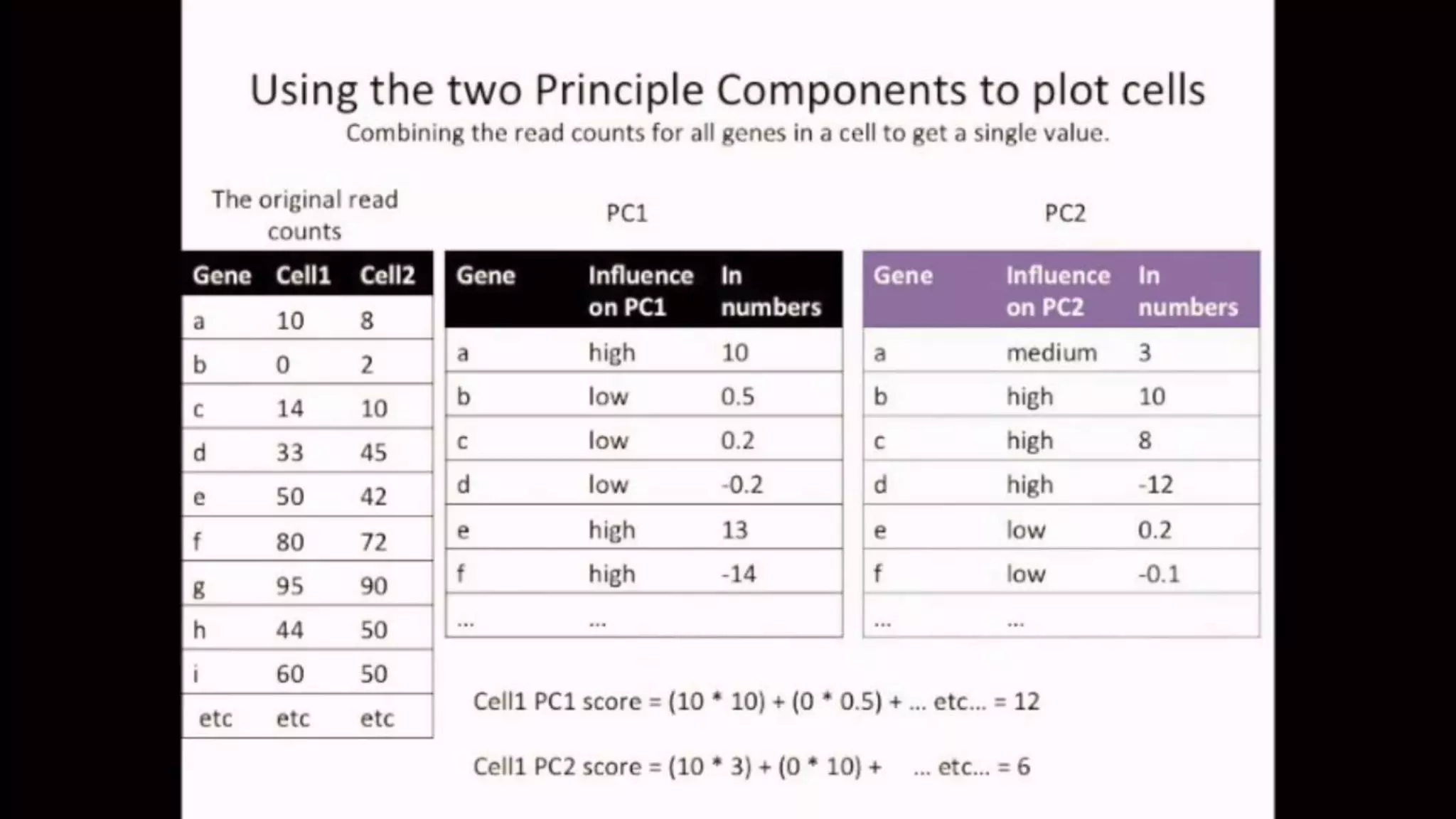
The same is done by transforming the variables to a new set of
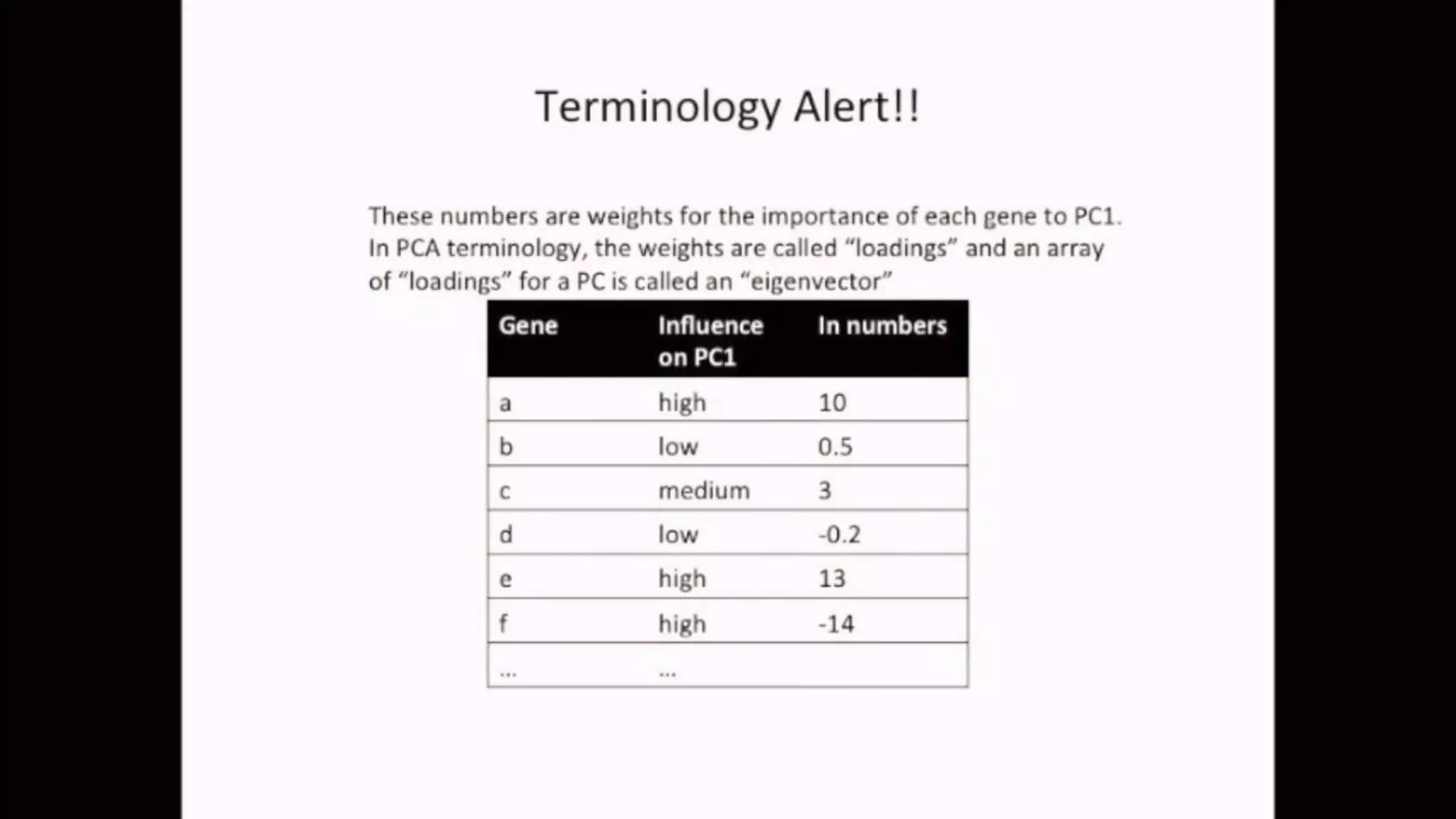
variables, which are known as the principal components (or simply,
the PCs) and are orthogonal, ordered such that the retention of
variation present in the original variables decreases as we move down
in the order.
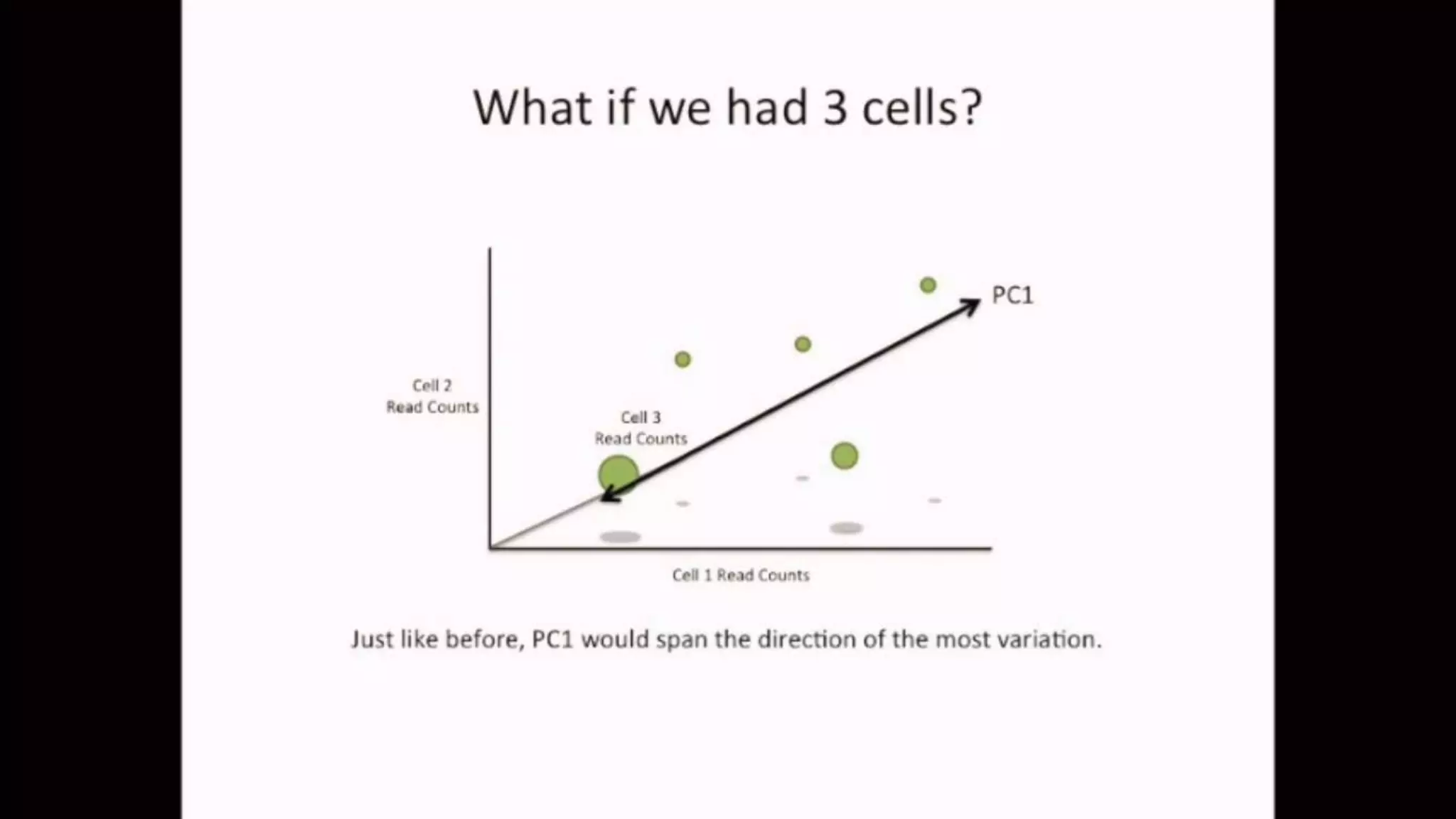
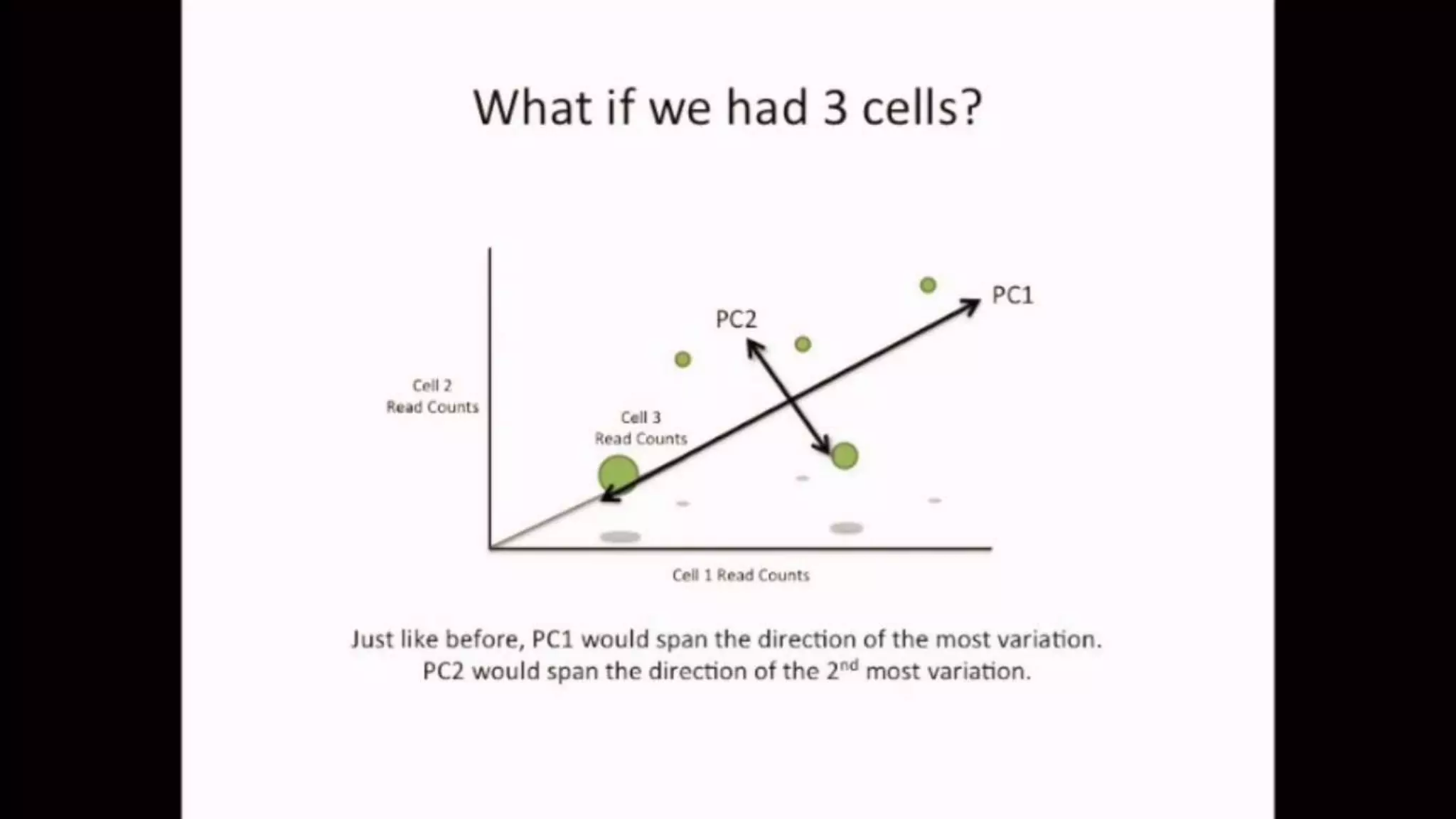
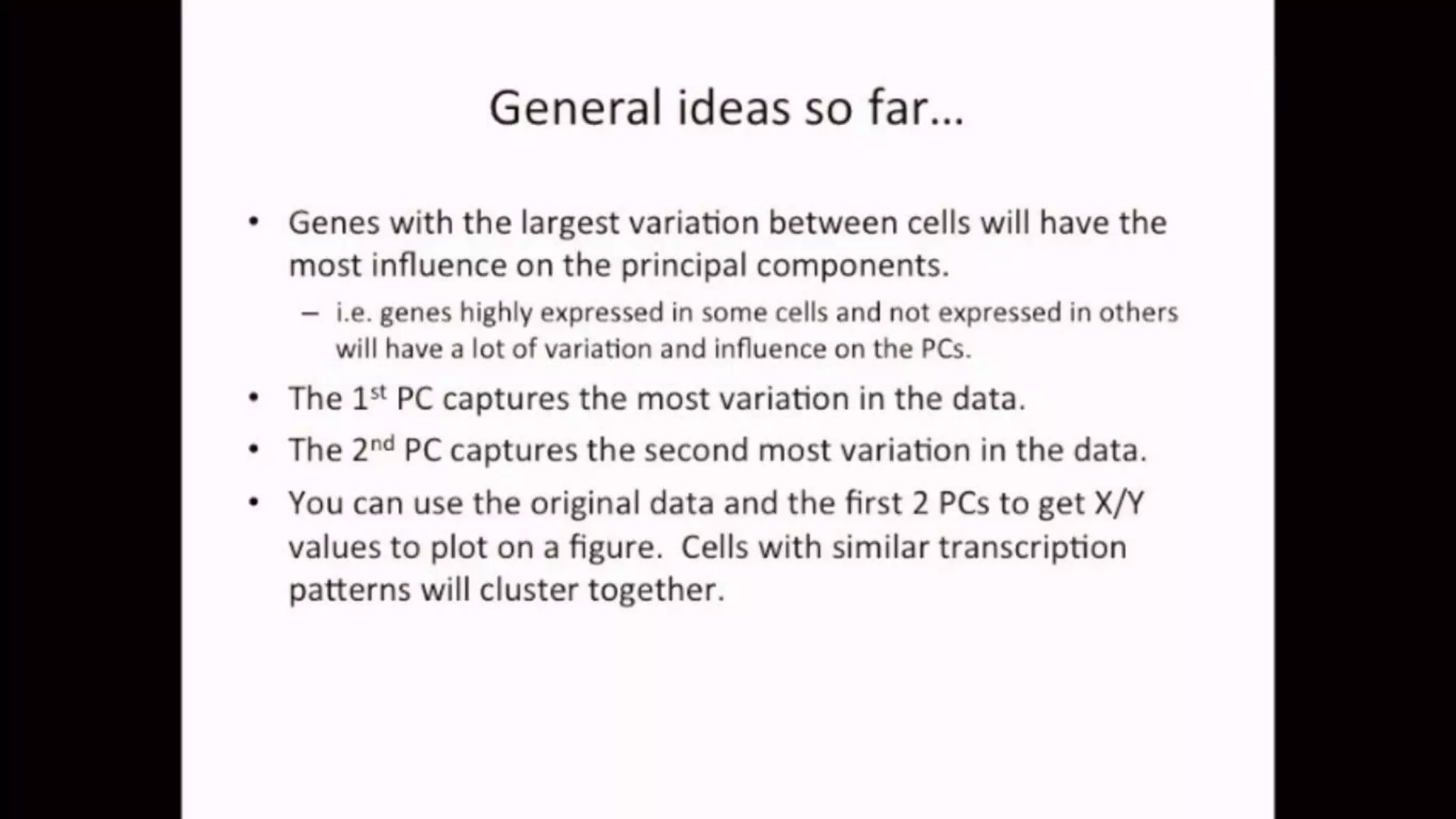
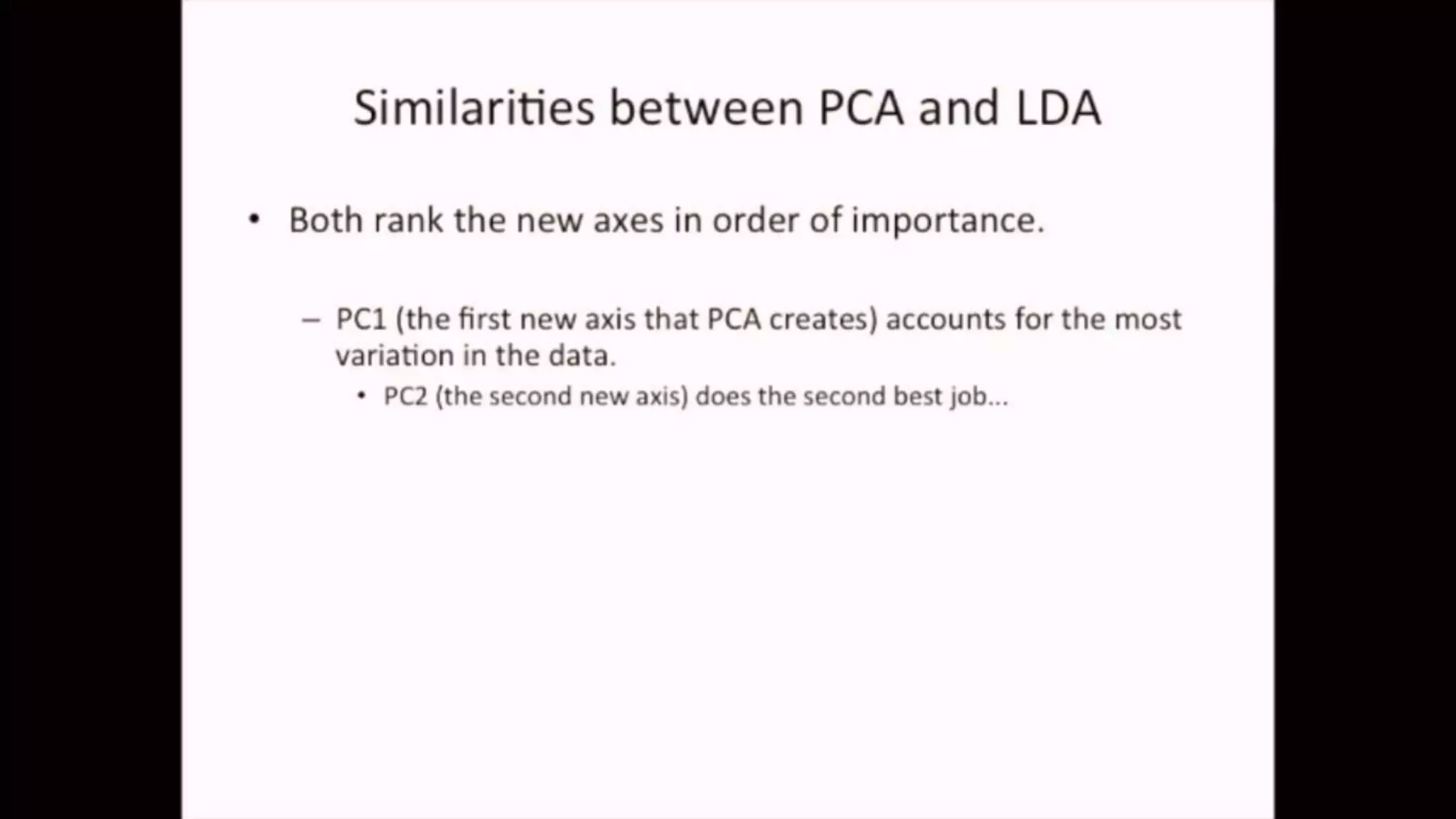
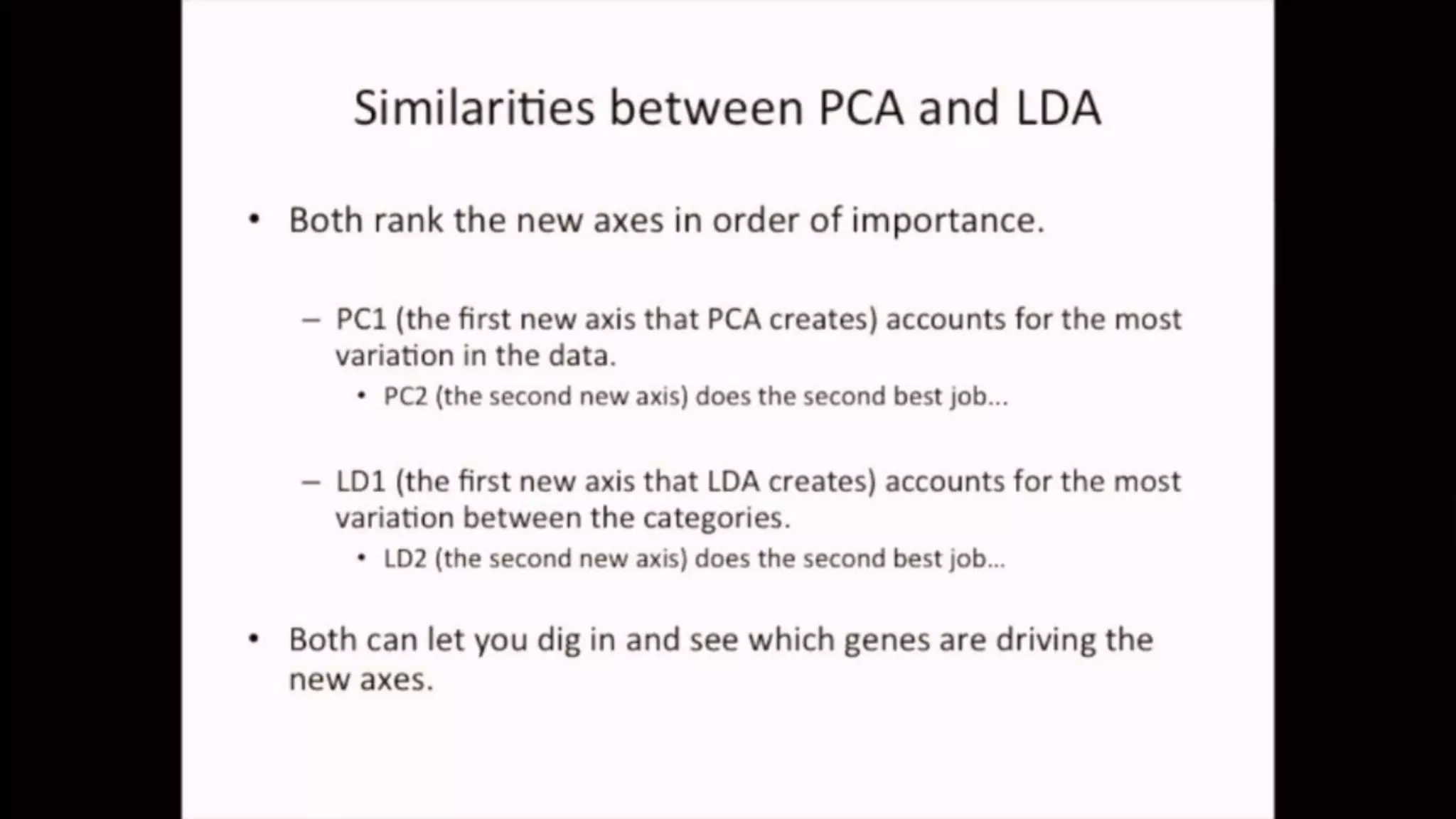
So, in this way, the 1st principal component retains maximum
variation that was present in the original components. The principal
components are the eigenvectors of a covariance matrix, and hence
they are orthogonal.
REFERENCES
StatQuest :
https://www.youtube.com/watch?v=_UVHneBUBW0&list=RD_UVHneB
UBW0
Dezyre :
https://www.dezyre.com/data-science-in-python-tutorial/principal-
component-analysis-tutorial
PCA
CONCEPT
ILLUSTRATI
ON
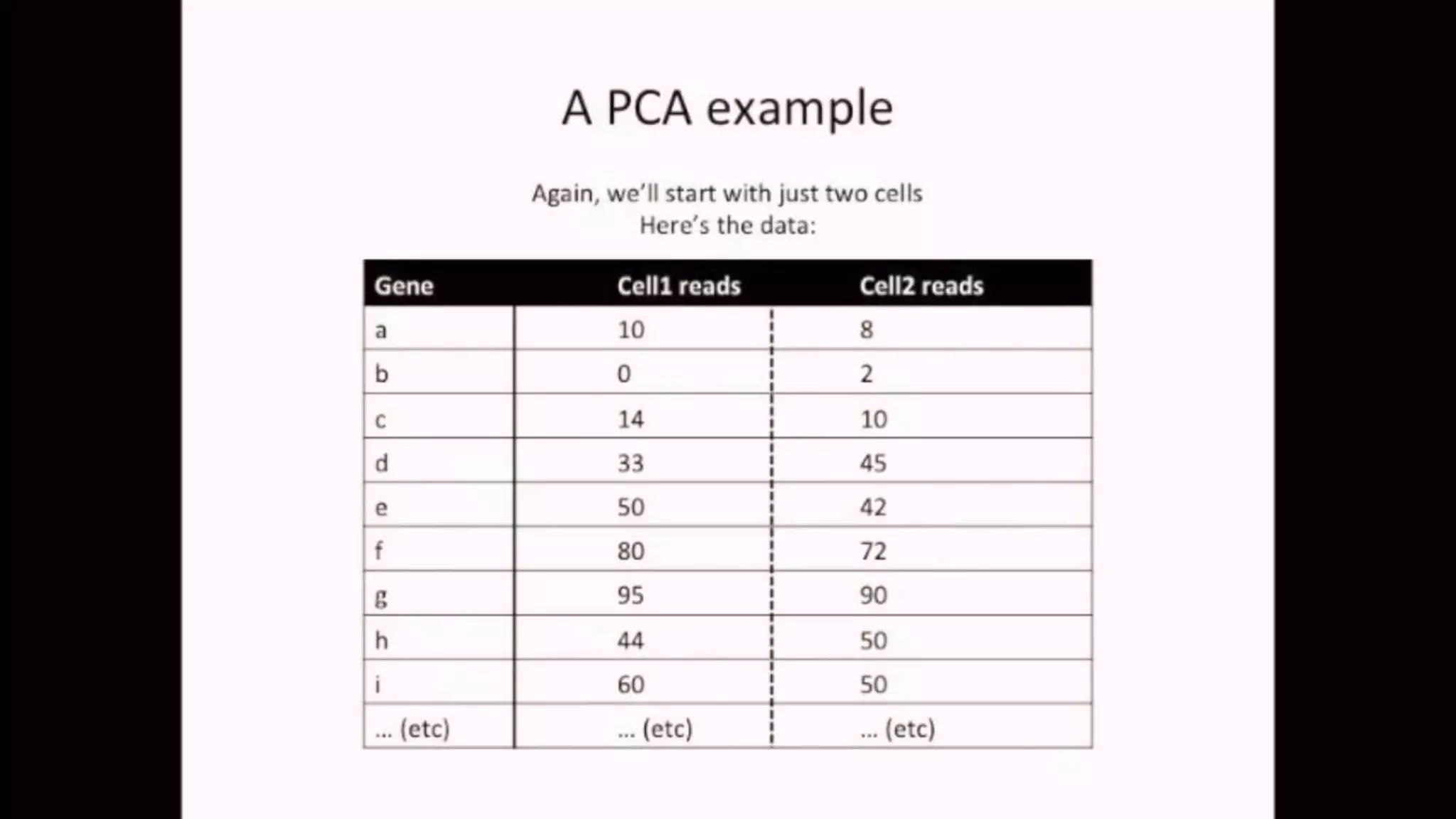
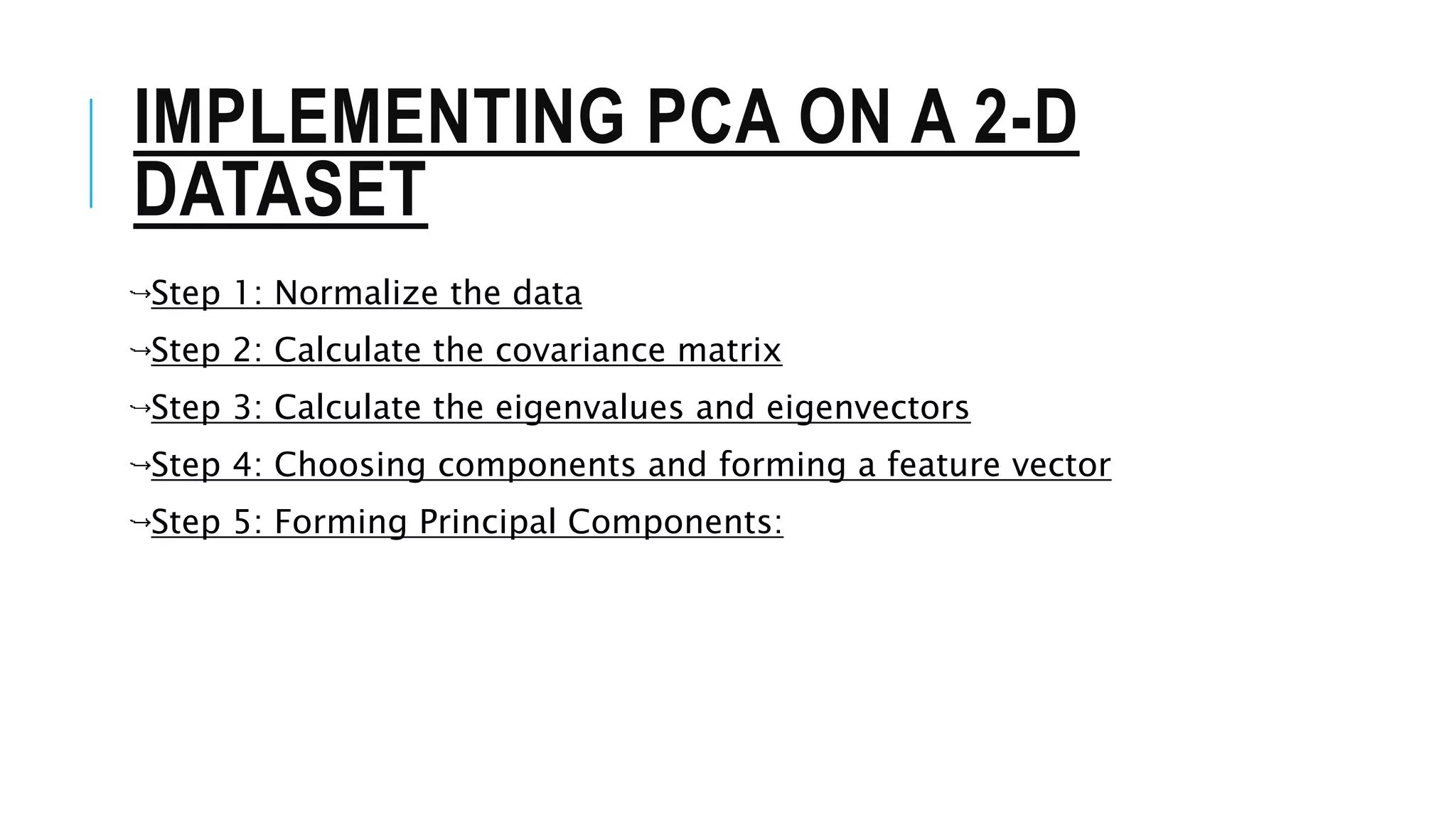
IMPLEMENTING PCA ON A 2-D
DATASET
Step 1: Normalize the data
Step 2: Calculate the covariance matrix
Step 3: Calculate the eigenvalues and eigenvectors
Step 4: Choosing components and forming a feature vector
Step 5: Forming Principal Components:
APPLICATIONS OF PRINCIPAL
COMPONENT ANALYSIS
PCA is predominantly used as a dimensionality reduction technique in
domains like facial recognition, computer vision and image
compression. It is also used for finding patterns in data of high
dimension in the field of finance, data mining, bioinformatics,
psychology, etc.
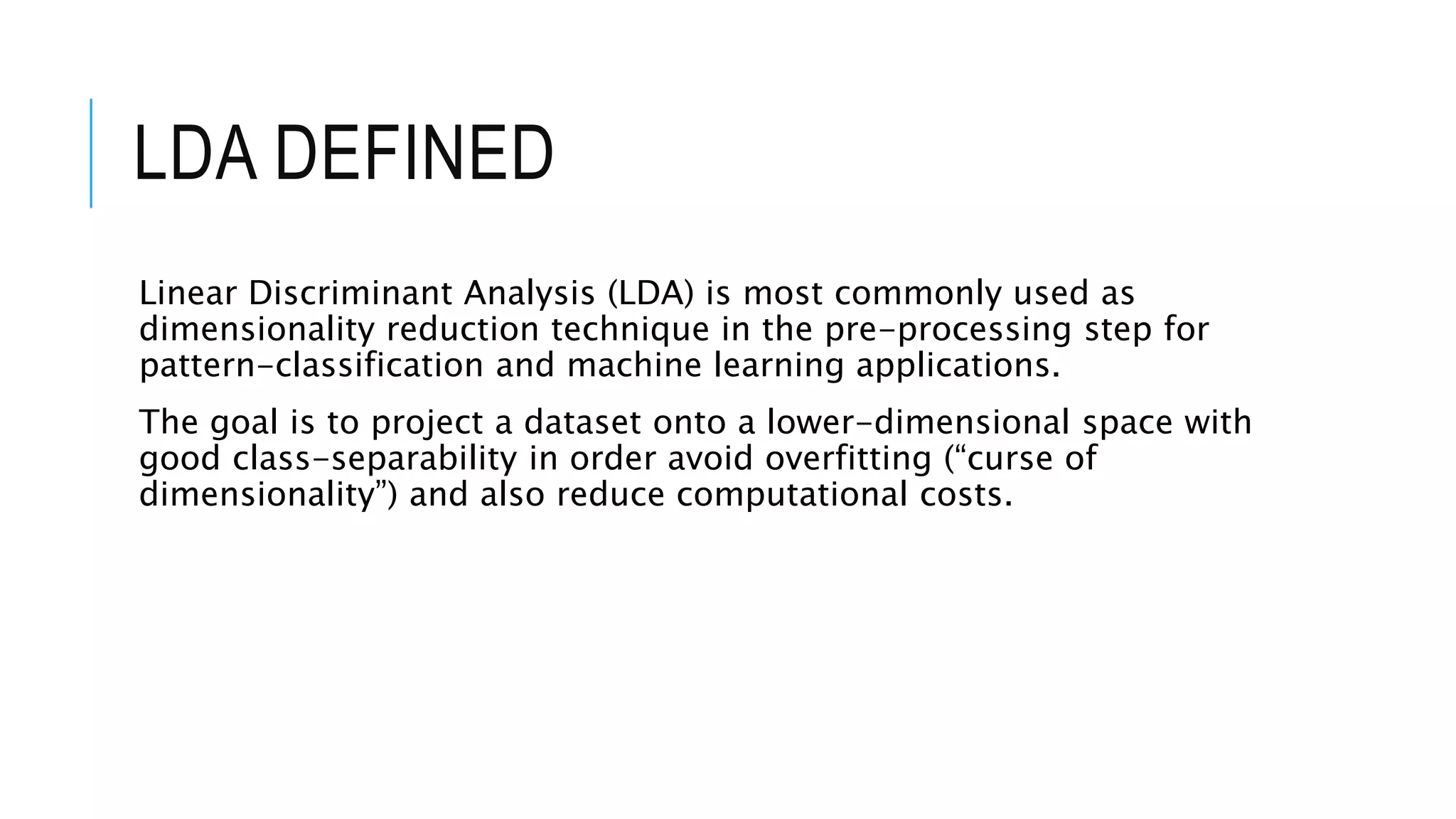
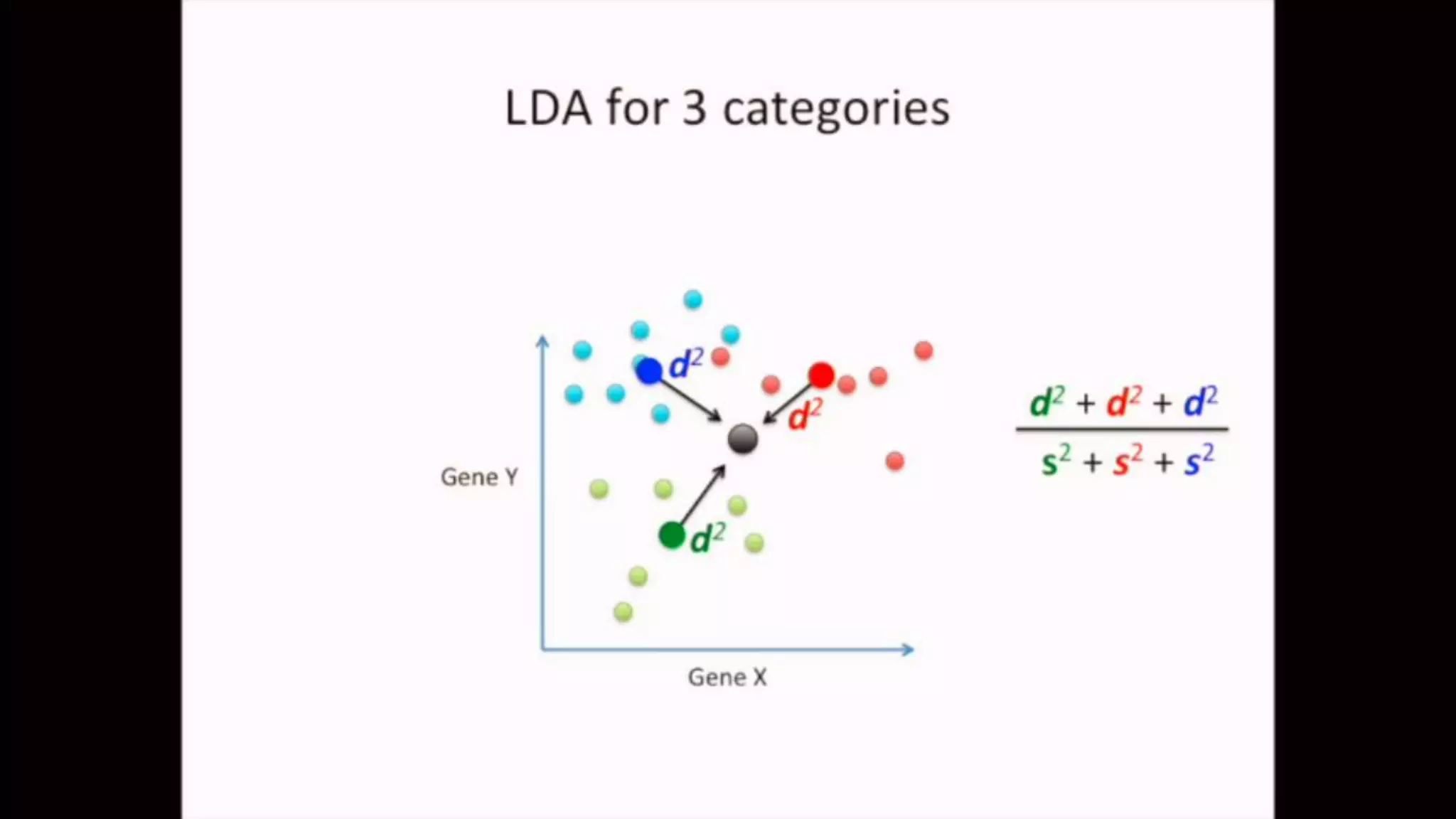
LDA DEFINED
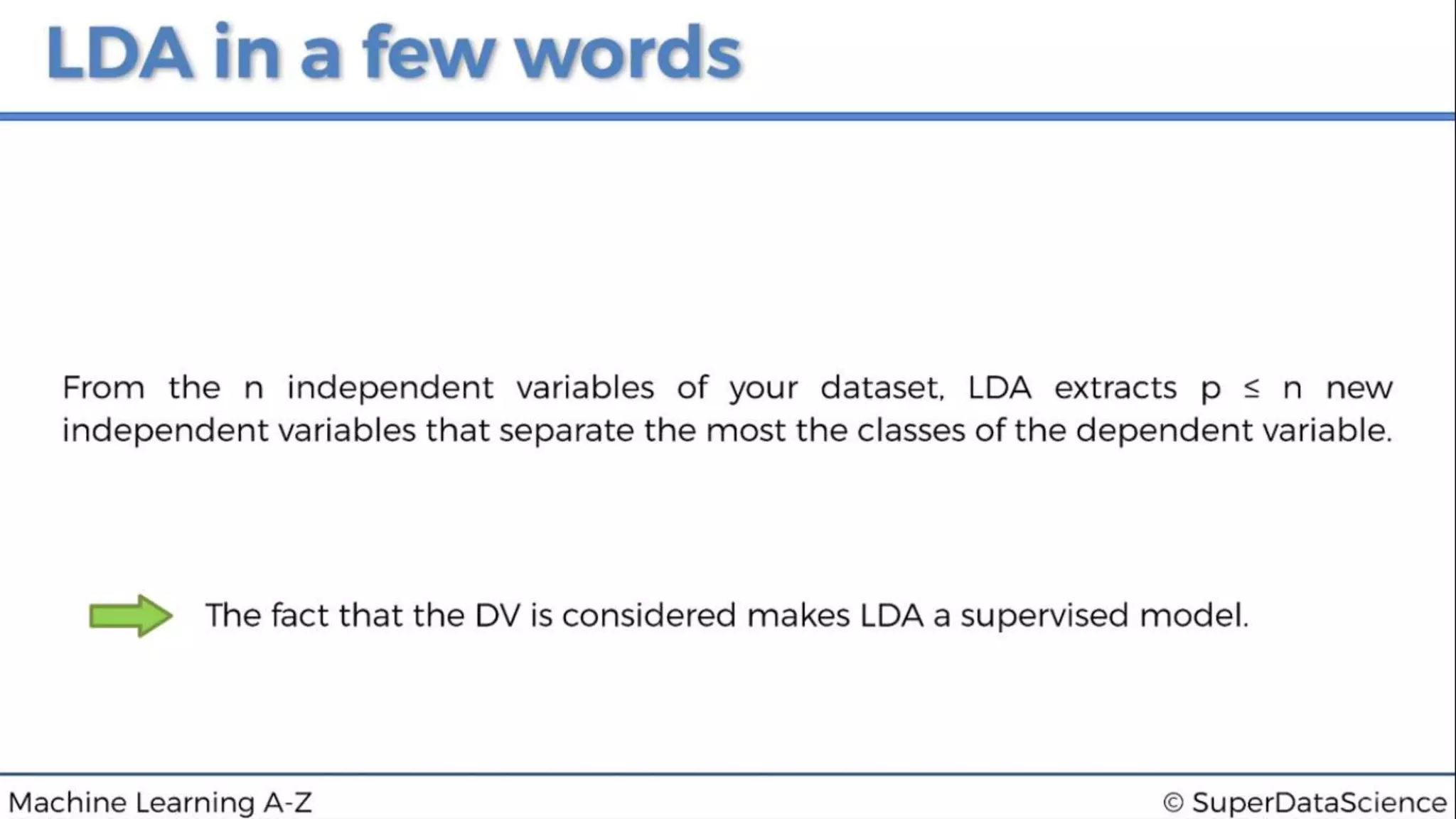
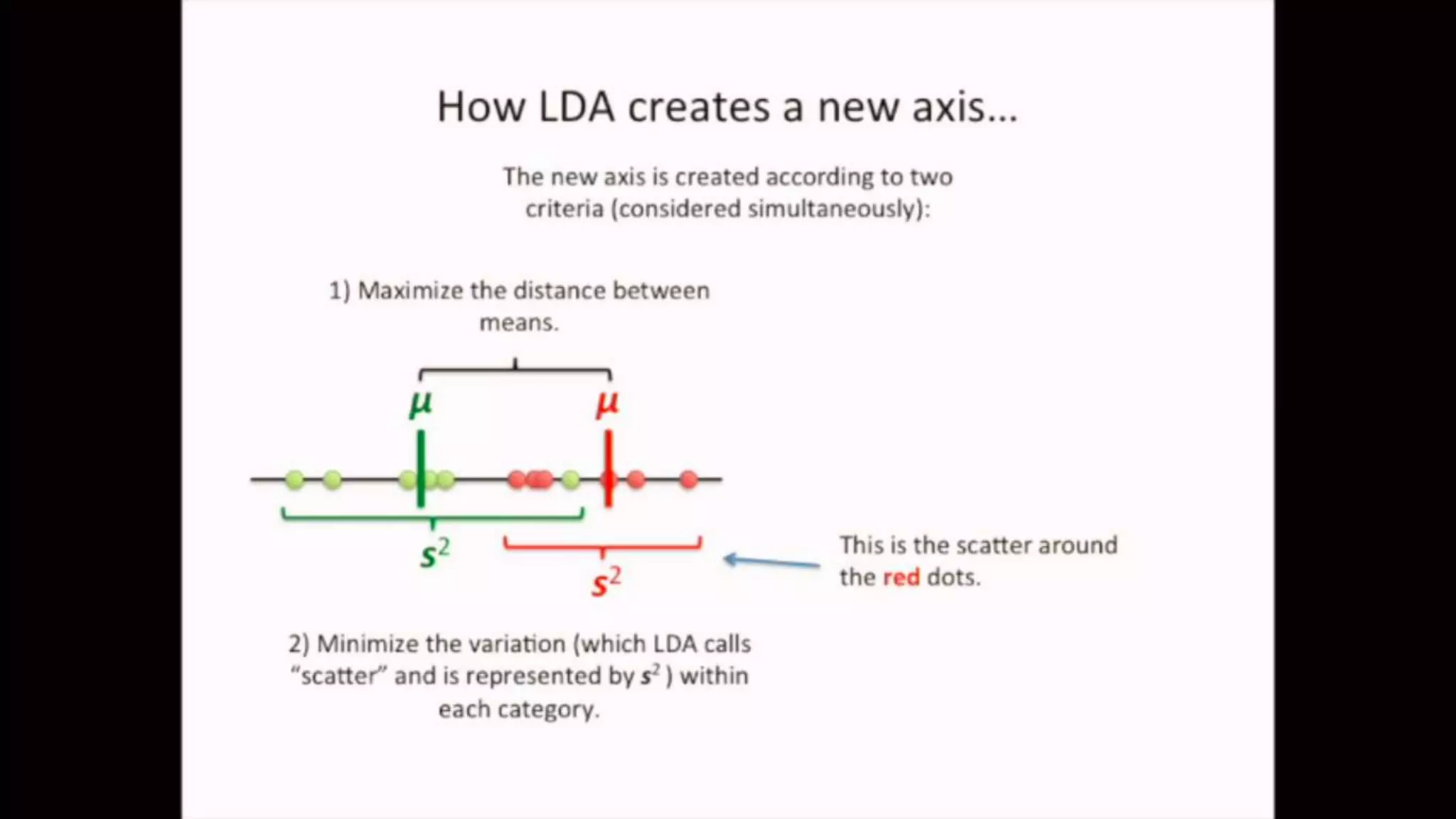
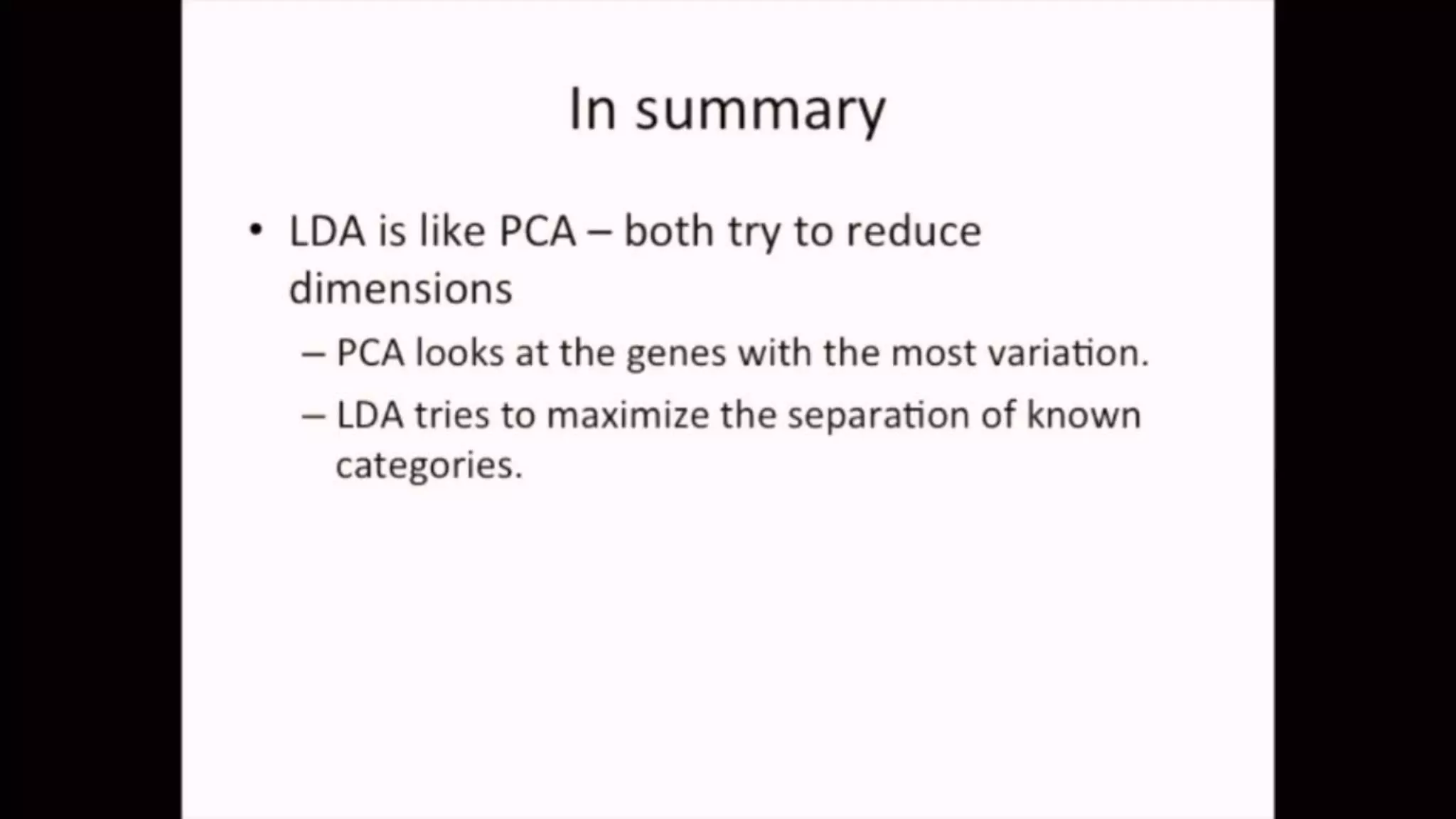
Linear Discriminant Analysis (LDA) is most commonly used as
dimensionality reduction technique in the pre-processing step for
pattern-classification and machine learning applications.
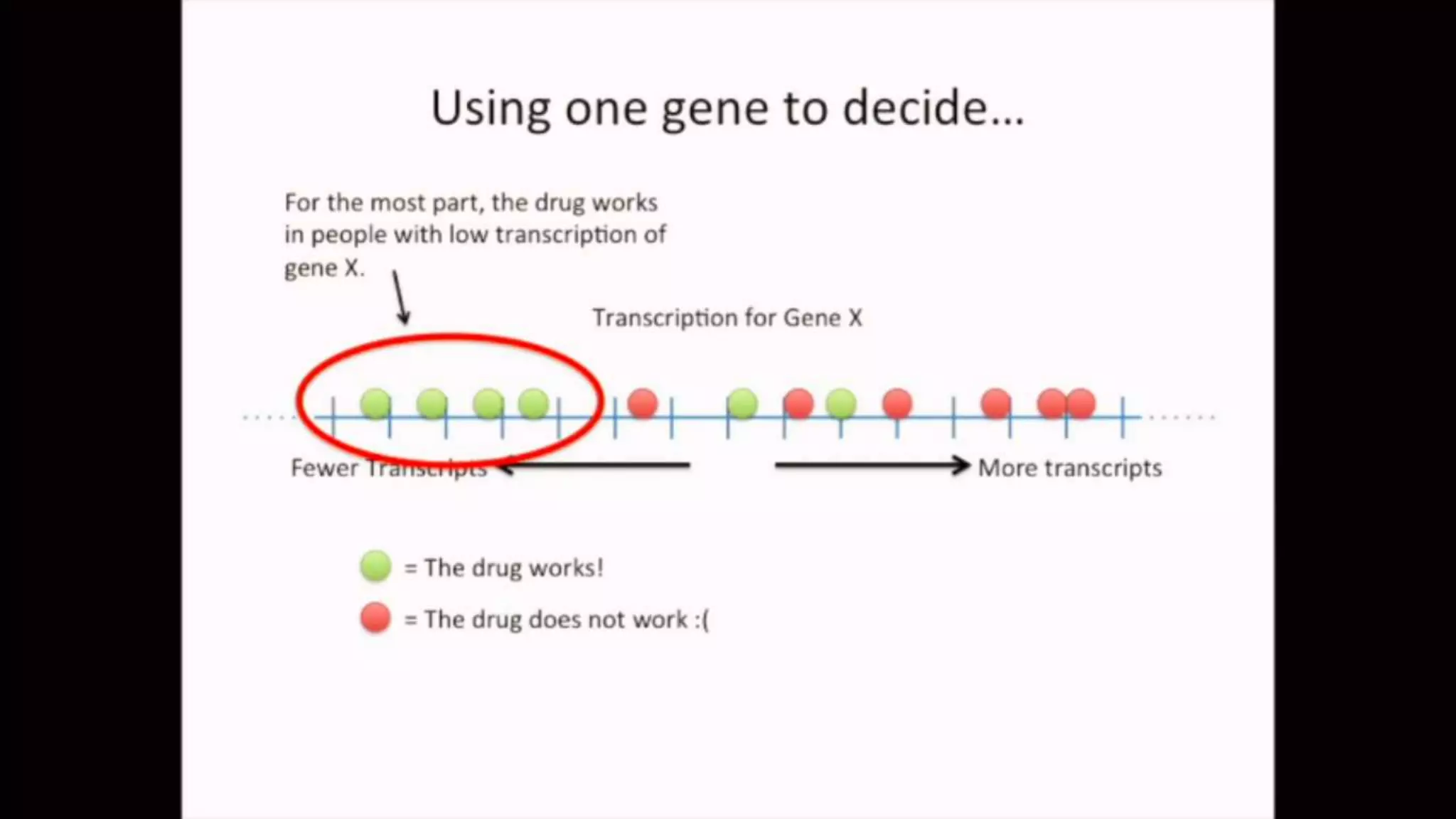
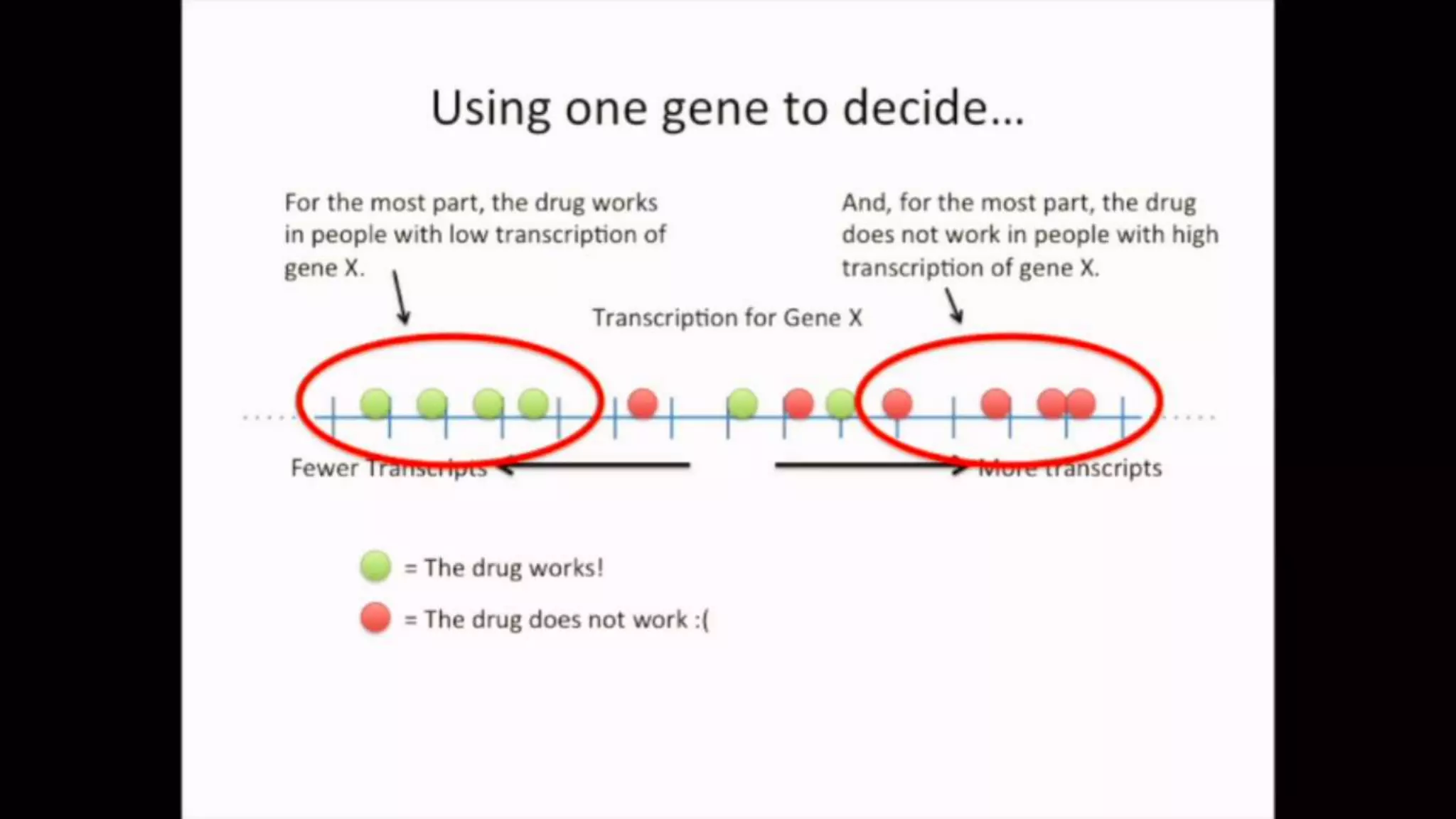
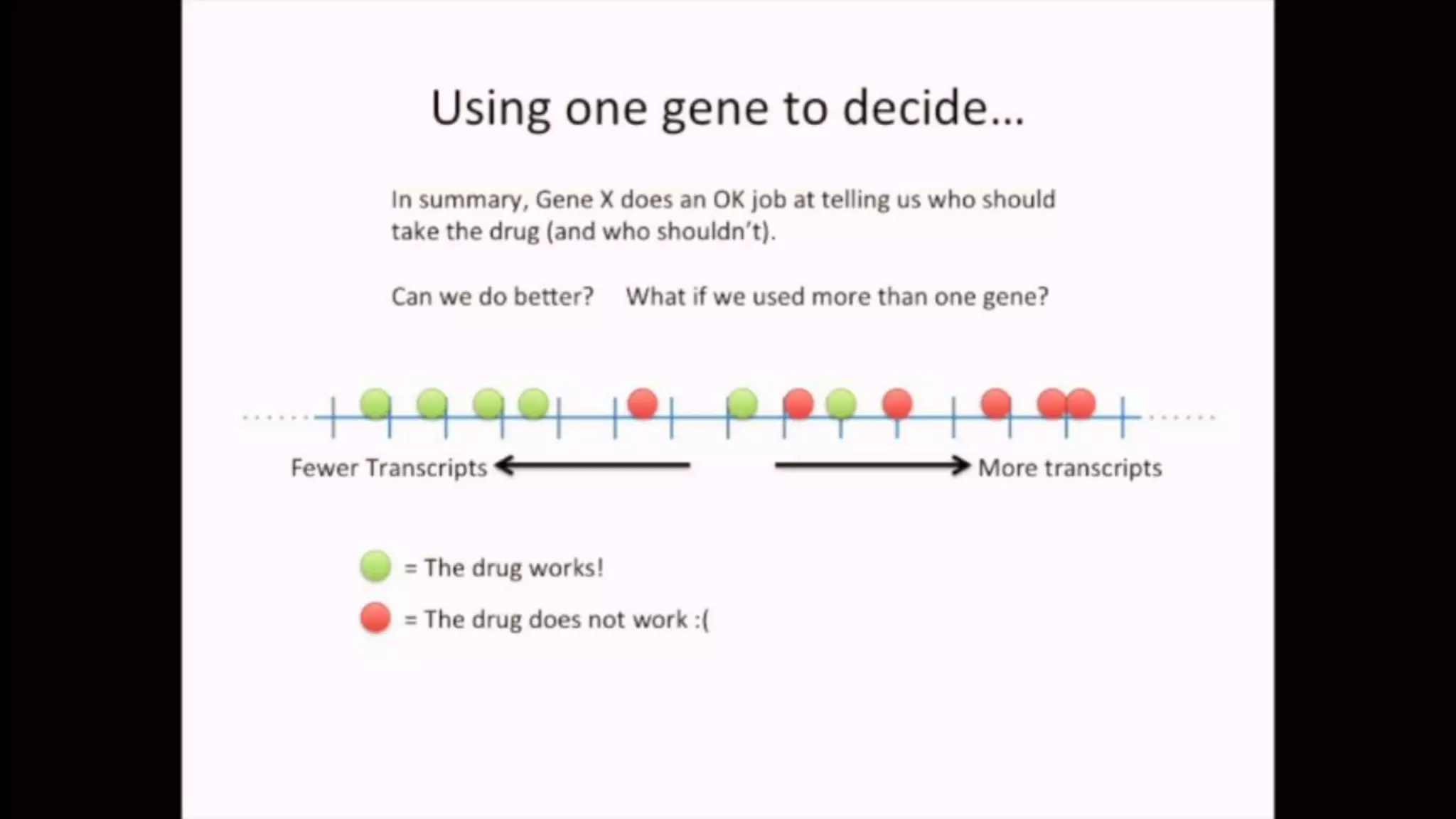
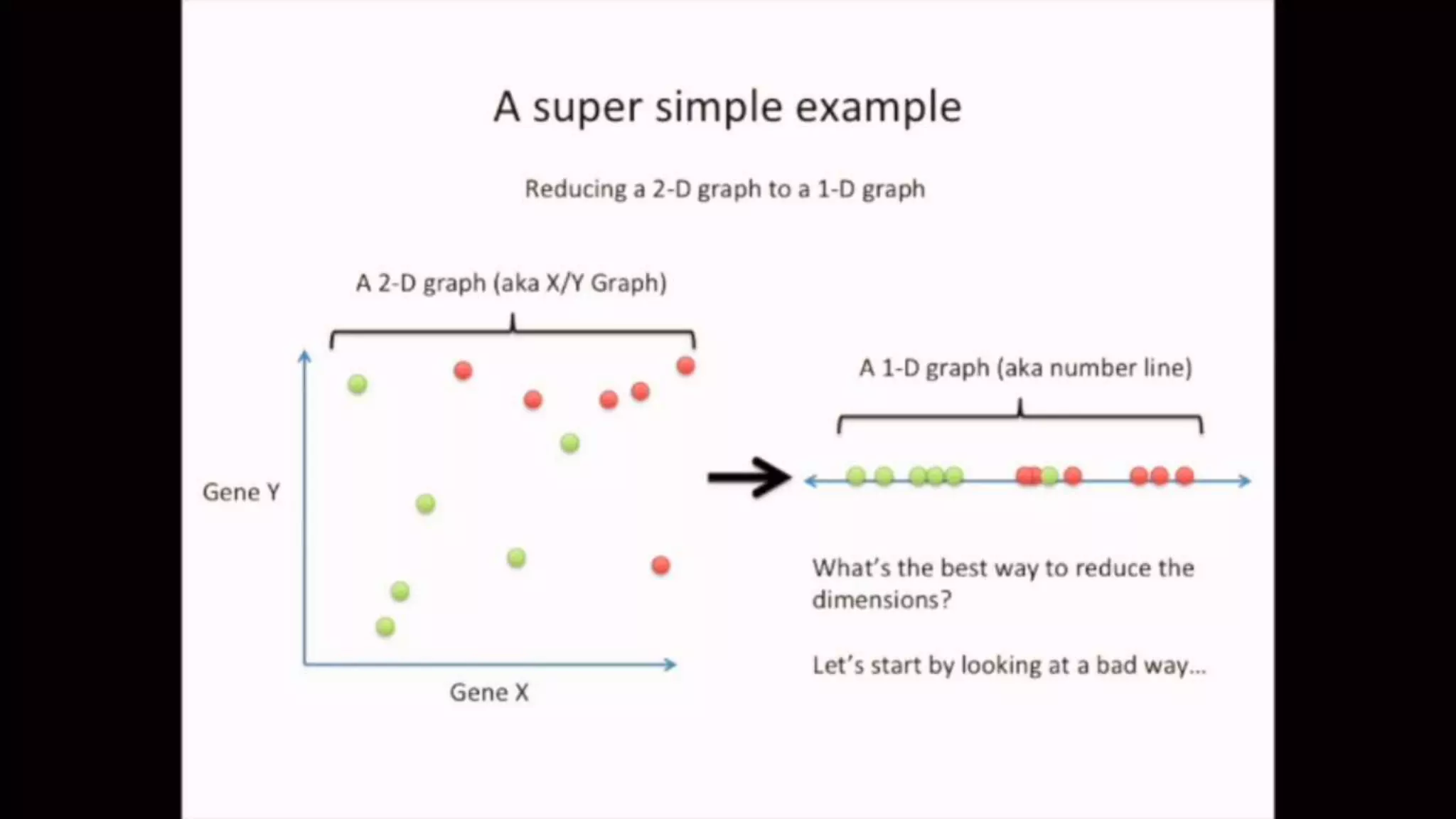
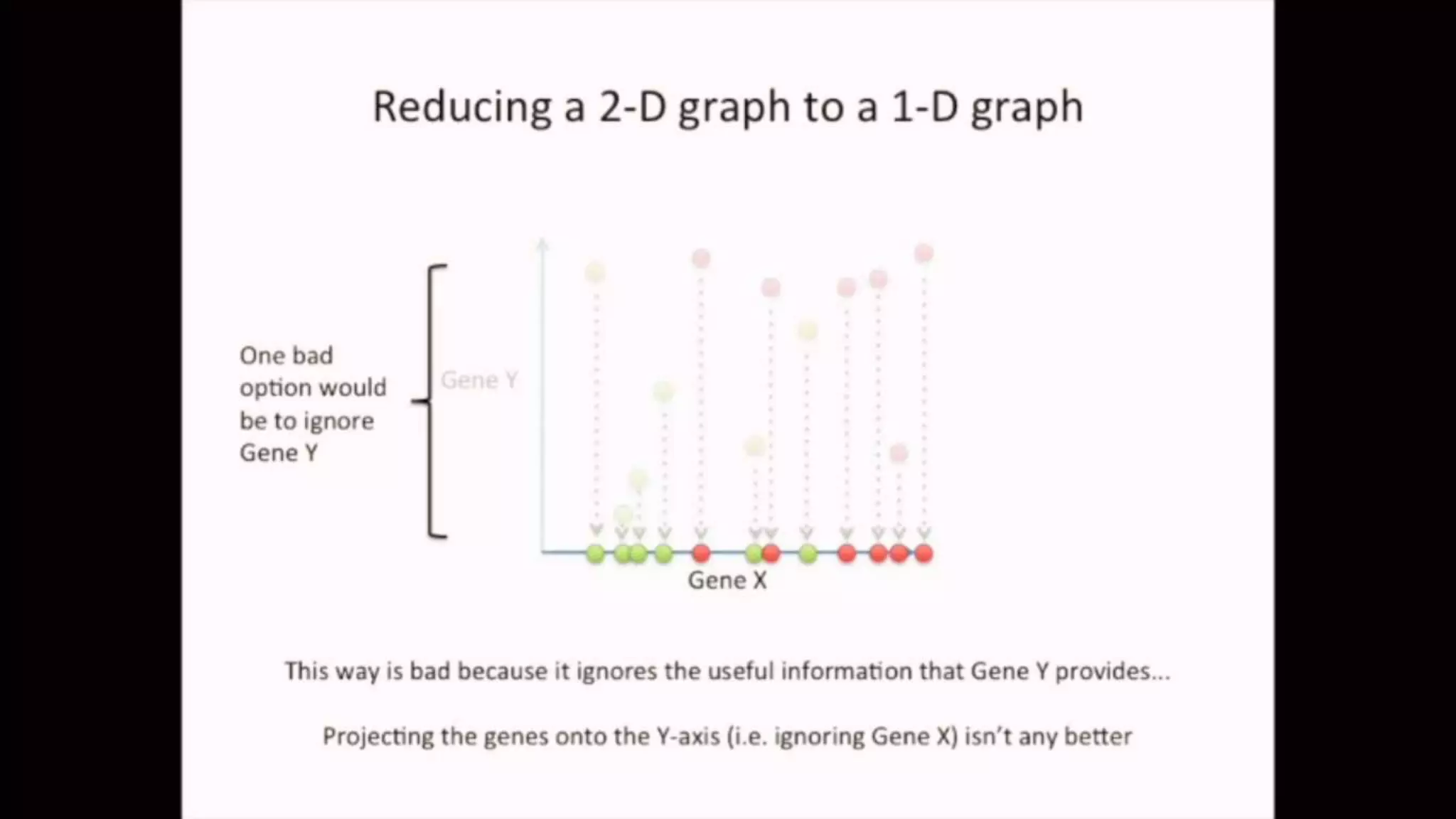
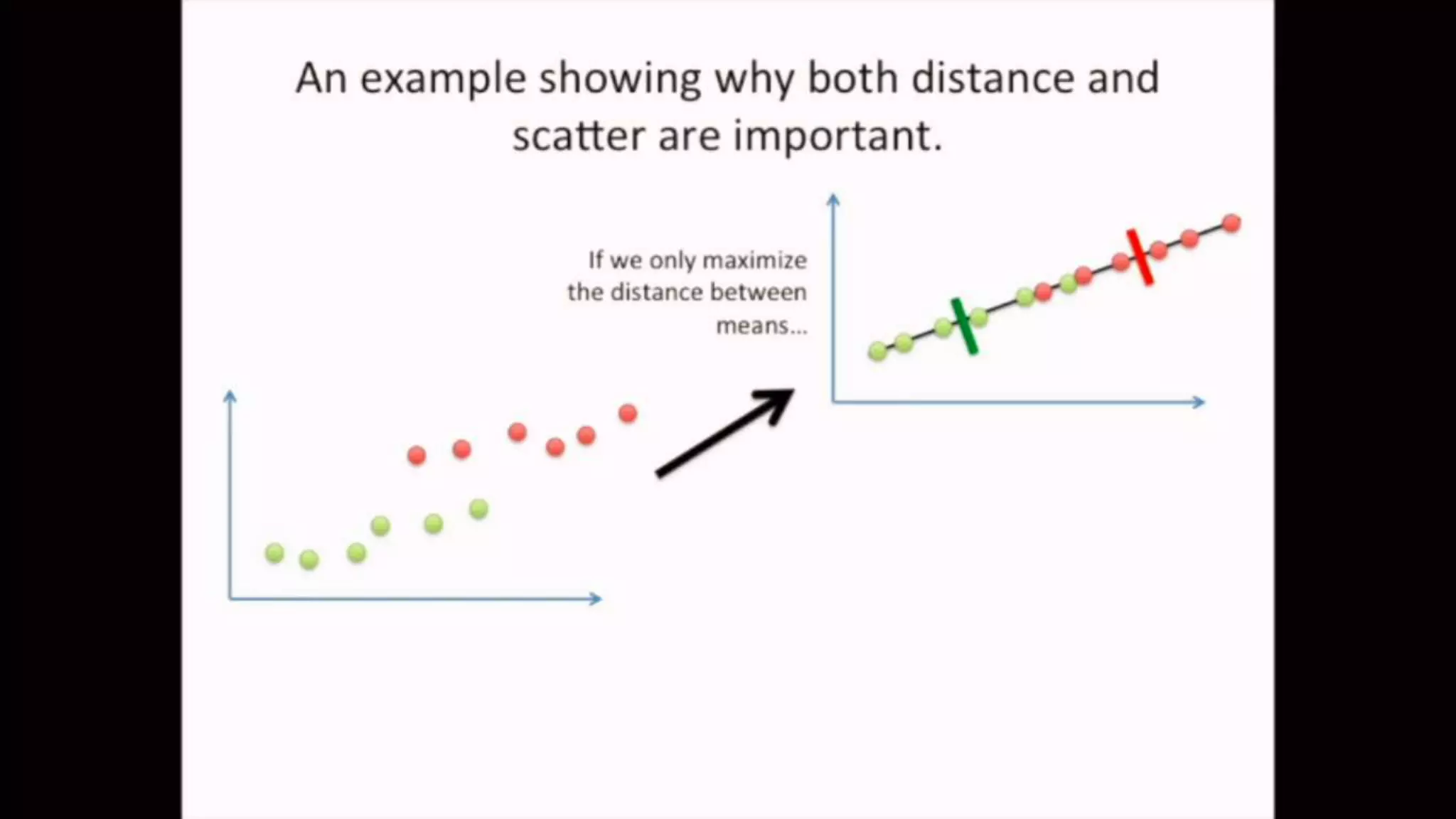
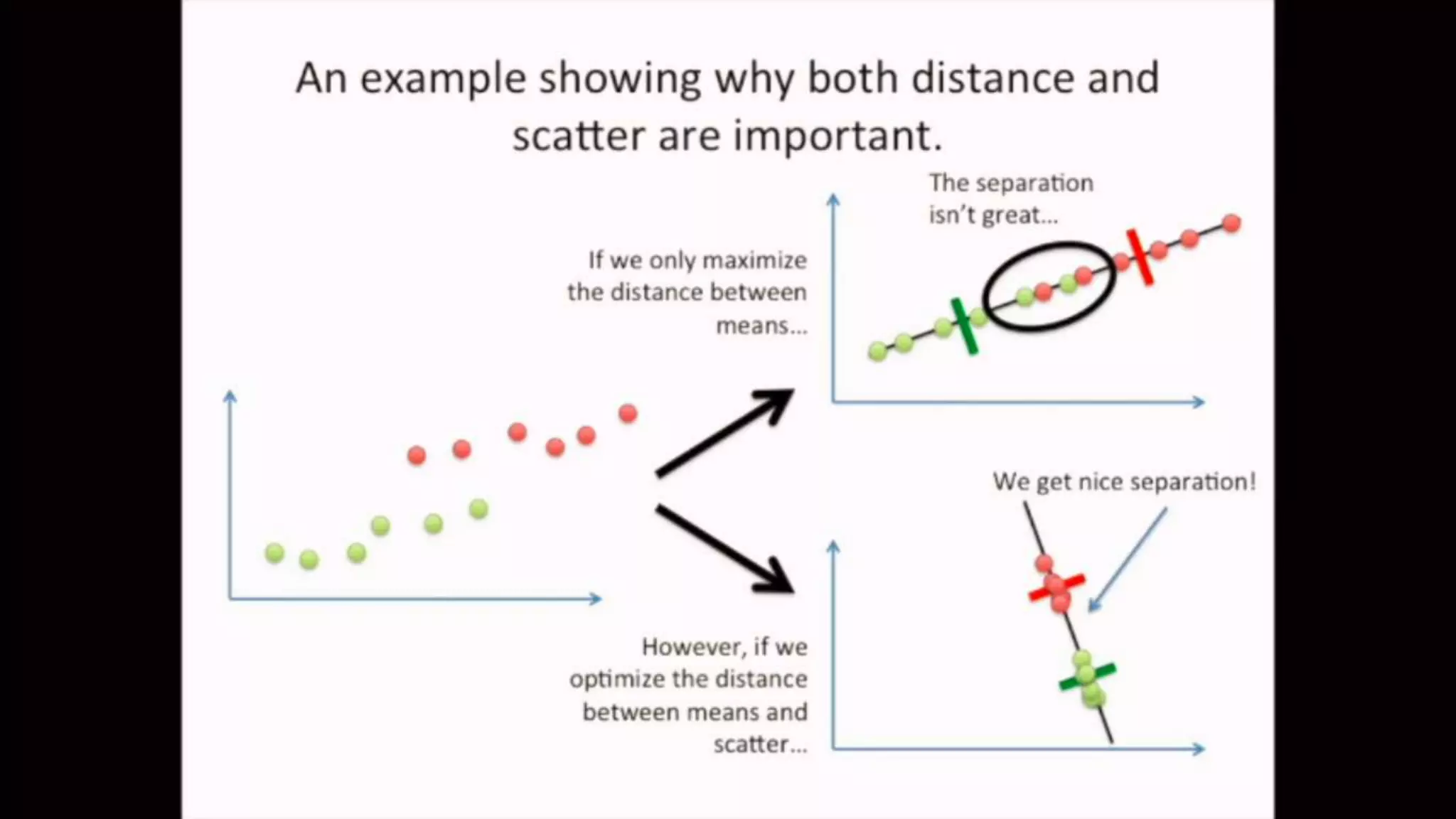
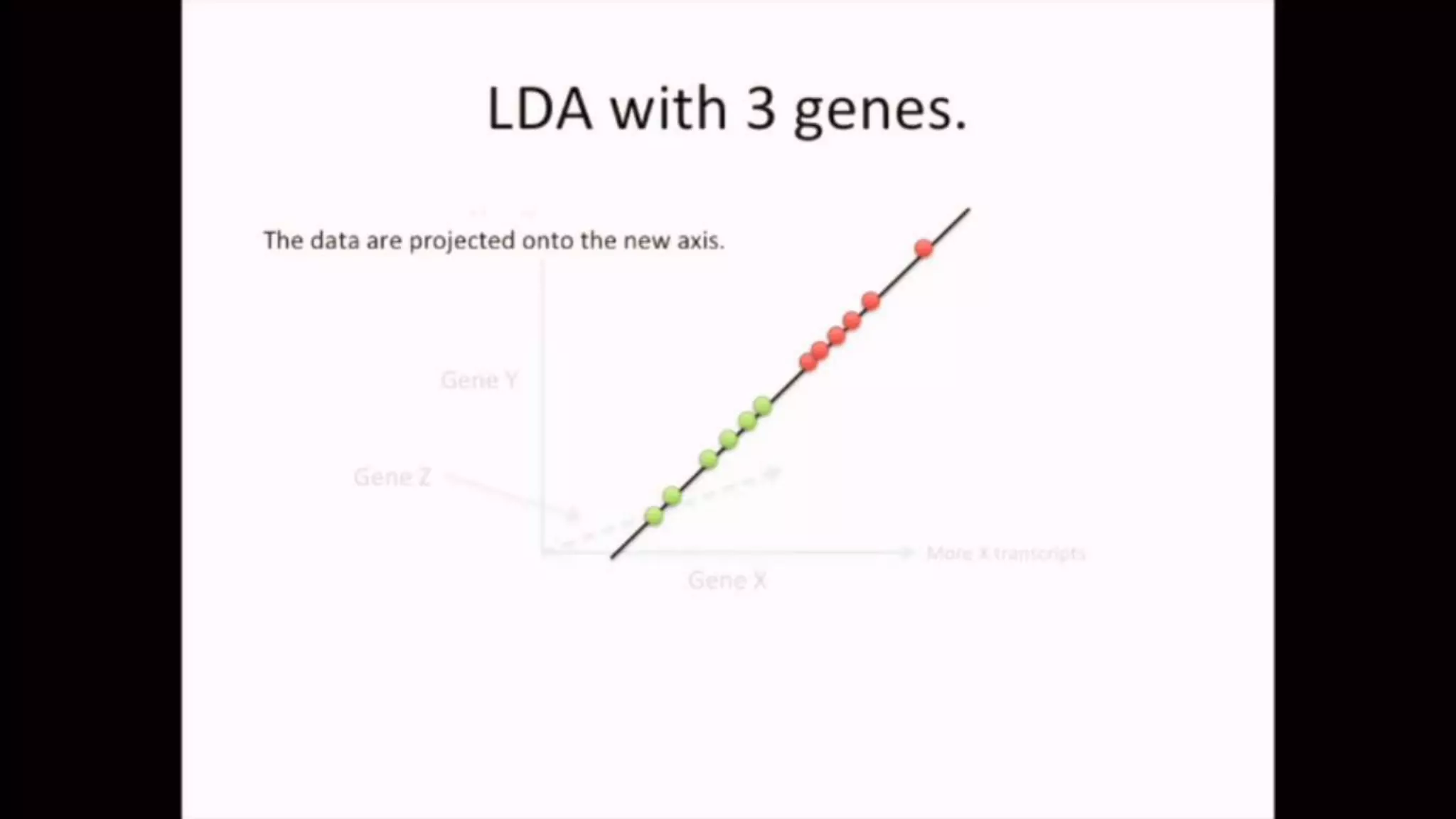
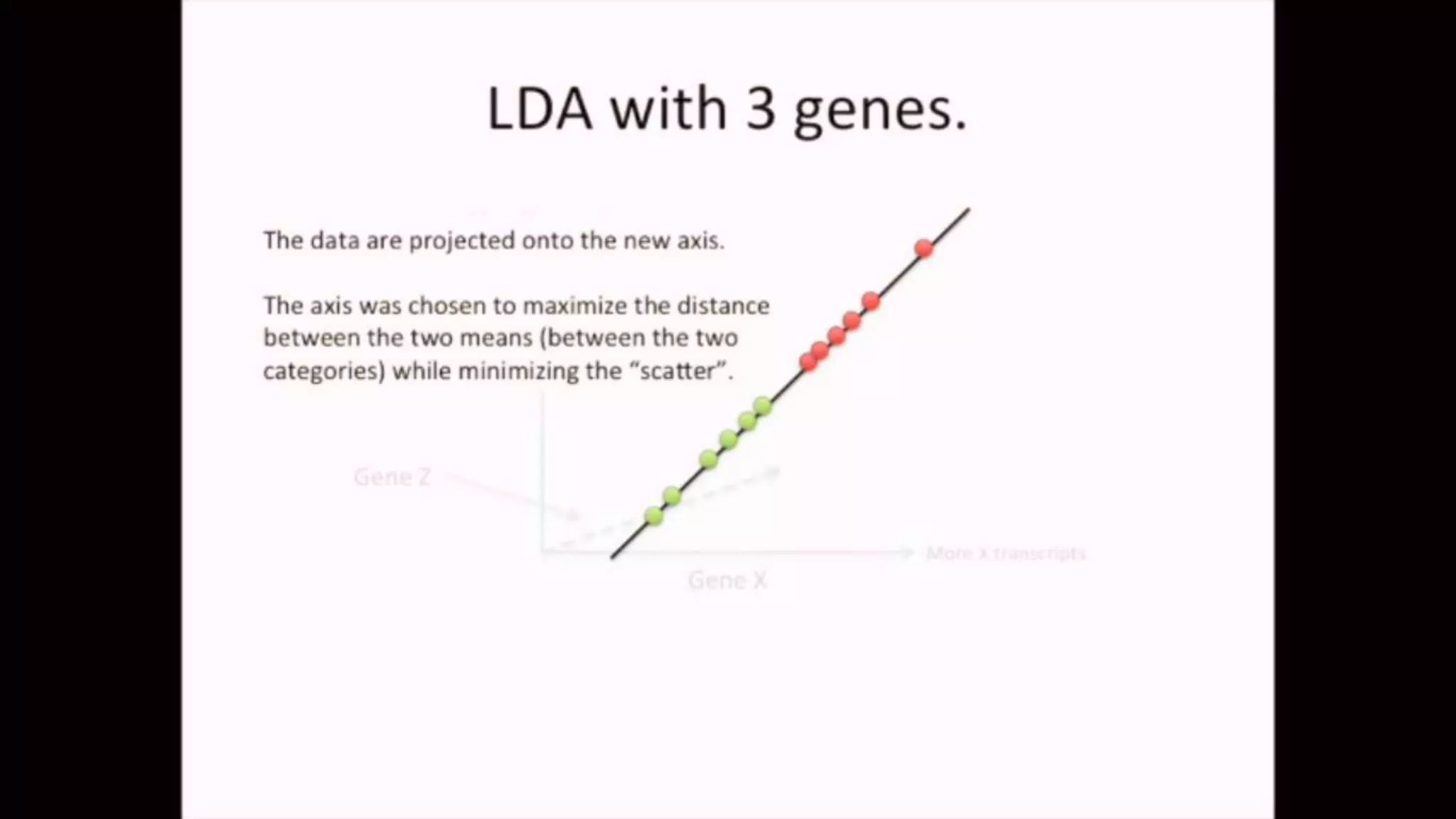
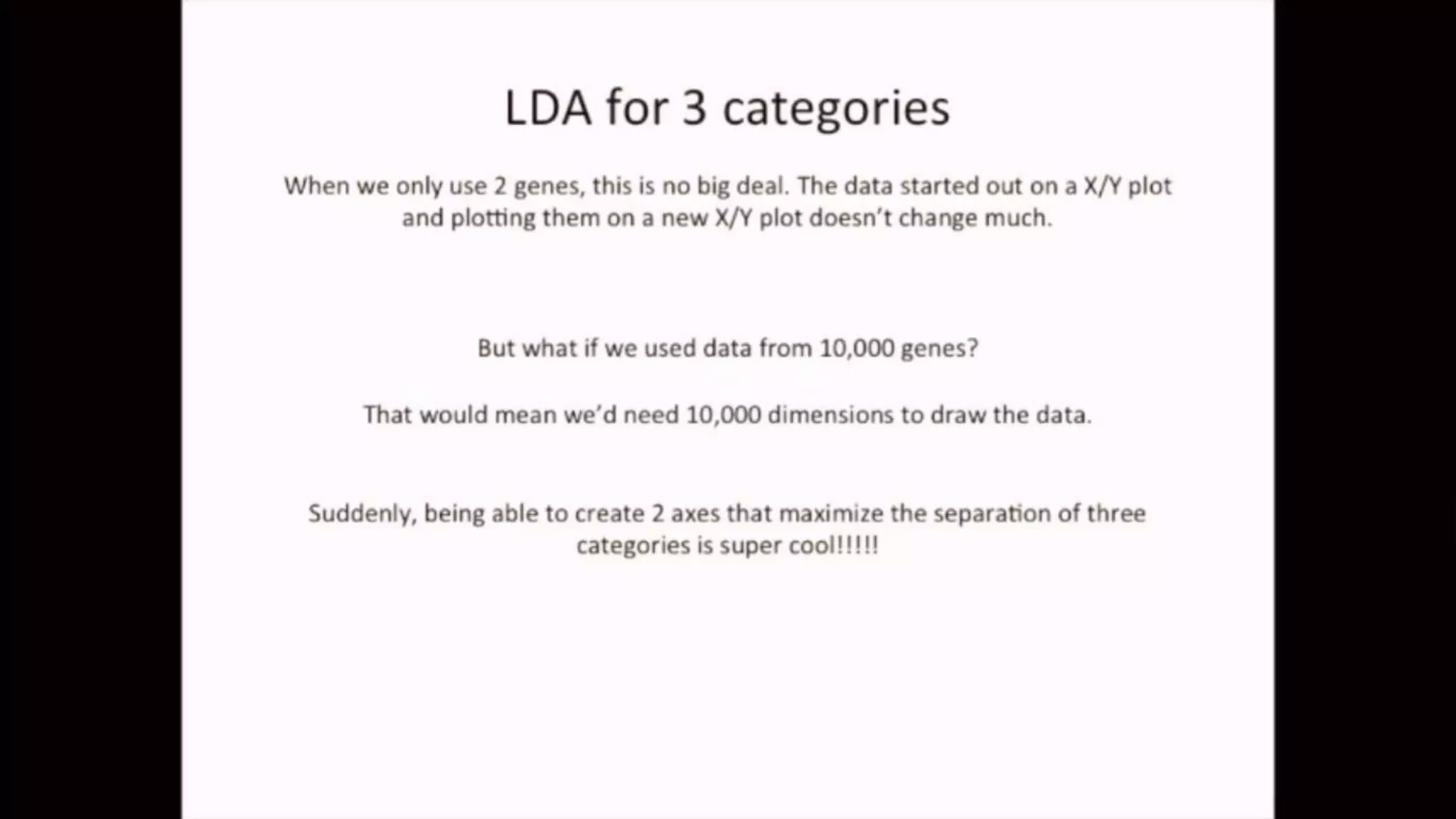
The goal is to project a dataset onto a lower-dimensional space with
good class-separability in order avoid overfitting (“curse of
dimensionality”) and also reduce computational costs.
LDA
CONCEPT
ILLUSTRATI
ON
APPLICATIONS
OF
LDA
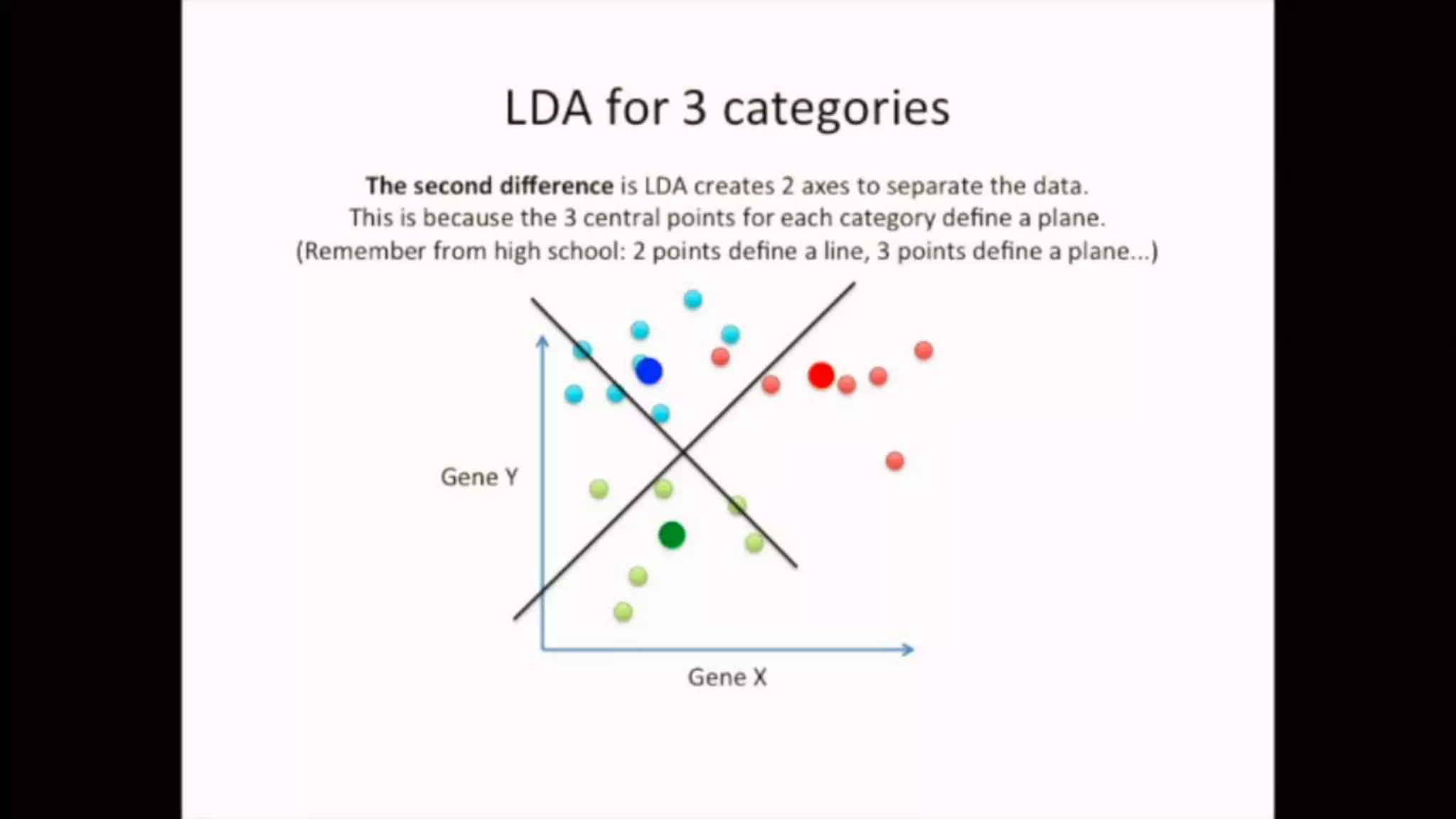
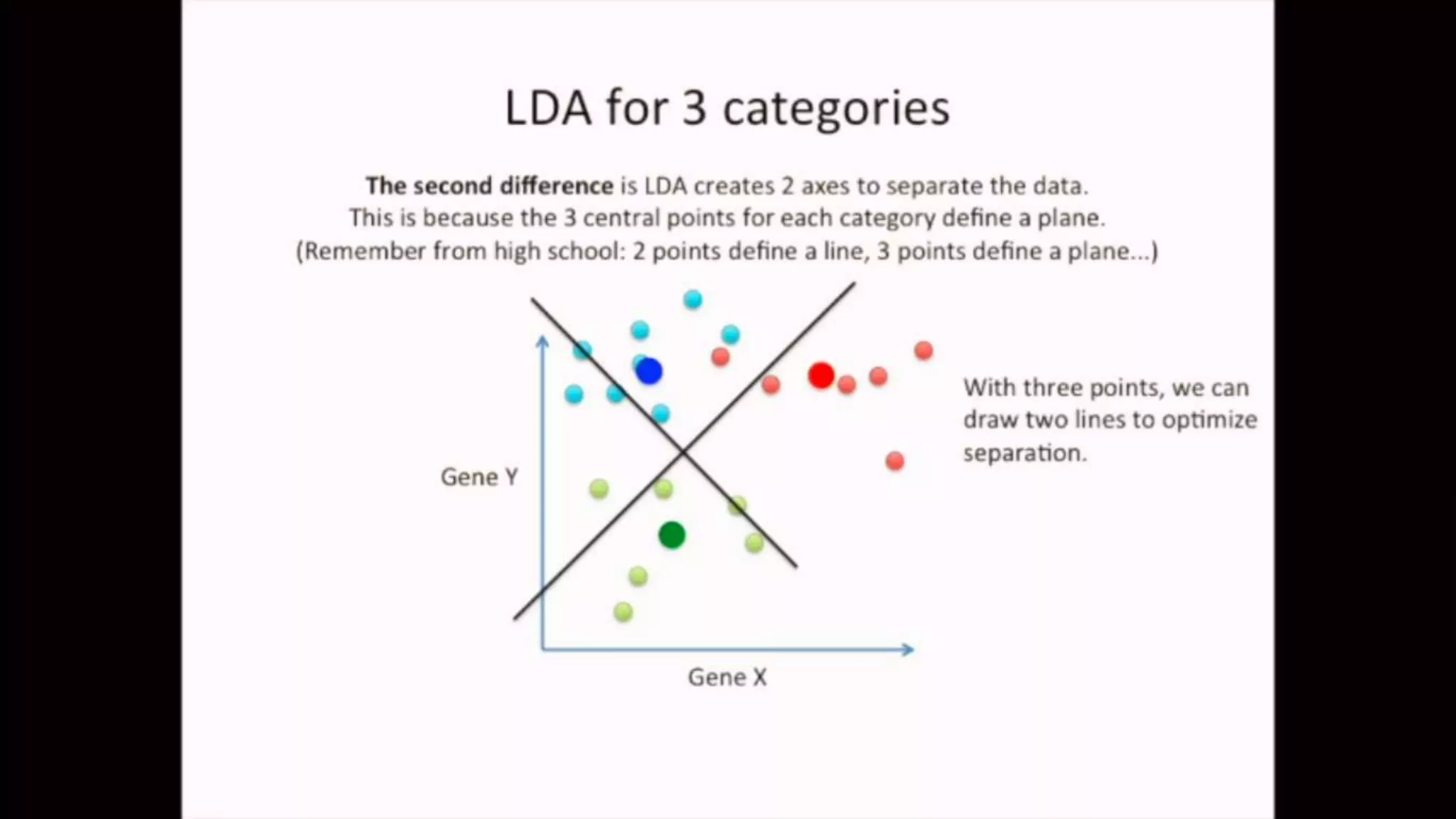
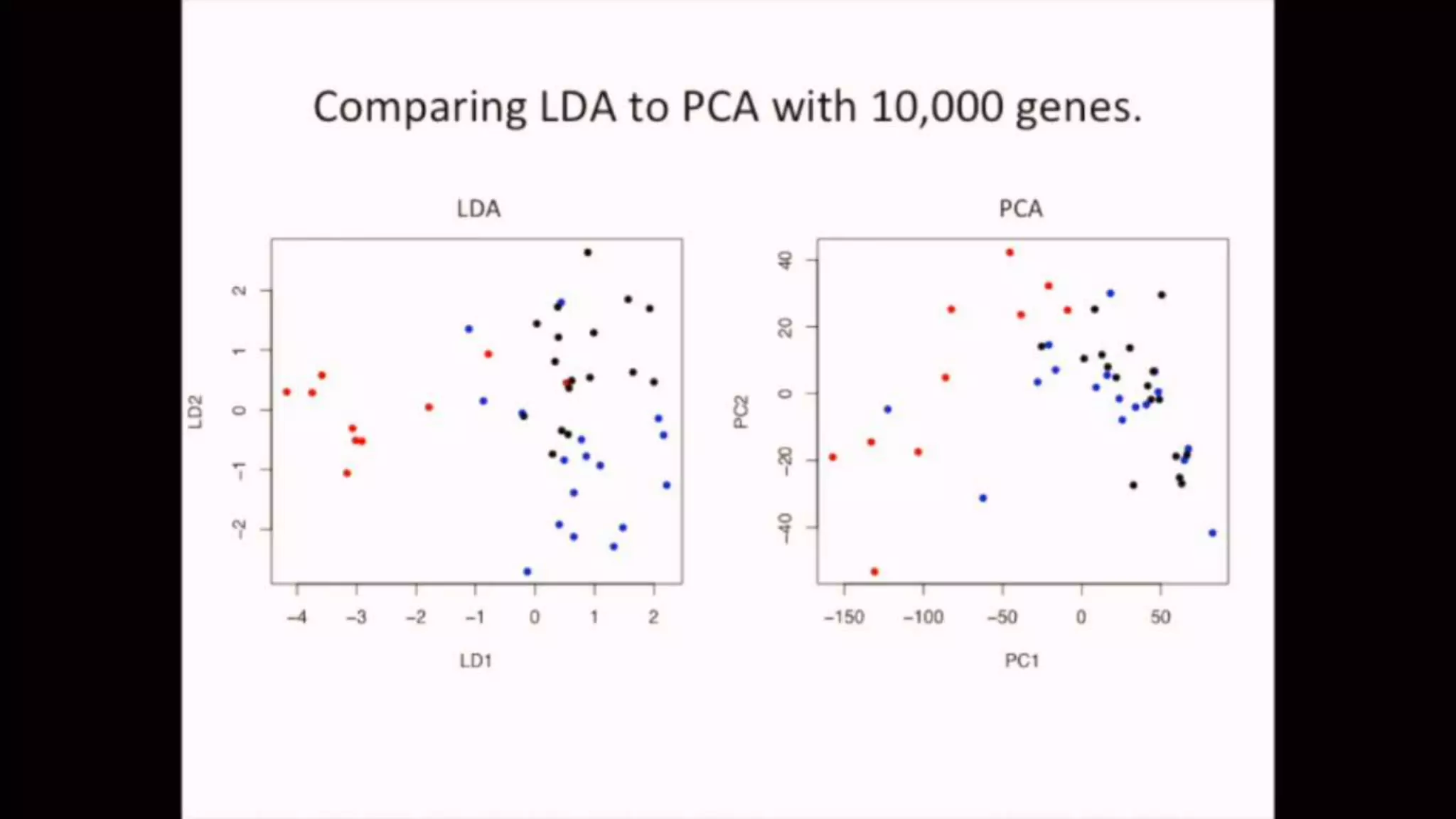
PCA VS LDA
PCA as a technique that finds the
directions of maximal variance
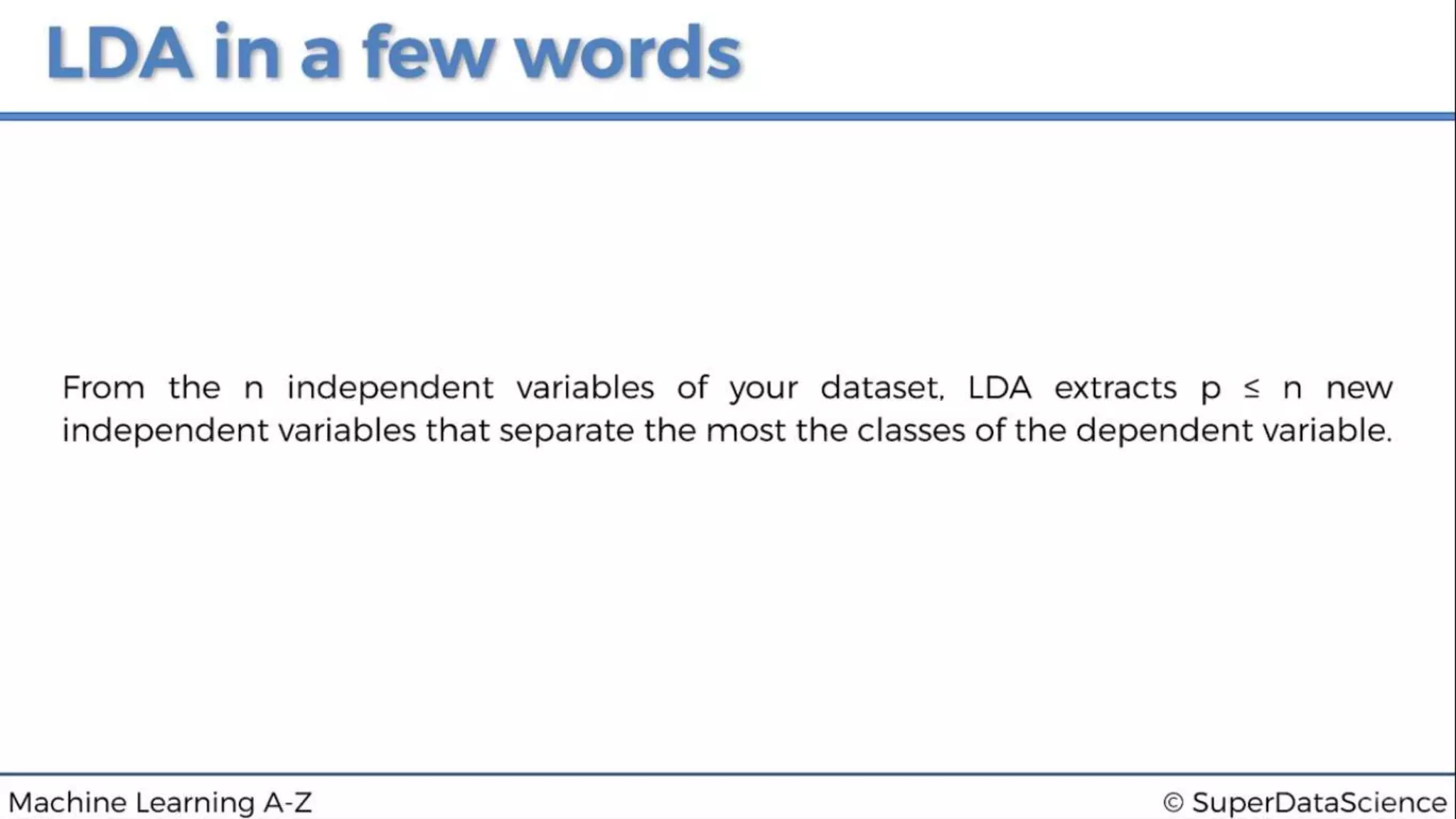
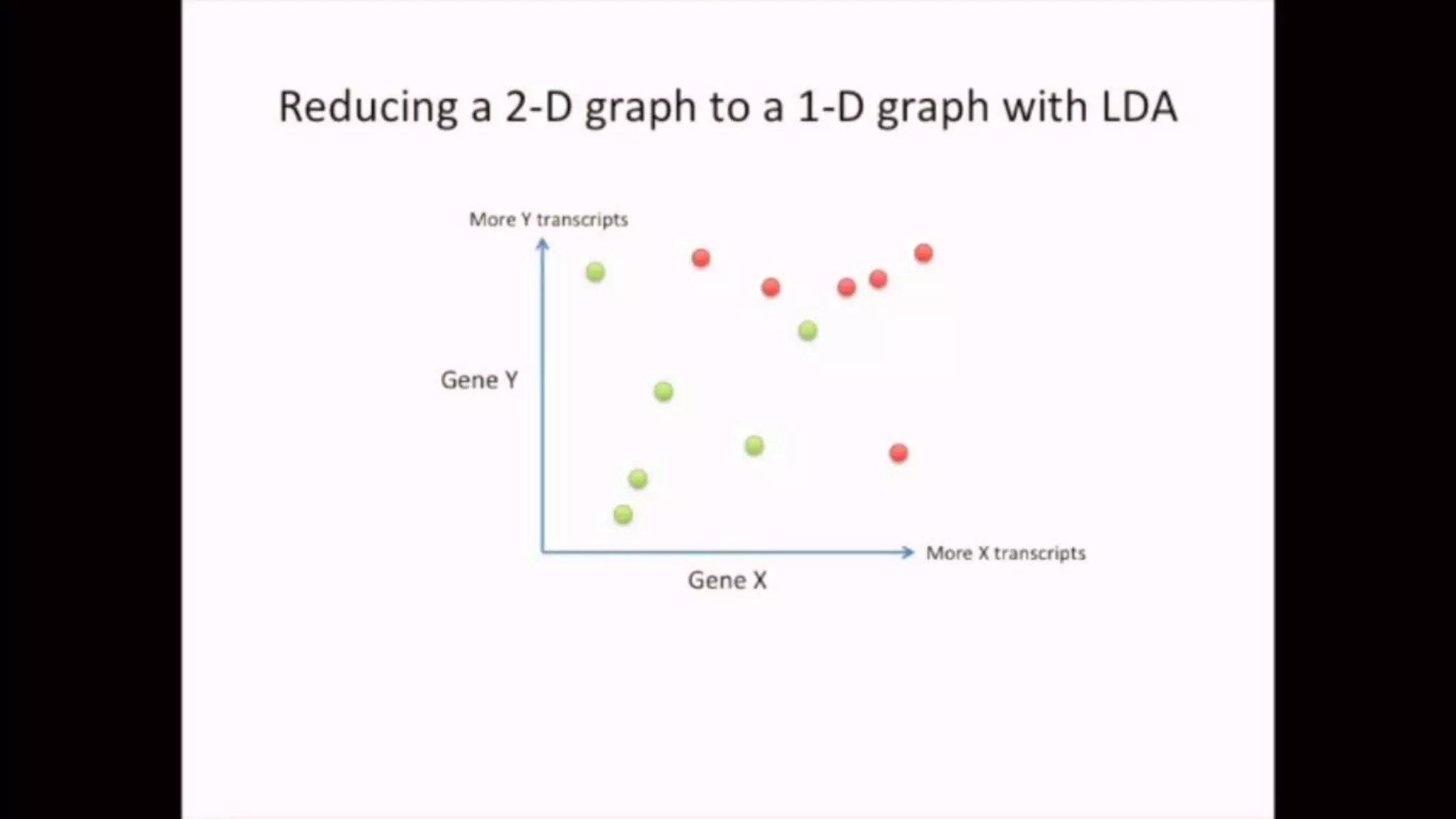
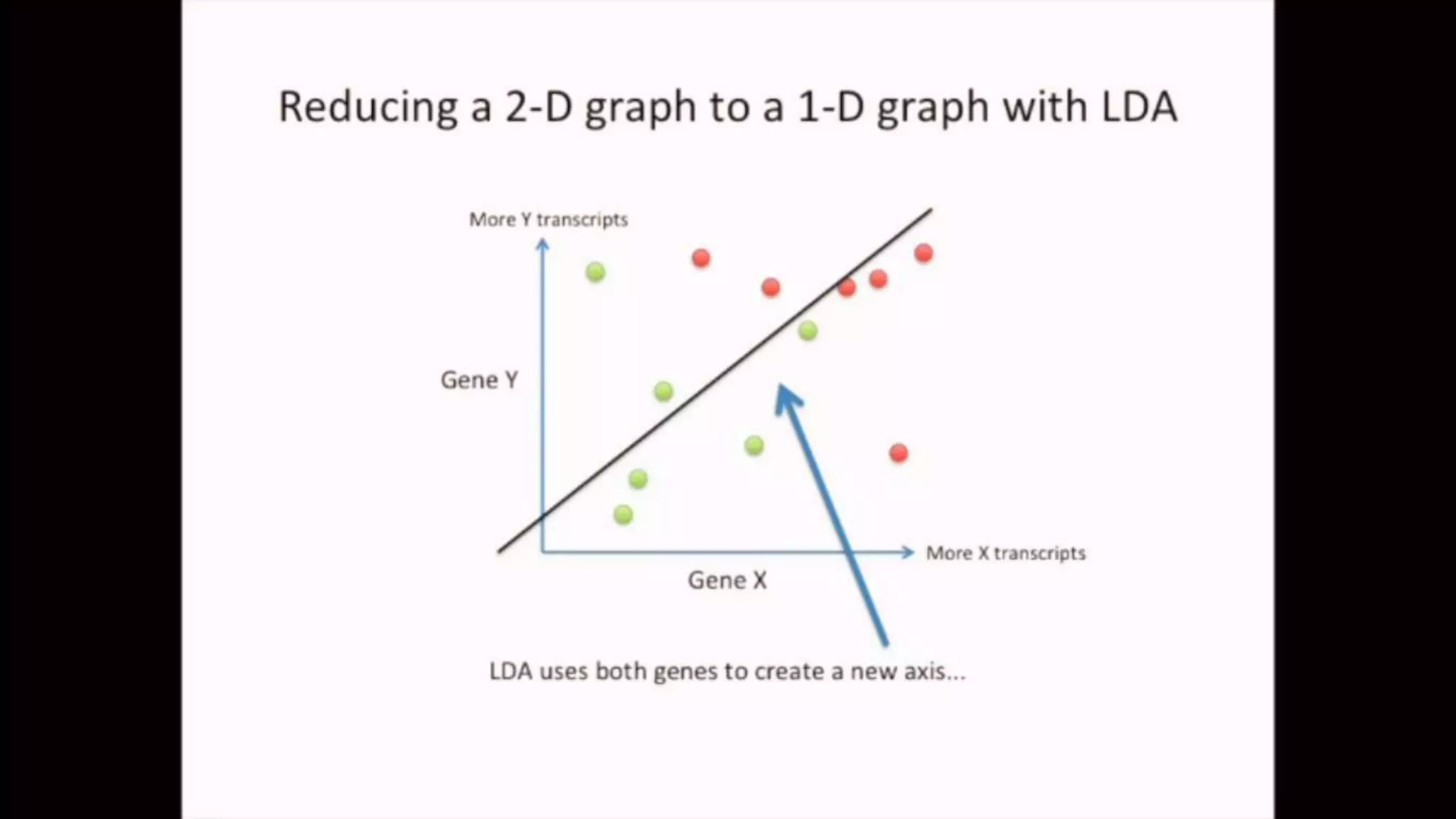
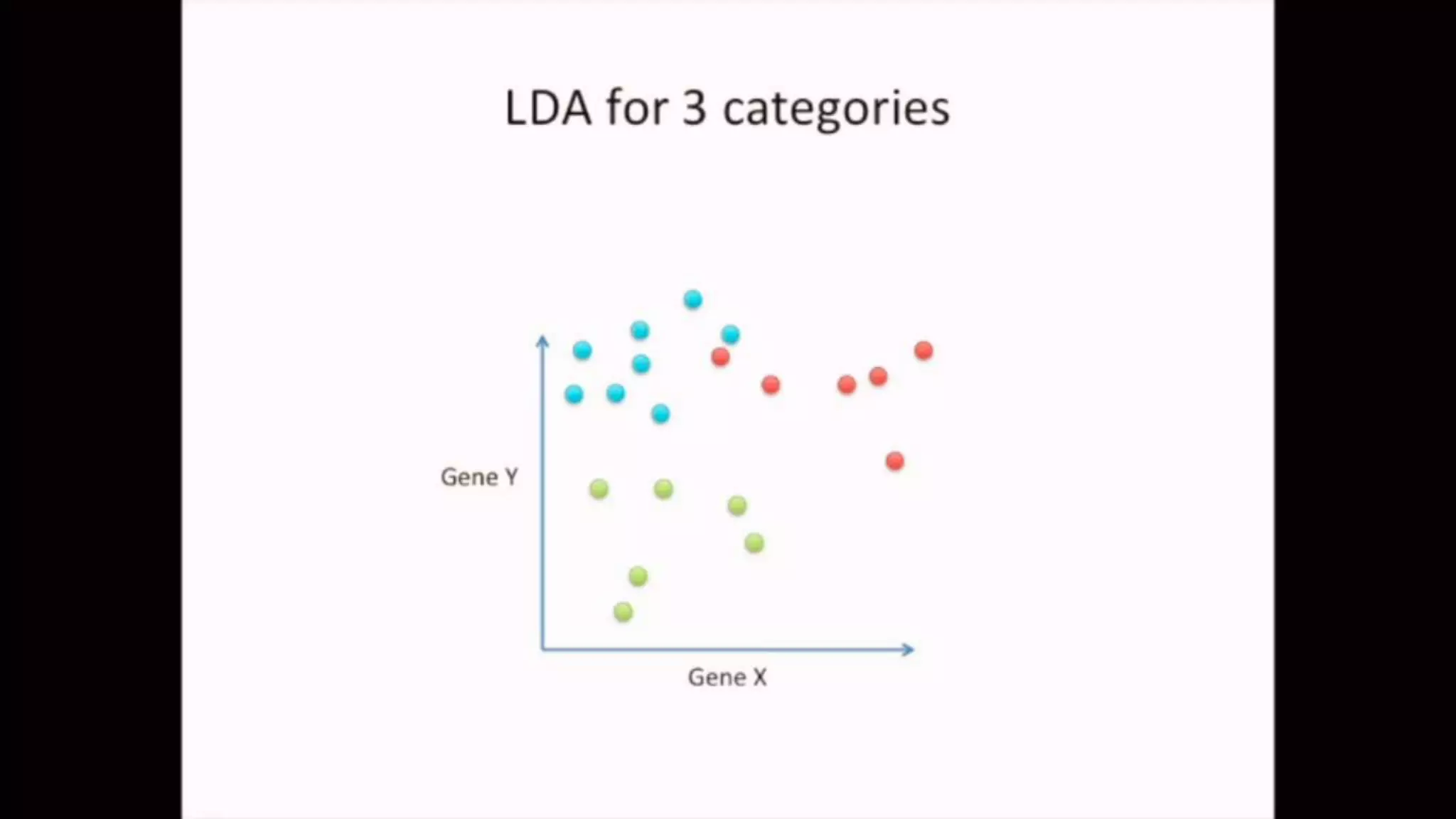
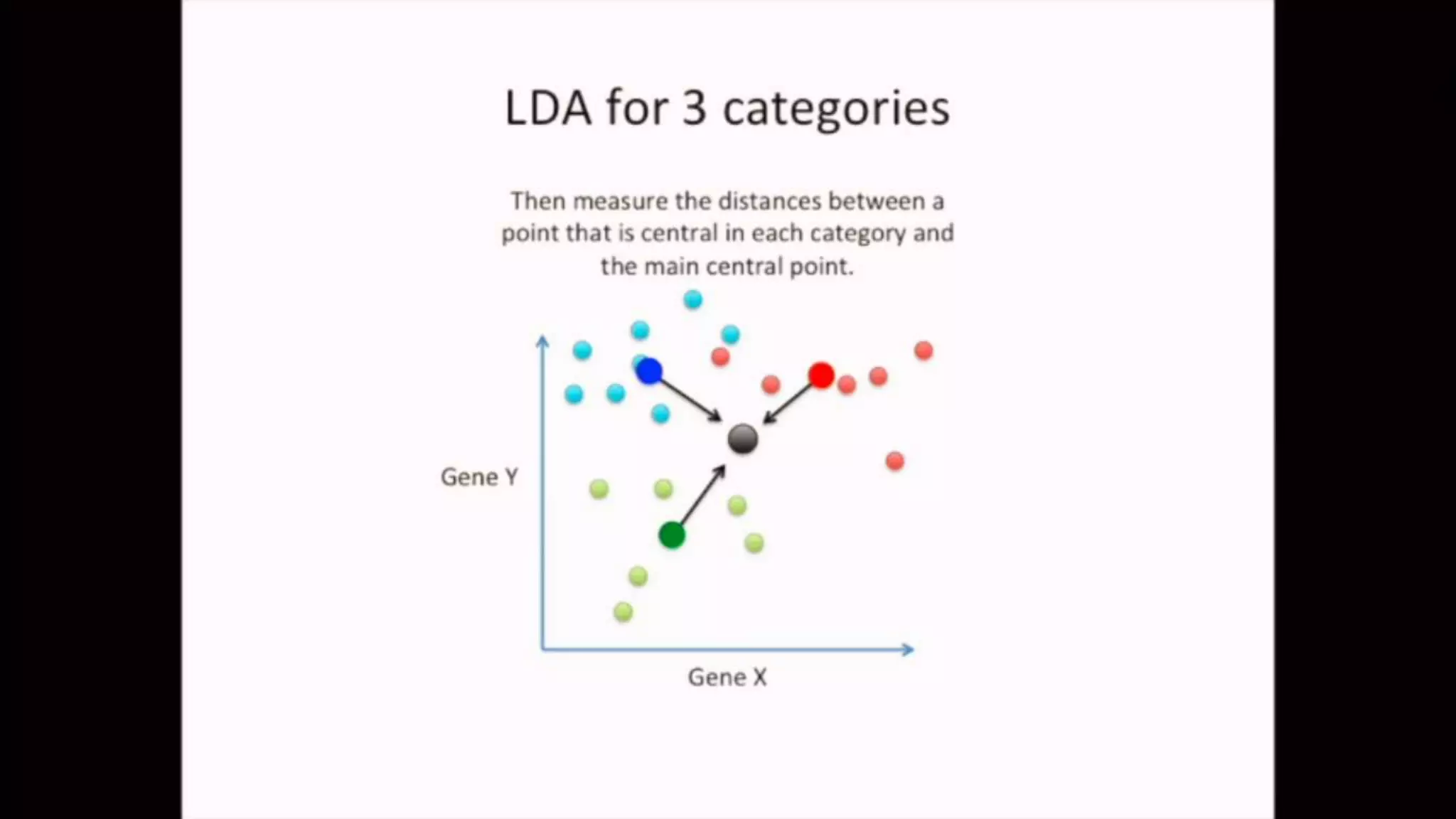
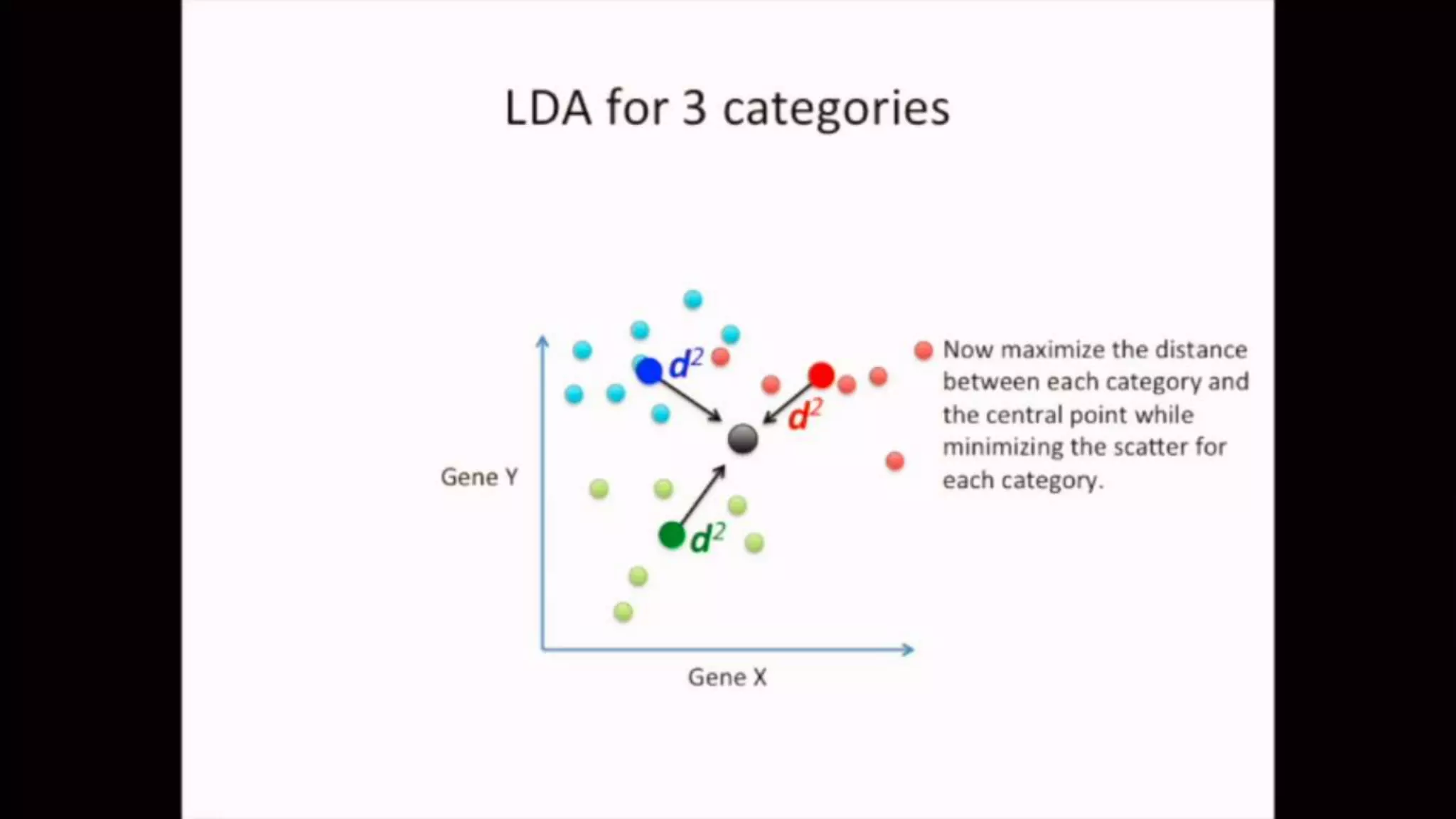
LDA attempts to find a feature
subspace that maximizes class
separability
PYTHON
This Photo by Unknown Author is licensed under CC BY-SA
IMPORTING THE LIBRARIES
import numpy as np
import matplotlib.pyplot as plt
import pandas as pd
IMPORTING THE DATASET
dataset = pd.read_csv('Wine.csv')
X = dataset.iloc[:, 0:13].values
y = dataset.iloc[:, 13].values
SPLITTING THE DATASET INTO THE
TRAINING SET AND TEST SET
from sklearn.model_selection import train_test_split
X_train, X_test, y_train, y_test = train_test_split(X, y, test_size = 0.2,
random_state = 0)
FEATURE SCALING
from sklearn.preprocessing import StandardScaler
sc = StandardScaler()
X_train = sc.fit_transform(X_train)
X_test = sc.transform(X_test)
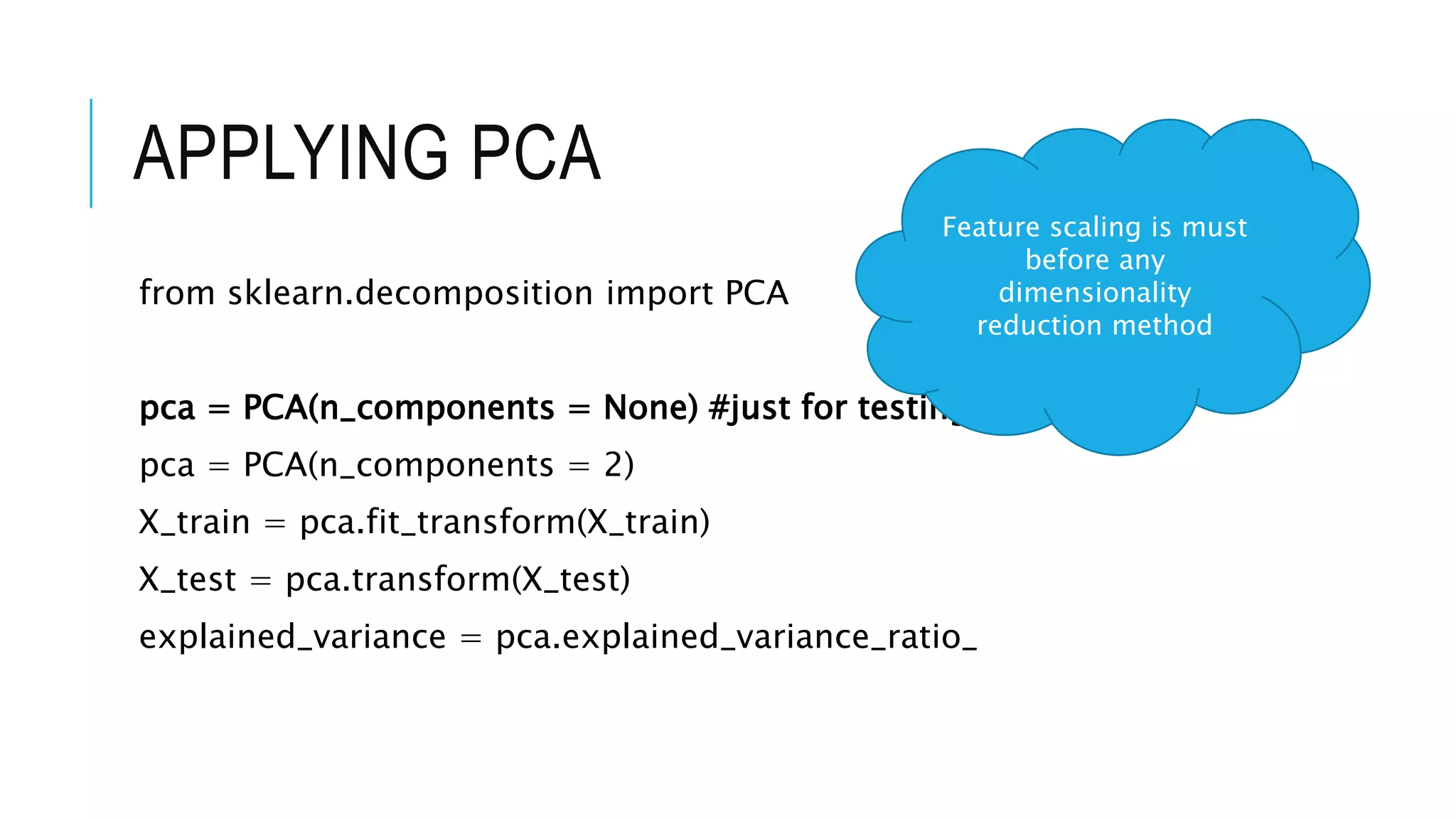
APPLYING PCA
from sklearn.decomposition import PCA
pca = PCA(n_components = None) #just for testing
pca = PCA(n_components = 2)
X_train = pca.fit_transform(X_train)
X_test = pca.transform(X_test)
explained_variance = pca.explained_variance_ratio_
Feature scaling is must
before any
dimensionality
reduction method
APPLYING KERNEL PCA
from sklearn.decomposition import KernelPCA
kpca = KernelPCA(n_components = 2, kernel = 'rbf')
X_train = kpca.fit_transform(X_train)
X_test = kpca.transform(X_test)
Feature scaling is must
before any
dimensionality
reduction method
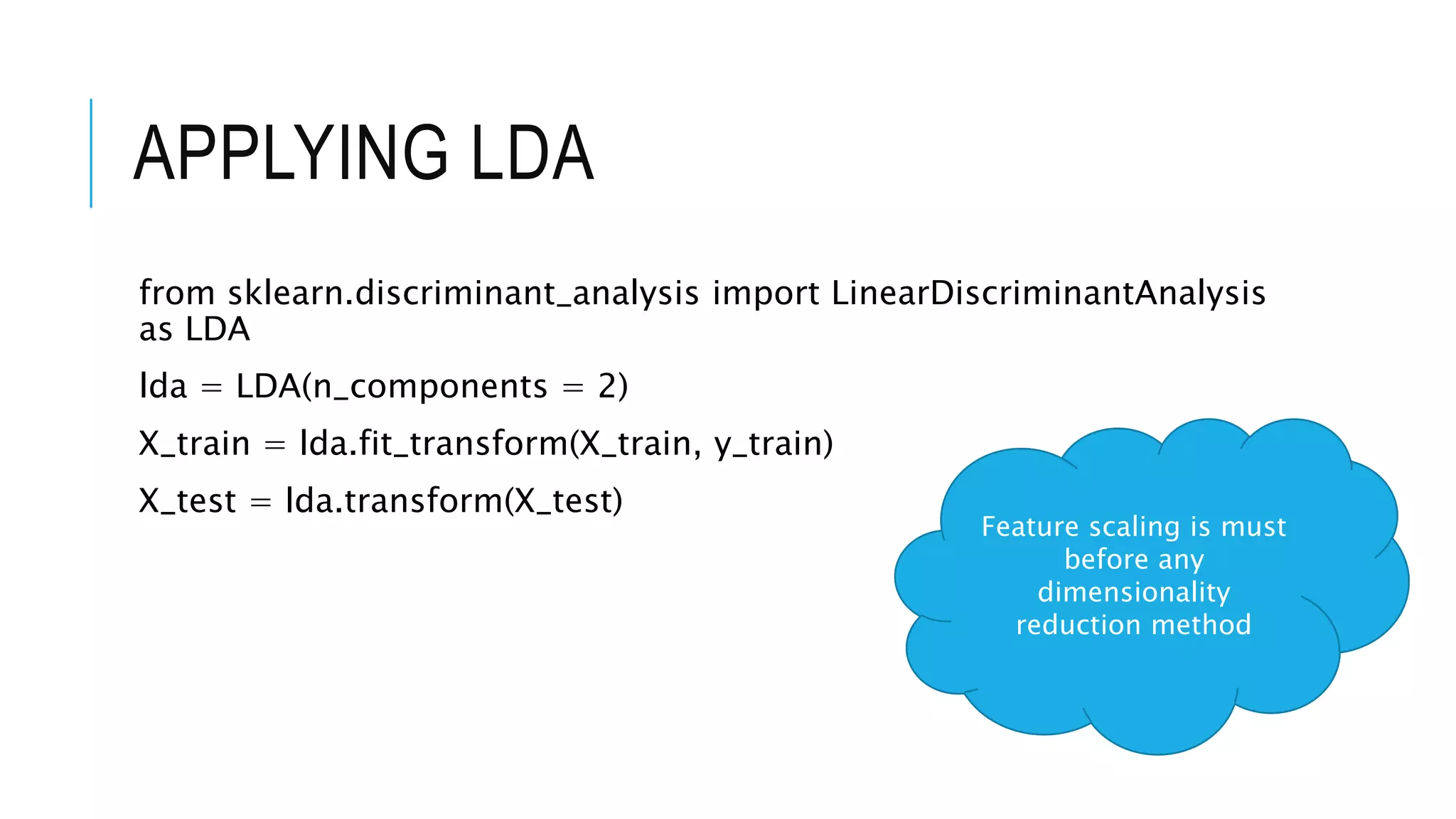
APPLYING LDA
from sklearn.discriminant_analysis import LinearDiscriminantAnalysis
as LDA
lda = LDA(n_components = 2)
X_train = lda.fit_transform(X_train, y_train)
X_test = lda.transform(X_test)
Feature scaling is must
before any
dimensionality
reduction method
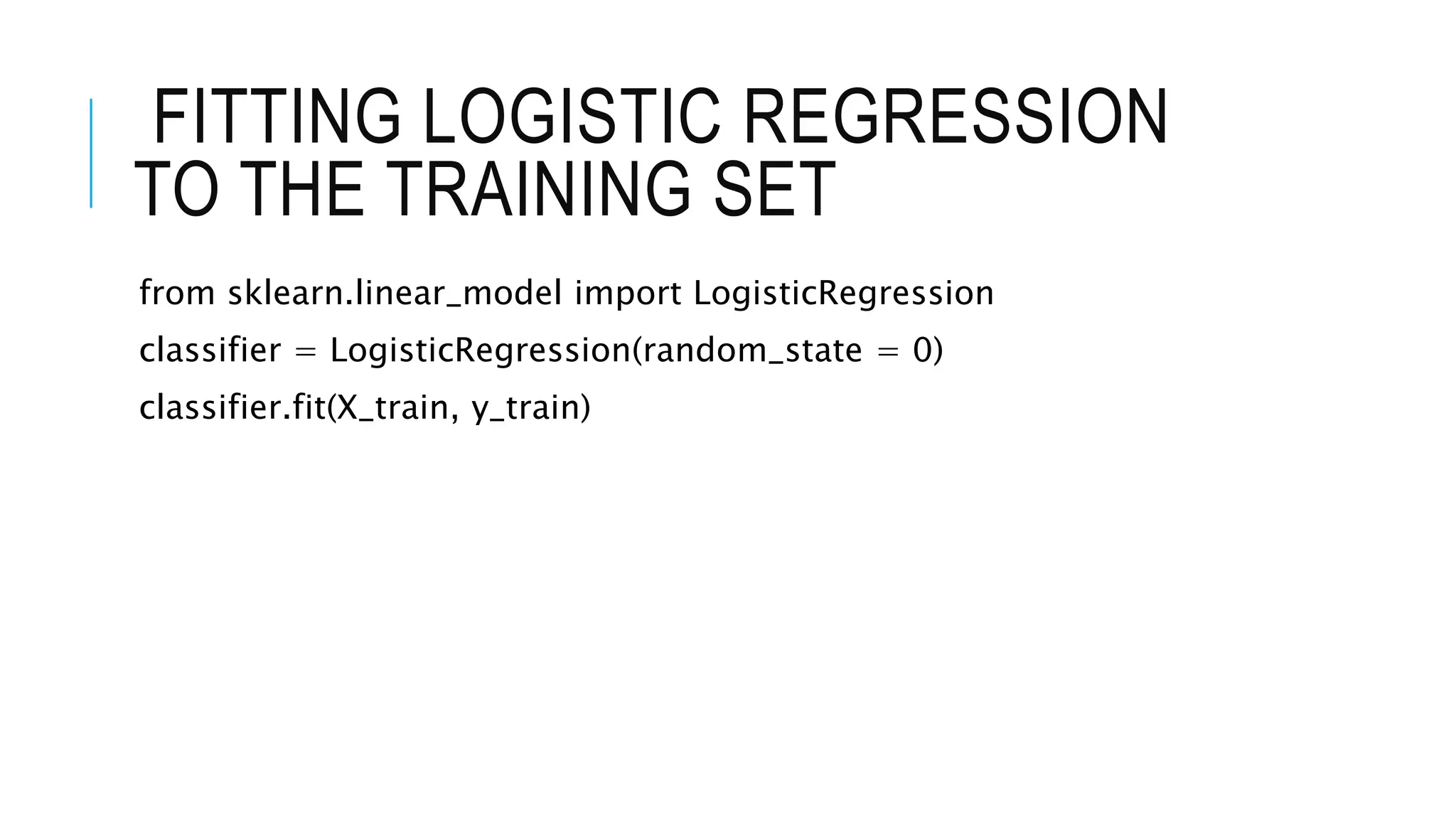
FITTING LOGISTIC REGRESSION
TO THE TRAINING SET
from sklearn.linear_model import LogisticRegression
classifier = LogisticRegression(random_state = 0)
classifier.fit(X_train, y_train)
PREDICTING THE TEST SET
RESULTS
y_pred = classifier.predict(X_test)
# MAKING THE CONFUSION MATRIX
from sklearn.metrics import confusion_matrix
cm = confusion_matrix(y_test, y_pred)
from matplotlib.colors import ListedColormap
X_set, y_set = X_train, y_train
X1, X2 = np.meshgrid(np.arange(start = X_set[:, 0].min() - 1, stop = X_set[:, 0].max() + 1, step = 0.01),
np.arange(start = X_set[:, 1].min() - 1, stop = X_set[:, 1].max() + 1, step = 0.01))
plt.contourf(X1, X2, classifier.predict(np.array([X1.ravel(), X2.ravel()]).T).reshape(X1.shape),
alpha = 0.75, cmap = ListedColormap(('red', 'green', 'blue')))
plt.xlim(X1.min(), X1.max())
plt.ylim(X2.min(), X2.max())
for i, j in enumerate(np.unique(y_set)):
plt.scatter(X_set[y_set == j, 0], X_set[y_set == j, 1],
c = ListedColormap(('red', 'green', 'blue'))(i), label = j)
plt.title('Logistic Regression (Training set)')
plt.xlabel('PC1')
plt.ylabel('PC2')
plt.legend()
plt.show()
# Visualising the Test set results
from matplotlib.colors import ListedColormap
X_set, y_set = X_test, y_test
X1, X2 = np.meshgrid(np.arange(start = X_set[:, 0].min() - 1, stop = X_set[:, 0].max() + 1, step
= 0.01),
np.arange(start = X_set[:, 1].min() - 1, stop = X_set[:, 1].max() + 1, step = 0.01))
plt.contourf(X1, X2, classifier.predict(np.array([X1.ravel(), X2.ravel()]).T).reshape(X1.shape),
alpha = 0.75, cmap = ListedColormap(('red', 'green', 'blue')))
plt.xlim(X1.min(), X1.max())
plt.ylim(X2.min(), X2.max())
for i, j in enumerate(np.unique(y_set)):
plt.scatter(X_set[y_set == j, 0], X_set[y_set == j, 1],
c = ListedColormap(('red', 'green', 'blue'))(i), label = j)
plt.title('Logistic Regression (Test set)')
plt.xlabel('PC1')
plt.ylabel('PC2')
plt.legend()
plt.show()

PCA and LDA in machine learning

  • 1.
    PCA AND LDA(MACHINE LEARNING) Akhilesh Joshi akhileshjoshi123@gmail .com
  • 2.
  • 3.
    PRINCIPAL COMPONENT ANALYSIS DEFINED Themain idea of principal component analysis (PCA) is to reduce the dimensionality of a data set consisting of many variables correlated with each other, either heavily or lightly, while retaining the variation present in the dataset, up to the maximum extent. The same is done by transforming the variables to a new set of variables, which are known as the principal components (or simply, the PCs) and are orthogonal, ordered such that the retention of variation present in the original variables decreases as we move down in the order. So, in this way, the 1st principal component retains maximum variation that was present in the original components. The principal components are the eigenvectors of a covariance matrix, and hence they are orthogonal.
  • 6.
  • 7.
  • 97.
    IMPLEMENTING PCA ONA 2-D DATASET Step 1: Normalize the data Step 2: Calculate the covariance matrix Step 3: Calculate the eigenvalues and eigenvectors Step 4: Choosing components and forming a feature vector Step 5: Forming Principal Components:
  • 98.
    APPLICATIONS OF PRINCIPAL COMPONENTANALYSIS PCA is predominantly used as a dimensionality reduction technique in domains like facial recognition, computer vision and image compression. It is also used for finding patterns in data of high dimension in the field of finance, data mining, bioinformatics, psychology, etc.
  • 100.
    LDA DEFINED Linear DiscriminantAnalysis (LDA) is most commonly used as dimensionality reduction technique in the pre-processing step for pattern-classification and machine learning applications. The goal is to project a dataset onto a lower-dimensional space with good class-separability in order avoid overfitting (“curse of dimensionality”) and also reduce computational costs.
  • 103.
  • 173.
  • 174.
    PCA VS LDA PCAas a technique that finds the directions of maximal variance LDA attempts to find a feature subspace that maximizes class separability
  • 176.
    PYTHON This Photo byUnknown Author is licensed under CC BY-SA
  • 177.
    IMPORTING THE LIBRARIES importnumpy as np import matplotlib.pyplot as plt import pandas as pd
  • 178.
    IMPORTING THE DATASET dataset= pd.read_csv('Wine.csv') X = dataset.iloc[:, 0:13].values y = dataset.iloc[:, 13].values
  • 179.
    SPLITTING THE DATASETINTO THE TRAINING SET AND TEST SET from sklearn.model_selection import train_test_split X_train, X_test, y_train, y_test = train_test_split(X, y, test_size = 0.2, random_state = 0)
  • 180.
    FEATURE SCALING from sklearn.preprocessingimport StandardScaler sc = StandardScaler() X_train = sc.fit_transform(X_train) X_test = sc.transform(X_test)
  • 181.
    APPLYING PCA from sklearn.decompositionimport PCA pca = PCA(n_components = None) #just for testing pca = PCA(n_components = 2) X_train = pca.fit_transform(X_train) X_test = pca.transform(X_test) explained_variance = pca.explained_variance_ratio_ Feature scaling is must before any dimensionality reduction method
  • 182.
    APPLYING KERNEL PCA fromsklearn.decomposition import KernelPCA kpca = KernelPCA(n_components = 2, kernel = 'rbf') X_train = kpca.fit_transform(X_train) X_test = kpca.transform(X_test) Feature scaling is must before any dimensionality reduction method
  • 183.
    APPLYING LDA from sklearn.discriminant_analysisimport LinearDiscriminantAnalysis as LDA lda = LDA(n_components = 2) X_train = lda.fit_transform(X_train, y_train) X_test = lda.transform(X_test) Feature scaling is must before any dimensionality reduction method
  • 184.
    FITTING LOGISTIC REGRESSION TOTHE TRAINING SET from sklearn.linear_model import LogisticRegression classifier = LogisticRegression(random_state = 0) classifier.fit(X_train, y_train)
  • 185.
    PREDICTING THE TESTSET RESULTS y_pred = classifier.predict(X_test)
  • 186.
    # MAKING THECONFUSION MATRIX from sklearn.metrics import confusion_matrix cm = confusion_matrix(y_test, y_pred)
  • 187.
    from matplotlib.colors importListedColormap X_set, y_set = X_train, y_train X1, X2 = np.meshgrid(np.arange(start = X_set[:, 0].min() - 1, stop = X_set[:, 0].max() + 1, step = 0.01), np.arange(start = X_set[:, 1].min() - 1, stop = X_set[:, 1].max() + 1, step = 0.01)) plt.contourf(X1, X2, classifier.predict(np.array([X1.ravel(), X2.ravel()]).T).reshape(X1.shape), alpha = 0.75, cmap = ListedColormap(('red', 'green', 'blue'))) plt.xlim(X1.min(), X1.max()) plt.ylim(X2.min(), X2.max()) for i, j in enumerate(np.unique(y_set)): plt.scatter(X_set[y_set == j, 0], X_set[y_set == j, 1], c = ListedColormap(('red', 'green', 'blue'))(i), label = j) plt.title('Logistic Regression (Training set)') plt.xlabel('PC1') plt.ylabel('PC2') plt.legend() plt.show()
  • 188.
    # Visualising theTest set results from matplotlib.colors import ListedColormap X_set, y_set = X_test, y_test X1, X2 = np.meshgrid(np.arange(start = X_set[:, 0].min() - 1, stop = X_set[:, 0].max() + 1, step = 0.01), np.arange(start = X_set[:, 1].min() - 1, stop = X_set[:, 1].max() + 1, step = 0.01)) plt.contourf(X1, X2, classifier.predict(np.array([X1.ravel(), X2.ravel()]).T).reshape(X1.shape), alpha = 0.75, cmap = ListedColormap(('red', 'green', 'blue'))) plt.xlim(X1.min(), X1.max()) plt.ylim(X2.min(), X2.max()) for i, j in enumerate(np.unique(y_set)): plt.scatter(X_set[y_set == j, 0], X_set[y_set == j, 1], c = ListedColormap(('red', 'green', 'blue'))(i), label = j) plt.title('Logistic Regression (Test set)') plt.xlabel('PC1') plt.ylabel('PC2') plt.legend() plt.show()