Contents
 Introduction
 Types
 Properties
 Tests on Bitumen
 Grading of Bitumen
Introduction
 Used in pavements
 Binding material
 Used in
 wearing course
 Primer
 Patch works
 Surface dressing etc.,
 Bitumen, Tar are not same.
Bitumen and Tar
 Black or dark colored solid, viscous
cementitious substance.
 Bitumen is petroleum product – obtained
by distillation of crude petroleum or
naturally available in asphalt.
 Coal tar – by product in destructive
distillation of coke
Bitumen and Tar
 Bitumen
 Excellent Binding properties
 Good water proofing surface
 Tar
 Highly temperature susceptible
 Pollutant
 Poor adhesion in presence of water
 Bitumen preferred over Tar
Bitumen - Definition
According to ASTM -
“Bitumen is hydrocarbon material of either
natural or pyrogenous origin found in
gaseous, liquid, semi-solid or solid form
and is completely soluble in carbon-di-
sulphide , carbon tetra chloride”
Bitumen - Intro
 Definition
 At normal range of temp – semi solid state
 When heated viscosity decreases
 For construction of pavements – heated
from 130 to 175C
 Mixing with aggregates at high temp – Hot
bituminous mix
 Mixing with aggregates at low or normal
temperature – Cold bituminous mix
Grades of Bitumen
 Bitumens can be majorly classified into
2 types
 Paving grade bitumen: Used for construction
of roads and airfields
 Industrial grade bitumen: water proofing of
structures and industrial floors etc.,
Types
 Paving grade bitumen
 Modified bitumen binders
 Cutback bitumen
 Bitumen Emulsion
Cutback bitumen
 To have fluid consistency at normal
temp, with low heating – cutback
bitumen is used
 Dilution of paving grade in volatile
solvents – kerosene, light fuel oil etc.,
 Hardening rate depends on the grade
and characteristics of bitumen and
solvent.
 RC, MC, SS
Cutback bitumen
 RC is recommended for surface
dressing and patchwork.
 MC is recommended for premix with
less quantity of fine aggregates.

 SS is used for premix with appreciable
quantity of fine aggregates.
Bitumen Emulsion
 To get fluid consistency
 Dispersing bitumen globules in aqueous
solution (i.e., water with dispersing
agent)
 60% water, remaining bitumen
 Cold bituminous mix
 Properties depend on grade, water
quantity, emulsifier
 RS, MS, SS
Modified Bitumen Binders
 To improve the properties of bitumen
 Additives are mixed
 Polymer modified bitumen is used only
in wearing course depending on the
severity of climatic and weather
conditions
Advantages of modified
bitumen
 Lower susceptibility to daily and seasonal
temperature variations
 Higher resistance to deformation at high
pavement temperature
 Better age resistance properties
 Higher fatigue life for mixes
 Better adhesion between aggregates and
binder
 Prevention of cracking and reflective
cracking
Functions of Binders
 Used in surface course
 Used in base course depending on
traffic
 Used in preparation of mixes
 Used as prime coat over granular base
course
 Used in soil stabilization
 Sealer material for filling joints, cracks in
cc pavements
Requirements
 Adequate viscosity
 Heating bitumen, aggregate
 Cutback
 Emulsion
 Sufficiently viscous on cooling – compact
surface with no deformation
 Form thin film around aggregates
 Sufficient ductility
 Temp susceptibility
 Adhesion with aggregates in presence of
water
 affinity between the materials used in the mix
Tests on Bitumen
 Penetration test
 Ductility test
 Softening point test
 Specific gravity test
 Viscosity test
 Flash and fire point test
 Float test
 Water content test
 Loss on heating test
Penetration test
 Measures hardness or softness of
bitumen
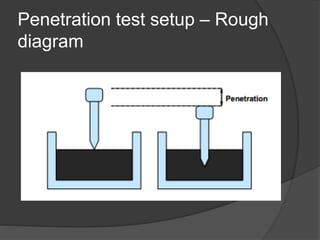
 Measures penetration depth in tenths of
a millimeter to which a standard loaded
needle will penetrate in 5 sec
 Standardized equipment – BIS
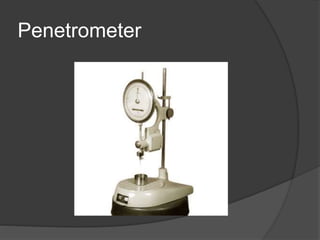
 Penetrometer device – consists a
needle, weight of 100g, device for
releasing and locking position
Penetration test setup – Rough
diagram
Penetrometer
 Bitumen heated to pouring consistency
 Placed in containers to a depth i.e.,
min15mm excess of expected
penetration
 Conducted at 25C
 Highly fluctuated with small inaccuracy
 Results are used for grading the
bitumen i.e., 40/50 or 80/90 etc.,
bitumens
Ductility test
 It is the property that permits bitumen to
undergo great deformation without
breaking
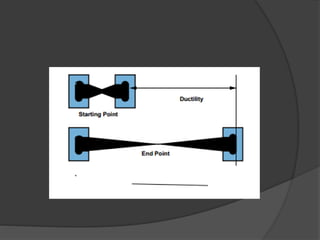
 Ductility is defined as the distance in cm,
to which a standard sample or briquette
of the material will be elongated without
breaking
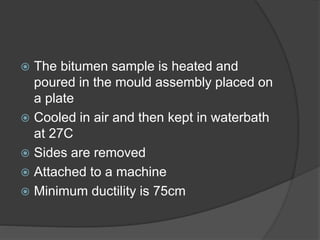
 The bitumen sample is heated and
poured in the mould assembly placed on
a plate
 Cooled in air and then kept in waterbath
at 27C
 Sides are removed
 Attached to a machine
 Minimum ductility is 75cm
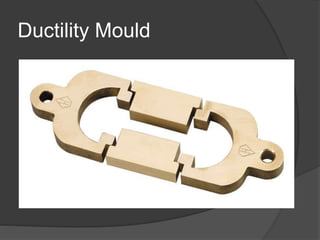
Ductility Mould
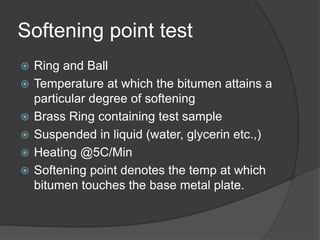
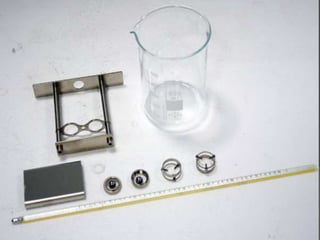
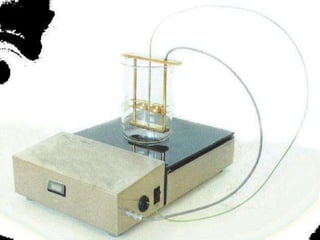
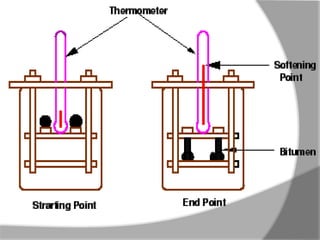
Softening point test
 Ring and Ball
 Temperature at which the bitumen attains a
particular degree of softening
 Brass Ring containing test sample
 Suspended in liquid (water, glycerin etc.,)
 Heating @5C/Min
 Softening point denotes the temp at which
bitumen touches the base metal plate.
Specific Gravity Test
 Used for classification
 Density influenced by chemical
composition
 Using pycnometer method or any other
standard method
 0.97 to 1.02
Viscosity Test
 It is fluid property of bitumen
 Measure of resistance to flow
 Influences the strength of resulting mixes
 Very low and high viscosity decreases the
stability of mix
 High viscosity – non homogenous mix
 Low viscosity – no uniform film on aggregates,
just lubricates
 Orifice type viscometer and other types of
equipment is used
 Time noted for receiving specific quantity of bitumen
material through orifice
Flash and Fire point test
 High temperatures – Bitumen leaves
volatiles
 These are inflammable
 Important to know at where it catches fire
 According to BIS, flash point is the
temperature at which the vapour of the
bitumen momentarily catches fire in the
form of flash.
 Fire point is the temperature at which the
material gets ignited and burns
 Flash point should be min 175C
Water content test
 Bitumen distilled in petroleum
 Heated
 Wait of water condensed and collected
is expressed as the percentage by
weight of original sample
 Allowable maximum water content
should not be more than 0.2% by weight
Loss on Heating Test
 Bitumen loses volatility upon heating and gets
hardened
 50gms of sample is weighed and heated to
163C for 5 hours
 Sample weighed after heating
 Loss in weight is expressed as the percentage
by weight of the original sample.
 For paving mixes not more than 1% is allowed
 How ever, if the bitumen has penetration
values of 150 -200mm 2% is allowed.
 Thankyou

Pavement Materials Bitumen

  • 2.
    Contents  Introduction  Types Properties  Tests on Bitumen  Grading of Bitumen
  • 3.
    Introduction  Used inpavements  Binding material  Used in  wearing course  Primer  Patch works  Surface dressing etc.,  Bitumen, Tar are not same.
  • 4.
    Bitumen and Tar Black or dark colored solid, viscous cementitious substance.  Bitumen is petroleum product – obtained by distillation of crude petroleum or naturally available in asphalt.  Coal tar – by product in destructive distillation of coke
  • 5.
    Bitumen and Tar Bitumen  Excellent Binding properties  Good water proofing surface  Tar  Highly temperature susceptible  Pollutant  Poor adhesion in presence of water  Bitumen preferred over Tar
  • 6.
    Bitumen - Definition Accordingto ASTM - “Bitumen is hydrocarbon material of either natural or pyrogenous origin found in gaseous, liquid, semi-solid or solid form and is completely soluble in carbon-di- sulphide , carbon tetra chloride”
  • 7.
    Bitumen - Intro Definition  At normal range of temp – semi solid state  When heated viscosity decreases  For construction of pavements – heated from 130 to 175C  Mixing with aggregates at high temp – Hot bituminous mix  Mixing with aggregates at low or normal temperature – Cold bituminous mix
  • 8.
    Grades of Bitumen Bitumens can be majorly classified into 2 types  Paving grade bitumen: Used for construction of roads and airfields  Industrial grade bitumen: water proofing of structures and industrial floors etc.,
  • 9.
    Types  Paving gradebitumen  Modified bitumen binders  Cutback bitumen  Bitumen Emulsion
  • 10.
    Cutback bitumen  Tohave fluid consistency at normal temp, with low heating – cutback bitumen is used  Dilution of paving grade in volatile solvents – kerosene, light fuel oil etc.,  Hardening rate depends on the grade and characteristics of bitumen and solvent.  RC, MC, SS
  • 11.
    Cutback bitumen  RCis recommended for surface dressing and patchwork.  MC is recommended for premix with less quantity of fine aggregates.  SS is used for premix with appreciable quantity of fine aggregates.
  • 12.
    Bitumen Emulsion  Toget fluid consistency  Dispersing bitumen globules in aqueous solution (i.e., water with dispersing agent)  60% water, remaining bitumen  Cold bituminous mix  Properties depend on grade, water quantity, emulsifier  RS, MS, SS
  • 13.
    Modified Bitumen Binders To improve the properties of bitumen  Additives are mixed  Polymer modified bitumen is used only in wearing course depending on the severity of climatic and weather conditions
  • 14.
    Advantages of modified bitumen Lower susceptibility to daily and seasonal temperature variations  Higher resistance to deformation at high pavement temperature  Better age resistance properties  Higher fatigue life for mixes  Better adhesion between aggregates and binder  Prevention of cracking and reflective cracking
  • 15.
    Functions of Binders Used in surface course  Used in base course depending on traffic  Used in preparation of mixes  Used as prime coat over granular base course  Used in soil stabilization  Sealer material for filling joints, cracks in cc pavements
  • 16.
    Requirements  Adequate viscosity Heating bitumen, aggregate  Cutback  Emulsion  Sufficiently viscous on cooling – compact surface with no deformation  Form thin film around aggregates  Sufficient ductility  Temp susceptibility  Adhesion with aggregates in presence of water  affinity between the materials used in the mix
  • 17.
    Tests on Bitumen Penetration test  Ductility test  Softening point test  Specific gravity test  Viscosity test  Flash and fire point test  Float test  Water content test  Loss on heating test
  • 18.
    Penetration test  Measureshardness or softness of bitumen  Measures penetration depth in tenths of a millimeter to which a standard loaded needle will penetrate in 5 sec  Standardized equipment – BIS  Penetrometer device – consists a needle, weight of 100g, device for releasing and locking position
  • 19.
    Penetration test setup– Rough diagram
  • 20.
  • 21.
     Bitumen heatedto pouring consistency  Placed in containers to a depth i.e., min15mm excess of expected penetration  Conducted at 25C  Highly fluctuated with small inaccuracy  Results are used for grading the bitumen i.e., 40/50 or 80/90 etc., bitumens
  • 22.
    Ductility test  Itis the property that permits bitumen to undergo great deformation without breaking  Ductility is defined as the distance in cm, to which a standard sample or briquette of the material will be elongated without breaking
  • 23.
     The bitumensample is heated and poured in the mould assembly placed on a plate  Cooled in air and then kept in waterbath at 27C  Sides are removed  Attached to a machine  Minimum ductility is 75cm
  • 24.
  • 27.
    Softening point test Ring and Ball  Temperature at which the bitumen attains a particular degree of softening  Brass Ring containing test sample  Suspended in liquid (water, glycerin etc.,)  Heating @5C/Min  Softening point denotes the temp at which bitumen touches the base metal plate.
  • 32.
    Specific Gravity Test Used for classification  Density influenced by chemical composition  Using pycnometer method or any other standard method  0.97 to 1.02
  • 33.
    Viscosity Test  Itis fluid property of bitumen  Measure of resistance to flow  Influences the strength of resulting mixes  Very low and high viscosity decreases the stability of mix  High viscosity – non homogenous mix  Low viscosity – no uniform film on aggregates, just lubricates  Orifice type viscometer and other types of equipment is used  Time noted for receiving specific quantity of bitumen material through orifice
  • 34.
    Flash and Firepoint test  High temperatures – Bitumen leaves volatiles  These are inflammable  Important to know at where it catches fire  According to BIS, flash point is the temperature at which the vapour of the bitumen momentarily catches fire in the form of flash.  Fire point is the temperature at which the material gets ignited and burns  Flash point should be min 175C
  • 35.
    Water content test Bitumen distilled in petroleum  Heated  Wait of water condensed and collected is expressed as the percentage by weight of original sample  Allowable maximum water content should not be more than 0.2% by weight
  • 36.
    Loss on HeatingTest  Bitumen loses volatility upon heating and gets hardened  50gms of sample is weighed and heated to 163C for 5 hours  Sample weighed after heating  Loss in weight is expressed as the percentage by weight of the original sample.  For paving mixes not more than 1% is allowed  How ever, if the bitumen has penetration values of 150 -200mm 2% is allowed.
  • 37.