PATIENT RECORD 
SYSTEM
DEFINITION 
Patient record is a permanent written 
communication that documents 
information relevant to the 
healthcare management.
PRINCIPLES IN KEEPING RECORDS 
 Minimum records 
 Review the records periodically 
 Simple, useful, legible 
 Confidential
VALUE OF THE CLINICAL RECORD 
 Scientific and legal 
 Evidence for patient care 
management. 
 Legal protection to hospital, doctors 
and nurses.
PURPOSE OF RECORDS 
 Provides information on clients 
medical condition, socio economic, 
psychological and environmental 
factors. 
 Data for programme planning and 
evaluation 
 Plan for future 
 Evaluation of services 
 research
IMPORTANCE OF RECORDS 
FOR INDIVIDUAL AND FAMILY 
oHistory of client 
oContinuity of care 
oLegal evidence 
oUsed as a research and teaching tools
FOR THE DOCTOR 
As a guide for diagnosis , treatment, follow 
up and evaluation of services 
Indicate progress and continuity of care 
Self evaluation of medical practice 
Protect in legal issues 
For teaching and research
FOR THE NURSE 
documentation of services rendered 
Planning and evaluation of services for future 
Guide for professional growth 
Enable to judge the quality and quantity 
of work done 
Communication tool 
Plan for future
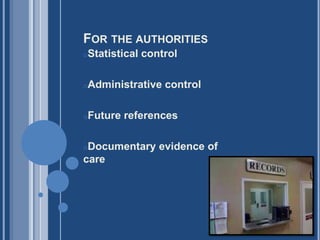
FOR THE AUTHORITIES 
oStatistical control 
oAdministrative control 
oFuture references 
oDocumentary evidence of 
care
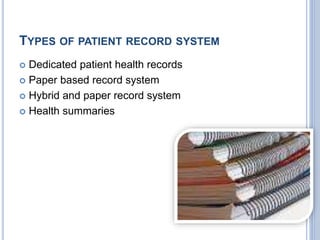
TYPES OF PATIENT RECORD SYSTEM 
 Dedicated patient health records 
 Paper based record system 
 Hybrid and paper record system 
 Health summaries
PATIENT HEALTH RECORD SYSTEM 
CONTAINS……..
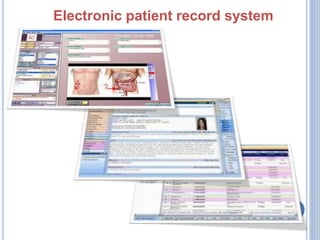
Electronic patient record system
DEFINITION 
“An electronic health record is a systematic 
collection of electronic health information about 
an individual, that is in digital format and is 
capable of being shared across different health 
care setting.”
ADVANTAGES 
 Information can be used and shared fastly 
 Could be accessed independently 
 Save time and improving patient care 
 Can be integrated with other initiatives 
 Improve quality and efficiency of care 
 Increases patient safety 
 Shared decision making 
 More efficient, accurate transferability of records
ISSUES IN PATIENT RECORD SYSTEM 
 Access 
 Data protection 
 Staff efficiency 
 Security and privacy 
 trust
TECHNICAL FEATURES 
 Digital formatting 
 Track care 
 Trigger warning and reminders 
 Send and receive orders , reports 
and results
TECHNICAL INFORMATION EXCHANGE 
 Technical and social framework 
 Reporting to public health 
 E prescribing 
 Sharing lab results
PATIENT CONSIDERATIONS 
 quality 
 costs 
 software quality and usability 
deficiencies 
 unintended consequences 
 intended consequences
LEGAL ISSUES 
privacy and confidentiality 
technical inter operability 
 liability
THANK YOU

Patient record system. shilpa Jose

  • 1.
  • 2.
    DEFINITION Patient recordis a permanent written communication that documents information relevant to the healthcare management.
  • 3.
    PRINCIPLES IN KEEPINGRECORDS  Minimum records  Review the records periodically  Simple, useful, legible  Confidential
  • 4.
    VALUE OF THECLINICAL RECORD  Scientific and legal  Evidence for patient care management.  Legal protection to hospital, doctors and nurses.
  • 5.
    PURPOSE OF RECORDS  Provides information on clients medical condition, socio economic, psychological and environmental factors.  Data for programme planning and evaluation  Plan for future  Evaluation of services  research
  • 6.
    IMPORTANCE OF RECORDS FOR INDIVIDUAL AND FAMILY oHistory of client oContinuity of care oLegal evidence oUsed as a research and teaching tools
  • 7.
    FOR THE DOCTOR As a guide for diagnosis , treatment, follow up and evaluation of services Indicate progress and continuity of care Self evaluation of medical practice Protect in legal issues For teaching and research
  • 8.
    FOR THE NURSE documentation of services rendered Planning and evaluation of services for future Guide for professional growth Enable to judge the quality and quantity of work done Communication tool Plan for future
  • 9.
    FOR THE AUTHORITIES oStatistical control oAdministrative control oFuture references oDocumentary evidence of care
  • 10.
    TYPES OF PATIENTRECORD SYSTEM  Dedicated patient health records  Paper based record system  Hybrid and paper record system  Health summaries
  • 11.
    PATIENT HEALTH RECORDSYSTEM CONTAINS……..
  • 12.
  • 13.
    DEFINITION “An electronichealth record is a systematic collection of electronic health information about an individual, that is in digital format and is capable of being shared across different health care setting.”
  • 14.
    ADVANTAGES  Informationcan be used and shared fastly  Could be accessed independently  Save time and improving patient care  Can be integrated with other initiatives  Improve quality and efficiency of care  Increases patient safety  Shared decision making  More efficient, accurate transferability of records
  • 15.
    ISSUES IN PATIENTRECORD SYSTEM  Access  Data protection  Staff efficiency  Security and privacy  trust
  • 16.
    TECHNICAL FEATURES Digital formatting  Track care  Trigger warning and reminders  Send and receive orders , reports and results
  • 17.
    TECHNICAL INFORMATION EXCHANGE  Technical and social framework  Reporting to public health  E prescribing  Sharing lab results
  • 18.
    PATIENT CONSIDERATIONS quality  costs  software quality and usability deficiencies  unintended consequences  intended consequences
  • 19.
    LEGAL ISSUES privacyand confidentiality technical inter operability  liability
  • 20.