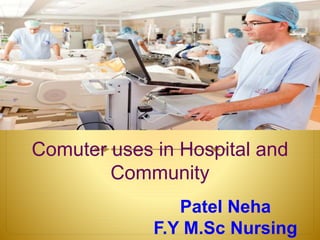
Comuter uses in Hospital and
Community
Patel Neha
F.Y M.Sc Nursing
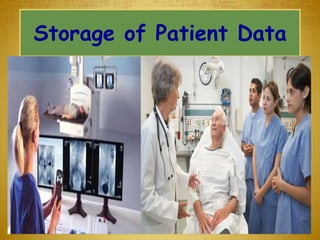
Storage of Patient Data
Computerized
Presentation
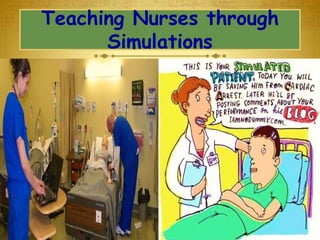
Teaching Nurses through
Simulations
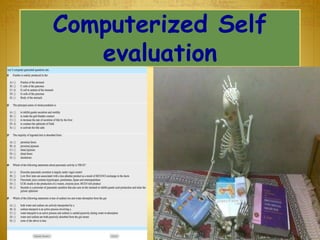
Computerized Self
evaluation
Interactive Learning
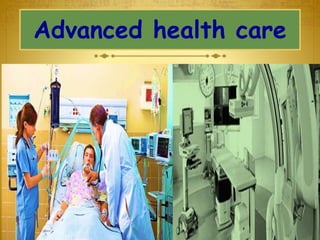
Advanced health care
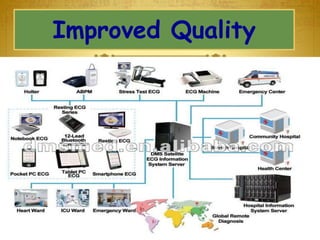
Improved Quality
Decreased cost
Advantages of
Computer in Hospitals
 Precise 'tests' and medical examn
 Faster medical alerts, which are
more accurate time-wise
 Enhanced data about a patient‘s medical hist
 Precision in diagnosis & billing
 Automated updating of medical h/o
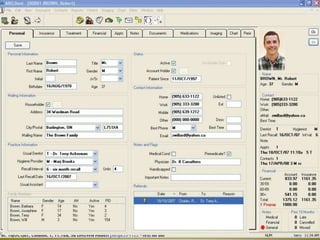
Electronic Patient
Record system
The EMR can be defined as the legal
patient record created in hospitals
and ambulatory environments that is
the data source for the EHR.
Electronic Health
Record is a digital format or documentation of
an individual’s medical history that is
maintained by health care providers or
health institutions.
 It includes information on patient’s
demographics progress notes, medication
problems, vital signs, past history,
diagnostic results and vaccination.
Definition of EHR
The 2003 Patient Safety Report describes
an EMR as encompassing:
 A longitudinal collection of electronic
health information for and about persons
 Immediate electronic access to person-
and population-level information by
authorized users;
 Provision of knowledge and decision-
support systems
 Support for efficient processes for health
care delivery.
Integrated Delivery
System
 Health information and data
 Result management
 Order manageement
 Decision support
 Electronic communication and connectivity
 Patient support
 Administrating processes and reporting
Hall mark of
Computerised Patient
Record Integrated view of patient record
 Improving the access of all patient data,
whenever and wherever is necessary
 Tang et al,(1998) observational studies of
physician they noted 81% physician did not find
all data of the patient for treatment
 Access to knowledge sources:
 Personal knowledge reference s data may be
useful
 Physician order initiate the clinical
intervention
 When its entered by the clinician responsible
for care the accuracy and quality of the
data are high
 Integrated communication support:
 Clinicians need integrated communication
support for effective functioning of
multidisciplinary outpatient health care
system
 Relying on paper based references become
ineffective and fallible
Advantages
 Can help lessen patient sufferance due to
medical error
 Reduced medical error by providing health
care workers with decision support.
 Promote evidenced- based medcine
 For research purpose
 Computerized Physician Order Entry
(CPOE)
Record keeping and
Mobility
 EHR systems have the advantages of being able
to connect too many electronic medical record
systems.
 In the current global medical environment,
patients are shopping for their procedures.
Coordinating these appointments via paper records
is a time-consuming procedure.
 It is also easier to check in their records
whether a patient as been admitted to such a
medical center or if they have any allergies since
they have been admitted before.
 Maintain a data and information trail that can
be readily analyzed for medical audit, research
and quality assurance, epidemiological
monitoring, disease surveillance.
 Support for continuing medical education.
 Improve care coordination
 Reduce healthcare disparities
 Engage patients and their families
 Improve population and public health
 Ensure adequate privacy and security
Storage of Record
 Depend on national and state regulations
 It can depend on shelf life of paper
record.
 Ruotsalainen and Manning have found
that typical preservation time of patient
data varies between 20 and 100 years.
Synchronization of records
 When care is provided at two different
facilities, it may be difficult to update
records at both locations in a co-
ordinated fashion. Two models have been
used to satisfy this problem: a
centralized data server solution and a
peer-to-peer file synchronization program
Synchronization programs for distributed
storage models, however, are only useful
once record standardization has occurred.
 Merging of already existing public
healthcare databases is a common
software challenge. The ability of
electronic health record systems to
provide this function is a key
benefit and can improve healthcare
delivery.
Computer use and patient record

Computer use and patient record

  • 1.
    Comuter uses inHospital and Community Patel Neha F.Y M.Sc Nursing
  • 2.
  • 3.
  • 4.
  • 5.
  • 6.
  • 7.
  • 8.
  • 9.
  • 10.
    Advantages of Computer inHospitals  Precise 'tests' and medical examn  Faster medical alerts, which are more accurate time-wise  Enhanced data about a patient‘s medical hist  Precision in diagnosis & billing  Automated updating of medical h/o
  • 12.
    Electronic Patient Record system TheEMR can be defined as the legal patient record created in hospitals and ambulatory environments that is the data source for the EHR.
  • 13.
    Electronic Health Record isa digital format or documentation of an individual’s medical history that is maintained by health care providers or health institutions.  It includes information on patient’s demographics progress notes, medication problems, vital signs, past history, diagnostic results and vaccination. Definition of EHR
  • 14.
    The 2003 PatientSafety Report describes an EMR as encompassing:  A longitudinal collection of electronic health information for and about persons  Immediate electronic access to person- and population-level information by authorized users;  Provision of knowledge and decision- support systems  Support for efficient processes for health care delivery.
  • 15.
    Integrated Delivery System  Healthinformation and data  Result management  Order manageement  Decision support  Electronic communication and connectivity  Patient support  Administrating processes and reporting
  • 16.
    Hall mark of ComputerisedPatient Record Integrated view of patient record  Improving the access of all patient data, whenever and wherever is necessary  Tang et al,(1998) observational studies of physician they noted 81% physician did not find all data of the patient for treatment  Access to knowledge sources:  Personal knowledge reference s data may be useful
  • 17.
     Physician orderinitiate the clinical intervention  When its entered by the clinician responsible for care the accuracy and quality of the data are high  Integrated communication support:  Clinicians need integrated communication support for effective functioning of multidisciplinary outpatient health care system  Relying on paper based references become ineffective and fallible
  • 18.
    Advantages  Can helplessen patient sufferance due to medical error  Reduced medical error by providing health care workers with decision support.  Promote evidenced- based medcine  For research purpose  Computerized Physician Order Entry (CPOE)
  • 19.
    Record keeping and Mobility EHR systems have the advantages of being able to connect too many electronic medical record systems.  In the current global medical environment, patients are shopping for their procedures. Coordinating these appointments via paper records is a time-consuming procedure.  It is also easier to check in their records whether a patient as been admitted to such a medical center or if they have any allergies since they have been admitted before.
  • 20.
     Maintain adata and information trail that can be readily analyzed for medical audit, research and quality assurance, epidemiological monitoring, disease surveillance.  Support for continuing medical education.  Improve care coordination  Reduce healthcare disparities  Engage patients and their families  Improve population and public health  Ensure adequate privacy and security
  • 21.
    Storage of Record Depend on national and state regulations  It can depend on shelf life of paper record.  Ruotsalainen and Manning have found that typical preservation time of patient data varies between 20 and 100 years.
  • 22.
    Synchronization of records When care is provided at two different facilities, it may be difficult to update records at both locations in a co- ordinated fashion. Two models have been used to satisfy this problem: a centralized data server solution and a peer-to-peer file synchronization program Synchronization programs for distributed storage models, however, are only useful once record standardization has occurred.
  • 23.
     Merging ofalready existing public healthcare databases is a common software challenge. The ability of electronic health record systems to provide this function is a key benefit and can improve healthcare delivery.