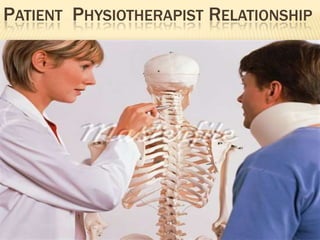
PATIENT PHYSIOTHERAPIST RELATIONSHIP
CONTENTS
patient relation program.

what physiotherapy do ?

Assessment and treatment

Importance

Performance Expectation
PATIENT RELATION PROGRAM
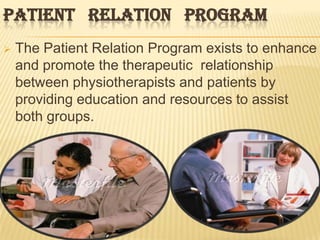
   The Patient Relation Program exists to enhance
    and promote the therapeutic relationship
    between physiotherapists and patients by
    providing education and resources to assist
    both groups.
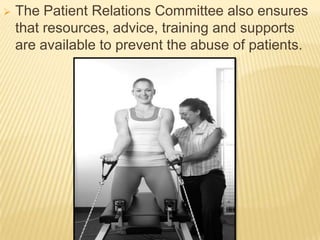
   The Patient Relations Committee also ensures
    that resources, advice, training and supports
    are available to prevent the abuse of patients.
WHAT PHYSIOTHERAPISTS DO?
   Physiotherapists assess, treat and prevent
    physical problems, injuries and pain, to restore
    movement, function and health status.
When you see a physiotherapist you can expect
that he/she will do the following:

Carry out an assessment of your condition

Review and discuss the assessment findings
with you.

Develop a plan for your treatment that will meet
your needs and goals.


Obtain your consent for the treatment .
   Regularly measure your progress and make
    adjustments to the treatment as needed.

   Provide advice and education regarding your
    condition.


   Keep a record of the care provided.

   Collaborate with others as appropriate
ASSESSMENT AND TREATMENT
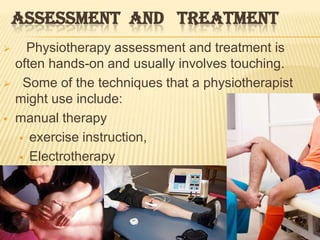
     Physiotherapy assessment and treatment is
    often hands-on and usually involves touching.
     Some of the techniques that a physiotherapist
    might use include:
   manual therapy
      exercise instruction,

      Electrotherapy
    You may be asked to remove some of your
    clothing to allow the physiotherapist to see your
    muscles, joints, posture, movement etc.

    The physiotherapist will allow you privacy to
    change your clothes and provide you with a
    way to cover yourself if necessary.

    The physiotherapist may also need to feel
    how your muscles and body parts move. The
    use of touch is a part of physiotherapy.
IMPORTANCE
   The relationship between physiotherapist and
    patient is very important in the outcome of
    treatment, affecting both pain and disability
   The aim of this topic is to review the evidence
    for the effects of the interaction. It include
    different models like :
       The quality of communication and patient
        education.

       compliance and adherence to a treatment
        programmed.

       Self-efficacy or the patient's perception of control
        over the problem and ability to cope.

       The principles of operant conditioning in
        influencing pain behavior.
PERFORMANCE EXPECTATIONS
Physiotherapists demonstrate the Standard by:

   Understanding the difference between a
    therapeutic relationship and a personal
    relationship with a patient

   The components that characterize the
    difference:
          Power
          Trust
          Respect
          Personal Closeness
   Accepting the responsibility for always
    managing the patient-therapist relationship by:

       continuously self-evaluating their conduct
        and correcting

           any inappropriate comments.

           behaviors or attitudes.


       recognizing the signs in an interaction
         with a patient .
   Recognizing that the treatment of a partner
    or family member may constitute a conflict
    of interest and should only occur after other
    options have been explored or are
    unavailable.

 In all other circumstances, avoid yourself
  from entering into a close personal
  relationship with a patient, a patient’s
  partner or family member while the patient
  is receiving physiotherapy treatment.
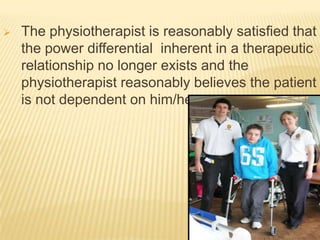
   The physiotherapist is reasonably satisfied that
    the power differential inherent in a therapeutic
    relationship no longer exists and the
    physiotherapist reasonably believes the patient
    is not dependent on him/her.
Thank
 you

Patient physiotherapist relationship

  • 1.
  • 2.
    CONTENTS patient relation program. whatphysiotherapy do ? Assessment and treatment Importance Performance Expectation
  • 3.
    PATIENT RELATION PROGRAM  The Patient Relation Program exists to enhance and promote the therapeutic relationship between physiotherapists and patients by providing education and resources to assist both groups.
  • 4.
    The Patient Relations Committee also ensures that resources, advice, training and supports are available to prevent the abuse of patients.
  • 5.
    WHAT PHYSIOTHERAPISTS DO?  Physiotherapists assess, treat and prevent physical problems, injuries and pain, to restore movement, function and health status.
  • 6.
    When you seea physiotherapist you can expect that he/she will do the following: Carry out an assessment of your condition Review and discuss the assessment findings with you. Develop a plan for your treatment that will meet your needs and goals. Obtain your consent for the treatment .
  • 7.
    Regularly measure your progress and make adjustments to the treatment as needed.  Provide advice and education regarding your condition.  Keep a record of the care provided.  Collaborate with others as appropriate
  • 8.
    ASSESSMENT AND TREATMENT  Physiotherapy assessment and treatment is often hands-on and usually involves touching.  Some of the techniques that a physiotherapist might use include:  manual therapy  exercise instruction,  Electrotherapy
  • 9.
    You may be asked to remove some of your clothing to allow the physiotherapist to see your muscles, joints, posture, movement etc. The physiotherapist will allow you privacy to change your clothes and provide you with a way to cover yourself if necessary. The physiotherapist may also need to feel how your muscles and body parts move. The use of touch is a part of physiotherapy.
  • 10.
    IMPORTANCE  The relationship between physiotherapist and patient is very important in the outcome of treatment, affecting both pain and disability
  • 11.
    The aim of this topic is to review the evidence for the effects of the interaction. It include different models like :  The quality of communication and patient education.  compliance and adherence to a treatment programmed.  Self-efficacy or the patient's perception of control over the problem and ability to cope.  The principles of operant conditioning in influencing pain behavior.
  • 12.
    PERFORMANCE EXPECTATIONS Physiotherapists demonstratethe Standard by:  Understanding the difference between a therapeutic relationship and a personal relationship with a patient  The components that characterize the difference:  Power  Trust  Respect  Personal Closeness
  • 13.
    Accepting the responsibility for always managing the patient-therapist relationship by:  continuously self-evaluating their conduct and correcting  any inappropriate comments.  behaviors or attitudes.  recognizing the signs in an interaction with a patient .
  • 14.
    Recognizing that the treatment of a partner or family member may constitute a conflict of interest and should only occur after other options have been explored or are unavailable.  In all other circumstances, avoid yourself from entering into a close personal relationship with a patient, a patient’s partner or family member while the patient is receiving physiotherapy treatment.
  • 15.
    The physiotherapist is reasonably satisfied that the power differential inherent in a therapeutic relationship no longer exists and the physiotherapist reasonably believes the patient is not dependent on him/her.
  • 16.