Download to read offline
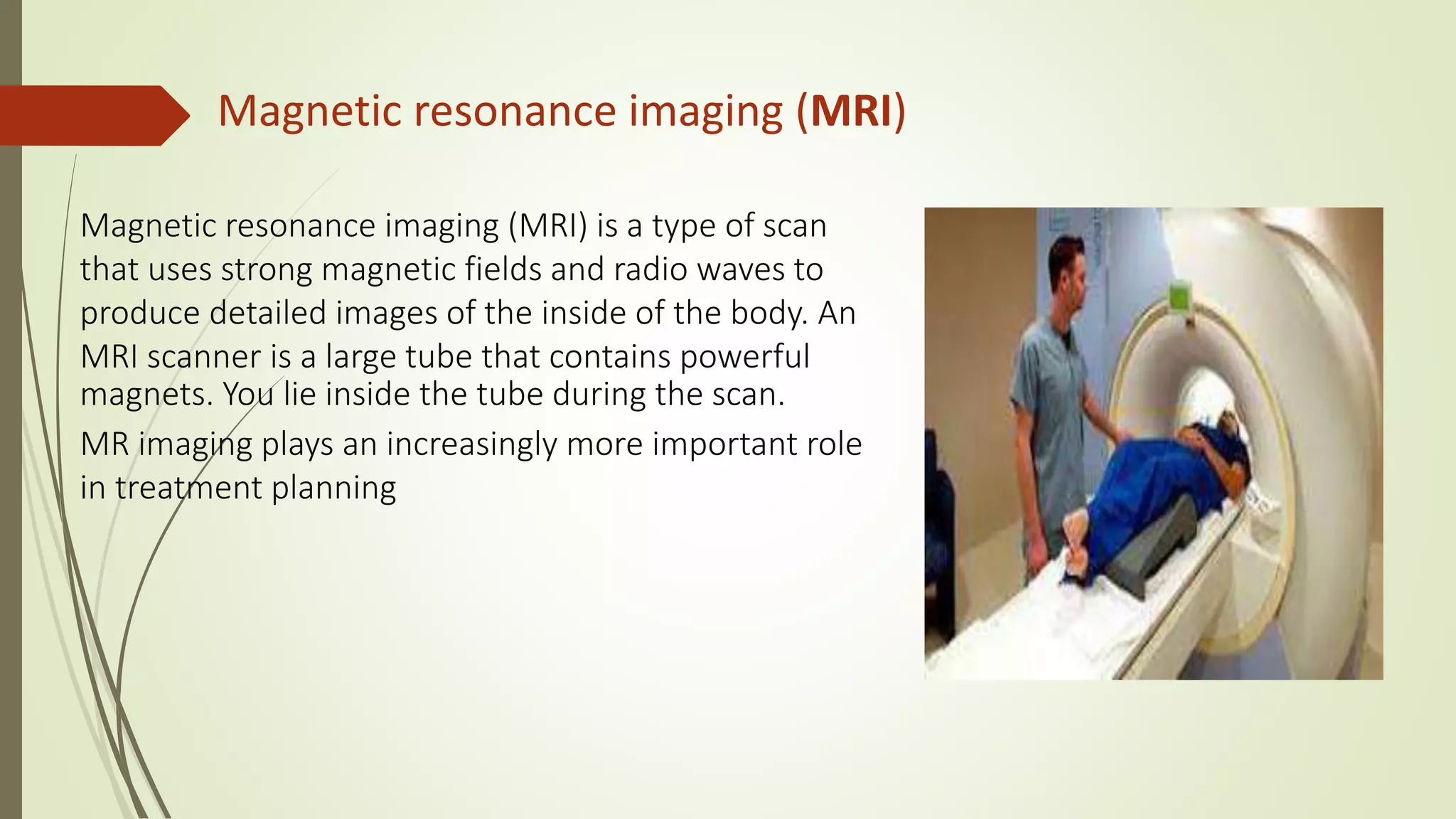


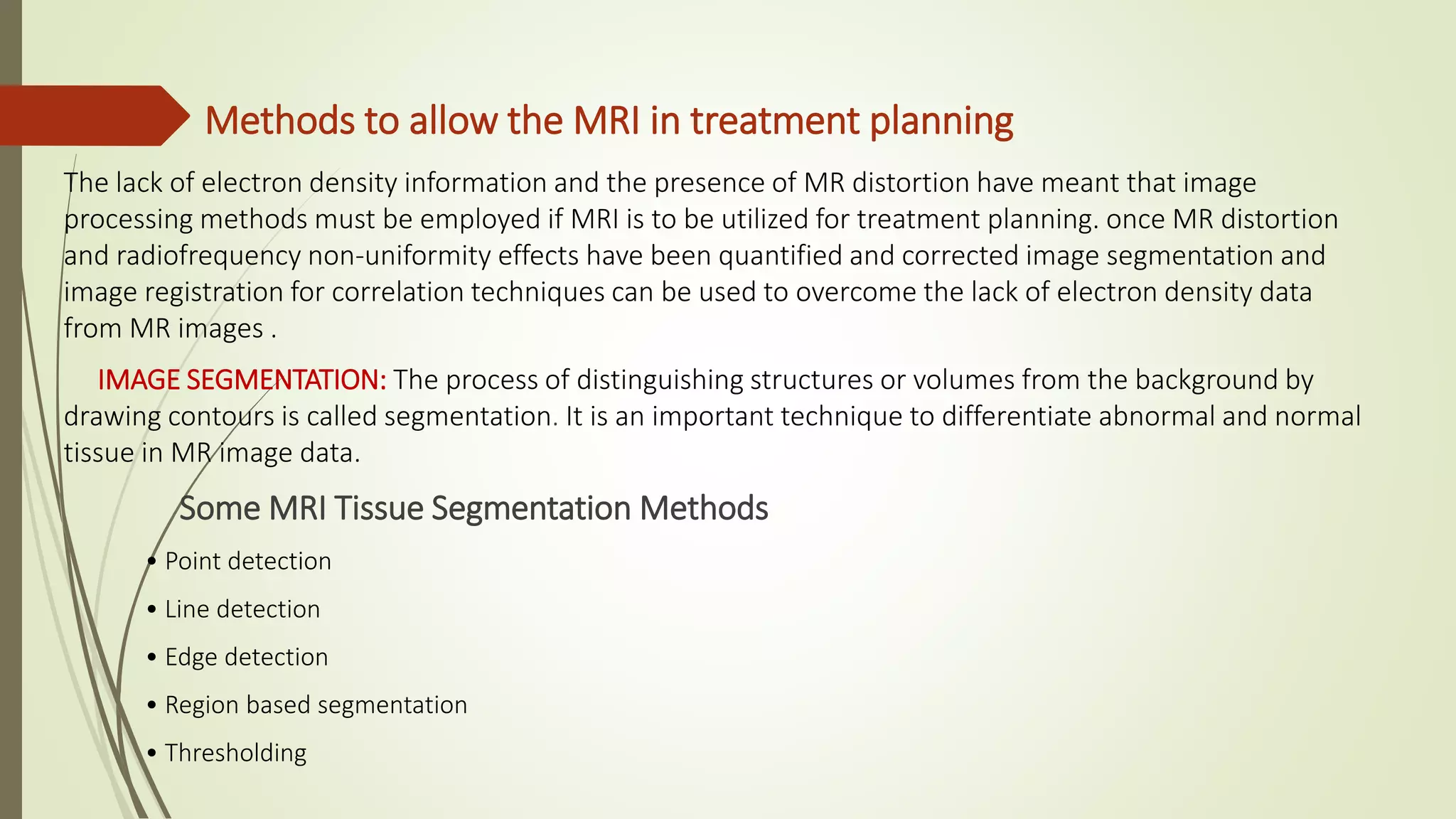
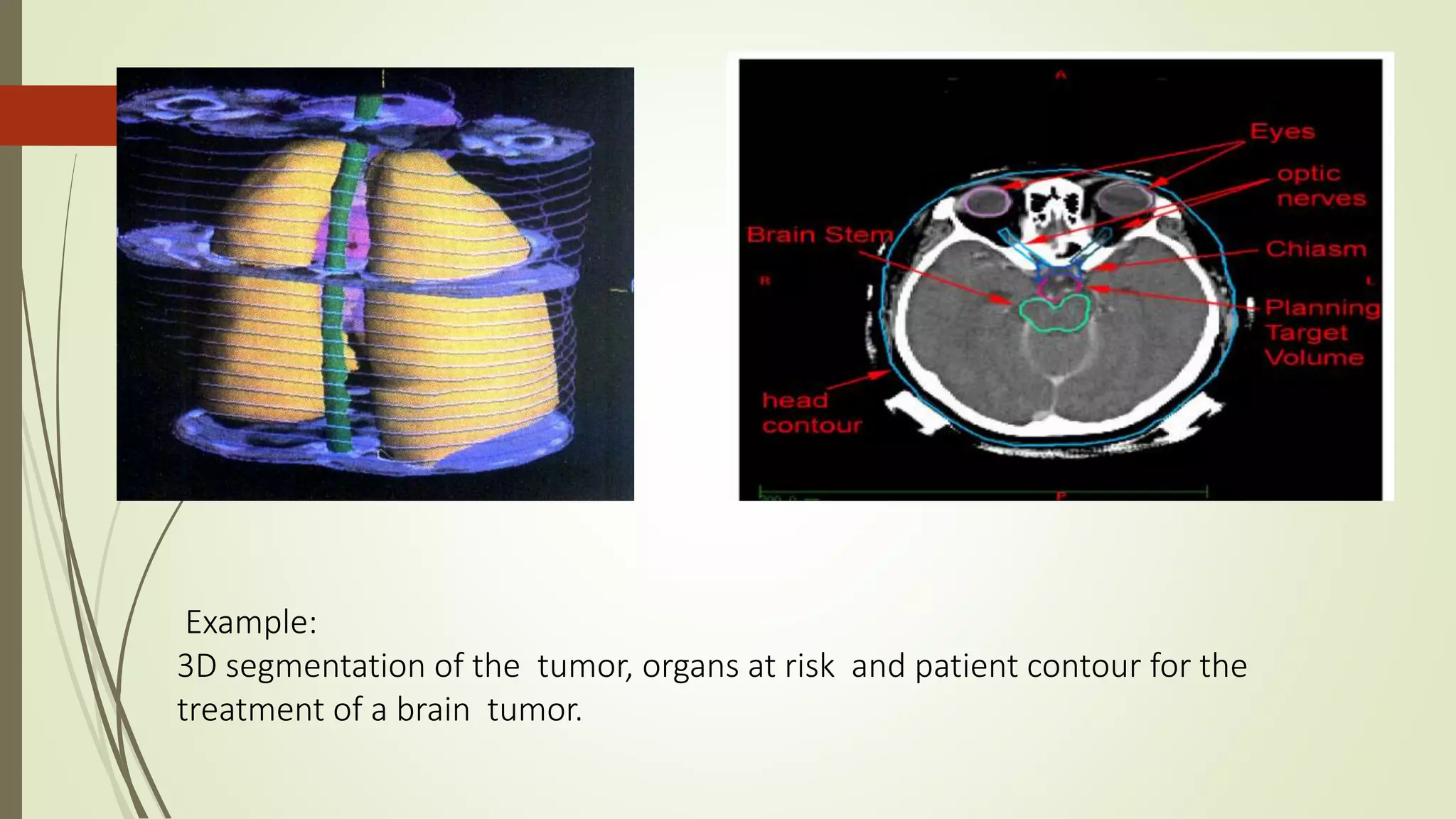
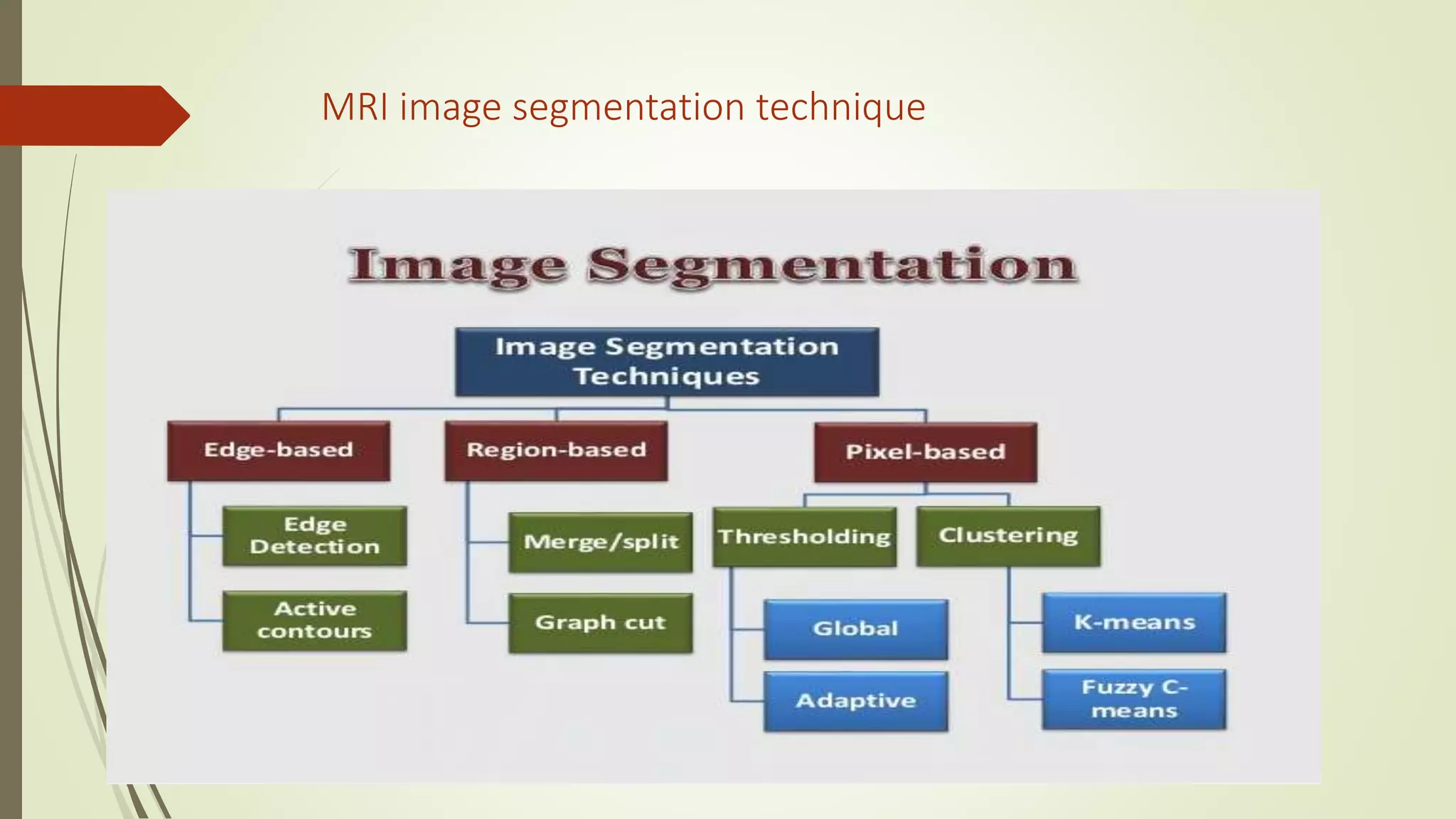

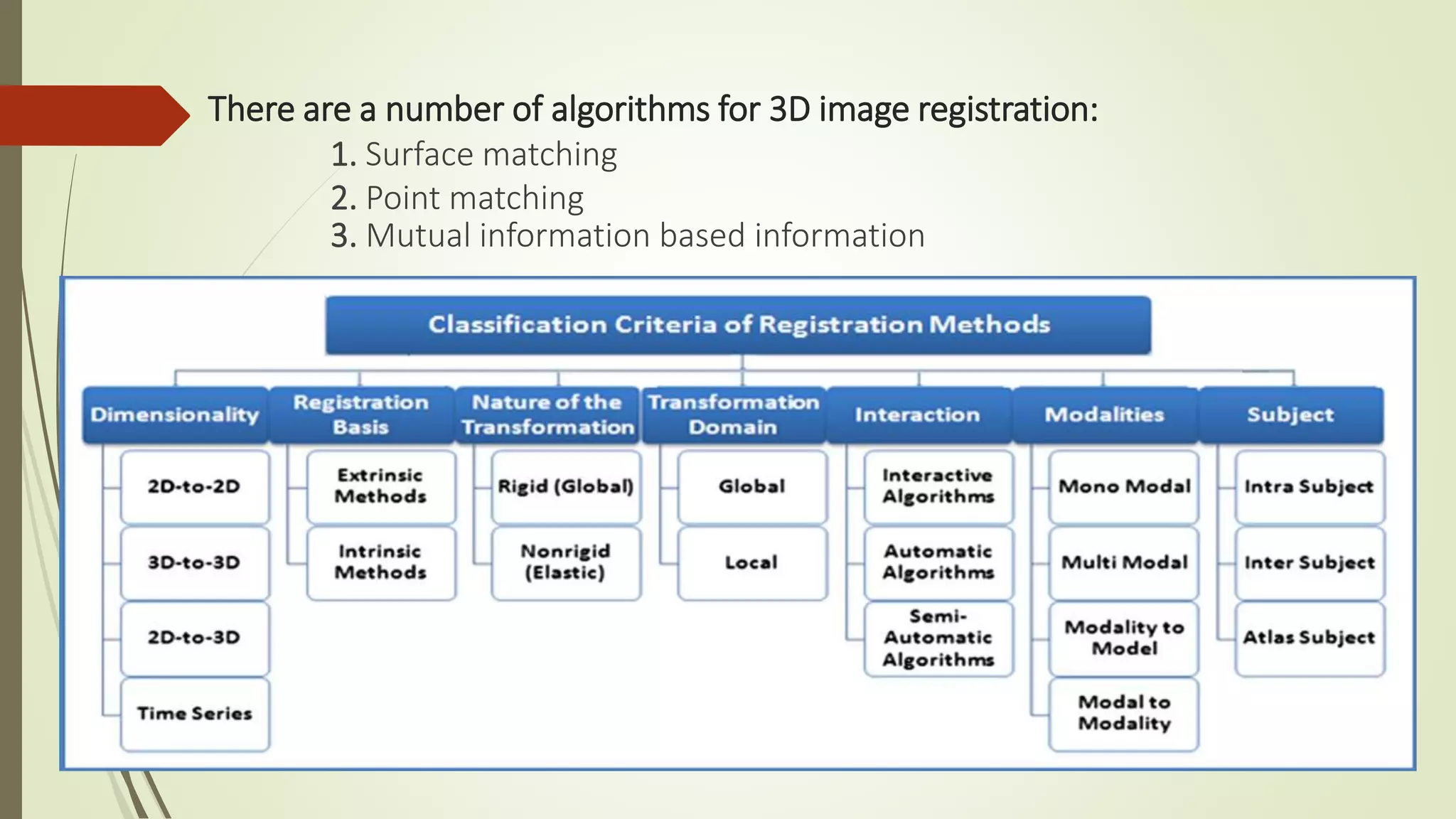
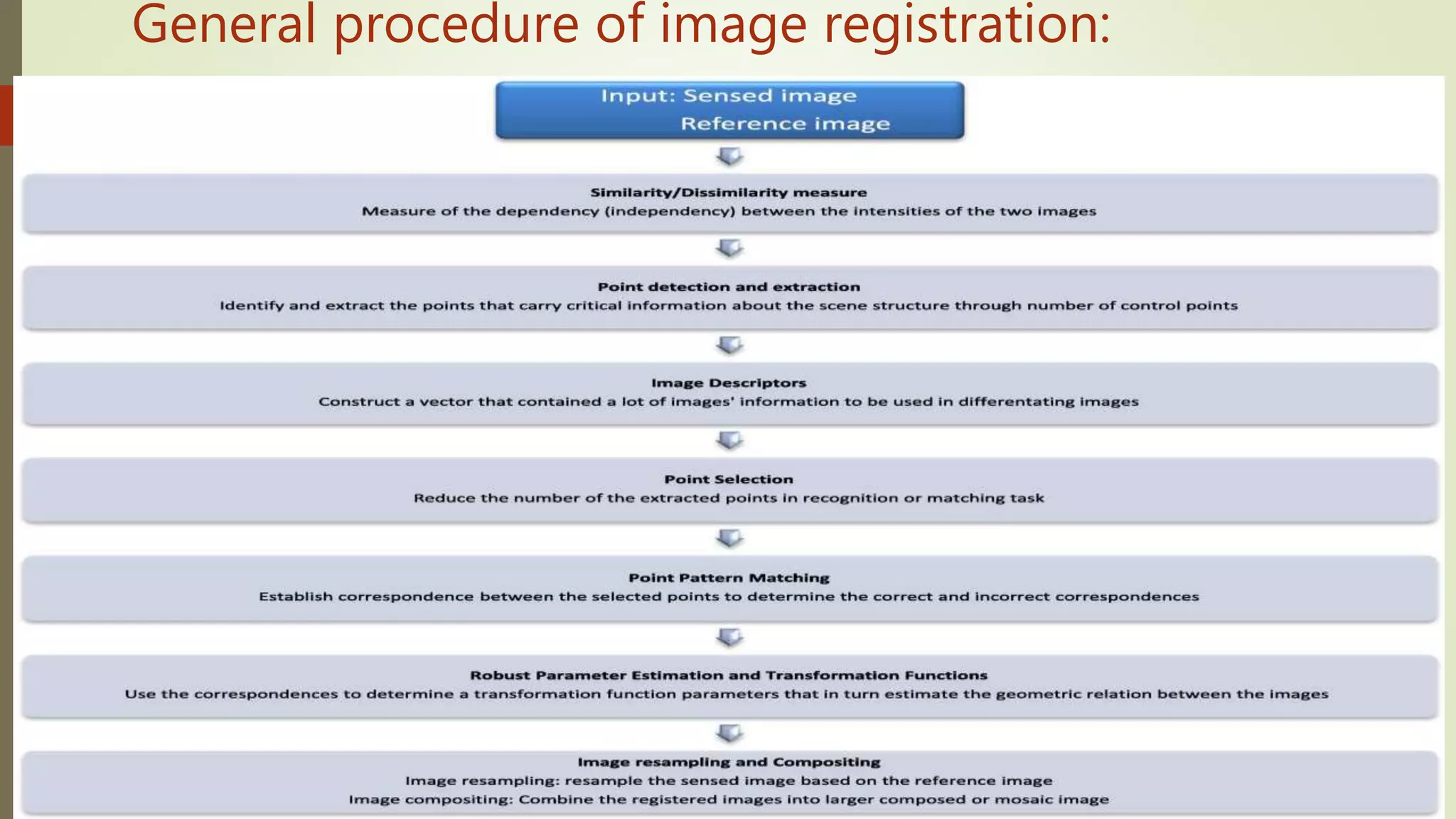


Magnetic resonance imaging (MRI) provides advantages over computed tomography (CT) for radiation treatment planning by better demonstrating soft tissues and tumors, depicting physiological motion, and differentiating pathological from normal tissues. However, MRI does not provide electron density information needed for dose calculations. To overcome this, treatment planning systems can fuse MRI and CT images after registration. Image segmentation delineates structures on MRI, while registration matches images from different modalities. After registration, image fusion combines information from MRI and CT for treatment planning.


![MAGNETIC_RESONANCE.._IMAGING[MRI][1].pptx](https://cdn.slidesharecdn.com/ss_thumbnails/magneticresonanceimagingmri1-240903182728-4f857936-thumbnail.jpg?width=640&height=640&fit=bounds)


