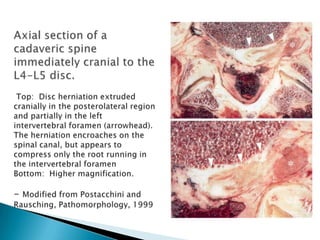
Dr. Sushil Paudel
 Low back pain is the most common
musculoskeletal disorder in industrialized
societies.
 AAOS, Dept of Research and Scientific Affairs
 Workers’ compensation statistics suggest that
disability for back pain is increasing 14 times
the population growth.
 Aronoff, 1991
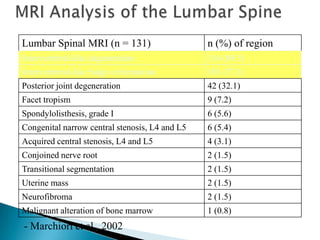
Lumbar Spinal MRI (n = 131) n (%) of region
Intervertebral disc degeneration 116 (88.5)
Intervertebral disc bulge or herniation 101 (77.1)
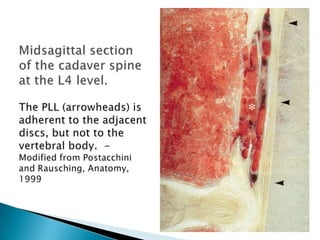
Posterior joint degeneration 42 (32.1)
Facet tropism 9 (7.2)
Spondylolisthesis, grade I 6 (5.6)
Congenital narrow central stenosis, L4 and L5 6 (5.4)
Acquired central stenosis, L4 and L5 4 (3.1)
Conjoined nerve root 2 (1.5)
Transitional segmentation 2 (1.5)
Uterine mass 2 (1.5)
Neurofibroma 2 (1.5)
Malignant alteration of bone marrow 1 (0.8)
- Marchiori et al. 2002
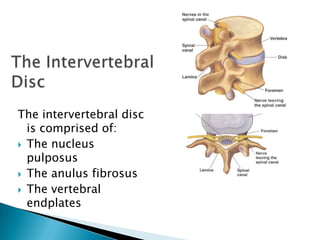
The intervertebral disc
is comprised of:
 The nucleus
pulposus
 The anulus fibrosus
 The vertebral
endplates
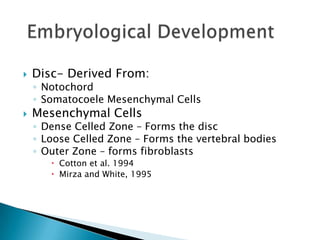
 Disc- Derived From:
◦ Notochord
◦ Somatocoele Mesenchymal Cells
 Mesenchymal Cells
◦ Dense Celled Zone – Forms the disc
◦ Loose Celled Zone – Forms the vertebral bodies
◦ Outer Zone – forms fibroblasts
 Cotton et al. 1994
 Mirza and White, 1995
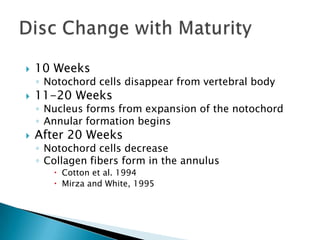
 10 Weeks
◦ Notochord cells disappear from vertebral body
 11-20 Weeks
◦ Nucleus forms from expansion of the notochord
◦ Annular formation begins
 After 20 Weeks
◦ Notochord cells decrease
◦ Collagen fibers form in the annulus
 Cotton et al. 1994
 Mirza and White, 1995
 Consists of 15 to 25 layers of fiber bundles
 Layers are 0.14 to 0.52 mm thick
 Average interbundle space is 0.22 mm wide
and filled with gelatinous material
 Structure of the anulus is irregular
◦ 40% of the layers are incomplete in any 20 degree
circumferential sector of the disc
◦ Irregularities are most frequent in the posterolateral
region of the anulus
 Marchand and Ahmed 1990
 Consists of a clear gelatinous substance
 Makes up 50% of the disc
 Moves within the disc with changes in posture
 Communicates with the epidural space and
surrounding neural structures
 Beattie et al. 1994
 MacMillan et al. 1991
 MacMillam et al analyzed 105 discs with
methylene blue dye injected in the nucleus
◦ 14% showed leaks
◦ 93% of the leaks were in the posterolateral region
◦ Injected dye showed contact with the adjacent nerve
root in 27% of the leaks
 MacMillan et al. 1991
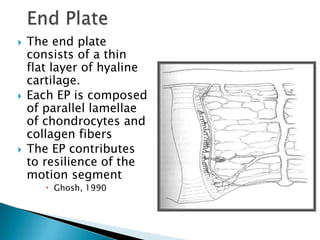
 The end plate
consists of a thin
flat layer of hyaline
cartilage.
 Each EP is composed
of parallel lamellae
of chondrocytes and
collagen fibers
 The EP contributes
to resilience of the
motion segment
 Ghosh, 1990
 Located cephalad in the foramen and bathed in
CSF
 With SLR, the lumbar nerve roots move 0.5-5 mm
and sustain 2-4% strain. – Smith et al. 1993
 A more transverse course of the nerve root may
be associated with an increased risk of sciatica
 Sato and Kikuchi, 1993
 Conjoined nerve roots:
◦ 2-4% of patients undergoing imaging studies - Okuwaki et
al. 1991
◦ 14% of anatomic studies
◦ May be associated with developmental anomalies and
increased risk of disc herniation - Gomez et al. 1993
 Lumbar region
◦ Loosely connected in upper levels
◦ Smaller diameter at lower levels
 Morphologically associated with herniation
◦ Intact PLL - central herniation in upper levels
◦ Ruptured PLL - posterolateral extrusion in lower
levels
 Ohshima et al. 1993
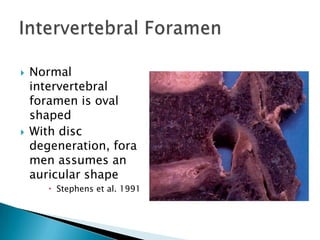
 Normal
intervertebral
foramen is oval
shaped
 With disc
degeneration, fora
men assumes an
auricular shape
 Stephens et al. 1991
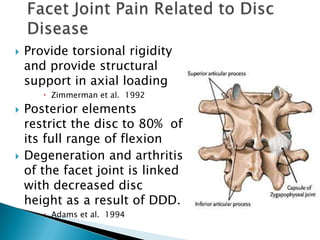
 Provide torsional rigidity
and provide structural
support in axial loading
 Zimmerman et al. 1992
 Posterior elements
restrict the disc to 80% of
its full range of flexion
 Degeneration and arthritis
of the facet joint is linked
with decreased disc
height as a result of DDD.
 Adams et al. 1994
 The normal disc is avascular
 Segmental blood vessels contribute to the
capillary bed surrounding the anulus
 Stairmand et al. 1991
 Blood vessels penetrate the subchondral bone
of the vertebral body and calcified region of
the hyaline cartilage end plate
 Invasion of blood vessels from the exterior is
seen in people age >50 years
 Yasuma et al. 1993
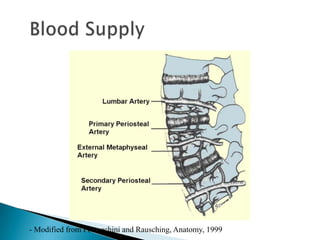
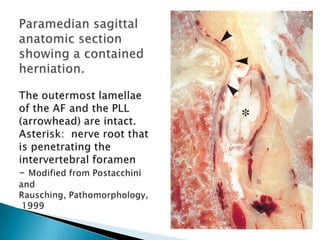
- Modified from Postacchini and Rausching, Anatomy, 1999
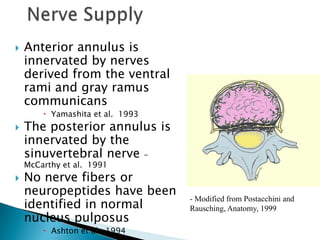
 Anterior annulus is
innervated by nerves
derived from the ventral
rami and gray ramus
communicans
 Yamashita et al. 1993
 The posterior annulus is
innervated by the
sinuvertebral nerve –
McCarthy et al. 1991
 No nerve fibers or
neuropeptides have been
identified in normal
nucleus pulposus
 Ashton et al. 1994
- Modified from Postacchini and
Rausching, Anatomy, 1999
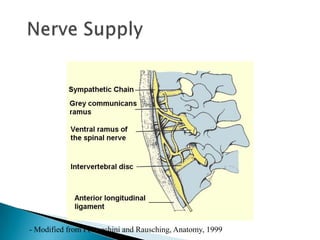
- Modified from Postacchini and Rausching, Anatomy, 1999
 Nerve endings in the outer half of the anulus in
normal and degenerated discs – Yoshizawa et al. 1980
 Nerve fibers may extend 3mm into the anulus of
a normal disc
 Nerve endings in abnormal discs may reach the
nucleus
 Ashton et al. 1994
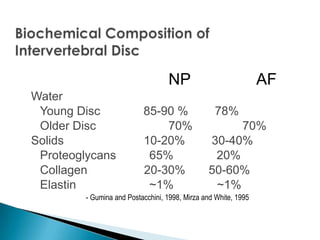
NP AF
Water
Young Disc 85-90 % 78%
Older Disc 70% 70%
Solids 10-20% 30-40%
Proteoglycans 65% 20%
Collagen 20-30% 50-60%
Elastin ~1% ~1%
- Gumina and Postacchini, 1998, Mirza and White, 1995
 Healthy Disc
◦ Average daily variation of 1.2 mm
 Degenerated Disc
◦ Average daily variation of 2.1 mm
 Diurnal Variation
◦ 13 to 21 mm variation in healthy 22-year olds
◦ Prolonged bed rest is associated with 22% expansion
of the disc
◦ Increased disc space may increase diffusion distances
 Paajanen et al. 1994
 LaBlanc et al. 1994
 Intradiscal pressure is lowest in supine
position
 Nachemson, 1960
 Intradiscal pressure rises in the sitting,
leaning forward position
 65% of height loss occurs in the first 6 min
after a 10 kg weight is lifted
 Krag et al. 1990
 The disc is largely avascular
 Metabolism is mainly anaerobic
 Nutrients enter by diffusion via two routes
 Diffusion through the end plates
◦ Perianular
◦ Diffusion distance may be as large as 8 mm
 Load dependant
◦ Metabolism in bovine discs was highest with 5 to 10
kg loads – Ohshima et al. 1995
◦ A physiologic level (0.33 MPa) of hydrostatic pressure
acts in an anabolic fashion, stimulating proteoglycan
synthesis – Handa et al. 1997
 Maximum cell density of the disc is
determined by nutrient supply
 Oxygen and glucose levels within the disc
may fall to very low levels
 Stairmand et al. 1991
 Oxygen
◦ At the center of the disc O2 is 1/20 to 1/50 of that
at the edge of the disc
 Lactate
◦ At the center of the disc is 8 to 10 times the plasma
concentration
 Holm et al. 1981
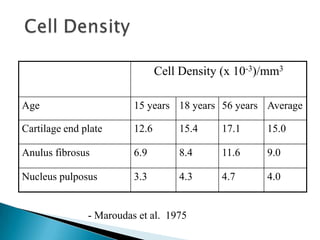
Cell Density (x 10-3)/mm3
Age 15 years 18 years 56 years Average
Cartilage end plate 12.6 15.4 17.1 15.0
Anulus fibrosus 6.9 8.4 11.6 9.0
Nucleus pulposus 3.3 4.3 4.7 4.0
- Maroudas et al. 1975
 Anular injury can initiate progressive
degenerative changes
◦ Nucleus becomes small, fibrotic, and develops
yellowish discoloration
◦ Replacement of lamellae with granulation tissue
◦ Lamellar structure was not restored in the area of
injury 3 to 5 months following injury
◦ Development of ventral osteophytes
◦ Collagen synthesis and content increased, cross links
decreased, water content decreased
 Kaapa et al. 1994
 Osti et al. 1990
Degeneration at the L4-5 disc predicted
decreased loads on the facet joints, increased
intradiscal pressure (by 10%), and increased
disc bulge at the L3-4 level in a finite element
model
- Kim et al. 1991
 Intervertebral disc prolapse is peripheral in
origin with the anulus being the site of primary
pathological change
 Gordon et al. 1991
 Bending in addition to axial compression in
predisposing a disc to prolapse
 Adams, 1994
 The normal disc is protected by the posterior
elements from overstretching, however not
from fatigue failure
 Adams et al. 1994
Proteoglycan levels decrease with
◦ Disc degeneration
◦ Age
◦ Altered loading
◦ A pH decrease from 6.9-7.1 to less than 6.5
 May be due to degeneration or smoking
◦ NSAID use
 Yoo et al. 1992
 Ohshima and Urban, 1992
 Ohshima et al. 1995 (J Orthop Res)
 Many changes occur before maturity
◦ Collagen in the nucleus increases in lumbar regions
◦ Collagen in the anulus increases
◦ Water content decreases
◦ Chondroitin sulfate and polyanion concentrations
decrease
◦ Hyaluronic acid and keratan sulfate increase
◦ Increase in elastin to proteoglycan ratio
◦ Decrease in elastin to collagen ratio
 Scott et al. 1994
Aging leads to loss of anular integrity
 Bernick et al. 1991
 In persons over 40 years of age
◦ Breakdown of lamina and thickening of lamellar layers
◦ Fraying, splitting, loss of collagen fibers
◦ Spaces filled with proteoglycan
◦ Deposition of chondroid material in the anulus
◦ Amyloid deposition in the anulus
◦ Circumferential and radial ruptures are noted
 Ito et al. 1991
 Marchand and Ahmed 1990
Aging may lead to:
 Calcification and gradual replacement with bone
 Bernick et al. 1991
 May become separated from subchondral bone
and herniate with the anulus
◦ In 51.1% of persons aged 77 years, end plate is
separated – Tanaka et al. 1993
 Irregularities may become common
◦ Bone marrow tissues may penetrate the end
plate, triggering cytokine production leading to matrix
degradation
 Fujita et al. 1993
Aging may lead to:
 Increased contact forces over the facet joints
due to loss of disc height
 Shirazie-Adl, 1992
 Facet osteoarthritis may occur secondary to
mechanical changes resulting from disc
degeneration
 Butler et al. 1990
 Genetic factors have been linked to disc
degeneration in identical twins.
 Sambrook et al. 1999
 Battie et al. 1995
 Harrington et al. 2001 analyzed five
factors: height, weight, body mass index,
disc endplate area, and disc endplate size.
 Only disc endplate shape had a strong
association with disc herniation
occurrence
 Disc endplate area had a borderline
association with disc herniation
occurrence in men.
 Mechanical factors such as: small discs,
a heavy torso, or small internal levers
may lead to high internal muscle forces
acting on the disc.
 Videmann, 2001
 Collagen Expression
◦ Defects in Collagen IX (CLO9A2), a
structural element of the anulus fibrosus,
nucleus pulposus, and the endplates, have
been associated with dominantly inherited
lumbar disc disease.
 Paasilta et al. 2001
 Annunen et al. 1999
 Jones et al. 1998
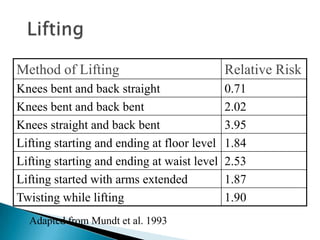
Method of Lifting Relative Risk
Knees bent and back straight 0.71
Knees bent and back bent 2.02
Knees straight and back bent 3.95
Lifting starting and ending at floor level 1.84
Lifting starting and ending at waist level 2.53
Lifting started with arms extended 1.87
Twisting while lifting 1.90
Adapted from Mundt et al. 1993
 Smoking has been linked to disc degeneration
in studies of identical twins.
 Lebeouf-Yde et al. 1998
 Battie et al. 1991
 Smoking – increases intradiscal lactate levels,
decreases pH, and degrades hyaluronic acid.
 Hambly and Mooney, 1992
 McDevitt et al. 1985
 Holm and Nachemson 1988
 Narrows the vascular lumen and reduces the
number of vascular buds present in the
endplate
 Iwahashi et al. 2002
Other Industrial Workers
Building Workers
Drivers
Farmers
Professional and white collar workers
Suspected Herniation (or sciatica) Documented Herniation
Adapted from Heliovaara, 1987
Stenosis of the ostia of the arteries supplying
the disc has been correlated to degree of disc
degeneration.
 Kauppila et al. 1994
 21.5% of herniated discs contain both nuclear
and anular material
 29% of herniated discs contain only anular
material
 Lebkowski and Dzieciol 2002
 Most recurrent disc herniations and
herniations with multiple extruded fragments
contain portions of endplate
 Brock et al. 1992
 The prevalence of disc herniation is 1.6% in
the US, 2.2% in England, and 1.2% in Finland
 The prevalence of low back pain is 15-20% in
the US, 25-45% in European countries, with a
life-time prevalence exceeding 70%
 Neovascularization was seen in 12.5% of
herniated discs in patients with less than 1
month duration and in 82% of herniated discs
in patients with symptoms greater than 6
month duration.
 Chitkara, 1991
 Neovascularization was seen in 91% of
herniated discs in patients with symptom
duration ranging from 5 days to 2.5 years
 Sequestered herniations had greater
neovascularization than did protrusions
 Virri et al., 1996
 In 80% of degenerated discs, solitary free
nerve fibers could be seen deeper than the
outer third of the annulus
 In 20% of degenerated discs, free nerve
fibers were discernible in the periphery of
the NP
 Coppes et al. 1997, COPPES et al. 1990
 Freemont et al. 1997
 Bogduk et al. 1981
 Neuropeptides involved in the transmission of
pain have been identified in the intervertebral
disc:
◦ CGRP, VIP, and SP are present in the outer anulus of
dog discs
 Chemical events in the disc following injury
may sensitize the DRG and generate pain
 Weinstein et al. 1988
 Acute compression of the nerve root with disc
protrusion is estimated to generate a contact
pressure of ~ 400 mm Hg compression.
Spencer et al. 1984
 This compression may cause numbness,
parasthesiae, and weakness but not pain.
Rydevik et al. 1984, Garfin et al. 1991
 5-10 mm Hg of pressure causes impairment
in blood flow
 50-75 mm Hg of pressure causes increased
permeability of blood vessels, edema,
increased tissue pressure, altered local ion
balance, and altered impulse contraction
Olmarker et al. 1989, Lind et al. 1993
 Compression of an inflamed nerve root may
cause pain
 Proposed mechanisms of inflammation
◦ Lowered pH
◦ Breakdown products from nucleus
◦ Proteoglycans from disc
◦ Autoimmune reaction to exposed disc tissue
 Mirza and White, 1995
 Application of NP to the nerve root reduces
blood flow in the DRG and causes vascular
changes and hypoxia.
 Causes hypersensitivity leading to an
increased spontaneous discharge rate.
 Excitation and mechanical hypersensitivity
may be induced without mechanical
compression.
- Takebayashi, et al. 2001
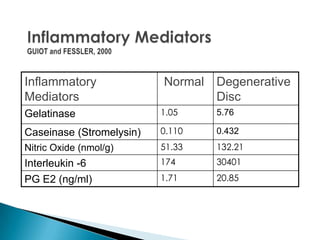
Inflammatory
Mediators
Normal Degenerative
Disc
Gelatinase 1.05 5.76
Caseinase (Stromelysin) 0.110 0.432
Nitric Oxide (nmol/g) 51.33 132.21
Interleukin -6 174 30401
PG E2 (ng/ml) 1.71 20.85
 Nucleus pulposus-induced effects on the nerve
root seems to be mediated by disc cell-related
cytokines, which in turn have a role in
mediation of the immune response.
 Brisby et al. 2000
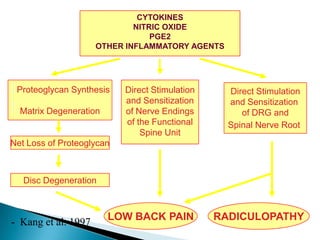
Proteoglycan Synthesis
Matrix Degeneration
Direct Stimulation
and Sensitization
of DRG and
Spinal Nerve Root
Net Loss of Proteoglycan
Disc Degeneration
LOW BACK PAIN RADICULOPATHY
CYTOKINES
NITRIC OXIDE
PGE2
OTHER INFLAMMATORY AGENTS
Direct Stimulation
and Sensitization
of Nerve Endings
of the Functional
Spine Unit
- Kang et al. 1997
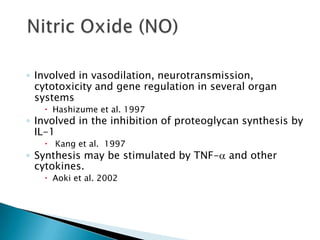
◦ Involved in vasodilation, neurotransmission,
cytotoxicity and gene regulation in several organ
systems
 Hashizume et al. 1997
◦ Involved in the inhibition of proteoglycan synthesis by
IL-1
 Kang et al. 1997
◦ Synthesis may be stimulated by TNF- and other
cytokines.
 Aoki et al. 2002
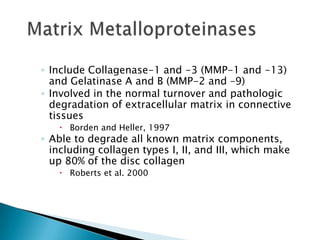
◦ Include Collagenase-1 and -3 (MMP-1 and -13)
and Gelatinase A and B (MMP-2 and –9)
◦ Involved in the normal turnover and pathologic
degradation of extracellular matrix in connective
tissues
 Borden and Heller, 1997
◦ Able to degrade all known matrix components,
including collagen types I, II, and III, which make
up 80% of the disc collagen
 Roberts et al. 2000
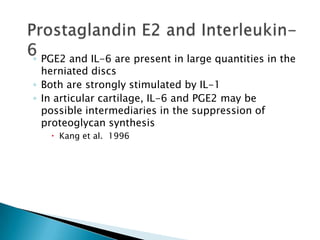
◦ PGE2 and IL-6 are present in large quantities in the
herniated discs
◦ Both are strongly stimulated by IL-1
◦ In articular cartilage, IL-6 and PGE2 may be
possible intermediaries in the suppression of
proteoglycan synthesis
 Kang et al. 1996
Phospholipase A2
◦ Lipolytic enzyme which hydrolyzes
certain phospholipids and free
fatty acids, generating
prostaglandins and other
eicosanoids which are potent
inflammatory mediators
◦ Application onto nerve roots in
rats resulted in demyelination in
the nerve fibers and increased
ectopic discharges in response to
mechanical stimuli.
 Chen et al. 1997
 PA2 activity is 20,000 to 100,000 fold more
than any other phospholipase activity
 PA2 extracted from the human lumbar disc
has a powerful inflammatory effect in vivo
 Increased PA2 activity is seen in disc tissue
◦ 50 times higher than in synovial tissue

 Saal et al. 1990
 The effect of tumor necrosis factor TNF- on
the nerve root was remarkably similar to the
effect of application of the nucleus pulposus
itself, indicating that TNF- may be an “early
player” in pathophysiologic reactions
resulting from nerve root injury.
 Aoki et al. 2002
 The left L5 nerve root and corresponding DRG
were examined with application of TNF- , as
well as on response to pinch and brush
stimulation with and without application of
TNF- .
◦ Spontaneous discharge of both wide dynamic
range and nociceptive specific neurons increased
significantly within 2 hours of application.
◦ Within 2 hours of application, discharge from pinch
stimulation became more intense and prolonged.
◦ No change was observed between control and
experimental groups in response to brush
stimulation.
 Onda, et al. 2002
 CT
◦ Excellent imaging of bones, inadequate for nerve roots
◦ Less sensitive than MRI for disc pathology
 MRI
◦ Detailed imaging of discs and nerve roots
◦ Detailed imaging of herniation
 Discography
◦ Necessary for confirmation of the painful disc
 Discograms produce mechanical stimulus
 Injection may directly stimulate sensitized
nerve fibers in the anulus
 Weinstein et al. 1988
 False-positive rate has been reported as
0%
 Gunzburg et al. 1992
 Specificity has been reported as 31%
 Walsh et al. 1990
 Sensitivity has been reported as 81-100%
 Nachemson, 1989
 Early degenerative disc disease may exist
before there is loss of disc height or signal
intensity, therefore appearing normal on MRI
 Scheibler et al. 1991
 Brightbill et al. 1994
 MRI is less specific than discography in
detecting disc pathology
 Gunzburg et al. 1992
Confirmation of the exact
symptomatic disc level(s):
A recent study indicated that normal MRI
and T2-weighted MRI with additional Gd-
DTPA-enhanced images were superior at
identifying posterior annular tears,
however could not replace discography in
terms of confirming the exact symptomatic
disc level(s).
 Yoshida et al. 2002
 The size of disc herniation in relation to the
size of the spinal canal has been reported to
provide the best correlation to clinical findings
 Sagittal plane ratio of disc herniation to canal
size has also been correlated to the degree of
sciatic pain.
 Thelander et al. 1994
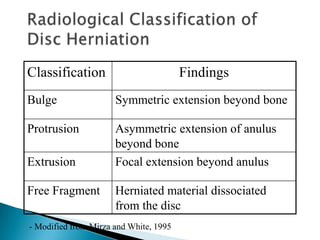
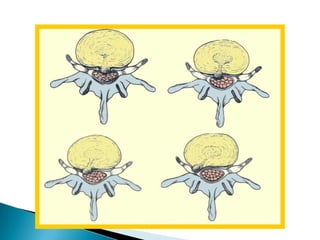
Classification Findings
Bulge Symmetric extension beyond bone
Protrusion Asymmetric extension of anulus
beyond bone
Extrusion Focal extension beyond anulus
Free Fragment Herniated material dissociated
from the disc
- Modified from Mirza and White, 1995
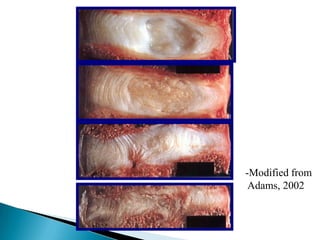
-Modified from
Adams, 2002
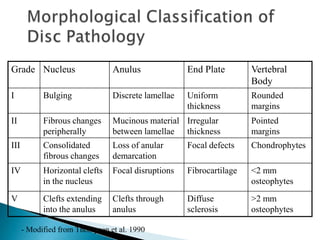
Grade Nucleus Anulus End Plate Vertebral
Body
I Bulging Discrete lamellae Uniform
thickness
Rounded
margins
II Fibrous changes
peripherally
Mucinous material
between lamellae
Irregular
thickness
Pointed
margins
III Consolidated
fibrous changes
Loss of anular
demarcation
Focal defects Chondrophytes
IV Horizontal clefts
in the nucleus
Focal disruptions Fibrocartilage <2 mm
osteophytes
V Clefts extending
into the anulus
Clefts through
anulus
Diffuse
sclerosis
>2 mm
osteophytes
- Modified from Thompson et al. 1990
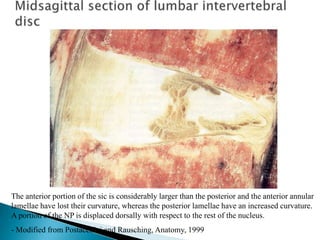
The anterior portion of the sic is considerably larger than the posterior and the anterior annular
lamellae have lost their curvature, whereas the posterior lamellae have an increased curvature.
A portion of the NP is displaced dorsally with respect to the rest of the nucleus.
- Modified from Postacchini and Rausching, Anatomy, 1999
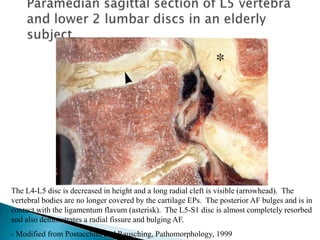
The L4-L5 disc is decreased in height and a long radial cleft is visible (arrowhead). The
vertebral bodies are no longer covered by the cartilage EPs. The posterior AF bulges and is in
contact with the ligamentum flavum (asterisk). The L5-S1 disc is almost completely resorbed
and also demonstrates a radial fissure and bulging AF.
- Modified from Postacchini and Rausching, Pathomorphology, 1999
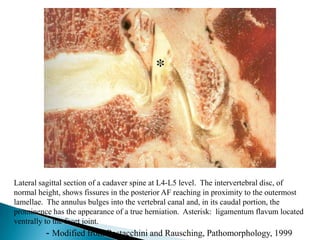
Lateral sagittal section of a cadaver spine at L4-L5 level. The intervertebral disc, of
normal height, shows fissures in the posterior AF reaching in proximity to the outermost
lamellae. The annulus bulges into the vertebral canal and, in its caudal portion, the
prominence has the appearance of a true herniation. Asterisk: ligamentum flavum located
ventrally to the facet joint.
- Modified from Postacchini and Rausching, Pathomorphology, 1999
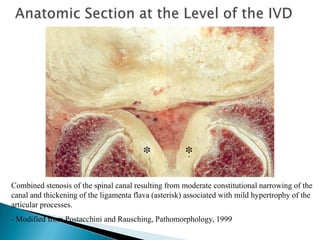
Combined stenosis of the spinal canal resulting from moderate constitutional narrowing of the
canal and thickening of the ligamenta flava (asterisk) associated with mild hypertrophy of the
articular processes.
- Modified from Postacchini and Rausching, Pathomorphology, 1999
Pathophysiology  of low back pain

Pathophysiology of low back pain

  • 1.
  • 2.
     Low backpain is the most common musculoskeletal disorder in industrialized societies.  AAOS, Dept of Research and Scientific Affairs  Workers’ compensation statistics suggest that disability for back pain is increasing 14 times the population growth.  Aronoff, 1991
  • 3.
    Lumbar Spinal MRI(n = 131) n (%) of region Intervertebral disc degeneration 116 (88.5) Intervertebral disc bulge or herniation 101 (77.1) Posterior joint degeneration 42 (32.1) Facet tropism 9 (7.2) Spondylolisthesis, grade I 6 (5.6) Congenital narrow central stenosis, L4 and L5 6 (5.4) Acquired central stenosis, L4 and L5 4 (3.1) Conjoined nerve root 2 (1.5) Transitional segmentation 2 (1.5) Uterine mass 2 (1.5) Neurofibroma 2 (1.5) Malignant alteration of bone marrow 1 (0.8) - Marchiori et al. 2002
  • 4.
    The intervertebral disc iscomprised of:  The nucleus pulposus  The anulus fibrosus  The vertebral endplates
  • 5.
     Disc- DerivedFrom: ◦ Notochord ◦ Somatocoele Mesenchymal Cells  Mesenchymal Cells ◦ Dense Celled Zone – Forms the disc ◦ Loose Celled Zone – Forms the vertebral bodies ◦ Outer Zone – forms fibroblasts  Cotton et al. 1994  Mirza and White, 1995
  • 6.
     10 Weeks ◦Notochord cells disappear from vertebral body  11-20 Weeks ◦ Nucleus forms from expansion of the notochord ◦ Annular formation begins  After 20 Weeks ◦ Notochord cells decrease ◦ Collagen fibers form in the annulus  Cotton et al. 1994  Mirza and White, 1995
  • 7.
     Consists of15 to 25 layers of fiber bundles  Layers are 0.14 to 0.52 mm thick  Average interbundle space is 0.22 mm wide and filled with gelatinous material  Structure of the anulus is irregular ◦ 40% of the layers are incomplete in any 20 degree circumferential sector of the disc ◦ Irregularities are most frequent in the posterolateral region of the anulus  Marchand and Ahmed 1990
  • 8.
     Consists ofa clear gelatinous substance  Makes up 50% of the disc  Moves within the disc with changes in posture  Communicates with the epidural space and surrounding neural structures  Beattie et al. 1994  MacMillan et al. 1991
  • 9.
     MacMillam etal analyzed 105 discs with methylene blue dye injected in the nucleus ◦ 14% showed leaks ◦ 93% of the leaks were in the posterolateral region ◦ Injected dye showed contact with the adjacent nerve root in 27% of the leaks  MacMillan et al. 1991
  • 10.
     The endplate consists of a thin flat layer of hyaline cartilage.  Each EP is composed of parallel lamellae of chondrocytes and collagen fibers  The EP contributes to resilience of the motion segment  Ghosh, 1990
  • 11.
     Located cephaladin the foramen and bathed in CSF  With SLR, the lumbar nerve roots move 0.5-5 mm and sustain 2-4% strain. – Smith et al. 1993  A more transverse course of the nerve root may be associated with an increased risk of sciatica  Sato and Kikuchi, 1993  Conjoined nerve roots: ◦ 2-4% of patients undergoing imaging studies - Okuwaki et al. 1991 ◦ 14% of anatomic studies ◦ May be associated with developmental anomalies and increased risk of disc herniation - Gomez et al. 1993
  • 12.
     Lumbar region ◦Loosely connected in upper levels ◦ Smaller diameter at lower levels  Morphologically associated with herniation ◦ Intact PLL - central herniation in upper levels ◦ Ruptured PLL - posterolateral extrusion in lower levels  Ohshima et al. 1993
  • 13.
     Normal intervertebral foramen isoval shaped  With disc degeneration, fora men assumes an auricular shape  Stephens et al. 1991
  • 14.
     Provide torsionalrigidity and provide structural support in axial loading  Zimmerman et al. 1992  Posterior elements restrict the disc to 80% of its full range of flexion  Degeneration and arthritis of the facet joint is linked with decreased disc height as a result of DDD.  Adams et al. 1994
  • 15.
     The normaldisc is avascular  Segmental blood vessels contribute to the capillary bed surrounding the anulus  Stairmand et al. 1991  Blood vessels penetrate the subchondral bone of the vertebral body and calcified region of the hyaline cartilage end plate  Invasion of blood vessels from the exterior is seen in people age >50 years  Yasuma et al. 1993
  • 16.
    - Modified fromPostacchini and Rausching, Anatomy, 1999
  • 17.
     Anterior annulusis innervated by nerves derived from the ventral rami and gray ramus communicans  Yamashita et al. 1993  The posterior annulus is innervated by the sinuvertebral nerve – McCarthy et al. 1991  No nerve fibers or neuropeptides have been identified in normal nucleus pulposus  Ashton et al. 1994 - Modified from Postacchini and Rausching, Anatomy, 1999
  • 18.
    - Modified fromPostacchini and Rausching, Anatomy, 1999
  • 19.
     Nerve endingsin the outer half of the anulus in normal and degenerated discs – Yoshizawa et al. 1980  Nerve fibers may extend 3mm into the anulus of a normal disc  Nerve endings in abnormal discs may reach the nucleus  Ashton et al. 1994
  • 20.
    NP AF Water Young Disc85-90 % 78% Older Disc 70% 70% Solids 10-20% 30-40% Proteoglycans 65% 20% Collagen 20-30% 50-60% Elastin ~1% ~1% - Gumina and Postacchini, 1998, Mirza and White, 1995
  • 22.
     Healthy Disc ◦Average daily variation of 1.2 mm  Degenerated Disc ◦ Average daily variation of 2.1 mm  Diurnal Variation ◦ 13 to 21 mm variation in healthy 22-year olds ◦ Prolonged bed rest is associated with 22% expansion of the disc ◦ Increased disc space may increase diffusion distances  Paajanen et al. 1994  LaBlanc et al. 1994
  • 23.
     Intradiscal pressureis lowest in supine position  Nachemson, 1960  Intradiscal pressure rises in the sitting, leaning forward position  65% of height loss occurs in the first 6 min after a 10 kg weight is lifted  Krag et al. 1990
  • 24.
     The discis largely avascular  Metabolism is mainly anaerobic  Nutrients enter by diffusion via two routes  Diffusion through the end plates ◦ Perianular ◦ Diffusion distance may be as large as 8 mm  Load dependant ◦ Metabolism in bovine discs was highest with 5 to 10 kg loads – Ohshima et al. 1995 ◦ A physiologic level (0.33 MPa) of hydrostatic pressure acts in an anabolic fashion, stimulating proteoglycan synthesis – Handa et al. 1997
  • 25.
     Maximum celldensity of the disc is determined by nutrient supply  Oxygen and glucose levels within the disc may fall to very low levels  Stairmand et al. 1991  Oxygen ◦ At the center of the disc O2 is 1/20 to 1/50 of that at the edge of the disc  Lactate ◦ At the center of the disc is 8 to 10 times the plasma concentration  Holm et al. 1981
  • 26.
    Cell Density (x10-3)/mm3 Age 15 years 18 years 56 years Average Cartilage end plate 12.6 15.4 17.1 15.0 Anulus fibrosus 6.9 8.4 11.6 9.0 Nucleus pulposus 3.3 4.3 4.7 4.0 - Maroudas et al. 1975
  • 27.
     Anular injurycan initiate progressive degenerative changes ◦ Nucleus becomes small, fibrotic, and develops yellowish discoloration ◦ Replacement of lamellae with granulation tissue ◦ Lamellar structure was not restored in the area of injury 3 to 5 months following injury ◦ Development of ventral osteophytes ◦ Collagen synthesis and content increased, cross links decreased, water content decreased  Kaapa et al. 1994  Osti et al. 1990
  • 28.
    Degeneration at theL4-5 disc predicted decreased loads on the facet joints, increased intradiscal pressure (by 10%), and increased disc bulge at the L3-4 level in a finite element model - Kim et al. 1991
  • 29.
     Intervertebral discprolapse is peripheral in origin with the anulus being the site of primary pathological change  Gordon et al. 1991  Bending in addition to axial compression in predisposing a disc to prolapse  Adams, 1994  The normal disc is protected by the posterior elements from overstretching, however not from fatigue failure  Adams et al. 1994
  • 30.
    Proteoglycan levels decreasewith ◦ Disc degeneration ◦ Age ◦ Altered loading ◦ A pH decrease from 6.9-7.1 to less than 6.5  May be due to degeneration or smoking ◦ NSAID use  Yoo et al. 1992  Ohshima and Urban, 1992  Ohshima et al. 1995 (J Orthop Res)
  • 31.
     Many changesoccur before maturity ◦ Collagen in the nucleus increases in lumbar regions ◦ Collagen in the anulus increases ◦ Water content decreases ◦ Chondroitin sulfate and polyanion concentrations decrease ◦ Hyaluronic acid and keratan sulfate increase ◦ Increase in elastin to proteoglycan ratio ◦ Decrease in elastin to collagen ratio  Scott et al. 1994
  • 32.
    Aging leads toloss of anular integrity  Bernick et al. 1991  In persons over 40 years of age ◦ Breakdown of lamina and thickening of lamellar layers ◦ Fraying, splitting, loss of collagen fibers ◦ Spaces filled with proteoglycan ◦ Deposition of chondroid material in the anulus ◦ Amyloid deposition in the anulus ◦ Circumferential and radial ruptures are noted  Ito et al. 1991  Marchand and Ahmed 1990
  • 33.
    Aging may leadto:  Calcification and gradual replacement with bone  Bernick et al. 1991  May become separated from subchondral bone and herniate with the anulus ◦ In 51.1% of persons aged 77 years, end plate is separated – Tanaka et al. 1993  Irregularities may become common ◦ Bone marrow tissues may penetrate the end plate, triggering cytokine production leading to matrix degradation  Fujita et al. 1993
  • 34.
    Aging may leadto:  Increased contact forces over the facet joints due to loss of disc height  Shirazie-Adl, 1992  Facet osteoarthritis may occur secondary to mechanical changes resulting from disc degeneration  Butler et al. 1990
  • 36.
     Genetic factorshave been linked to disc degeneration in identical twins.  Sambrook et al. 1999  Battie et al. 1995  Harrington et al. 2001 analyzed five factors: height, weight, body mass index, disc endplate area, and disc endplate size.  Only disc endplate shape had a strong association with disc herniation occurrence  Disc endplate area had a borderline association with disc herniation occurrence in men.
  • 37.
     Mechanical factorssuch as: small discs, a heavy torso, or small internal levers may lead to high internal muscle forces acting on the disc.  Videmann, 2001  Collagen Expression ◦ Defects in Collagen IX (CLO9A2), a structural element of the anulus fibrosus, nucleus pulposus, and the endplates, have been associated with dominantly inherited lumbar disc disease.  Paasilta et al. 2001  Annunen et al. 1999  Jones et al. 1998
  • 38.
    Method of LiftingRelative Risk Knees bent and back straight 0.71 Knees bent and back bent 2.02 Knees straight and back bent 3.95 Lifting starting and ending at floor level 1.84 Lifting starting and ending at waist level 2.53 Lifting started with arms extended 1.87 Twisting while lifting 1.90 Adapted from Mundt et al. 1993
  • 39.
     Smoking hasbeen linked to disc degeneration in studies of identical twins.  Lebeouf-Yde et al. 1998  Battie et al. 1991  Smoking – increases intradiscal lactate levels, decreases pH, and degrades hyaluronic acid.  Hambly and Mooney, 1992  McDevitt et al. 1985  Holm and Nachemson 1988  Narrows the vascular lumen and reduces the number of vascular buds present in the endplate  Iwahashi et al. 2002
  • 40.
    Other Industrial Workers BuildingWorkers Drivers Farmers Professional and white collar workers Suspected Herniation (or sciatica) Documented Herniation Adapted from Heliovaara, 1987
  • 41.
    Stenosis of theostia of the arteries supplying the disc has been correlated to degree of disc degeneration.  Kauppila et al. 1994
  • 42.
     21.5% ofherniated discs contain both nuclear and anular material  29% of herniated discs contain only anular material  Lebkowski and Dzieciol 2002  Most recurrent disc herniations and herniations with multiple extruded fragments contain portions of endplate  Brock et al. 1992
  • 43.
     The prevalenceof disc herniation is 1.6% in the US, 2.2% in England, and 1.2% in Finland  The prevalence of low back pain is 15-20% in the US, 25-45% in European countries, with a life-time prevalence exceeding 70%
  • 44.
     Neovascularization wasseen in 12.5% of herniated discs in patients with less than 1 month duration and in 82% of herniated discs in patients with symptoms greater than 6 month duration.  Chitkara, 1991  Neovascularization was seen in 91% of herniated discs in patients with symptom duration ranging from 5 days to 2.5 years  Sequestered herniations had greater neovascularization than did protrusions  Virri et al., 1996
  • 45.
     In 80%of degenerated discs, solitary free nerve fibers could be seen deeper than the outer third of the annulus  In 20% of degenerated discs, free nerve fibers were discernible in the periphery of the NP  Coppes et al. 1997, COPPES et al. 1990  Freemont et al. 1997  Bogduk et al. 1981
  • 47.
     Neuropeptides involvedin the transmission of pain have been identified in the intervertebral disc: ◦ CGRP, VIP, and SP are present in the outer anulus of dog discs  Chemical events in the disc following injury may sensitize the DRG and generate pain  Weinstein et al. 1988
  • 48.
     Acute compressionof the nerve root with disc protrusion is estimated to generate a contact pressure of ~ 400 mm Hg compression. Spencer et al. 1984  This compression may cause numbness, parasthesiae, and weakness but not pain. Rydevik et al. 1984, Garfin et al. 1991  5-10 mm Hg of pressure causes impairment in blood flow  50-75 mm Hg of pressure causes increased permeability of blood vessels, edema, increased tissue pressure, altered local ion balance, and altered impulse contraction Olmarker et al. 1989, Lind et al. 1993
  • 49.
     Compression ofan inflamed nerve root may cause pain  Proposed mechanisms of inflammation ◦ Lowered pH ◦ Breakdown products from nucleus ◦ Proteoglycans from disc ◦ Autoimmune reaction to exposed disc tissue  Mirza and White, 1995
  • 51.
     Application ofNP to the nerve root reduces blood flow in the DRG and causes vascular changes and hypoxia.  Causes hypersensitivity leading to an increased spontaneous discharge rate.  Excitation and mechanical hypersensitivity may be induced without mechanical compression. - Takebayashi, et al. 2001
  • 52.
    Inflammatory Mediators Normal Degenerative Disc Gelatinase 1.055.76 Caseinase (Stromelysin) 0.110 0.432 Nitric Oxide (nmol/g) 51.33 132.21 Interleukin -6 174 30401 PG E2 (ng/ml) 1.71 20.85
  • 53.
     Nucleus pulposus-inducedeffects on the nerve root seems to be mediated by disc cell-related cytokines, which in turn have a role in mediation of the immune response.  Brisby et al. 2000
  • 54.
    Proteoglycan Synthesis Matrix Degeneration DirectStimulation and Sensitization of DRG and Spinal Nerve Root Net Loss of Proteoglycan Disc Degeneration LOW BACK PAIN RADICULOPATHY CYTOKINES NITRIC OXIDE PGE2 OTHER INFLAMMATORY AGENTS Direct Stimulation and Sensitization of Nerve Endings of the Functional Spine Unit - Kang et al. 1997
  • 55.
    ◦ Involved invasodilation, neurotransmission, cytotoxicity and gene regulation in several organ systems  Hashizume et al. 1997 ◦ Involved in the inhibition of proteoglycan synthesis by IL-1  Kang et al. 1997 ◦ Synthesis may be stimulated by TNF- and other cytokines.  Aoki et al. 2002
  • 56.
    ◦ Include Collagenase-1and -3 (MMP-1 and -13) and Gelatinase A and B (MMP-2 and –9) ◦ Involved in the normal turnover and pathologic degradation of extracellular matrix in connective tissues  Borden and Heller, 1997 ◦ Able to degrade all known matrix components, including collagen types I, II, and III, which make up 80% of the disc collagen  Roberts et al. 2000
  • 57.
    ◦ PGE2 andIL-6 are present in large quantities in the herniated discs ◦ Both are strongly stimulated by IL-1 ◦ In articular cartilage, IL-6 and PGE2 may be possible intermediaries in the suppression of proteoglycan synthesis  Kang et al. 1996
  • 58.
    Phospholipase A2 ◦ Lipolyticenzyme which hydrolyzes certain phospholipids and free fatty acids, generating prostaglandins and other eicosanoids which are potent inflammatory mediators ◦ Application onto nerve roots in rats resulted in demyelination in the nerve fibers and increased ectopic discharges in response to mechanical stimuli.  Chen et al. 1997
  • 59.
     PA2 activityis 20,000 to 100,000 fold more than any other phospholipase activity  PA2 extracted from the human lumbar disc has a powerful inflammatory effect in vivo  Increased PA2 activity is seen in disc tissue ◦ 50 times higher than in synovial tissue  Saal et al. 1990
  • 60.
     The effectof tumor necrosis factor TNF- on the nerve root was remarkably similar to the effect of application of the nucleus pulposus itself, indicating that TNF- may be an “early player” in pathophysiologic reactions resulting from nerve root injury.  Aoki et al. 2002
  • 61.
     The leftL5 nerve root and corresponding DRG were examined with application of TNF- , as well as on response to pinch and brush stimulation with and without application of TNF- . ◦ Spontaneous discharge of both wide dynamic range and nociceptive specific neurons increased significantly within 2 hours of application. ◦ Within 2 hours of application, discharge from pinch stimulation became more intense and prolonged. ◦ No change was observed between control and experimental groups in response to brush stimulation.  Onda, et al. 2002
  • 62.
     CT ◦ Excellentimaging of bones, inadequate for nerve roots ◦ Less sensitive than MRI for disc pathology  MRI ◦ Detailed imaging of discs and nerve roots ◦ Detailed imaging of herniation  Discography ◦ Necessary for confirmation of the painful disc
  • 63.
     Discograms producemechanical stimulus  Injection may directly stimulate sensitized nerve fibers in the anulus  Weinstein et al. 1988  False-positive rate has been reported as 0%  Gunzburg et al. 1992  Specificity has been reported as 31%  Walsh et al. 1990  Sensitivity has been reported as 81-100%  Nachemson, 1989
  • 64.
     Early degenerativedisc disease may exist before there is loss of disc height or signal intensity, therefore appearing normal on MRI  Scheibler et al. 1991  Brightbill et al. 1994  MRI is less specific than discography in detecting disc pathology  Gunzburg et al. 1992
  • 65.
    Confirmation of theexact symptomatic disc level(s): A recent study indicated that normal MRI and T2-weighted MRI with additional Gd- DTPA-enhanced images were superior at identifying posterior annular tears, however could not replace discography in terms of confirming the exact symptomatic disc level(s).  Yoshida et al. 2002
  • 66.
     The sizeof disc herniation in relation to the size of the spinal canal has been reported to provide the best correlation to clinical findings  Sagittal plane ratio of disc herniation to canal size has also been correlated to the degree of sciatic pain.  Thelander et al. 1994
  • 67.
    Classification Findings Bulge Symmetricextension beyond bone Protrusion Asymmetric extension of anulus beyond bone Extrusion Focal extension beyond anulus Free Fragment Herniated material dissociated from the disc - Modified from Mirza and White, 1995
  • 69.
  • 70.
    Grade Nucleus AnulusEnd Plate Vertebral Body I Bulging Discrete lamellae Uniform thickness Rounded margins II Fibrous changes peripherally Mucinous material between lamellae Irregular thickness Pointed margins III Consolidated fibrous changes Loss of anular demarcation Focal defects Chondrophytes IV Horizontal clefts in the nucleus Focal disruptions Fibrocartilage <2 mm osteophytes V Clefts extending into the anulus Clefts through anulus Diffuse sclerosis >2 mm osteophytes - Modified from Thompson et al. 1990
  • 72.
    The anterior portionof the sic is considerably larger than the posterior and the anterior annular lamellae have lost their curvature, whereas the posterior lamellae have an increased curvature. A portion of the NP is displaced dorsally with respect to the rest of the nucleus. - Modified from Postacchini and Rausching, Anatomy, 1999
  • 73.
    The L4-L5 discis decreased in height and a long radial cleft is visible (arrowhead). The vertebral bodies are no longer covered by the cartilage EPs. The posterior AF bulges and is in contact with the ligamentum flavum (asterisk). The L5-S1 disc is almost completely resorbed and also demonstrates a radial fissure and bulging AF. - Modified from Postacchini and Rausching, Pathomorphology, 1999
  • 74.
    Lateral sagittal sectionof a cadaver spine at L4-L5 level. The intervertebral disc, of normal height, shows fissures in the posterior AF reaching in proximity to the outermost lamellae. The annulus bulges into the vertebral canal and, in its caudal portion, the prominence has the appearance of a true herniation. Asterisk: ligamentum flavum located ventrally to the facet joint. - Modified from Postacchini and Rausching, Pathomorphology, 1999
  • 76.
    Combined stenosis ofthe spinal canal resulting from moderate constitutional narrowing of the canal and thickening of the ligamenta flava (asterisk) associated with mild hypertrophy of the articular processes. - Modified from Postacchini and Rausching, Pathomorphology, 1999