Downloaded 203 times
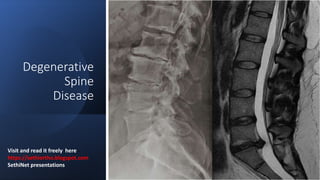
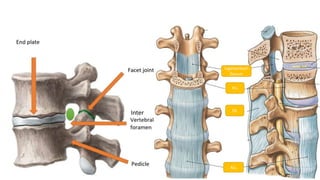
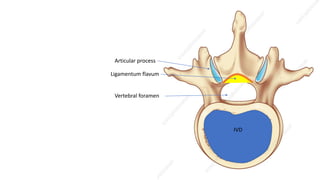
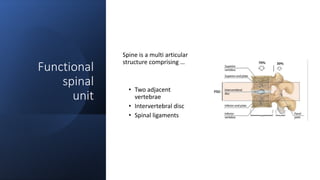
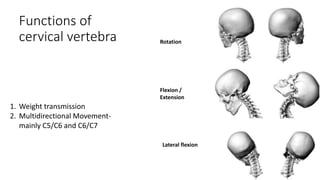
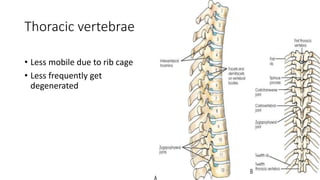
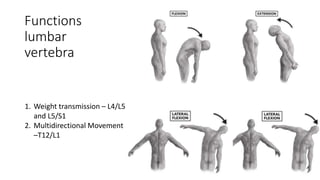
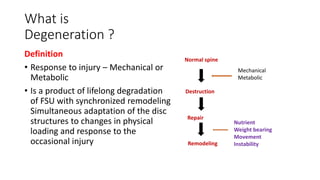
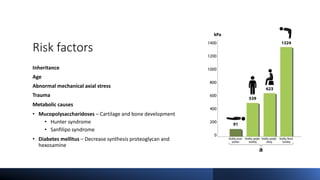
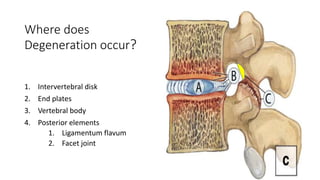

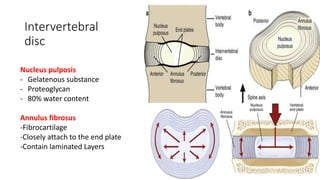
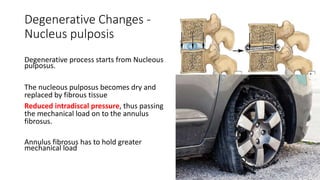
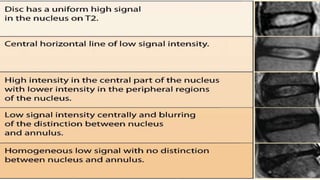
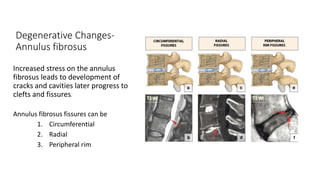
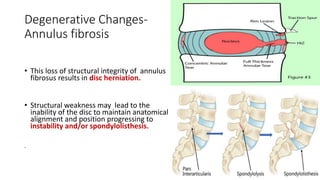
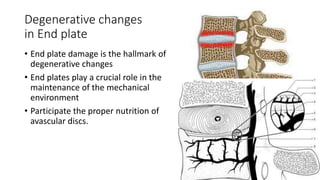
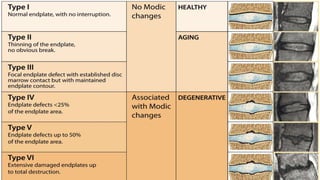
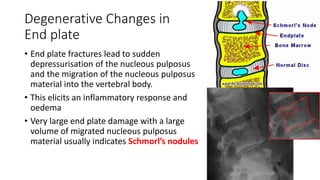
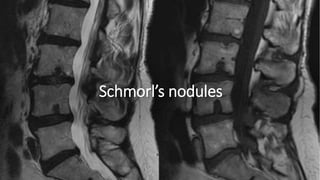
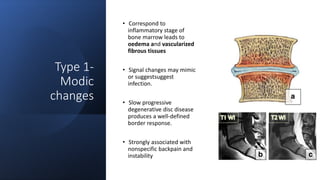
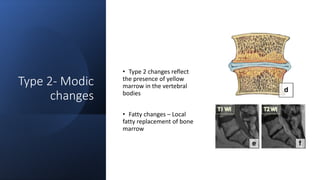
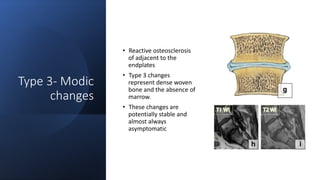
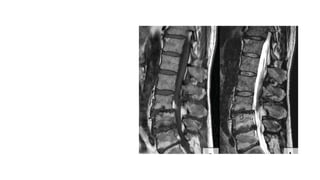
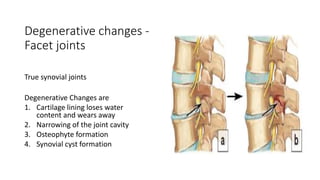
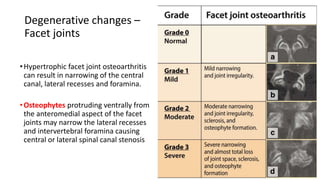
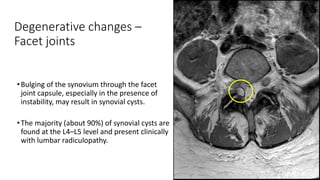
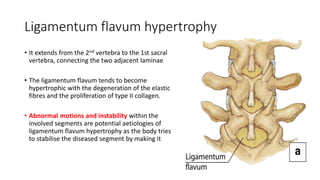
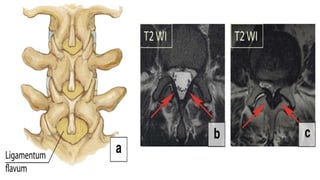
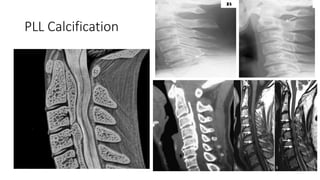
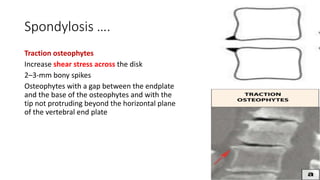
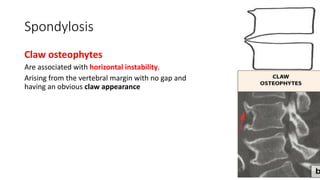
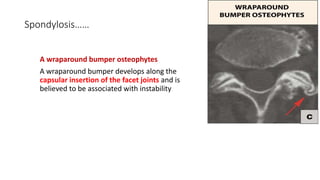

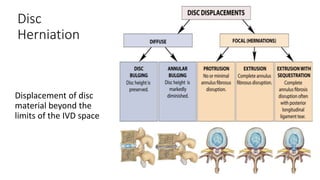
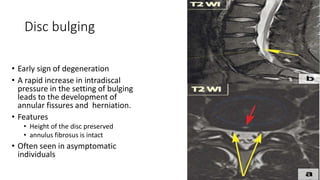
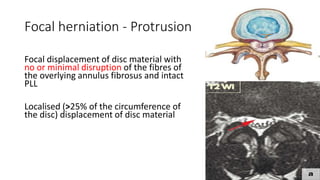
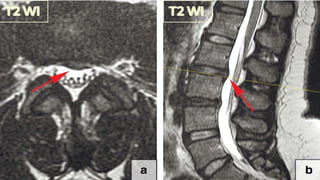
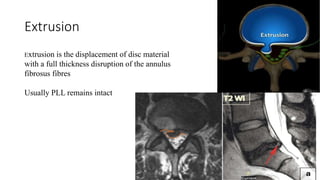
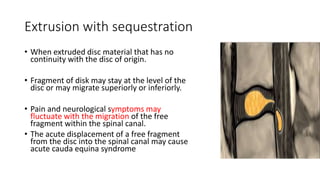
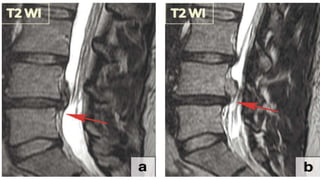
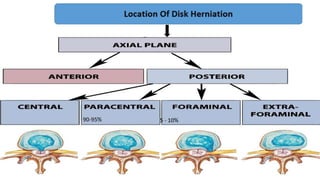
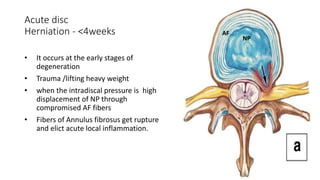
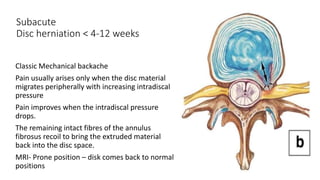
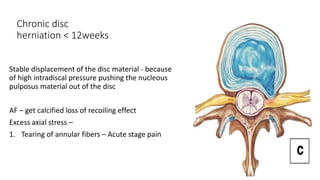
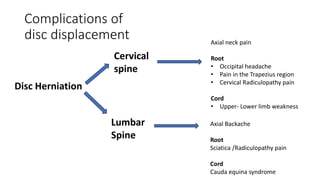
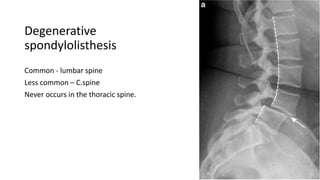
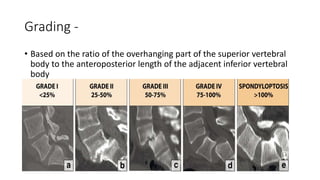
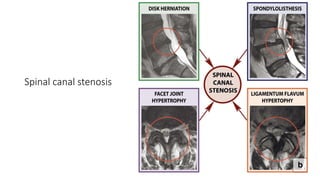

Degenerative spine disease is caused by the body's response to injury over a lifetime which results in the degradation of the functional spinal unit. This leads to changes in the intervertebral discs, endplates, facet joints, and ligaments. Risk factors include age, inheritance, trauma, and metabolic diseases. Degeneration typically occurs in the lumbar and cervical spine. Common signs are disc bulging and herniation, osteophyte formation, endplate damage, ligamentum flavum hypertrophy, and facet joint osteoarthritis - all of which can cause spinal stenosis and neurological symptoms. Treatment involves managing pain and symptoms while preserving spinal function.


