Unit 2. Grammar (I). The past tense
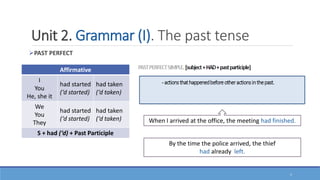
PAST PERFECT
Affirmative
I
You
He, she it
had started
(‘d started)
had taken
(‘d taken)
We
You
They
had started
(‘d started)
had taken
(‘d taken)
S + had (‘d) + Past Participle
When I arrived at the office, the meeting had finished.
By the time the police arrived, the thief
had already left.
1
Unit 2. Grammar (I). The past tense
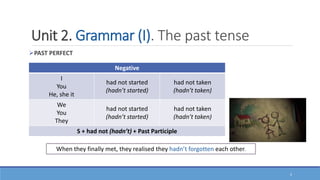
PAST PERFECT
Negative
I
You
He, she it
had not started
(hadn’t started)
had not taken
(hadn’t taken)
We
You
They
had not started
(hadn’t started)
had not taken
(hadn’t taken)
S + had not (hadn’t) + Past Participle
When they finally met, they realised they hadn’t forgotten each other.
2
Unit 2. Grammar (I). The past tense
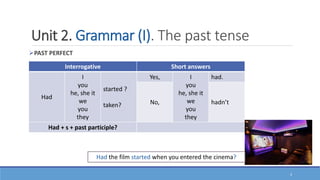
PAST PERFECT
Interrogative Short answers
Had
I
you
he, she it
we
you
they
started ?
taken?
Yes, I
you
he, she it
we
you
they
had.
No, hadn’t
Had + s + past participle?
Had the film started when you entered the cinema?
3
Unit 2. Grammar (I). The past tense
PAST PERFECT. Use
4
PRESENTPAST
“I have never been on a
plane before now”
She said she had
never been on a
plane before then.
Unit 2. Grammar (I). The past tense
PAST PERFECT. Use
5
PRESENTPAST
“We don’t need to queue
because I’ve already
bought the tickets”
Jack bougth the
tickets for the
cinema.
LAST
SATURDAY
“We didn’t need to
queue because
I had already bought the
tickets”
Unit 2. Grammar (I). The past tense
PAST SIMPLE OR PAST PERFECT.
6
PAST PRESENT
I saw a beautiful bird
in my garden.
I went to get my camera.
The bird flew away.
I returned with my camera.
“When I returned with my
camera, the bird had flown
away”
Unit 2. Grammar (I). The past tense
PAST SIMPLE OR PAST PERFECT.
7
PAST PRESENT
I saw a beautiful bird
in my garden.
I went to get my camera.
I returned with my
camera.
The bird flew away.
“When I returned with my camera,
the bird flew away”

Past perfect

  • 1.
    Unit 2. Grammar(I). The past tense PAST PERFECT Affirmative I You He, she it had started (‘d started) had taken (‘d taken) We You They had started (‘d started) had taken (‘d taken) S + had (‘d) + Past Participle When I arrived at the office, the meeting had finished. By the time the police arrived, the thief had already left. 1
  • 2.
    Unit 2. Grammar(I). The past tense PAST PERFECT Negative I You He, she it had not started (hadn’t started) had not taken (hadn’t taken) We You They had not started (hadn’t started) had not taken (hadn’t taken) S + had not (hadn’t) + Past Participle When they finally met, they realised they hadn’t forgotten each other. 2
  • 3.
    Unit 2. Grammar(I). The past tense PAST PERFECT Interrogative Short answers Had I you he, she it we you they started ? taken? Yes, I you he, she it we you they had. No, hadn’t Had + s + past participle? Had the film started when you entered the cinema? 3
  • 4.
    Unit 2. Grammar(I). The past tense PAST PERFECT. Use 4 PRESENTPAST “I have never been on a plane before now” She said she had never been on a plane before then.
  • 5.
    Unit 2. Grammar(I). The past tense PAST PERFECT. Use 5 PRESENTPAST “We don’t need to queue because I’ve already bought the tickets” Jack bougth the tickets for the cinema. LAST SATURDAY “We didn’t need to queue because I had already bought the tickets”
  • 6.
    Unit 2. Grammar(I). The past tense PAST SIMPLE OR PAST PERFECT. 6 PAST PRESENT I saw a beautiful bird in my garden. I went to get my camera. The bird flew away. I returned with my camera. “When I returned with my camera, the bird had flown away”
  • 7.
    Unit 2. Grammar(I). The past tense PAST SIMPLE OR PAST PERFECT. 7 PAST PRESENT I saw a beautiful bird in my garden. I went to get my camera. I returned with my camera. The bird flew away. “When I returned with my camera, the bird flew away”