Present Perfect Tense
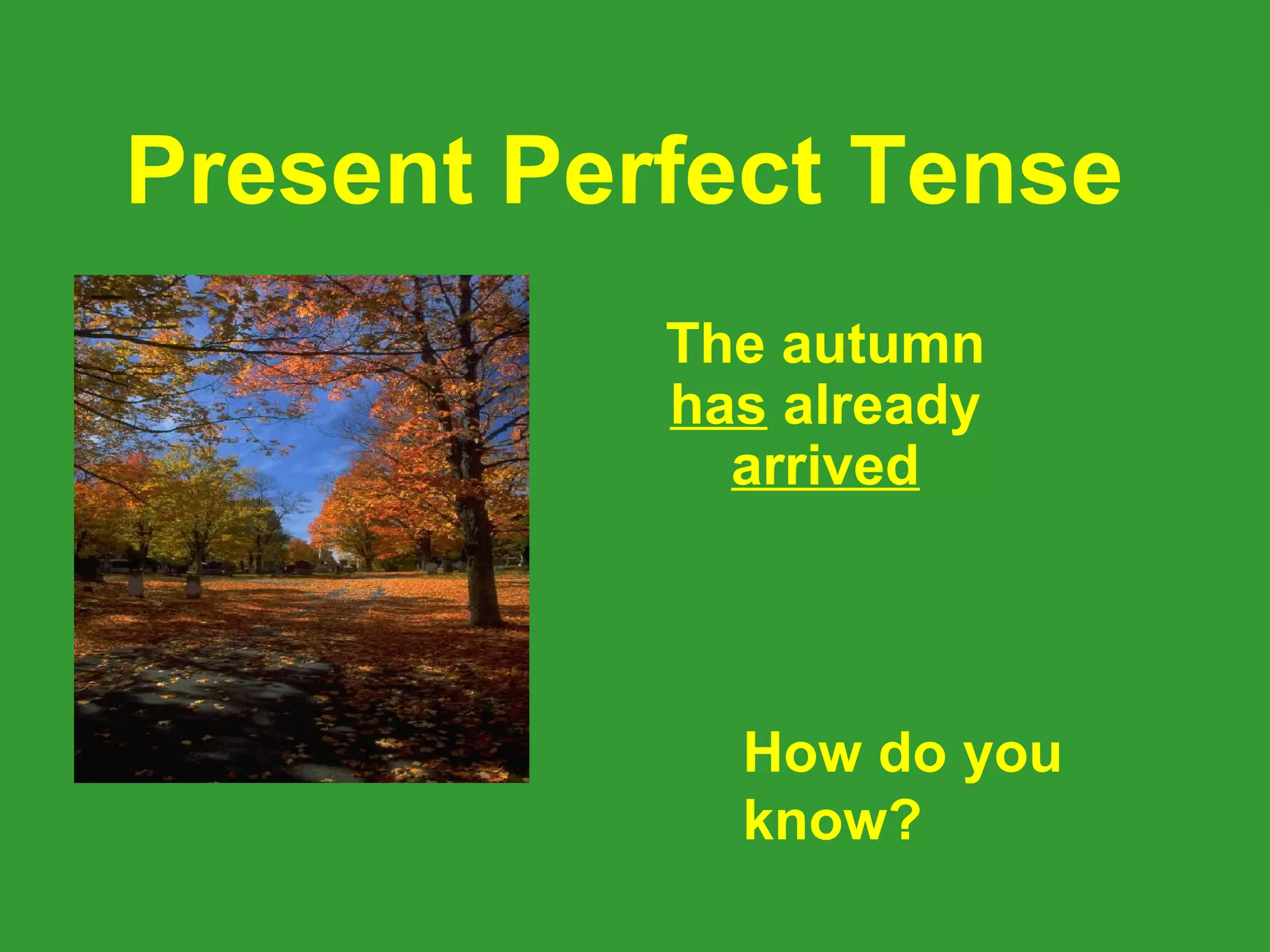
           The autumn
           has already
             arrived


             How do you
             know?
Present Perfect Tense
            FORM: have / has + past participle

Affirmative:    I have seen the film before.
                She has seen the film before.

Interrogative: Have you seen the film before?
               Has she seen the film before?

Negative:      They haven’t seen the film before.
               He hasn’t seen the film before.
Present Perfect Tense
      Uses of the present perfect
1- Recent events: It is used to describe recent events
 without a definite time. The idea of time or place in
 the speaker’s mind makes the event recent. A time
 expression may emphasize recentness:
 just, recently, lately


Why are they so happy?

They have just won a prize so
they are really pleased
Present Perfect Tense
2- Personal experiences: It is used to express
 personal experiences, there is not a definite time
 given. The time expressions ever and never are very
 often used with this meaning


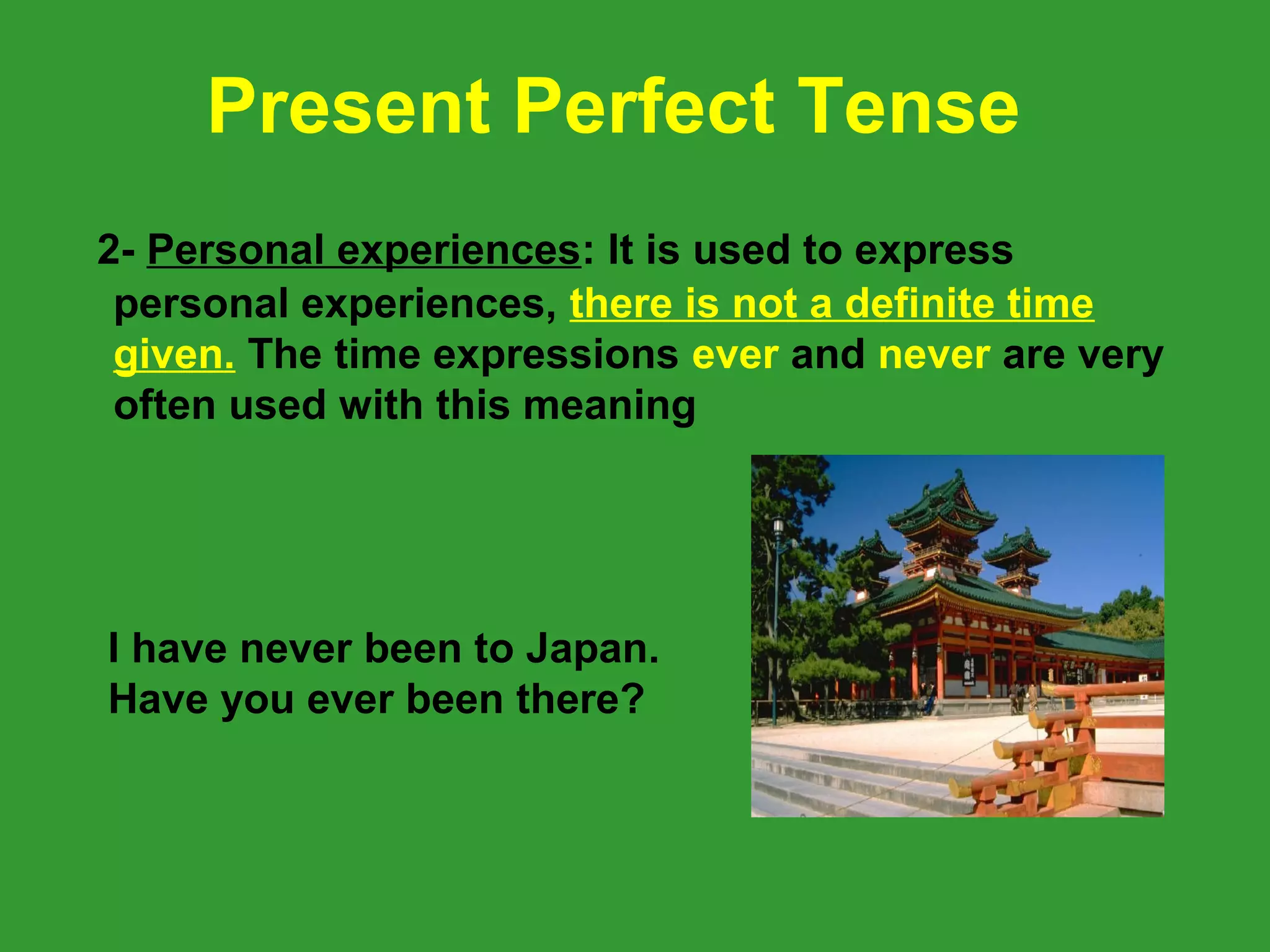
I have never been to Japan.
Have you ever been there?
Present Perfect Tense
3- It is used to express actions that started in the past
   and continue to the present, the time period is not
   finished. We use for and since with this meaning. We
   use for with periods of time and since with points of
   time.

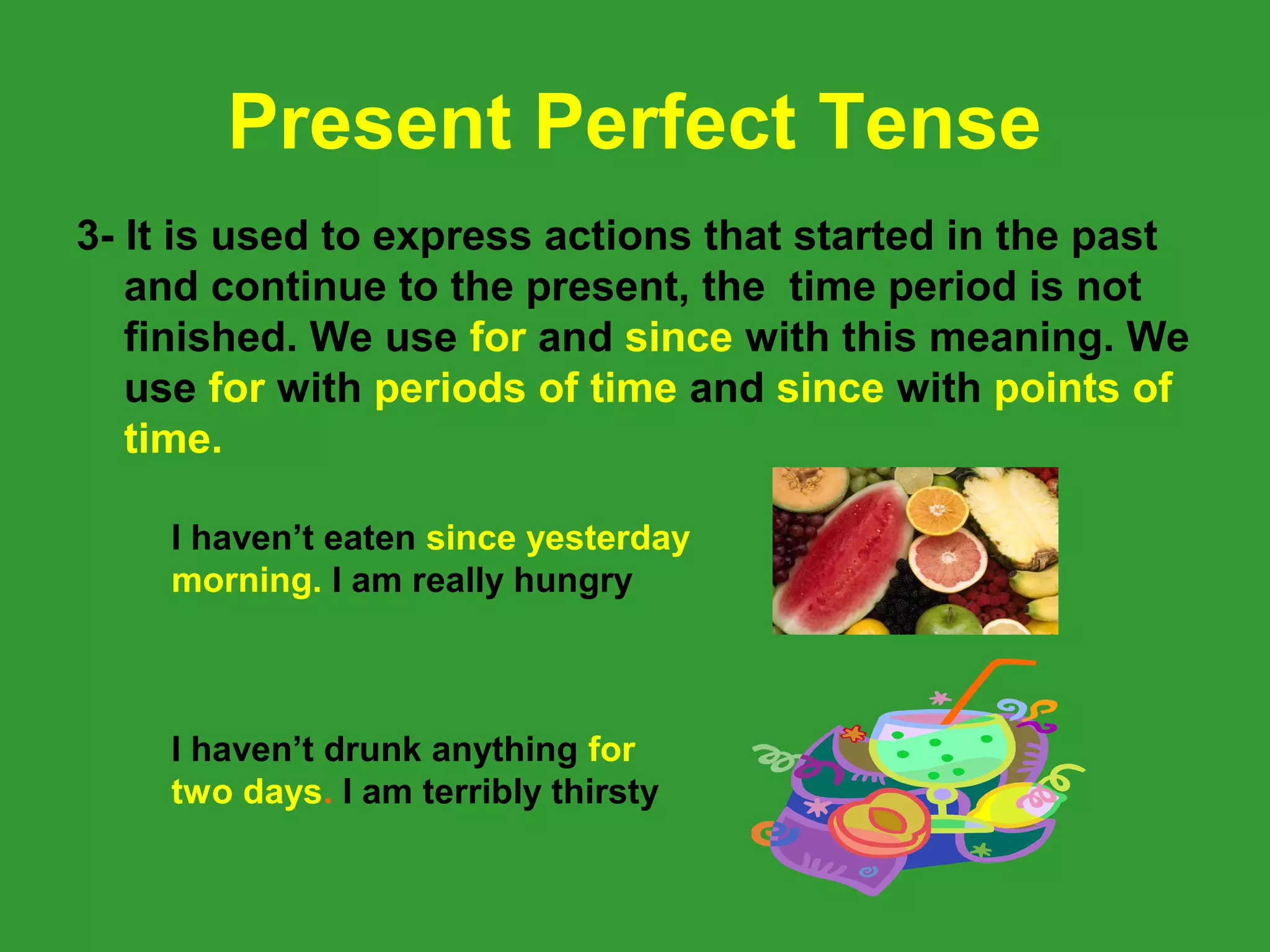
    I haven’t eaten since yesterday
    morning. I am really hungry


    I haven’t drunk anything for
    two days. I am terribly thirsty
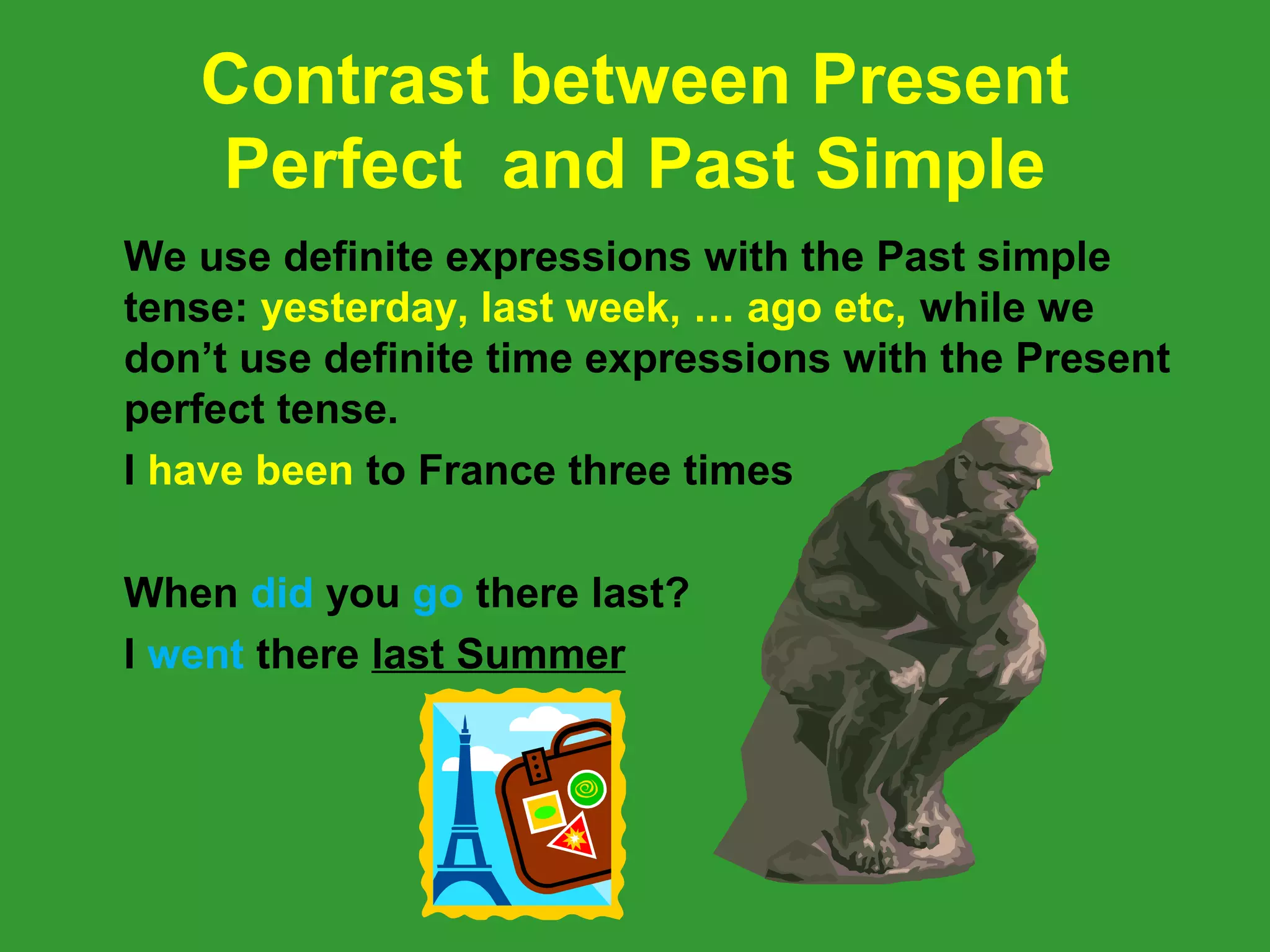
Contrast between Present
   Perfect and Past Simple
We use definite expressions with the Past simple
tense: yesterday, last week, … ago etc, while we
don’t use definite time expressions with the Present
perfect tense.
I have been to France three times

When did you go there last?
I went there last Summer
Contrast between Present
    Perfect and Past Simple
 Gerald has bought a new car. He bought it last
 week.
 Have you met Ray? – Yes, I met him when we
 were students.
 My parents have been to India. In fact, they
 went there twice last year.
 Has anybody phoned me? – Yes, Joyce
 phoned an hour ago.
 I’ve seen that man before. – Really? When did
 you see him?
Present Perfect Tense
Have you ever listened to
classical music before?


Where did you hear it?
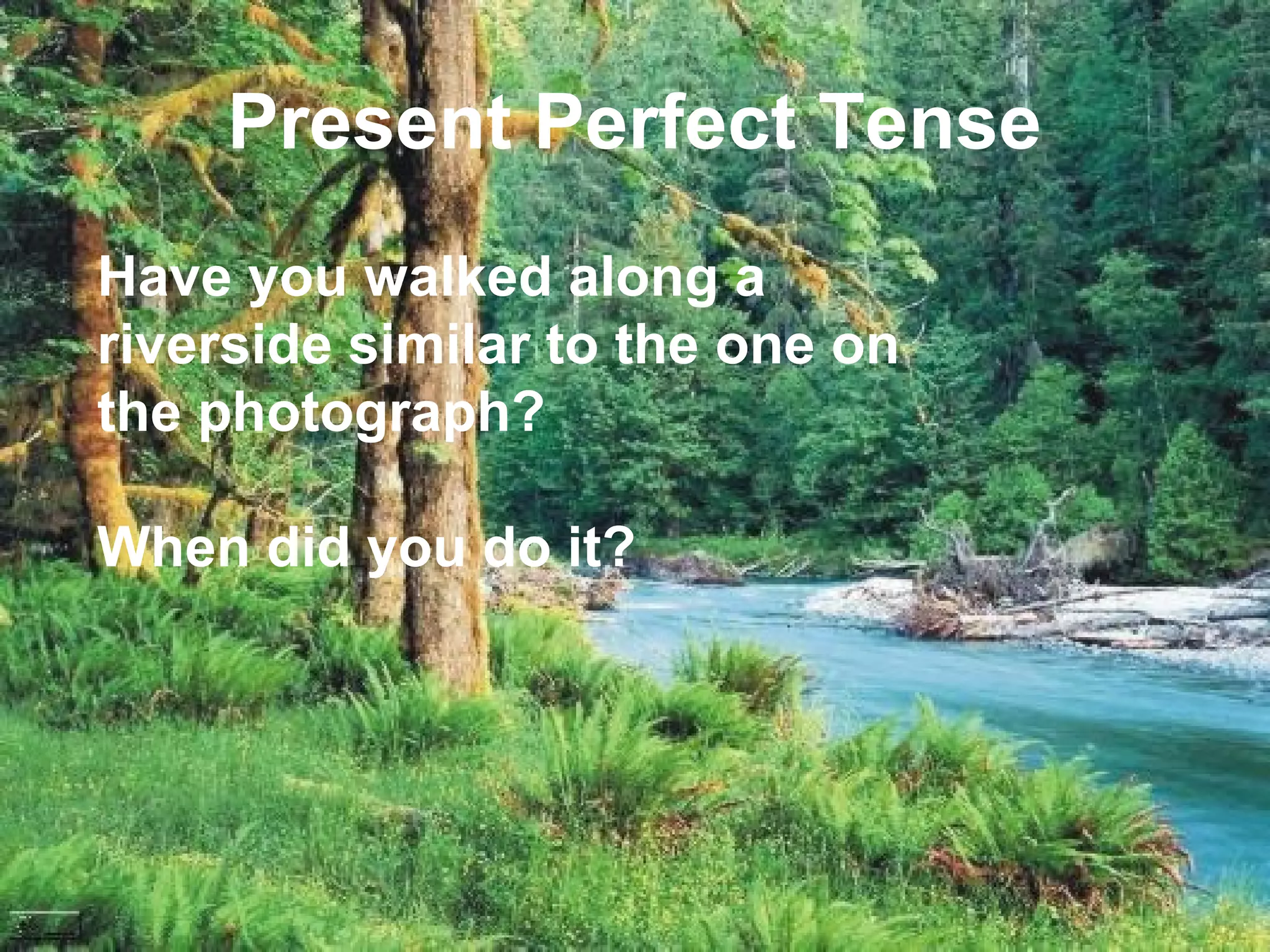
Present Perfect Tense
Have you walked along a
riverside similar to the one on
the photograph?

When did you do it?
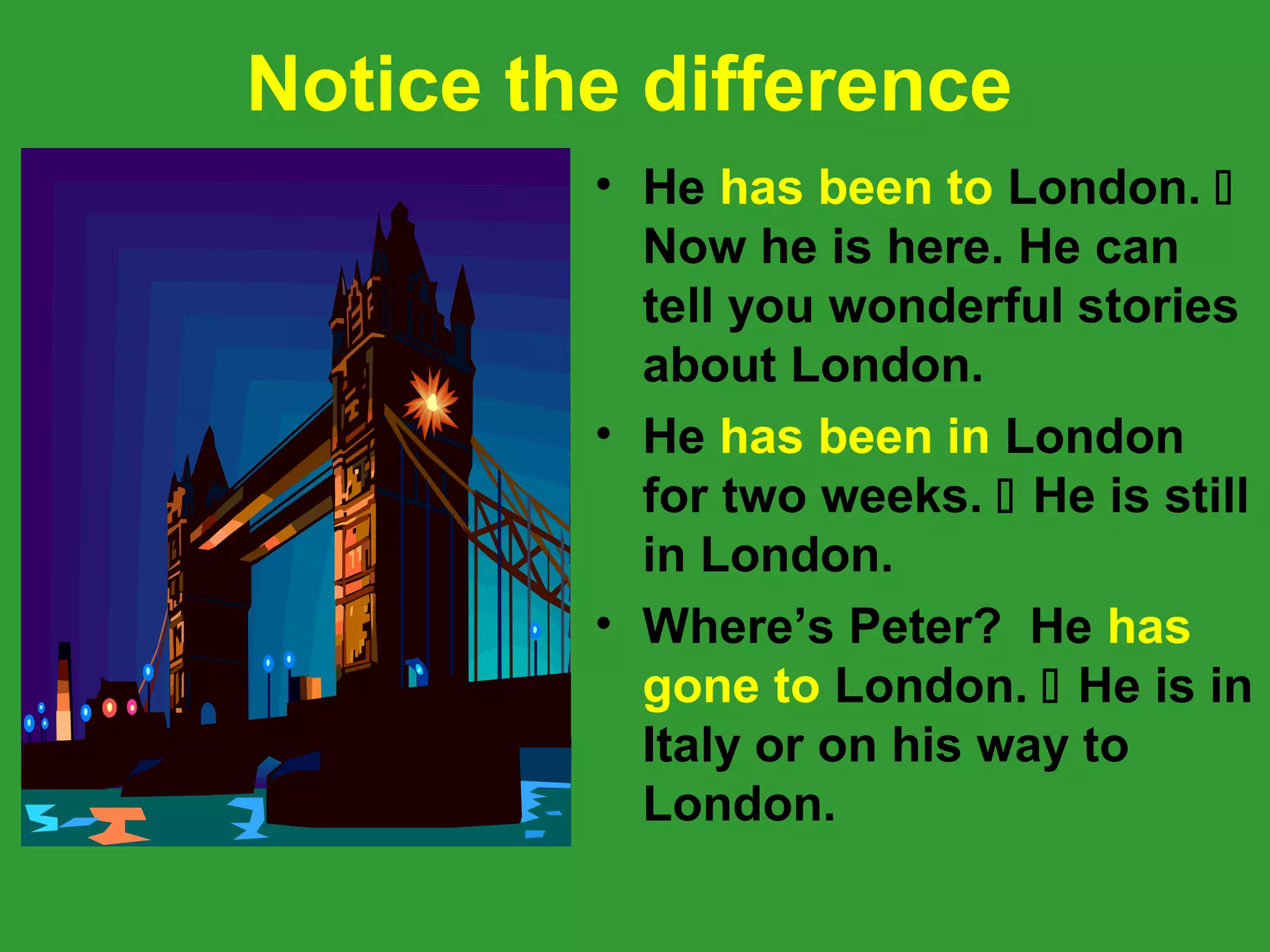
Notice the difference
         • He has been to London. 
           Now he is here. He can
           tell you wonderful stories
           about London.
         • He has been in London
           for two weeks.  He is still
           in London.
         • Where’s Peter? He has
           gone to London.  He is in
           Italy or on his way to
           London.

Present Perfect use

  • 1.
    Present Perfect Tense The autumn has already arrived How do you know?
  • 2.
    Present Perfect Tense FORM: have / has + past participle Affirmative: I have seen the film before. She has seen the film before. Interrogative: Have you seen the film before? Has she seen the film before? Negative: They haven’t seen the film before. He hasn’t seen the film before.
  • 3.
    Present Perfect Tense Uses of the present perfect 1- Recent events: It is used to describe recent events without a definite time. The idea of time or place in the speaker’s mind makes the event recent. A time expression may emphasize recentness: just, recently, lately Why are they so happy? They have just won a prize so they are really pleased
  • 4.
    Present Perfect Tense 2-Personal experiences: It is used to express personal experiences, there is not a definite time given. The time expressions ever and never are very often used with this meaning I have never been to Japan. Have you ever been there?
  • 5.
    Present Perfect Tense 3-It is used to express actions that started in the past and continue to the present, the time period is not finished. We use for and since with this meaning. We use for with periods of time and since with points of time. I haven’t eaten since yesterday morning. I am really hungry I haven’t drunk anything for two days. I am terribly thirsty
  • 6.
    Contrast between Present Perfect and Past Simple We use definite expressions with the Past simple tense: yesterday, last week, … ago etc, while we don’t use definite time expressions with the Present perfect tense. I have been to France three times When did you go there last? I went there last Summer
  • 7.
    Contrast between Present Perfect and Past Simple  Gerald has bought a new car. He bought it last week.  Have you met Ray? – Yes, I met him when we were students.  My parents have been to India. In fact, they went there twice last year.  Has anybody phoned me? – Yes, Joyce phoned an hour ago.  I’ve seen that man before. – Really? When did you see him?
  • 8.
    Present Perfect Tense Haveyou ever listened to classical music before? Where did you hear it?
  • 9.
    Present Perfect Tense Haveyou walked along a riverside similar to the one on the photograph? When did you do it?
  • 10.
    Notice the difference • He has been to London.  Now he is here. He can tell you wonderful stories about London. • He has been in London for two weeks.  He is still in London. • Where’s Peter? He has gone to London.  He is in Italy or on his way to London.