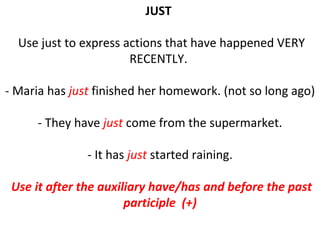
JUST    Use just to express actions that have happened VERY RECENTLY.  - Maria has  just  finished her homework. (not so long ago) - They have  just  come from the supermarket. - It has  just  started raining. Use it after the auxiliary have/has and before the past participle  (+)
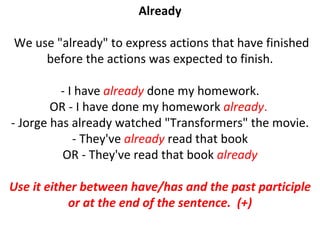
Already We use "already" to express actions that have finished before the actions was expected to finish. - I have  already  done my homework. OR - I have done my homework  already .  - Jorge has already watched "Transformers" the movie. - They've  already  read that book OR - They've read that book  already Use it either between have/has and the past participle or at the end of the sentence.  (+)
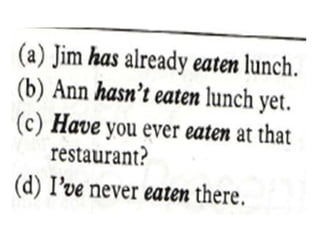
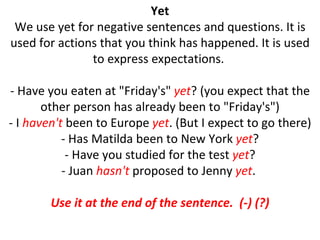
Yet We use yet for negative sentences and questions. It is used for actions that you think has happened. It is used to express expectations.  - Have you eaten at "Friday's"  yet ? (you expect that the other person has already been to "Friday's") - I  haven't  been to Europe  yet . (But I expect to go there) - Has Matilda been to New York  yet ? - Have you studied for the test  yet ? - Juan  hasn't  proposed to Jenny  yet .  Use it at the end of the sentence.  (-) (?)
Exercises: http://www.oup.com/elt/global/products/englishfile/preint/a_grammar/file04/grammar04_b01/ Game:  http://www.oup.com/elt/global/products/englishfile/intermediate/i_games/gotoschool/nef_int_games_gts02/

Present perfect yet - just - already

  • 1.
  • 2.
  • 3.
  • 4.
  • 5.
  • 6.
  • 7.
    JUST Use just to express actions that have happened VERY RECENTLY. - Maria has just finished her homework. (not so long ago) - They have just come from the supermarket. - It has just started raining. Use it after the auxiliary have/has and before the past participle (+)
  • 8.
    Already We use"already" to express actions that have finished before the actions was expected to finish. - I have already done my homework. OR - I have done my homework already . - Jorge has already watched "Transformers" the movie. - They've already read that book OR - They've read that book already Use it either between have/has and the past participle or at the end of the sentence. (+)
  • 9.
    Yet We useyet for negative sentences and questions. It is used for actions that you think has happened. It is used to express expectations. - Have you eaten at "Friday's" yet ? (you expect that the other person has already been to "Friday's") - I haven't been to Europe yet . (But I expect to go there) - Has Matilda been to New York yet ? - Have you studied for the test yet ? - Juan hasn't proposed to Jenny yet . Use it at the end of the sentence. (-) (?)
  • 10.
    Exercises: http://www.oup.com/elt/global/products/englishfile/preint/a_grammar/file04/grammar04_b01/ Game: http://www.oup.com/elt/global/products/englishfile/intermediate/i_games/gotoschool/nef_int_games_gts02/