welcome
passive voice English Grammar 142   Present by: Entisar   Gharawi . Instructor: Shadia Banjar.
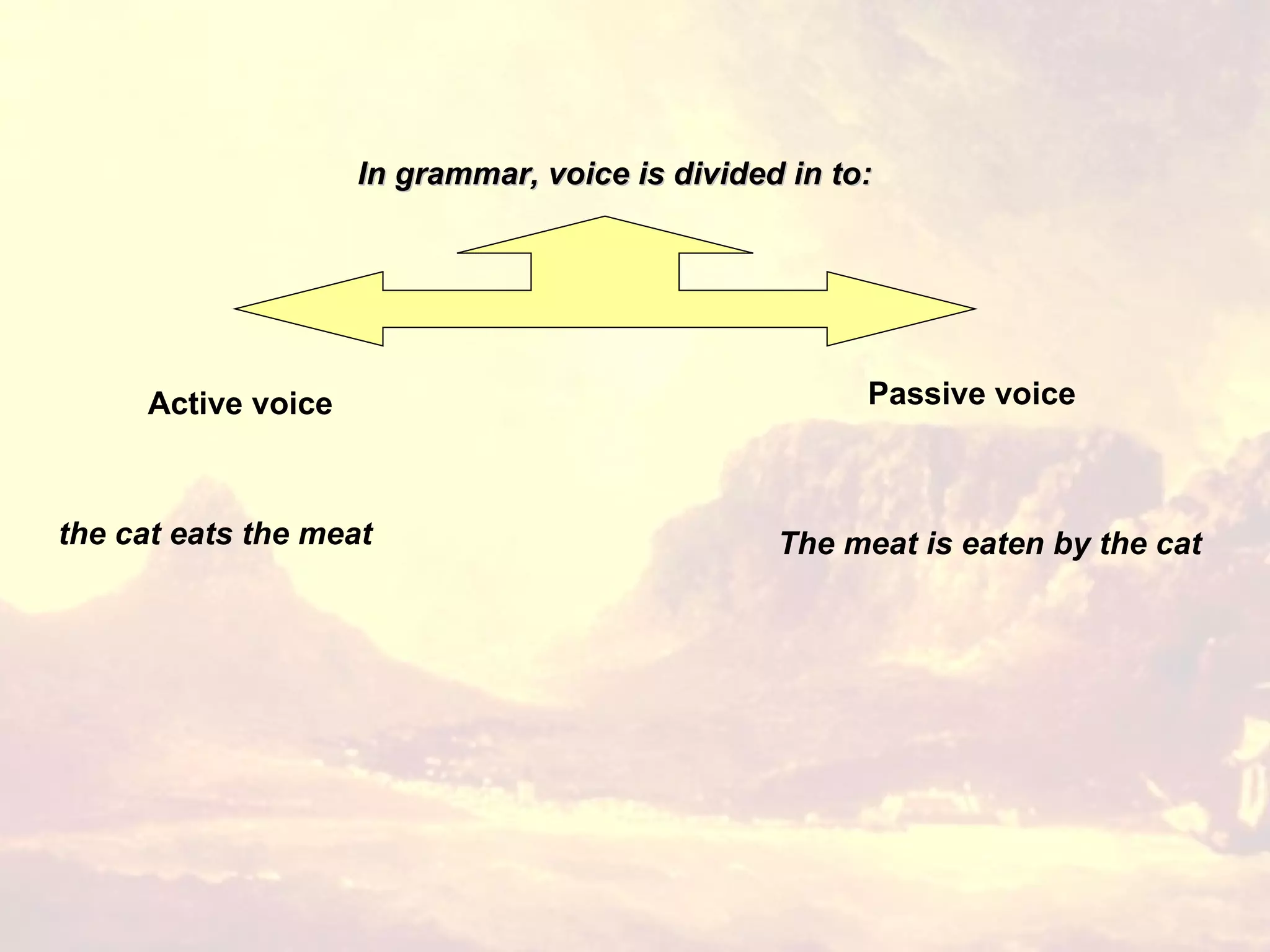
In grammar, voice is divided in to: Passive voice Active voice the cat eats the meat   The meat is eaten by the cat
Use of the Passive Voice : We use the passive when: we want to make the  object  more important . The car  was repaired by Sam.  we do not know the  subject . He was killed  with  a gun.
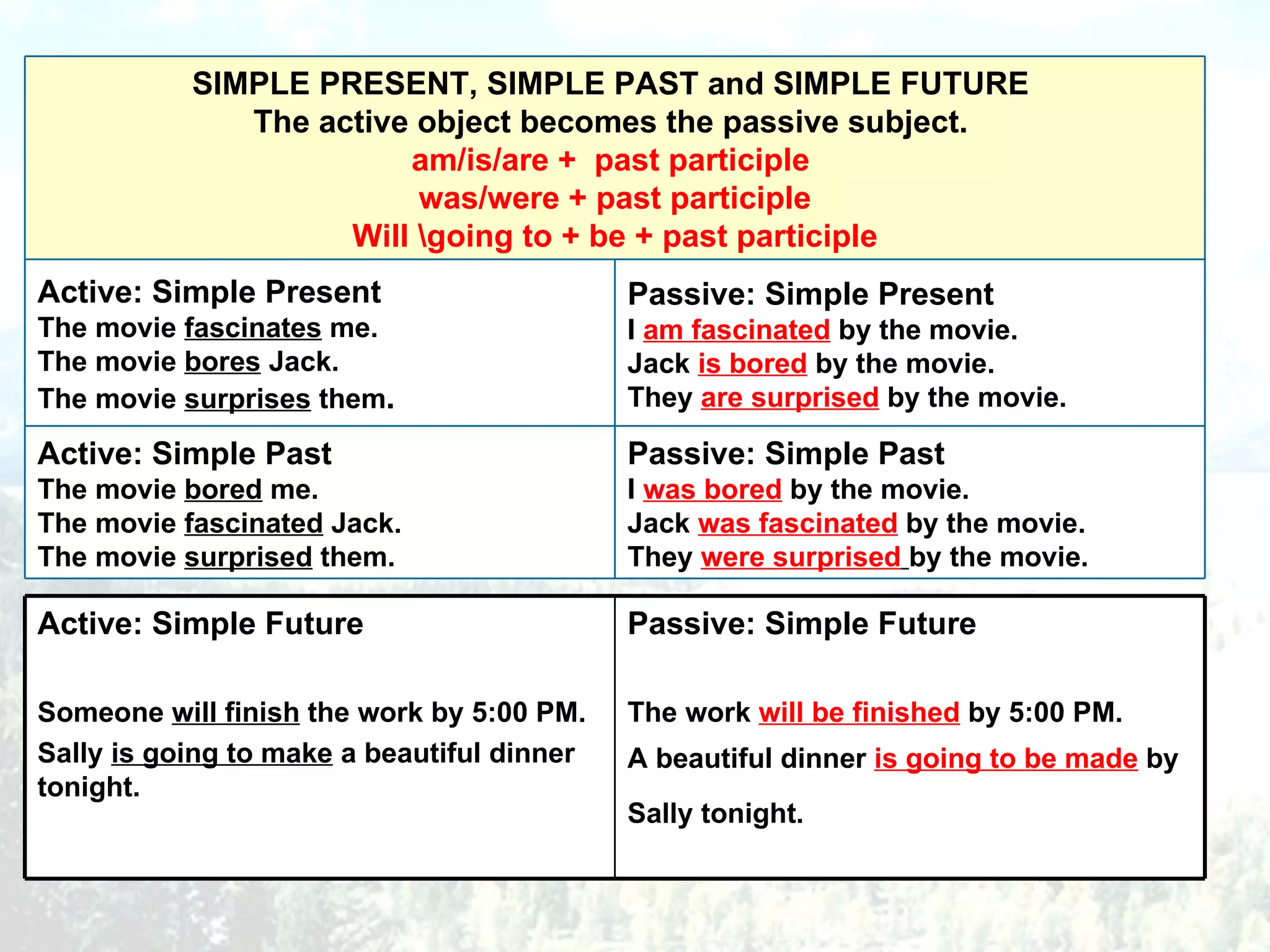
SIMPLE PRESENT, SIMPLE PAST   and SIMPLE FUTURE   The active object becomes the passive subject.  am/is/are +  past participle  was/were + past participle Will \going to + be + past participle Passive: Simple Present  I  am fascinated  by the movie.  Jack  is bored  by the movie.  They  are surprised  by the movie. Active: Simple Present  The movie  fascinates  me.  The movie  bores  Jack.  The movie  surprises  them . Passive: Simple Past  I  was bored  by the movie.  Jack  was fascinated  by the movie.  They  were surprised   by the movie. Active: Simple Past  The movie  bored  me.  The movie  fascinated  Jack.  The movie  surprised  them. Passive:   Simple Future The work  will be finished  by 5:00 PM.  A beautiful dinner  is going to be made  by Sally tonight.   Active: Simple Future Someone  will finish  the work by 5:00 PM. Sally  is going to make  a beautiful dinner tonight.
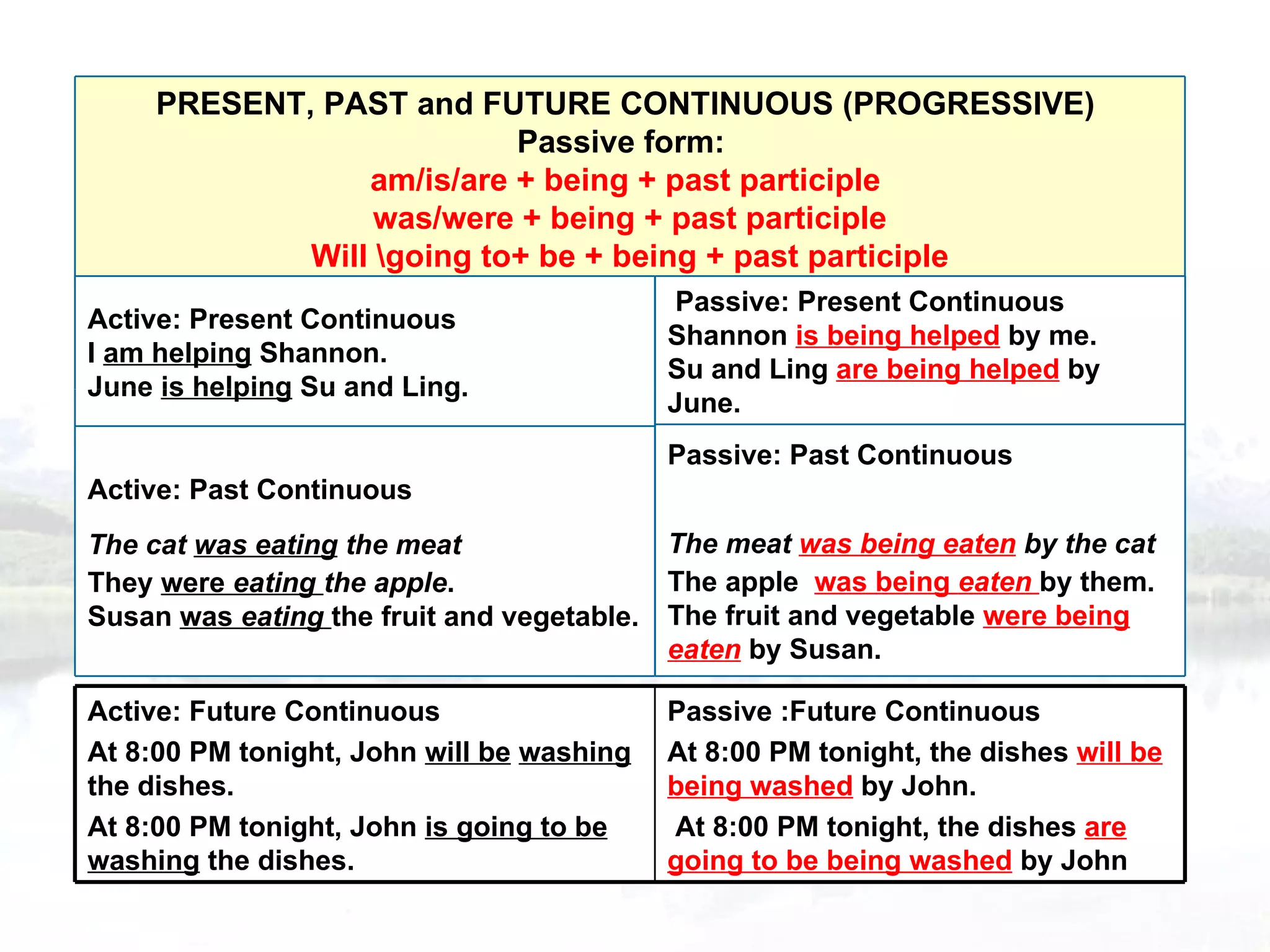
PRESENT, PAST and FUTURE CONTINUOUS (PROGRESSIVE)  Passive form:   am/is/are + being + past participle  was/were + being + past participle Will \going to+ be + being + past participle Active: Present Continuous  I  am helping  Shannon.  June  is helping  Su and Ling. Active: Past Continuous  The cat  was eating  the meat   They  were  eating  the apple .  Susan  was  eating   the fruit and vegetable.   Passive: Present Continuous  Shannon  is being helped  by me.  Su and Ling  are being helped  by June. Passive: Past Continuous  The meat  was being eaten  by the cat   The apple   was being  eaten   by them.  The fruit and vegetable  were being   eaten   by Susan. Passive :Future Continuous  At 8:00 PM tonight, the dishes  will be   being washed  by John. At 8:00 PM tonight, the dishes  are going to be being washed  by John   Active: Future Continuous  At 8:00 PM tonight, John  will be   washing  the dishes. At 8:00 PM tonight, John  is going to be   washing  the dishes.
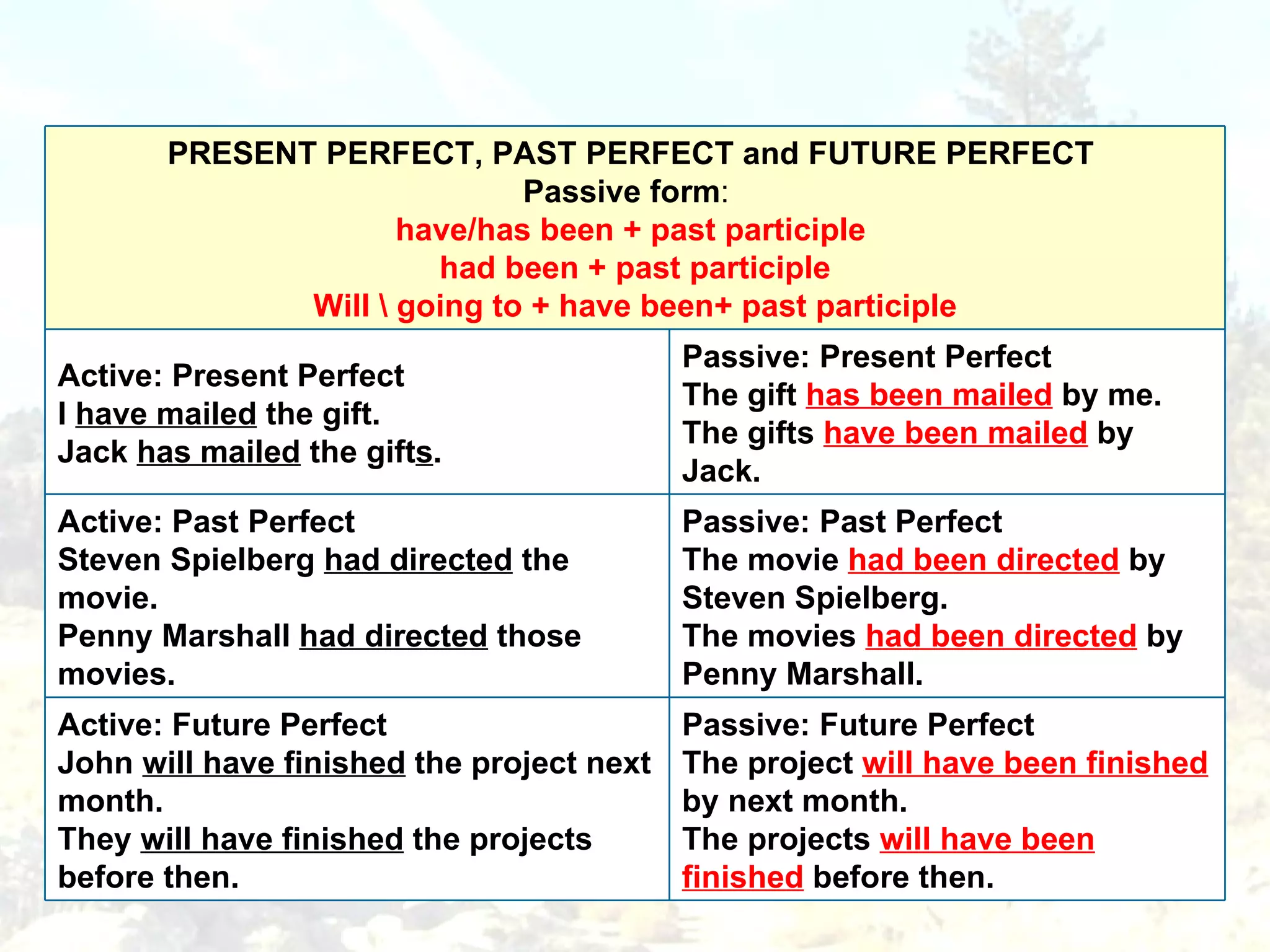
PRESENT PERFECT, PAST PERFECT and FUTURE PERFECT   Passive form :   have/has been + past participle  had been + past participle Will \ going to + have been+ past participle Passive: Present Perfect  The gift  has been mailed  by me.  The gifts  have been mailed  by Jack. Active: Present Perfect  I  have mailed  the gift.  Jack  has mailed  the gift s . Passive: Past Perfect  The movie  had been directed  by Steven Spielberg.  The movies  had been directed  by Penny Marshall. Active: Past Perfect  Steven Spielberg  had directed  the movie.  Penny Marshall  had directed  those movies. Passive: Future Perfect  The project  will have been finished  by next month.  The projects  will have been finished  before then. Active: Future Perfect  John  will have finished  the project next month.  They  will have finished  the projects before then.
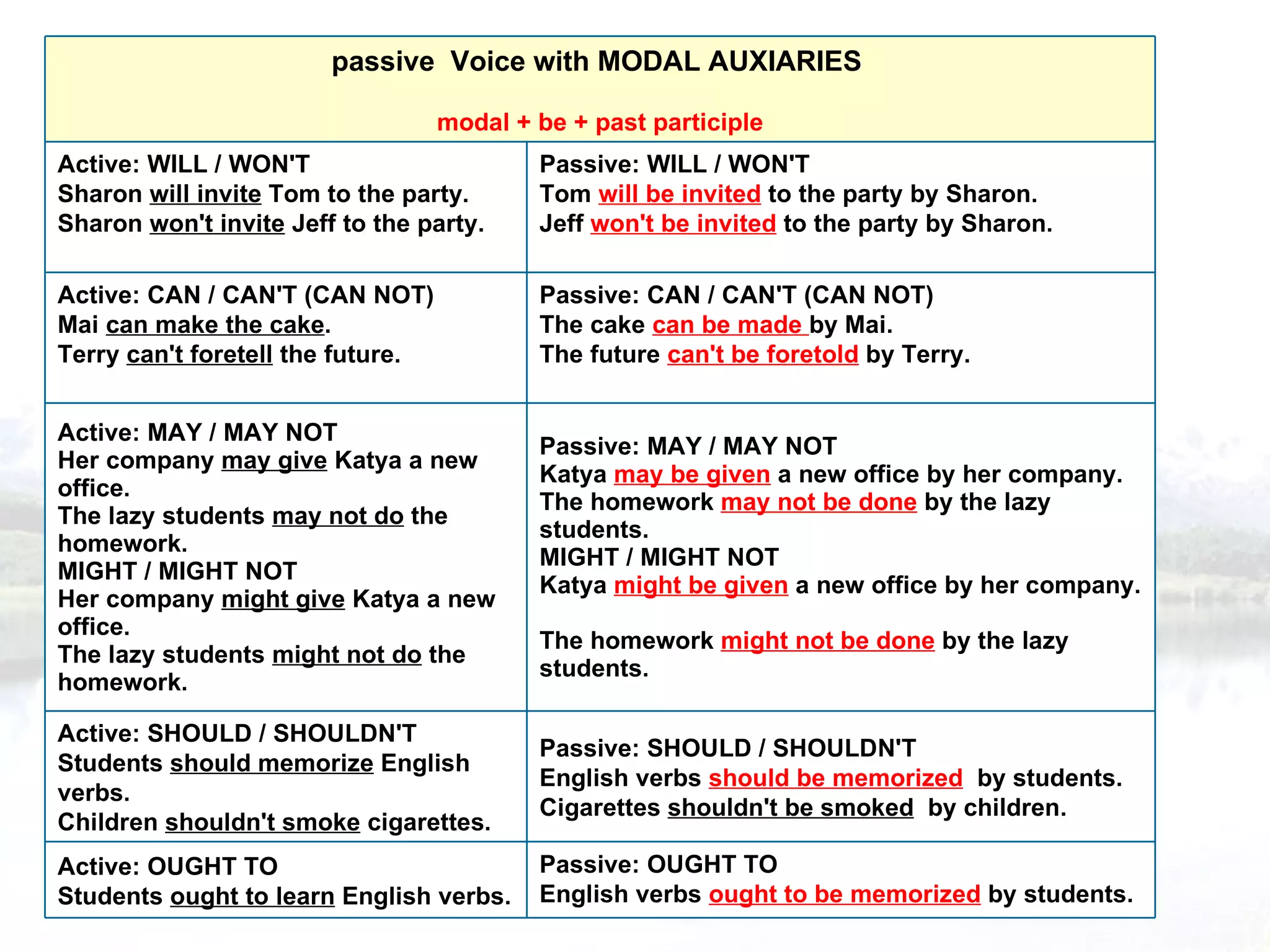
passive  Voice with   MODAL AUXIARIES   modal + be + past participle Passive: WILL / WON'T Tom  will be invited  to the party by Sharon.  Jeff  won't be invited  to the party by Sharon.  Active: WILL / WON'T Sharon  will invite  Tom to the party.  Sharon  won't invite  Jeff to the party.  Passive: CAN / CAN'T (CAN NOT)  The cake  can be made  by Mai.  The future  can't be foretold  by Terry.  Active: CAN / CAN'T (CAN NOT)  Mai  can make the cake .  Terry  can't foretell  the future.  Passive: MAY / MAY NOT  Katya  may be given  a new office by her company.  The homework  may not be done  by the lazy students.  MIGHT / MIGHT NOT  Katya  might be given  a new office by her company.  The homework  might not be done  by the lazy students. Active: MAY / MAY NOT  Her company  may give  Katya a new office.  The lazy students  may not do  the homework.  MIGHT / MIGHT NOT  Her company  might give  Katya a new office.  The lazy students  might not do  the homework. Passive: SHOULD / SHOULDN'T  English verbs  should be memorized    by students.  Cigarettes  shouldn't be smoked   by children. Active: SHOULD / SHOULDN'T  Students  should memorize  English verbs.  Children  shouldn't smoke  cigarettes. Passive: OUGHT TO  English verbs  ought to be memorized  by students. Active: OUGHT TO  Students  ought to learn  English verbs.
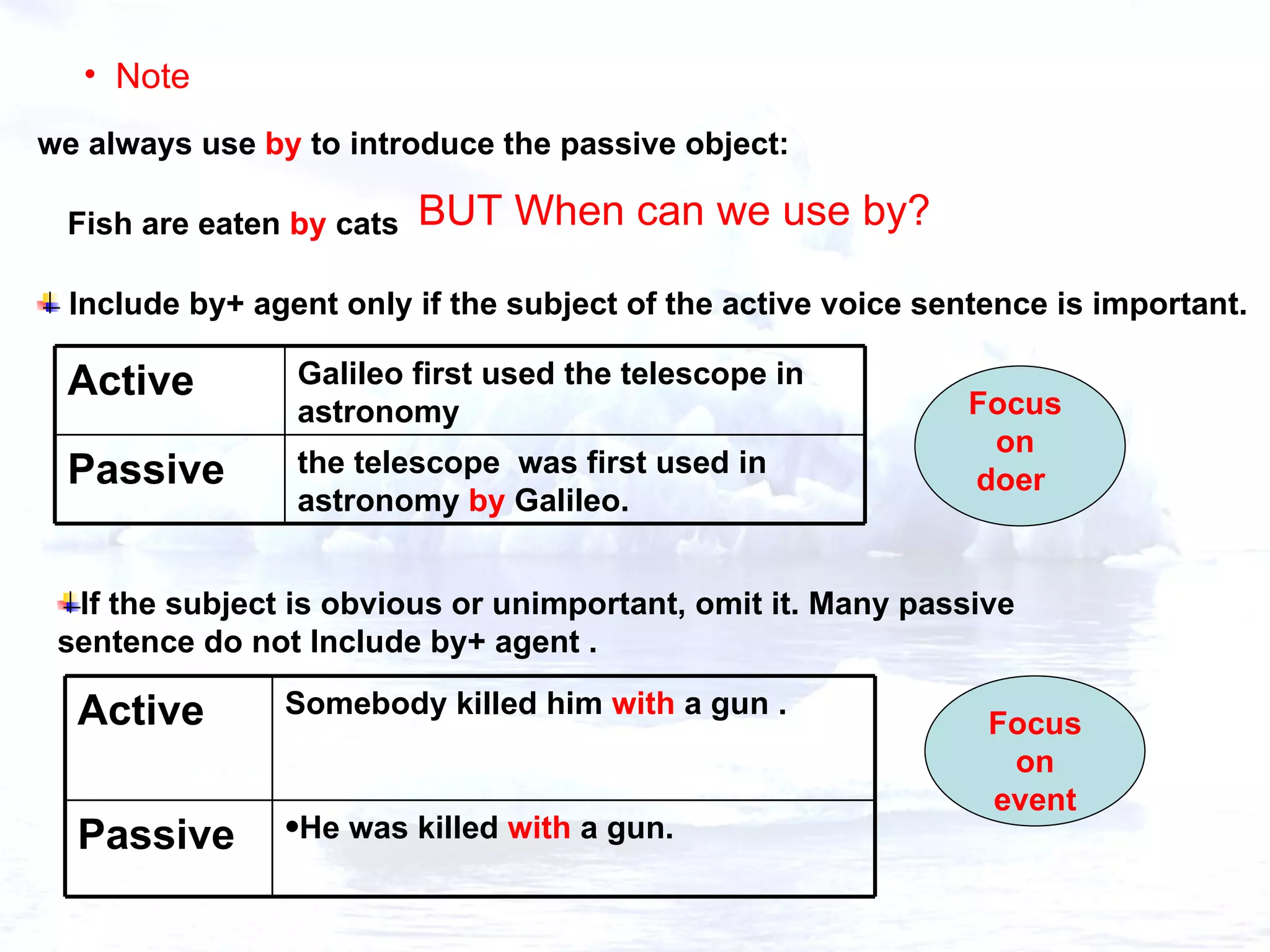
Note   we always use  by  to introduce the passive object:   Fish are eaten  by  cats   BUT When can we use by? Include by+ agent only if the subject of the active voice sentence is important. If the subject is obvious or unimportant, omit it. Many passive sentence do not Include by+ agent . Focus   on doer   Focus   on event Galileo first used the telescope in astronomy Active the telescope   was first used in astronomy  by  Galileo. Passive Somebody killed him  with  a gun . Active He was killed  with  a gun. Passive
Thank You
REFERENCES:  Interactions2 Grammar book .   www.commnet.edu  www.englishpage.com www.englishclub.com

Passive voice 3

  • 1.
  • 2.
    passive voice EnglishGrammar 142 Present by: Entisar Gharawi . Instructor: Shadia Banjar.
  • 3.
    In grammar, voiceis divided in to: Passive voice Active voice the cat eats the meat The meat is eaten by the cat
  • 4.
    Use of thePassive Voice : We use the passive when: we want to make the object more important . The car was repaired by Sam. we do not know the subject . He was killed with a gun.
  • 5.
    SIMPLE PRESENT, SIMPLEPAST and SIMPLE FUTURE The active object becomes the passive subject. am/is/are +  past participle was/were + past participle Will \going to + be + past participle Passive: Simple Present I am fascinated by the movie. Jack is bored by the movie. They are surprised by the movie. Active: Simple Present The movie fascinates me. The movie bores Jack. The movie surprises them . Passive: Simple Past I was bored by the movie. Jack was fascinated by the movie. They were surprised by the movie. Active: Simple Past The movie bored me. The movie fascinated Jack. The movie surprised them. Passive: Simple Future The work will be finished by 5:00 PM. A beautiful dinner is going to be made by Sally tonight. Active: Simple Future Someone will finish the work by 5:00 PM. Sally is going to make a beautiful dinner tonight.
  • 6.
    PRESENT, PAST andFUTURE CONTINUOUS (PROGRESSIVE) Passive form:  am/is/are + being + past participle was/were + being + past participle Will \going to+ be + being + past participle Active: Present Continuous I am helping Shannon. June is helping Su and Ling. Active: Past Continuous The cat was eating the meat They were eating the apple . Susan was eating the fruit and vegetable.   Passive: Present Continuous Shannon is being helped by me. Su and Ling are being helped by June. Passive: Past Continuous The meat was being eaten by the cat The apple  was being eaten by them. The fruit and vegetable were being eaten by Susan. Passive :Future Continuous At 8:00 PM tonight, the dishes will be being washed by John. At 8:00 PM tonight, the dishes are going to be being washed by John Active: Future Continuous At 8:00 PM tonight, John will be washing the dishes. At 8:00 PM tonight, John is going to be washing the dishes.
  • 7.
    PRESENT PERFECT, PASTPERFECT and FUTURE PERFECT Passive form :  have/has been + past participle had been + past participle Will \ going to + have been+ past participle Passive: Present Perfect The gift has been mailed by me. The gifts have been mailed by Jack. Active: Present Perfect I have mailed the gift. Jack has mailed the gift s . Passive: Past Perfect The movie had been directed by Steven Spielberg. The movies had been directed by Penny Marshall. Active: Past Perfect Steven Spielberg had directed the movie. Penny Marshall had directed those movies. Passive: Future Perfect The project will have been finished by next month. The projects will have been finished before then. Active: Future Perfect John will have finished the project next month. They will have finished the projects before then.
  • 8.
    passive Voicewith MODAL AUXIARIES modal + be + past participle Passive: WILL / WON'T Tom will be invited to the party by Sharon. Jeff won't be invited to the party by Sharon. Active: WILL / WON'T Sharon will invite Tom to the party. Sharon won't invite Jeff to the party. Passive: CAN / CAN'T (CAN NOT) The cake can be made by Mai. The future can't be foretold by Terry. Active: CAN / CAN'T (CAN NOT) Mai can make the cake . Terry can't foretell the future. Passive: MAY / MAY NOT Katya may be given a new office by her company. The homework may not be done by the lazy students. MIGHT / MIGHT NOT Katya might be given a new office by her company. The homework might not be done by the lazy students. Active: MAY / MAY NOT Her company may give Katya a new office. The lazy students may not do the homework. MIGHT / MIGHT NOT Her company might give Katya a new office. The lazy students might not do the homework. Passive: SHOULD / SHOULDN'T English verbs should be memorized   by students. Cigarettes shouldn't be smoked   by children. Active: SHOULD / SHOULDN'T Students should memorize English verbs. Children shouldn't smoke cigarettes. Passive: OUGHT TO English verbs ought to be memorized by students. Active: OUGHT TO Students ought to learn English verbs.
  • 9.
    Note we always use by to introduce the passive object: Fish are eaten by cats BUT When can we use by? Include by+ agent only if the subject of the active voice sentence is important. If the subject is obvious or unimportant, omit it. Many passive sentence do not Include by+ agent . Focus on doer Focus on event Galileo first used the telescope in astronomy Active the telescope was first used in astronomy by Galileo. Passive Somebody killed him with a gun . Active He was killed with a gun. Passive
  • 10.
  • 11.
    REFERENCES:  Interactions2 Grammarbook .   www.commnet.edu www.englishpage.com www.englishclub.com