ACTIVE TO PASSIVE
TRANSFORMATION
●

●

●

●

●

●

The passive is formed exactly as in Spanish, but its
use is much more common in English.
The Spanish construction considers it a more formal
and therefore is more commonly find ir in the print
media. Of there that, sometimes, does not sound so
natural.
In both languages we possess the same auxiliary verb
SER / TO BE, for its construction and we maintain the
time of the main verb.
The direct object of the active voice becomes in the
subject of the passive.
The subject of the passive will become the
complement agent that realizes the action.
The action is made with POR / BY.
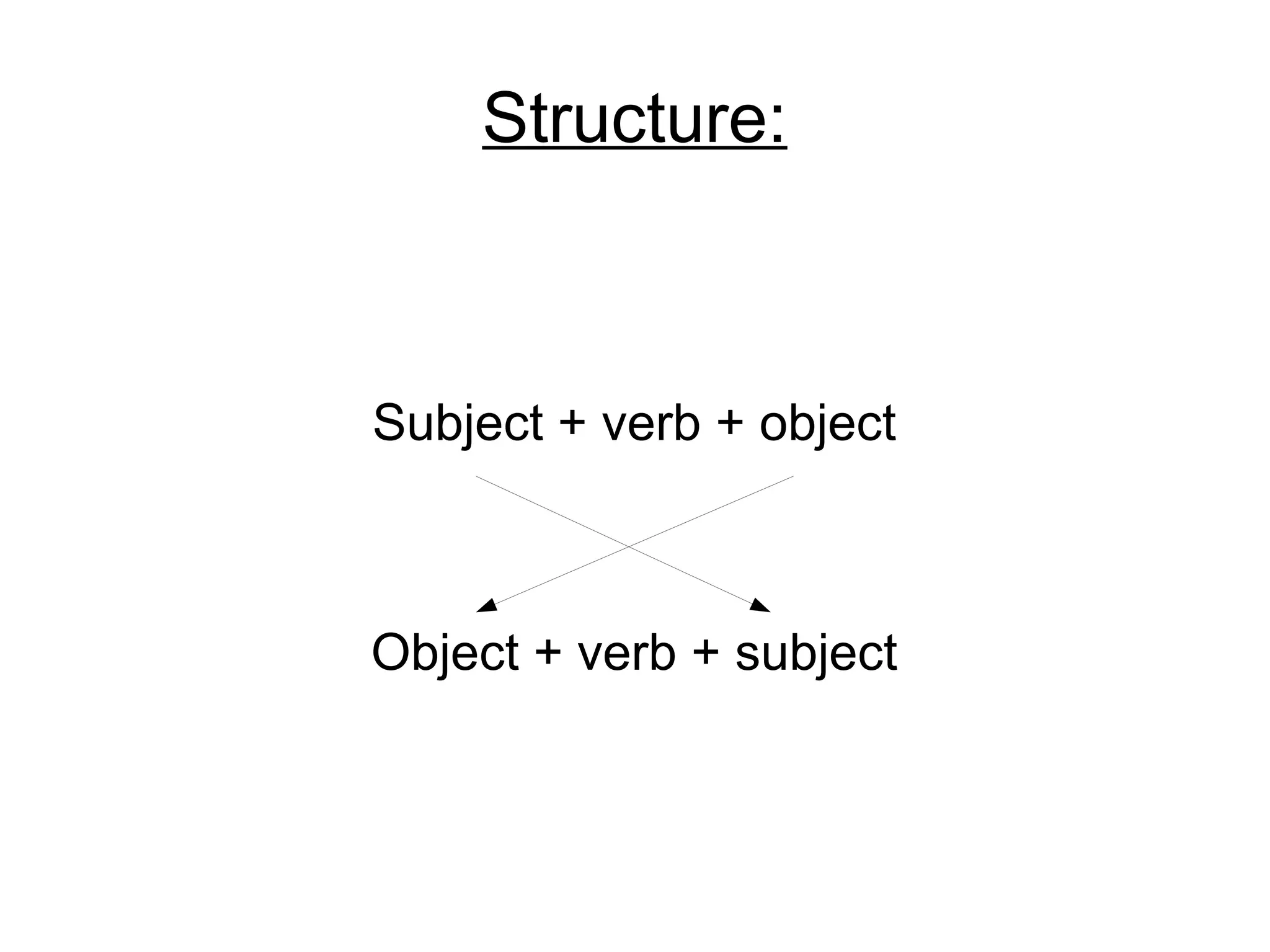
Structure:

Subject + verb + object

Object + verb + subject
●

Present Simple: subject + am/are/is + participle
●
●

●

Active voice: John writes the letter.
Passive voice: The letter is written by John.

Past Simple: subject + was/were + participle
●
●

●

Active voice: I wrote the book.
Passive voice: The book was written by me.

Present Perfect: subject + has/have + been +
participle
●
●

Active voice: Jennifer has won most medals.
Passive voice: Most medals have been won by
Jennifer.
●

Pasado perfecto: subject + had + been +
participle
●
●

●

Active voice: Her mother had bought the shoes.
Passive voice: The shoes had been bought by her
mother.

Futuro (with Will): subject + will be + participle
●

●

Active voice: The children won't open the presents
before midnight.
Passive voice: The presents won't be opened by
the children before midnight.
●

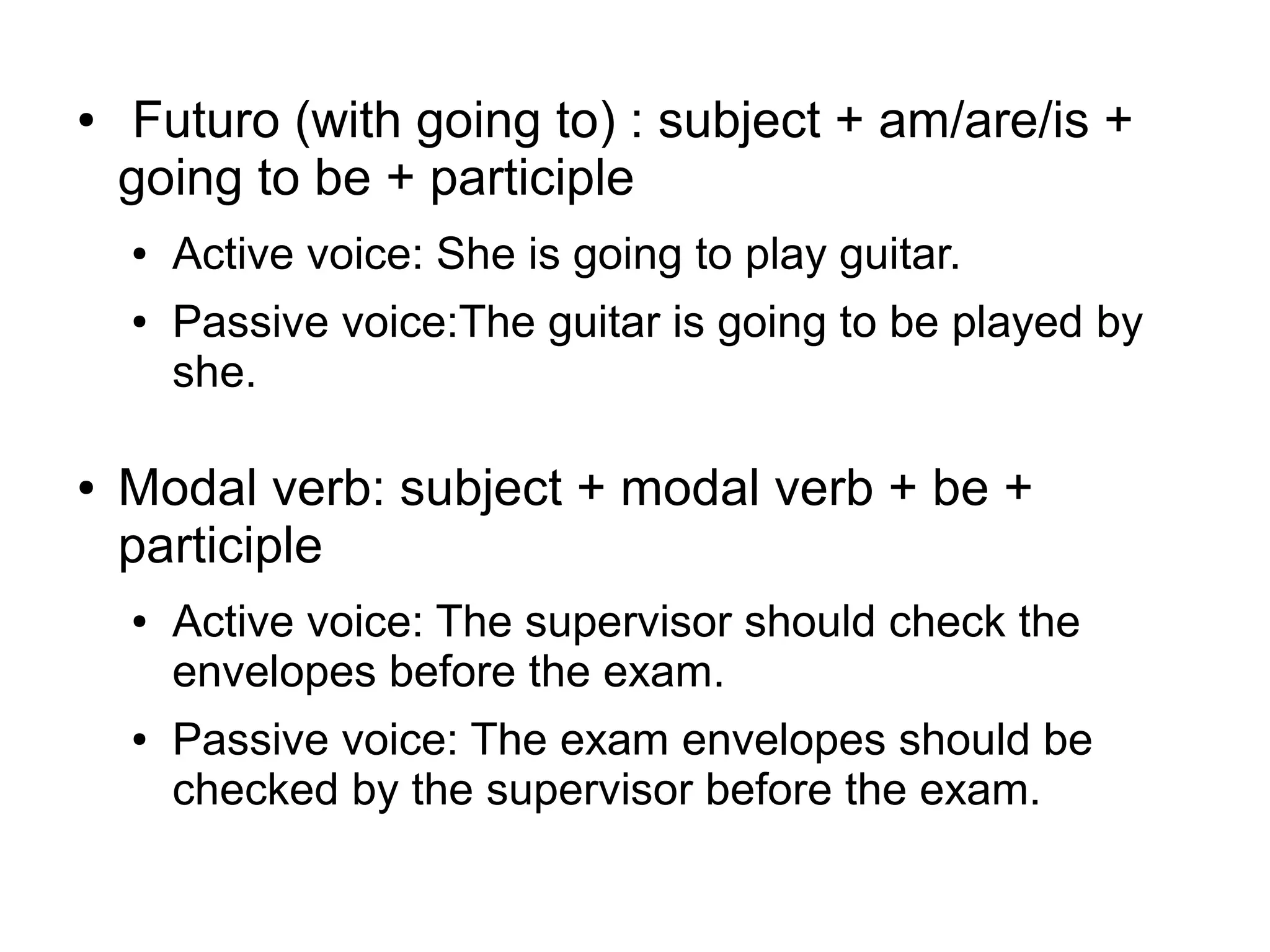
Futuro (with going to) : subject + am/are/is +
going to be + participle
●
●

●

Active voice: She is going to play guitar.
Passive voice:The guitar is going to be played by
she.

Modal verb: subject + modal verb + be +
participle
●

●

Active voice: The supervisor should check the
envelopes before the exam.
Passive voice: The exam envelopes should be
checked by the supervisor before the exam.
●

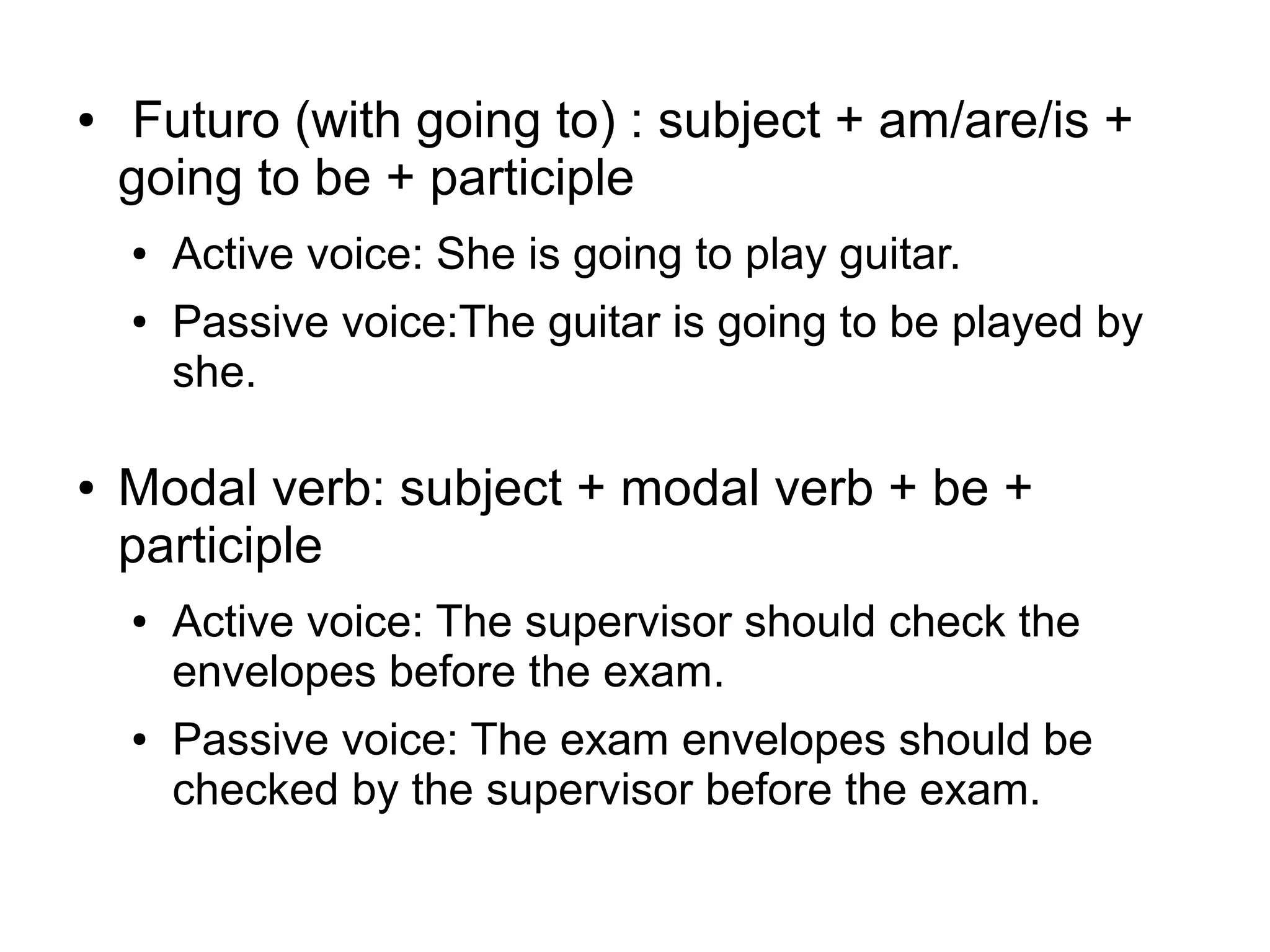
Futuro (with going to) : subject + am/are/is +
going to be + participle
●
●

●

Active voice: She is going to play guitar.
Passive voice:The guitar is going to be played by
she.

Modal verb: subject + modal verb + be +
participle
●

●

Active voice: The supervisor should check the
envelopes before the exam.
Passive voice: The exam envelopes should be
checked by the supervisor before the exam.

Presentacion slideshare

  • 1.
  • 2.
    ● ● ● ● ● ● The passive isformed exactly as in Spanish, but its use is much more common in English. The Spanish construction considers it a more formal and therefore is more commonly find ir in the print media. Of there that, sometimes, does not sound so natural. In both languages we possess the same auxiliary verb SER / TO BE, for its construction and we maintain the time of the main verb. The direct object of the active voice becomes in the subject of the passive. The subject of the passive will become the complement agent that realizes the action. The action is made with POR / BY.
  • 3.
    Structure: Subject + verb+ object Object + verb + subject
  • 4.
    ● Present Simple: subject+ am/are/is + participle ● ● ● Active voice: John writes the letter. Passive voice: The letter is written by John. Past Simple: subject + was/were + participle ● ● ● Active voice: I wrote the book. Passive voice: The book was written by me. Present Perfect: subject + has/have + been + participle ● ● Active voice: Jennifer has won most medals. Passive voice: Most medals have been won by Jennifer.
  • 5.
    ● Pasado perfecto: subject+ had + been + participle ● ● ● Active voice: Her mother had bought the shoes. Passive voice: The shoes had been bought by her mother. Futuro (with Will): subject + will be + participle ● ● Active voice: The children won't open the presents before midnight. Passive voice: The presents won't be opened by the children before midnight.
  • 6.
    ● Futuro (with goingto) : subject + am/are/is + going to be + participle ● ● ● Active voice: She is going to play guitar. Passive voice:The guitar is going to be played by she. Modal verb: subject + modal verb + be + participle ● ● Active voice: The supervisor should check the envelopes before the exam. Passive voice: The exam envelopes should be checked by the supervisor before the exam.
  • 7.
    ● Futuro (with goingto) : subject + am/are/is + going to be + participle ● ● ● Active voice: She is going to play guitar. Passive voice:The guitar is going to be played by she. Modal verb: subject + modal verb + be + participle ● ● Active voice: The supervisor should check the envelopes before the exam. Passive voice: The exam envelopes should be checked by the supervisor before the exam.