Boris Shapiro PE
Certified Sustainable Energy Management Professional
BMS Controls
experiences and projects
4/24/2016 Sustainable Projects in NJIT 1
4/24/2016 Sustainable Projects in NJIT 2
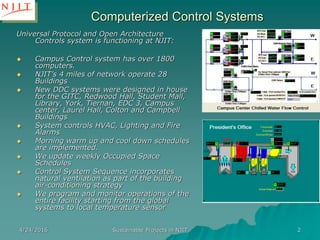
Universal Protocol and Open Architecture
Controls system is functioning at NJIT:
 Campus Control system has over 1800
computers.
 NJIT’s 4 miles of network operate 28
Buildings
 New DDC systems were designed in house
for the GITC, Redwood Hall, Student Mall,
Library, York, Tiernan, EDC 3, Campus
center, Laurel Hall, Colton and Campbell
Buildings
 System controls HVAC, Lighting and Fire
Alarms
 Morning warm up and cool down schedules
are implemented.
 We update weekly Occupied Space
Schedules
 Control System Sequence incorporates
natural ventilation as part of the building
air-conditioning strategy
 We program and monitor operations of the
entire facility starting from the global
systems to local temperature sensor
Computerized Control Systems
4/24/2016 Sustainable Projects in NJIT 3
Innovative environmental technologies applied
Campus Center, Fenster, GITC, Weston hall
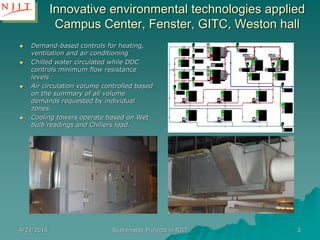
 Demand-based controls for heating,
ventilation and air conditioning
 Chilled water circulated while DDC
controls minimum flow resistance
levels
 Air circulation volume controlled based
on the summary of all volume
demands requested by individual
zones.
 Cooling towers operate based on Wet
bulb readings and Chillers load.
4/24/2016 Sustainable Projects in NJIT 4
GITC Building
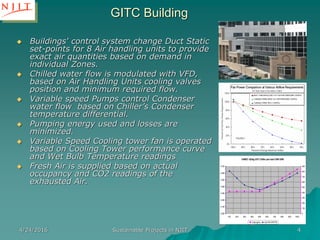
 Buildings' control system change Duct Static
set-points for 8 Air handling units to provide
exact air quantities based on demand in
individual Zones.
 Chilled water flow is modulated with VFD,
based on Air Handling Units cooling valves
position and minimum required flow.
 Variable speed Pumps control Condenser
water flow based on Chiller’s Condenser
temperature differential.
 Pumping energy used and losses are
minimized.
 Variable Speed Cooling tower fan is operated
based on Cooling Tower performance curve
and Wet Bulb Temperature readings
 Fresh Air is supplied based on actual
occupancy and CO2 readings of the
exhausted Air.
CHWST 42Deg GITC Chiller part load CHW GPM
0
100
200
300
400
500
600
700
800
900
100%90%80%70%60%50%40%30%20%15%
0.000
0.100
0.200
0.300
0.400
0.500
0.600
0.700
Evap (gpm) Sys Perf (KW/TR)
4/24/2016 Sustainable Projects in NJIT 5
Controlling a System of 2 Chillers to enable an
ultra Efficient Cooling Plant
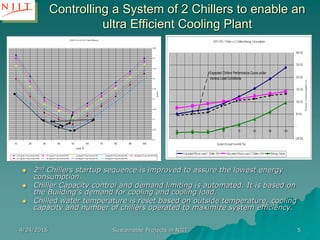
 2nd Chillers startup sequence is improved to assure the lowest energy
consumption.
 Chiller Capacity control and demand limiting is automated. It is based on
the Building’s demand for cooling and cooling load.
 Chilled water temperature is reset based on outside temperature, cooling
capacity and number of chillers operated to maximize system efficiency.
Expected Chillers Performance Curve under
Various Load Conditions
4/24/2016 Sustainable Projects in NJIT 6
Some of the Sustainable features:
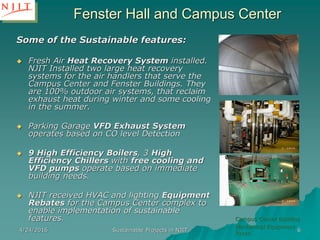
 Fresh Air Heat Recovery System installed.
NJIT Installed two large heat recovery
systems for the air handlers that serve the
Campus Center and Fenster Buildings. They
are 100% outdoor air systems, that reclaim
exhaust heat during winter and some cooling
in the summer.
 Parking Garage VFD Exhaust System
operates based on CO level Detection
 9 High Efficiency Boilers, 3 High
Efficiency Chillers with free cooling and
VFD pumps operate based on immediate
building needs.
 NJIT received HVAC and lighting Equipment
Rebates for the Campus Center complex to
enable implementation of sustainable
features. Campus Center Building
Mechanical Equipment
Room
Fenster Hall and Campus Center
4/24/2016 Sustainable Projects in NJIT 7
Demand Based HVAC Services
 2 Buildings' control system change Duct
Static set-points for 7 Air handling units to
provide exact air quantities based on
demand in 230 individual VAV Zones.
 Variable Speed Cooling tower fan is
operated based on Cooling Tower
performance curve and Wet Bulb
Temperature readings
 To minimize resistance to water flow and
resulting heat gain:
– in the Secondary chilled water loop, water
flow is reset based on Air Handling Units
cooling valves position.
– Primary Condenser water flow is based on
Condenser temperature differential.
– Chilled water flow is based on the total flow
demand from the secondary loop.
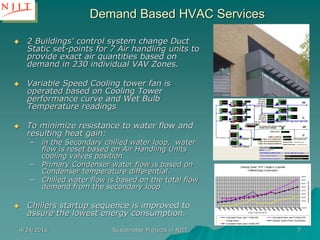
 Chillers startup sequence is improved to
assure the lowest energy consumption.
Campus Center VFD 1 single or 2 parralel
ChillersEnergy Consumption
(100.00)
-
100.00
200.00
300.00
400.00
500.00
600.00
700.00
800.00
200%
190%
180%
170%
160%
150%
140%
130%
120%
110%
100%
90%
80%
70%
60%
50%
40%
30%
20%
System % load from 605 Ton
PowerConsumptionkW
Calculated Power used 1 Chiller KW Calculated Power used 2 Chillers KW
Energy Saved Expecter System Power Consumption
Calculated Power used 3 Chillers KW
4/24/2016 Sustainable Projects in NJIT 8
The green renewal of Oak Hall
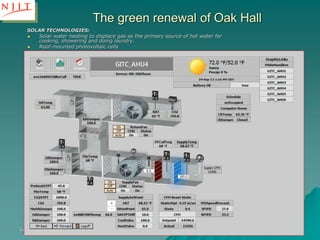
SOLAR TECHNOLOGIES:
 Solar water heating to displace gas as the primary source of hot water for
cooking, showering and doing laundry.
 Roof-mounted photovoltaic cells
ELECTRICAL SYSTEMS:
 Regenerative elevator technology that will capture energy generated
when an elevator descends or rises
 High-efficiency lighting in residence and common areas utilizing the
most advanced fluorescent technology with electronic ballasts.
4/24/2016 Sustainable Projects in NJIT 9
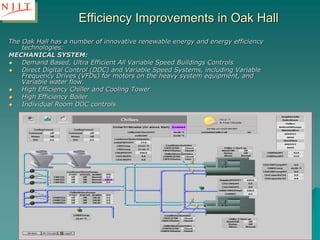
Efficiency Improvements in Oak Hall
The Oak Hall has a number of innovative renewable energy and energy efficiency
technologies:
MECHANICAL SYSTEM:
 Demand Based, Ultra Efficient All Variable Speed Buildings Controls
 Direct Digital Control (DDC) and Variable Speed Systems, including Variable
Frequency Drives (VFDs) for motors on the heavy system equipment, and
Variable water flow.
 High Efficiency Chiller and Cooling Tower
 High Efficiency Boiler
 Individual Room DDC controls

Boris Shapiro Controls expeiences

  • 1.
    Boris Shapiro PE CertifiedSustainable Energy Management Professional BMS Controls experiences and projects 4/24/2016 Sustainable Projects in NJIT 1
  • 2.
    4/24/2016 Sustainable Projectsin NJIT 2 Universal Protocol and Open Architecture Controls system is functioning at NJIT:  Campus Control system has over 1800 computers.  NJIT’s 4 miles of network operate 28 Buildings  New DDC systems were designed in house for the GITC, Redwood Hall, Student Mall, Library, York, Tiernan, EDC 3, Campus center, Laurel Hall, Colton and Campbell Buildings  System controls HVAC, Lighting and Fire Alarms  Morning warm up and cool down schedules are implemented.  We update weekly Occupied Space Schedules  Control System Sequence incorporates natural ventilation as part of the building air-conditioning strategy  We program and monitor operations of the entire facility starting from the global systems to local temperature sensor Computerized Control Systems
  • 3.
    4/24/2016 Sustainable Projectsin NJIT 3 Innovative environmental technologies applied Campus Center, Fenster, GITC, Weston hall  Demand-based controls for heating, ventilation and air conditioning  Chilled water circulated while DDC controls minimum flow resistance levels  Air circulation volume controlled based on the summary of all volume demands requested by individual zones.  Cooling towers operate based on Wet bulb readings and Chillers load.
  • 4.
    4/24/2016 Sustainable Projectsin NJIT 4 GITC Building  Buildings' control system change Duct Static set-points for 8 Air handling units to provide exact air quantities based on demand in individual Zones.  Chilled water flow is modulated with VFD, based on Air Handling Units cooling valves position and minimum required flow.  Variable speed Pumps control Condenser water flow based on Chiller’s Condenser temperature differential.  Pumping energy used and losses are minimized.  Variable Speed Cooling tower fan is operated based on Cooling Tower performance curve and Wet Bulb Temperature readings  Fresh Air is supplied based on actual occupancy and CO2 readings of the exhausted Air. CHWST 42Deg GITC Chiller part load CHW GPM 0 100 200 300 400 500 600 700 800 900 100%90%80%70%60%50%40%30%20%15% 0.000 0.100 0.200 0.300 0.400 0.500 0.600 0.700 Evap (gpm) Sys Perf (KW/TR)
  • 5.
    4/24/2016 Sustainable Projectsin NJIT 5 Controlling a System of 2 Chillers to enable an ultra Efficient Cooling Plant  2nd Chillers startup sequence is improved to assure the lowest energy consumption.  Chiller Capacity control and demand limiting is automated. It is based on the Building’s demand for cooling and cooling load.  Chilled water temperature is reset based on outside temperature, cooling capacity and number of chillers operated to maximize system efficiency. Expected Chillers Performance Curve under Various Load Conditions
  • 6.
    4/24/2016 Sustainable Projectsin NJIT 6 Some of the Sustainable features:  Fresh Air Heat Recovery System installed. NJIT Installed two large heat recovery systems for the air handlers that serve the Campus Center and Fenster Buildings. They are 100% outdoor air systems, that reclaim exhaust heat during winter and some cooling in the summer.  Parking Garage VFD Exhaust System operates based on CO level Detection  9 High Efficiency Boilers, 3 High Efficiency Chillers with free cooling and VFD pumps operate based on immediate building needs.  NJIT received HVAC and lighting Equipment Rebates for the Campus Center complex to enable implementation of sustainable features. Campus Center Building Mechanical Equipment Room Fenster Hall and Campus Center
  • 7.
    4/24/2016 Sustainable Projectsin NJIT 7 Demand Based HVAC Services  2 Buildings' control system change Duct Static set-points for 7 Air handling units to provide exact air quantities based on demand in 230 individual VAV Zones.  Variable Speed Cooling tower fan is operated based on Cooling Tower performance curve and Wet Bulb Temperature readings  To minimize resistance to water flow and resulting heat gain: – in the Secondary chilled water loop, water flow is reset based on Air Handling Units cooling valves position. – Primary Condenser water flow is based on Condenser temperature differential. – Chilled water flow is based on the total flow demand from the secondary loop.  Chillers startup sequence is improved to assure the lowest energy consumption. Campus Center VFD 1 single or 2 parralel ChillersEnergy Consumption (100.00) - 100.00 200.00 300.00 400.00 500.00 600.00 700.00 800.00 200% 190% 180% 170% 160% 150% 140% 130% 120% 110% 100% 90% 80% 70% 60% 50% 40% 30% 20% System % load from 605 Ton PowerConsumptionkW Calculated Power used 1 Chiller KW Calculated Power used 2 Chillers KW Energy Saved Expecter System Power Consumption Calculated Power used 3 Chillers KW
  • 8.
    4/24/2016 Sustainable Projectsin NJIT 8 The green renewal of Oak Hall SOLAR TECHNOLOGIES:  Solar water heating to displace gas as the primary source of hot water for cooking, showering and doing laundry.  Roof-mounted photovoltaic cells ELECTRICAL SYSTEMS:  Regenerative elevator technology that will capture energy generated when an elevator descends or rises  High-efficiency lighting in residence and common areas utilizing the most advanced fluorescent technology with electronic ballasts.
  • 9.
    4/24/2016 Sustainable Projectsin NJIT 9 Efficiency Improvements in Oak Hall The Oak Hall has a number of innovative renewable energy and energy efficiency technologies: MECHANICAL SYSTEM:  Demand Based, Ultra Efficient All Variable Speed Buildings Controls  Direct Digital Control (DDC) and Variable Speed Systems, including Variable Frequency Drives (VFDs) for motors on the heavy system equipment, and Variable water flow.  High Efficiency Chiller and Cooling Tower  High Efficiency Boiler  Individual Room DDC controls