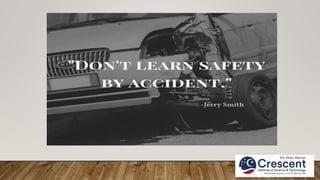
PASSIVE SAFETY
BY
MOHAMED SHARAF - 180021601051
MOHAMED SUHAIL K A J -180021601052
MOHAMED SUHAIL N -180021601053
INTRODUCTION:
• Passive safety:
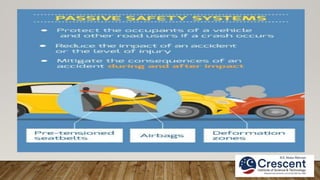
• Passive driving safety refers to systems in the car that protect the driver and
passengers from injury if an accident occurs.
• Passive safety systems play a role in
Limiting/containing the damage/ injuries caused to driver, passengers and
pedestrians in the event of a crash/ accident.
• Active safety:
Active safety seeks to minimize the chances of having an accident while
circulating in a road.
SAFETY SYSTEMS:
• There are
• Airbags
• Sealtbelts
• Crumble zone
• Laminated windshield
AIRBAGS:
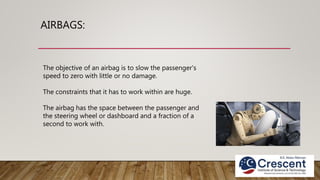
The objective of an airbag is to slow the passenger's
speed to zero with little or no damage.
The constraints that it has to work within are huge.
The airbag has the space between the passenger and
the steering wheel or dashboard and a fraction of a
second to work with.
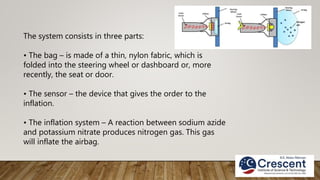
The system consists in three parts:
• The bag – is made of a thin, nylon fabric, which is
folded into the steering wheel or dashboard or, more
recently, the seat or door.
• The sensor – the device that gives the order to the
inflation.
• The inflation system – A reaction between sodium azide
and potassium nitrate produces nitrogen gas. This gas
will inflate the airbag.
SEATBELTS:
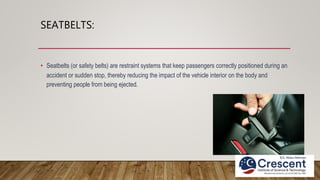
• Seatbelts (or safety belts) are restraint systems that keep passengers correctly positioned during an
accident or sudden stop, thereby reducing the impact of the vehicle interior on the body and
preventing people from being ejected.
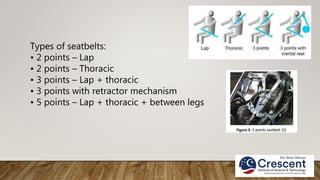
Types of seatbelts:
• 2 points – Lap
• 2 points – Thoracic
• 3 points – Lap + thoracic
• 3 points with retractor mechanism
• 5 points – Lap + thoracic + between legs
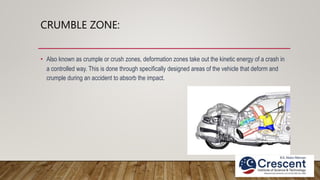
CRUMBLE ZONE:
• Also known as crumple or crush zones, deformation zones take out the kinetic energy of a crash in
a controlled way. This is done through specifically designed areas of the vehicle that deform and
crumple during an accident to absorb the impact.
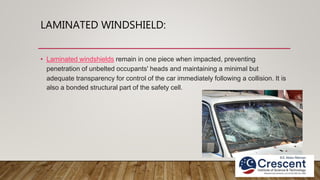
LAMINATED WINDSHIELD:
• Laminated windshields remain in one piece when impacted, preventing
penetration of unbelted occupants' heads and maintaining a minimal but
adequate transparency for control of the car immediately following a collision. It is
also a bonded structural part of the safety cell.
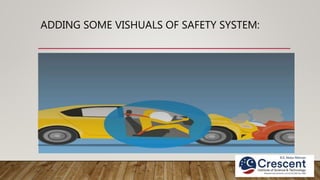
ADDING SOME VISHUALS OF SAFETY SYSTEM:
CONCLUSION:
• Over the past decades, passive safety systems have made a major contribution to road safety by
reducing the consequences of accidents. As a result, most European vehicles now score highly in
crash tests and passive safety technology is reaching a level of maturity.
• Passive measures will remain essential in the future and won’t disappear from vehicles.
Technologies and design measures that limit the impact of a crash may be taken for granted today,
but without them the death toll on Europe’s roads would be far greater.
PASSIVE SAFETY SYSTEMS

PASSIVE SAFETY SYSTEMS

  • 1.
    PASSIVE SAFETY BY MOHAMED SHARAF- 180021601051 MOHAMED SUHAIL K A J -180021601052 MOHAMED SUHAIL N -180021601053
  • 2.
    INTRODUCTION: • Passive safety: •Passive driving safety refers to systems in the car that protect the driver and passengers from injury if an accident occurs. • Passive safety systems play a role in Limiting/containing the damage/ injuries caused to driver, passengers and pedestrians in the event of a crash/ accident. • Active safety: Active safety seeks to minimize the chances of having an accident while circulating in a road.
  • 4.
    SAFETY SYSTEMS: • Thereare • Airbags • Sealtbelts • Crumble zone • Laminated windshield
  • 5.
    AIRBAGS: The objective ofan airbag is to slow the passenger's speed to zero with little or no damage. The constraints that it has to work within are huge. The airbag has the space between the passenger and the steering wheel or dashboard and a fraction of a second to work with.
  • 6.
    The system consistsin three parts: • The bag – is made of a thin, nylon fabric, which is folded into the steering wheel or dashboard or, more recently, the seat or door. • The sensor – the device that gives the order to the inflation. • The inflation system – A reaction between sodium azide and potassium nitrate produces nitrogen gas. This gas will inflate the airbag.
  • 7.
    SEATBELTS: • Seatbelts (orsafety belts) are restraint systems that keep passengers correctly positioned during an accident or sudden stop, thereby reducing the impact of the vehicle interior on the body and preventing people from being ejected.
  • 8.
    Types of seatbelts: •2 points – Lap • 2 points – Thoracic • 3 points – Lap + thoracic • 3 points with retractor mechanism • 5 points – Lap + thoracic + between legs
  • 9.
    CRUMBLE ZONE: • Alsoknown as crumple or crush zones, deformation zones take out the kinetic energy of a crash in a controlled way. This is done through specifically designed areas of the vehicle that deform and crumple during an accident to absorb the impact.
  • 10.
    LAMINATED WINDSHIELD: • Laminatedwindshields remain in one piece when impacted, preventing penetration of unbelted occupants' heads and maintaining a minimal but adequate transparency for control of the car immediately following a collision. It is also a bonded structural part of the safety cell.
  • 11.
    ADDING SOME VISHUALSOF SAFETY SYSTEM:
  • 12.
    CONCLUSION: • Over thepast decades, passive safety systems have made a major contribution to road safety by reducing the consequences of accidents. As a result, most European vehicles now score highly in crash tests and passive safety technology is reaching a level of maturity. • Passive measures will remain essential in the future and won’t disappear from vehicles. Technologies and design measures that limit the impact of a crash may be taken for granted today, but without them the death toll on Europe’s roads would be far greater.