A Seminar onA Seminar on
AUTOMOBILE SAFETYAUTOMOBILE SAFETY
INTRODUCTIONINTRODUCTION
Automobile Industry is undergoing a BIGAutomobile Industry is undergoing a BIG
TRANSFORMATION never seen before.TRANSFORMATION never seen before.
Today CAR’s are not only used for personalToday CAR’s are not only used for personal
Transport but they are ENCOMPASSED withTransport but they are ENCOMPASSED with
Entertainment that vies with the fedility of your HOMEEntertainment that vies with the fedility of your HOME
THEATRETHEATRE
Seating arrangement more comfortable than yourSeating arrangement more comfortable than your
RECLINERRECLINER
SAFETY FEATURESSAFETY FEATURES making your car safer than a TANKmaking your car safer than a TANK
•Globally car companies SpendGlobally car companies Spend
nearly $36 billon annually fornearly $36 billon annually for
influencing new TECHNOLOGIESinfluencing new TECHNOLOGIES
into their cars.into their cars.
•Some of the big advancement in
Automotive Industry in last 10years
have come in a area of SAFETY.
In addition to Telematics based Services like
• Digital Satellite Radio
•In car E-mail
•GPS systems
Recent Advancement in Braking Technology have led to
•Shorter stopping distance
•Increased Control in PANIC situation
•More control on CURVED turns
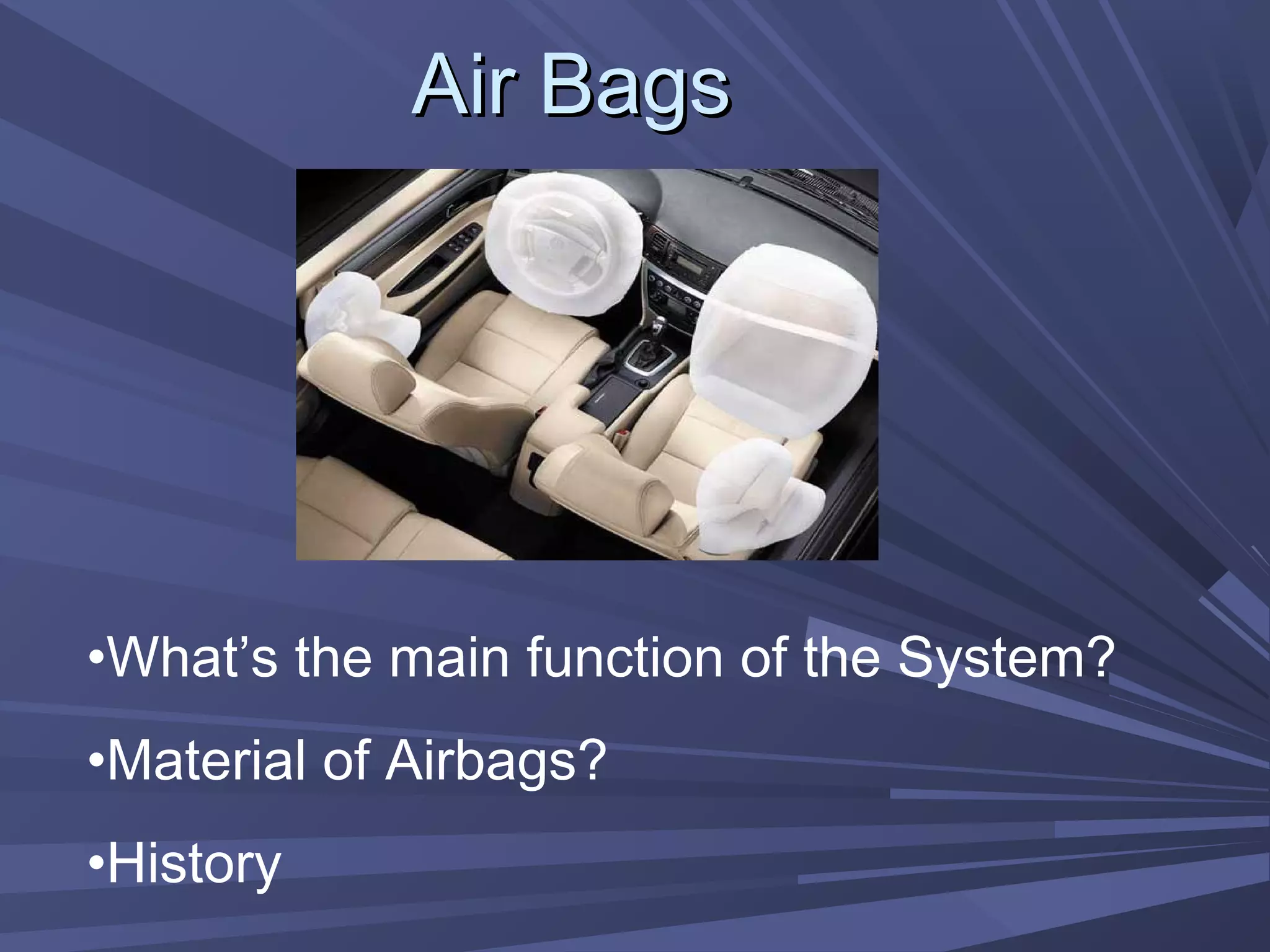
Air BagsAir Bags
•What’s the main function of the System?
•Material of Airbags?
•History
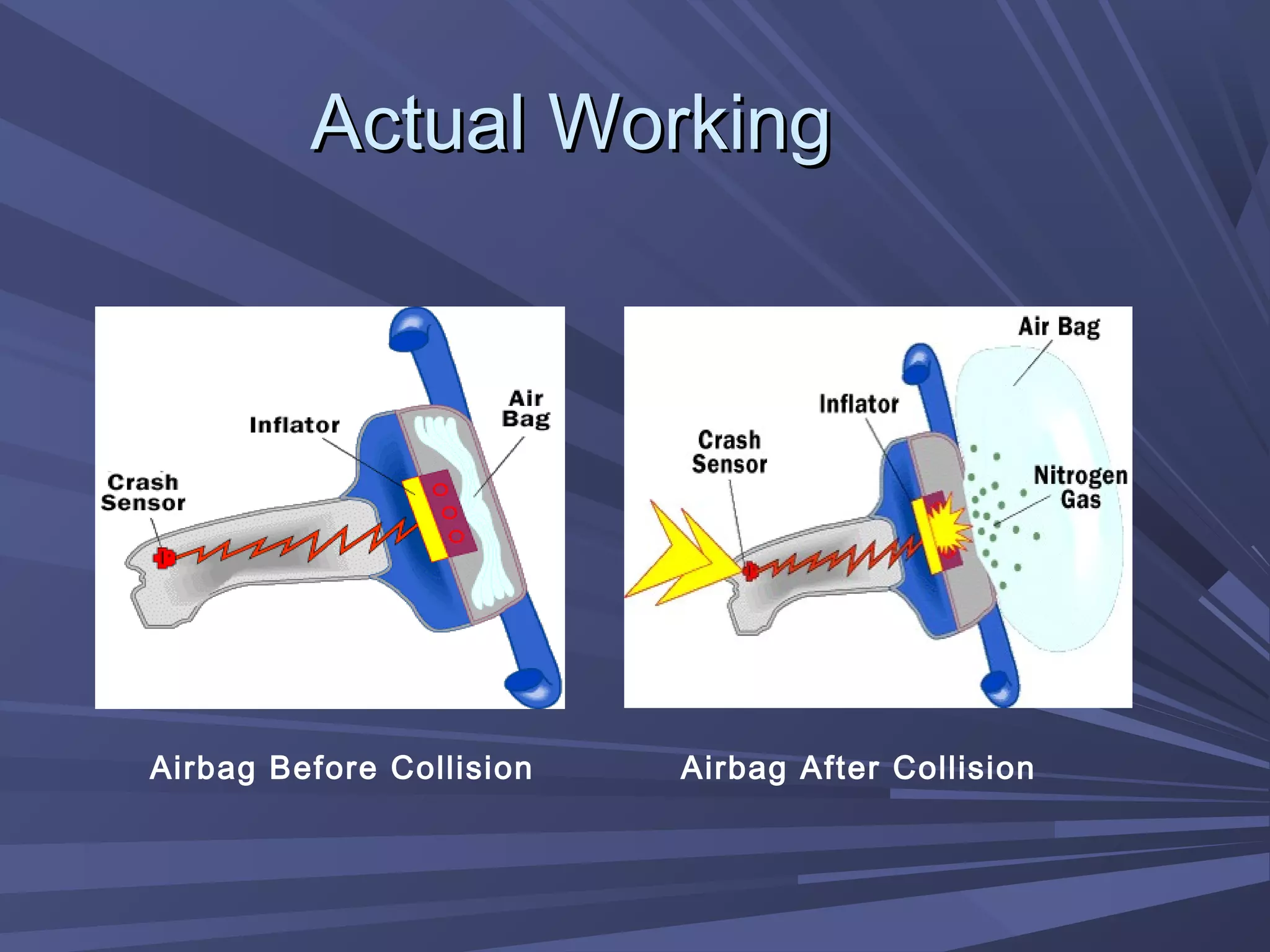
Actual WorkingActual Working
Airbag Before Collision Airbag After Collision
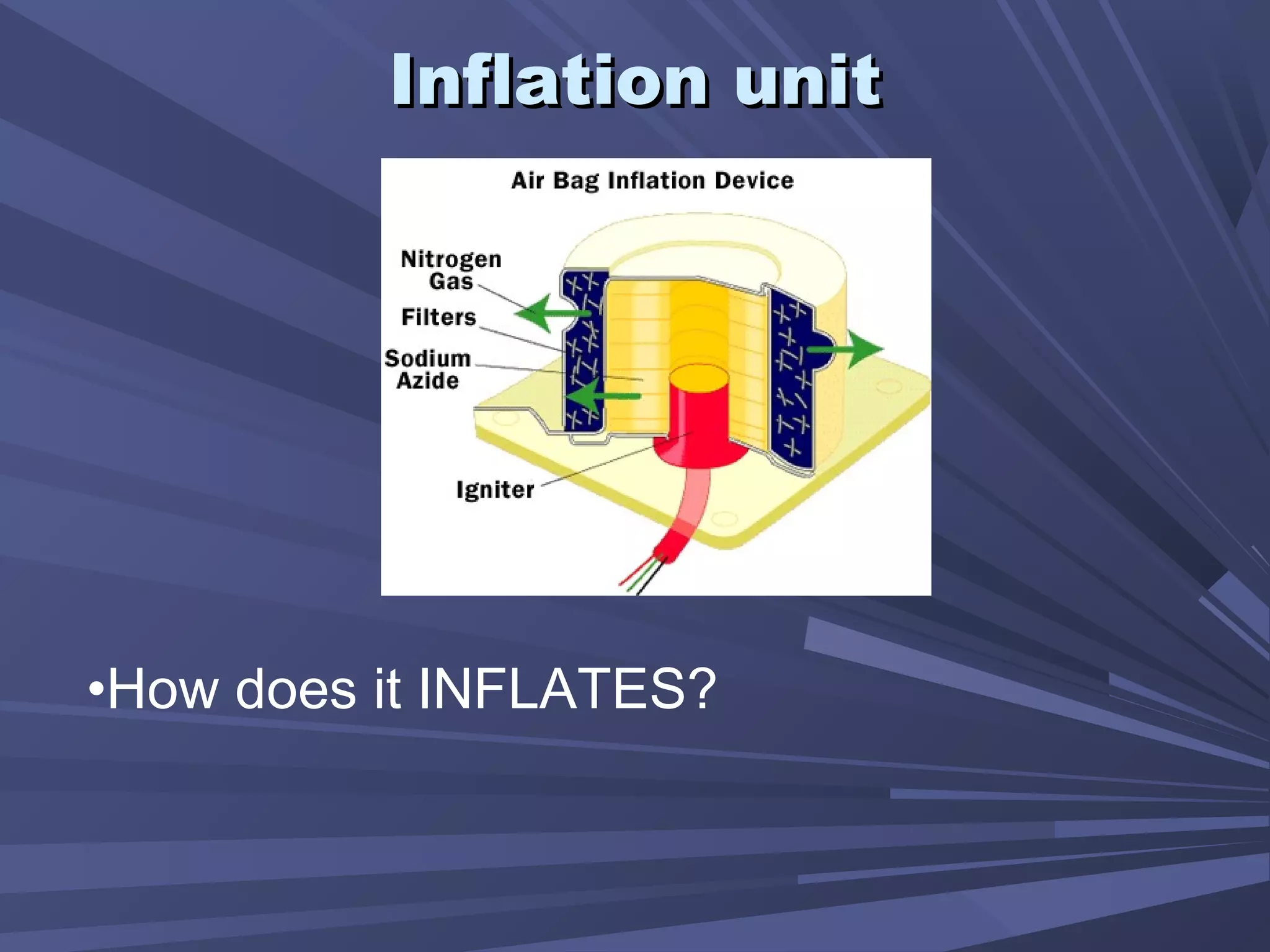
Inflation unitInflation unit
•How does it INFLATES?
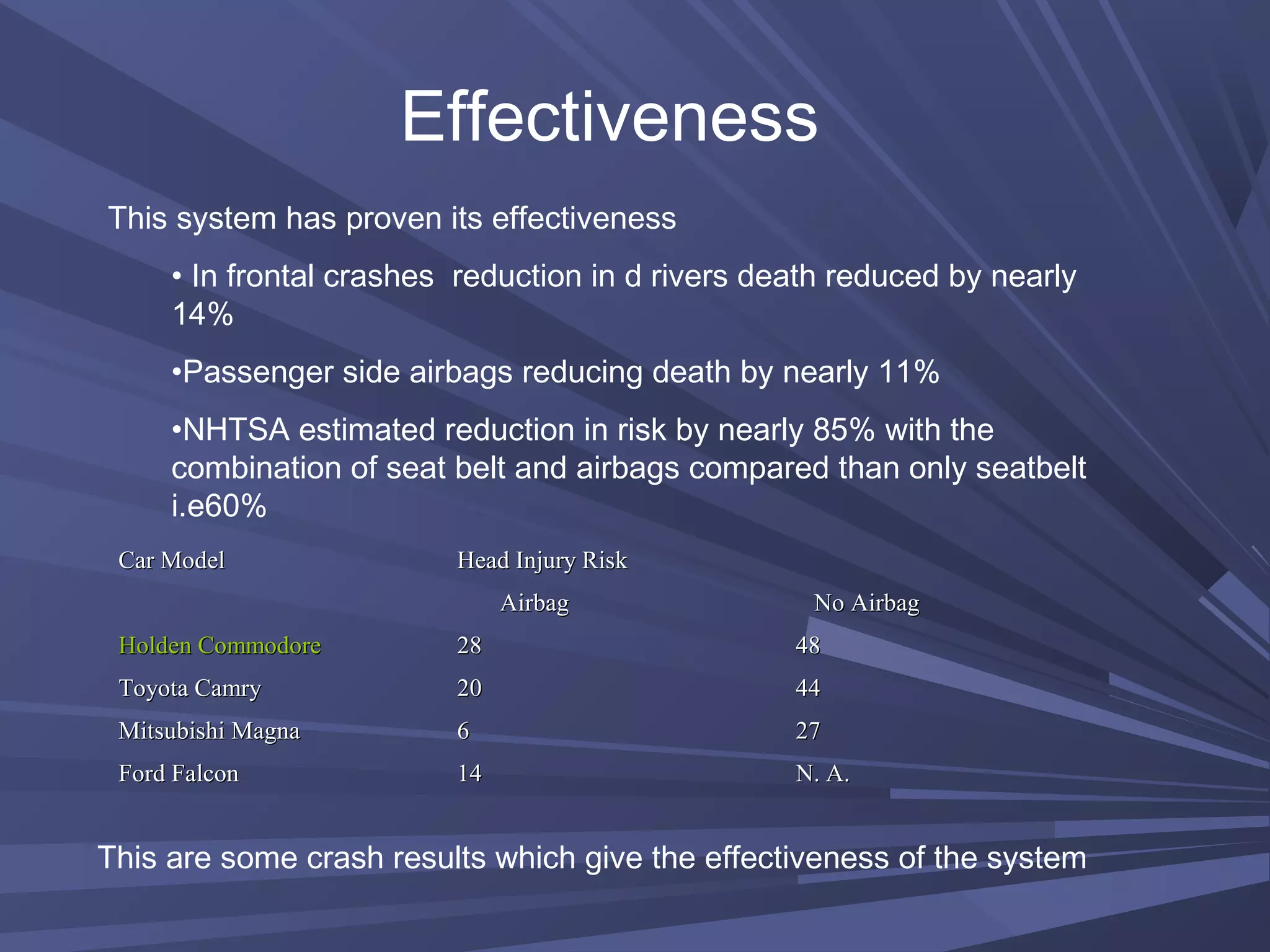
Effectiveness
This system has proven its effectiveness
• In frontal crashes reduction in d rivers death reduced by nearly
14%
•Passenger side airbags reducing death by nearly 11%
•NHTSA estimated reduction in risk by nearly 85% with the
combination of seat belt and airbags compared than only seatbelt
i.e60%
Car ModelCar Model Head Injury RiskHead Injury Risk
AirbagAirbag No AirbagNo Airbag
Holden CommodoreHolden Commodore 2828 4848
Toyota CamryToyota Camry 2020 4444
Mitsubishi MagnaMitsubishi Magna 66 2727
Ford FalconFord Falcon 1414 N. A.N. A.
This are some crash results which give the effectiveness of the system
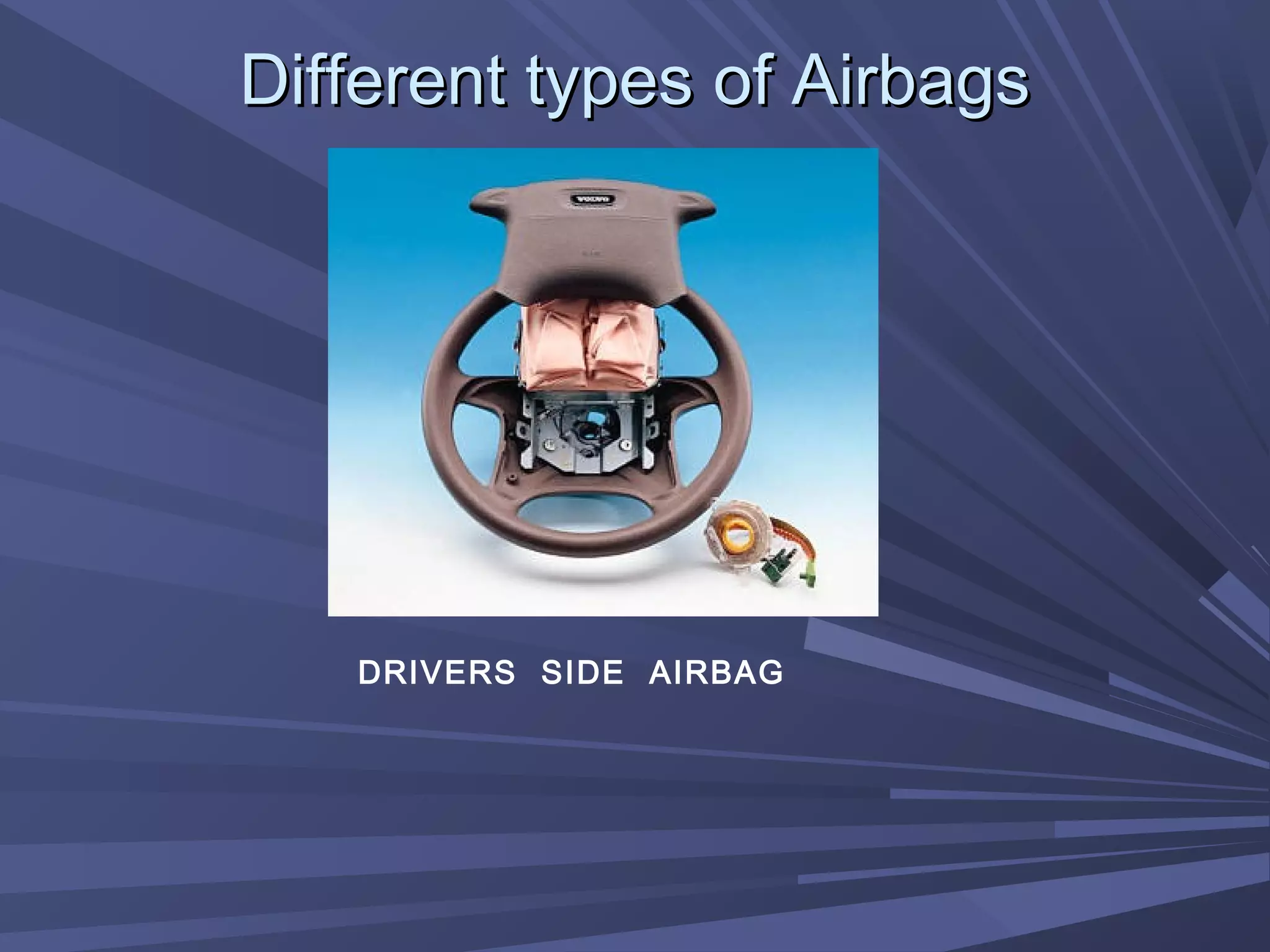
Different types of AirbagsDifferent types of Airbags
DRIVERS SIDE AIRBAG
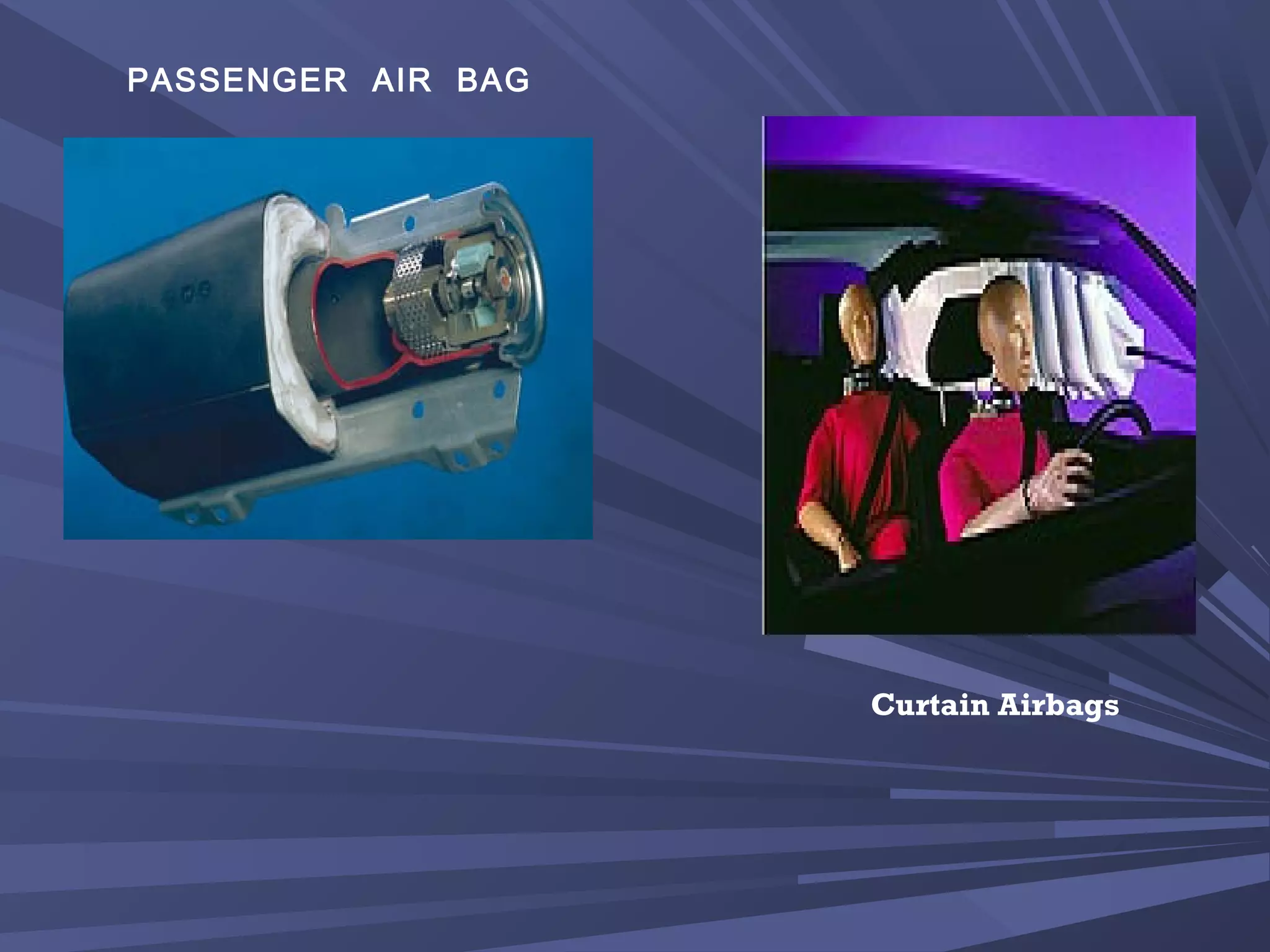
PASSENGER AIR BAG
Curtain Airbags
Anti-lock Braking SystemAnti-lock Braking System
• Introduction?
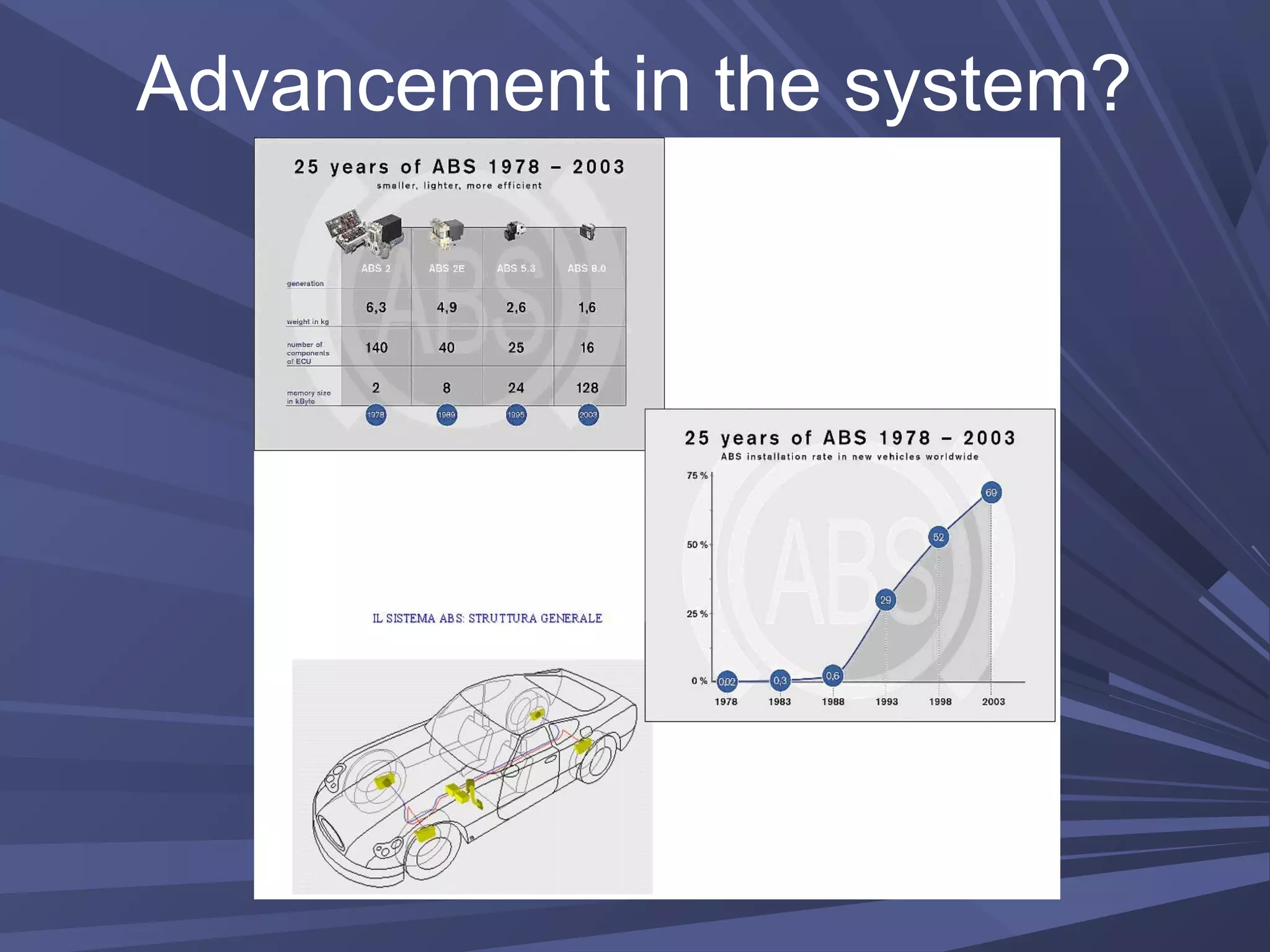
•Advancement in the system?
•Working?
Advancement in the system?
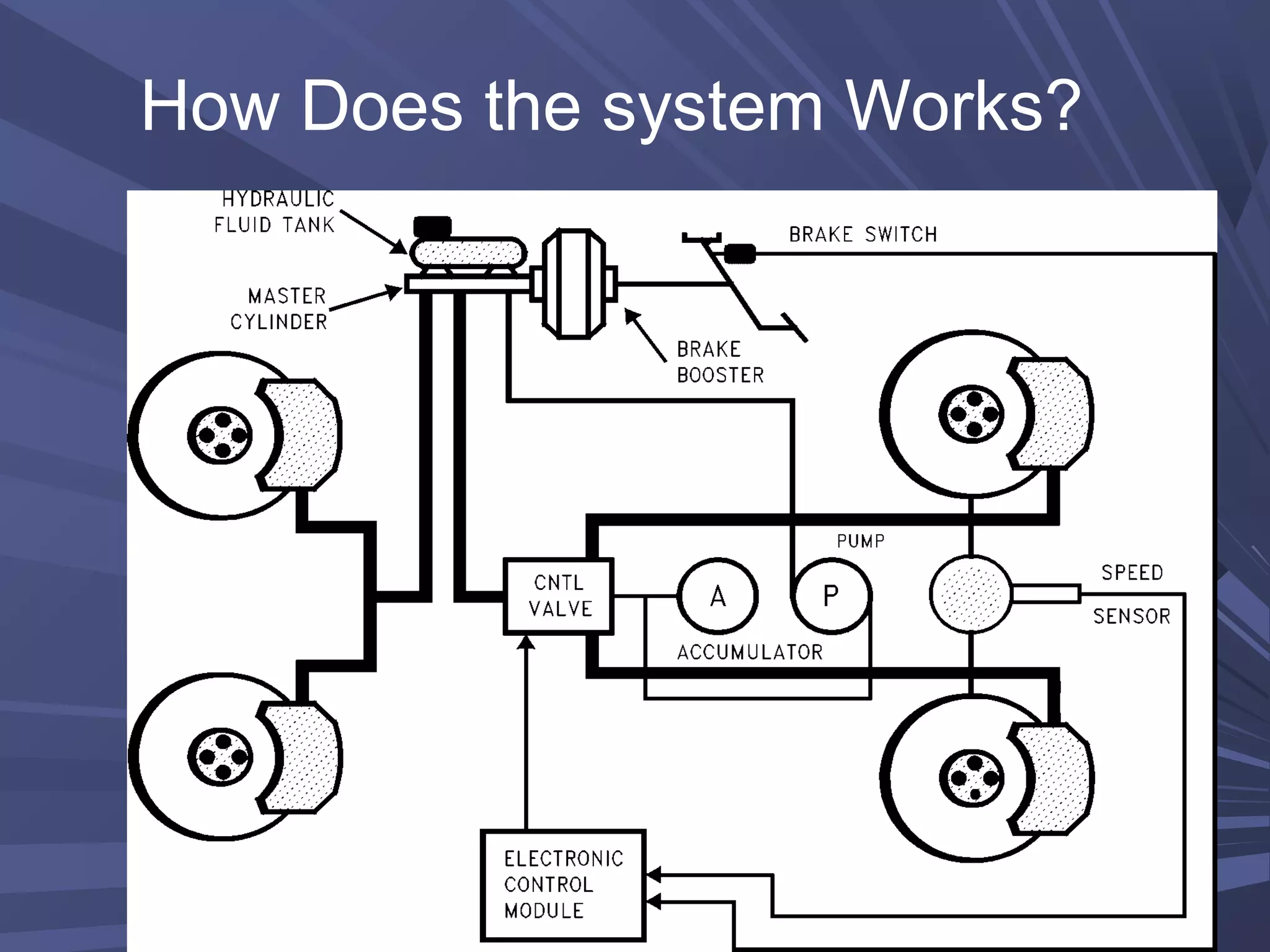
How Does the system Works?
Working
Conventional BrakingConventional Braking
Whole process is controlled by driver applied breakWhole process is controlled by driver applied break
paddle pressurepaddle pressure;;
ABS BrakingABS Braking
Electric Sensors monitor the wheel speedElectric Sensors monitor the wheel speed
ABS microprocessor Compares the wheel speedABS microprocessor Compares the wheel speed
Control valve is energized.Control valve is energized.
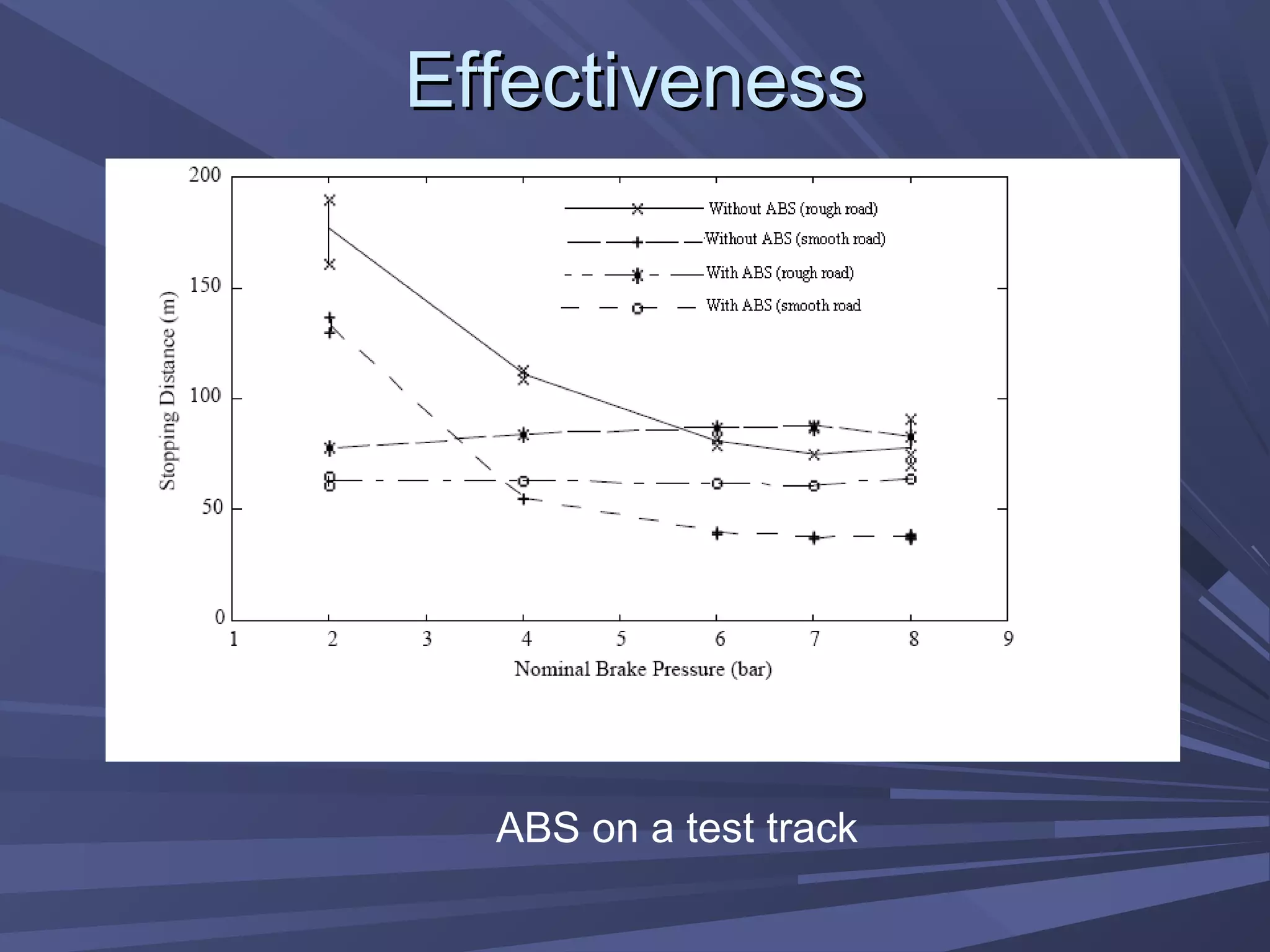
EffectivenessEffectiveness
ABS on a test track
Advantages:
Achives the Shortest Stopping distance
Better chance on Steering around obstacle
Reduced risk of skidding
Disadvantages:
Precautions should be taken while
driving
Proved less effective on gravel road or
road compacted by snow
Traction ControlTraction Control
Next Generation ABSNext Generation ABS
Uses ABS as a Building block.Uses ABS as a Building block.
Can be is a combination of ABS & EngineCan be is a combination of ABS & Engine
controlcontrol
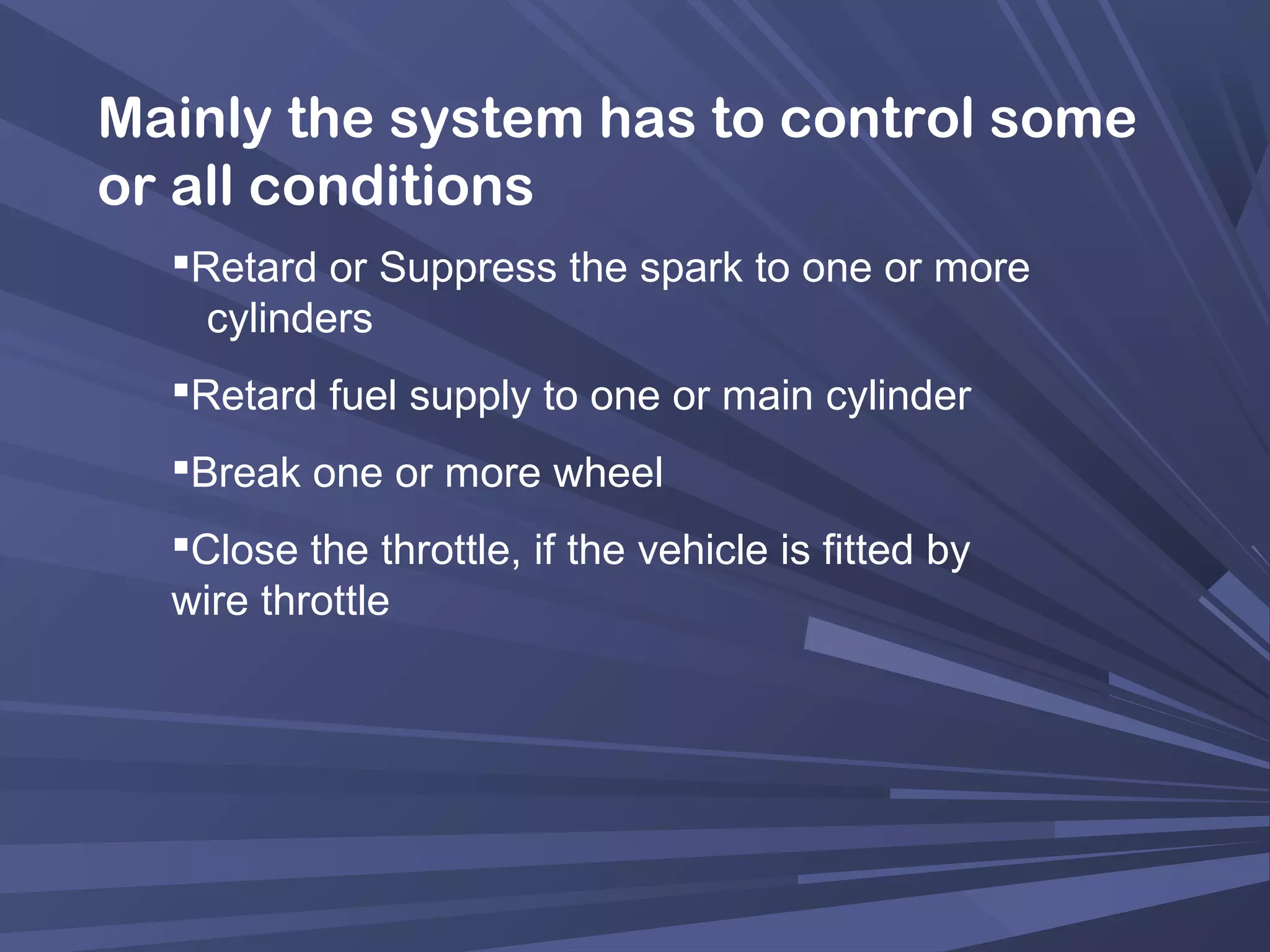
Mainly the system has to control some
or all conditions
Retard or Suppress the spark to one or more
cylinders
Retard fuel supply to one or main cylinder
Break one or more wheel
Close the throttle, if the vehicle is fitted by
wire throttle
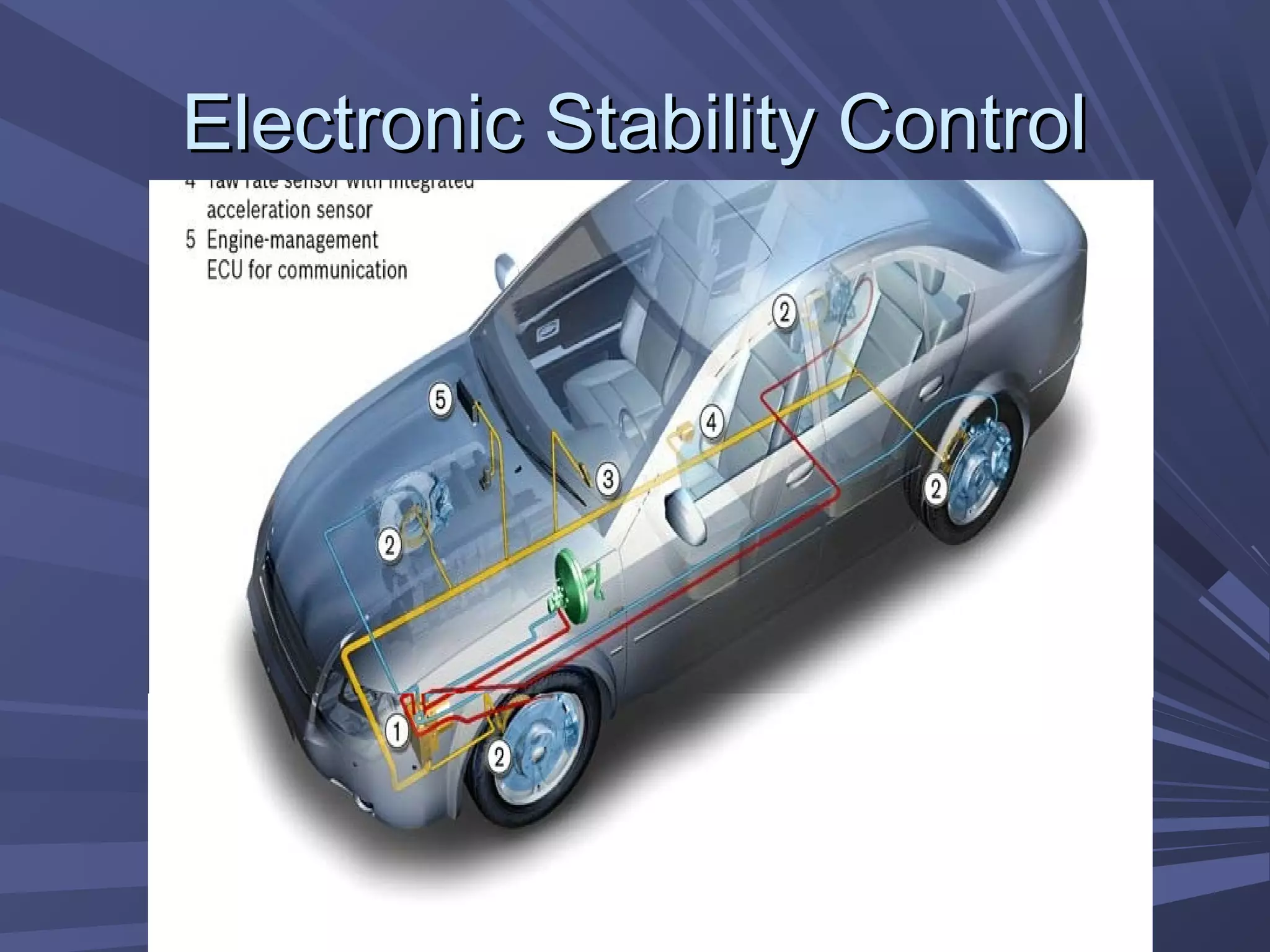
Electronic Stability ControlElectronic Stability Control
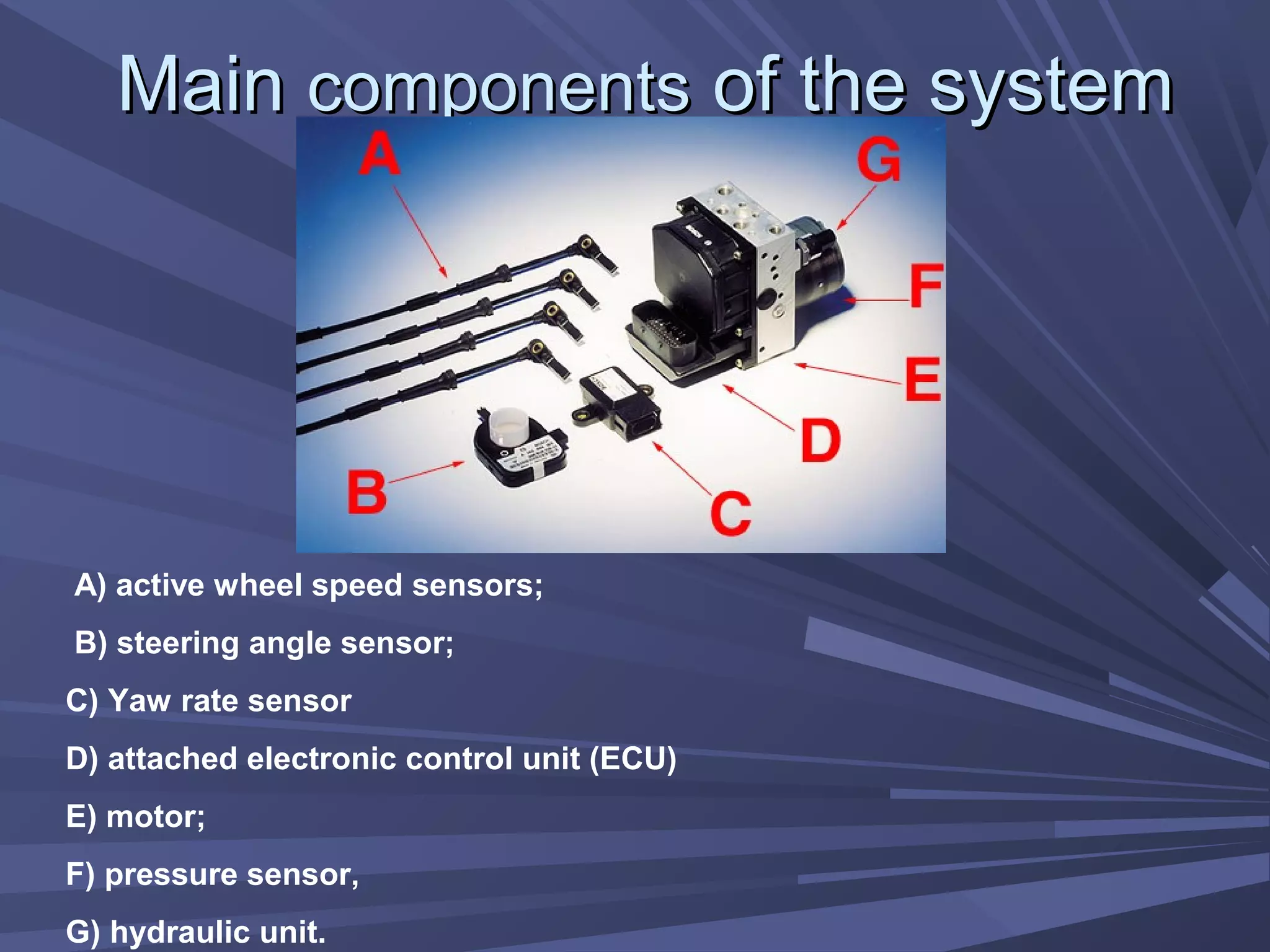
MainMain componentscomponents of the systemof the system
A) active wheel speed sensors;
B) steering angle sensor;
C) Yaw rate sensor
D) attached electronic control unit (ECU)
E) motor;
F) pressure sensor,
G) hydraulic unit.
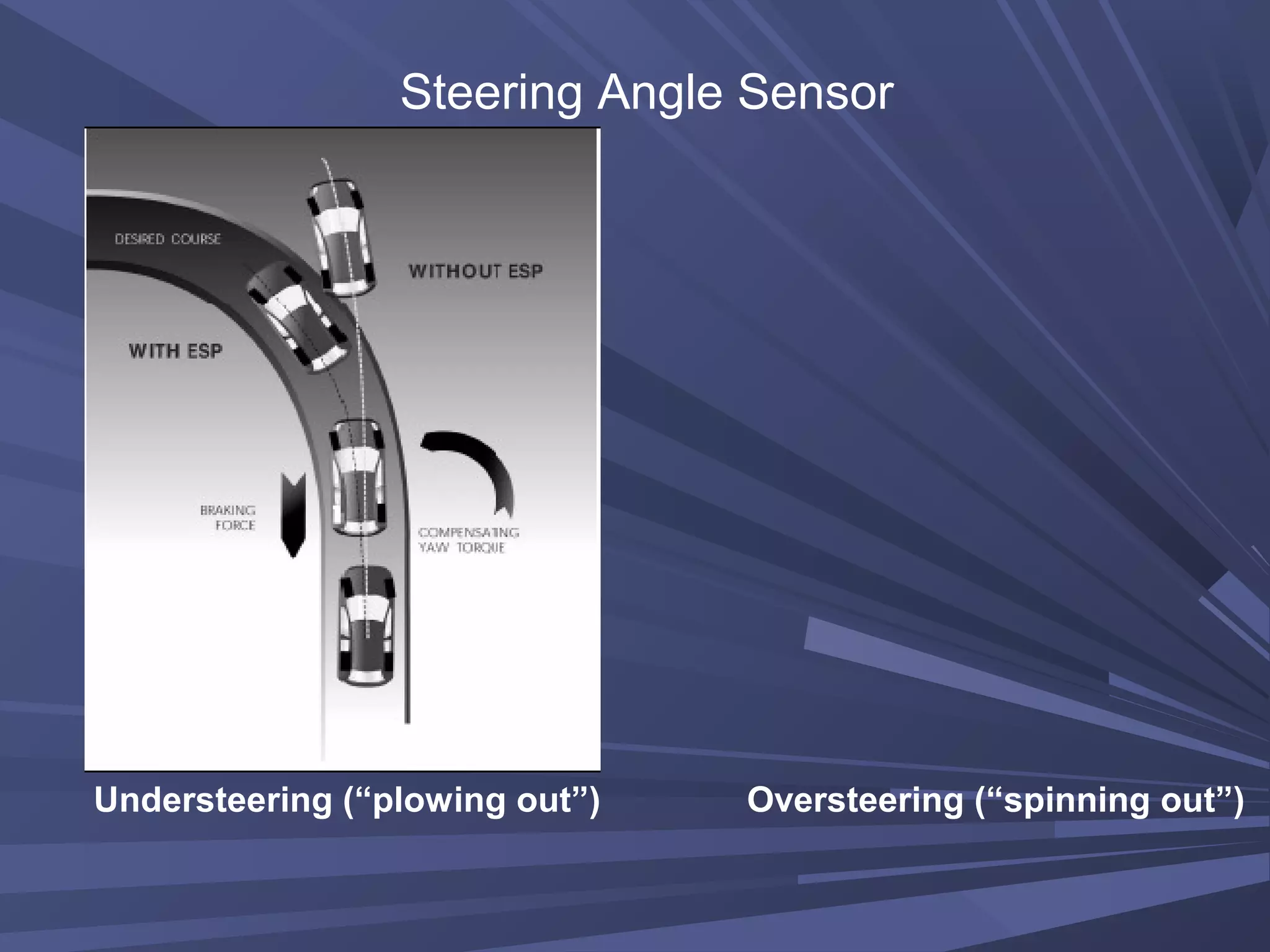
Steering Angle Sensor
Understeering (“plowing out”) Oversteering (“spinning out”)
Some important ECS definitions
• ESC augments vehicle directional stability by
applying and adjusting the vehicle brakes individually
to induce correcting yaw torques to the vehicle.
• ESC is a computer-controlled system, which uses a
close-loop algorithm to limit under steer and over steer
of the vehicle when appropriate
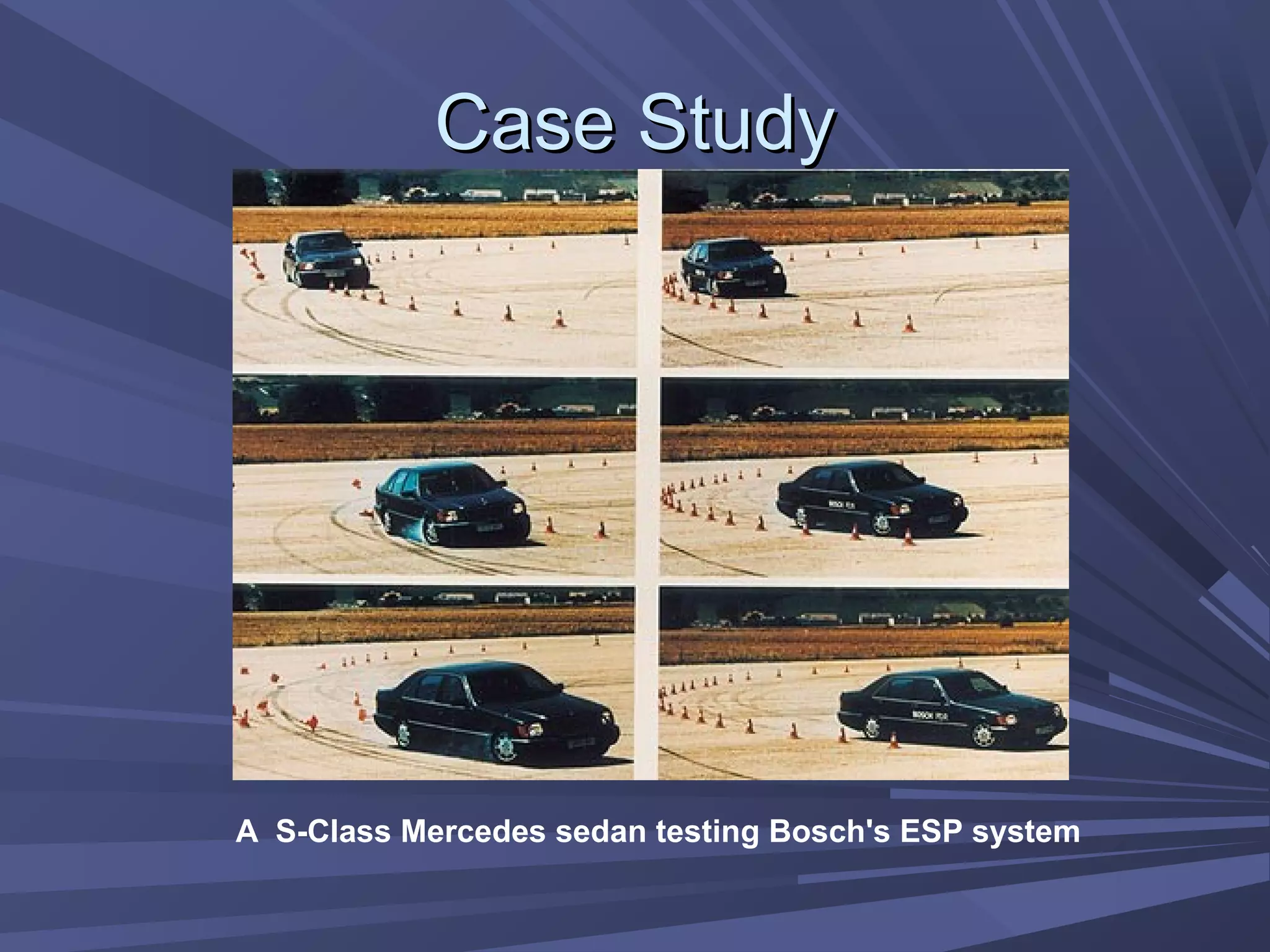
Case StudyCase Study
A S-Class Mercedes sedan testing Bosch's ESP system

Ppt auto mobile

  • 1.
    A Seminar onASeminar on AUTOMOBILE SAFETYAUTOMOBILE SAFETY
  • 2.
    INTRODUCTIONINTRODUCTION Automobile Industry isundergoing a BIGAutomobile Industry is undergoing a BIG TRANSFORMATION never seen before.TRANSFORMATION never seen before. Today CAR’s are not only used for personalToday CAR’s are not only used for personal Transport but they are ENCOMPASSED withTransport but they are ENCOMPASSED with Entertainment that vies with the fedility of your HOMEEntertainment that vies with the fedility of your HOME THEATRETHEATRE Seating arrangement more comfortable than yourSeating arrangement more comfortable than your RECLINERRECLINER SAFETY FEATURESSAFETY FEATURES making your car safer than a TANKmaking your car safer than a TANK
  • 3.
    •Globally car companiesSpendGlobally car companies Spend nearly $36 billon annually fornearly $36 billon annually for influencing new TECHNOLOGIESinfluencing new TECHNOLOGIES into their cars.into their cars. •Some of the big advancement in Automotive Industry in last 10years have come in a area of SAFETY.
  • 4.
    In addition toTelematics based Services like • Digital Satellite Radio •In car E-mail •GPS systems Recent Advancement in Braking Technology have led to •Shorter stopping distance •Increased Control in PANIC situation •More control on CURVED turns
  • 5.
    Air BagsAir Bags •What’sthe main function of the System? •Material of Airbags? •History
  • 6.
    Actual WorkingActual Working AirbagBefore Collision Airbag After Collision
  • 7.
  • 8.
    Effectiveness This system hasproven its effectiveness • In frontal crashes reduction in d rivers death reduced by nearly 14% •Passenger side airbags reducing death by nearly 11% •NHTSA estimated reduction in risk by nearly 85% with the combination of seat belt and airbags compared than only seatbelt i.e60% Car ModelCar Model Head Injury RiskHead Injury Risk AirbagAirbag No AirbagNo Airbag Holden CommodoreHolden Commodore 2828 4848 Toyota CamryToyota Camry 2020 4444 Mitsubishi MagnaMitsubishi Magna 66 2727 Ford FalconFord Falcon 1414 N. A.N. A. This are some crash results which give the effectiveness of the system
  • 9.
    Different types ofAirbagsDifferent types of Airbags DRIVERS SIDE AIRBAG
  • 10.
  • 11.
    Anti-lock Braking SystemAnti-lockBraking System • Introduction? •Advancement in the system? •Working?
  • 12.
  • 13.
    How Does thesystem Works?
  • 14.
    Working Conventional BrakingConventional Braking Wholeprocess is controlled by driver applied breakWhole process is controlled by driver applied break paddle pressurepaddle pressure;; ABS BrakingABS Braking Electric Sensors monitor the wheel speedElectric Sensors monitor the wheel speed ABS microprocessor Compares the wheel speedABS microprocessor Compares the wheel speed Control valve is energized.Control valve is energized.
  • 15.
  • 16.
    Advantages: Achives the ShortestStopping distance Better chance on Steering around obstacle Reduced risk of skidding Disadvantages: Precautions should be taken while driving Proved less effective on gravel road or road compacted by snow
  • 17.
    Traction ControlTraction Control NextGeneration ABSNext Generation ABS Uses ABS as a Building block.Uses ABS as a Building block. Can be is a combination of ABS & EngineCan be is a combination of ABS & Engine controlcontrol
  • 18.
    Mainly the systemhas to control some or all conditions Retard or Suppress the spark to one or more cylinders Retard fuel supply to one or main cylinder Break one or more wheel Close the throttle, if the vehicle is fitted by wire throttle
  • 19.
  • 20.
    MainMain componentscomponents ofthe systemof the system A) active wheel speed sensors; B) steering angle sensor; C) Yaw rate sensor D) attached electronic control unit (ECU) E) motor; F) pressure sensor, G) hydraulic unit.
  • 21.
    Steering Angle Sensor Understeering(“plowing out”) Oversteering (“spinning out”)
  • 22.
    Some important ECSdefinitions • ESC augments vehicle directional stability by applying and adjusting the vehicle brakes individually to induce correcting yaw torques to the vehicle. • ESC is a computer-controlled system, which uses a close-loop algorithm to limit under steer and over steer of the vehicle when appropriate
  • 23.
    Case StudyCase Study AS-Class Mercedes sedan testing Bosch's ESP system