PARTICIPATIVE MANAGEMENT
 
Islamic concept on participation And consult with them upon the conduct of affairs, and when you have resolved, then put your trust in Allah al-i-imran 3:159
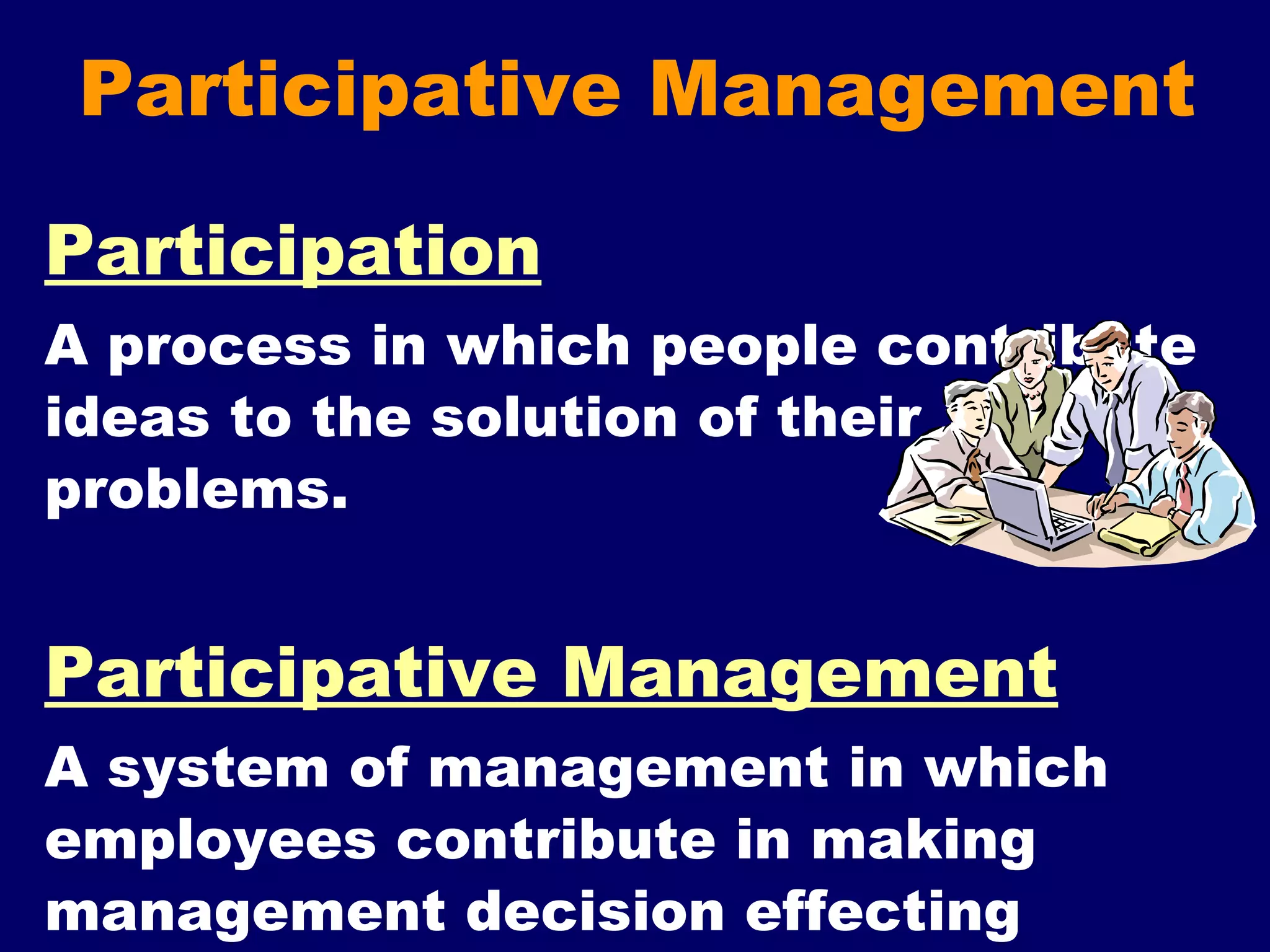
Participative Management Participation A process in which people contribute ideas to the solution of their problems. Participative Management A system of management in which employees contribute in making management decision effecting organization and their jobs.
Arguments for Participation Evolution. Globalization. Flexibility. Decentralization.  Theory X and Y.
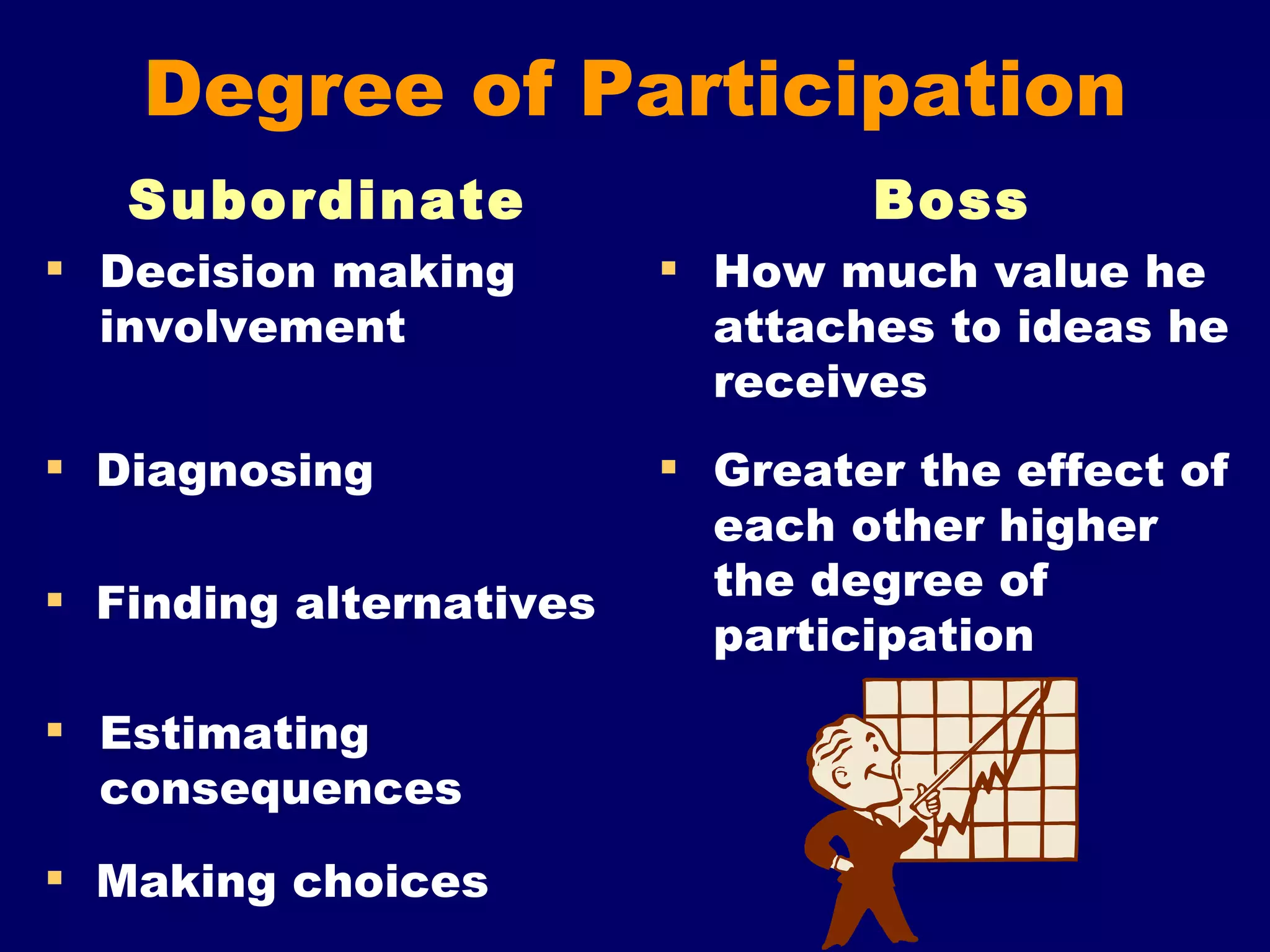
Degree of Participation Making choices Estimating consequences Greater the effect of each other higher the degree of participation Diagnosing Finding alternatives How much value he attaches to ideas he receives Decision making involvement Boss Subordinate
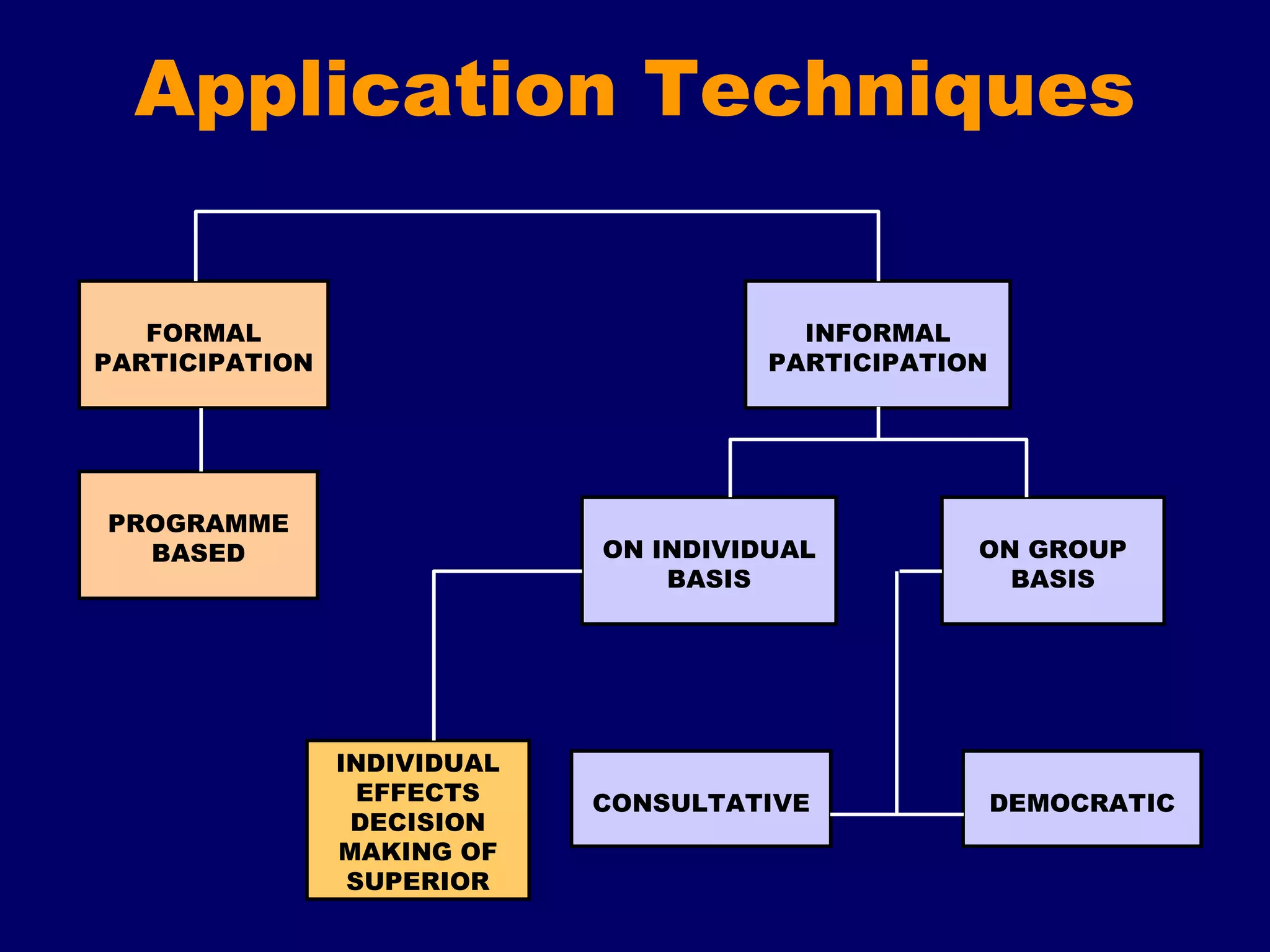
Application Techniques   FORMAL PARTICIPATION   INFORMAL PARTICIPATION   PROGRAMME BASED   ON INDIVIDUAL BASIS   ON GROUP BASIS INDIVIDUAL EFFECTS DECISION MAKING OF SUPERIOR   CONSULTATIVE   DEMOCRATIC  
Major Pre-requisites to Participative Management Time Factor. Cost benefit analysis. Matter of interest. Participants to have knowledge and intelligence to participate. No language barrier …participants must be able to communicate freely. No position threat on both sides. Participation is valid only to the group’s area of  Job Freedom
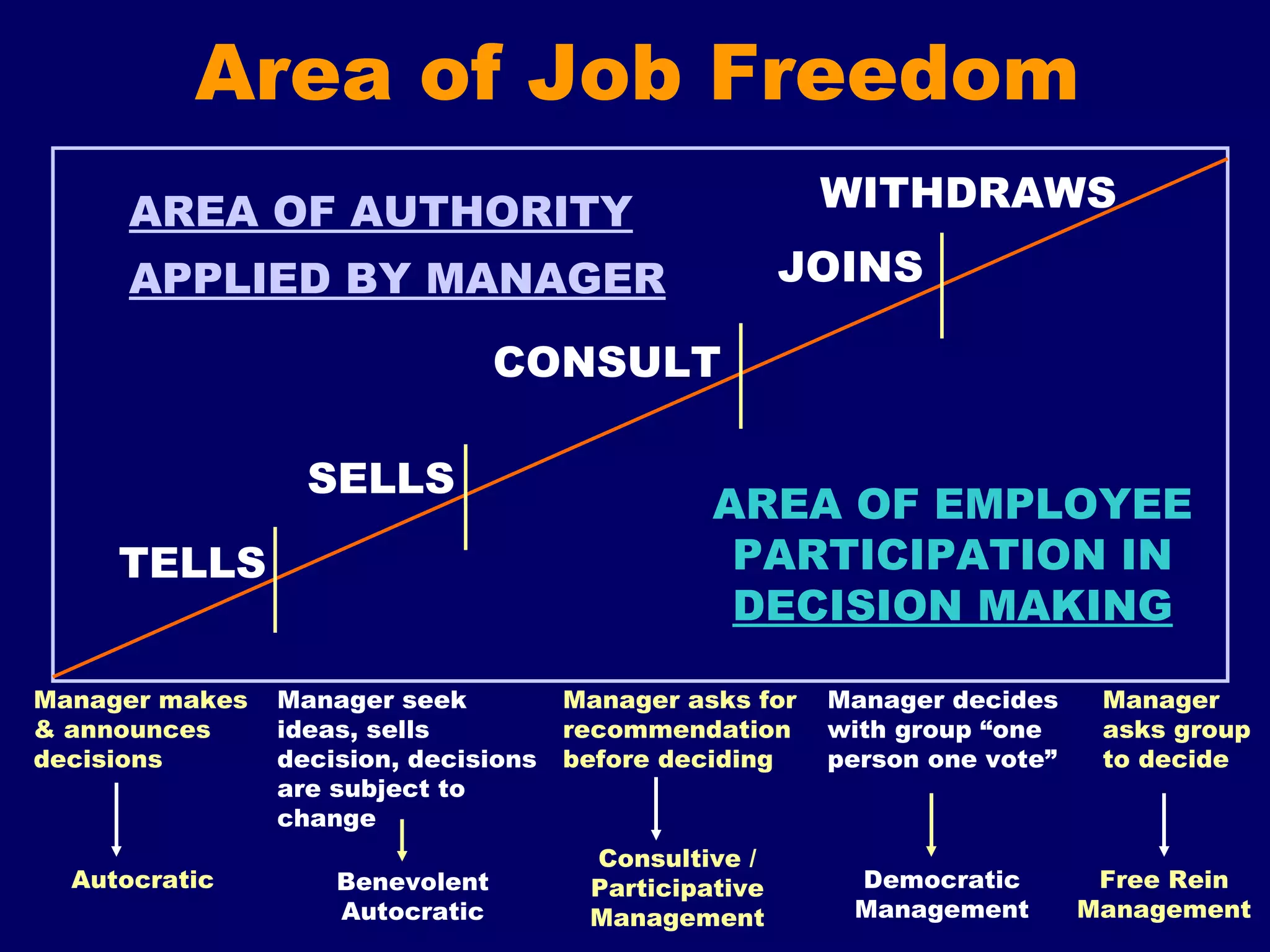
Area of Job Freedom AREA OF EMPLOYEE PARTICIPATION IN  DECISION MAKING TELLS SELLS CONSULT AREA OF AUTHORITY APPLIED BY MANAGER JOINS WITHDRAWS Manager makes & announces decisions Manager seek ideas, sells decision, decisions are subject to change Manager asks for recommendation before deciding Manager decides with group “one person one vote” Manager asks group to decide Autocratic Benevolent Autocratic Consultive / Participative Management Democratic Management Free Rein Management
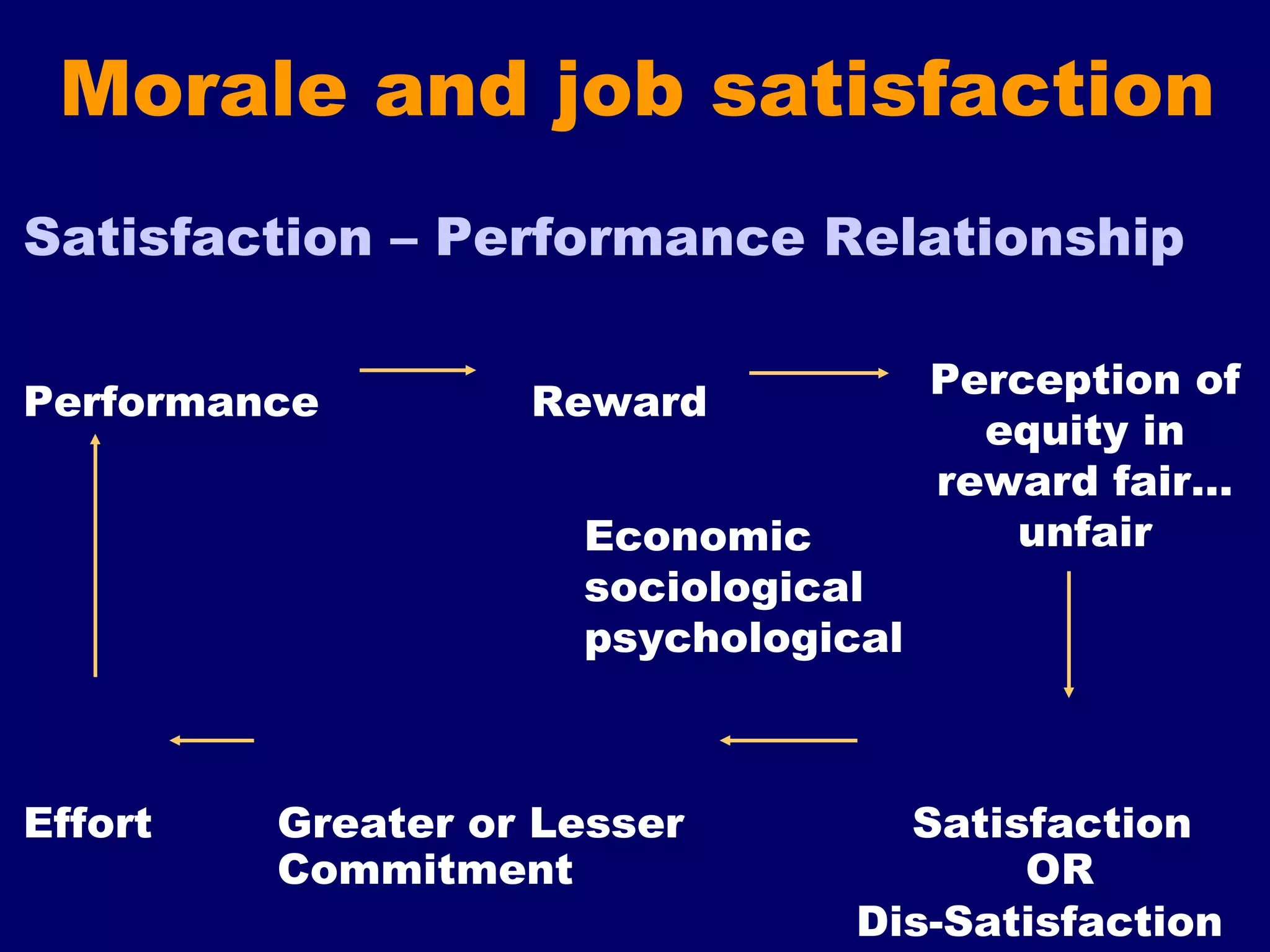
Morale and job satisfaction Satisfaction – Performance Relationship Performance  Reward Effort  Greater or Lesser Satisfaction Commitment   OR   Dis-Satisfaction Perception of equity in reward fair…unfair Economic sociological psychological
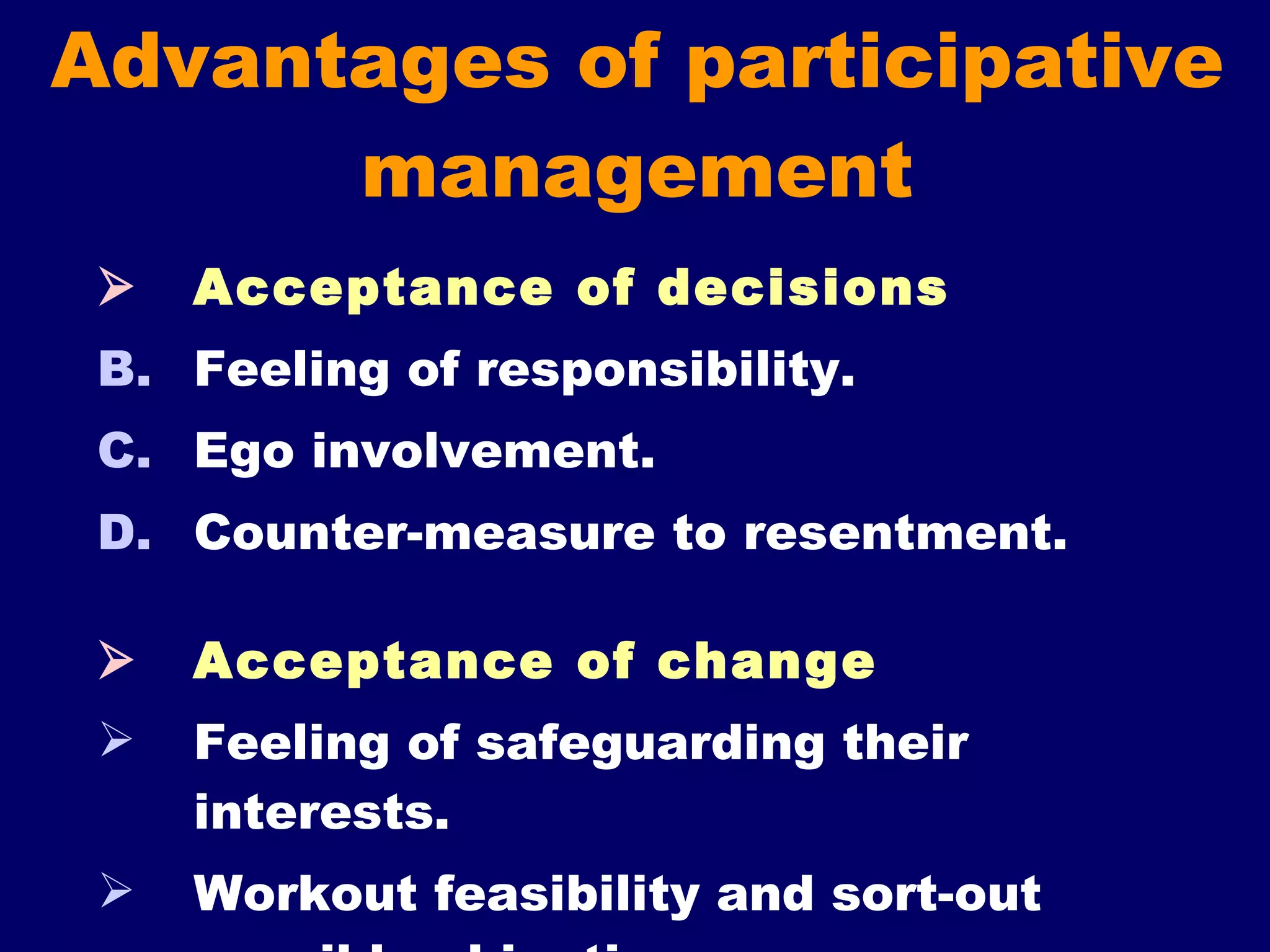
Advantages of participative management  Acceptance of decisions Feeling of responsibility. Ego involvement. Counter-measure to resentment.     Acceptance of change Feeling of safeguarding their interests. Workout feasibility and sort-out possible objections.
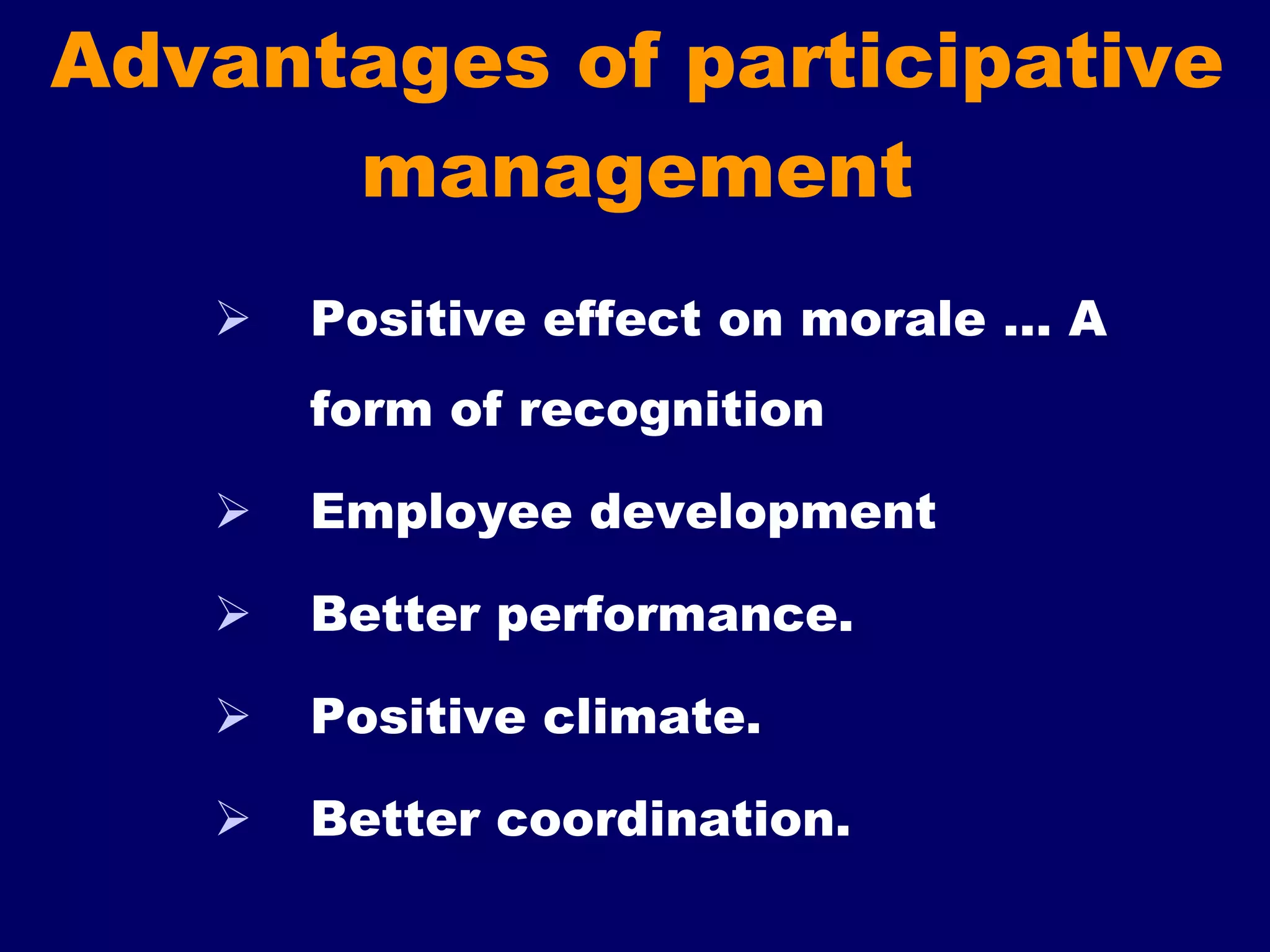
Advantages of participative management    Positive effect on morale … A form of recognition  Employee development  Better performance.    Positive climate.  Better coordination.
Disadvantages of participative management    Time consuming and costly.  Pseudo Participation.
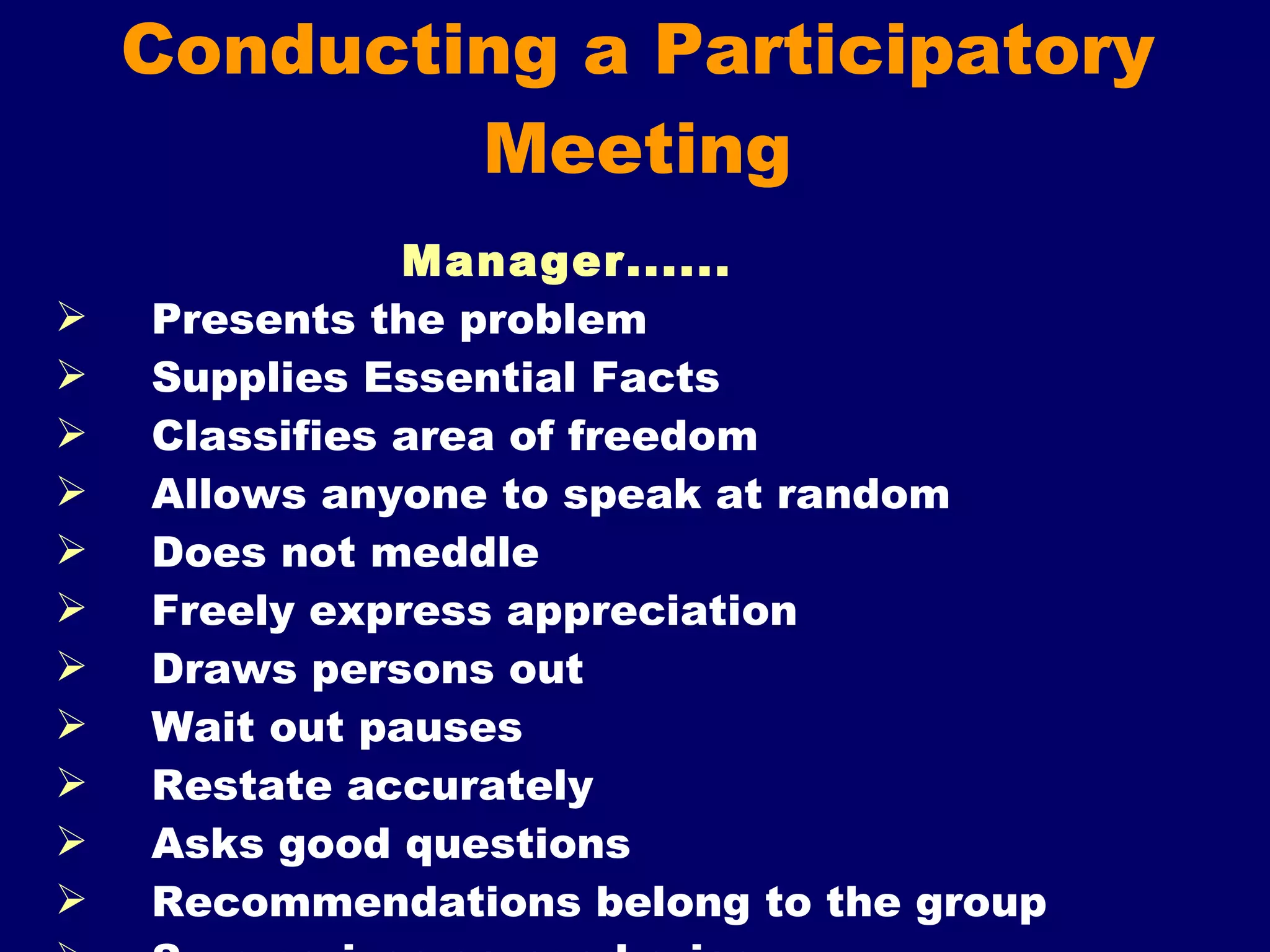
Conducting a Participatory Meeting Manager...... Presents the problem  Supplies Essential Facts  Classifies area of freedom Allows anyone to speak at random  Does not meddle  Freely express appreciation Draws persons out Wait out pauses  Restate accurately Asks good questions Recommendations belong to the group Summarizes as need arise
Thank you

Participative Management

  • 1.
  • 2.
  • 3.
    Islamic concept onparticipation And consult with them upon the conduct of affairs, and when you have resolved, then put your trust in Allah al-i-imran 3:159
  • 4.
    Participative Management ParticipationA process in which people contribute ideas to the solution of their problems. Participative Management A system of management in which employees contribute in making management decision effecting organization and their jobs.
  • 5.
    Arguments for ParticipationEvolution. Globalization. Flexibility. Decentralization. Theory X and Y.
  • 6.
    Degree of ParticipationMaking choices Estimating consequences Greater the effect of each other higher the degree of participation Diagnosing Finding alternatives How much value he attaches to ideas he receives Decision making involvement Boss Subordinate
  • 7.
    Application Techniques  FORMAL PARTICIPATION   INFORMAL PARTICIPATION   PROGRAMME BASED   ON INDIVIDUAL BASIS   ON GROUP BASIS INDIVIDUAL EFFECTS DECISION MAKING OF SUPERIOR   CONSULTATIVE   DEMOCRATIC  
  • 8.
    Major Pre-requisites toParticipative Management Time Factor. Cost benefit analysis. Matter of interest. Participants to have knowledge and intelligence to participate. No language barrier …participants must be able to communicate freely. No position threat on both sides. Participation is valid only to the group’s area of Job Freedom
  • 9.
    Area of JobFreedom AREA OF EMPLOYEE PARTICIPATION IN DECISION MAKING TELLS SELLS CONSULT AREA OF AUTHORITY APPLIED BY MANAGER JOINS WITHDRAWS Manager makes & announces decisions Manager seek ideas, sells decision, decisions are subject to change Manager asks for recommendation before deciding Manager decides with group “one person one vote” Manager asks group to decide Autocratic Benevolent Autocratic Consultive / Participative Management Democratic Management Free Rein Management
  • 10.
    Morale and jobsatisfaction Satisfaction – Performance Relationship Performance Reward Effort Greater or Lesser Satisfaction Commitment OR Dis-Satisfaction Perception of equity in reward fair…unfair Economic sociological psychological
  • 11.
    Advantages of participativemanagement  Acceptance of decisions Feeling of responsibility. Ego involvement. Counter-measure to resentment.  Acceptance of change Feeling of safeguarding their interests. Workout feasibility and sort-out possible objections.
  • 12.
    Advantages of participativemanagement  Positive effect on morale … A form of recognition  Employee development  Better performance.  Positive climate.  Better coordination.
  • 13.
    Disadvantages of participativemanagement  Time consuming and costly.  Pseudo Participation.
  • 14.
    Conducting a ParticipatoryMeeting Manager...... Presents the problem Supplies Essential Facts Classifies area of freedom Allows anyone to speak at random Does not meddle Freely express appreciation Draws persons out Wait out pauses Restate accurately Asks good questions Recommendations belong to the group Summarizes as need arise
  • 15.