PAL #3: Symbols and Library
   Symbols are reusable assets that can be used
    for animation, interaction or special effects.
   You can create multiple instances of a symbol
    to create a range of objects on screen at any
    one moment.
   Remember, that changes made to the
    original symbol in your project affect all
    instances of that symbol thereafter.
   Flash uses three types of symbols:

• Graphic
• Button
• Movie clip
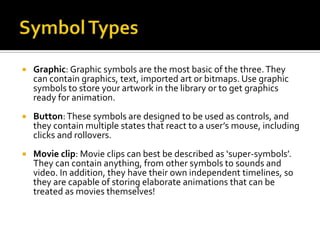
   Graphic: Graphic symbols are the most basic of the three. They
    can contain graphics, text, imported art or bitmaps. Use graphic
    symbols to store your artwork in the library or to get graphics
    ready for animation.
   Button: These symbols are designed to be used as controls, and
    they contain multiple states that react to a user’s mouse, including
    clicks and rollovers.
   Movie clip: Movie clips can best be described as ‘super-symbols’.
    They can contain anything, from other symbols to sounds and
    video. In addition, they have their own independent timelines, so
    they are capable of storing elaborate animations that can be
    treated as movies themselves!
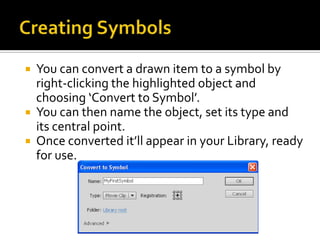
 You can convert a drawn item to a symbol by
  right-clicking the highlighted object and
  choosing ‘Convert to Symbol’.
 You can then name the object, set its type and
  its central point.
 Once converted it’ll appear in your Library, ready
  for use.
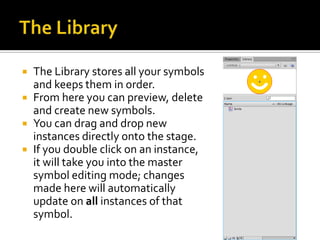
   The Library stores all your symbols
    and keeps them in order.
   From here you can preview, delete
    and create new symbols.
   You can drag and drop new
    instances directly onto the stage.
   If you double click on an instance,
    it will take you into the master
    symbol editing mode; changes
    made here will automatically
    update on all instances of that
    symbol.
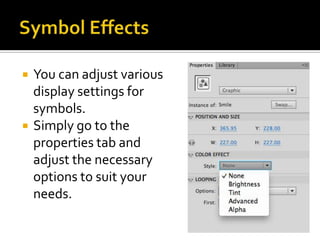
   You can adjust various
    display settings for
    symbols.
   Simply go to the
    properties tab and
    adjust the necessary
    options to suit your
    needs.
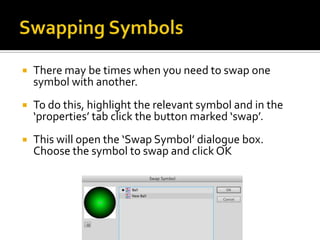
   There may be times when you need to swap one
    symbol with another.
   To do this, highlight the relevant symbol and in the
    ‘properties’ tab click the button marked ‘swap’.
   This will open the ‘Swap Symbol’ dialogue box.
    Choose the symbol to swap and click OK
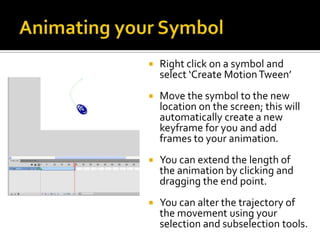
   Right click on a symbol and
    select ‘Create Motion Tween’
   Move the symbol to the new
    location on the screen; this will
    automatically create a new
    keyframe for you and add
    frames to your animation.
   You can extend the length of
    the animation by clicking and
    dragging the end point.
   You can alter the trajectory of
    the movement using your
    selection and subselection tools.
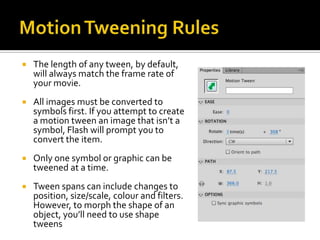
   The length of any tween, by default,
    will always match the frame rate of
    your movie.
   All images must be converted to
    symbols first. If you attempt to create
    a motion tween an image that isn’t a
    symbol, Flash will prompt you to
    convert the item.
   Only one symbol or graphic can be
    tweened at a time.
   Tween spans can include changes to
    position, size/scale, colour and filters.
    However, to morph the shape of an
    object, you’ll need to use shape
    tweens
   Using the images of the airplane and the
    runway, create an animation where the plane
    comes in to land.

   Upload your completed SWF file to Moodle.

PAL #3: Symbols and Library

  • 1.
    PAL #3: Symbolsand Library
  • 2.
    Symbols are reusable assets that can be used for animation, interaction or special effects.  You can create multiple instances of a symbol to create a range of objects on screen at any one moment.  Remember, that changes made to the original symbol in your project affect all instances of that symbol thereafter.
  • 3.
    Flash uses three types of symbols: • Graphic • Button • Movie clip
  • 4.
    Graphic: Graphic symbols are the most basic of the three. They can contain graphics, text, imported art or bitmaps. Use graphic symbols to store your artwork in the library or to get graphics ready for animation.  Button: These symbols are designed to be used as controls, and they contain multiple states that react to a user’s mouse, including clicks and rollovers.  Movie clip: Movie clips can best be described as ‘super-symbols’. They can contain anything, from other symbols to sounds and video. In addition, they have their own independent timelines, so they are capable of storing elaborate animations that can be treated as movies themselves!
  • 5.
     You canconvert a drawn item to a symbol by right-clicking the highlighted object and choosing ‘Convert to Symbol’.  You can then name the object, set its type and its central point.  Once converted it’ll appear in your Library, ready for use.
  • 6.
    The Library stores all your symbols and keeps them in order.  From here you can preview, delete and create new symbols.  You can drag and drop new instances directly onto the stage.  If you double click on an instance, it will take you into the master symbol editing mode; changes made here will automatically update on all instances of that symbol.
  • 7.
    You can adjust various display settings for symbols.  Simply go to the properties tab and adjust the necessary options to suit your needs.
  • 8.
    There may be times when you need to swap one symbol with another.  To do this, highlight the relevant symbol and in the ‘properties’ tab click the button marked ‘swap’.  This will open the ‘Swap Symbol’ dialogue box. Choose the symbol to swap and click OK
  • 9.
    Right click on a symbol and select ‘Create Motion Tween’  Move the symbol to the new location on the screen; this will automatically create a new keyframe for you and add frames to your animation.  You can extend the length of the animation by clicking and dragging the end point.  You can alter the trajectory of the movement using your selection and subselection tools.
  • 10.
    The length of any tween, by default, will always match the frame rate of your movie.  All images must be converted to symbols first. If you attempt to create a motion tween an image that isn’t a symbol, Flash will prompt you to convert the item.  Only one symbol or graphic can be tweened at a time.  Tween spans can include changes to position, size/scale, colour and filters. However, to morph the shape of an object, you’ll need to use shape tweens
  • 11.
    Using the images of the airplane and the runway, create an animation where the plane comes in to land.  Upload your completed SWF file to Moodle.