PAIN in Dentistry
theories
pathways,
types
diagnosis
Dr. AASHNA DHINGRA

Postgraduate student (II year)
Dept. of Public Health Dentistry
INTRODUCTION
Pain is a vital function of the
nervous system, in providing the
body with a warning of potential or
actual injury.
DEFINITION
“ an unpleasant sensory and emotional experience
associated with actual or potential tissue damage,
or described in terms of such damage ”
International Association for the study of Pain
(IASP)
Monheim
“ an unpleasant emotional experience usually
stimulated by a noxious stimulus and transmitted
over a specialized neural network to the CNS
where it is interpreted as such.”
HISTORY
Greek word ‘poin’ - meaning penalty
Latin word ‘poena’ - punishment from god.
Aristotle- first to distinguish the 5
physical senses. Considered pain to be the
‘passion of the soul’.
HISTORICAL Theories
Hippocrates - imbalance in vital fluids.
1664-Rene descartes - disturbance in nerve fibers that
reaches the brain.
1955 - G. Wedell - proposed that all skin fiber endings (with the
exception of those innervating hair cells) are identical, and
that pain is produced by intense stimulation of these fibers.
20th century - “Gate Control Theory”- Ronald Melzack and
Patrick Wall. proposed that both thin (pain) and large diameter
(touch, pressure, vibration) nerve fibers carry information
from the site of injury to two destinations in the dorsal horn
of the spinal cord, 

and that the more large fiber activity relative to thin fiber
activity at the inhibitory cell, the less pain is felt.
Changing Concepts of Pain
During recent years concept of pain has evolved. It
is now recognized as being an experience than just a
sensation.
Cognitive - which represents a subject’s ability to
comprehend and evaluate the significance of
experience.
Emotional - represents the feelings that are
generated.
Motivational - which has to do with the drive to
eliminate pain.
3 Dimensions of Pain
In 1968 Ronald Melzack and Kenneth Casey
described pain in terms of its three dimensions:
"sensory-discriminative" (sense of the intensity,
location, quality and duration of the pain),
"affective-motivational" (unpleasantness and
urge to escape the unpleasantness), and
"cognitive-evaluative" (cognitions such as
appraisal, cultural values, distraction and
hypnotic suggestion)
Concept Today..
“intensive theory”
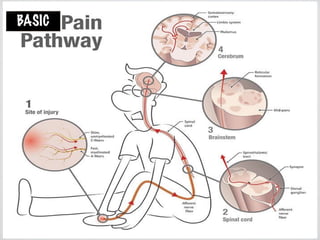
that a pain signal can be generated by intense
enough stimulation of any sensory receptor.
At the peripheral end of the nociceptor, noxious
stimuli generate currents that, above a given
threshold, send signals along the nerve fiber to the
spinal cord.
The "specificity" (whether it responds to thermal,
chemical or mechanical features of its environment)
of a nociceptor is determined by which ion channels
it expresses at its peripheral end.
Wilhelm Erb’s
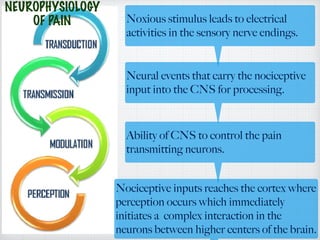
Noxious stimulus leads to electrical
activities in the sensory nerve endings.
Neural events that carry the nociceptive
input into the CNS for processing.
Ability of CNS to control the pain
transmitting neurons.
Nociceptive inputs reaches the cortex where
perception occurs which immediately
initiates a complex interaction in the
neurons between higher centers of the brain.
NEUROPHYSIOLOGY
OF PAIN
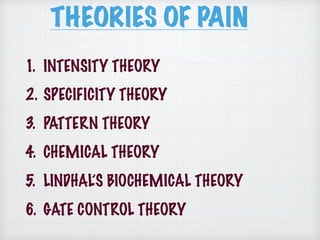
THEORIES OF PAIN
1. INTENSITY THEORY
2. SPECIFICITY THEORY
3. PATTERN THEORY
4. CHEMICAL THEORY
5. LINDHAL’S BIOCHEMICAL THEORY
6. GATE CONTROL THEORY
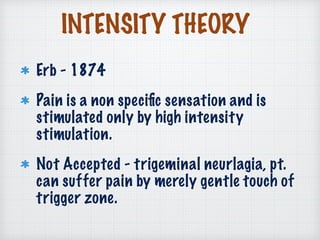
INTENSITY THEORY
Erb - 1874
Pain is a non specific sensation and is
stimulated only by high intensity
stimulation.
Not Accepted - trigeminal neurlagia, pt.
can suffer pain by merely gentle touch of
trigger zone.
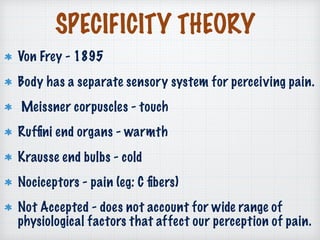
SPECIFICITY THEORY
Von Frey - 1895
Body has a separate sensory system for perceiving pain.
Meissner corpuscles - touch
Ruffini end organs - warmth
Krausse end bulbs - cold
Nociceptors - pain (eg: C fibers)
Not Accepted - does not account for wide range of
physiological factors that affect our perception of pain.
PATTERN THEORY
Goldscheider 1920
Proposed that pain is generated by non specific
receptor.
Assumed that all peripheral nerve fibre
endings are alike and that pattern for pain is
produces by more intense stimulation than for
other sensations.
Nerve impulse entering CNS is diff. for diff.
persons depending on anatomic variation.
CHEMICAL THEORY
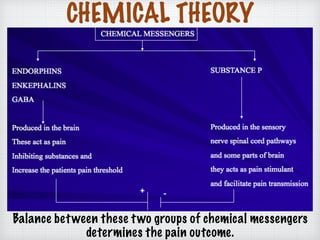
Balance between these two groups of chemical messengers
determines the pain outcome.
LINDHAL’s BIOCHEMICAL THEORY
Acc. to this, alteration in the local pH in
the vicinity of nerve is the cause for pain.
Eg: Pain of abscess (due to acidic
environment) - can be reduced by increasing
alkalinity of the area.
ACIDITY - Causes pain
ALKALINITY - Reduces pain
GATE CONTROL THEORY
Ronald Melzack and Patrick Wall 1965
Small fibers relay impulses to the cells of
substantial gelatinous
Large fibers relay impulses - marginal cells of
posterior grey horn
Large fibers had ability to modulate synaptic
transmission of small fibers within the dorsal horn
Large fiber creates a hypothetical gate that can
open or close the system to pain stimulation
INNERVATION OF THE HEAD
Somatic and visceral sensory innervation : Trigeminal
Nerve (V), partly by glossopharyngeal (IX), and vagus (X).
Voluntary Motor Innervation : 

Occulomotor (III)

Trochlear (IV) 

Abducent (VI)

Facial Nerve (VII) - muscles of expression

Motor branch of Trigeminal (Vm) - Muscles of mastication

Glossopharygeal (IX) - swallowing
Autonomic Motor Innervation :

entire sympathetic supply to smooth muscles is from
Superior Cervical Sympathetic Ganglion.
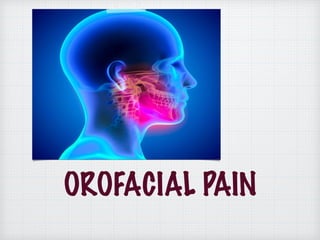
OROFACIAL PAIN
Pain due to local causes
A. Pathological changes in
teeth and jaws
B. TMJ and associated muscles
of mastication
C. Nose and paranasal
diseases
D. Oral mucosal diseases
E. Lymph node diseases
F. Salivary gland disease
G. Diseases of blood vessels
Pain along nerve trunk and
central pathways
A. Trigeminal neuralgia and
glossopharyngeal neuralgia
B. Migraine
C. Atypical facial palsy
Referred pain from other organs
A. Cervical spondalities
B. Angina pectoris
C. Oropharygeal diseases
ETIOLOGICAL CLASSIFICATION
1. Experimental
Noxious stimuli causes mild
uncomfortable or painful sensation.
2. Transient

Short duration
Severe
Self limiting
3. Acute Pathological Pain

Sharp, fast, pricking
Occurs very rapidly

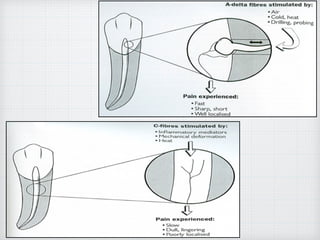
Carried by large diameter A𝛿 fibers.

Usually alleviated with
professional help
4. Chronic Pathological Pain
Burning, aching

Gradually decreases

Non myelinated C fibers

Persistent pain that may last for months to years

Little apparent cause

Pain often increases over time
Based on onset, duration and quality of pain
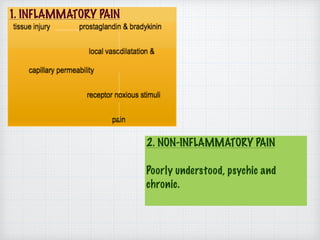
2. NON-INFLAMMATORY PAIN

Poorly understood, psychic and
chronic.
1. INFLAMMATORY PAIN
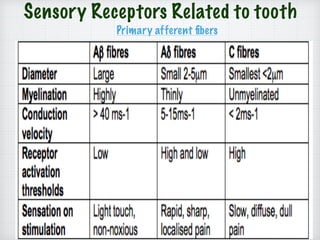
Primary afferent fibers
Sensory Receptors Related to tooth
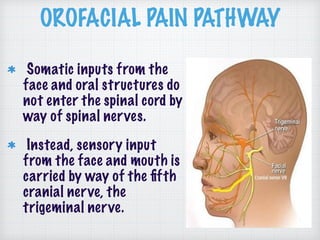
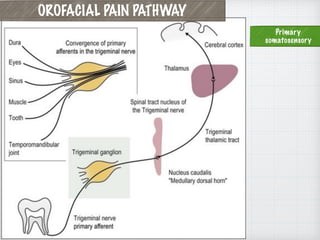
OROFACIAL PAIN PATHWAY
Somatic inputs from the
face and oral structures do
not enter the spinal cord by
way of spinal nerves.
Instead, sensory input
from the face and mouth is
carried by way of the fifth
cranial nerve, the
trigeminal nerve.
BASIC
Primary
somatosensory
OROFACIAL PAIN PATHWAY
• Visceral in character and is of threshold type.
• Responds to all types of noxious stimuli but to
ordinary masticatory function.
• Non-localisable
• A basic clinical feature is that it does not remain
the same indefinitely.
• Generally it resolves, becomes chronic or
proceeds to PDL structures.
DENTAL PAIN OF PULPAL ORIGIN
• Deep somatic pain of musculoskeletal type.
• More localized than pulpal pain.
• Intimately related to biomechanical function
(masticatory)
• Receptors of PDL are capable of precise localization.
• Characterised by discomfort during biting - Under
occlusal pressure - tooth feels sore or elongated.
DENTAL PAIN OF PDL ORIGIN
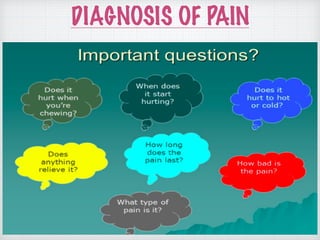
DIAGNOSIS OF PAIN
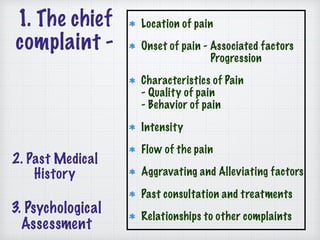
1. The chief
complaint -
Location of pain
Onset of pain - Associated factors

Progression
Characteristics of Pain

- Quality of pain

- Behavior of pain
Intensity
Flow of the pain
Aggravating and Alleviating factors
Past consultation and treatments
Relationships to other complaints
2. Past Medical
History
3. Psychological
Assessment
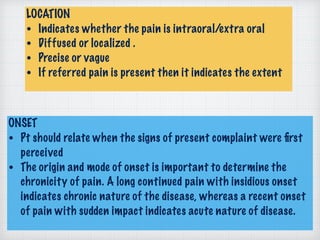
LOCATION
• Indicates whether the pain is intraoral/extra oral
• Diffused or localized .
• Precise or vague
• If referred pain is present then it indicates the extent
ONSET
• Pt should relate when the signs of present complaint were first
perceived
• The origin and mode of onset is important to determine the
chronicity of pain. A long continued pain with insidious onset
indicates chronic nature of the disease, whereas a recent onset
of pain with sudden impact indicates acute nature of disease.
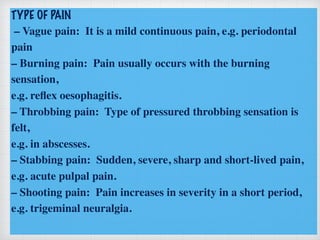
TYPE OF PAIN
– Vague pain: It is a mild continuous pain, e.g. periodontal
pain
– Burning pain: Pain usually occurs with the burning
sensation,
e.g. reflex oesophagitis.
– Throbbing pain: Type of pressured throbbing sensation is
felt,
e.g. in abscesses.
– Stabbing pain: Sudden, severe, sharp and short-lived pain,
e.g. acute pulpal pain.
– Shooting pain: Pain increases in severity in a short period,
e.g. trigeminal neuralgia.
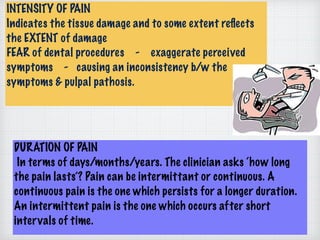
INTENSITY OF PAIN
Indicates the tissue damage and to some extent reflects
the EXTENT of damage
FEAR of dental procedures - exaggerate perceived
symptoms - causing an inconsistency b/w the
symptoms & pulpal pathosis.
DURATION OF PAIN
In terms of days/months/years. The clinician asks ‘how long
the pain lasts’? Pain can be intermittant or continuous. A
continuous pain is the one which persists for a longer duration.
An intermittent pain is the one which occurs after short
intervals of time.
AFFECTING FACTORS
Affecting Factors-aggravating, relieving or altering the
symptoms
Postural Changes
Maxillary sinus involvement :HEADACHE/jaw pain
accentuated by jogging, bending over, blowing of nose
The pain of cracked tooth syndrome occurs when the
patient relieves the occlusal pressure over the tooth.
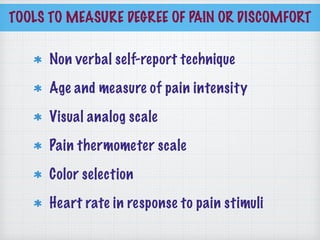
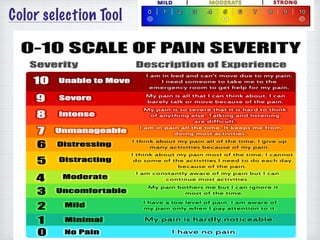
TOOLS TO MEASURE DEGREE OF PAIN OR DISCOMFORT
Non verbal self-report technique
Age and measure of pain intensity
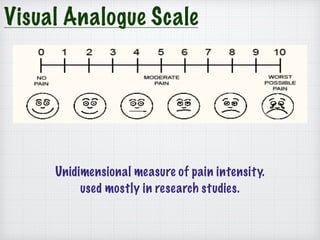
Visual analog scale
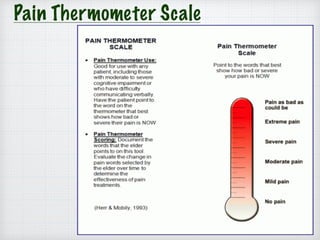
Pain thermometer scale
Color selection
Heart rate in response to pain stimuli
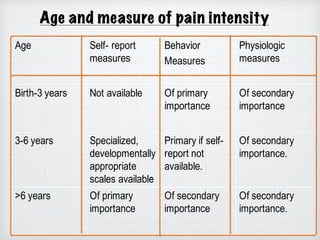
Age Self- report
measures
Behavior
Measures
Physiologic
measures
Birth-3 years Not available Of primary
importance
Of secondary
importance
3-6 years Specialized,
developmentally
appropriate
scales available
Primary if self-
report not
available.
Of secondary
importance.
>6 years Of primary
importance
Of secondary
importance
Of secondary
importance.
Age and measure of pain intensity
Visual Analogue Scale
Unidimensional measure of pain intensity.
used mostly in research studies.
Pain Thermometer Scale
Color selection Tool
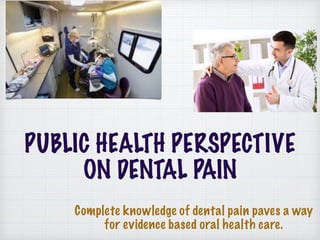
PUBLIC HEALTH PERSPECTIVE
ON DENTAL PAIN
Complete knowledge of dental pain paves a way
for evidence based oral health care.
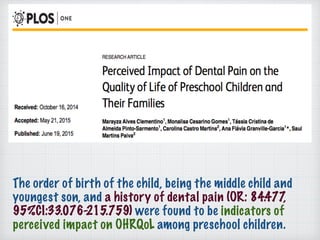
The order of birth of the child, being the middle child and
youngest son, and a history of dental pain (OR: 84.477,
95%CI:33.076-215.759) were found to be indicators of
perceived impact on OHRQoL among preschool children.
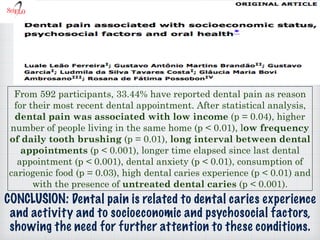
CONCLUSION: Dental pain is related to dental caries experience
and activity and to socioeconomic and psychosocial factors,
showing the need for further attention to these conditions.
From 592 participants, 33.44% have reported dental pain as reason
for their most recent dental appointment. After statistical analysis,
dental pain was associated with low income (p = 0.04), higher
number of people living in the same home (p < 0.01), low frequency
of daily tooth brushing (p = 0.01), long interval between dental
appointments (p < 0.001), longer time elapsed since last dental
appointment (p < 0.001), dental anxiety (p < 0.01), consumption of
cariogenic food (p = 0.03), high dental caries experience (p < 0.01) and
with the presence of untreated dental caries (p < 0.001).
REFERENCES
Textbook of Orofacial Pain and Headache - Yair
Sharav and Rafael Benoliel
A practical manual of Public Health Dentistry - by
CM Maurya
Serpell M. (2006) Anatomy, physiology and
pharmacology of pain. Surgery 24 (10): 350-353
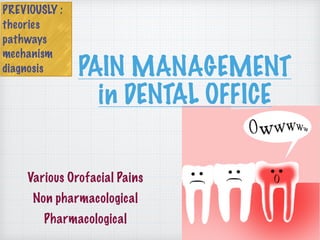
PAIN MANAGEMENT
in DENTAL OFFICE
PREVIOUSLY :
theories
pathways
mechanism
diagnosis
Various Orofacial Pains
Non pharmacological
Pharmacological
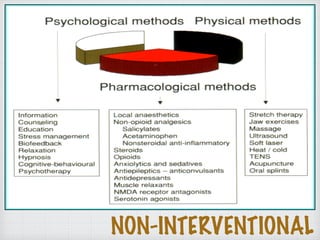
NON-INTERVENTIONAL
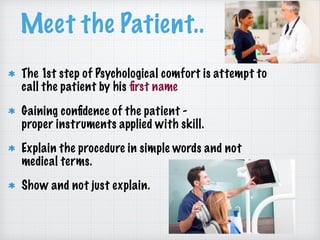
The 1st step of Psychological comfort is attempt to
call the patient by his first name
Gaining confidence of the patient - 

proper instruments applied with skill.
Explain the procedure in simple words and not
medical terms.
Show and not just explain.
Meet the Patient..
Pain and anxiety
Enhancing control and information - Tell show do approach
Ask permission before adjusting chair positions, or before giving injections.
Modifying attention and Using Distraction - background music.
Relaxation
Paced Breathing
Biofeedback : pulse meter to monitor heart rate.
Desensitization : (Cognitive behavioral psychology)- for long standing
dental fears. Pt. is taught relaxation and paced breathing. Then each
stimuli is presented in order.
Therapeutic recommendations : difficult patient.

attempt to establish a rapport, then institute prevention-oriented
procedure 1st. 

Analgesics and antibiotics to alleviate pain.

Referral of overanxious pt. to mental health practitioners for prescribing
sedating drugs.
Non Pharmacological Interventions
Bed Rest
Distraction
Therapeutic
modalities
TENS
Superficial
heat
Ultrasound
Cryotherapy
Acupuncture
Exercise
Hypnosis
BED REST : beneficial to allow for reduction of muscle
spasm brought on by upright activity.
DISTRACTION : diversion of one’s attention from
pain to something else.
TENS (Transcutaneous Electrical Nerve Stimulation)
- the local stimulation of sore sites and strong
neurologic sites in the region of pain, followed by
stretching of the stiff muscle.
For Chronic pain conditions, not in acute pain.
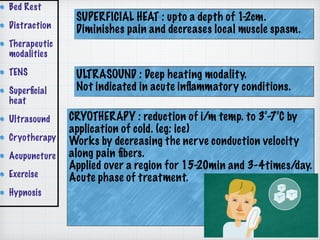
SUPERFICIAL HEAT : upto a depth of 1-2cm.
Diminishes pain and decreases local muscle spasm.
ULTRASOUND : Deep heating modality.
Not indicated in acute inflammatory conditions.
CRYOTHERAPY : reduction of i/m temp. to 3°-7°C by
application of cold. (eg: ice)
Works by decreasing the nerve conduction velocity
along pain fibers.
Applied over a region for 15-20min and 3-4times/day.
Acute phase of treatment.
Bed Rest
Distraction
Therapeutic
modalities
TENS
Superficial
heat
Ultrasound
Cryotherapy
Acupuncture
Exercise
Hypnosis
ACUPUNCTURE :
Most common form of strong counter stimulation.
Chronic pain
Local needling in sore site and strong neurologic site
in the region 30min of low frequency electrical
stimulation i.e. 2-3Hz is added by clipping the
stimulator directly to the inserted needle.
Bed Rest
Distraction
Therapeutic
modalities
TENS
Superficial
heat
Ultrasound
Cryotherapy
Acupuncture
Exercise
Hypnosis
HYPNOSIS : Application of techniques of attention
modification, paced breathing and muscle
relaxation.
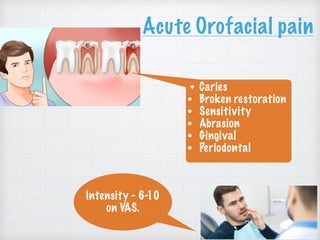
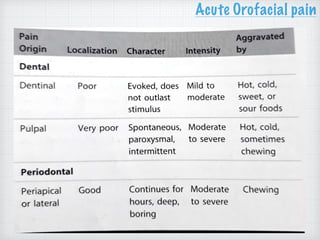
Acute Orofacial pain
• Caries
• Broken restoration
• Sensitivity
• Abrasion
• Gingival
• Periodontal
Intensity - 6-10
on VAS.
Acute Orofacial pain
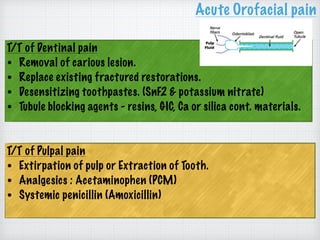
T/T of Dentinal pain
• Removal of carious lesion.
• Replace existing fractured restorations.
• Desensitizing toothpastes. (SnF2 & potassium nitrate)
• Tubule blocking agents - resins, GIC, Ca or silica cont. materials.
Acute Orofacial pain
T/T of Pulpal pain
• Extirpation of pulp or Extraction of Tooth.
• Analgesics : Acetaminophen (PCM)
• Systemic penicillin (Amoxicillin)
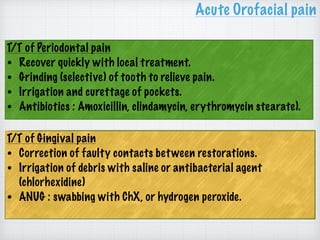
T/T of Periodontal pain
• Recover quickly with local treatment.
• Grinding (selective) of tooth to relieve pain.
• Irrigation and curettage of pockets.
• Antibiotics : Amoxicillin, clindamycin, erythromycin stearate).
Acute Orofacial pain
T/T of Gingival pain
• Correction of faulty contacts between restorations.
• Irrigation of debris with saline or antibacterial agent
(chlorhexidine)
• ANUG : swabbing with ChX, or hydrogen peroxide.
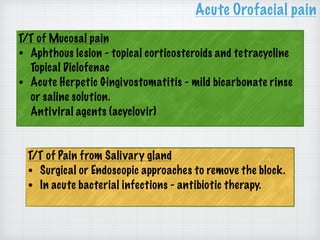
T/T of Mucosal pain
• Aphthous lesion - topical corticosteroids and tetracycline

Topical Diclofenac
• Acute Herpetic Gingivostomatitis - mild bicarbonate rinse
or saline solution.

Antiviral agents (acyclovir)
Acute Orofacial pain
T/T of Pain from Salivary gland
• Surgical or Endoscopic approaches to remove the block.
• In acute bacterial infections - antibiotic therapy.
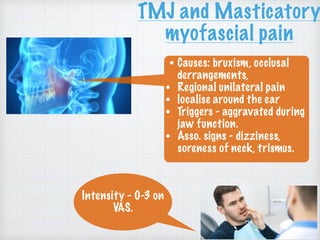
TMJ and Masticatory
myofascial pain
• Causes: bruxism, occlusal
derrangements,
• Regional unilateral pain
• localise around the ear
• Triggers - aggravated during
jaw function.
• Asso. signs - dizziness,
soreness of neck, trismus.
Intensity - 0-3 on
VAS.
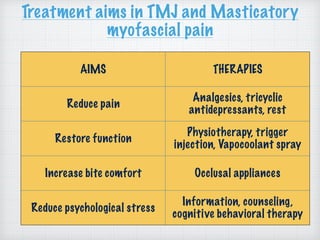
Treatment aims in TMJ and Masticatory
myofascial pain
AIMS THERAPIES
Reduce pain
Analgesics, tricyclic
antidepressants, rest
Restore function
Physiotherapy, trigger
injection, Vapocoolant spray
Increase bite comfort Occlusal appliances
Reduce psychological stress
Information, counseling,
cognitive behavioral therapy
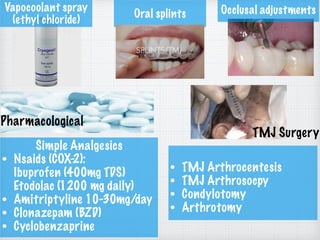
Vapocoolant spray
(ethyl chloride)
Oral splints Occlusal adjustments
Pharmacological
Simple Analgesics
• Nsaids (COX-2): 

Ibuprofen (400mg TDS)

Etodolac (1200 mg daily)
• Amitriptyline 10-30mg/day
• Clonazepam (BZD)
• Cyclobenzaprine
TMJ Surgery
• TMJ Arthrocentesis
• TMJ Arthrosocpy
• Condylotomy
• Arthrotomy
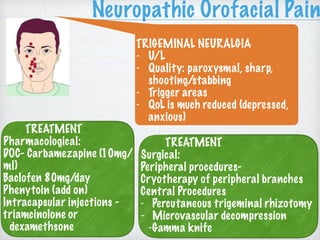
Neuropathic Orofacial Pain
TRIGEMINAL NEURALGIA
- U/L
- Quality: paroxysmal, sharp,
shooting/stabbing
- Trigger areas
- QoL is much reduced (depressed,
anxious)
TREATMENT
Pharmacological:

DOC- Carbamezapine (10mg/
ml)

Baclofen 80mg/day
Phenytoin (add on)
Intracapsular injections -
triamcinolone or
dexamethsone
TREATMENT
Surgical:

Peripheral procedures-
Cryotherapy of peripheral branches
Central Procedures
- Percutaneous trigeminal rhizotomy
- Microvascular decompression
-Gamma knife
Pharmacological
Non-narcotic analgesics
Narcotic analgesics
Adjuvant analgesics
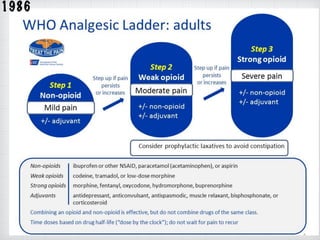
1986
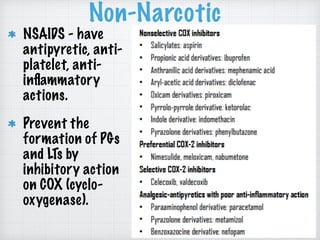
Non-Narcotic
NSAIDS - have
antipyretic, anti-
platelet, anti-
inflammatory
actions.
Prevent the
formation of PGs
and LTs by
inhibitory action
on COX (cyclo-
oxygenase).
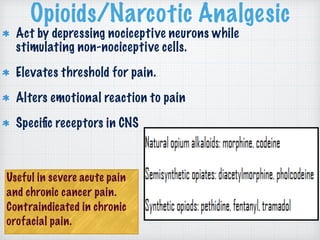
Opioids/Narcotic Analgesic
Act by depressing nociceptive neurons while
stimulating non-nociceptive cells.
Elevates threshold for pain.
Alters emotional reaction to pain
Specific receptors in CNS
Useful in severe acute pain
and chronic cancer pain.
Contraindicated in chronic
orofacial pain.
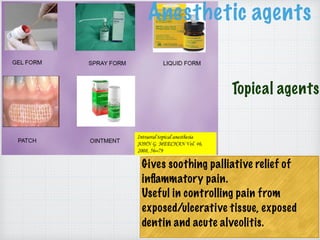
Topical agents
Anesthetic agents
Gives soothing palliative relief of
inflammatory pain.
Useful in controlling pain from
exposed/ulcerative tissue, exposed
dentin and acute alveolitis.
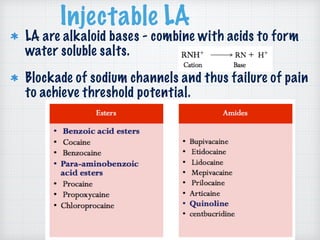
Injectable LA
LA are alkaloid bases - combine with acids to form
water soluble salts.
Blockade of sodium channels and thus failure of pain
to achieve threshold potential.
Vasoactive agents
Neurovascular pain may be influenced by
alpha adrenergenic blocking action of
ergotamine tartrate, which causes
stimulating effect on smooth muscles of
peripheral and cranial vessels.
It is available with or without addition
of caffeine. Caffeine enhances vaso-
constricting effect
Non epinephrine blockers
Guanethine and reserpine appears to
block the uptake of nonepinephrine by
sensitized axons used in treatment of
orofacial pain by blocking satellite
ganglion
These are commonly used in rheumatoid
arthritis
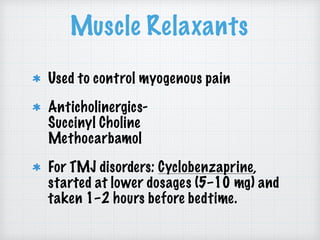
Muscle Relaxants
Used to control myogenous pain
Anticholinergics-

Succinyl Choline

Methocarbamol
For TMJ disorders: Cyclobenzaprine,
started at lower dosages (5–10 mg) and
taken 1–2 hours before bedtime.
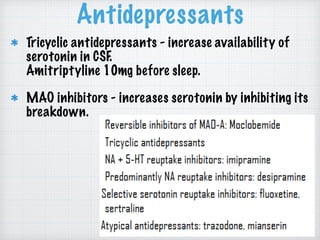
Antidepressants
Tricyclic antidepressants - increase availability of
serotonin in CSF. 

Amitriptyline 10mg before sleep.
MAO inhibitors - increases serotonin by inhibiting its
breakdown.
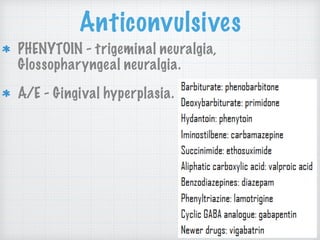
Anticonvulsives
PHENYTOIN - trigeminal neuralgia,
Glossopharyngeal neuralgia.
A/E - Gingival hyperplasia.
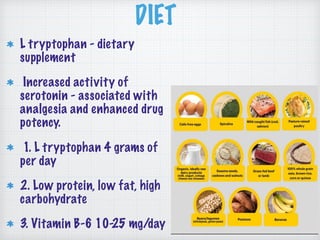
DIET
L tryptophan - dietary
supplement
Increased activity of
serotonin - associated with
analgesia and enhanced drug
potency.
1. L tryptophan 4 grams of
per day
2. Low protein, low fat, high
carbohydrate
3. Vitamin B-6 10-25 mg/day
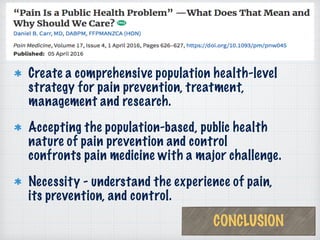
Create a comprehensive population health-level
strategy for pain prevention, treatment,
management and research.
Accepting the population-based, public health
nature of pain prevention and control
confronts pain medicine with a major challenge.
Necessity - understand the experience of pain,
its prevention, and control.
CONCLUSION
REFERENCES
Pain in dentistry

Pain in dentistry

  • 1.
    PAIN in Dentistry theories pathways, types diagnosis Dr.AASHNA DHINGRA
 Postgraduate student (II year) Dept. of Public Health Dentistry
  • 2.
    INTRODUCTION Pain is avital function of the nervous system, in providing the body with a warning of potential or actual injury.
  • 3.
    DEFINITION “ an unpleasantsensory and emotional experience associated with actual or potential tissue damage, or described in terms of such damage ” International Association for the study of Pain (IASP) Monheim “ an unpleasant emotional experience usually stimulated by a noxious stimulus and transmitted over a specialized neural network to the CNS where it is interpreted as such.”
  • 4.
    HISTORY Greek word ‘poin’- meaning penalty Latin word ‘poena’ - punishment from god. Aristotle- first to distinguish the 5 physical senses. Considered pain to be the ‘passion of the soul’.
  • 5.
    HISTORICAL Theories Hippocrates -imbalance in vital fluids. 1664-Rene descartes - disturbance in nerve fibers that reaches the brain. 1955 - G. Wedell - proposed that all skin fiber endings (with the exception of those innervating hair cells) are identical, and that pain is produced by intense stimulation of these fibers. 20th century - “Gate Control Theory”- Ronald Melzack and Patrick Wall. proposed that both thin (pain) and large diameter (touch, pressure, vibration) nerve fibers carry information from the site of injury to two destinations in the dorsal horn of the spinal cord, 
 and that the more large fiber activity relative to thin fiber activity at the inhibitory cell, the less pain is felt.
  • 6.
    Changing Concepts ofPain During recent years concept of pain has evolved. It is now recognized as being an experience than just a sensation. Cognitive - which represents a subject’s ability to comprehend and evaluate the significance of experience. Emotional - represents the feelings that are generated. Motivational - which has to do with the drive to eliminate pain.
  • 7.
    3 Dimensions ofPain In 1968 Ronald Melzack and Kenneth Casey described pain in terms of its three dimensions: "sensory-discriminative" (sense of the intensity, location, quality and duration of the pain), "affective-motivational" (unpleasantness and urge to escape the unpleasantness), and "cognitive-evaluative" (cognitions such as appraisal, cultural values, distraction and hypnotic suggestion)
  • 8.
    Concept Today.. “intensive theory” thata pain signal can be generated by intense enough stimulation of any sensory receptor. At the peripheral end of the nociceptor, noxious stimuli generate currents that, above a given threshold, send signals along the nerve fiber to the spinal cord. The "specificity" (whether it responds to thermal, chemical or mechanical features of its environment) of a nociceptor is determined by which ion channels it expresses at its peripheral end. Wilhelm Erb’s
  • 9.
    Noxious stimulus leadsto electrical activities in the sensory nerve endings. Neural events that carry the nociceptive input into the CNS for processing. Ability of CNS to control the pain transmitting neurons. Nociceptive inputs reaches the cortex where perception occurs which immediately initiates a complex interaction in the neurons between higher centers of the brain. NEUROPHYSIOLOGY OF PAIN
  • 10.
    THEORIES OF PAIN 1.INTENSITY THEORY 2. SPECIFICITY THEORY 3. PATTERN THEORY 4. CHEMICAL THEORY 5. LINDHAL’S BIOCHEMICAL THEORY 6. GATE CONTROL THEORY
  • 11.
    INTENSITY THEORY Erb -1874 Pain is a non specific sensation and is stimulated only by high intensity stimulation. Not Accepted - trigeminal neurlagia, pt. can suffer pain by merely gentle touch of trigger zone.
  • 12.
    SPECIFICITY THEORY Von Frey- 1895 Body has a separate sensory system for perceiving pain. Meissner corpuscles - touch Ruffini end organs - warmth Krausse end bulbs - cold Nociceptors - pain (eg: C fibers) Not Accepted - does not account for wide range of physiological factors that affect our perception of pain.
  • 13.
    PATTERN THEORY Goldscheider 1920 Proposedthat pain is generated by non specific receptor. Assumed that all peripheral nerve fibre endings are alike and that pattern for pain is produces by more intense stimulation than for other sensations. Nerve impulse entering CNS is diff. for diff. persons depending on anatomic variation.
  • 14.
    CHEMICAL THEORY Balance betweenthese two groups of chemical messengers determines the pain outcome.
  • 15.
    LINDHAL’s BIOCHEMICAL THEORY Acc.to this, alteration in the local pH in the vicinity of nerve is the cause for pain. Eg: Pain of abscess (due to acidic environment) - can be reduced by increasing alkalinity of the area. ACIDITY - Causes pain ALKALINITY - Reduces pain
  • 16.
    GATE CONTROL THEORY RonaldMelzack and Patrick Wall 1965 Small fibers relay impulses to the cells of substantial gelatinous Large fibers relay impulses - marginal cells of posterior grey horn Large fibers had ability to modulate synaptic transmission of small fibers within the dorsal horn Large fiber creates a hypothetical gate that can open or close the system to pain stimulation
  • 17.
    INNERVATION OF THEHEAD Somatic and visceral sensory innervation : Trigeminal Nerve (V), partly by glossopharyngeal (IX), and vagus (X). Voluntary Motor Innervation : 
 Occulomotor (III)
 Trochlear (IV) 
 Abducent (VI)
 Facial Nerve (VII) - muscles of expression
 Motor branch of Trigeminal (Vm) - Muscles of mastication
 Glossopharygeal (IX) - swallowing Autonomic Motor Innervation :
 entire sympathetic supply to smooth muscles is from Superior Cervical Sympathetic Ganglion.
  • 18.
  • 19.
    Pain due tolocal causes A. Pathological changes in teeth and jaws B. TMJ and associated muscles of mastication C. Nose and paranasal diseases D. Oral mucosal diseases E. Lymph node diseases F. Salivary gland disease G. Diseases of blood vessels Pain along nerve trunk and central pathways A. Trigeminal neuralgia and glossopharyngeal neuralgia B. Migraine C. Atypical facial palsy Referred pain from other organs A. Cervical spondalities B. Angina pectoris C. Oropharygeal diseases ETIOLOGICAL CLASSIFICATION
  • 20.
    1. Experimental Noxious stimulicauses mild uncomfortable or painful sensation. 2. Transient
 Short duration Severe Self limiting 3. Acute Pathological Pain
 Sharp, fast, pricking Occurs very rapidly
 Carried by large diameter A𝛿 fibers.
 Usually alleviated with professional help 4. Chronic Pathological Pain Burning, aching
 Gradually decreases
 Non myelinated C fibers
 Persistent pain that may last for months to years
 Little apparent cause
 Pain often increases over time Based on onset, duration and quality of pain
  • 21.
    2. NON-INFLAMMATORY PAIN
 Poorlyunderstood, psychic and chronic. 1. INFLAMMATORY PAIN
  • 22.
    Primary afferent fibers SensoryReceptors Related to tooth
  • 24.
    OROFACIAL PAIN PATHWAY Somaticinputs from the face and oral structures do not enter the spinal cord by way of spinal nerves. Instead, sensory input from the face and mouth is carried by way of the fifth cranial nerve, the trigeminal nerve.
  • 25.
  • 26.
  • 27.
    • Visceral incharacter and is of threshold type. • Responds to all types of noxious stimuli but to ordinary masticatory function. • Non-localisable • A basic clinical feature is that it does not remain the same indefinitely. • Generally it resolves, becomes chronic or proceeds to PDL structures. DENTAL PAIN OF PULPAL ORIGIN
  • 28.
    • Deep somaticpain of musculoskeletal type. • More localized than pulpal pain. • Intimately related to biomechanical function (masticatory) • Receptors of PDL are capable of precise localization. • Characterised by discomfort during biting - Under occlusal pressure - tooth feels sore or elongated. DENTAL PAIN OF PDL ORIGIN
  • 29.
  • 30.
    1. The chief complaint- Location of pain Onset of pain - Associated factors
 Progression Characteristics of Pain
 - Quality of pain
 - Behavior of pain Intensity Flow of the pain Aggravating and Alleviating factors Past consultation and treatments Relationships to other complaints 2. Past Medical History 3. Psychological Assessment
  • 31.
    LOCATION • Indicates whetherthe pain is intraoral/extra oral • Diffused or localized . • Precise or vague • If referred pain is present then it indicates the extent ONSET • Pt should relate when the signs of present complaint were first perceived • The origin and mode of onset is important to determine the chronicity of pain. A long continued pain with insidious onset indicates chronic nature of the disease, whereas a recent onset of pain with sudden impact indicates acute nature of disease.
  • 32.
    TYPE OF PAIN –Vague pain: It is a mild continuous pain, e.g. periodontal pain – Burning pain: Pain usually occurs with the burning sensation, e.g. reflex oesophagitis. – Throbbing pain: Type of pressured throbbing sensation is felt, e.g. in abscesses. – Stabbing pain: Sudden, severe, sharp and short-lived pain, e.g. acute pulpal pain. – Shooting pain: Pain increases in severity in a short period, e.g. trigeminal neuralgia.
  • 33.
    INTENSITY OF PAIN Indicatesthe tissue damage and to some extent reflects the EXTENT of damage FEAR of dental procedures - exaggerate perceived symptoms - causing an inconsistency b/w the symptoms & pulpal pathosis. DURATION OF PAIN In terms of days/months/years. The clinician asks ‘how long the pain lasts’? Pain can be intermittant or continuous. A continuous pain is the one which persists for a longer duration. An intermittent pain is the one which occurs after short intervals of time.
  • 34.
    AFFECTING FACTORS Affecting Factors-aggravating,relieving or altering the symptoms Postural Changes Maxillary sinus involvement :HEADACHE/jaw pain accentuated by jogging, bending over, blowing of nose The pain of cracked tooth syndrome occurs when the patient relieves the occlusal pressure over the tooth.
  • 35.
    TOOLS TO MEASUREDEGREE OF PAIN OR DISCOMFORT Non verbal self-report technique Age and measure of pain intensity Visual analog scale Pain thermometer scale Color selection Heart rate in response to pain stimuli
  • 36.
    Age Self- report measures Behavior Measures Physiologic measures Birth-3years Not available Of primary importance Of secondary importance 3-6 years Specialized, developmentally appropriate scales available Primary if self- report not available. Of secondary importance. >6 years Of primary importance Of secondary importance Of secondary importance. Age and measure of pain intensity
  • 37.
    Visual Analogue Scale Unidimensionalmeasure of pain intensity. used mostly in research studies.
  • 38.
  • 39.
  • 40.
    PUBLIC HEALTH PERSPECTIVE ONDENTAL PAIN Complete knowledge of dental pain paves a way for evidence based oral health care.
  • 41.
    The order ofbirth of the child, being the middle child and youngest son, and a history of dental pain (OR: 84.477, 95%CI:33.076-215.759) were found to be indicators of perceived impact on OHRQoL among preschool children.
  • 42.
    CONCLUSION: Dental painis related to dental caries experience and activity and to socioeconomic and psychosocial factors, showing the need for further attention to these conditions. From 592 participants, 33.44% have reported dental pain as reason for their most recent dental appointment. After statistical analysis, dental pain was associated with low income (p = 0.04), higher number of people living in the same home (p < 0.01), low frequency of daily tooth brushing (p = 0.01), long interval between dental appointments (p < 0.001), longer time elapsed since last dental appointment (p < 0.001), dental anxiety (p < 0.01), consumption of cariogenic food (p = 0.03), high dental caries experience (p < 0.01) and with the presence of untreated dental caries (p < 0.001).
  • 43.
    REFERENCES Textbook of OrofacialPain and Headache - Yair Sharav and Rafael Benoliel A practical manual of Public Health Dentistry - by CM Maurya Serpell M. (2006) Anatomy, physiology and pharmacology of pain. Surgery 24 (10): 350-353
  • 44.
    PAIN MANAGEMENT in DENTALOFFICE PREVIOUSLY : theories pathways mechanism diagnosis Various Orofacial Pains Non pharmacological Pharmacological
  • 45.
  • 46.
    The 1st stepof Psychological comfort is attempt to call the patient by his first name Gaining confidence of the patient - 
 proper instruments applied with skill. Explain the procedure in simple words and not medical terms. Show and not just explain. Meet the Patient..
  • 47.
    Pain and anxiety Enhancingcontrol and information - Tell show do approach Ask permission before adjusting chair positions, or before giving injections. Modifying attention and Using Distraction - background music. Relaxation Paced Breathing Biofeedback : pulse meter to monitor heart rate. Desensitization : (Cognitive behavioral psychology)- for long standing dental fears. Pt. is taught relaxation and paced breathing. Then each stimuli is presented in order. Therapeutic recommendations : difficult patient.
 attempt to establish a rapport, then institute prevention-oriented procedure 1st. 
 Analgesics and antibiotics to alleviate pain.
 Referral of overanxious pt. to mental health practitioners for prescribing sedating drugs.
  • 48.
    Non Pharmacological Interventions BedRest Distraction Therapeutic modalities TENS Superficial heat Ultrasound Cryotherapy Acupuncture Exercise Hypnosis BED REST : beneficial to allow for reduction of muscle spasm brought on by upright activity. DISTRACTION : diversion of one’s attention from pain to something else. TENS (Transcutaneous Electrical Nerve Stimulation) - the local stimulation of sore sites and strong neurologic sites in the region of pain, followed by stretching of the stiff muscle. For Chronic pain conditions, not in acute pain.
  • 49.
    SUPERFICIAL HEAT :upto a depth of 1-2cm. Diminishes pain and decreases local muscle spasm. ULTRASOUND : Deep heating modality. Not indicated in acute inflammatory conditions. CRYOTHERAPY : reduction of i/m temp. to 3°-7°C by application of cold. (eg: ice) Works by decreasing the nerve conduction velocity along pain fibers. Applied over a region for 15-20min and 3-4times/day. Acute phase of treatment. Bed Rest Distraction Therapeutic modalities TENS Superficial heat Ultrasound Cryotherapy Acupuncture Exercise Hypnosis
  • 50.
    ACUPUNCTURE : Most commonform of strong counter stimulation. Chronic pain Local needling in sore site and strong neurologic site in the region 30min of low frequency electrical stimulation i.e. 2-3Hz is added by clipping the stimulator directly to the inserted needle. Bed Rest Distraction Therapeutic modalities TENS Superficial heat Ultrasound Cryotherapy Acupuncture Exercise Hypnosis HYPNOSIS : Application of techniques of attention modification, paced breathing and muscle relaxation.
  • 51.
    Acute Orofacial pain •Caries • Broken restoration • Sensitivity • Abrasion • Gingival • Periodontal Intensity - 6-10 on VAS.
  • 52.
  • 53.
    T/T of Dentinalpain • Removal of carious lesion. • Replace existing fractured restorations. • Desensitizing toothpastes. (SnF2 & potassium nitrate) • Tubule blocking agents - resins, GIC, Ca or silica cont. materials. Acute Orofacial pain T/T of Pulpal pain • Extirpation of pulp or Extraction of Tooth. • Analgesics : Acetaminophen (PCM) • Systemic penicillin (Amoxicillin)
  • 54.
    T/T of Periodontalpain • Recover quickly with local treatment. • Grinding (selective) of tooth to relieve pain. • Irrigation and curettage of pockets. • Antibiotics : Amoxicillin, clindamycin, erythromycin stearate). Acute Orofacial pain T/T of Gingival pain • Correction of faulty contacts between restorations. • Irrigation of debris with saline or antibacterial agent (chlorhexidine) • ANUG : swabbing with ChX, or hydrogen peroxide.
  • 55.
    T/T of Mucosalpain • Aphthous lesion - topical corticosteroids and tetracycline
 Topical Diclofenac • Acute Herpetic Gingivostomatitis - mild bicarbonate rinse or saline solution.
 Antiviral agents (acyclovir) Acute Orofacial pain T/T of Pain from Salivary gland • Surgical or Endoscopic approaches to remove the block. • In acute bacterial infections - antibiotic therapy.
  • 56.
    TMJ and Masticatory myofascialpain • Causes: bruxism, occlusal derrangements, • Regional unilateral pain • localise around the ear • Triggers - aggravated during jaw function. • Asso. signs - dizziness, soreness of neck, trismus. Intensity - 0-3 on VAS.
  • 57.
    Treatment aims inTMJ and Masticatory myofascial pain AIMS THERAPIES Reduce pain Analgesics, tricyclic antidepressants, rest Restore function Physiotherapy, trigger injection, Vapocoolant spray Increase bite comfort Occlusal appliances Reduce psychological stress Information, counseling, cognitive behavioral therapy
  • 58.
    Vapocoolant spray (ethyl chloride) Oralsplints Occlusal adjustments Pharmacological Simple Analgesics • Nsaids (COX-2): 
 Ibuprofen (400mg TDS)
 Etodolac (1200 mg daily) • Amitriptyline 10-30mg/day • Clonazepam (BZD) • Cyclobenzaprine TMJ Surgery • TMJ Arthrocentesis • TMJ Arthrosocpy • Condylotomy • Arthrotomy
  • 59.
    Neuropathic Orofacial Pain TRIGEMINALNEURALGIA - U/L - Quality: paroxysmal, sharp, shooting/stabbing - Trigger areas - QoL is much reduced (depressed, anxious) TREATMENT Pharmacological:
 DOC- Carbamezapine (10mg/ ml)
 Baclofen 80mg/day Phenytoin (add on) Intracapsular injections - triamcinolone or dexamethsone TREATMENT Surgical:
 Peripheral procedures- Cryotherapy of peripheral branches Central Procedures - Percutaneous trigeminal rhizotomy - Microvascular decompression -Gamma knife
  • 60.
  • 61.
  • 62.
    Non-Narcotic NSAIDS - have antipyretic,anti- platelet, anti- inflammatory actions. Prevent the formation of PGs and LTs by inhibitory action on COX (cyclo- oxygenase).
  • 63.
    Opioids/Narcotic Analgesic Act bydepressing nociceptive neurons while stimulating non-nociceptive cells. Elevates threshold for pain. Alters emotional reaction to pain Specific receptors in CNS Useful in severe acute pain and chronic cancer pain. Contraindicated in chronic orofacial pain.
  • 64.
    Topical agents Anesthetic agents Givessoothing palliative relief of inflammatory pain. Useful in controlling pain from exposed/ulcerative tissue, exposed dentin and acute alveolitis.
  • 65.
    Injectable LA LA arealkaloid bases - combine with acids to form water soluble salts. Blockade of sodium channels and thus failure of pain to achieve threshold potential.
  • 66.
    Vasoactive agents Neurovascular painmay be influenced by alpha adrenergenic blocking action of ergotamine tartrate, which causes stimulating effect on smooth muscles of peripheral and cranial vessels. It is available with or without addition of caffeine. Caffeine enhances vaso- constricting effect
  • 67.
    Non epinephrine blockers Guanethineand reserpine appears to block the uptake of nonepinephrine by sensitized axons used in treatment of orofacial pain by blocking satellite ganglion These are commonly used in rheumatoid arthritis
  • 68.
    Muscle Relaxants Used tocontrol myogenous pain Anticholinergics-
 Succinyl Choline
 Methocarbamol For TMJ disorders: Cyclobenzaprine, started at lower dosages (5–10 mg) and taken 1–2 hours before bedtime.
  • 69.
    Antidepressants Tricyclic antidepressants -increase availability of serotonin in CSF. 
 Amitriptyline 10mg before sleep. MAO inhibitors - increases serotonin by inhibiting its breakdown.
  • 70.
    Anticonvulsives PHENYTOIN - trigeminalneuralgia, Glossopharyngeal neuralgia. A/E - Gingival hyperplasia.
  • 71.
    DIET L tryptophan -dietary supplement Increased activity of serotonin - associated with analgesia and enhanced drug potency. 1. L tryptophan 4 grams of per day 2. Low protein, low fat, high carbohydrate 3. Vitamin B-6 10-25 mg/day
  • 72.
    Create a comprehensivepopulation health-level strategy for pain prevention, treatment, management and research. Accepting the population-based, public health nature of pain prevention and control confronts pain medicine with a major challenge. Necessity - understand the experience of pain, its prevention, and control. CONCLUSION
  • 73.