OSTEOPOROSIS
Radhika Chintamani
Contents
• Definition
• Epidemiology
• Diagnostic and causative classification
• Physiology and pathophysiology
• Clinical features
• Postmenopausal and juvenile osteoporosis
• Differential diagnosis
• Outcome measures
• Diagnosis
• Management
• References
DEFINITION
• WHO has defined osteoporosis as a systemic
skeletal disease characterized by low bone
mass and micro architectural deterioration of
bone tissue, with a consequent increase in
bone fragility and susceptibility to fracture.
Epidemiology
• >61 million Indians have osteoporosis.
• Of these 80% are females.
• India has highest prevalence of osteoporosis and
osteopenia in the world followed by Japan.
• The mean bone mineral density (BMD) in India is about
two SDs lower than in women in the western
population. The prevalence of low bone mass is to the
extent of 40% from the age of 40 years and increases
to more than 62% by age 60 years and 80% by the age
of 65 years.
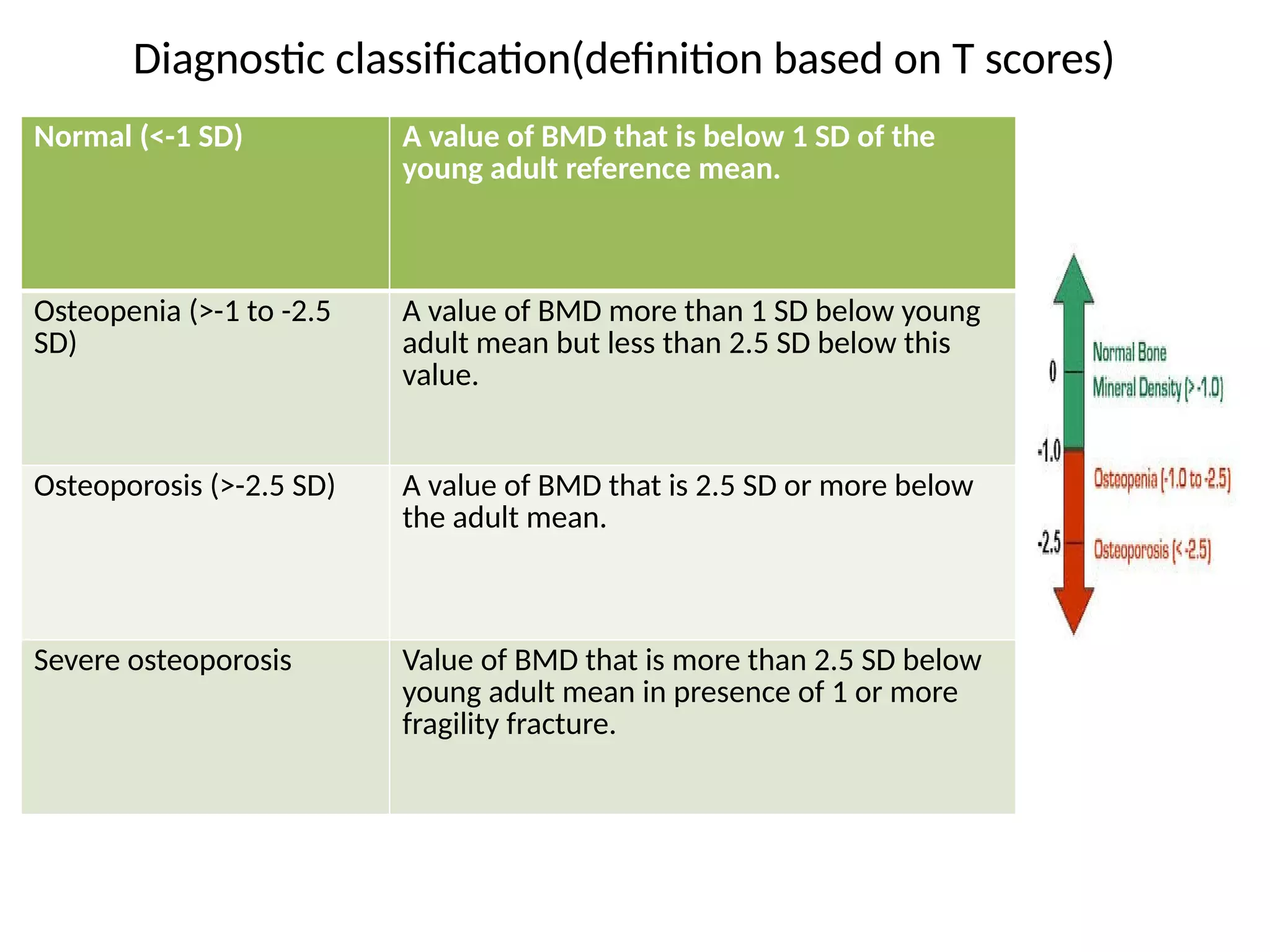
Diagnostic classification(definition based on T scores)
Normal (<-1 SD) A value of BMD that is below 1 SD of the
young adult reference mean.
Osteopenia (>-1 to -2.5
SD)
A value of BMD more than 1 SD below young
adult mean but less than 2.5 SD below this
value.
Osteoporosis (>-2.5 SD) A value of BMD that is 2.5 SD or more below
the adult mean.
Severe osteoporosis Value of BMD that is more than 2.5 SD below
young adult mean in presence of 1 or more
fragility fracture.
Fragility fractures
• Fracture occurring spontaneously or
following minor trauma such as a fall
from standing height or less.
• They exclude craniofacial, hand, ankle
and foot fractures.
• Represent 80% of fractures occurring in
post menopausal women aged 50 years
and older.
• It has a greater impact on quality of life
than COPD, diabetes or heart disease.
Normal physiology
Pathophysiology and bone fragility
• Uncoupling of remodeling
• Production of RANKL()
• Osteoclastogenesis
Causative Classification
• Primary-
1. age related bone loss in both men and
women.
2. Estrogen depletion in post menopausal
women.
• Secondary to any condition.
Conditions, diseases and medications that contribute to osteoporosis
• I. lifestyle factors:
Alcohol abuse
Smoking (A/P)
Excessive thinness
Excess vitamin A
Vitamin D insufficiency
Frequent falling
Sedentary lifestyle
Immobilization
Low calcium intake
High salt intake
• II. Genetic diseases
Cystic fibrosis
Glycogen storage diseases
Osteogenesis imperfecta
Homocystinuria
Parental history of hip
fractures
Porphyria
• III. Hypogonadal states
Androgen insensitivity
Anorexia nervosa
Athletic amenorrhea
Premature
menopause(<40 yrs)
• Endocrine disorders
Central obesity
Cushing’s syndrome
Hyperparathyroidism
Thyrotoxicosis
Diabetes mellitus
• GI disorders
IBD
Gastric bypass
Malabsorption
• Hematologic disorders
Hemophilia
Leukemia
Thalassemia
Myeloma
• Rheumatologic & autoimmune
diseases
AS
RA
systemic lupus
• Neurological and MSK
Epilepsy
MS
Dystrophy
PD
SCI
Stroke
• Miscellaneous
AIDS
COPD
CHF
Depression
Renal disease
Weight loss
Idiopathic scoliosis
• Medications
Antacids
Thyroid hormones
Parental nutrition
Anticoagulants
Anticonvulsants
Cancer chemo drugs
Glucocorticoids
Barbiturates
SSRIs
methotrexate
Generalized osteoporosis
• Senile/postmenopausal osteoporosis
• Drug induced-steroids, heparin
• Deficiency states- abnormal protein metabolism
• Neuromuscular diseases or dystrophies
• Osteogenesis imperfecta
• Ankylosing spondylitis
• Idiopathic juvenile osteoporosis
Localised osteoporosis
• Immobilized limb after trauma/fracture
Clinical features
• Osteoporosis has no
clinical warning signs
or symptoms.
• Opportunistic
diagnosis after a
fragility fracture.
• Silent Compression
fractures in the spine
can cause diffuse
back pain, reduced
mobility and
participation in
activities of daily
living.
Pathogenesis of osteoporosis related
fractures
Fractures
• Postmenopausal osteoporosis(type 1)-
fractures tend to involve predominantly the
vertebral bodies. Deformities range from
subtle indentations of end plates, wedging and
cod fish appearance and complete collapse of
vertebral body.
• Senile(type II)- Fractures tend to involve
peripheral skeleton. Typical sites are-femoral
neck, distal radius and ribs.
Vertebral fractures
Abnormal forces due to vertebral fractures
Post menopausal osteoporosis
• Onset of menopause at an
early age.
• Genetic components:
polymorphisms in estrogen
and vitamin D receptors has
been implicated in the
pathogenesis of
osteoporosis.
• Indians are known to be
deficient in vitamin B12, folic
acid, and vitamin D.
• Can be primary or secondary.
Post menopausal osteoporosis
There is an
accelerated
bone loss at the
rate of 2 5%‑
per year due to
declining
estrogens levels
and is seen in
the first 5 7‑
years after
menopause.
• A study done by keramat et al in which they have studied the
risk factors for osteoporosis in post menopausal women in
Indian and Iranian women showed that the following are
significant risk factors for Indian women:
1. Menstrual factors such as late menarche (after 14 years old),
early menopause (before 45 years old) and Postmenopausal
period more than 5 years.
2. multi-parity more than 3.
3. Bone and joint problems.
4. nil consumption of milk.
5. pure vegetarianism.
6.  red meat consumption more than 4 times per week was a risk
factor among Iranian subjects.
7. no regular walking.
8. Height less than 155 cm have been shown as a risk factor of
osteoporosis in Indian subjects and in private center of Iran.
9. Cigarette smoking induces early menopause.
Juvenile/pediatric osteoporosis
• The WHO definition of
osteoporosis is functionally
valid for adults.
• At the first pediatric
consensus development
conference, Pediatric
Osteoporosis was defined as
bone density Z score below -2
in combination with a fracture.
• Disease is self limiting with
spontaneous clinical and
radiological improvement.
Differential diagnosis
• Osteomalacia
• Bone tumors
• Osteonecrosis
• Leukemia
• Lymphoma
Outcome measures in osteoporosis
• Qualeffo-41 questionnaire:
Contains 5 domains:
1. Pain
2. Physical function
3. Social function
4. General health perception
5. Mental function(mood)
Lower the score better is the quality of life.
• Osteoporosis Assessment Questionnaire-
Physical Function (OPAQ-PF)
A reliable and valid disease-targeted measure
of health-related quality of life (HRQOL) in
osteoporosis.
Also for evaluating treatment effectiveness.
Outcome measures used in menopausal
osteoporosis
• Greene Climacteric Scale,
• Women’s Health Questionnaire,
• Menopause Rating Scale
• Utian Quality of Life Scale.
Diagnosis
• Bone mineral content(BMC) and bone mineral
density(BMD) measured using
1. Dual energy x-ray absorptiometry(DXA)
2. Quantitative computed tomography(QCT)
3. Quantitative ultrasound(QUS)
4. Bone markers
5. Body composition measures
• FRAX() Tool
DXA scores (interpretation)
• T score-used to estimate risk of developing a
fracture.
• T score= measured BMD-mean value of young
adults / SD of young normal
• Z score= measured BMD-mean value of age &
gender matched / SD of age & gender
matched individuals.
FRAX
• frax tool.html
• A simple web and paper–based method of
calculating probability of fracture risk.
• FRAX is able to calculate fracture risk with or
without bone mineral density values.
• Predicts 10 year risk of hip fracture or
osteoporotic fracture.
Vertebral imaging
• A vertebral fracture is consistent with diagnosis of
osteoporosis even in absence of a bone density
diagnosis.
• Radiographically confirmed vertebral fractures are a
sign of impaired bone quality and strength and a
strong predictor of new vertebral and other
fractures.
• Vertebral imaging can be performed using a lateral
thoracic and lumbar spine x-ray or a lateral vertebral
fracture assessment(VFA) done on a DXA machine.
Biochemical markers of bone turnover
• Resorption markers-
- Serum C-telopeptide(CTX)
- Urinary N-telopeptide(NTX)
• Formation markers-
- Osteocalcin
- Serum specific alkaline phosphatase(BSAP)
- Aminoterminal propeptide of type 1
procollagen(P1 NP)
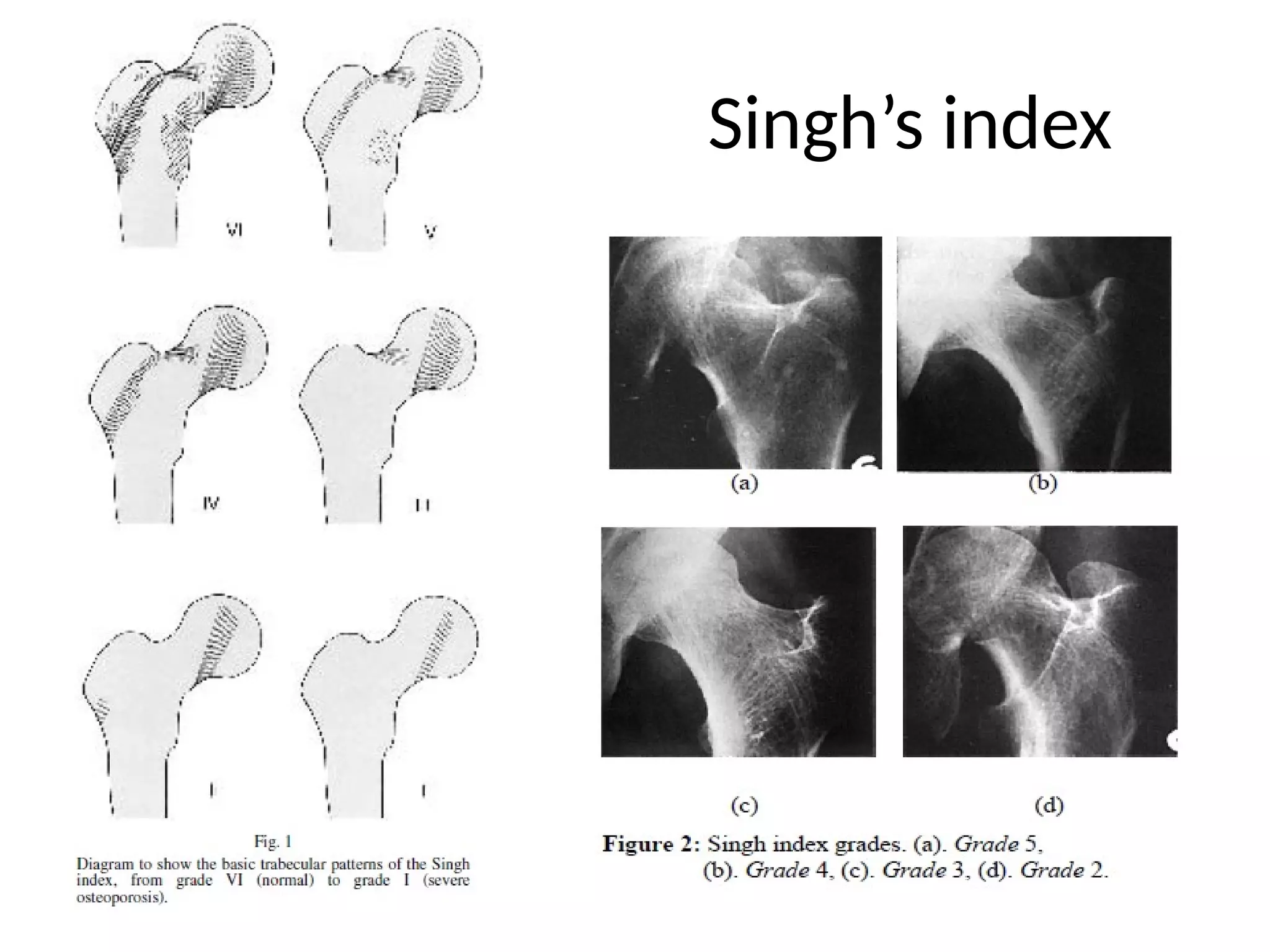
Singh’s index
Metacarpal index
• Thinning of cortex(feature of osteoporosis) is
most reliably demonstrated in 2nd
metacarpal
at the diaphysis.
• Normally cortical thickening should be
approximately 1/4th
to 1/3rd
the thickness of
metacarpal.
Other tests associated with osteoporosis
• Serum calcium
• Serum phosphurus
• Liver function test
• Kidney function test-GFR
• Complete blood count
• TSH
• Testosterone levels
• Serum creatinine
• Vitamin D levels
Medical management
Drugs
Antiresorptive
Biphosph
onates
Estrogen receptor
modulators-
raloxifene
calcitoni
n
Hormone
replacement
therapy
Anabolic
Synthetic human PTH-
teriparatide
Newer options:
Denosumab- human monoclonal antibody to RANKL.
Zolendronic acid
Strontium ranelate
Physiotherapy management
• Conventional
physiotherapy:
- Treatment of low back
pain.
- Basic stabilization exercises
for the spine.
- Walking, stair climbing and
weight bearing exercises
Exercise prescription
• Frequency: weight bearing aerobic 3-5d/wk
resistance training 2-3d/wk
• Intensity: moderate intensity 40-60% HRR for weight
bearing exs. 60-80% of 1 RM,8-12 reps for resistance exs.
• Time: 30-60 mins/day
• Type:
1. Weight bearing-stair climbing, walking with intermittent
jogging.
2. Resistance exs-weight lifting.
Recent advances
• Guido et al., evaluated the effects of physical
therapy on quality of life in osteoporosis patients.
44 osteoporotic patients were divided into 2
groups conventional exercises and sling exercises.
QOL was assessed using QUALEFFO-41
questionnaire.
Both groups showed significant improvement in
BMD but greater improvement in the sling
exercises group.
Sling exercises
• S.von Stengel et al., studied the effect of a
multifunctional training program and whole
body vibration on lumbar BMD in
postmenopausal women.
They found that a combination of the above
two gave significant results than whole body
vibration alone.
Type of exercise in middle aged adults
• High intensity progressive resistance training
is effective in improving vertebral BMD.
• High impact weight bearing exercises are
effective for femoral neck BMD.
• Premenopausal women
Type of exercise in older adults
• A meta-analysis has reported that mixed
impact loading programs including low-
moderate impact exercises such as jogging,
walking and stair climbing were most
effective for preserving BMD at the lumbar
spine and femoral neck when combined with
resistance training.
Functional electrical stimulation
• In Spinal cord injuries for extensive muscle and bone
atrophy below site of injury.
• In a study of 6 chronic and acute SCI patients, electrical
stimulation improved systolic and diastolic pressure
thereby activating the muscle pump.
• Improved circulation indirectly provides nutrition to the
bone reducing bone loss.
• Eser and collegues(2003) showed that muscle stimulation
for 30 mins/day immediately after onset of paralysis
slowed the rate of bone loss by 50% in the tibia.
T’ai chi chuan
• Recently emerged exercise modality
• Characterized by high demand for neuromuscular
coordination, low velocity of muscle contraction, low
impact and minimal weight bearing.
• In a case control study in postmenopausal women t’ai
chi significantly reduced trabecular bone loss in
tibia( Qin et al., 2002)
• Improves muscle strength, flexibility and
neuromuscular coordination thus reducing fall related
fracture risk in elderly.(Lane 1999)
T’ai chi chuan
Ergonomics
Outdoors:
 Use a cane or walker for added stability.
 Wear rubber-soled shoes for friction.
 Walk on grass when sidewalks are slippery.
 Be careful on highly polished floors that
become slick and dangerous when wet.
Indoors:
 Keep rooms free of clutter, especially on floors.
 Keep floor surfaces smooth but not slippery.
 Wear supportive, low-heeled shoes even at home.
 Avoid walking in socks, stockings, or slippers.
 Be sure carpets and area rugs have skid-proof backing or are
tacked to the floor.
 Be sure stairwells are well lit and that stairs have handrails on
both sides.
 Install grab bars on bathroom walls near tub, shower, and toilet.
 Use a rubber bath mat in shower or tub.
 Keep a flashlight with fresh batteries beside your bed.
 If using a step stool for hard-to-reach areas, use a sturdy one
with a handrail and wide steps.
 Add ceiling fixtures to rooms lit by lamps.
Prevention
References
1. Oxford textbook of orthopaedics & trauma-christopher bulstrode.
2. ACSM
3. Osteoporosis-A guide for clinicians by pauline and miller.
4. Osteoporosis-clinical guidelines for prevention, diagnosis and management-
Sarah and theresa.
5. Fundamentals of diagnostic radiology by william brant.
6. Clinical imaging: An atlas of differential diagnosis by ronald eisenberg.
7. Musculoskeletal imaging by klaus bohndorf and herwig imhof.
8. 2014 clinicians guideline to prevention and treatment of osteoporosis.
9. National osteoporosis foundation guidelines.
10.Osteoporosis: R Keith-alternative medicine review vol 12, 2007.
11.Osteoporosis:review, genetics and hormones by R Rizzoli.
12.Physical activity and bone health by karim khan.
13.Journal of molecular endocrinology, 2001-R Rizzoli.
14.2010 canada guidelines for osteoporosis.
15.Indian journal of orthopedics: heel ultradensitometer-H Rao et al., 2003.
Osteoporosis

Osteoporosis

  • 1.
  • 2.
    Contents • Definition • Epidemiology •Diagnostic and causative classification • Physiology and pathophysiology • Clinical features • Postmenopausal and juvenile osteoporosis • Differential diagnosis • Outcome measures • Diagnosis • Management • References
  • 3.
    DEFINITION • WHO hasdefined osteoporosis as a systemic skeletal disease characterized by low bone mass and micro architectural deterioration of bone tissue, with a consequent increase in bone fragility and susceptibility to fracture.
  • 4.
    Epidemiology • >61 millionIndians have osteoporosis. • Of these 80% are females. • India has highest prevalence of osteoporosis and osteopenia in the world followed by Japan. • The mean bone mineral density (BMD) in India is about two SDs lower than in women in the western population. The prevalence of low bone mass is to the extent of 40% from the age of 40 years and increases to more than 62% by age 60 years and 80% by the age of 65 years.
  • 5.
    Diagnostic classification(definition basedon T scores) Normal (<-1 SD) A value of BMD that is below 1 SD of the young adult reference mean. Osteopenia (>-1 to -2.5 SD) A value of BMD more than 1 SD below young adult mean but less than 2.5 SD below this value. Osteoporosis (>-2.5 SD) A value of BMD that is 2.5 SD or more below the adult mean. Severe osteoporosis Value of BMD that is more than 2.5 SD below young adult mean in presence of 1 or more fragility fracture.
  • 6.
    Fragility fractures • Fractureoccurring spontaneously or following minor trauma such as a fall from standing height or less. • They exclude craniofacial, hand, ankle and foot fractures. • Represent 80% of fractures occurring in post menopausal women aged 50 years and older. • It has a greater impact on quality of life than COPD, diabetes or heart disease.
  • 7.
  • 8.
    Pathophysiology and bonefragility • Uncoupling of remodeling • Production of RANKL() • Osteoclastogenesis
  • 9.
    Causative Classification • Primary- 1.age related bone loss in both men and women. 2. Estrogen depletion in post menopausal women. • Secondary to any condition.
  • 10.
    Conditions, diseases andmedications that contribute to osteoporosis • I. lifestyle factors: Alcohol abuse Smoking (A/P) Excessive thinness Excess vitamin A Vitamin D insufficiency Frequent falling Sedentary lifestyle Immobilization Low calcium intake High salt intake • II. Genetic diseases Cystic fibrosis Glycogen storage diseases Osteogenesis imperfecta Homocystinuria Parental history of hip fractures Porphyria • III. Hypogonadal states Androgen insensitivity Anorexia nervosa Athletic amenorrhea Premature menopause(<40 yrs) • Endocrine disorders Central obesity Cushing’s syndrome Hyperparathyroidism Thyrotoxicosis Diabetes mellitus • GI disorders IBD Gastric bypass Malabsorption
  • 11.
    • Hematologic disorders Hemophilia Leukemia Thalassemia Myeloma •Rheumatologic & autoimmune diseases AS RA systemic lupus • Neurological and MSK Epilepsy MS Dystrophy PD SCI Stroke • Miscellaneous AIDS COPD CHF Depression Renal disease Weight loss Idiopathic scoliosis • Medications Antacids Thyroid hormones Parental nutrition Anticoagulants Anticonvulsants Cancer chemo drugs Glucocorticoids Barbiturates SSRIs methotrexate
  • 12.
    Generalized osteoporosis • Senile/postmenopausalosteoporosis • Drug induced-steroids, heparin • Deficiency states- abnormal protein metabolism • Neuromuscular diseases or dystrophies • Osteogenesis imperfecta • Ankylosing spondylitis • Idiopathic juvenile osteoporosis Localised osteoporosis • Immobilized limb after trauma/fracture
  • 13.
    Clinical features • Osteoporosishas no clinical warning signs or symptoms. • Opportunistic diagnosis after a fragility fracture. • Silent Compression fractures in the spine can cause diffuse back pain, reduced mobility and participation in activities of daily living.
  • 14.
  • 15.
    Fractures • Postmenopausal osteoporosis(type1)- fractures tend to involve predominantly the vertebral bodies. Deformities range from subtle indentations of end plates, wedging and cod fish appearance and complete collapse of vertebral body. • Senile(type II)- Fractures tend to involve peripheral skeleton. Typical sites are-femoral neck, distal radius and ribs.
  • 16.
  • 17.
    Abnormal forces dueto vertebral fractures
  • 18.
    Post menopausal osteoporosis •Onset of menopause at an early age. • Genetic components: polymorphisms in estrogen and vitamin D receptors has been implicated in the pathogenesis of osteoporosis. • Indians are known to be deficient in vitamin B12, folic acid, and vitamin D. • Can be primary or secondary.
  • 19.
    Post menopausal osteoporosis Thereis an accelerated bone loss at the rate of 2 5%‑ per year due to declining estrogens levels and is seen in the first 5 7‑ years after menopause.
  • 20.
    • A studydone by keramat et al in which they have studied the risk factors for osteoporosis in post menopausal women in Indian and Iranian women showed that the following are significant risk factors for Indian women: 1. Menstrual factors such as late menarche (after 14 years old), early menopause (before 45 years old) and Postmenopausal period more than 5 years. 2. multi-parity more than 3. 3. Bone and joint problems. 4. nil consumption of milk. 5. pure vegetarianism. 6.  red meat consumption more than 4 times per week was a risk factor among Iranian subjects. 7. no regular walking. 8. Height less than 155 cm have been shown as a risk factor of osteoporosis in Indian subjects and in private center of Iran. 9. Cigarette smoking induces early menopause.
  • 21.
    Juvenile/pediatric osteoporosis • TheWHO definition of osteoporosis is functionally valid for adults. • At the first pediatric consensus development conference, Pediatric Osteoporosis was defined as bone density Z score below -2 in combination with a fracture. • Disease is self limiting with spontaneous clinical and radiological improvement.
  • 22.
    Differential diagnosis • Osteomalacia •Bone tumors • Osteonecrosis • Leukemia • Lymphoma
  • 23.
    Outcome measures inosteoporosis • Qualeffo-41 questionnaire: Contains 5 domains: 1. Pain 2. Physical function 3. Social function 4. General health perception 5. Mental function(mood) Lower the score better is the quality of life.
  • 24.
    • Osteoporosis AssessmentQuestionnaire- Physical Function (OPAQ-PF) A reliable and valid disease-targeted measure of health-related quality of life (HRQOL) in osteoporosis. Also for evaluating treatment effectiveness.
  • 25.
    Outcome measures usedin menopausal osteoporosis • Greene Climacteric Scale, • Women’s Health Questionnaire, • Menopause Rating Scale • Utian Quality of Life Scale.
  • 26.
    Diagnosis • Bone mineralcontent(BMC) and bone mineral density(BMD) measured using 1. Dual energy x-ray absorptiometry(DXA) 2. Quantitative computed tomography(QCT) 3. Quantitative ultrasound(QUS) 4. Bone markers 5. Body composition measures • FRAX() Tool
  • 27.
    DXA scores (interpretation) •T score-used to estimate risk of developing a fracture. • T score= measured BMD-mean value of young adults / SD of young normal • Z score= measured BMD-mean value of age & gender matched / SD of age & gender matched individuals.
  • 30.
    FRAX • frax tool.html •A simple web and paper–based method of calculating probability of fracture risk. • FRAX is able to calculate fracture risk with or without bone mineral density values. • Predicts 10 year risk of hip fracture or osteoporotic fracture.
  • 31.
    Vertebral imaging • Avertebral fracture is consistent with diagnosis of osteoporosis even in absence of a bone density diagnosis. • Radiographically confirmed vertebral fractures are a sign of impaired bone quality and strength and a strong predictor of new vertebral and other fractures. • Vertebral imaging can be performed using a lateral thoracic and lumbar spine x-ray or a lateral vertebral fracture assessment(VFA) done on a DXA machine.
  • 35.
    Biochemical markers ofbone turnover • Resorption markers- - Serum C-telopeptide(CTX) - Urinary N-telopeptide(NTX) • Formation markers- - Osteocalcin - Serum specific alkaline phosphatase(BSAP) - Aminoterminal propeptide of type 1 procollagen(P1 NP)
  • 36.
  • 37.
    Metacarpal index • Thinningof cortex(feature of osteoporosis) is most reliably demonstrated in 2nd metacarpal at the diaphysis. • Normally cortical thickening should be approximately 1/4th to 1/3rd the thickness of metacarpal.
  • 39.
    Other tests associatedwith osteoporosis • Serum calcium • Serum phosphurus • Liver function test • Kidney function test-GFR • Complete blood count • TSH • Testosterone levels • Serum creatinine • Vitamin D levels
  • 40.
    Medical management Drugs Antiresorptive Biphosph onates Estrogen receptor modulators- raloxifene calcitoni n Hormone replacement therapy Anabolic Synthetichuman PTH- teriparatide Newer options: Denosumab- human monoclonal antibody to RANKL. Zolendronic acid Strontium ranelate
  • 41.
    Physiotherapy management • Conventional physiotherapy: -Treatment of low back pain. - Basic stabilization exercises for the spine. - Walking, stair climbing and weight bearing exercises
  • 42.
    Exercise prescription • Frequency:weight bearing aerobic 3-5d/wk resistance training 2-3d/wk • Intensity: moderate intensity 40-60% HRR for weight bearing exs. 60-80% of 1 RM,8-12 reps for resistance exs. • Time: 30-60 mins/day • Type: 1. Weight bearing-stair climbing, walking with intermittent jogging. 2. Resistance exs-weight lifting.
  • 43.
    Recent advances • Guidoet al., evaluated the effects of physical therapy on quality of life in osteoporosis patients. 44 osteoporotic patients were divided into 2 groups conventional exercises and sling exercises. QOL was assessed using QUALEFFO-41 questionnaire. Both groups showed significant improvement in BMD but greater improvement in the sling exercises group.
  • 44.
  • 45.
    • S.von Stengelet al., studied the effect of a multifunctional training program and whole body vibration on lumbar BMD in postmenopausal women. They found that a combination of the above two gave significant results than whole body vibration alone.
  • 46.
    Type of exercisein middle aged adults • High intensity progressive resistance training is effective in improving vertebral BMD. • High impact weight bearing exercises are effective for femoral neck BMD. • Premenopausal women
  • 48.
    Type of exercisein older adults • A meta-analysis has reported that mixed impact loading programs including low- moderate impact exercises such as jogging, walking and stair climbing were most effective for preserving BMD at the lumbar spine and femoral neck when combined with resistance training.
  • 50.
    Functional electrical stimulation •In Spinal cord injuries for extensive muscle and bone atrophy below site of injury. • In a study of 6 chronic and acute SCI patients, electrical stimulation improved systolic and diastolic pressure thereby activating the muscle pump. • Improved circulation indirectly provides nutrition to the bone reducing bone loss. • Eser and collegues(2003) showed that muscle stimulation for 30 mins/day immediately after onset of paralysis slowed the rate of bone loss by 50% in the tibia.
  • 51.
    T’ai chi chuan •Recently emerged exercise modality • Characterized by high demand for neuromuscular coordination, low velocity of muscle contraction, low impact and minimal weight bearing. • In a case control study in postmenopausal women t’ai chi significantly reduced trabecular bone loss in tibia( Qin et al., 2002) • Improves muscle strength, flexibility and neuromuscular coordination thus reducing fall related fracture risk in elderly.(Lane 1999)
  • 52.
  • 54.
    Ergonomics Outdoors:  Use acane or walker for added stability.  Wear rubber-soled shoes for friction.  Walk on grass when sidewalks are slippery.  Be careful on highly polished floors that become slick and dangerous when wet.
  • 55.
    Indoors:  Keep roomsfree of clutter, especially on floors.  Keep floor surfaces smooth but not slippery.  Wear supportive, low-heeled shoes even at home.  Avoid walking in socks, stockings, or slippers.  Be sure carpets and area rugs have skid-proof backing or are tacked to the floor.  Be sure stairwells are well lit and that stairs have handrails on both sides.  Install grab bars on bathroom walls near tub, shower, and toilet.  Use a rubber bath mat in shower or tub.  Keep a flashlight with fresh batteries beside your bed.  If using a step stool for hard-to-reach areas, use a sturdy one with a handrail and wide steps.  Add ceiling fixtures to rooms lit by lamps.
  • 56.
  • 57.
    References 1. Oxford textbookof orthopaedics & trauma-christopher bulstrode. 2. ACSM 3. Osteoporosis-A guide for clinicians by pauline and miller. 4. Osteoporosis-clinical guidelines for prevention, diagnosis and management- Sarah and theresa. 5. Fundamentals of diagnostic radiology by william brant. 6. Clinical imaging: An atlas of differential diagnosis by ronald eisenberg. 7. Musculoskeletal imaging by klaus bohndorf and herwig imhof. 8. 2014 clinicians guideline to prevention and treatment of osteoporosis. 9. National osteoporosis foundation guidelines. 10.Osteoporosis: R Keith-alternative medicine review vol 12, 2007. 11.Osteoporosis:review, genetics and hormones by R Rizzoli. 12.Physical activity and bone health by karim khan. 13.Journal of molecular endocrinology, 2001-R Rizzoli. 14.2010 canada guidelines for osteoporosis. 15.Indian journal of orthopedics: heel ultradensitometer-H Rao et al., 2003.