OSTEOPOROSIS
INTRODUCTION
• Osteoporosis defined as a reduction in the strength of bone
that lead to an increased risk of fractures
• WHO- Bone density that falls 2.5 standard deviation (SD)
below the mean for young healthy adults of the same sex
also referred to as a T score of ≤ -2.5
BONE STRUCTURE
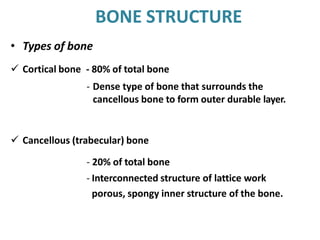
• Types of bone
 Cortical bone - 80% of total bone
- Dense type of bone that surrounds the
cancellous bone to form outer durable layer.
 Cancellous (trabecular) bone
- 20% of total bone
- Interconnected structure of lattice work
porous, spongy inner structure of the bone.
 Osteoblast, Osteocytes and Osteoclasts
 Osteoblast and Osteocytes are derived from mesenchymal
stem cells
 During remodelling Osteoblast lay down layers of bone that
add strength to the matrix
Types of bone cells
 Some of the osteoblast are buried in the matrix to become
osteocytes
 Osteoclasts originate from hematopoietic stem cells
 Osteoclasts are the cells that remove old bone by
dissolving the mineral and breaking down the matrix in a
process called bone resorption
EPIDEMIOLOGY
• Osteoporosis occur more frequently with increasing age as
bone tissue is lost progressively
• More in women as loss of ovarian function at menopause
precipitates rapid bone loss and lower peak bone mass
• In India around 36 million people have osteoporosis
• 1 out of 8 males and 1 out of 3 females in India suffer from
osteoporosis
• Around 80% of people with osteoporosis are women
• While the peak incidence of osteoporosis occur at about
70-80 years of age, in India it may afflict at age of 50-60
years of age
• Osteoporosis is responsible for one and half million
fracture / year
• World wide over 200 million people have osteoporosis
PATHOPHYSIOLOGY
• Bone remodelling has two primary functions
 To repair micro damage within the skeleton to maintain skeletal
strength and relative youth of the skeleton
 To supply calcium from the skeleton to maintain serum calcium
• After 30-45 years of age, bone resorption exceeds formation
• Remodelling may be activated by micro damage to bone as a
result of excessive or accumulated stress
• Osteoblast synthesize and secrete the organic matrix and
regulate new bone formation
• Osteoclasts mainly carried out resorption of bone
• Excessive bone loss can be due to an increase in osteoclastic
activity or decrease in osteoblastic activity
• Nutrition and lifestyle play important role in growth
although genetic factors primarily determine peak skeletal
mass and density
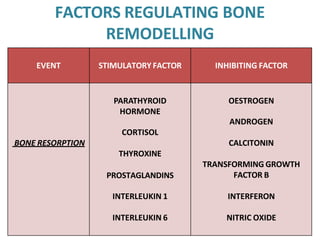
EVENT STIMULATORY FACTOR INHIBITING FACTOR
PARATHYROID
HORMONE
OESTROGEN
ANDROGEN
CORTISOL
BONE RESORPTION CALCITONIN
THYROXINE
PROSTAGLANDINS
TRANSFORMING GROWTH
FACTOR B
INTERLEUKIN 1 INTERFERON
INTERLEUKIN 6 NITRIC OXIDE
FACTORS REGULATING BONE
REMODELLING
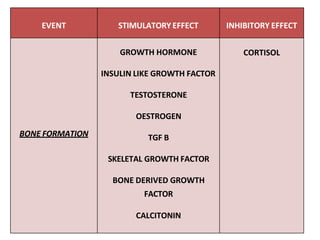
EVENT STIMULATORY EFFECT INHIBITORY EFFECT
BONE FORMATION
GROWTH HORMONE
INSULIN LIKE GROWTH FACTOR
TESTOSTERONE
OESTROGEN
TGF B
SKELETAL GROWTH FACTOR
BONE DERIVED GROWTH
FACTOR
CALCITONIN
CORTISOL
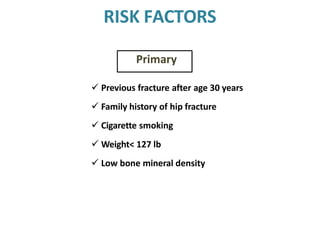
RISK FACTORS
 Previous fracture after age 30 years
 Family history of hip fracture
 Cigarette smoking
 Weight< 127 lb
 Low bone mineral density
Primary
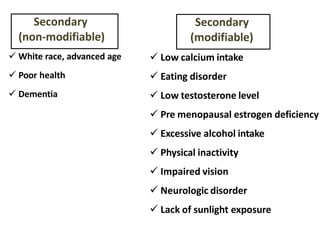
 Low calcium intake
 Eating disorder
 Low testosterone level
 Pre menopausal estrogen deficiency
 Excessive alcohol intake
 Physical inactivity
 Impaired vision
 Neurologic disorder
 Lack of sunlight exposure
Secondary
(modifiable)
 White race, advanced age
 Poor health
 Dementia
Secondary
(non-modifiable)
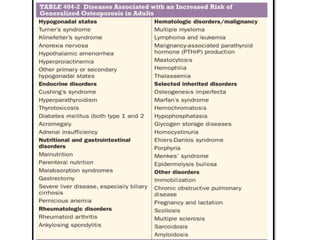
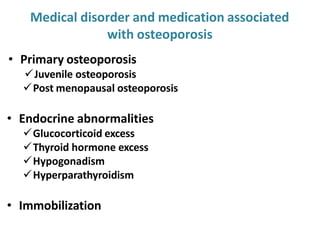
Medical disorder and medication associated
with osteoporosis
• Primary osteoporosis
Juvenile osteoporosis
Post menopausal osteoporosis
• Endocrine abnormalities
Glucocorticoid excess
Thyroid hormone excess
Hypogonadism
Hyperparathyroidism
• Immobilization
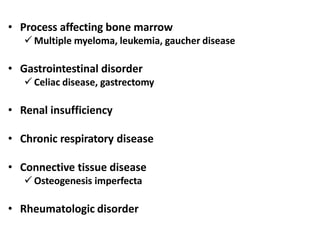
• Process affecting bone marrow
 Multiple myeloma, leukemia, gaucher disease
• Gastrointestinal disorder
 Celiac disease, gastrectomy
• Renal insufficiency
• Chronic respiratory disease
• Connective tissue disease
 Osteogenesis imperfecta
• Rheumatologic disorder
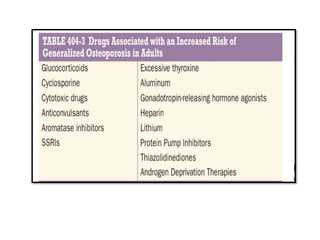
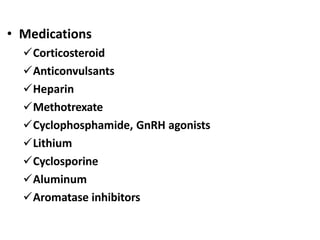
• Medications
Corticosteroid
Anticonvulsants
Heparin
Methotrexate
Cyclophosphamide, GnRH agonists
Lithium
Cyclosporine
Aluminum
Aromatase inhibitors
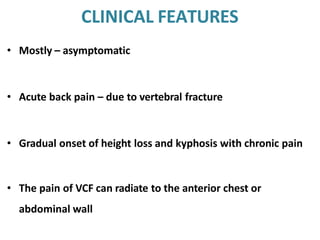
CLINICAL FEATURES
• Mostly – asymptomatic
• Acute back pain – due to vertebral fracture
• Gradual onset of height loss and kyphosis with chronic pain
• The pain of VCF can radiate to the anterior chest or
abdominal wall
• Lumbar fractures can be associated with abdominal
symptoms like distension, early satiety and constipation
• Peripheral osteoporotic fractures- local pain, tenderness
and deformity
• Hip fracture, the affected leg is shortened and
externally rotated
INVESTIGATIONS
Dual Energy X Ray Absorptiometry (DXA)
 Clinical determination are made of the lumbar spine and hip
 T score below -2.5 in the lumbar spine, femoral neck or total
hip has been defined as osteoporosis
 It determine mass of bone mineral in the path of the beam
divided by the cross sectional area of the beam expressed as
g/cm2
 DXA can be used to obtain lateral images of thoracic and
lumbar spine, a technique called vertebral fracture
assessment(VFA)
 If only one skeletal site can be measured it is best to assess
the spine in individuals < 60 years and hip in > 60 years
Indication for BMD testing
• Women aged ≥65 yrs and men aged ≥70; regardless of
clinical risk factors for fracture
• Younger postmenopausal women, women in the
menopausal transition, and men aged from 50 to 69
with clinical risk factors for fracture
• Adults who have fracture at or after age 50
• Adults with a condition (e.g., rheumatoid arthritis) or
taking a medication ( e.g. , glucocorticoids at a daily
dose > 5mg prednisone or equivalent for > 3 months)
associated with low bone mass or bone loss
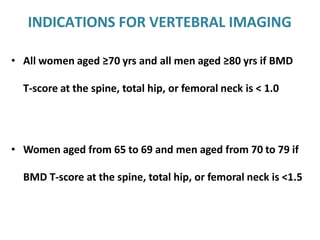
INDICATIONS FOR VERTEBRAL IMAGING
• All women aged ≥70 yrs and all men aged ≥80 yrs if BMD
T-score at the spine, total hip, or femoral neck is < 1.0
• Women aged from 65 to 69 and men aged from 70 to 79 if
BMD T-score at the spine, total hip, or femoral neck is <1.5
• Postmenopausal women and men aged ≥50 with
specific risk factors:
– Low-trauma fracture during adulthood (aged≥50)
– Historical height loss of ≥1.5 in.(4cm)
– Prospective height loss of ≥0.8 in. (2cm)
– Recent or ongoing long-term glucocorticoid treatment
• BONE BIOPSY
 Tetracycline labelling of the skeleton determine rate of
remodelling and evaluation of other metabolic bone diseases.
 Not used for diagnosis
• BIOCHEMICAL MARKERS
 It provide an earlier estimate of patient response than bone
densitometry
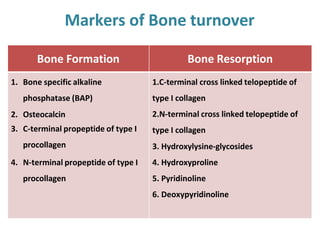
Markers of Bone turnover
Bone Formation Bone Resorption
1. Bone specific alkaline
phosphatase (BAP)
2. Osteocalcin
3. C-terminal propeptide of type І
procollagen
4. N-terminal propeptide of type І
procollagen
1.C-terminal cross linked telopeptide of
type І collagen
2.N-terminal cross linked telopeptide of
type І collagen
3. Hydroxylysine-glycosides
4. Hydroxyproline
5. Pyridinoline
6. Deoxypyridinoline
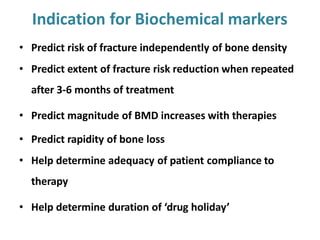
Indication for Biochemical markers
• Predict risk of fracture independently of bone density
• Predict extent of fracture risk reduction when repeated
after 3-6 months of treatment
• Predict magnitude of BMD increases with therapies
• Predict rapidity of bone loss
• Help determine adequacy of patient compliance to
therapy
• Help determine duration of ‘drug holiday’
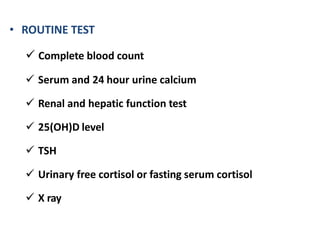
• ROUTINE TEST
 Complete blood count
 Serum and 24 hour urine calcium
 Renal and hepatic function test
 25(OH)D level
 TSH
 Urinary free cortisol or fasting serum cortisol
 X ray
TREATMENT
• When to start treatment
 When there is hip or vertebral fracture (clinical or
asymptomatic)
 When BMD is > 2.5 SD below the mean value for young adults
(T score ≤ -2.5) in either spine, total hip or femoral neck
 Post menopausal women and men >50 years with fracture risk
factors even if BMD is not in the osteoporosis range
Management of underlying disease
• Risk factor reduction
• Nutritional recommendations
- Calcium: 1200mg/day ,doses of supplements should be <600
mg per single dose
- Vit D: (serum 25(OH) D level should >30 ng/ml)
- recommends daily intake
- Age < 50yrs  200 IU
- 50-70 yrs  400 IU
- >70 yrs  600 IU
• Exercise
Pharmacologic treatment
Antiresorptive Agents
1. Estrogen, Progesteron, Tibolone -
 reduce bone turn over, prevent bone loss, and induce small
increase in bone mass (50% )
 Act on ERs especially α, inhibit osteoclast directly and
stimulate osteobast to produce paracrine factor.
 Increased risk of fatal and non fatal MI, STROKE, venous
thromboembolism, breast cancer
1. Raloxifene, Bazedoxifene:
 Estrogen antagonist on breast and estrogen agonist on bone,
lipids, clotting factors and endometrium.
 Use in pt with low risk of deep vein thrombosis (DVT) and for
whom bisphosphonates or denosumab are not appropriate, or
with a high risk of breast cancer.
 Raloxifene 60mg once daily.
SELECTIVE ESTROGEN RECEPTOR MODULATORS
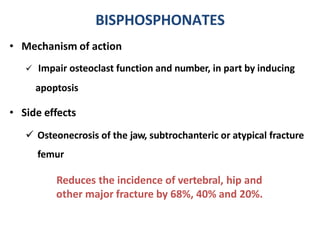
• Mechanism of action
 Impair osteoclast function and number, in part by inducing
apoptosis
• Side effects
 Osteonecrosis of the jaw, subtrochanteric or atypical fracture
femur
Reduces the incidence of vertebral, hip and
other major fracture by 68%, 40% and 20%.
BISPHOSPHONATES
BISPHOSPHONATES
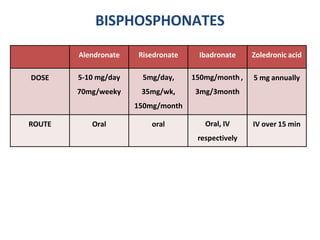
Alendronate Risedronate Ibadronate Zoledronic acid
DOSE 5-10 mg/day
70mg/weeky
5mg/day,
35mg/wk,
150mg/month
150mg/month ,
3mg/3month
5 mg annually
ROUTE Oral oral Oral, IV
respectively
IV over 15 min
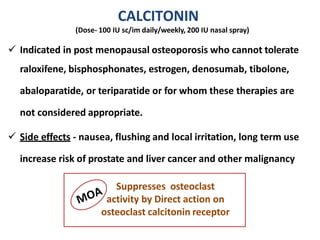
CALCITONIN
(Dose- 100 IU sc/im daily/weekly, 200 IU nasal spray)
 Indicated in post menopausal osteoporosis who cannot tolerate
raloxifene, bisphosphonates, estrogen, denosumab, tibolone,
abaloparatide, or teriparatide or for whom these therapies are
not considered appropriate.
 Side effects - nausea, flushing and local irritation, long term use
increase risk of prostate and liver cancer and other malignancy
Suppresses osteoclast
activity by Direct action on
osteoclast calcitonin receptor
 Stimulate calcium uptake in bone while inhibit bone
resorption
 Orally administered. Approved by European regulatory
agencies not by FDA
 Increased cardiovascular events
Strontium Ranelate
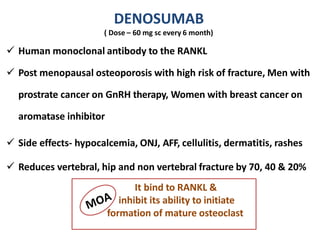
DENOSUMAB
( Dose – 60 mg sc every 6 month)
 Human monoclonal antibody to the RANKL
 Post menopausal osteoporosis with high risk of fracture, Men with
prostrate cancer on GnRH therapy, Women with breast cancer on
aromatase inhibitor
 Side effects- hypocalcemia, ONJ, AFF, cellulitis, dermatitis, rashes
 Reduces vertebral, hip and non vertebral fracture by 70, 40 & 20%
It bind to RANKL &
inhibit its ability to initiate
formation of mature osteoclast
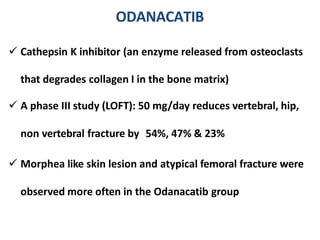
ODANACATIB
 Cathepsin K inhibitor (an enzyme released from osteoclasts
that degrades collagen I in the bone matrix)
 A phase III study (LOFT): 50 mg/day reduces vertebral, hip,
non vertebral fracture by 54%, 47% & 23%
 Morphea like skin lesion and atypical femoral fracture were
observed more often in the Odanacatib group
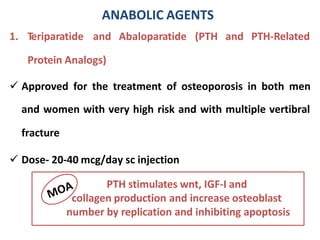
1. Teriparatide and Abaloparatide (PTH
Protein Analogs)
and PTH-Related
 Approved for the treatment of osteoporosis in both men
and women with very high risk and with multiple vertibral
fracture
 Dose- 20-40 mcg/day sc injection
ANABOLIC AGENTS
PTH stimulates wnt, IGF-I and
collagen production and increase osteoblast
number by replication and inhibiting apoptosis
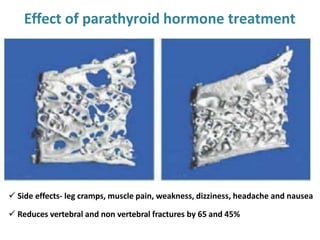
Effect of parathyroid hormone treatment
 Side effects- leg cramps, muscle pain, weakness, dizziness, headache and nausea
 Reduces vertebral and non vertebral fractures by 65 and 45%
 Depending on the location and severity of the fractures
procedures may include open reduction and internal
fixation, hemiarthroplasty and total arthroplasty
 Long bone fractures often require either external and
internal fixation
 Vertebral, rib and pelvic fracture usually managed with
supportive care requiring no specific orthopaedic treatment
Treatment of patients with osteoporotic fracture
 BMD is considered as a monitoring tool, should be repeated at
intervals> 2 years
 Changes must exceed 4% in the spine and 6% in the hip to be
considered significant in any individual
 Biochemical marker of bone turnover may prove useful for
treatment monitoring
 Determination should be made before therapy is started and
repeated > 4 month after therapy
 Change in bone turnover markers must be 30-40% lower than
the baseline to be significant
Treatment monitoring
 Reducing risk factors for bone loss(hypogonadism, decreased
body fat, cigarette smoking, inactivity, alcohol intake)
 Patient should be advised to consume adequate vitamin D and
calcium
 Patient should be advised to participate in a regular weight
bearing exercise
 Avoid caffeine
Preventive measures
THANK YOU

Osteoporosis.pptx

  • 1.
  • 2.
    INTRODUCTION • Osteoporosis definedas a reduction in the strength of bone that lead to an increased risk of fractures • WHO- Bone density that falls 2.5 standard deviation (SD) below the mean for young healthy adults of the same sex also referred to as a T score of ≤ -2.5
  • 3.
    BONE STRUCTURE • Typesof bone  Cortical bone - 80% of total bone - Dense type of bone that surrounds the cancellous bone to form outer durable layer.  Cancellous (trabecular) bone - 20% of total bone - Interconnected structure of lattice work porous, spongy inner structure of the bone.
  • 5.
     Osteoblast, Osteocytesand Osteoclasts  Osteoblast and Osteocytes are derived from mesenchymal stem cells  During remodelling Osteoblast lay down layers of bone that add strength to the matrix Types of bone cells
  • 6.
     Some ofthe osteoblast are buried in the matrix to become osteocytes  Osteoclasts originate from hematopoietic stem cells  Osteoclasts are the cells that remove old bone by dissolving the mineral and breaking down the matrix in a process called bone resorption
  • 7.
    EPIDEMIOLOGY • Osteoporosis occurmore frequently with increasing age as bone tissue is lost progressively • More in women as loss of ovarian function at menopause precipitates rapid bone loss and lower peak bone mass • In India around 36 million people have osteoporosis • 1 out of 8 males and 1 out of 3 females in India suffer from osteoporosis
  • 8.
    • Around 80%of people with osteoporosis are women • While the peak incidence of osteoporosis occur at about 70-80 years of age, in India it may afflict at age of 50-60 years of age • Osteoporosis is responsible for one and half million fracture / year • World wide over 200 million people have osteoporosis
  • 9.
    PATHOPHYSIOLOGY • Bone remodellinghas two primary functions  To repair micro damage within the skeleton to maintain skeletal strength and relative youth of the skeleton  To supply calcium from the skeleton to maintain serum calcium • After 30-45 years of age, bone resorption exceeds formation • Remodelling may be activated by micro damage to bone as a result of excessive or accumulated stress
  • 10.
    • Osteoblast synthesizeand secrete the organic matrix and regulate new bone formation • Osteoclasts mainly carried out resorption of bone • Excessive bone loss can be due to an increase in osteoclastic activity or decrease in osteoblastic activity • Nutrition and lifestyle play important role in growth although genetic factors primarily determine peak skeletal mass and density
  • 11.
    EVENT STIMULATORY FACTORINHIBITING FACTOR PARATHYROID HORMONE OESTROGEN ANDROGEN CORTISOL BONE RESORPTION CALCITONIN THYROXINE PROSTAGLANDINS TRANSFORMING GROWTH FACTOR B INTERLEUKIN 1 INTERFERON INTERLEUKIN 6 NITRIC OXIDE FACTORS REGULATING BONE REMODELLING
  • 12.
    EVENT STIMULATORY EFFECTINHIBITORY EFFECT BONE FORMATION GROWTH HORMONE INSULIN LIKE GROWTH FACTOR TESTOSTERONE OESTROGEN TGF B SKELETAL GROWTH FACTOR BONE DERIVED GROWTH FACTOR CALCITONIN CORTISOL
  • 15.
    RISK FACTORS  Previousfracture after age 30 years  Family history of hip fracture  Cigarette smoking  Weight< 127 lb  Low bone mineral density Primary
  • 16.
     Low calciumintake  Eating disorder  Low testosterone level  Pre menopausal estrogen deficiency  Excessive alcohol intake  Physical inactivity  Impaired vision  Neurologic disorder  Lack of sunlight exposure Secondary (modifiable)  White race, advanced age  Poor health  Dementia Secondary (non-modifiable)
  • 17.
    Medical disorder andmedication associated with osteoporosis • Primary osteoporosis Juvenile osteoporosis Post menopausal osteoporosis • Endocrine abnormalities Glucocorticoid excess Thyroid hormone excess Hypogonadism Hyperparathyroidism • Immobilization
  • 18.
    • Process affectingbone marrow  Multiple myeloma, leukemia, gaucher disease • Gastrointestinal disorder  Celiac disease, gastrectomy • Renal insufficiency • Chronic respiratory disease • Connective tissue disease  Osteogenesis imperfecta • Rheumatologic disorder
  • 19.
    • Medications Corticosteroid Anticonvulsants Heparin Methotrexate Cyclophosphamide, GnRHagonists Lithium Cyclosporine Aluminum Aromatase inhibitors
  • 20.
    CLINICAL FEATURES • Mostly– asymptomatic • Acute back pain – due to vertebral fracture • Gradual onset of height loss and kyphosis with chronic pain • The pain of VCF can radiate to the anterior chest or abdominal wall
  • 21.
    • Lumbar fracturescan be associated with abdominal symptoms like distension, early satiety and constipation • Peripheral osteoporotic fractures- local pain, tenderness and deformity • Hip fracture, the affected leg is shortened and externally rotated
  • 22.
    INVESTIGATIONS Dual Energy XRay Absorptiometry (DXA)  Clinical determination are made of the lumbar spine and hip  T score below -2.5 in the lumbar spine, femoral neck or total hip has been defined as osteoporosis  It determine mass of bone mineral in the path of the beam divided by the cross sectional area of the beam expressed as g/cm2
  • 23.
     DXA canbe used to obtain lateral images of thoracic and lumbar spine, a technique called vertebral fracture assessment(VFA)  If only one skeletal site can be measured it is best to assess the spine in individuals < 60 years and hip in > 60 years
  • 24.
    Indication for BMDtesting • Women aged ≥65 yrs and men aged ≥70; regardless of clinical risk factors for fracture • Younger postmenopausal women, women in the menopausal transition, and men aged from 50 to 69 with clinical risk factors for fracture • Adults who have fracture at or after age 50
  • 25.
    • Adults witha condition (e.g., rheumatoid arthritis) or taking a medication ( e.g. , glucocorticoids at a daily dose > 5mg prednisone or equivalent for > 3 months) associated with low bone mass or bone loss
  • 26.
    INDICATIONS FOR VERTEBRALIMAGING • All women aged ≥70 yrs and all men aged ≥80 yrs if BMD T-score at the spine, total hip, or femoral neck is < 1.0 • Women aged from 65 to 69 and men aged from 70 to 79 if BMD T-score at the spine, total hip, or femoral neck is <1.5
  • 27.
    • Postmenopausal womenand men aged ≥50 with specific risk factors: – Low-trauma fracture during adulthood (aged≥50) – Historical height loss of ≥1.5 in.(4cm) – Prospective height loss of ≥0.8 in. (2cm) – Recent or ongoing long-term glucocorticoid treatment
  • 28.
    • BONE BIOPSY Tetracycline labelling of the skeleton determine rate of remodelling and evaluation of other metabolic bone diseases.  Not used for diagnosis • BIOCHEMICAL MARKERS  It provide an earlier estimate of patient response than bone densitometry
  • 29.
    Markers of Boneturnover Bone Formation Bone Resorption 1. Bone specific alkaline phosphatase (BAP) 2. Osteocalcin 3. C-terminal propeptide of type І procollagen 4. N-terminal propeptide of type І procollagen 1.C-terminal cross linked telopeptide of type І collagen 2.N-terminal cross linked telopeptide of type І collagen 3. Hydroxylysine-glycosides 4. Hydroxyproline 5. Pyridinoline 6. Deoxypyridinoline
  • 30.
    Indication for Biochemicalmarkers • Predict risk of fracture independently of bone density • Predict extent of fracture risk reduction when repeated after 3-6 months of treatment • Predict magnitude of BMD increases with therapies • Predict rapidity of bone loss • Help determine adequacy of patient compliance to therapy • Help determine duration of ‘drug holiday’
  • 31.
    • ROUTINE TEST Complete blood count  Serum and 24 hour urine calcium  Renal and hepatic function test  25(OH)D level  TSH  Urinary free cortisol or fasting serum cortisol  X ray
  • 32.
    TREATMENT • When tostart treatment  When there is hip or vertebral fracture (clinical or asymptomatic)  When BMD is > 2.5 SD below the mean value for young adults (T score ≤ -2.5) in either spine, total hip or femoral neck  Post menopausal women and men >50 years with fracture risk factors even if BMD is not in the osteoporosis range
  • 33.
    Management of underlyingdisease • Risk factor reduction • Nutritional recommendations - Calcium: 1200mg/day ,doses of supplements should be <600 mg per single dose - Vit D: (serum 25(OH) D level should >30 ng/ml) - recommends daily intake - Age < 50yrs  200 IU - 50-70 yrs  400 IU - >70 yrs  600 IU • Exercise
  • 34.
    Pharmacologic treatment Antiresorptive Agents 1.Estrogen, Progesteron, Tibolone -  reduce bone turn over, prevent bone loss, and induce small increase in bone mass (50% )  Act on ERs especially α, inhibit osteoclast directly and stimulate osteobast to produce paracrine factor.  Increased risk of fatal and non fatal MI, STROKE, venous thromboembolism, breast cancer
  • 35.
    1. Raloxifene, Bazedoxifene: Estrogen antagonist on breast and estrogen agonist on bone, lipids, clotting factors and endometrium.  Use in pt with low risk of deep vein thrombosis (DVT) and for whom bisphosphonates or denosumab are not appropriate, or with a high risk of breast cancer.  Raloxifene 60mg once daily. SELECTIVE ESTROGEN RECEPTOR MODULATORS
  • 36.
    • Mechanism ofaction  Impair osteoclast function and number, in part by inducing apoptosis • Side effects  Osteonecrosis of the jaw, subtrochanteric or atypical fracture femur Reduces the incidence of vertebral, hip and other major fracture by 68%, 40% and 20%. BISPHOSPHONATES
  • 37.
    BISPHOSPHONATES Alendronate Risedronate IbadronateZoledronic acid DOSE 5-10 mg/day 70mg/weeky 5mg/day, 35mg/wk, 150mg/month 150mg/month , 3mg/3month 5 mg annually ROUTE Oral oral Oral, IV respectively IV over 15 min
  • 38.
    CALCITONIN (Dose- 100 IUsc/im daily/weekly, 200 IU nasal spray)  Indicated in post menopausal osteoporosis who cannot tolerate raloxifene, bisphosphonates, estrogen, denosumab, tibolone, abaloparatide, or teriparatide or for whom these therapies are not considered appropriate.  Side effects - nausea, flushing and local irritation, long term use increase risk of prostate and liver cancer and other malignancy Suppresses osteoclast activity by Direct action on osteoclast calcitonin receptor
  • 39.
     Stimulate calciumuptake in bone while inhibit bone resorption  Orally administered. Approved by European regulatory agencies not by FDA  Increased cardiovascular events Strontium Ranelate
  • 40.
    DENOSUMAB ( Dose –60 mg sc every 6 month)  Human monoclonal antibody to the RANKL  Post menopausal osteoporosis with high risk of fracture, Men with prostrate cancer on GnRH therapy, Women with breast cancer on aromatase inhibitor  Side effects- hypocalcemia, ONJ, AFF, cellulitis, dermatitis, rashes  Reduces vertebral, hip and non vertebral fracture by 70, 40 & 20% It bind to RANKL & inhibit its ability to initiate formation of mature osteoclast
  • 41.
    ODANACATIB  Cathepsin Kinhibitor (an enzyme released from osteoclasts that degrades collagen I in the bone matrix)  A phase III study (LOFT): 50 mg/day reduces vertebral, hip, non vertebral fracture by 54%, 47% & 23%  Morphea like skin lesion and atypical femoral fracture were observed more often in the Odanacatib group
  • 42.
    1. Teriparatide andAbaloparatide (PTH Protein Analogs) and PTH-Related  Approved for the treatment of osteoporosis in both men and women with very high risk and with multiple vertibral fracture  Dose- 20-40 mcg/day sc injection ANABOLIC AGENTS PTH stimulates wnt, IGF-I and collagen production and increase osteoblast number by replication and inhibiting apoptosis
  • 43.
    Effect of parathyroidhormone treatment  Side effects- leg cramps, muscle pain, weakness, dizziness, headache and nausea  Reduces vertebral and non vertebral fractures by 65 and 45%
  • 44.
     Depending onthe location and severity of the fractures procedures may include open reduction and internal fixation, hemiarthroplasty and total arthroplasty  Long bone fractures often require either external and internal fixation  Vertebral, rib and pelvic fracture usually managed with supportive care requiring no specific orthopaedic treatment Treatment of patients with osteoporotic fracture
  • 45.
     BMD isconsidered as a monitoring tool, should be repeated at intervals> 2 years  Changes must exceed 4% in the spine and 6% in the hip to be considered significant in any individual  Biochemical marker of bone turnover may prove useful for treatment monitoring  Determination should be made before therapy is started and repeated > 4 month after therapy  Change in bone turnover markers must be 30-40% lower than the baseline to be significant Treatment monitoring
  • 46.
     Reducing riskfactors for bone loss(hypogonadism, decreased body fat, cigarette smoking, inactivity, alcohol intake)  Patient should be advised to consume adequate vitamin D and calcium  Patient should be advised to participate in a regular weight bearing exercise  Avoid caffeine Preventive measures
  • 47.