Snoring and Obstructive
sleep Apnea
Snoring
 It is an undesirable disturbing sound that occurs during sleep.
Terminology
 Sleep apnoea. It is cessation of breathing that lasts for 10 s or more during sleep.
Less than five such episodes is normal.
 Apnoea index. It is number of episodes of apnoea in 1 h.
 Hypopnoea. It is reduction of airflow. Some define it as drop of 50% of airflow
from the base line associated with an EEG defined arousal or 4% drop in oxygen
saturation.
 Respiratory disturbance index (RDI). Also called apnoea– hypopnoea index. It is
the number of apnoea and hypopnoea events per hour. Normally RDI is less than
five.
 Based on RDI, severity of apnoea has been classified
 Mild- 5–14;
 Moderate -15–29
 Severe ≥ 30
 Arousal. Transient awakening from sleep as a result of apnoea or respiratory
efforts.
 Arousal index. It is number of arousal events in 1 h. Less than four is normal.
 Sleep efficiency. Minutes of sleep divided by minutes in bed after lights are
turned off.
MECHANISM OF SNORING
 Muscles of pharynx are relaxed during sleep and cause partial obstruction.
Breathing against obstruction causes vibrations of soft palate, tonsillar pillars and
base of tongue producing sound
Etiology
 In children- Adenotonsilitis
 Adult- Nasal pathology/ Nasopharyngeal pathology/ Oral cavity/Orophageal
pathology or larygopharyngeal pathology.
Site of snoring
 Soft palate
 Tonsilar pillars
 Hypopharynx
Symptomatology
 Snoring spouse syndrome
 Excessive day time sleepiness
 Morning head ache
 General Fatigue
 Memory loss
 Irritability and depression
 Decreased libido
 Increase risk of road accidents
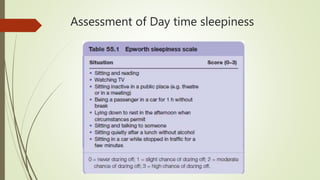
Assessment of Day time sleepiness
Treatment of Snoring
 1. Avoidance of alcohol, sedatives and hypnotics.
 2. Reduction of weight.
 3. Sleeping on the side rather than on the back.
 4. Removal of obstructing lesion in nose, nasopharynx, oral
cavity, hypopharynx and larynx. Radiofrequency has been
used for volumetric reduction of tissues of turbinates, soft
palate and base of tongue.
 5. Performing uvulopalatoplasty (UPP) surgically with cold
knife or assisted
Obstructive sleep Apnea
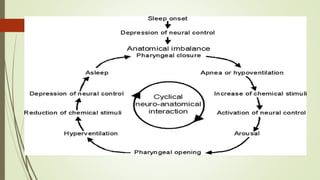
 Apnoea means no breathing at all. There is no movement of air at the level of nose
and mouth. It is of three types.
 Obstructive. There is collapse of the upper airway resulting in cessation of airflow.
Other factors may be obstructive conditions of nose, nasopharynx, oral cavity and
oropharynx, base of tongue or larynx.
 2. Central. Airways are patent but brain fails to signal the muscles to breathe.
 3. Mixed. It is combination of both types.
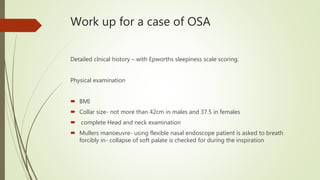
Work up for a case of OSA
Detailed clnical history – with Epworths sleepiness scale scoring.
Physical examination
 BMI
 Collar size- not more than 42cm in males and 37.5 in females
 complete Head and neck examination
 Mullers manoeuvre- using flexible nasal endoscope patient is asked to breath
forcibly in- collapse of soft palate is checked for during the inspiration
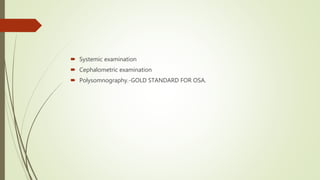
 Systemic examination
 Cephalometric examination
 Polysomnography.-GOLD STANDARD FOR OSA.
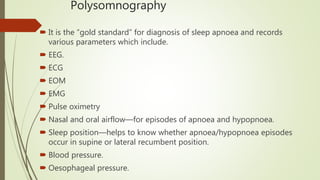
Polysomnography
 It is the “gold standard” for diagnosis of sleep apnoea and records
various parameters which include.
 EEG.
 ECG
 EOM
 EMG
 Pulse oximetry
 Nasal and oral airflow—for episodes of apnoea and hypopnoea.
 Sleep position—helps to know whether apnoea/hypopnoea episodes
occur in supine or lateral recumbent position.
 Blood pressure.
 Oesophageal pressure.
Treatment for OSA
 Change in lifestyle-
 Reduce the use of alcohol
 Smoking should be avoided
 Reduction of weight
 Positional Therapy
 Intraoral device
 CPAP- Continuous Positive airway pressure
Surgery for OSA
 Tonsillectomy and adenoidectomy
 Nasal surgery
 Palate surgery
Uvulopalatoplasty (UPP)
Uvulopalatopharyngoplasty (UPPP)
 Advancement pharyngoplasty
 Tongue base surgery: lingual tonsillectomy, laser midline glossectomy
 Tongue base radiofrequency reduction
 Mandibular osteotomy with genioglossus advancement

OSA- Undergraduate level

  • 1.
  • 2.
    Snoring  It isan undesirable disturbing sound that occurs during sleep.
  • 3.
    Terminology  Sleep apnoea.It is cessation of breathing that lasts for 10 s or more during sleep. Less than five such episodes is normal.  Apnoea index. It is number of episodes of apnoea in 1 h.  Hypopnoea. It is reduction of airflow. Some define it as drop of 50% of airflow from the base line associated with an EEG defined arousal or 4% drop in oxygen saturation.
  • 4.
     Respiratory disturbanceindex (RDI). Also called apnoea– hypopnoea index. It is the number of apnoea and hypopnoea events per hour. Normally RDI is less than five.  Based on RDI, severity of apnoea has been classified  Mild- 5–14;  Moderate -15–29  Severe ≥ 30
  • 5.
     Arousal. Transientawakening from sleep as a result of apnoea or respiratory efforts.  Arousal index. It is number of arousal events in 1 h. Less than four is normal.  Sleep efficiency. Minutes of sleep divided by minutes in bed after lights are turned off.
  • 6.
    MECHANISM OF SNORING Muscles of pharynx are relaxed during sleep and cause partial obstruction. Breathing against obstruction causes vibrations of soft palate, tonsillar pillars and base of tongue producing sound
  • 7.
    Etiology  In children-Adenotonsilitis  Adult- Nasal pathology/ Nasopharyngeal pathology/ Oral cavity/Orophageal pathology or larygopharyngeal pathology.
  • 8.
    Site of snoring Soft palate  Tonsilar pillars  Hypopharynx
  • 9.
    Symptomatology  Snoring spousesyndrome  Excessive day time sleepiness  Morning head ache  General Fatigue  Memory loss  Irritability and depression  Decreased libido  Increase risk of road accidents
  • 10.
    Assessment of Daytime sleepiness
  • 11.
    Treatment of Snoring 1. Avoidance of alcohol, sedatives and hypnotics.  2. Reduction of weight.  3. Sleeping on the side rather than on the back.  4. Removal of obstructing lesion in nose, nasopharynx, oral cavity, hypopharynx and larynx. Radiofrequency has been used for volumetric reduction of tissues of turbinates, soft palate and base of tongue.  5. Performing uvulopalatoplasty (UPP) surgically with cold knife or assisted
  • 12.
  • 13.
     Apnoea meansno breathing at all. There is no movement of air at the level of nose and mouth. It is of three types.  Obstructive. There is collapse of the upper airway resulting in cessation of airflow. Other factors may be obstructive conditions of nose, nasopharynx, oral cavity and oropharynx, base of tongue or larynx.  2. Central. Airways are patent but brain fails to signal the muscles to breathe.  3. Mixed. It is combination of both types.
  • 15.
    Work up fora case of OSA Detailed clnical history – with Epworths sleepiness scale scoring. Physical examination  BMI  Collar size- not more than 42cm in males and 37.5 in females  complete Head and neck examination  Mullers manoeuvre- using flexible nasal endoscope patient is asked to breath forcibly in- collapse of soft palate is checked for during the inspiration
  • 16.
     Systemic examination Cephalometric examination  Polysomnography.-GOLD STANDARD FOR OSA.
  • 17.
    Polysomnography  It isthe “gold standard” for diagnosis of sleep apnoea and records various parameters which include.  EEG.  ECG  EOM  EMG  Pulse oximetry  Nasal and oral airflow—for episodes of apnoea and hypopnoea.  Sleep position—helps to know whether apnoea/hypopnoea episodes occur in supine or lateral recumbent position.  Blood pressure.  Oesophageal pressure.
  • 18.
    Treatment for OSA Change in lifestyle-  Reduce the use of alcohol  Smoking should be avoided  Reduction of weight  Positional Therapy  Intraoral device  CPAP- Continuous Positive airway pressure
  • 19.
    Surgery for OSA Tonsillectomy and adenoidectomy  Nasal surgery  Palate surgery Uvulopalatoplasty (UPP) Uvulopalatopharyngoplasty (UPPP)  Advancement pharyngoplasty  Tongue base surgery: lingual tonsillectomy, laser midline glossectomy  Tongue base radiofrequency reduction  Mandibular osteotomy with genioglossus advancement