Downloaded 159 times








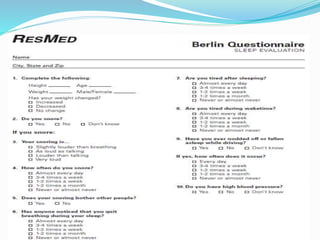
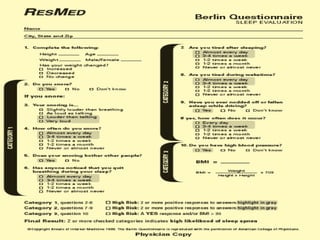
![[Study Name/ID pre-filled] Site Name: ________________________
Initials of Completer: ____ ____ ____ Subject ID: ________________________
Date Form Completed: ___ ___ / ___ ___ / 2 0 ___ ___ Visit Type: ______________________
m m d d y y y y
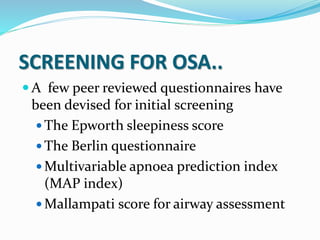
MAP SLEEP SYMPTOM-FREQUENCY QUESTIONAIRE
During the last month, on how many nights or days per week have you had or been told you had
the following (please check only one box per question):
(0)
Never
(1)
Rarely
(less than
once a
week)
(2)
Sometimes
(1-2 times
per week)
(3)
Frequently
(3-4 times
per week)
(4)
Always
(5-7
times per
week)
(.)
Do
not
know
1. Loud snoring
2. Your legs feel jumpy or jerk
3. Difficulty falling asleep
4. Frequent wakenings
5. Snorting or gasping
6. Falling asleep when at work
7. Frequent tossing, turning, or
thrashing
8. Your breathing stops or you
choke or struggle for breath
9. Excessive sleepiness
10. Morning headaches
11. Falling asleep while driving
12. Feeling paralyzed, unable to
move for short periods when
falling asleep or awakening
13. Find yourself in a vivid
dreamlike state when falling
asleep or awakening even
though you know you are awake
](https://image.slidesharecdn.com/obstructivesleepapnoea-150523165516-lva1-app6892/85/Obstructive-sleep-apnoea-31-320.jpg)
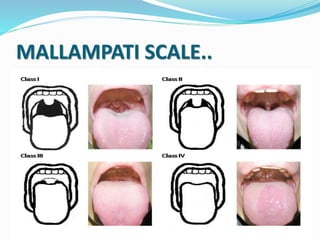
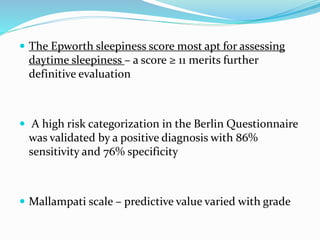
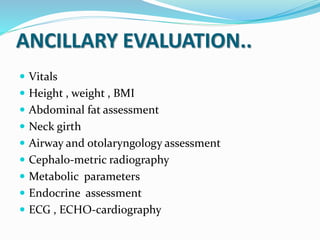

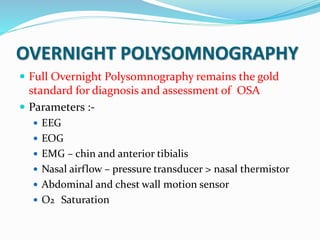

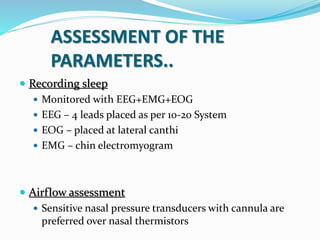
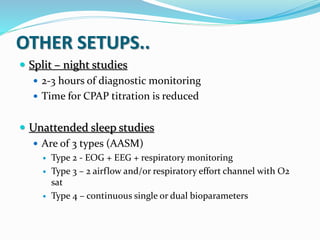
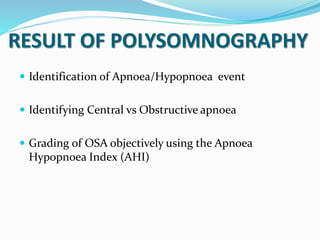
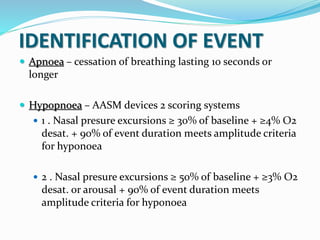

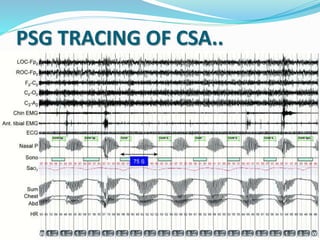
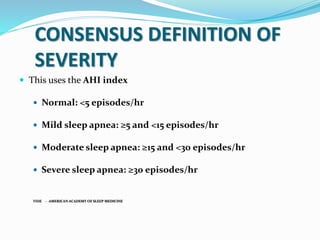



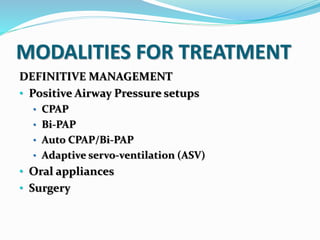

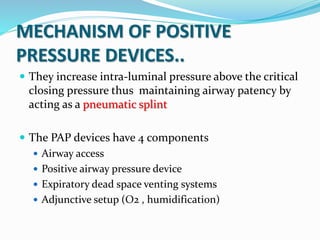
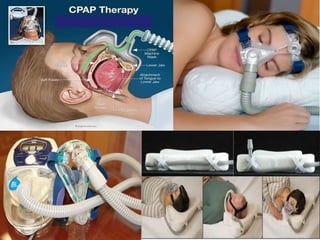


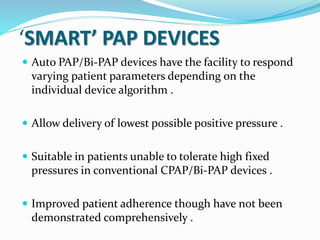
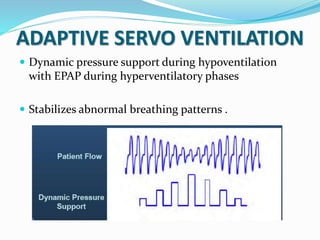



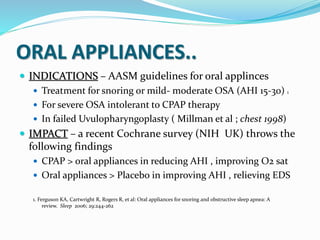
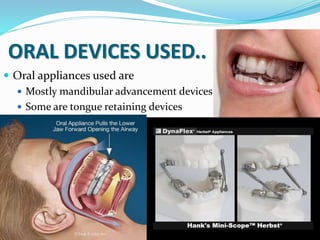

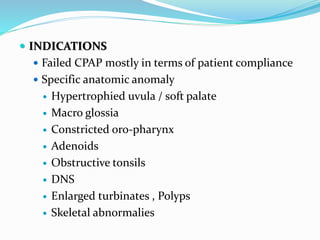

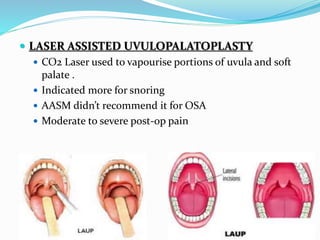

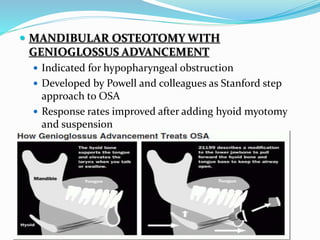
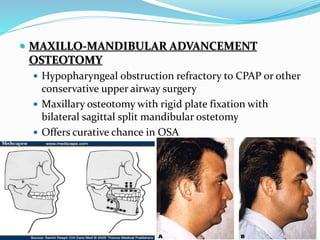


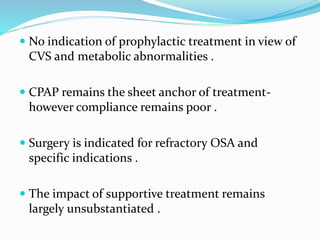


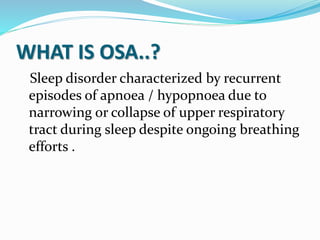
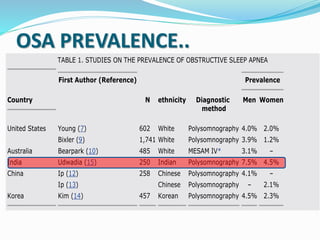
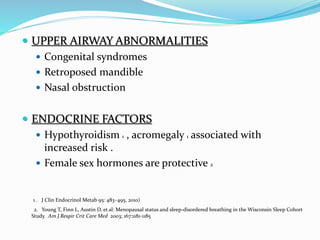
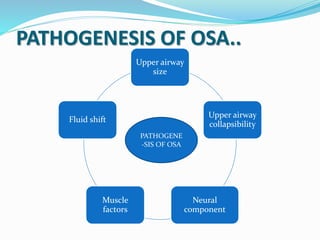
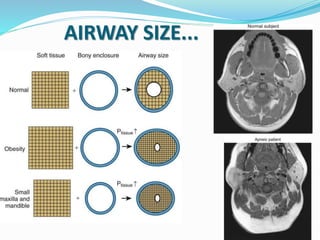
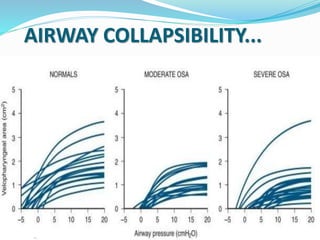
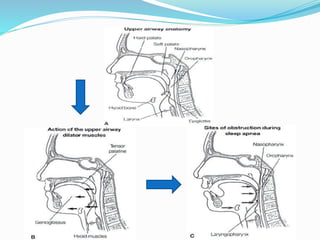
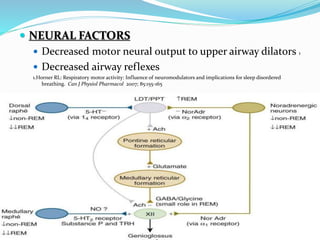
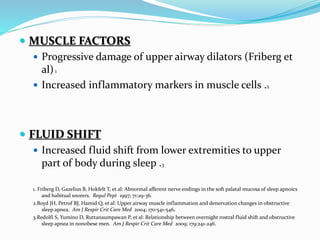
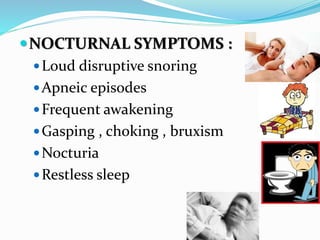
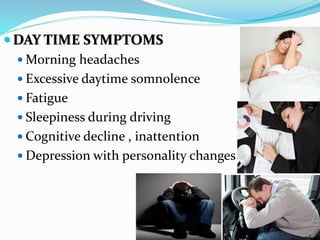
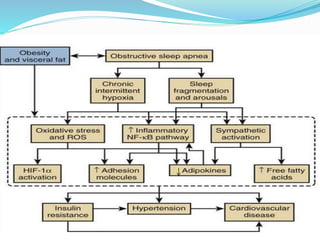
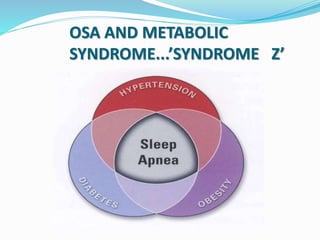
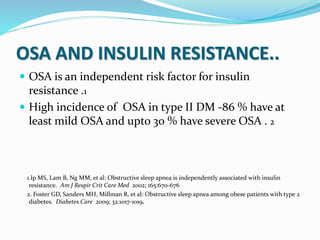
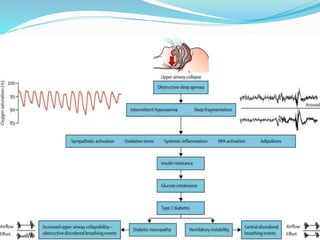
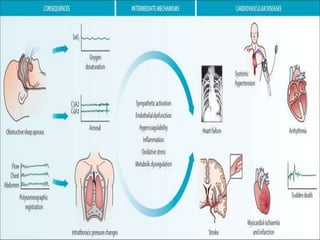
This document discusses obstructive sleep apnea (OSA). It defines OSA as recurrent episodes of apnea or hypopnea due to upper airway collapse during sleep. It reviews the prevalence of OSA in different populations and risk factors such as obesity, genetics, and upper airway abnormalities. The pathogenesis of OSA involves reduced airway size and increased collapsibility, as well as neural, muscle and fluid shift factors. Clinical symptoms, diagnostic tools like polysomnography, and treatment options including positive airway pressure and oral appliances are described in detail.


![OBSTRUCTIVE SLEEP APNEA [Autosaved].pptx](https://cdn.slidesharecdn.com/ss_thumbnails/obstructivesleepapneaautosaved-240801041633-6b724373-thumbnail.jpg?width=640&height=640&fit=bounds)


