In
Obstructive sleep Apnea
Dr Shubha Agrawal
• MD CHEST & TB(K.E.M .Mum)
•
•AGRAWAL DIAGNOSTIC CENTRE
WHAT IS SNORING
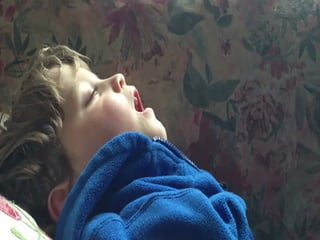
 A rough, rattling, inspiratory noise produced
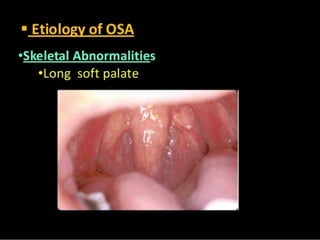
by vibration of the pendulous palate, or
sometimes of the vocal cords during sleep .
 As patient doze off and progress from a lighter
sleep to a deep sleep, the muscles in the roof
of the mouth (soft palate), tongue and throat
relax.
 If the tissues in the throat relax enough, they
vibrate and may partially obstruct the airway.
 The more narrowed airway, the more forceful
the airflow becomes and louder snoring.
 Snoring may be an occasional problem, or it
may be habitual. Loud and frequent snoring
can be more than just a nuisance to patient’s
partner.
 This nighttime annoyance may indicate a
serious health condition, and it can disrupt
household and strain relationships.
 Snoring is common. More than one-third of
adults snore at least a few nights each week.
What contributes to snoring in Sleep Apnea :-
 Sedative pills, drugs abusers
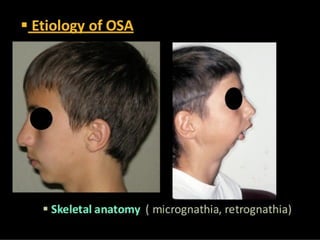
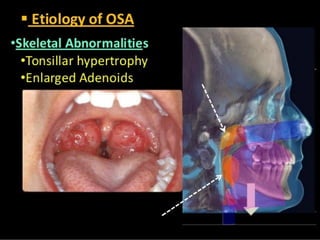
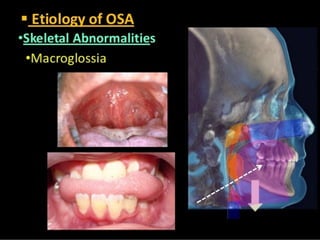
 Mouth anatomy.
 Alcohol consumption.
 Nasal problems.
 Hypothyroid.
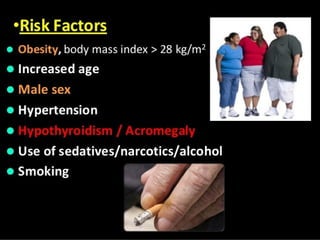
 Smoking
 Obesity
 Deviated Nasal Septum
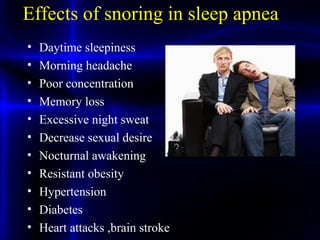
Effects of snoring in sleep apnea
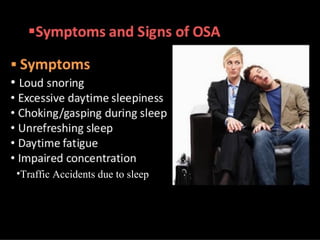
• Daytime sleepiness
• Morning headache
• Poor concentration
• Memory loss
• Excessive night sweat
• Decrease sexual desire
• Nocturnal awakening
• Resistant obesity
• Hypertension
• Diabetes
• Heart attacks ,brain stroke
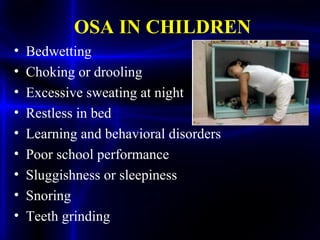
OSA IN CHILDREN
• Bedwetting
• Choking or drooling
• Excessive sweating at night
• Restless in bed
• Learning and behavioral disorders
• Poor school performance
• Sluggishness or sleepiness
• Snoring
• Teeth grinding
SCREENING & DIAGNOSIS
 Physical examination and Medical history.
 His partner may need to answer some questions
about when and how he snore to help doctor assess
the severity of the problem.
 Parents are asked about the severity of a child's
snoring.
 Pulmonologist sleep disorder specialist & ENT
consultation for additional studies and evaluation
will be helpful.
 Home Respiratory sleep study with titration can be
done or can be done at hospital for in depth
analysis of sleep disorder.
•Traffic Accidents due to sleep
EVALUATION
 Sleep Study
 PFT
 Pathology
 X-Ray
 ECG
 Sleep Endoscopy
 CT Scan / MRI
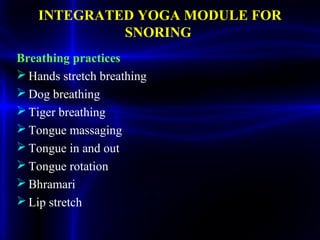
INTEGRATED YOGA MODULE FOR
SNORING
Breathing practices
 Hands stretch breathing
 Dog breathing
 Tiger breathing
 Tongue massaging
 Tongue in and out
 Tongue rotation
 Bhramari
 Lip stretch
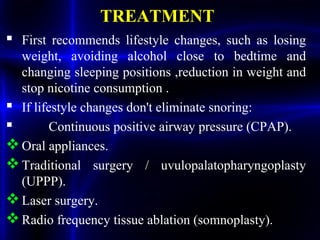
TREATMENT
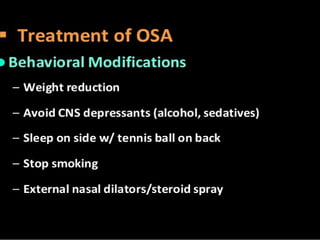
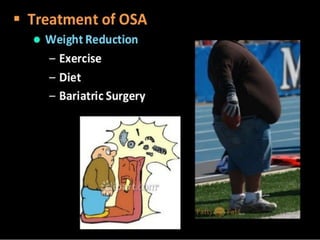
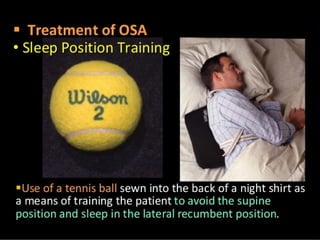
 First recommends lifestyle changes, such as losing
weight, avoiding alcohol close to bedtime and
changing sleeping positions ,reduction in weight and
stop nicotine consumption .
 If lifestyle changes don't eliminate snoring:
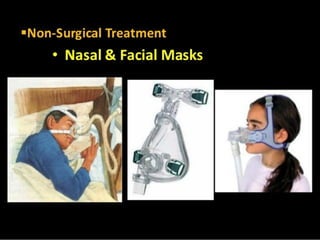
 Continuous positive airway pressure (CPAP).
Oral appliances.
Traditional surgery / uvulopalatopharyngoplasty
(UPPP).
Laser surgery.
Radio frequency tissue ablation (somnoplasty).
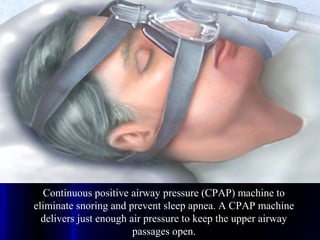
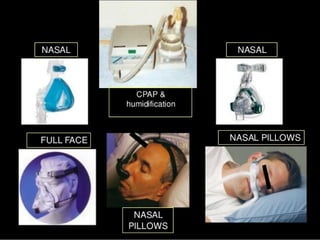
Continuous positive airway pressure (CPAP) machine to
eliminate snoring and prevent sleep apnea. A CPAP machine
delivers just enough air pressure to keep the upper airway
passages open.
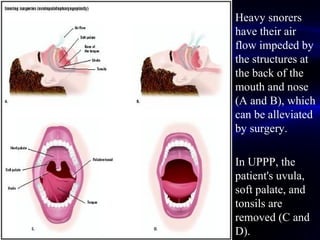
Heavy snorers
have their air
flow impeded by
the structures at
the back of the
mouth and nose
(A and B), which
can be alleviated
by surgery.
In UPPP, the
patient's uvula,
soft palate, and
tonsils are
removed (C and
D).
Snoring in Obstructive Sleep Apnea

Snoring in Obstructive Sleep Apnea

  • 1.
    In Obstructive sleep Apnea DrShubha Agrawal • MD CHEST & TB(K.E.M .Mum) • •AGRAWAL DIAGNOSTIC CENTRE
  • 5.
    WHAT IS SNORING A rough, rattling, inspiratory noise produced by vibration of the pendulous palate, or sometimes of the vocal cords during sleep .  As patient doze off and progress from a lighter sleep to a deep sleep, the muscles in the roof of the mouth (soft palate), tongue and throat relax.  If the tissues in the throat relax enough, they vibrate and may partially obstruct the airway.  The more narrowed airway, the more forceful the airflow becomes and louder snoring.
  • 6.
     Snoring maybe an occasional problem, or it may be habitual. Loud and frequent snoring can be more than just a nuisance to patient’s partner.  This nighttime annoyance may indicate a serious health condition, and it can disrupt household and strain relationships.  Snoring is common. More than one-third of adults snore at least a few nights each week.
  • 7.
    What contributes tosnoring in Sleep Apnea :-  Sedative pills, drugs abusers  Mouth anatomy.  Alcohol consumption.  Nasal problems.  Hypothyroid.  Smoking  Obesity  Deviated Nasal Septum
  • 8.
    Effects of snoringin sleep apnea • Daytime sleepiness • Morning headache • Poor concentration • Memory loss • Excessive night sweat • Decrease sexual desire • Nocturnal awakening • Resistant obesity • Hypertension • Diabetes • Heart attacks ,brain stroke
  • 9.
    OSA IN CHILDREN •Bedwetting • Choking or drooling • Excessive sweating at night • Restless in bed • Learning and behavioral disorders • Poor school performance • Sluggishness or sleepiness • Snoring • Teeth grinding
  • 11.
    SCREENING & DIAGNOSIS Physical examination and Medical history.  His partner may need to answer some questions about when and how he snore to help doctor assess the severity of the problem.  Parents are asked about the severity of a child's snoring.  Pulmonologist sleep disorder specialist & ENT consultation for additional studies and evaluation will be helpful.  Home Respiratory sleep study with titration can be done or can be done at hospital for in depth analysis of sleep disorder.
  • 13.
  • 18.
    EVALUATION  Sleep Study PFT  Pathology  X-Ray  ECG  Sleep Endoscopy  CT Scan / MRI
  • 25.
    INTEGRATED YOGA MODULEFOR SNORING Breathing practices  Hands stretch breathing  Dog breathing  Tiger breathing  Tongue massaging  Tongue in and out  Tongue rotation  Bhramari  Lip stretch
  • 26.
    TREATMENT  First recommendslifestyle changes, such as losing weight, avoiding alcohol close to bedtime and changing sleeping positions ,reduction in weight and stop nicotine consumption .  If lifestyle changes don't eliminate snoring:  Continuous positive airway pressure (CPAP). Oral appliances. Traditional surgery / uvulopalatopharyngoplasty (UPPP). Laser surgery. Radio frequency tissue ablation (somnoplasty).
  • 27.
    Continuous positive airwaypressure (CPAP) machine to eliminate snoring and prevent sleep apnea. A CPAP machine delivers just enough air pressure to keep the upper airway passages open.
  • 32.
    Heavy snorers have theirair flow impeded by the structures at the back of the mouth and nose (A and B), which can be alleviated by surgery. In UPPP, the patient's uvula, soft palate, and tonsils are removed (C and D).