Snoring & Obstructive Sleep Apnea
-Clinical Staging & Treatment
Dr Raymond Tan AIIMS, FRCS(Glasgow)
Consultant ENT Surgeon
iHeal Medical Center
Taman Desa Medical Centre
Treasurer
Sleep Disorder Society of Malaysia(SDSM)
MPCN Talk-19th Oct 2013
Container
(Skeletal
Framework)
vs
Contents
(Soft Tissue)
Typical case scenarios…
• Dr, I fall asleep at the wheel and have had
3 car accidents, please help me…
• Dr, I really, really LOVE my husband…but
when he sleeps, I really, really HATE
him…please help him
• Dr, I am a walking zombie and I’ve seen
20 doctors…please help me….
SNORING
“ A coarse sound made by VIBRATIONS of the soft
palate, and other tissue in the mouth, nose, & throat
(upper airway). It is caused by the TURBULENCE
inside the airway during INSPIRATION”
- British Snoring & Sleep Apnoea Association
OBSTRUCTIVE SLEEP APNOEA
(OSA)
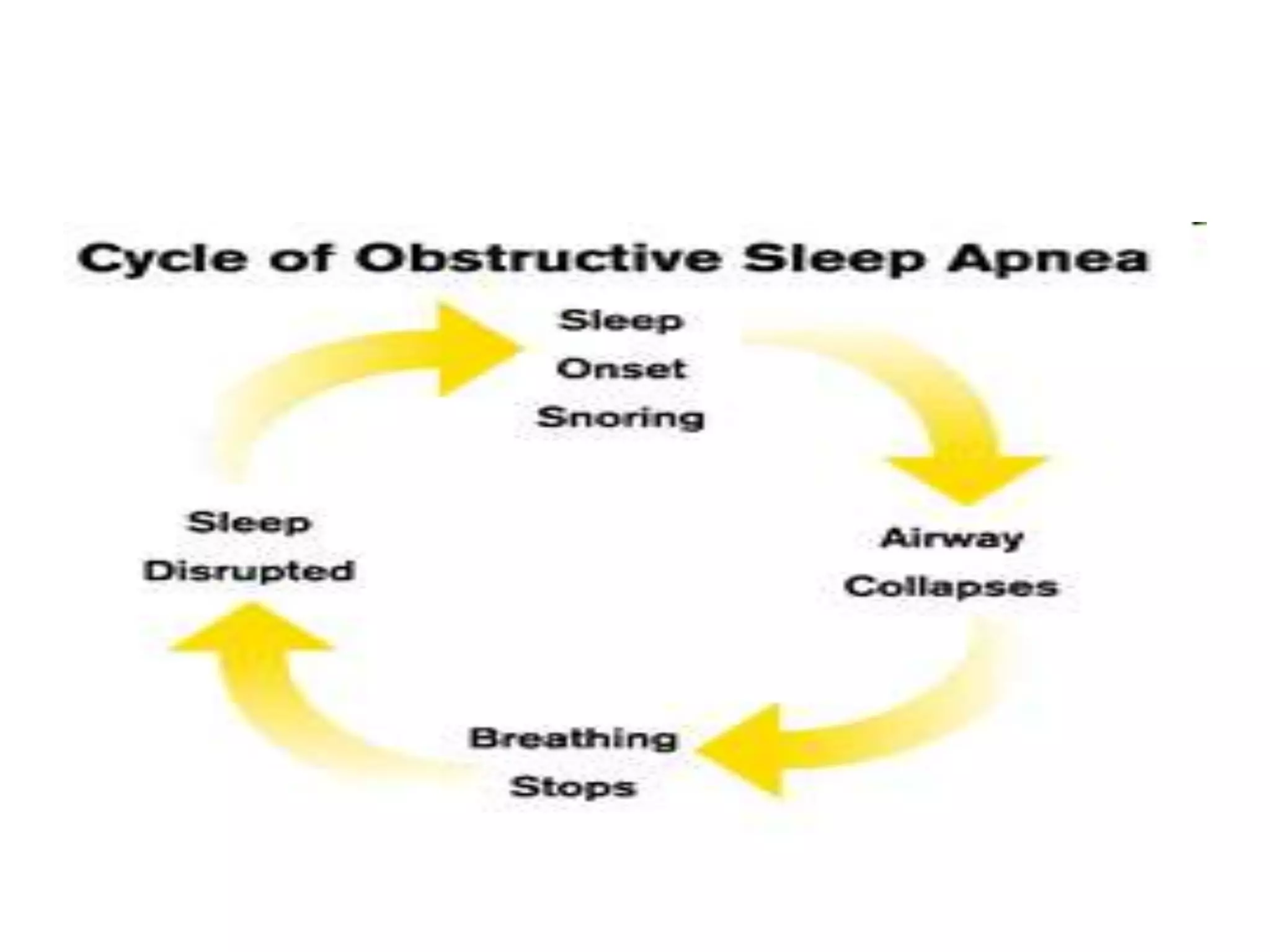
“ A clinical condition/ spectrum* in which the upper airway
collapses intermittently & repeatedly during sleep”
Apnoea (complete obstruction)
ten second breathing pause
and/or
Hypopnoea (partial/ reduction in cross sectional area)
ten second event where there is continued breathing but
ventilation is reduced by at least 50% from the previous
baseline during sleep
British Snoring & Sleep
Apnoea Association
Epidemiology of OSA
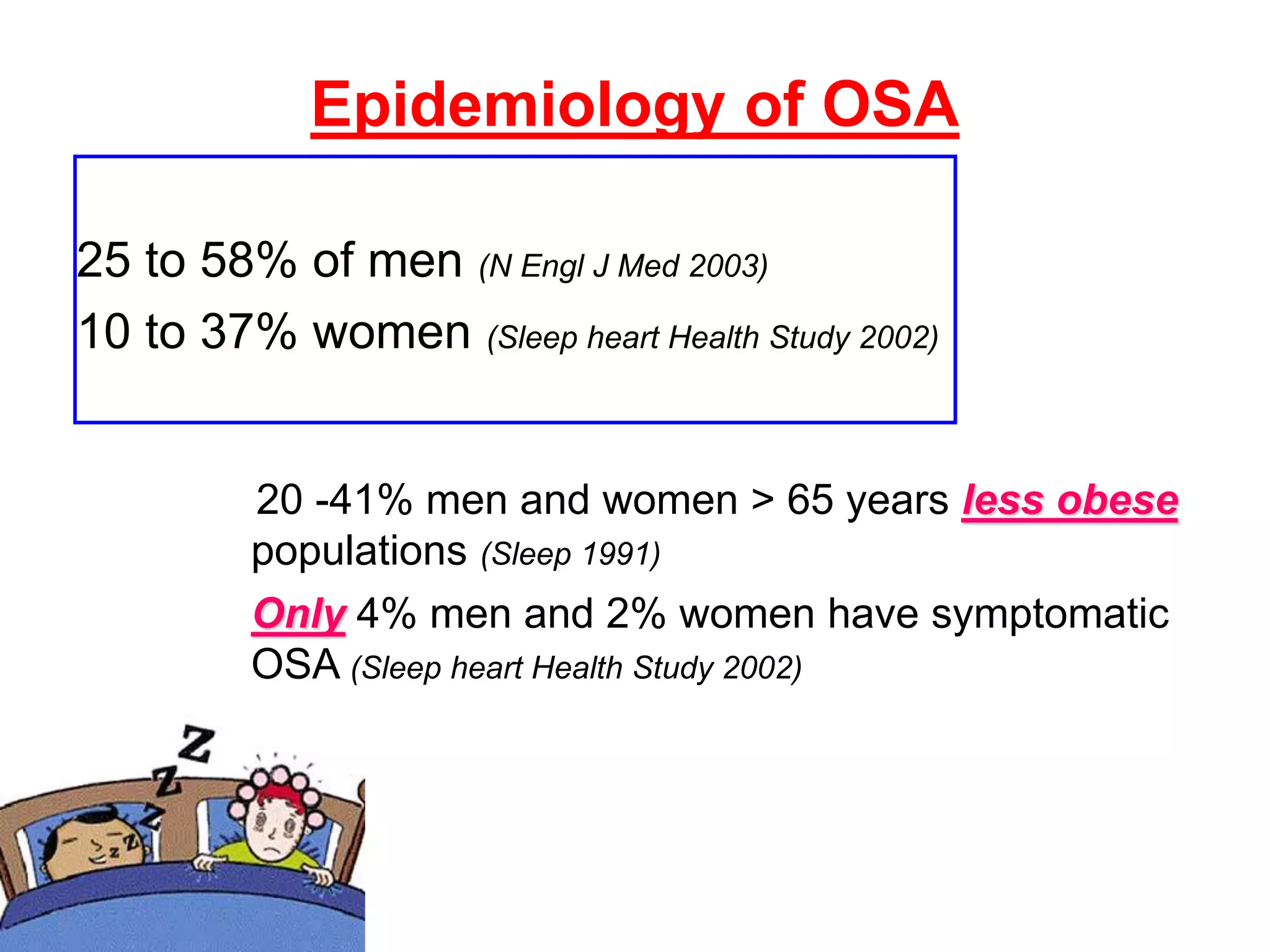
25 to 58% of men (N Engl J Med 2003)
10 to 37% women (Sleep heart Health Study 2002)
20 -41% men and women > 65 years less obese
populations (Sleep 1991)
Only 4% men and 2% women have symptomatic
OSA (Sleep heart Health Study 2002)
WHO IS AT RISK?
•OBESITY
•SEX
•AGE
•HYPERTENSIVES
•HEART FAILURE
PATIENTS
•CORONARY ARTERY
SYNDROMES
•DIABETICS
WHO IS AT RISK?
Obesity: most powerful risk factor
for OSA
OBESITY
•70% OSA PTS ARE OBESE (Lancet,
2002)
•40% OBESE SUBJECTS HAVE OSA
(Arch Intern Med 2002)
MORBIDLY OBESE(BMI>40),98% OSA
(Obes Res 2000)
3rd Malaysian National Health
Morbidity Survey 2006
•20% of Malaysians above 50 years old
are diabetics
•Urban=rural
•Indians>Malays>Chinese
•14% Malaysians are obese
•29% Malaysians are overweight
•1 in 5 Malaysian children is obese
OSA-Obesity Vicious Cycle
• OSA individuals get tired.. Eating for
Stimulation….put on more weight….OSA
worsens
SNORING
Simple snoring Snoring
With ApneaDisturbances to others,
fatigue, morning tiredness,
headache, sore throat & dry
mouth
Symptom of sleep apnoea
which is frequently associated
with hypertension, stroke, and
other cardiopulmonary
problems
Measurement of severity in OSAHS
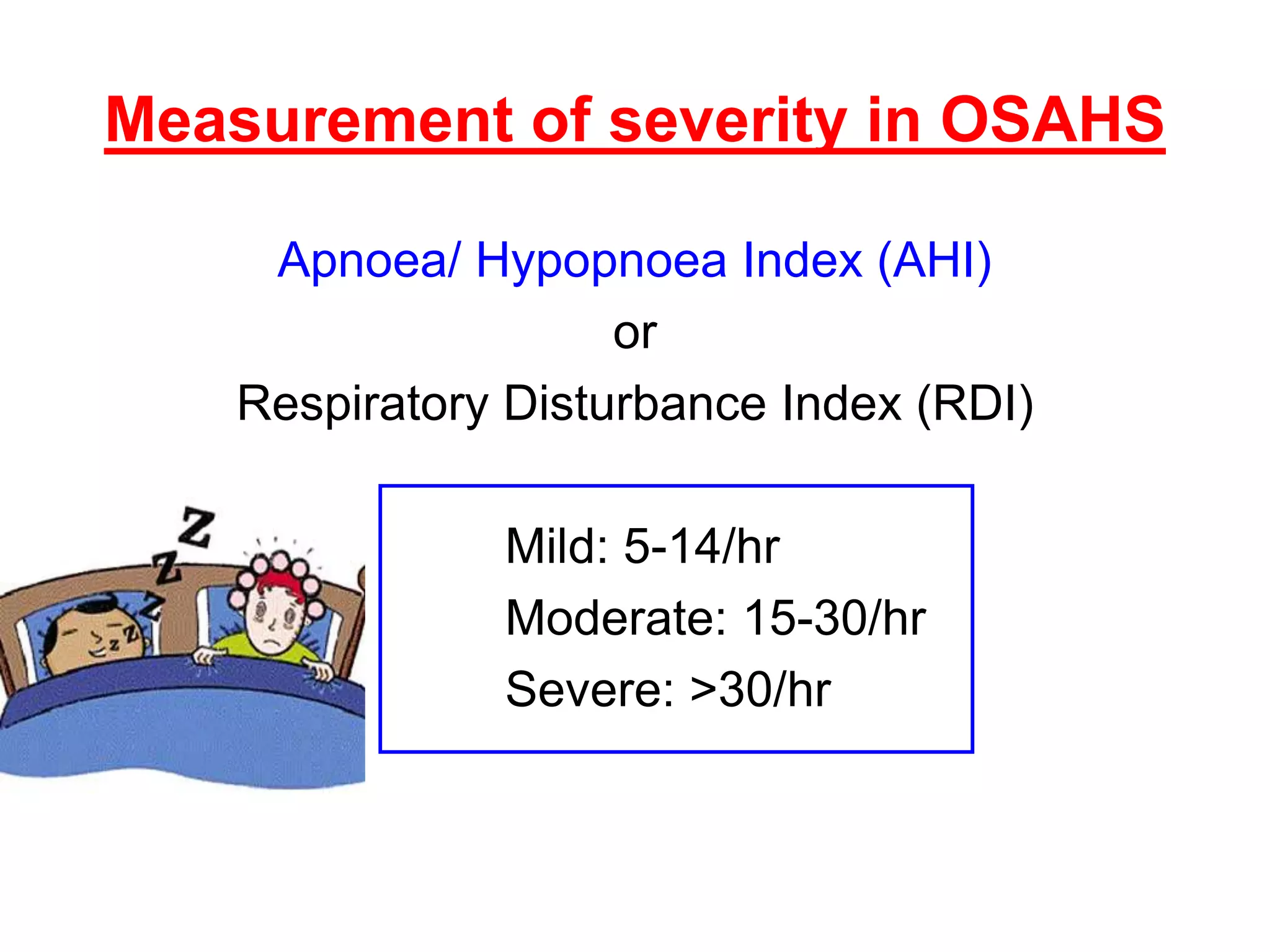
Apnoea/ Hypopnoea Index (AHI)
or
Respiratory Disturbance Index (RDI)
Mild: 5-14/hr
Moderate: 15-30/hr
Severe: >30/hr
CLINICAL FEATURES
Common
• Loud snoring*
• Excessive daytime sleepiness*
• Feelings of choking or shortness of breath at night
• Restless sleep
• Unrefreshing sleep
• Changes in personality (impaired concentration*
anxiety, irritability, depression, forgetfulness)
• Nocturia
CLINICAL FEATURES
Less common
• Morning headaches
• Enuresis
• Reduced libido
• Spouse worried by apnoeic pauses
• Nocturnal sweating
Rare
• Recurrent arousals/ insomnia
• Nocturnal cough
• Symptomatic oesophageal reflux
Rhinitis & Sleep
• Longer Sleep latency time
• Unrefreshing sleep leading to daytme
sleepiness
• Nasal blockage can cause Obstructive
Sleep Apnea (OSA)
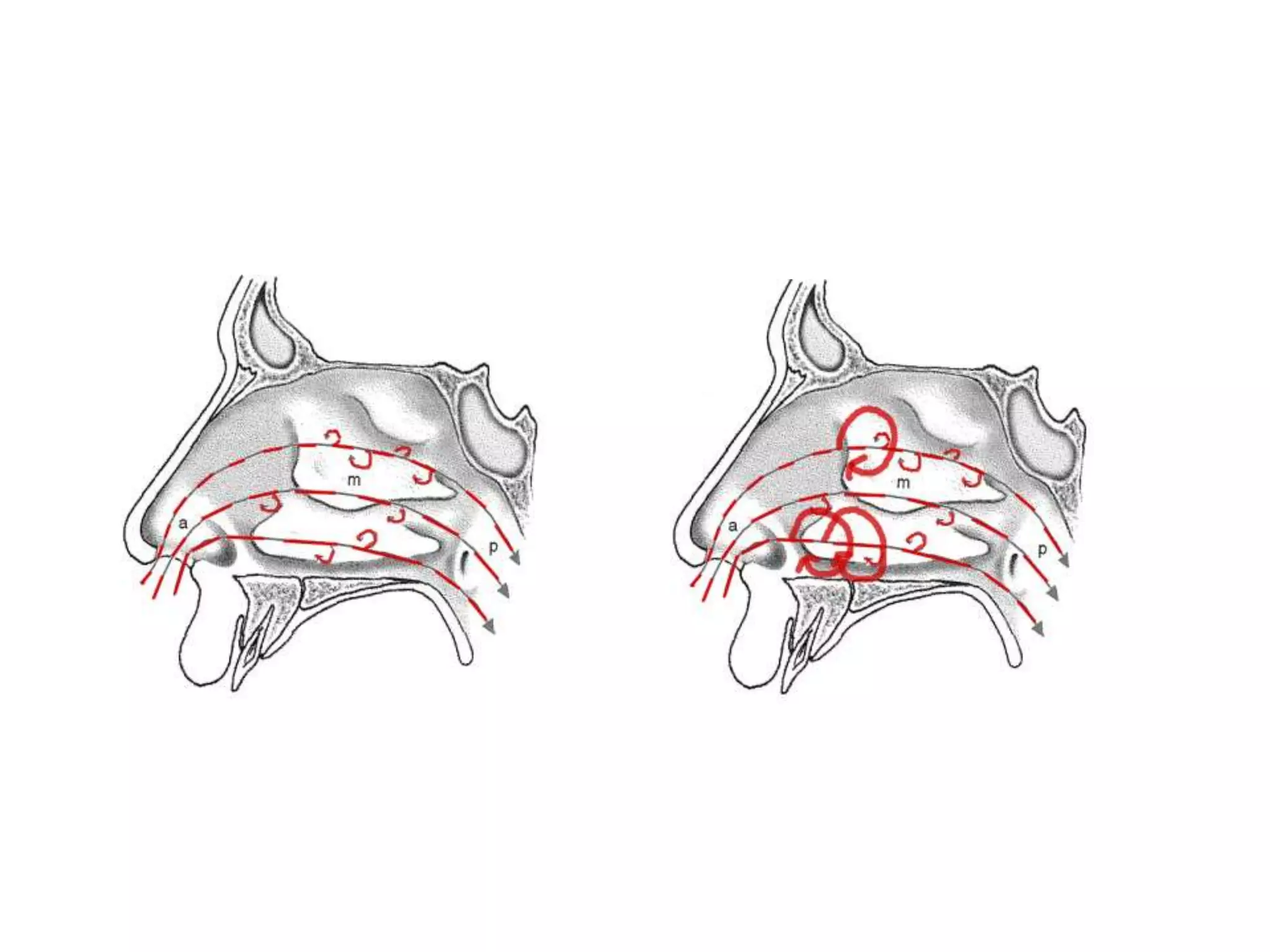
Air flows from atmosphere, through the nose to the
lung, via upper airway
Nose Surgery is Pivotal, Not Primary
Oro-nasal Breathing
Primary route breathing
Shift at onset of turbulence
Shift with full turbulence
Mediated via nasal and pharyngeal
pressure receptors
Nasal
Oro-nasal
Oral
Nasal Laminar Air Flow
Air Flow Stasis/Turbulence
Nasal Resistance
• 2/3 of total upper airway resistance
• Nasal cycle
– 2-4 hour awake upright (70% subjects)
– Supine position worsens bilaterally
– Lateral recumbancy worsens ipsilaterally
• Symptoms
– Poor correlations of objective Rn to
symptoms
Success Criteria
Objective
• 50% reduction from pre-op AHI
&
• Post-op AHI < 20 or AHI < 15
Subjective
• QOL, Epworth, Snoring
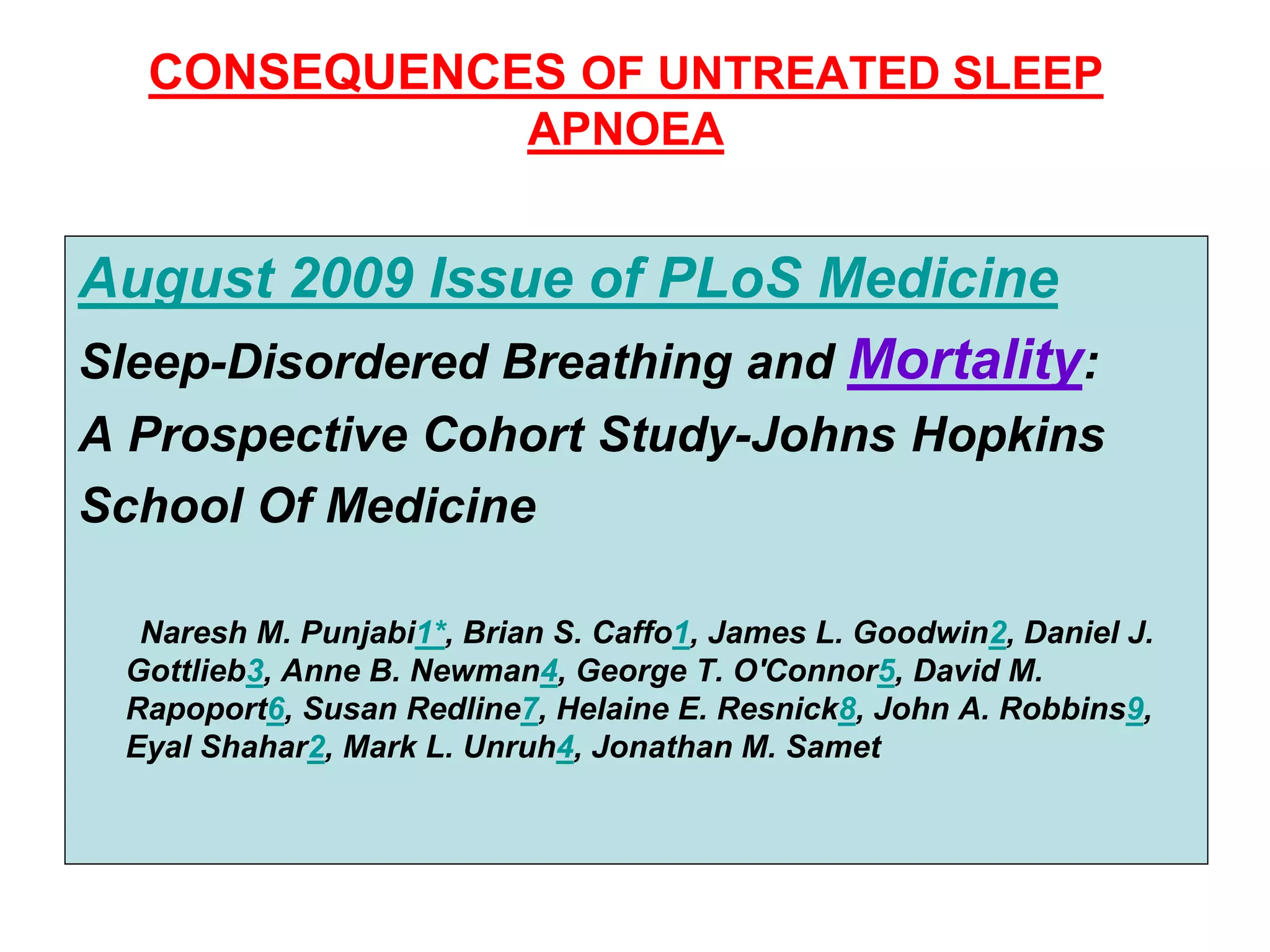
CONSEQUENCES OF UNTREATED SLEEP
APNOEA
August 2009 Issue of PLoS Medicine
Sleep-Disordered Breathing and Mortality:
A Prospective Cohort Study-Johns Hopkins
School Of Medicine
Naresh M. Punjabi1*, Brian S. Caffo1, James L. Goodwin2, Daniel J.
Gottlieb3, Anne B. Newman4, George T. O'Connor5, David M.
Rapoport6, Susan Redline7, Helaine E. Resnick8, John A. Robbins9,
Eyal Shahar2, Mark L. Unruh4, Jonathan M. Samet
August 2009 Issue of PLoS Medicine
Sleep-Disordered Breathing and Mortality: A Prospective
Cohort Study - Johns Hopkins
Method
•6,441 men and women above 40 years
old studied over a period of 8 years
• Home sleep study done at start of study
August 2009 Issue of PLoS Medicine
Sleep-Disordered Breathing and Mortality: A Prospective
Cohort Study - Johns Hopkins
Results
•Average follow up: 8.2 years
•1,047 deaths among 6,441 study
population
August 2009 Issue of PLoS Medicine
Sleep-Disordered Breathing and Mortality: A Prospective
Cohort Study - Johns Hopkins
Results
•1 in 4 Men, 1 in 10 Women had OSA
•Men 40-70 years old with severe OSA:
DOUBLING of chance of dying
•Especially from coronary artery disease
and sudden cardiac deaths
•Heart attacks occurred between 10 p.m. to
6 a.m
August 2009 Issue of PLoS Medicine
Sleep-Disordered Breathing and Mortality: A Prospective
Cohort Study - Johns Hopkins
Discussion
•Hypoxemia causes dangerous
arrhythmias resulting in sudden cardiac
deaths
CONSEQUENCES OF UNTREATED SLEEP
APNOEA
• Increased risk of hypertension-Independent risk
factor [N Engl J Med 2000;342:1378-84]
• Myocardial Infarct: 23X increased risk [Hung et
al., Association of sleep apnoea with myocardial
infarction in men, Lancet 336 (1990) (8710)]
• Premature deaths: 2X increased risk , 1 in 4
males, 1 in 10 females [John Hopkins
Study[PLoS Med 2009 6(8)]
• Increased risk of strokes: 3x (American Journal of
Respiratory and Critical Care Medicine 2010)
• Daytime sleepiness- work and study
suffers
• Impaired cognitive function, memory
problems
• Depression, anxiety, panic attacks
CONSEQUENCES OF UNTREATED SLEEP
APNOEA
• Worsened relationship between spouse/
partner...Grounds for divorce in US!...British
study…wives sleep only 3-5hrs a night
• Look older, look tired, decrease sexual libido,
impotency
• Reduced in alertness: Road traffic accident..7X
UK DVLA licence suspended, sleepy drivers
cause 300x more accidents than drunk drivers
CONSEQUENCES OF UNTREATED
SLEEP APNOEA
Childhood Sleep Apnea
Hong Kong Childhood
OSA Prevalence Study:
5 % children have OSA
Boys > Girls
Childhood Sleep Apnea
•Diagnose early, prevent consequences
•AHI>1
•Large tonsils, allergy, obesity,
•Craniofacial &
neuromuscular abnormalities
Childhood Sleep Apnea
•Neurocognitive deficits, attention-deficit
hyperactivity disorders
• Increased BP
•Left ventricular dysfunction
DIAGNOSIS
• HISTORY
• PHYSICAL EXAMINATION + AIRWAY
ASSESSMENT
• QUESTIONNAIRE’S: STOP, ESS
• DIAGNOSTIC TOOLS
• SLEEP STUDIES
• MULLER’S MANOEUVRE
• Weight & Height: BMI
• Neck circumference (>16”)
• Abdominal Circumference
• Abnormal size of mandible
• Nasal patency
• Tongue (macroglossia),
dentition, teeth
PHYSICAL EXAMINATION/ AIRWAY
ASSESSMENT
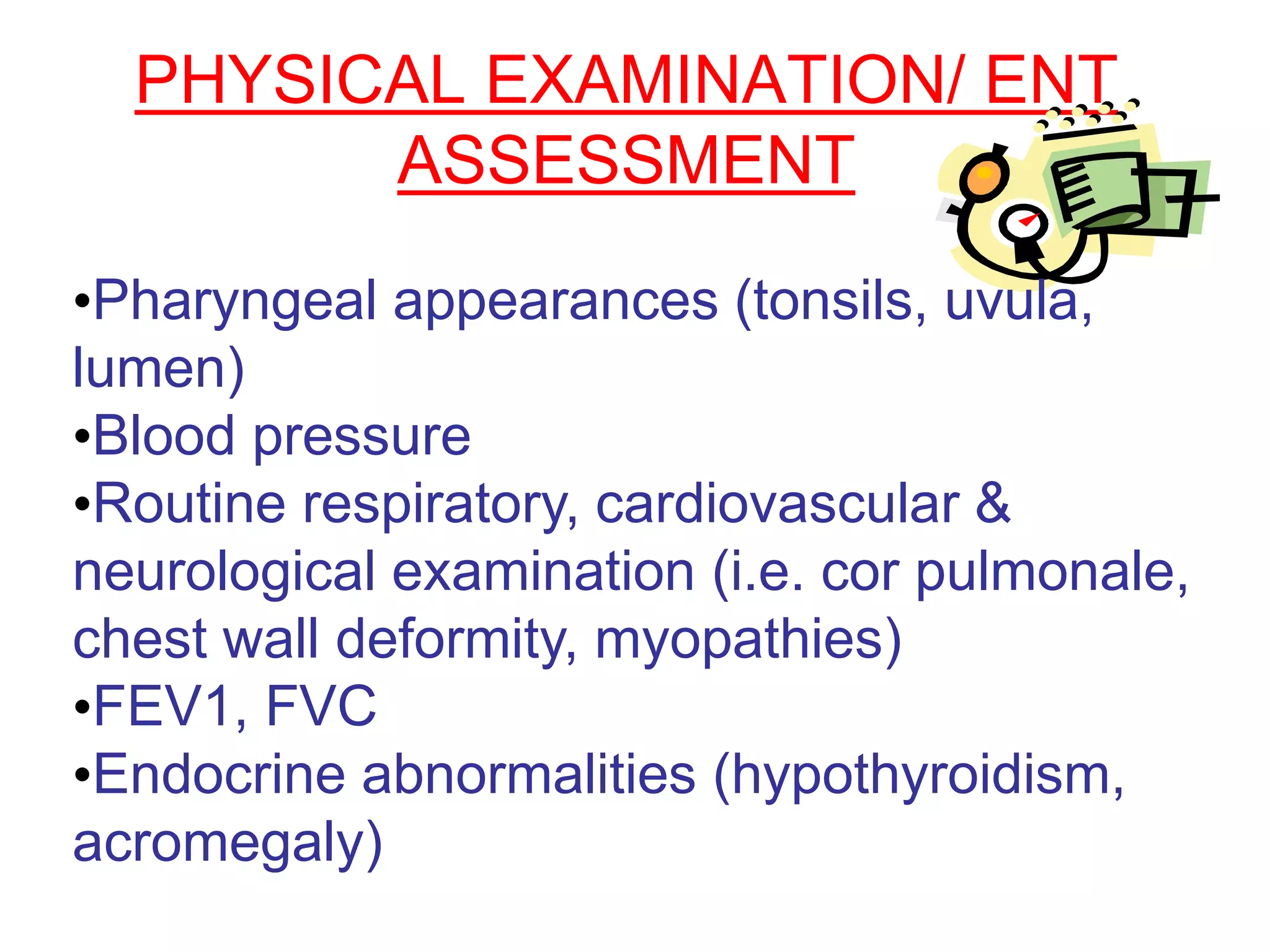
PHYSICAL EXAMINATION/ ENT
ASSESSMENT
•Pharyngeal appearances (tonsils, uvula,
lumen)
•Blood pressure
•Routine respiratory, cardiovascular &
neurological examination (i.e. cor pulmonale,
chest wall deformity, myopathies)
•FEV1, FVC
•Endocrine abnormalities (hypothyroidism,
acromegaly)
Friedman’s Palatal Position Grading
Tonsil Size Grading
ESS (Epworth Sleepiness Score)
• 0 - Would never doze off
1 - Slight chance of dozing off
2 - Moderate chance of dozing off
3 - High chance of dozing off
• Score situation
_____ Sitting and reading
_____ Watching TV
_____ Sitting inactive in a public place (e.g., theatre, meeting)
_____ As a passenger in a car for an hour without break
_____ Lying down to rest in the afternoon when circumstances
permit
_____ Sitting and talking to someone
_____ Sitting quietly after a lunch without alcohol
_____ In a car, while stopped for a few minutes in the traffic
_____ Total
Normal range: <11 Mild: 11-14 Severe:>18
STOP
Questionnaire for OSA
The STOP test consists of four questions:
S: Do you snore loudly?
T: Do you often feel tired, fatigued or sleepy during
daytime?
O: Has anyone observed you stop breathing during sleep?
P: Do you have or are you being treated for high blood
pressure?
2 or more yes: High risk for obstructive sleep apnea
Anaesthesiology. 2008 May;108(5): Chung F, University of Toronto, Toronto
Western Hospital, University Health Network, Toronto, Ontario, Canada.
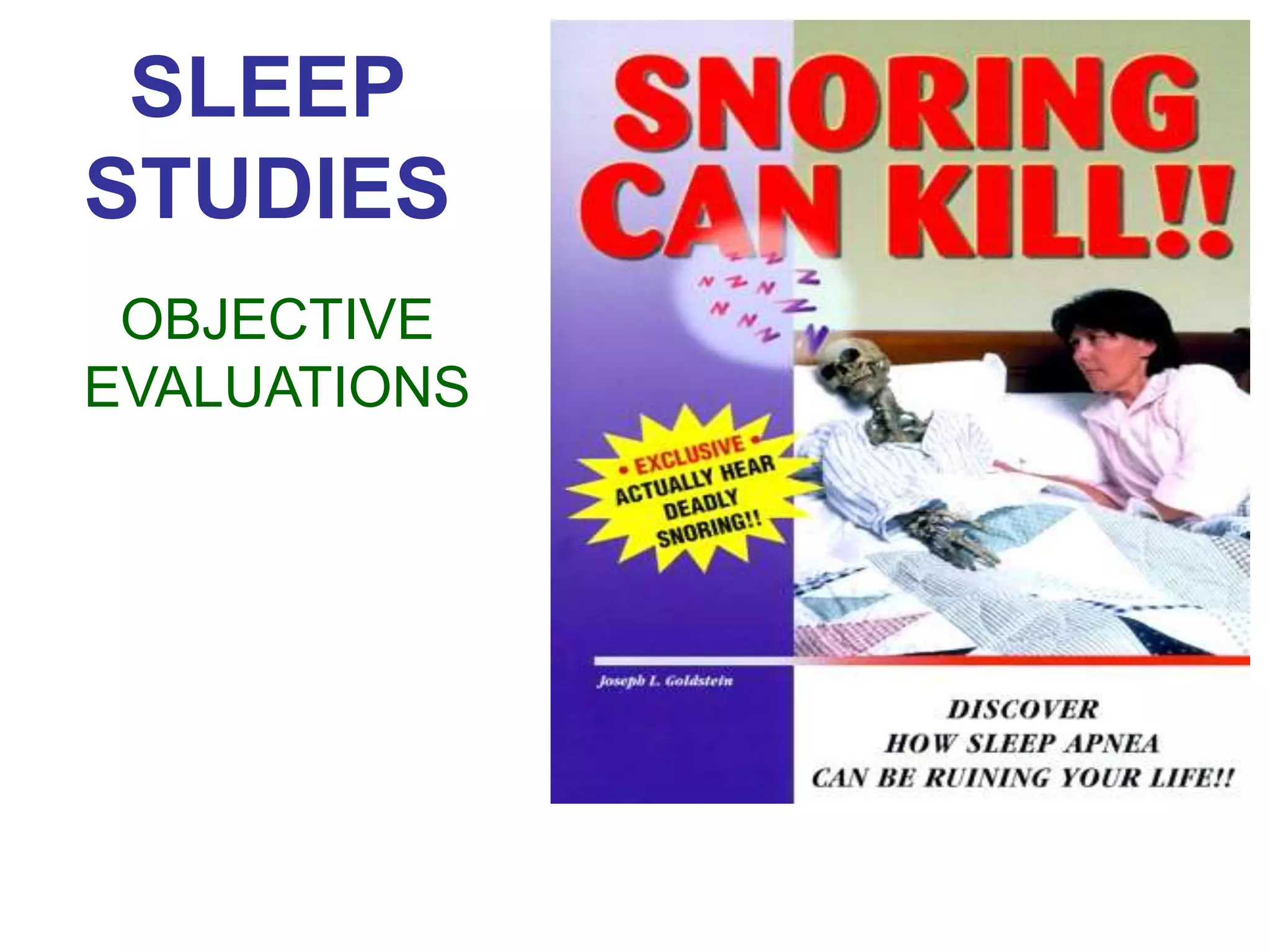
SLEEP
STUDIES
OBJECTIVE
EVALUATIONS
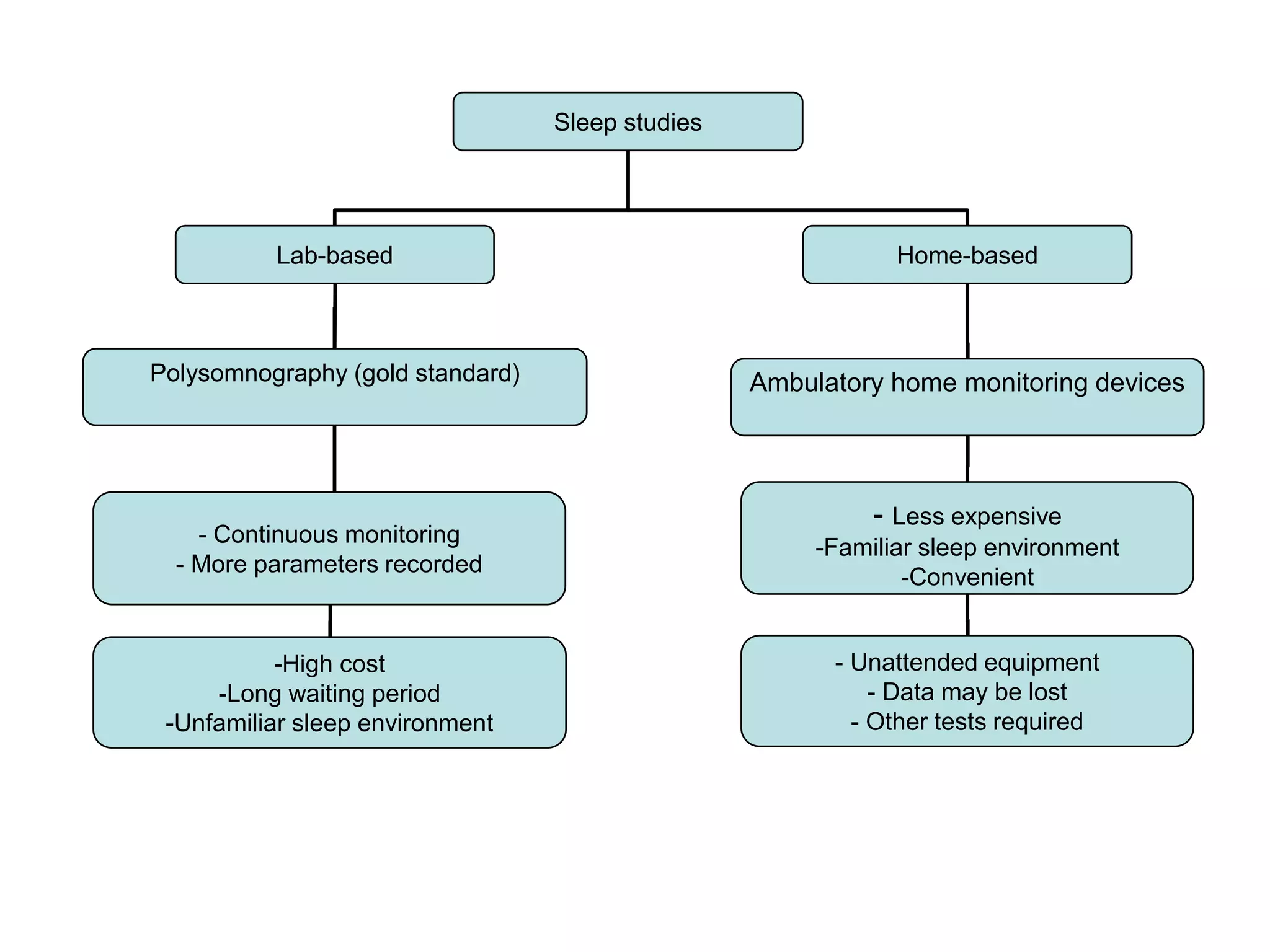
Sleep studies
Lab-based Home-based
Ambulatory home monitoring devices
- Continuous monitoring
- More parameters recorded
- Less expensive
-Familiar sleep environment
-Convenient
-High cost
-Long waiting period
-Unfamiliar sleep environment
- Unattended equipment
- Data may be lost
- Other tests required
Polysomnography (gold standard)
Polysomnography
Parameters measured:
• 2 - 6 channels of EEG
• 2 channels of EOG
• Chin EMG
• Airflow from the nose and
mouth
• Respiratory effort
• Body position
• 1 channel of ECG
• Oxymetry
• 2 channels of leg EMG
Home monitoring device
Polysomnograph
Watch PAT
Diagnostic Device for Sleep
Apnea
• Records 3 main parameters
(1) Actigraphy
(2) Pulse Oximetry
(3) Peripheral Arterial
Tonometry
• Self-administered
• Portable
• Non- invasive
• Reliable
Watch PAT
Watch PAT Mechanics:
• 2 finger probes
• 3 parameters : Actigarphy, Pulse
Oximetry, Peripheral Arterial
Tonometry
• Actigraph – determines sleep/wake
stages
• Pulse oximetry – oxygen saturation
• PAT – records sympathetic tone
Watch PAT
Great as a diagnostic device for OSA.
• Small, lightweight
• Non-invasive
• Reliable, accurate
• Convenient
• Easy-to-use
• Safe
• No risk
50
Watch-PAT200
51
Watch-PAT
Report
Primary Snoring
Resting Muller's Maneuver Jaw Thrust Jaw Open
Mild Obstructive Sleep Apnea
Resting Muller's Maneuver Jaw Thrust Jaw Open
Moderately Severe Obstructive Sleep Apnea
Resting Muller's Maneuver Jaw Thrust Jaw Open
Severe Obstructive Sleep Apnea
Resting Muller's Maneuver Jaw Thrust Jaw Open
MANAGEMENT
WHO TO TREAT?
Recommendation: Symptomatic
AHI >5
• BEHAVIOURAL INTERVENTION
• Loss weight, cessation of
smoking, avoid alcohol &
sedatives drugs
• Sleeping habits: sleep by the side
(sew tennis ball into pyjamas
back), establish regular sleeping
pattern, sleep without pillow
Treatment -CPAP
• Continuous positive airway pressure (CPAP).
• Face mask connected to pump – high-
pressured air forced into the nasal passages
Treatment - CPAP
• Nasal CPAP - airway pressure delivered through
nose continuously during inspiration and
expiration.
• Full face CPAP - covers both nose and mouth
Treatment -CPAP
Advantages
• No surgical intervention
• Quality of life and sleep improves
• Daytime sleepiness lessened
• Heart function and hypertension improves
Disadvantages
Life long treatment-not a cure
• Non-compliance,
Claustrophobia
• Side effects of CPAP:
• Nose block and bleeds
• Sore eyes , dry throat
• Abdominal bloating and chest muscle
discomfort
• Rash, skin abrasions, and conjunctivitis
• Sound of the machine
Treatment – CPAP (Cont’d)
Treatment - MAD
• Mandibular
Advancement
Devices
Surgery
• Inpatients who have failed or not keen on
CPAP
• Where CPAP pressures are too high due
to anatomical obstruction
Adenotonsillectomy
• For patients with large tonsils and
adenoids
• In children, this procedure is the mainstay
of treatment for OSA. 25% or more cure
rate. Rest still need nasal steroids, CPAP.
(J Pediatr 2006;149:803-8)
Nasal Surgery
• Patients with nasal obstruction eg nasal
polyps, enlarged turbinates, deviated septums
Pillar Implants
• The overall efficacy
is limited in these
groups of patients
with mild OSA.
Efficacy of Pillar® palatal implants
in patients with OSA
SwissMedWkly 2009;139(43-44):624-629
RFA Somnoplasty
• Radio Frequency Ablation
• Quick outpatient clinic procedure under
local or general anaesthesia
• RFA probe stiffens soft palate
• RF volume reduction base of tongue,
nasal turbinates
• 80% patients reported reduced snoring
• High patient acceptability
UPPP
• A procedure used to remove excess tissue at the
back of the throat (tonsils, uvula, and 1/3rd of the
soft palate)
• Requires general anaesthesia and an overnight
hospital stay
• Very painful
• Long-term nasal regurgitation of food
Anterior Palatoplasty
(The Palatal Lift)
for the Treatment of OSA
– 3 year results
Otolaryngology - Head and Neck Surgery 2009, Volume
141, Issue 2, Pages 253-256
Kenny P. Pang FRCSEd, FRCSI(OTO)
Raymond Tan FRCS(Glas)
P. Puraviappan MS(ORL)
David J. Terris M.D. F.A.C.S.
Anterior Palatoplasty
Anterior Palatoplasty-
The Palatal Lift Operation
• Less extensive than UPPP
• Can be done under local
• Reshapes the soft palate-lifts it up via a
mucosal cut and absorbable sutures
• AHI index reduced by more than half
• Snoring intensity reduced by > 70%
• Not a single case of long-term nasal
reflux
Upper Airway Surgery
UPPP Survival
Benefits of treatment…patient
reports
• Walking zombie to mountain-biking mum
• Fresher sleep… even 5 hours enough
• Heightened levels of…spousal intimacy-
…….Rabbit Kisses
• End to…. noon time naps
• Winning at …golf again!...
• Look ten years younger…what magic-drug are you
on?
• Better BP control
thesnoringsurgeon@gmail.com
www.sleepsocietymalaysia.org
ASEAN Sleep Surgical Society
www.AseanSleepSurgicalSociety.com
Membership
FREE
Thank You
www.sleepsocietymalaysia.org

Obstructive Sleep Apnoea

  • 1.
    Snoring & ObstructiveSleep Apnea -Clinical Staging & Treatment Dr Raymond Tan AIIMS, FRCS(Glasgow) Consultant ENT Surgeon iHeal Medical Center Taman Desa Medical Centre Treasurer Sleep Disorder Society of Malaysia(SDSM) MPCN Talk-19th Oct 2013
  • 2.
  • 3.
    Typical case scenarios… •Dr, I fall asleep at the wheel and have had 3 car accidents, please help me… • Dr, I really, really LOVE my husband…but when he sleeps, I really, really HATE him…please help him • Dr, I am a walking zombie and I’ve seen 20 doctors…please help me….
  • 4.
    SNORING “ A coarsesound made by VIBRATIONS of the soft palate, and other tissue in the mouth, nose, & throat (upper airway). It is caused by the TURBULENCE inside the airway during INSPIRATION” - British Snoring & Sleep Apnoea Association
  • 5.
    OBSTRUCTIVE SLEEP APNOEA (OSA) “A clinical condition/ spectrum* in which the upper airway collapses intermittently & repeatedly during sleep” Apnoea (complete obstruction) ten second breathing pause and/or Hypopnoea (partial/ reduction in cross sectional area) ten second event where there is continued breathing but ventilation is reduced by at least 50% from the previous baseline during sleep British Snoring & Sleep Apnoea Association
  • 7.
    Epidemiology of OSA 25to 58% of men (N Engl J Med 2003) 10 to 37% women (Sleep heart Health Study 2002) 20 -41% men and women > 65 years less obese populations (Sleep 1991) Only 4% men and 2% women have symptomatic OSA (Sleep heart Health Study 2002)
  • 8.
    WHO IS ATRISK? •OBESITY •SEX •AGE •HYPERTENSIVES •HEART FAILURE PATIENTS •CORONARY ARTERY SYNDROMES •DIABETICS
  • 9.
    WHO IS ATRISK? Obesity: most powerful risk factor for OSA OBESITY •70% OSA PTS ARE OBESE (Lancet, 2002) •40% OBESE SUBJECTS HAVE OSA (Arch Intern Med 2002) MORBIDLY OBESE(BMI>40),98% OSA (Obes Res 2000)
  • 10.
    3rd Malaysian NationalHealth Morbidity Survey 2006 •20% of Malaysians above 50 years old are diabetics •Urban=rural •Indians>Malays>Chinese •14% Malaysians are obese •29% Malaysians are overweight •1 in 5 Malaysian children is obese
  • 11.
    OSA-Obesity Vicious Cycle •OSA individuals get tired.. Eating for Stimulation….put on more weight….OSA worsens
  • 12.
    SNORING Simple snoring Snoring WithApneaDisturbances to others, fatigue, morning tiredness, headache, sore throat & dry mouth Symptom of sleep apnoea which is frequently associated with hypertension, stroke, and other cardiopulmonary problems
  • 13.
    Measurement of severityin OSAHS Apnoea/ Hypopnoea Index (AHI) or Respiratory Disturbance Index (RDI) Mild: 5-14/hr Moderate: 15-30/hr Severe: >30/hr
  • 14.
    CLINICAL FEATURES Common • Loudsnoring* • Excessive daytime sleepiness* • Feelings of choking or shortness of breath at night • Restless sleep • Unrefreshing sleep • Changes in personality (impaired concentration* anxiety, irritability, depression, forgetfulness) • Nocturia
  • 15.
    CLINICAL FEATURES Less common •Morning headaches • Enuresis • Reduced libido • Spouse worried by apnoeic pauses • Nocturnal sweating Rare • Recurrent arousals/ insomnia • Nocturnal cough • Symptomatic oesophageal reflux
  • 16.
    Rhinitis & Sleep •Longer Sleep latency time • Unrefreshing sleep leading to daytme sleepiness • Nasal blockage can cause Obstructive Sleep Apnea (OSA)
  • 17.
    Air flows fromatmosphere, through the nose to the lung, via upper airway Nose Surgery is Pivotal, Not Primary
  • 18.
    Oro-nasal Breathing Primary routebreathing Shift at onset of turbulence Shift with full turbulence Mediated via nasal and pharyngeal pressure receptors Nasal Oro-nasal Oral
  • 20.
  • 21.
  • 22.
    Nasal Resistance • 2/3of total upper airway resistance • Nasal cycle – 2-4 hour awake upright (70% subjects) – Supine position worsens bilaterally – Lateral recumbancy worsens ipsilaterally • Symptoms – Poor correlations of objective Rn to symptoms
  • 23.
    Success Criteria Objective • 50%reduction from pre-op AHI & • Post-op AHI < 20 or AHI < 15 Subjective • QOL, Epworth, Snoring
  • 24.
    CONSEQUENCES OF UNTREATEDSLEEP APNOEA August 2009 Issue of PLoS Medicine Sleep-Disordered Breathing and Mortality: A Prospective Cohort Study-Johns Hopkins School Of Medicine Naresh M. Punjabi1*, Brian S. Caffo1, James L. Goodwin2, Daniel J. Gottlieb3, Anne B. Newman4, George T. O'Connor5, David M. Rapoport6, Susan Redline7, Helaine E. Resnick8, John A. Robbins9, Eyal Shahar2, Mark L. Unruh4, Jonathan M. Samet
  • 25.
    August 2009 Issueof PLoS Medicine Sleep-Disordered Breathing and Mortality: A Prospective Cohort Study - Johns Hopkins Method •6,441 men and women above 40 years old studied over a period of 8 years • Home sleep study done at start of study
  • 26.
    August 2009 Issueof PLoS Medicine Sleep-Disordered Breathing and Mortality: A Prospective Cohort Study - Johns Hopkins Results •Average follow up: 8.2 years •1,047 deaths among 6,441 study population
  • 27.
    August 2009 Issueof PLoS Medicine Sleep-Disordered Breathing and Mortality: A Prospective Cohort Study - Johns Hopkins Results •1 in 4 Men, 1 in 10 Women had OSA •Men 40-70 years old with severe OSA: DOUBLING of chance of dying •Especially from coronary artery disease and sudden cardiac deaths •Heart attacks occurred between 10 p.m. to 6 a.m
  • 28.
    August 2009 Issueof PLoS Medicine Sleep-Disordered Breathing and Mortality: A Prospective Cohort Study - Johns Hopkins Discussion •Hypoxemia causes dangerous arrhythmias resulting in sudden cardiac deaths
  • 29.
    CONSEQUENCES OF UNTREATEDSLEEP APNOEA • Increased risk of hypertension-Independent risk factor [N Engl J Med 2000;342:1378-84] • Myocardial Infarct: 23X increased risk [Hung et al., Association of sleep apnoea with myocardial infarction in men, Lancet 336 (1990) (8710)] • Premature deaths: 2X increased risk , 1 in 4 males, 1 in 10 females [John Hopkins Study[PLoS Med 2009 6(8)] • Increased risk of strokes: 3x (American Journal of Respiratory and Critical Care Medicine 2010)
  • 31.
    • Daytime sleepiness-work and study suffers • Impaired cognitive function, memory problems • Depression, anxiety, panic attacks CONSEQUENCES OF UNTREATED SLEEP APNOEA
  • 32.
    • Worsened relationshipbetween spouse/ partner...Grounds for divorce in US!...British study…wives sleep only 3-5hrs a night • Look older, look tired, decrease sexual libido, impotency • Reduced in alertness: Road traffic accident..7X UK DVLA licence suspended, sleepy drivers cause 300x more accidents than drunk drivers CONSEQUENCES OF UNTREATED SLEEP APNOEA
  • 33.
    Childhood Sleep Apnea HongKong Childhood OSA Prevalence Study: 5 % children have OSA Boys > Girls
  • 34.
    Childhood Sleep Apnea •Diagnoseearly, prevent consequences •AHI>1 •Large tonsils, allergy, obesity, •Craniofacial & neuromuscular abnormalities
  • 35.
    Childhood Sleep Apnea •Neurocognitivedeficits, attention-deficit hyperactivity disorders • Increased BP •Left ventricular dysfunction
  • 36.
    DIAGNOSIS • HISTORY • PHYSICALEXAMINATION + AIRWAY ASSESSMENT • QUESTIONNAIRE’S: STOP, ESS • DIAGNOSTIC TOOLS • SLEEP STUDIES • MULLER’S MANOEUVRE
  • 37.
    • Weight &Height: BMI • Neck circumference (>16”) • Abdominal Circumference • Abnormal size of mandible • Nasal patency • Tongue (macroglossia), dentition, teeth PHYSICAL EXAMINATION/ AIRWAY ASSESSMENT
  • 38.
    PHYSICAL EXAMINATION/ ENT ASSESSMENT •Pharyngealappearances (tonsils, uvula, lumen) •Blood pressure •Routine respiratory, cardiovascular & neurological examination (i.e. cor pulmonale, chest wall deformity, myopathies) •FEV1, FVC •Endocrine abnormalities (hypothyroidism, acromegaly)
  • 39.
  • 40.
  • 41.
    ESS (Epworth SleepinessScore) • 0 - Would never doze off 1 - Slight chance of dozing off 2 - Moderate chance of dozing off 3 - High chance of dozing off • Score situation _____ Sitting and reading _____ Watching TV _____ Sitting inactive in a public place (e.g., theatre, meeting) _____ As a passenger in a car for an hour without break _____ Lying down to rest in the afternoon when circumstances permit _____ Sitting and talking to someone _____ Sitting quietly after a lunch without alcohol _____ In a car, while stopped for a few minutes in the traffic _____ Total Normal range: <11 Mild: 11-14 Severe:>18
  • 42.
    STOP Questionnaire for OSA TheSTOP test consists of four questions: S: Do you snore loudly? T: Do you often feel tired, fatigued or sleepy during daytime? O: Has anyone observed you stop breathing during sleep? P: Do you have or are you being treated for high blood pressure? 2 or more yes: High risk for obstructive sleep apnea Anaesthesiology. 2008 May;108(5): Chung F, University of Toronto, Toronto Western Hospital, University Health Network, Toronto, Ontario, Canada.
  • 43.
  • 44.
    Sleep studies Lab-based Home-based Ambulatoryhome monitoring devices - Continuous monitoring - More parameters recorded - Less expensive -Familiar sleep environment -Convenient -High cost -Long waiting period -Unfamiliar sleep environment - Unattended equipment - Data may be lost - Other tests required Polysomnography (gold standard)
  • 45.
    Polysomnography Parameters measured: • 2- 6 channels of EEG • 2 channels of EOG • Chin EMG • Airflow from the nose and mouth • Respiratory effort • Body position • 1 channel of ECG • Oxymetry • 2 channels of leg EMG
  • 46.
  • 47.
    Watch PAT Diagnostic Devicefor Sleep Apnea • Records 3 main parameters (1) Actigraphy (2) Pulse Oximetry (3) Peripheral Arterial Tonometry • Self-administered • Portable • Non- invasive • Reliable
  • 48.
    Watch PAT Watch PATMechanics: • 2 finger probes • 3 parameters : Actigarphy, Pulse Oximetry, Peripheral Arterial Tonometry • Actigraph – determines sleep/wake stages • Pulse oximetry – oxygen saturation • PAT – records sympathetic tone
  • 49.
    Watch PAT Great asa diagnostic device for OSA. • Small, lightweight • Non-invasive • Reliable, accurate • Convenient • Easy-to-use • Safe • No risk
  • 50.
  • 51.
  • 52.
    Primary Snoring Resting Muller'sManeuver Jaw Thrust Jaw Open Mild Obstructive Sleep Apnea Resting Muller's Maneuver Jaw Thrust Jaw Open
  • 53.
    Moderately Severe ObstructiveSleep Apnea Resting Muller's Maneuver Jaw Thrust Jaw Open Severe Obstructive Sleep Apnea Resting Muller's Maneuver Jaw Thrust Jaw Open
  • 54.
    MANAGEMENT WHO TO TREAT? Recommendation:Symptomatic AHI >5 • BEHAVIOURAL INTERVENTION • Loss weight, cessation of smoking, avoid alcohol & sedatives drugs • Sleeping habits: sleep by the side (sew tennis ball into pyjamas back), establish regular sleeping pattern, sleep without pillow
  • 55.
    Treatment -CPAP • Continuouspositive airway pressure (CPAP). • Face mask connected to pump – high- pressured air forced into the nasal passages
  • 56.
    Treatment - CPAP •Nasal CPAP - airway pressure delivered through nose continuously during inspiration and expiration. • Full face CPAP - covers both nose and mouth
  • 57.
    Treatment -CPAP Advantages • Nosurgical intervention • Quality of life and sleep improves • Daytime sleepiness lessened • Heart function and hypertension improves
  • 58.
    Disadvantages Life long treatment-nota cure • Non-compliance, Claustrophobia • Side effects of CPAP: • Nose block and bleeds • Sore eyes , dry throat • Abdominal bloating and chest muscle discomfort • Rash, skin abrasions, and conjunctivitis • Sound of the machine Treatment – CPAP (Cont’d)
  • 59.
    Treatment - MAD •Mandibular Advancement Devices
  • 60.
    Surgery • Inpatients whohave failed or not keen on CPAP • Where CPAP pressures are too high due to anatomical obstruction
  • 61.
    Adenotonsillectomy • For patientswith large tonsils and adenoids • In children, this procedure is the mainstay of treatment for OSA. 25% or more cure rate. Rest still need nasal steroids, CPAP. (J Pediatr 2006;149:803-8)
  • 63.
    Nasal Surgery • Patientswith nasal obstruction eg nasal polyps, enlarged turbinates, deviated septums
  • 64.
    Pillar Implants • Theoverall efficacy is limited in these groups of patients with mild OSA. Efficacy of Pillar® palatal implants in patients with OSA SwissMedWkly 2009;139(43-44):624-629
  • 65.
    RFA Somnoplasty • RadioFrequency Ablation • Quick outpatient clinic procedure under local or general anaesthesia • RFA probe stiffens soft palate • RF volume reduction base of tongue, nasal turbinates • 80% patients reported reduced snoring • High patient acceptability
  • 66.
    UPPP • A procedureused to remove excess tissue at the back of the throat (tonsils, uvula, and 1/3rd of the soft palate) • Requires general anaesthesia and an overnight hospital stay • Very painful • Long-term nasal regurgitation of food
  • 67.
    Anterior Palatoplasty (The PalatalLift) for the Treatment of OSA – 3 year results Otolaryngology - Head and Neck Surgery 2009, Volume 141, Issue 2, Pages 253-256 Kenny P. Pang FRCSEd, FRCSI(OTO) Raymond Tan FRCS(Glas) P. Puraviappan MS(ORL) David J. Terris M.D. F.A.C.S.
  • 69.
  • 70.
  • 71.
  • 72.
  • 73.
  • 74.
  • 75.
    Anterior Palatoplasty- The PalatalLift Operation • Less extensive than UPPP • Can be done under local • Reshapes the soft palate-lifts it up via a mucosal cut and absorbable sutures • AHI index reduced by more than half • Snoring intensity reduced by > 70% • Not a single case of long-term nasal reflux
  • 76.
  • 77.
  • 78.
    Benefits of treatment…patient reports •Walking zombie to mountain-biking mum • Fresher sleep… even 5 hours enough • Heightened levels of…spousal intimacy- …….Rabbit Kisses • End to…. noon time naps • Winning at …golf again!... • Look ten years younger…what magic-drug are you on? • Better BP control
  • 79.
  • 80.
    ASEAN Sleep SurgicalSociety www.AseanSleepSurgicalSociety.com Membership FREE
  • 81.