Origin of Agriculture
Introduction
• Knowledge of time and place of origin is
important
– For taxonomists and plant breeders
– Present day plants are much different than the
wild varieties
• Genetically and morphologically different
• Several genes (characterisitcs) are selected
– Loss of plants is loss of gene pools from
which new traits can be retrieved
Introduction
• Humans turned non-agricultural to
agricultural way of life.
• Agriculture; horticulture and domestication
• Study history by
– Carbon dating
– Fossils
– Phytoliths
Why farm?
• Work by Lee and Devore
– !King bushmen of Kalahari desert of southern
Africa
• Selected plant for adequate diet
• 105 species were used
• Did not work hard
• Not due to mal-nutrition or poverty
• Not revolution but evolution
De Candolle (1883)
• Pioneering work
• Criteria for recognizing centers of origin
– Places where a plant grows spontaneously in
a wild state
– Places where fragments of plants in old
deposits and buildings (archeological and
palaeobotanical) are found
– Archives describing the adventures of
travelers.
– Philogical (naming) origin
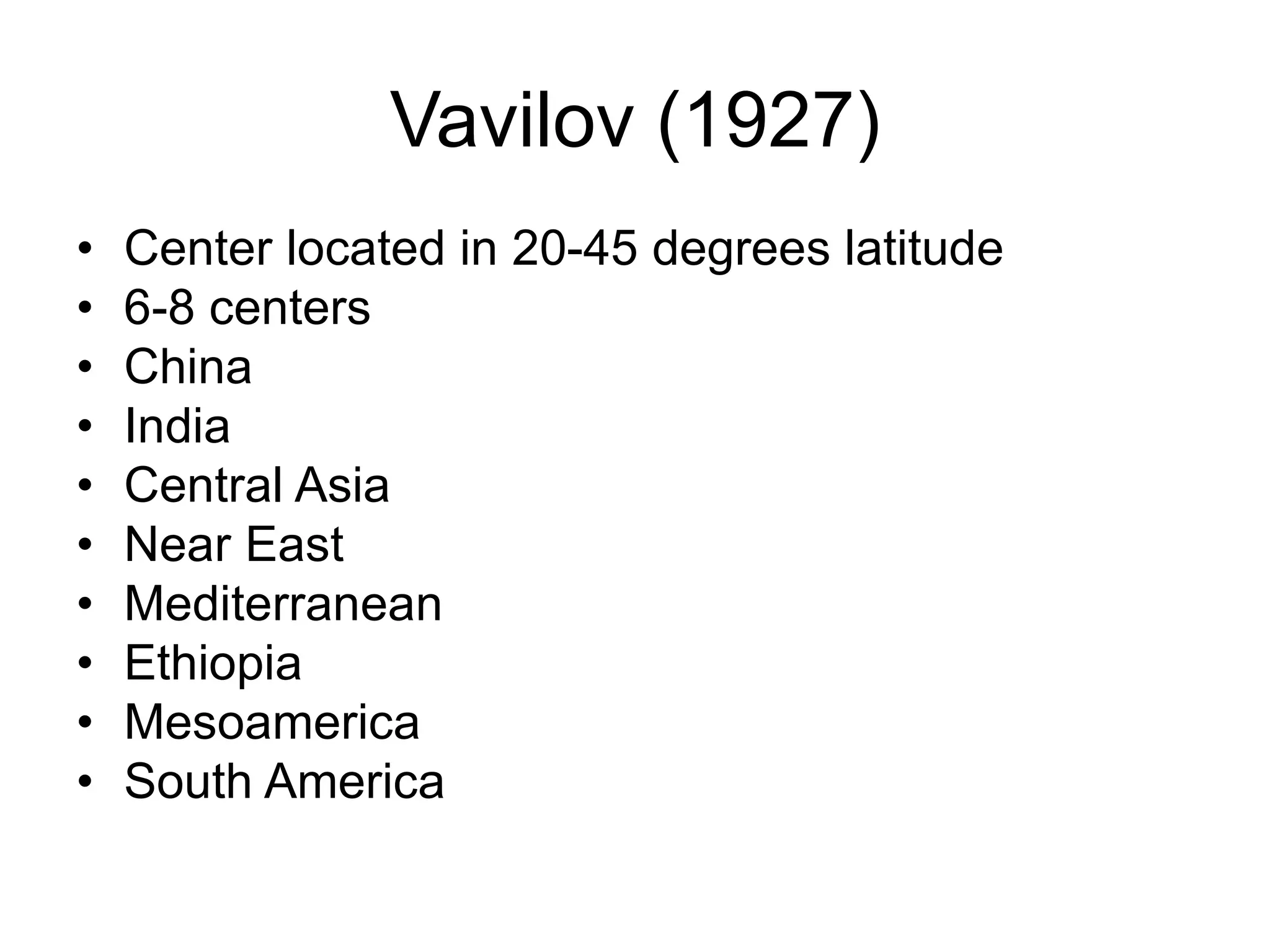
Vavilov (1927)
• Center located in 20-45 degrees latitude
• 6-8 centers
• China
• India
• Central Asia
• Near East
• Mediterranean
• Ethiopia
• Mesoamerica
• South America
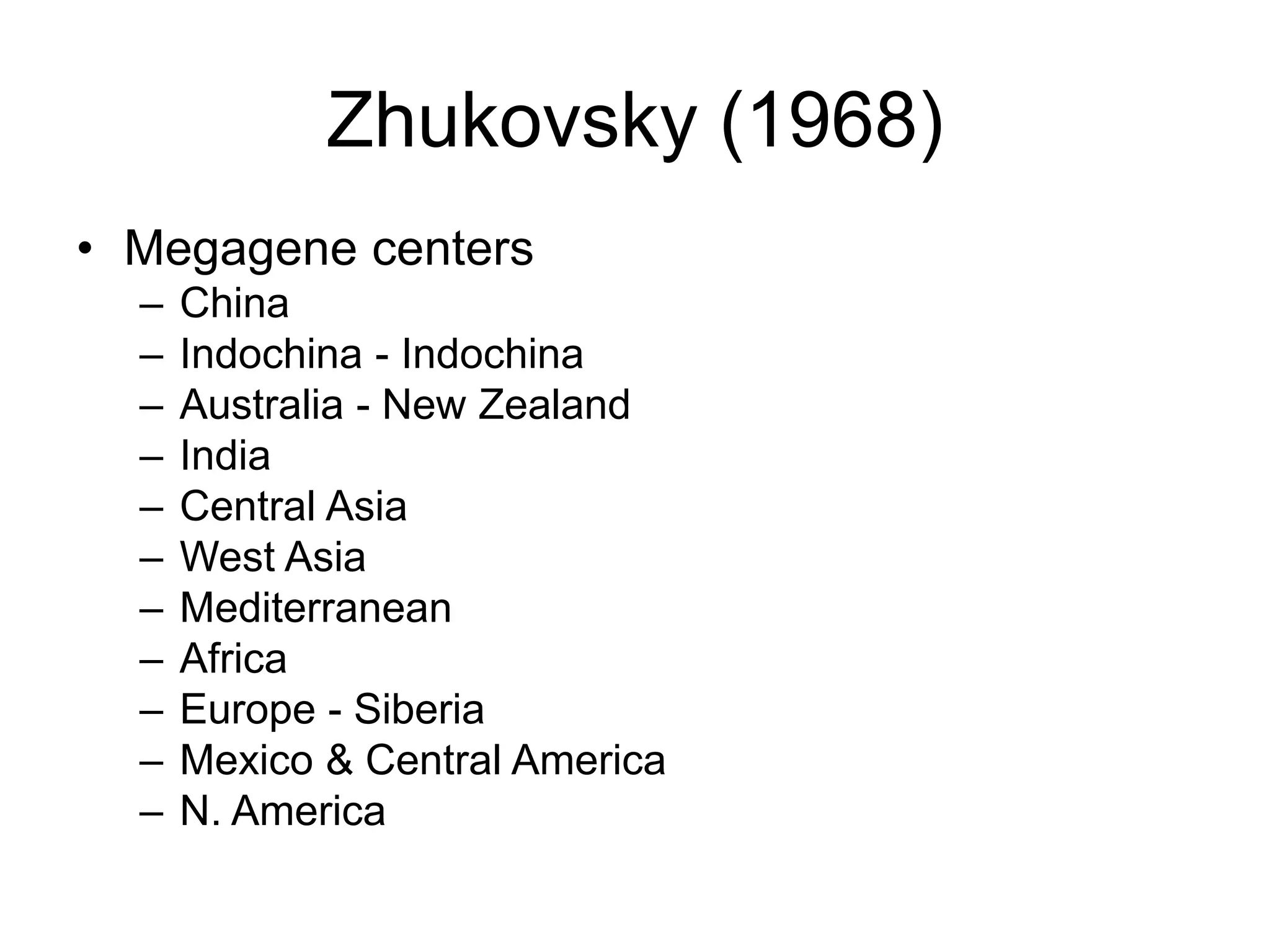
Zhukovsky (1968)
• Megagene centers
– China
– Indochina - Indochina
– Australia - New Zealand
– India
– Central Asia
– West Asia
– Mediterranean
– Africa
– Europe - Siberia
– Mexico & Central America
– N. America
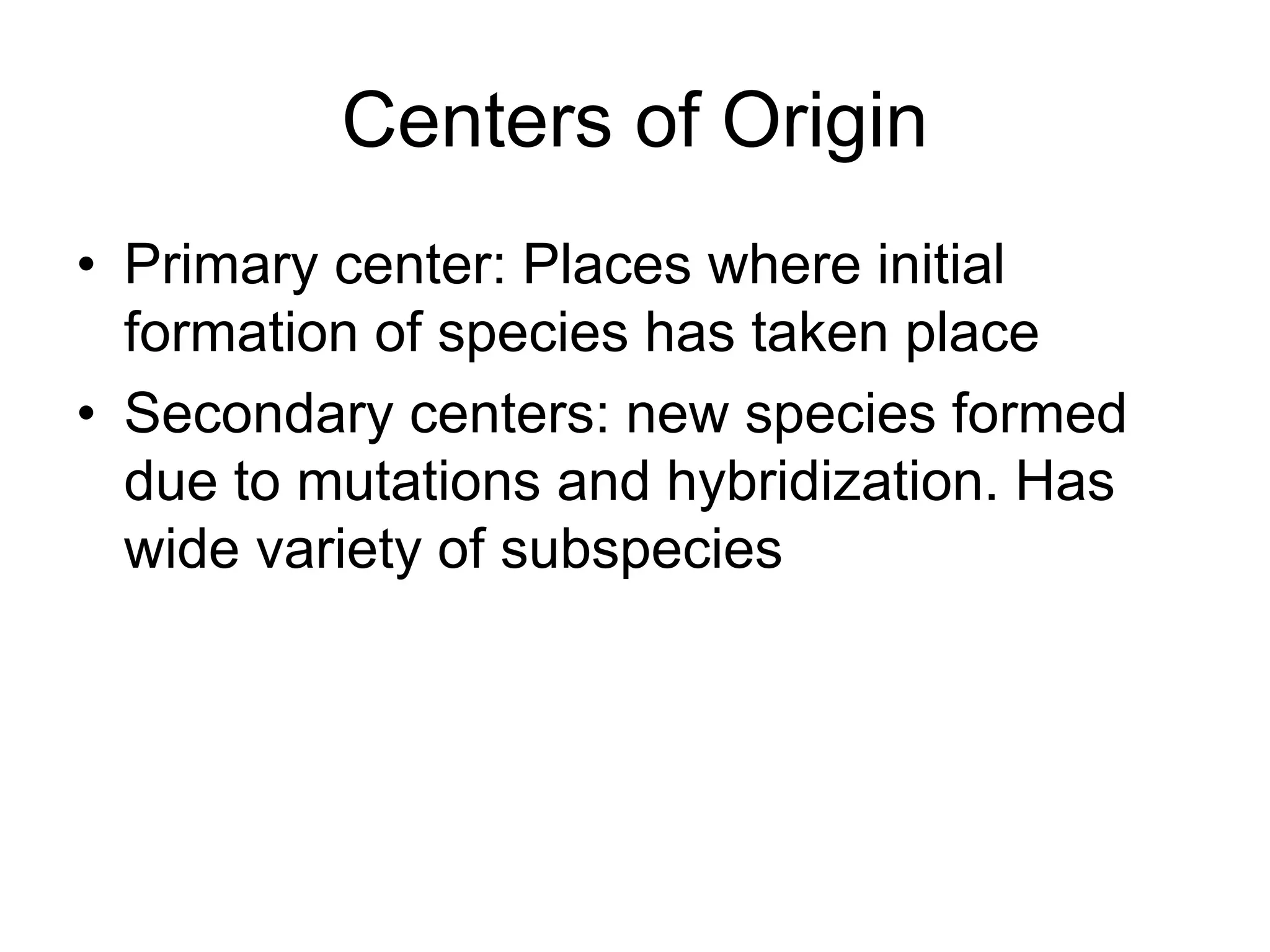
Centers of Origin
• Primary center: Places where initial
formation of species has taken place
• Secondary centers: new species formed
due to mutations and hybridization. Has
wide variety of subspecies
Harlan (1971 and 1992)
• Centers and non-centers: three each
• Recently related biomes to cultivation
• Tundra – no cultivation
• Tropical: Sugar cane, banana, orange, mango
and cocoa. Root crops and coffee
• Temperate: cheery, apple, pear, grapes walnut,
millets and wheat
• Mediterranean: maize, rice, sorghum, cassava,
sweet potato, bean, peanut, yams
• Sea coast: coconut, cabbage, cotton, beet
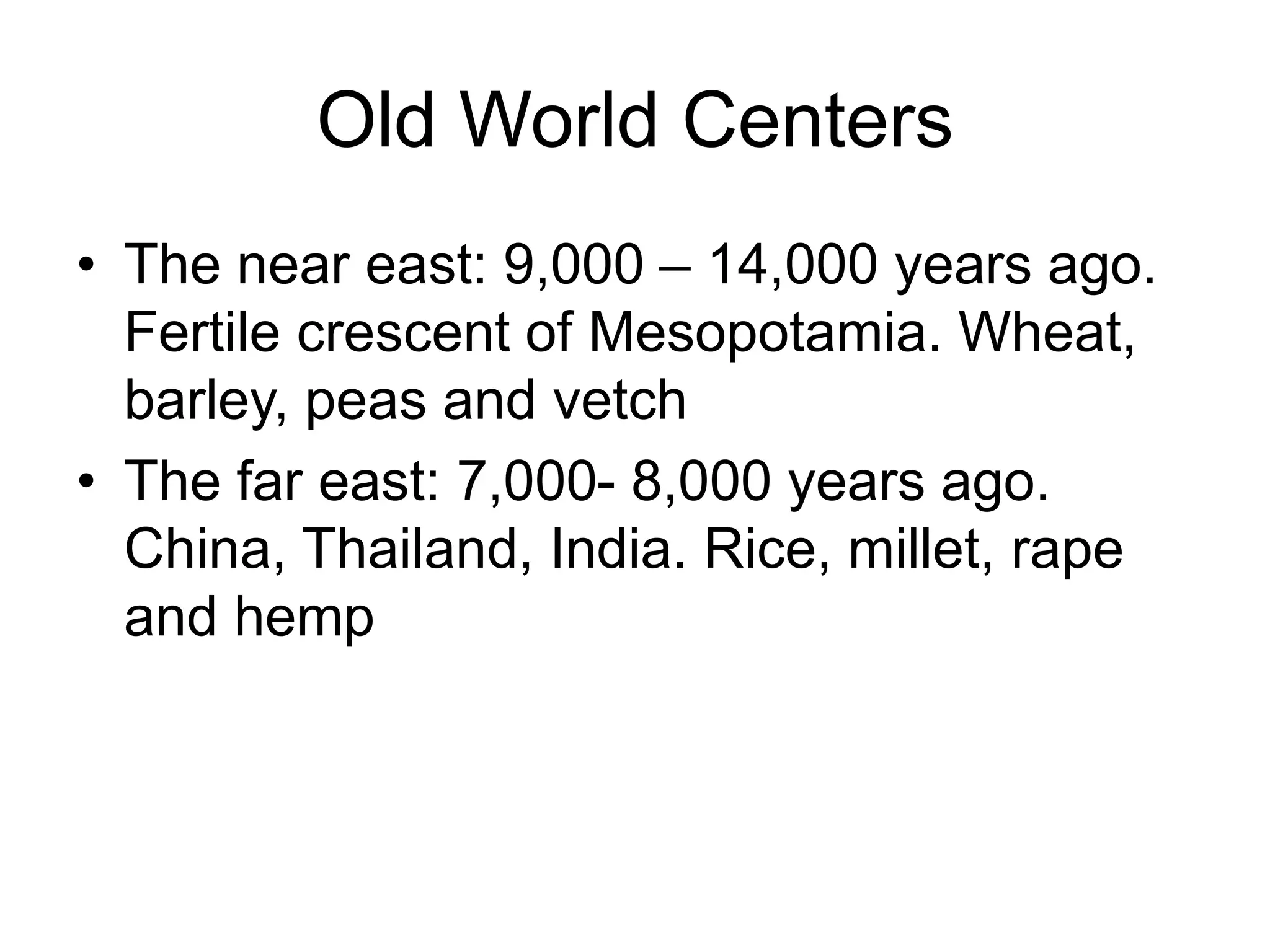
Old World Centers
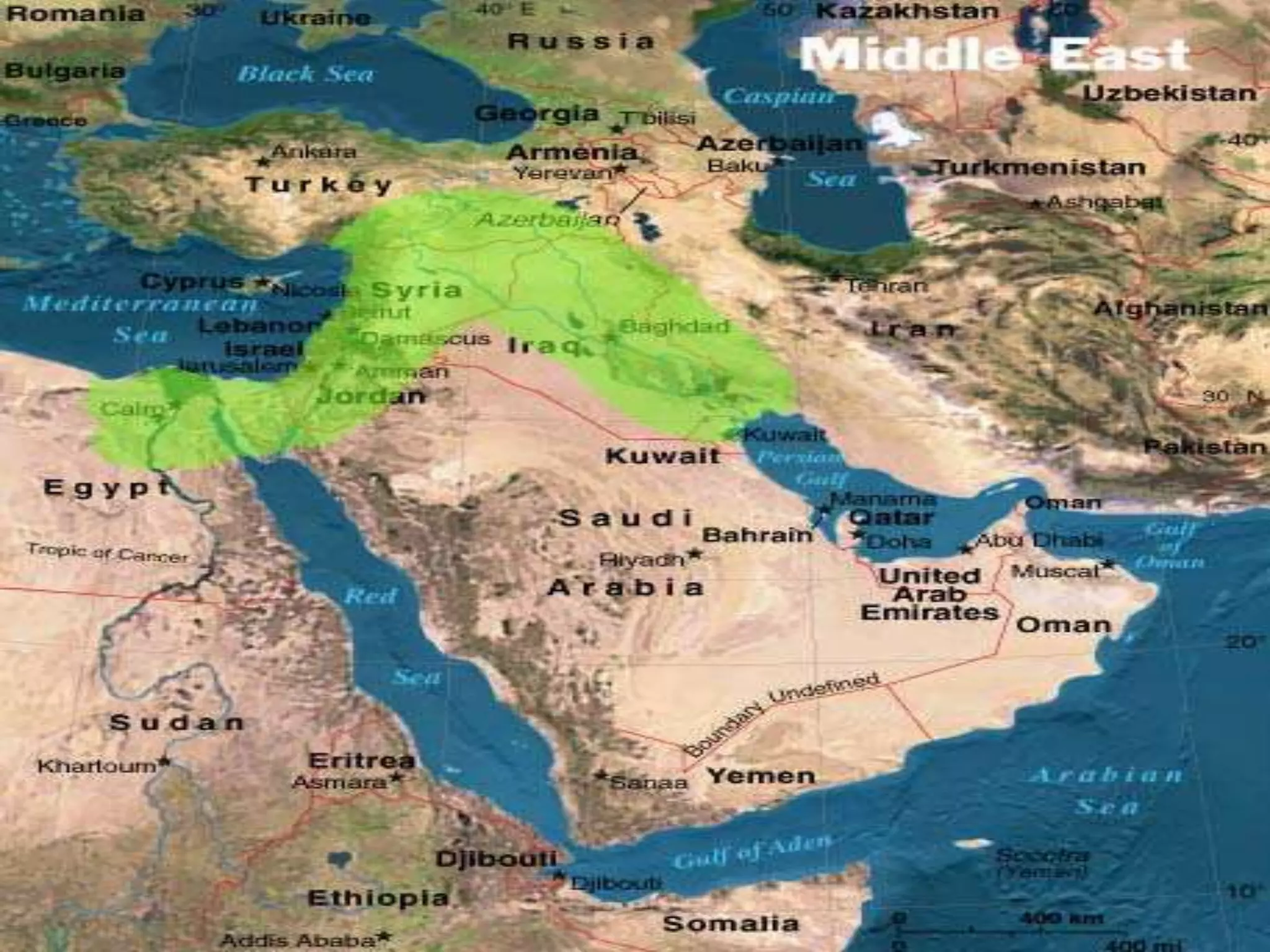
• The near east: 9,000 – 14,000 years ago.
Fertile crescent of Mesopotamia. Wheat,
barley, peas and vetch
• The far east: 7,000- 8,000 years ago.
China, Thailand, India. Rice, millet, rape
and hemp
New World Centers
• Eastern North America: Cherokee
Sunflower and cranberries
• Western North America: Pueblo Dwellers
Trees and shrubs; pine nuts and pigweed
• Mexico: Aztecs and Mayans; Corn and
beans
• South American: Inca; Potato and
chocolate
Agriculture to day
• 3% of land is used for cultivation
• US: 1.9 billion acres
– 310million acres for crop
– 650 million acres for animal
• Four major crops: 80% Corn, wheat soy
and hay
• All fruits and vegetable – 7% land
• Cotton – 4%

Origin of Agriculture.ppt

  • 1.
  • 2.
    Introduction • Knowledge oftime and place of origin is important – For taxonomists and plant breeders – Present day plants are much different than the wild varieties • Genetically and morphologically different • Several genes (characterisitcs) are selected – Loss of plants is loss of gene pools from which new traits can be retrieved
  • 3.
    Introduction • Humans turnednon-agricultural to agricultural way of life. • Agriculture; horticulture and domestication • Study history by – Carbon dating – Fossils – Phytoliths
  • 4.
    Why farm? • Workby Lee and Devore – !King bushmen of Kalahari desert of southern Africa • Selected plant for adequate diet • 105 species were used • Did not work hard • Not due to mal-nutrition or poverty • Not revolution but evolution
  • 5.
    De Candolle (1883) •Pioneering work • Criteria for recognizing centers of origin – Places where a plant grows spontaneously in a wild state – Places where fragments of plants in old deposits and buildings (archeological and palaeobotanical) are found – Archives describing the adventures of travelers. – Philogical (naming) origin
  • 6.
    Vavilov (1927) • Centerlocated in 20-45 degrees latitude • 6-8 centers • China • India • Central Asia • Near East • Mediterranean • Ethiopia • Mesoamerica • South America
  • 8.
    Zhukovsky (1968) • Megagenecenters – China – Indochina - Indochina – Australia - New Zealand – India – Central Asia – West Asia – Mediterranean – Africa – Europe - Siberia – Mexico & Central America – N. America
  • 10.
    Centers of Origin •Primary center: Places where initial formation of species has taken place • Secondary centers: new species formed due to mutations and hybridization. Has wide variety of subspecies
  • 11.
    Harlan (1971 and1992) • Centers and non-centers: three each • Recently related biomes to cultivation • Tundra – no cultivation • Tropical: Sugar cane, banana, orange, mango and cocoa. Root crops and coffee • Temperate: cheery, apple, pear, grapes walnut, millets and wheat • Mediterranean: maize, rice, sorghum, cassava, sweet potato, bean, peanut, yams • Sea coast: coconut, cabbage, cotton, beet
  • 13.
    Old World Centers •The near east: 9,000 – 14,000 years ago. Fertile crescent of Mesopotamia. Wheat, barley, peas and vetch • The far east: 7,000- 8,000 years ago. China, Thailand, India. Rice, millet, rape and hemp
  • 14.
    New World Centers •Eastern North America: Cherokee Sunflower and cranberries • Western North America: Pueblo Dwellers Trees and shrubs; pine nuts and pigweed • Mexico: Aztecs and Mayans; Corn and beans • South American: Inca; Potato and chocolate
  • 16.
    Agriculture to day •3% of land is used for cultivation • US: 1.9 billion acres – 310million acres for crop – 650 million acres for animal • Four major crops: 80% Corn, wheat soy and hay • All fruits and vegetable – 7% land • Cotton – 4%