1 
By: 
ORGANIZATIONAL 
COMMUNICATION 
Sikandar Ali 
Soomro 
TYPES OF 
2k12/BBA/47
ORGANIZATIONAL COMMUNICATION: 
• Organizational Communication is 
also defined as “A program that 
focuses on general 
communication processes and 
dynamics within organizations”
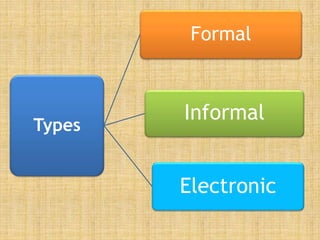
Types 
Formal 
Informal 
Electronic
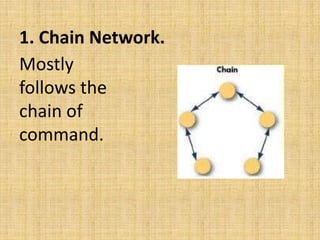
1. Chain Network. 
Mostly 
follows the 
chain of 
command.
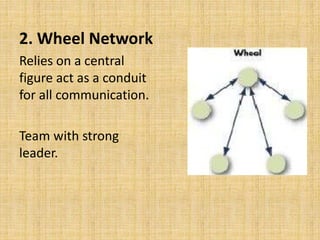
2. Wheel Network 
Relies on a central 
figure act as a conduit 
for all communication. 
Team with strong 
leader.
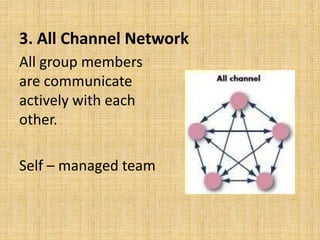
3. All Channel Network 
All group members 
are communicate 
actively with each 
other. 
Self – managed team
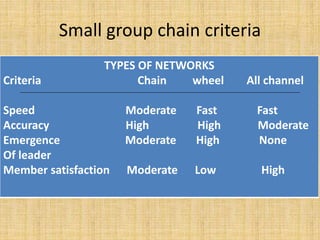
Small group chain criteria 
TYPES OF NETWORKS 
Criteria Chain wheel All channel 
Speed Moderate Fast Fast 
Accuracy High High Moderate 
Emergence Moderate High None 
Of leader 
Member satisfaction Moderate Low High
Grapevine 
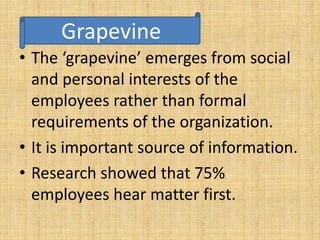
• The ‘grapevine’ emerges from social 
and personal interests of the 
employees rather than formal 
requirements of the organization. 
• It is important source of information. 
• Research showed that 75% 
employees hear matter first.
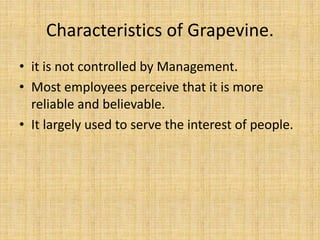
Characteristics of Grapevine. 
• it is not controlled by Management. 
• Most employees perceive that it is more 
reliable and believable. 
• It largely used to serve the interest of people.
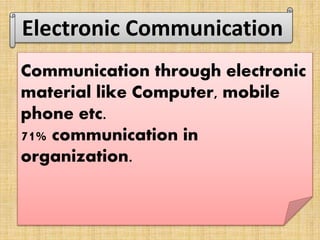
Electronic Communication 
Communication through electronic 
material like Computer, mobile 
phone etc. 
71% communication in 
organization.
E-mail 
• Email uses the 
internet to 
transmit or receive 
computer 
generated text and 
documents.
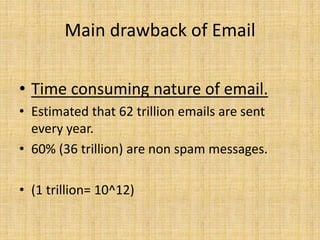
Main drawback of Email 
• Time consuming nature of email. 
• Estimated that 62 trillion emails are sent 
every year. 
• 60% (36 trillion) are non spam messages. 
• (1 trillion= 10^12)
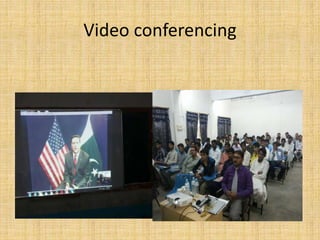
Video Conferencing 
• it permits employees in an organization to 
have meeting with people at different 
location.
Video conferencing
Organizational communication

Organizational communication

  • 1.
    1 By: ORGANIZATIONAL COMMUNICATION Sikandar Ali Soomro TYPES OF 2k12/BBA/47
  • 2.
    ORGANIZATIONAL COMMUNICATION: •Organizational Communication is also defined as “A program that focuses on general communication processes and dynamics within organizations”
  • 3.
  • 5.
    1. Chain Network. Mostly follows the chain of command.
  • 6.
    2. Wheel Network Relies on a central figure act as a conduit for all communication. Team with strong leader.
  • 7.
    3. All ChannelNetwork All group members are communicate actively with each other. Self – managed team
  • 8.
    Small group chaincriteria TYPES OF NETWORKS Criteria Chain wheel All channel Speed Moderate Fast Fast Accuracy High High Moderate Emergence Moderate High None Of leader Member satisfaction Moderate Low High
  • 10.
    Grapevine • The‘grapevine’ emerges from social and personal interests of the employees rather than formal requirements of the organization. • It is important source of information. • Research showed that 75% employees hear matter first.
  • 11.
    Characteristics of Grapevine. • it is not controlled by Management. • Most employees perceive that it is more reliable and believable. • It largely used to serve the interest of people.
  • 13.
    Electronic Communication Communicationthrough electronic material like Computer, mobile phone etc. 71% communication in organization.
  • 14.
    E-mail • Emailuses the internet to transmit or receive computer generated text and documents.
  • 15.
    Main drawback ofEmail • Time consuming nature of email. • Estimated that 62 trillion emails are sent every year. • 60% (36 trillion) are non spam messages. • (1 trillion= 10^12)
  • 16.
    Video Conferencing •it permits employees in an organization to have meeting with people at different location.
  • 17.