Exchange the information to one 
person another person is called a 
communication
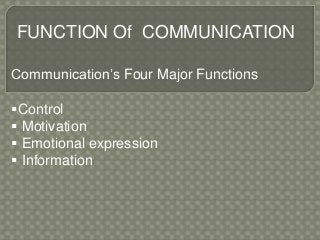
FUNCTION Of COMMUNICATION 
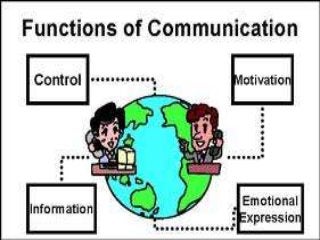
Communication’s Four Major Functions 
Control 
 Motivation 
 Emotional expression 
 Information
Control 
Communication controls member behavior in 
several ways. 
Employees are required to follow authority 
hierarchies and formal guidelines. 
Informal communication also controls behavior.
When work groups tease or harass a member who 
produces too much,they are informal communicating 
with, and controlling, the member’s behavior.
Motivation. 
Communication promote motivation by 
clarifying for employees what is to be done, how 
well they are doing and what can be done to 
improve performance. 
The formation of specific goals, feedback on 
progress toward the goals, and reinforcement of 
desired behavior all stimulate motivation and 
require communication.
Emotional expression. 
Many employees, their work group is a primary 
source for social interaction. 
Communication within the group is 
a fundamental mechanism by which members 
show the their frustrations and feelings 
of satisfaction.
Communication provides a way for expression 
of emotions and fulfillment of social needs.
Information. 
The final function that communication performs 
is related to its role in facilitating decision 
making. 
It provides the needed information. 
None of these four functions should be seen as 
more important than the others.
Presentation of o.b

Presentation of o.b

  • 4.
    Exchange the informationto one person another person is called a communication
  • 5.
    FUNCTION Of COMMUNICATION Communication’s Four Major Functions Control  Motivation  Emotional expression  Information
  • 6.
    Control Communication controlsmember behavior in several ways. Employees are required to follow authority hierarchies and formal guidelines. Informal communication also controls behavior.
  • 7.
    When work groupstease or harass a member who produces too much,they are informal communicating with, and controlling, the member’s behavior.
  • 8.
    Motivation. Communication promotemotivation by clarifying for employees what is to be done, how well they are doing and what can be done to improve performance. The formation of specific goals, feedback on progress toward the goals, and reinforcement of desired behavior all stimulate motivation and require communication.
  • 9.
    Emotional expression. Manyemployees, their work group is a primary source for social interaction. Communication within the group is a fundamental mechanism by which members show the their frustrations and feelings of satisfaction.
  • 10.
    Communication provides away for expression of emotions and fulfillment of social needs.
  • 11.
    Information. The finalfunction that communication performs is related to its role in facilitating decision making. It provides the needed information. None of these four functions should be seen as more important than the others.