1
1. INTRODUCTION
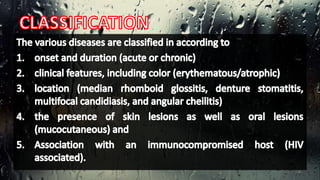
2. CLASSIFICATION
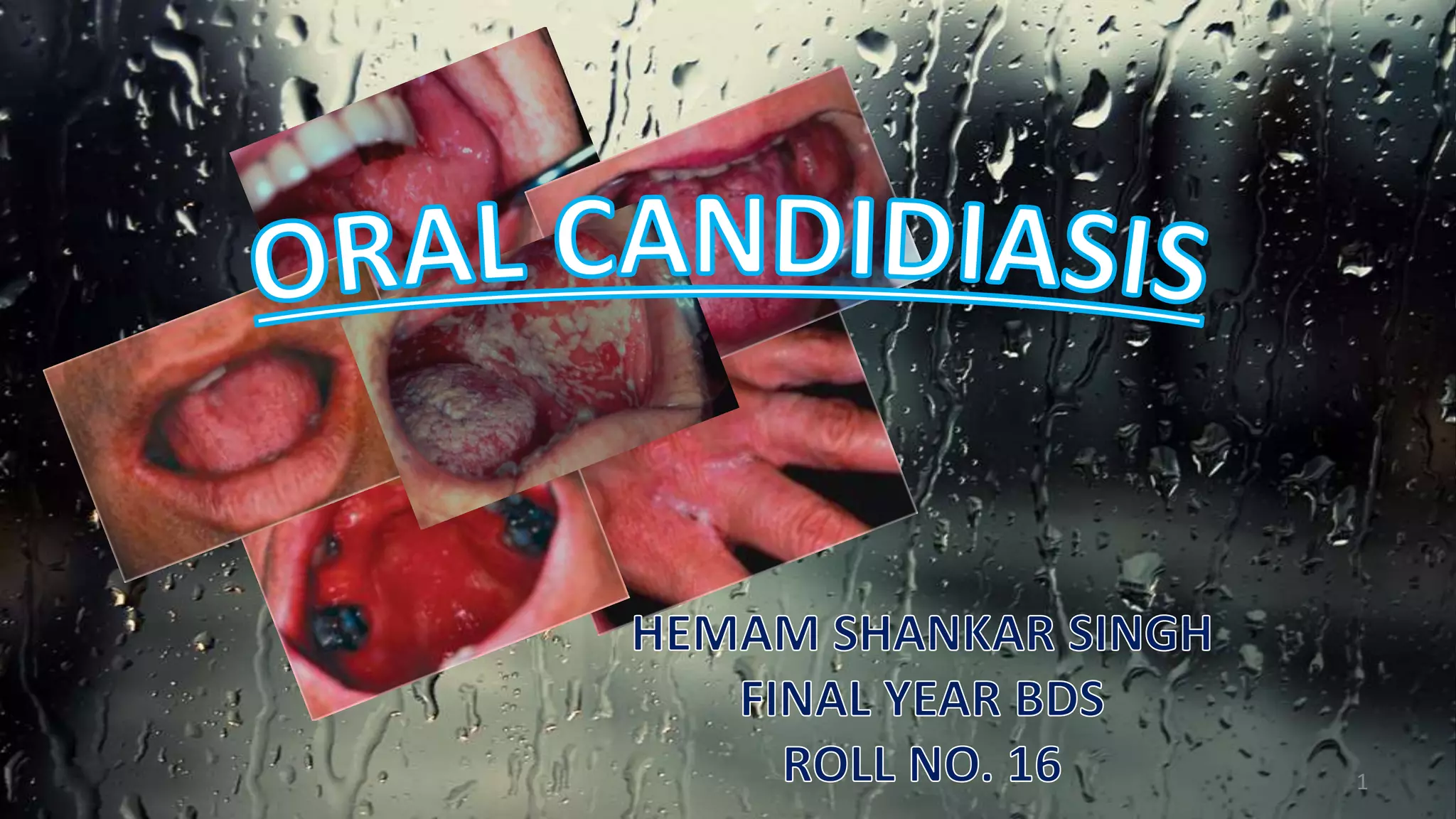
3. ACUTE PSEUDOMEMBRANOUS CANDIDIASIS (THRUSH)
4. ACUTE ATROPHIC CANDIDIASIS
5. CHRONIC ATROPHIC CANDIDIASIS
6. CHRONIC HYPERPLASTIC CANDIDIASIS
7. CHRONIC MULTIFOCAL CANDIDIASIS
8. CHRONIC MUCOCUTANEOUS CANDIDIASIS
9. IMMUNOCOMPROMISED (HIV)-ASSOCIATED CANDIDIASIS
10. TREATMENT OF ORAL CANDIDIASIS
2
 It is also called as candidiosis.
 Older name of candidiasis is “moniliasis”.
3
4
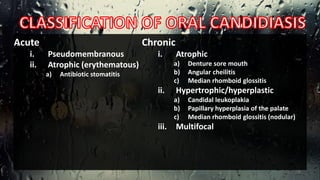
.Acute
i. Pseudomembranous
ii. Atrophic (erythematous)
a) Antibiotic stomatitis
Chronic
i. Atrophic
a) Denture sore mouth
b) Angular cheilitis
c) Median rhomboid glossitis
ii. Hypertrophic/hyperplastic
a) Candidal leukoplakia
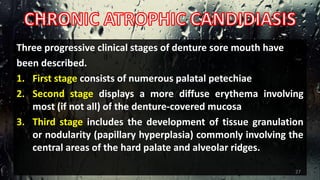
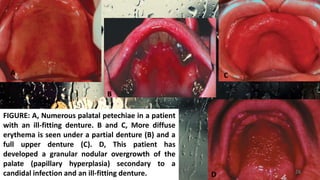
b) Papillary hyperplasia of the palate
c) Median rhomboid glossitis (nodular)
iii. Multifocal
5
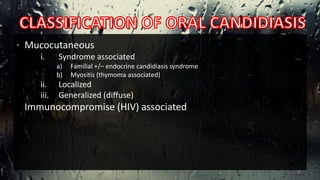
. Mucocutaneous
i. Syndrome associated
a) Familial +/– endocrine candidiasis syndrome
b) Myositis (thymoma associated)
ii. Localized
iii. Generalized (diffuse)
Immunocompromise (HIV) associated
6
. Conditions associated with increased vulnerability of oral candidiasis and their mechanism
Category Condition Mechanism
Altered local resistance to
infection
Poor oral hygiene Promotes organism adherence & colonization
Xerostomia Absence of antimicrobial & flushing effect of saliva
Recent antibiotics treatment Inhibits competitive oral bacteria
Dental appliance Isolate mucosa from saliva & functional cleansing serve as organism
reservoir
Compromised immune system Early infancy Immune competence has not completely developed
Genetic immune deficiency Specific humoral or cellular immune defects
AIDS Deficient cellular immune response
Corticcasteroids therapy Inhibition of immune function
Pancytopenia Depletion of circulating leukocytes caused by chemotherapy, aplastic
anaemia & similar hemopoietic disorders
Generalized patient
debilitation
Anemia, malnutrition, malabsorption Epithelial thinning & altered maturation, poor tissue oxygenation
Diabetes mellitus Recurring hyperglycemia & mild ketoacidosis
Advanced systemic disease Metabolic toxicity or limited blood perfusion of tissues
7
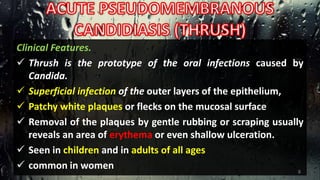
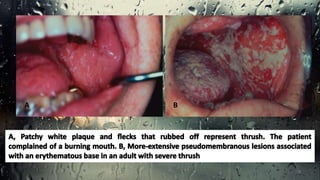
Clinical Features.
 Thrush is the prototype of the oral infections caused by
Candida.
 Superficial infection of the outer layers of the epithelium,
 Patchy white plaques or flecks on the mucosal surface
 Removal of the plaques by gentle rubbing or scraping usually
reveals an area of erythema or even shallow ulceration.
 Seen in children and in adults of all ages
 common in women 8
A B
9
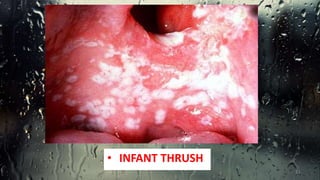
• Typical lesions in infants are
– as soft white adherent patches on the oral mucosa
– generally painless,
– can be removed with little difficulty, leaving raw bleeding
surface
– infection is contracted mother during pregnancy
 In adult,
 inflammation,
 erythema, and
 painful eroded areas
10
• INFANT THRUSH
11
 Any mucosal surface may be involved,
 erythematous or white areas often develop beneath partial or
complete dentures (areas where normal cleansing
mechanisms are poor)
 A prodromal symptom of a
 rapid onset of a bad taste and
the loss of taste discrimination
burning sensation of the mouth and throat may also
precede
12
• pearly white or bluish white plaques are present on the oral
mucosa, they resemble cottage cheese or curdled milk
• white patches are easily wiped out with wet gauge which
leaves either a normal or erythematous area or atrophic area
13
Micro-organisms associated
• Candida albicans,
• Candida tropicalis, and
• Candida glabrata account for over 80% of medical isolates;
• Candida parapsilopsis,
• Candida guilliermondii,
• Candida krusei, and
• Candida pseudotropicalis are also recognized as pathogens.
14
Predisposing Factors
1. Marked changes in oral microbial flora
1. due to the use of antibiotics [especially broad-spectrum antibiotics],
2. excessive use of antibacterial mouth rinses, or xerostomia
2. Chronic local irritants (dentures and orthodontic appliances)
3. Administration of corticosteroids (aerosolized inhalant and
topical agents are more likely to cause Candidiasis than
systemic administration)
4. Poor oral hygiene
15
5. Pregnancy
6. Immunologic deficiency
1. congenital or childhood (chronic familial mucocutaneous candidiasis
± endocrine candidiasis syndrome [hypoparathyroidism,
hypoadrenocorticism], and immunologic immaturity of infancy)
2. acquired or adult (diabetes, leukemia, lymphomas, and AIDS)
3. iatrogenic (from cancer chemotherapy, bone marrow transplantation,
and head and neck radiation)
7. Mal-absorption and malnutrition
16
• Xerostomia and chronic local irritants
may alter the oral mucous membranes,
predispose them to colonization and invasion
• Shifts in the bacterial flora often accompany these situations
and provide an opportunity for Candida spp to increase.
• Radiation to the head and neck also affects the oral mucous
membranes and produces xerostomia 17
Histologic Features.
Microscopic examination of the lesions reveals a
localized superficial inflammatory reaction,
hyperparakeratosis and
ulceration of the surface covered with a fibrinoid exudate,
In fibrinoid exudate large numbers of yeast and
pseudohyphae are found .
18
Histologic Features.
The fungi rarely penetrate below this superficial layer.
This pseudo-membrane imparts the characteristic white-
flecked appearance to the mucosal lesions. Thrush is correctly
described as an acute pseudo-membranous candidiasis.
19
DIFFERENTIAL DIAGNOSIS
• Plaque form of lichen planus: lesions of thrush can be wiped with the help
of gauge
• Leukoplakia: history of recent administration of antibiotics will favor the
diagnosis
• Genodermatoses: cytological smear should be taken to confirm the
diagnosis
• Gangrenous stomatitis: pseudomembrane is dirty in color & not raised
above the surface
• Chemical burns: The superficial white material burn of oral mucosa
appears thin and delicate as compared to pseudomembranous
candidiasis.
20
Acute atrophic candidiasis presents as a
 red patch of atrophic or
 erythematous raw and painful mucosa,
 with minimal evidence of the white pseudo-membranous
lesions observed in thrush
 Depapillation of tongue occurs
21
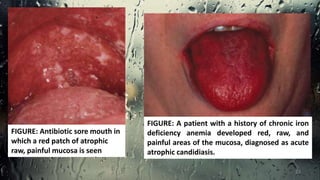
 Antibiotic sore mouth, a common form of atrophic
candidiasis, should be suspected in a patient who develops
symptoms of
 oral burning,
 bad taste, or
 sore throat during or after therapy with broad-spectrum antibiotics.
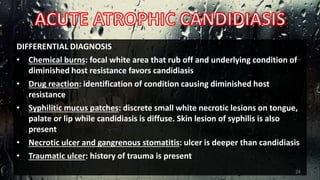
Patients with chronic iron deficiency anemia may also develop
atrophic candidiasis
22
FIGURE: A patient with a history of chronic iron
deficiency anemia developed red, raw, and
painful areas of the mucosa, diagnosed as acute
atrophic candidiasis.
FIGURE: Antibiotic sore mouth in
which a red patch of atrophic
raw, painful mucosa is seen
23
DIFFERENTIAL DIAGNOSIS
• Chemical burns: focal white area that rub off and underlying condition of
diminished host resistance favors candidiasis
• Drug reaction: identification of condition causing diminished host
resistance
• Syphilitic mucus patches: discrete small white necrotic lesions on tongue,
palate or lip while candidiasis is diffuse. Skin lesion of syphilis is also
present
• Necrotic ulcer and gangrenous stomatitis: ulcer is deeper than candidiasis
• Traumatic ulcer: history of trauma is present
24
Chronic atrophic candidiasis includes
• denture stomatitis (denture sore mouth),
• angular cheilitis, and
• median rhomboid glossitis.
25
DENTURE STOMATITIS (Denture Sore Mouth).
It is a common form of oral candidiasis that manifests as
a diffuse inflammation of the maxillary denture-bearing areas
and that is often (15 to 65% of cases) associated with angular
cheilitis
• Candida spp act as an endogenous infecting agent on
tissue predisposed by chronic trauma to microbial invasion.
Lesions of chronic atrophic candidiasis have also been
frequently reported in HIV-positive patients
26
Three progressive clinical stages of denture sore mouth have
been described.
1. First stage consists of numerous palatal petechiae
2. Second stage displays a more diffuse erythema involving
most (if not all) of the denture-covered mucosa
3. Third stage includes the development of tissue granulation
or nodularity (papillary hyperplasia) commonly involving the
central areas of the hard palate and alveolar ridges.
27
FIGURE: A, Numerous palatal petechiae in a patient
with an ill-fitting denture. B and C, More diffuse
erythema is seen under a partial denture (B) and a
full upper denture (C). D, This patient has
developed a granular nodular overgrowth of the
palate (papillary hyperplasia) secondary to a
candidal infection and an ill-fitting denture.
A
B
C
D 28
Denture sore mouth is rarely found under a mandibular denture.
 negative pressure that forms under the maxillary denture
excludes salivary antibody from this region, and
 yeast may reproduce, undisturbed, in the space between the
denture and mucosa.
 The closer adaptation of the maxillary denture and palate
may also bring the large number of yeasts adhering to the
denture surface into contact with the mucosa.
29
ANGULAR CHEILITIS.
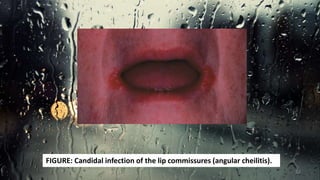
Angular cheilitis is the term used for an infection
involving the lip commissures
• There is frequently a coexistent denture stomatitis, and
• uncommon in patients with a natural dentition.
30
• Other possible etiologic cofactors include
– reduced vertical dimension;
– a nutritional deficiency (iron deficiency anemia and vitamin B or folic
acid deficiency) sometimes referred to as perlèche; and
– (more rarely) diabetes,
– neutropenia, and
– AIDS, as well
– as co-infection with Staphylococcus and beta-hemolytic Streptococcus.
31
FIGURE: Candidal infection of the lip commissures (angular cheilitis).
32
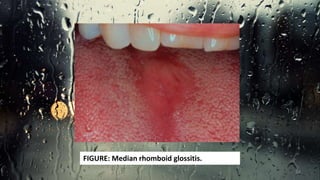
MEDIAN RHOMBOID GLOSSITIS.
Erythematous patches of atrophic papillae located in the
central area of the dorsum of the tongue are considered a
form of chronic atrophic candidiasis
When these lesions become more nodular, the condition
is referred to as hyperplastic median rhomboid glossitis.
These lesions were originally thought to be
developmental in nature but are now considered to be a
manifestation of chronic candidiasis.
33
FIGURE: Median rhomboid glossitis.
34
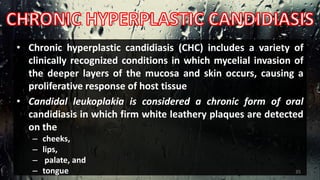
• Chronic hyperplastic candidiasis (CHC) includes a variety of
clinically recognized conditions in which mycelial invasion of
the deeper layers of the mucosa and skin occurs, causing a
proliferative response of host tissue
• Candidal leukoplakia is considered a chronic form of oral
candidiasis in which firm white leathery plaques are detected
on the
– cheeks,
– lips,
– palate, and
– tongue 35
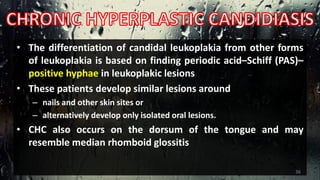
• The differentiation of candidal leukoplakia from other forms
of leukoplakia is based on finding periodic acid–Schiff (PAS)–
positive hyphae in leukoplakic lesions
• These patients develop similar lesions around
– nails and other skin sites or
– alternatively develop only isolated oral lesions.
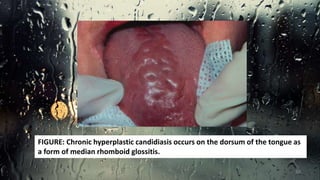
• CHC also occurs on the dorsum of the tongue and may
resemble median rhomboid glossitis
36
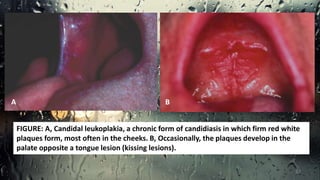
A B
FIGURE: A, Candidal leukoplakia, a chronic form of candidiasis in which firm red white
plaques form, most often in the cheeks. B, Occasionally, the plaques develop in the
palate opposite a tongue lesion (kissing lesions).
37
FIGURE: Chronic hyperplastic candidiasis occurs on the dorsum of the tongue as
a form of median rhomboid glossitis.
38
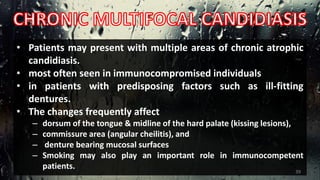
• Patients may present with multiple areas of chronic atrophic
candidiasis.
• most often seen in immunocompromised individuals
• in patients with predisposing factors such as ill-fitting
dentures.
• The changes frequently affect
– dorsum of the tongue & midline of the hard palate (kissing lesions),
– commissure area (angular cheilitis), and
– denture bearing mucosal surfaces
– Smoking may also play an important role in immunocompetent
patients.
39
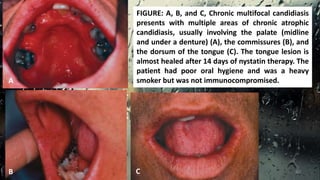
FIGURE: A, B, and C, Chronic multifocal candidiasis
presents with multiple areas of chronic atrophic
candidiasis, usually involving the palate (midline
and under a denture) (A), the commissures (B), and
the dorsum of the tongue (C). The tongue lesion is
almost healed after 14 days of nystatin therapy. The
patient had poor oral hygiene and was a heavy
smoker but was not immunocompromised.A
B C 40
Persistent infection with Candida usually occurs as a
result of a defect in cell-mediated immunity or may be
associated with iron deficiency.
 Hyperplastic mucocutaneous lesions,
 localized granulomas, and
 adherent white plaques on affected mucous membranes
are the prominent lesions that identify chronic mucocutaneous
candidiasis (CMC)
41
 Two categories of CMC have been described:
1. syndrome-associated CMC and
a. familial or
b. chronic
2. localized and diffuse CMC.
42
 The familial form, candidiasis endocrinopathy syndrome
(CES), is a rare autosomal recessive disorder characterized by
 an onset of CMC during infancy or early childhood,
 associated with the appearance of hypoparathyroidism,
hypoadrenocorticism, and other endocrine anomalies.
 Patients develop persistent oral candidiasis and hyperplastic infections
of the nail folds at an early age
43
 The other syndrome-associated form is chronic candidiasis
associated with thymoma, which appears with other
autoimmune abnormalities such as
 myasthenia gravis,
 polymyositis,
 bullous lichen planus, and
 hypogammaglobulinemia.
44
• Localized CMC is a variant associated with chronic oral
candidiasis and lesions of the skin and nails.
• usually begin within the first two decades of life.
• The diffuse variant is characterized by
– randomly occurring cases of severe mucocutaneous candidiasis
– widespread skin involvement and
– development of Candida granulomas.
– It is often associated with other opportunistic fungal and bacterial
infections.
45
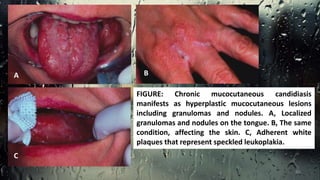
FIGURE: Chronic mucocutaneous candidiasis
manifests as hyperplastic mucocutaneous lesions
including granulomas and nodules. A, Localized
granulomas and nodules on the tongue. B, The same
condition, affecting the skin. C, Adherent white
plaques that represent speckled leukoplakia.
A
C
B
46
• Oral candidiasis is the most frequent opportunistic infection
associated with immunocompromised individuals.
• The patients who are on immunosuppressive drug regimens
or who have HIV infection, cancer, or hematologic
malignancies have an increased susceptibility to oral
candidiasis.
47
 A variety of topical and systemically administered
medications are now available to supplement the older
polyene antifungal antibiotics nystatin and amphotericin B.
 Treatment should be maintained for 7 days
 Response to treatment is often good
 Oral lesions and symptoms may disappear in a fairly short
period (ranging from 2-5 days), but relapse are common
because of the underlying immunodeficiency.
48
• Topical treatment-
– Clotrimazole—one oral troche (10 mg tab ) dissolved in mouth five
times daily
– 1% gentian violet—can be used but it is not ideal because of the
superficial necrosis of mucosa and it may produce unsightly staining
– Nystatin preparations-- (7-10 days rinse, 3-4 times daily)
– Amphotericin-B—5-10ml of oral solution is used as a rinse and then
expectorated 3-4 times daily
– Idoquinol—it has both antifungal and antibacterial properties. When
this is combined with corticosteroid is very helpful in management of
angular cheilitis
49
• Systemic therapy includes the use of any one of these three:
– ketoconazole,
– itraconazole, and
– fluconazole.
• Fluconazole and amphotericin B may be used intravenously
for the treatment of the resistant lesions of CMC and systemic
candidiasis.
50
• The majority of acute oral Candida infections respond rapidly
to topical nystatin and will not recur, provided that the
predisposing factors have also been eliminated
– Seven to 21 days’ use of a nystatin rinse three to four
times daily is usually adequate although some resistant
cases may require a second course of treatment.
– Nystatin in cream form may also be applied directly to the
denture or to the corners of the mouth
51
• Patients for whom predisposing factors such as xerostomia
and immunodeficiency cannot be eliminated may need either
– continuous or
– repeated treatment to prevent recurrences.
• The consumption of yogurt two to three times per week and
improved oral hygiene can also help, especially if underlying
predisposing factors cannot be eliminated.
52
• Better patient compliance and more effective treatment of
both acute and chronic candidiasis can usually be attained by
– a once-daily dose of 200 mg of ketoconazole,
– 100 mg of fluconazole, or
– itraconazole oral suspension (100 to 200 mg/d) for 2
Weeks
53
• When these medications are used for this short period, side
effects such as
– increased liver enzymes,
– abdominal pain, and
– pruritus are rare
• Fluconazole is more effective than ketoconazole, but its
frequent use can lead to the development of resistance to the
drug.
54
• Fluconazole therapy for oral candidiasis associated with HIV
infection often results in the development of resistance to
fluconazole.
• Itraconazole can be substituted for fluconazole in resistant
patients, but fluconazole is still the mainstay of therapy for
HIV-associated candidiasis.
55
• Fluconazole interacts with a number of other medications and
must be prescribed with care for patients who are using
– anticoagulants,
– phenytoin,
– cyclosporine, and
– oral hypoglycemic agents.
56
• The simultaneous administration of
– ketoconazole (or the related antifungal itraconazole) and
– cisapride or antihistamines (terfenadine and astemizole)
• is associated occasionally with ventricular arrhythmias and
other serious cardiovascular events.
57
58

Oral candidiasis

  • 1.
  • 2.
    1. INTRODUCTION 2. CLASSIFICATION 3.ACUTE PSEUDOMEMBRANOUS CANDIDIASIS (THRUSH) 4. ACUTE ATROPHIC CANDIDIASIS 5. CHRONIC ATROPHIC CANDIDIASIS 6. CHRONIC HYPERPLASTIC CANDIDIASIS 7. CHRONIC MULTIFOCAL CANDIDIASIS 8. CHRONIC MUCOCUTANEOUS CANDIDIASIS 9. IMMUNOCOMPROMISED (HIV)-ASSOCIATED CANDIDIASIS 10. TREATMENT OF ORAL CANDIDIASIS 2
  • 3.
     It isalso called as candidiosis.  Older name of candidiasis is “moniliasis”. 3
  • 4.
  • 5.
    .Acute i. Pseudomembranous ii. Atrophic(erythematous) a) Antibiotic stomatitis Chronic i. Atrophic a) Denture sore mouth b) Angular cheilitis c) Median rhomboid glossitis ii. Hypertrophic/hyperplastic a) Candidal leukoplakia b) Papillary hyperplasia of the palate c) Median rhomboid glossitis (nodular) iii. Multifocal 5
  • 6.
    . Mucocutaneous i. Syndromeassociated a) Familial +/– endocrine candidiasis syndrome b) Myositis (thymoma associated) ii. Localized iii. Generalized (diffuse) Immunocompromise (HIV) associated 6
  • 7.
    . Conditions associatedwith increased vulnerability of oral candidiasis and their mechanism Category Condition Mechanism Altered local resistance to infection Poor oral hygiene Promotes organism adherence & colonization Xerostomia Absence of antimicrobial & flushing effect of saliva Recent antibiotics treatment Inhibits competitive oral bacteria Dental appliance Isolate mucosa from saliva & functional cleansing serve as organism reservoir Compromised immune system Early infancy Immune competence has not completely developed Genetic immune deficiency Specific humoral or cellular immune defects AIDS Deficient cellular immune response Corticcasteroids therapy Inhibition of immune function Pancytopenia Depletion of circulating leukocytes caused by chemotherapy, aplastic anaemia & similar hemopoietic disorders Generalized patient debilitation Anemia, malnutrition, malabsorption Epithelial thinning & altered maturation, poor tissue oxygenation Diabetes mellitus Recurring hyperglycemia & mild ketoacidosis Advanced systemic disease Metabolic toxicity or limited blood perfusion of tissues 7
  • 8.
    Clinical Features.  Thrushis the prototype of the oral infections caused by Candida.  Superficial infection of the outer layers of the epithelium,  Patchy white plaques or flecks on the mucosal surface  Removal of the plaques by gentle rubbing or scraping usually reveals an area of erythema or even shallow ulceration.  Seen in children and in adults of all ages  common in women 8
  • 9.
  • 10.
    • Typical lesionsin infants are – as soft white adherent patches on the oral mucosa – generally painless, – can be removed with little difficulty, leaving raw bleeding surface – infection is contracted mother during pregnancy  In adult,  inflammation,  erythema, and  painful eroded areas 10
  • 11.
  • 12.
     Any mucosalsurface may be involved,  erythematous or white areas often develop beneath partial or complete dentures (areas where normal cleansing mechanisms are poor)  A prodromal symptom of a  rapid onset of a bad taste and the loss of taste discrimination burning sensation of the mouth and throat may also precede 12
  • 13.
    • pearly whiteor bluish white plaques are present on the oral mucosa, they resemble cottage cheese or curdled milk • white patches are easily wiped out with wet gauge which leaves either a normal or erythematous area or atrophic area 13
  • 14.
    Micro-organisms associated • Candidaalbicans, • Candida tropicalis, and • Candida glabrata account for over 80% of medical isolates; • Candida parapsilopsis, • Candida guilliermondii, • Candida krusei, and • Candida pseudotropicalis are also recognized as pathogens. 14
  • 15.
    Predisposing Factors 1. Markedchanges in oral microbial flora 1. due to the use of antibiotics [especially broad-spectrum antibiotics], 2. excessive use of antibacterial mouth rinses, or xerostomia 2. Chronic local irritants (dentures and orthodontic appliances) 3. Administration of corticosteroids (aerosolized inhalant and topical agents are more likely to cause Candidiasis than systemic administration) 4. Poor oral hygiene 15
  • 16.
    5. Pregnancy 6. Immunologicdeficiency 1. congenital or childhood (chronic familial mucocutaneous candidiasis ± endocrine candidiasis syndrome [hypoparathyroidism, hypoadrenocorticism], and immunologic immaturity of infancy) 2. acquired or adult (diabetes, leukemia, lymphomas, and AIDS) 3. iatrogenic (from cancer chemotherapy, bone marrow transplantation, and head and neck radiation) 7. Mal-absorption and malnutrition 16
  • 17.
    • Xerostomia andchronic local irritants may alter the oral mucous membranes, predispose them to colonization and invasion • Shifts in the bacterial flora often accompany these situations and provide an opportunity for Candida spp to increase. • Radiation to the head and neck also affects the oral mucous membranes and produces xerostomia 17
  • 18.
    Histologic Features. Microscopic examinationof the lesions reveals a localized superficial inflammatory reaction, hyperparakeratosis and ulceration of the surface covered with a fibrinoid exudate, In fibrinoid exudate large numbers of yeast and pseudohyphae are found . 18
  • 19.
    Histologic Features. The fungirarely penetrate below this superficial layer. This pseudo-membrane imparts the characteristic white- flecked appearance to the mucosal lesions. Thrush is correctly described as an acute pseudo-membranous candidiasis. 19
  • 20.
    DIFFERENTIAL DIAGNOSIS • Plaqueform of lichen planus: lesions of thrush can be wiped with the help of gauge • Leukoplakia: history of recent administration of antibiotics will favor the diagnosis • Genodermatoses: cytological smear should be taken to confirm the diagnosis • Gangrenous stomatitis: pseudomembrane is dirty in color & not raised above the surface • Chemical burns: The superficial white material burn of oral mucosa appears thin and delicate as compared to pseudomembranous candidiasis. 20
  • 21.
    Acute atrophic candidiasispresents as a  red patch of atrophic or  erythematous raw and painful mucosa,  with minimal evidence of the white pseudo-membranous lesions observed in thrush  Depapillation of tongue occurs 21
  • 22.
     Antibiotic soremouth, a common form of atrophic candidiasis, should be suspected in a patient who develops symptoms of  oral burning,  bad taste, or  sore throat during or after therapy with broad-spectrum antibiotics. Patients with chronic iron deficiency anemia may also develop atrophic candidiasis 22
  • 23.
    FIGURE: A patientwith a history of chronic iron deficiency anemia developed red, raw, and painful areas of the mucosa, diagnosed as acute atrophic candidiasis. FIGURE: Antibiotic sore mouth in which a red patch of atrophic raw, painful mucosa is seen 23
  • 24.
    DIFFERENTIAL DIAGNOSIS • Chemicalburns: focal white area that rub off and underlying condition of diminished host resistance favors candidiasis • Drug reaction: identification of condition causing diminished host resistance • Syphilitic mucus patches: discrete small white necrotic lesions on tongue, palate or lip while candidiasis is diffuse. Skin lesion of syphilis is also present • Necrotic ulcer and gangrenous stomatitis: ulcer is deeper than candidiasis • Traumatic ulcer: history of trauma is present 24
  • 25.
    Chronic atrophic candidiasisincludes • denture stomatitis (denture sore mouth), • angular cheilitis, and • median rhomboid glossitis. 25
  • 26.
    DENTURE STOMATITIS (DentureSore Mouth). It is a common form of oral candidiasis that manifests as a diffuse inflammation of the maxillary denture-bearing areas and that is often (15 to 65% of cases) associated with angular cheilitis • Candida spp act as an endogenous infecting agent on tissue predisposed by chronic trauma to microbial invasion. Lesions of chronic atrophic candidiasis have also been frequently reported in HIV-positive patients 26
  • 27.
    Three progressive clinicalstages of denture sore mouth have been described. 1. First stage consists of numerous palatal petechiae 2. Second stage displays a more diffuse erythema involving most (if not all) of the denture-covered mucosa 3. Third stage includes the development of tissue granulation or nodularity (papillary hyperplasia) commonly involving the central areas of the hard palate and alveolar ridges. 27
  • 28.
    FIGURE: A, Numerouspalatal petechiae in a patient with an ill-fitting denture. B and C, More diffuse erythema is seen under a partial denture (B) and a full upper denture (C). D, This patient has developed a granular nodular overgrowth of the palate (papillary hyperplasia) secondary to a candidal infection and an ill-fitting denture. A B C D 28
  • 29.
    Denture sore mouthis rarely found under a mandibular denture.  negative pressure that forms under the maxillary denture excludes salivary antibody from this region, and  yeast may reproduce, undisturbed, in the space between the denture and mucosa.  The closer adaptation of the maxillary denture and palate may also bring the large number of yeasts adhering to the denture surface into contact with the mucosa. 29
  • 30.
    ANGULAR CHEILITIS. Angular cheilitisis the term used for an infection involving the lip commissures • There is frequently a coexistent denture stomatitis, and • uncommon in patients with a natural dentition. 30
  • 31.
    • Other possibleetiologic cofactors include – reduced vertical dimension; – a nutritional deficiency (iron deficiency anemia and vitamin B or folic acid deficiency) sometimes referred to as perlèche; and – (more rarely) diabetes, – neutropenia, and – AIDS, as well – as co-infection with Staphylococcus and beta-hemolytic Streptococcus. 31
  • 32.
    FIGURE: Candidal infectionof the lip commissures (angular cheilitis). 32
  • 33.
    MEDIAN RHOMBOID GLOSSITIS. Erythematouspatches of atrophic papillae located in the central area of the dorsum of the tongue are considered a form of chronic atrophic candidiasis When these lesions become more nodular, the condition is referred to as hyperplastic median rhomboid glossitis. These lesions were originally thought to be developmental in nature but are now considered to be a manifestation of chronic candidiasis. 33
  • 34.
  • 35.
    • Chronic hyperplasticcandidiasis (CHC) includes a variety of clinically recognized conditions in which mycelial invasion of the deeper layers of the mucosa and skin occurs, causing a proliferative response of host tissue • Candidal leukoplakia is considered a chronic form of oral candidiasis in which firm white leathery plaques are detected on the – cheeks, – lips, – palate, and – tongue 35
  • 36.
    • The differentiationof candidal leukoplakia from other forms of leukoplakia is based on finding periodic acid–Schiff (PAS)– positive hyphae in leukoplakic lesions • These patients develop similar lesions around – nails and other skin sites or – alternatively develop only isolated oral lesions. • CHC also occurs on the dorsum of the tongue and may resemble median rhomboid glossitis 36
  • 37.
    A B FIGURE: A,Candidal leukoplakia, a chronic form of candidiasis in which firm red white plaques form, most often in the cheeks. B, Occasionally, the plaques develop in the palate opposite a tongue lesion (kissing lesions). 37
  • 38.
    FIGURE: Chronic hyperplasticcandidiasis occurs on the dorsum of the tongue as a form of median rhomboid glossitis. 38
  • 39.
    • Patients maypresent with multiple areas of chronic atrophic candidiasis. • most often seen in immunocompromised individuals • in patients with predisposing factors such as ill-fitting dentures. • The changes frequently affect – dorsum of the tongue & midline of the hard palate (kissing lesions), – commissure area (angular cheilitis), and – denture bearing mucosal surfaces – Smoking may also play an important role in immunocompetent patients. 39
  • 40.
    FIGURE: A, B,and C, Chronic multifocal candidiasis presents with multiple areas of chronic atrophic candidiasis, usually involving the palate (midline and under a denture) (A), the commissures (B), and the dorsum of the tongue (C). The tongue lesion is almost healed after 14 days of nystatin therapy. The patient had poor oral hygiene and was a heavy smoker but was not immunocompromised.A B C 40
  • 41.
    Persistent infection withCandida usually occurs as a result of a defect in cell-mediated immunity or may be associated with iron deficiency.  Hyperplastic mucocutaneous lesions,  localized granulomas, and  adherent white plaques on affected mucous membranes are the prominent lesions that identify chronic mucocutaneous candidiasis (CMC) 41
  • 42.
     Two categoriesof CMC have been described: 1. syndrome-associated CMC and a. familial or b. chronic 2. localized and diffuse CMC. 42
  • 43.
     The familialform, candidiasis endocrinopathy syndrome (CES), is a rare autosomal recessive disorder characterized by  an onset of CMC during infancy or early childhood,  associated with the appearance of hypoparathyroidism, hypoadrenocorticism, and other endocrine anomalies.  Patients develop persistent oral candidiasis and hyperplastic infections of the nail folds at an early age 43
  • 44.
     The othersyndrome-associated form is chronic candidiasis associated with thymoma, which appears with other autoimmune abnormalities such as  myasthenia gravis,  polymyositis,  bullous lichen planus, and  hypogammaglobulinemia. 44
  • 45.
    • Localized CMCis a variant associated with chronic oral candidiasis and lesions of the skin and nails. • usually begin within the first two decades of life. • The diffuse variant is characterized by – randomly occurring cases of severe mucocutaneous candidiasis – widespread skin involvement and – development of Candida granulomas. – It is often associated with other opportunistic fungal and bacterial infections. 45
  • 46.
    FIGURE: Chronic mucocutaneouscandidiasis manifests as hyperplastic mucocutaneous lesions including granulomas and nodules. A, Localized granulomas and nodules on the tongue. B, The same condition, affecting the skin. C, Adherent white plaques that represent speckled leukoplakia. A C B 46
  • 47.
    • Oral candidiasisis the most frequent opportunistic infection associated with immunocompromised individuals. • The patients who are on immunosuppressive drug regimens or who have HIV infection, cancer, or hematologic malignancies have an increased susceptibility to oral candidiasis. 47
  • 48.
     A varietyof topical and systemically administered medications are now available to supplement the older polyene antifungal antibiotics nystatin and amphotericin B.  Treatment should be maintained for 7 days  Response to treatment is often good  Oral lesions and symptoms may disappear in a fairly short period (ranging from 2-5 days), but relapse are common because of the underlying immunodeficiency. 48
  • 49.
    • Topical treatment- –Clotrimazole—one oral troche (10 mg tab ) dissolved in mouth five times daily – 1% gentian violet—can be used but it is not ideal because of the superficial necrosis of mucosa and it may produce unsightly staining – Nystatin preparations-- (7-10 days rinse, 3-4 times daily) – Amphotericin-B—5-10ml of oral solution is used as a rinse and then expectorated 3-4 times daily – Idoquinol—it has both antifungal and antibacterial properties. When this is combined with corticosteroid is very helpful in management of angular cheilitis 49
  • 50.
    • Systemic therapyincludes the use of any one of these three: – ketoconazole, – itraconazole, and – fluconazole. • Fluconazole and amphotericin B may be used intravenously for the treatment of the resistant lesions of CMC and systemic candidiasis. 50
  • 51.
    • The majorityof acute oral Candida infections respond rapidly to topical nystatin and will not recur, provided that the predisposing factors have also been eliminated – Seven to 21 days’ use of a nystatin rinse three to four times daily is usually adequate although some resistant cases may require a second course of treatment. – Nystatin in cream form may also be applied directly to the denture or to the corners of the mouth 51
  • 52.
    • Patients forwhom predisposing factors such as xerostomia and immunodeficiency cannot be eliminated may need either – continuous or – repeated treatment to prevent recurrences. • The consumption of yogurt two to three times per week and improved oral hygiene can also help, especially if underlying predisposing factors cannot be eliminated. 52
  • 53.
    • Better patientcompliance and more effective treatment of both acute and chronic candidiasis can usually be attained by – a once-daily dose of 200 mg of ketoconazole, – 100 mg of fluconazole, or – itraconazole oral suspension (100 to 200 mg/d) for 2 Weeks 53
  • 54.
    • When thesemedications are used for this short period, side effects such as – increased liver enzymes, – abdominal pain, and – pruritus are rare • Fluconazole is more effective than ketoconazole, but its frequent use can lead to the development of resistance to the drug. 54
  • 55.
    • Fluconazole therapyfor oral candidiasis associated with HIV infection often results in the development of resistance to fluconazole. • Itraconazole can be substituted for fluconazole in resistant patients, but fluconazole is still the mainstay of therapy for HIV-associated candidiasis. 55
  • 56.
    • Fluconazole interactswith a number of other medications and must be prescribed with care for patients who are using – anticoagulants, – phenytoin, – cyclosporine, and – oral hypoglycemic agents. 56
  • 57.
    • The simultaneousadministration of – ketoconazole (or the related antifungal itraconazole) and – cisapride or antihistamines (terfenadine and astemizole) • is associated occasionally with ventricular arrhythmias and other serious cardiovascular events. 57
  • 58.